For U.S. readers: This article discusses U.S. rules and financial products. State rules and individual eligibility may differ.
FHA Loans After Chapter 7 Bankruptcy: Your Complete Guide
Use HUD’s two‑year baseline as a planning benchmark: if your discharge is two years old or older, prepare a lender-ready file (discharge paperwork, steady income documentation, and recent on‑time payments) and ask lenders whether they will accept a manual underwrite.
9 min read
Practice trading with Finelo
Practice in a simulator, learn with bite-sized lessons, and build confidence before risking real money.
Want to learn more?
Practice in a simulator, learn with bite-sized lessons, and build confidence before risking real money.
Explore FineloExplore Finelo's 28-day challenges
Turn learning into a daily habit with guided challenge paths.
Quick answer
You can qualify for an FHA‑insured mortgage after a Chapter 7 discharge, but HUD’s manual‑underwriting guidance requires that at least two years have elapsed since the bankruptcy discharge at the time a case number is assigned for a manually underwritten FHA mortgage (HUD guidance). Finelo provides financial education, not financial or investment advice.
Use HUD’s two‑year baseline as a planning benchmark: if your discharge is two years old or older, prepare a lender-ready file (discharge paperwork, steady income documentation, and recent on‑time payments) and ask lenders whether they will accept a manual underwrite.
What to know before deciding
This section helps you decide whether to apply now or prepare more. It covers who this page is for, key tradeoffs, and the single practical check you must make first.
Who this guide is for
This page is for borrowers who have completed Chapter 7 and want clear, practical steps to evaluate FHA eligibility and assemble a mortgage application lenders can review.
Key tradeoffs to weigh
- Apply at the two‑year HUD baseline and pursue manual underwriting: you may qualify sooner but face stricter scrutiny and fewer lender options.
- Wait longer to rebuild credit, increase reserves, and lengthen a record of on‑time payments: this usually widens lender choice and can lower long‑term costs.
Educational note: this content is educational, not financial or investment advice. Mortgage outcomes depend on lender policies and personal circumstances; borrowing involves cost and risk.
Practical constraint to check first
The single baseline to verify is your bankruptcy discharge date. HUD’s manual‑underwriting rule measures seasoning from the discharge date when a case number is assigned for manual review (HUD guidance). If your discharge is under two years old, plan to strengthen your file before asking lenders to consider you.
What is Chapter 7 Bankruptcy?
Plain‑language definition
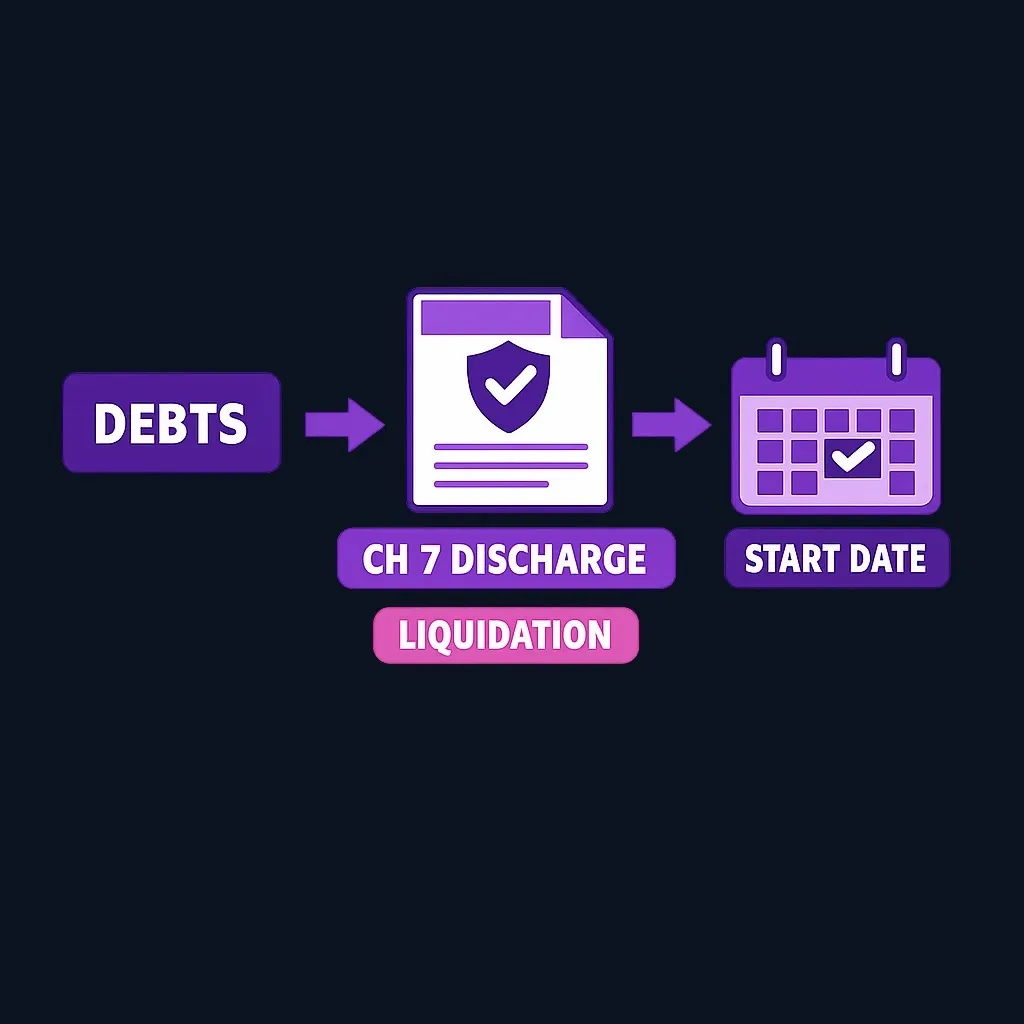
Chapter 7 is a liquidation bankruptcy that can discharge eligible unsecured debts and give the filer a legal fresh start. HUD’s guidance refers to Chapter 7 as liquidation when discussing FHA eligibility and seasoning (HUD guidance).
How underwriters measure bankruptcy in a mortgage file
Underwriters use the official bankruptcy discharge date from court records or credit reports to measure required seasoning. HUD explicitly ties the two‑year measure to the discharge date at the time a case number is assigned for a manually underwritten FHA mortgage (HUD guidance). That discharge date is the starting point for any HUD‑based timing calculations.
Practical implications for your finances
Underwriters will want evidence that you recovered financially after the discharge. They typically expect:
- steady employment or verifiable income;
- recent on‑time payments (rent, utilities, or credit) demonstrating responsible payment behavior; and
- verifiable funds for down payment and short‑term reserves.
If you lack these elements, lenders may require more seasoning, higher credit thresholds, or simply decline the file.
FHA Loan Eligibility After Chapter 7
HUD baseline you must know
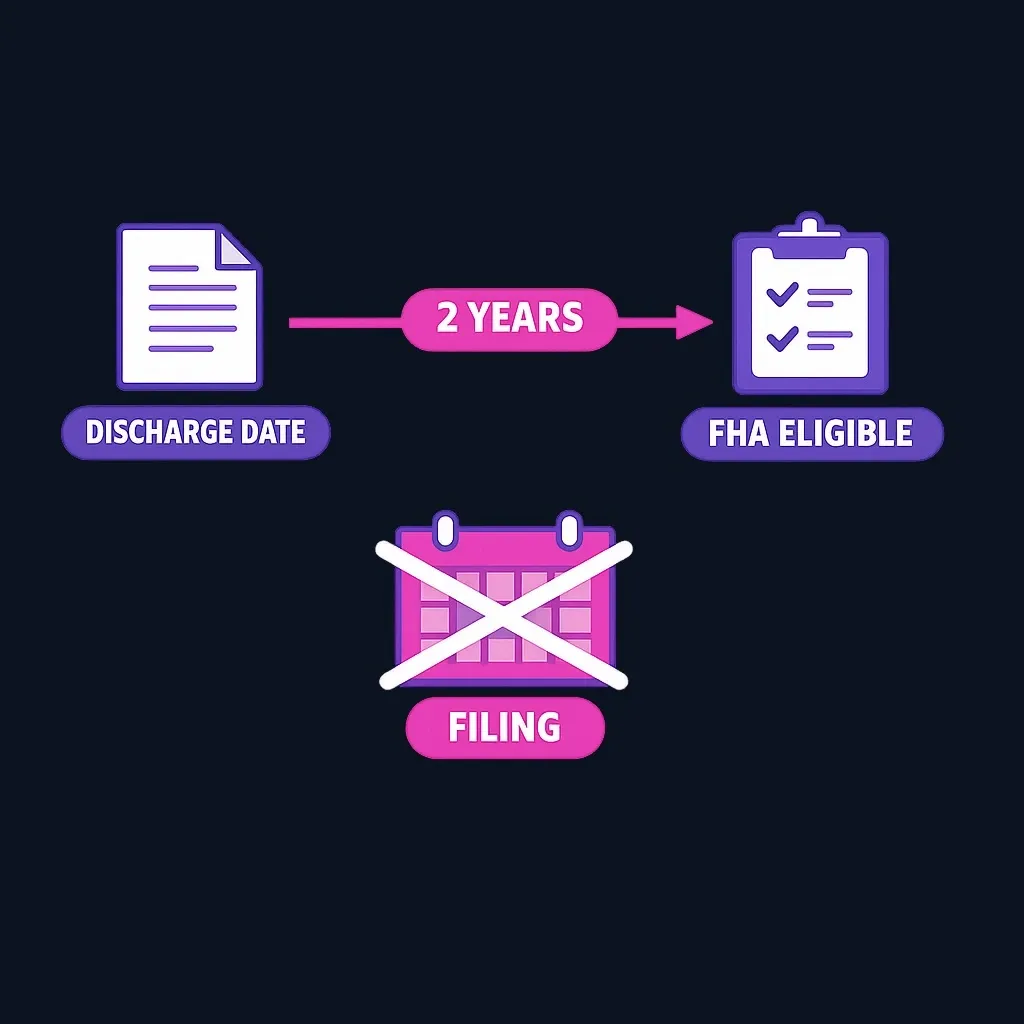
For manually underwritten FHA mortgages, HUD’s guidance says a Chapter 7 discharge does not automatically disqualify a borrower provided at least two years have elapsed since the discharge at the time the case number is assigned (HUD guidance).
What that baseline means — and what it does not
- It is a minimum seasoning benchmark for manual underwriting, not a loan approval guarantee.
- Individual lenders can add “overlays” (stricter timing, credit, or reserve requirements) or refuse automated underwriting for these files. Always confirm each lender’s policy before applying.
- The waiting period is measured from discharge, not from filing.
Example decision point
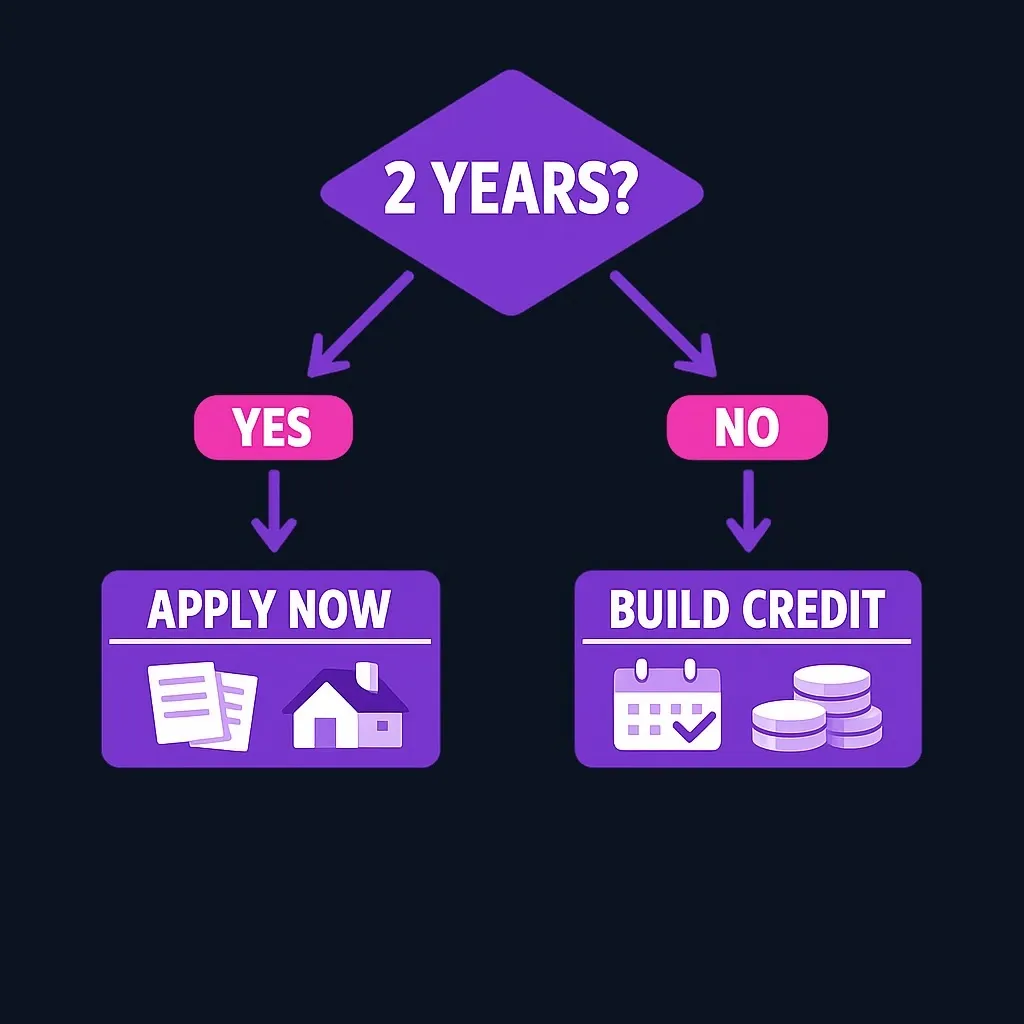
If your discharge date is two years or more in the past and you have steady documented income plus recent on‑time payments, identify lenders who accept manual underwriting and assemble a complete file. If your discharge is under two years, prioritize rebuilding reliable payment history and reserves until you meet HUD’s baseline.
Practice trading with Finelo
Practice in a simulator, learn with bite-sized lessons, and build confidence before risking real money.
Re‑establishing Good Credit: Steps to Take
Actionable steps lenders care about and common mistakes to avoid.
Concrete, lender‑focused actions
- Pull your credit reports and correct errors. Accurate reporting shortens underwriting questions.
- Keep positive accounts open and make all payments on time. Recent payment behavior is heavily weighted.
- Maintain steady employment and document income with pay stubs, W‑2s, or tax returns.
- Save and document funds for down payment and reserves; underwriters will verify the source.
- Write a concise hardship and recovery letter explaining why bankruptcy happened and what you did to recover.
Timeline and priorities
- In the 6–12 months before you intend to apply: focus on uninterrupted on‑time payments, stable income documentation, and clearly documented funds.
- If you have more time before the two‑year mark: extend the period of on‑time payments and increase reserves; that generally improves lender options.
Common mistakes and fixes
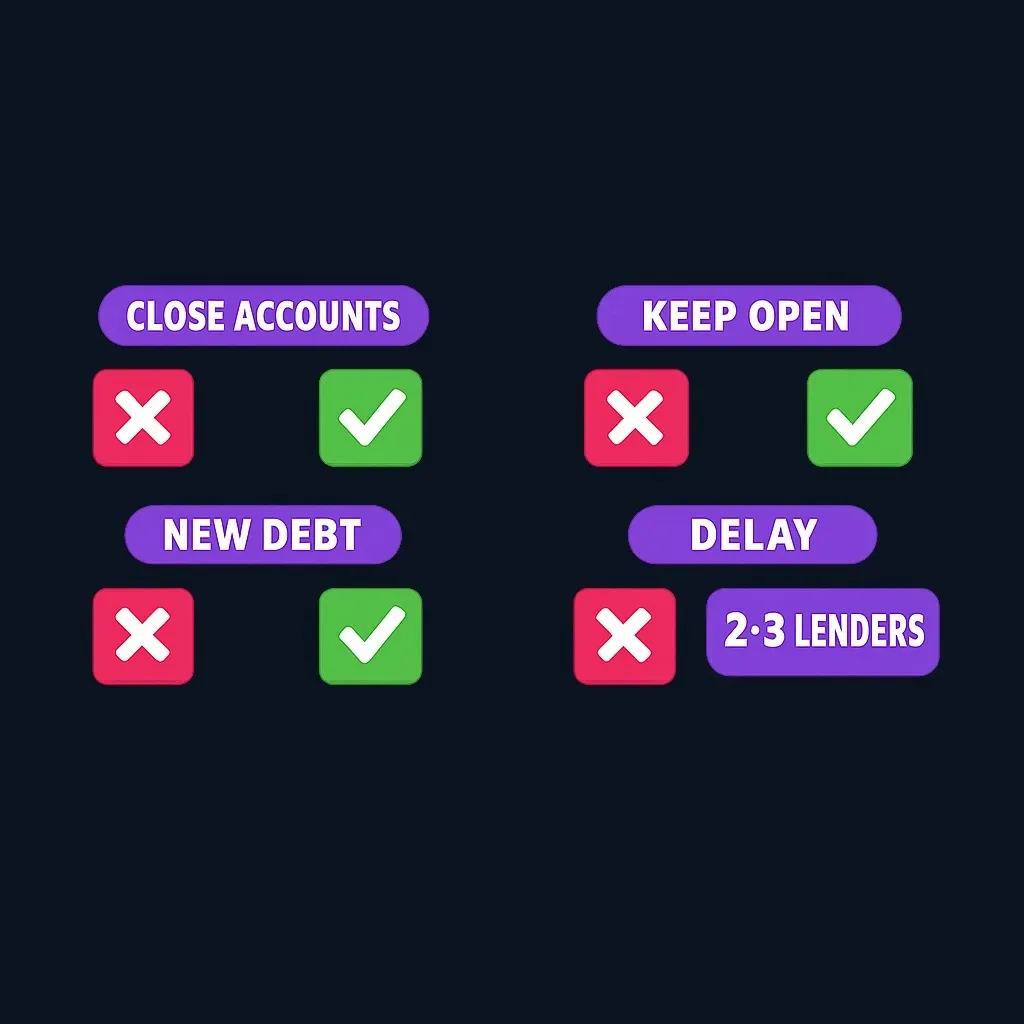
- Mistake: closing seasoned, positive accounts. Fix: keep beneficial accounts open when possible.
- Mistake: taking on large new debt before applying. Fix: delay major credit activity until after closing.
- Mistake: applying to just one lender. Fix: shop 2–3 lenders or work with a mortgage broker experienced in FHA manual underwriting.
Documentation Needed for FHA Loan Applications
A practical, lender‑ready checklist and how to handle extenuating circumstances.
Core checklist to assemble
- Bankruptcy discharge order (verifies the official discharge date).
- Bankruptcy petition and schedules (if a lender requests fuller context).
- Short hardship and recovery letter describing the cause and recovery steps.
- Recent pay stubs (usually last 30 days) and W‑2s or tax returns.
- Recent bank statements showing down payment and reserves (typically 1–2 months).
- Proof of recent housing payment history (rent receipts, canceled checks, or ledgers).
- Documentation for outstanding obligations (judgments, liens, child support).
- Divorce decree or separation agreement when applicable.
Why each item matters
| Document | Why underwriters ask for it |
|---|---|
| Bankruptcy discharge order | Verifies the discharge date lenders use to measure seasoning. |
| Hardship & recovery letter | Explains context and shows steps taken to stabilize finances. |
| Pay stubs / W‑2s / tax returns | Demonstrate steady, verifiable income. |
| Bank statements | Prove available funds for down payment and short‑term reserves. |
| Rent/mortgage history | Shows recent reliable housing payments when you previously rented. |
Submission tips and extenuating‑circumstance examples
- Name files clearly (e.g., DischargeOrder_2024.pdf) and include a one‑page cover sheet listing contents — organized packets shorten underwriting review.
- If down payment funds were a family gift, include a signed gift letter plus the donor’s statements showing ability to give.
- If court records are delayed, include a dated letter from your bankruptcy attorney and any certified filings you can obtain from the court clerk.
Decision framework
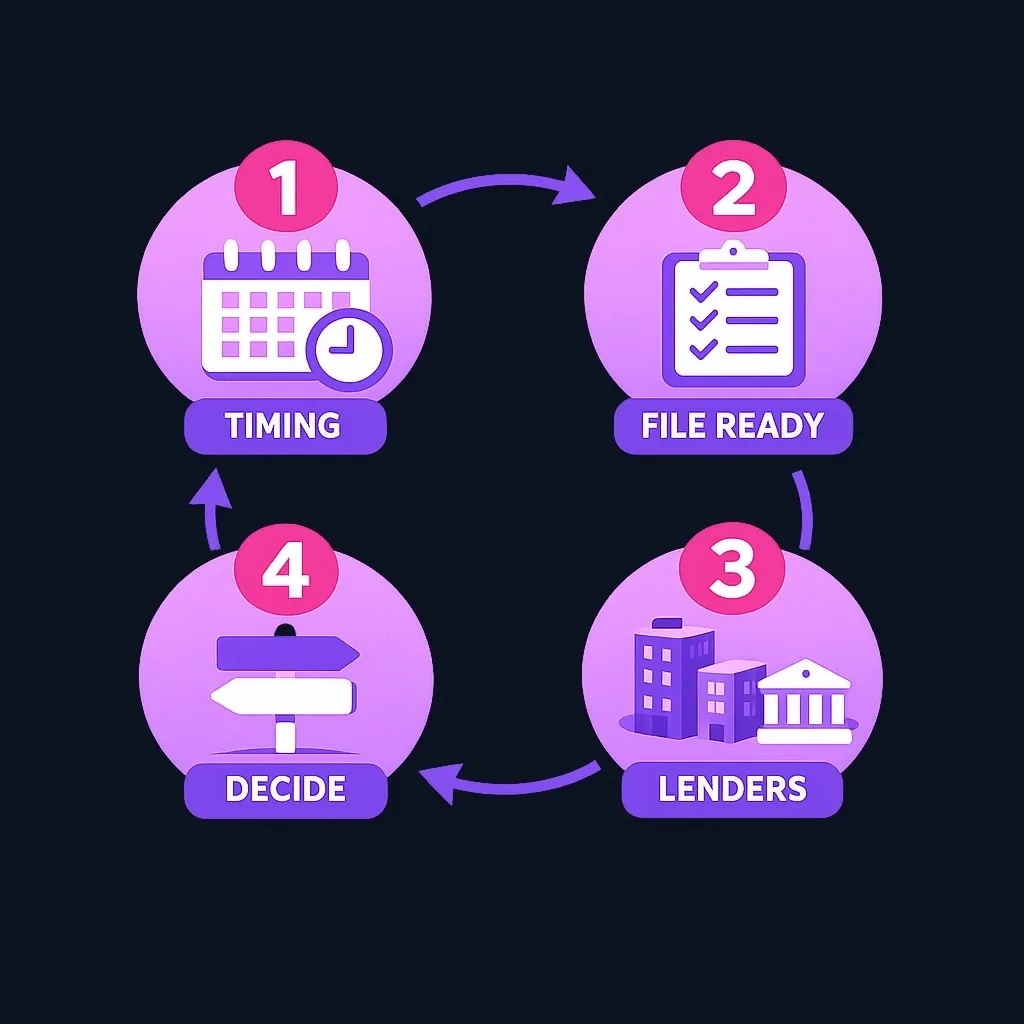
A four‑step framework to decide whether to apply now or prepare more, plus immediate next steps.
Step 1 — Timing check
Is your discharge date at least two years old? If yes, proceed to Step 2. If not, plan months of documented on‑time behavior until you meet the HUD baseline for manual underwriting (HUD guidance).
Step 2 — File readiness
Do you have documented steady income, at least 6–12 months of recent on‑time housing or credit payments, and verifiable funds for down payment and reserves? If gaps exist, estimate how many months you need and prioritize those actions.
Step 3 — Market check
Contact 2–3 lenders or a mortgage broker who understands FHA manual underwriting. Ask:
- Do you accept manual underwriting for FHA files with a Chapter 7 discharge?
- What overlays (additional seasoning, credit, or reserve requirements) do you apply? Compare answers and choose a lender whose overlays fit your file.
Step 4 — Route and action
- Apply now if a lender confirms they will accept a manual underwrite and your documentation is complete.
- Wait and rebuild if you need more on‑time history or larger reserves.
- If the file is complex or borderline, get a pre‑qualification or consult a broker to shop multiple lenders.
Next step (one quick action): gather your bankruptcy discharge order, two recent pay stubs, and two months of bank statements, then contact 2–3 lenders or a mortgage broker and ask about manual underwriting. Learn more about preparing documents and mortgage basics at Finelo Blog
FAQ
What is the waiting period for FHA loans after Chapter 7 bankruptcy?
For manually underwritten FHA mortgages, HUD’s guidance uses a two‑year seasoning measure: at least two years must have elapsed since the bankruptcy discharge at the time the case number is assigned (HUD guidance).
Can I qualify for an FHA loan if I have filed for bankruptcy?
Yes. HUD’s manual‑underwriting guidance does not automatically disqualify a borrower after Chapter 7 if the two‑year discharge seasoning exists, but approval depends on the full file and any lender overlays. Confirm policies with each lender (HUD guidance).
What should I do to re‑establish credit after bankruptcy?
Focus on timely payments, keep positive accounts open, document steady income, and save verifiable funds for down payment and reserves. Prepare a short hardship and recovery letter that explains the bankruptcy and shows concrete steps taken to stabilize finances.
Are there exceptions to the FHA waiting period?
HUD’s two‑year reference applies to manual underwriting consideration; lenders may impose different timing or additional requirements. Ask potential lenders whether they accept manual underwriting and whether any exceptions or overlays apply (HUD guidance).
Final practical checklist (one page to act on now)
- Find and scan your bankruptcy discharge order.
- Pull pay stubs (last 30 days) and recent W‑2s or tax returns.
- Collect 1–2 months of bank statements showing down payment/reserves.
- Compile 12 months of rent or housing payment evidence if you rented.
- Draft a concise hardship and recovery letter.
- Contact 2–3 lenders or a mortgage broker; ask about manual underwriting and overlays.
Finelo provides financial education, not financial or investment advice. If your file is complex, a HUD‑approved housing counselor or an experienced mortgage broker can help match your file to lenders who will review it.
Financial LiteracyFinancial Education
Practice trading with Finelo
Practice in a simulator, learn with bite-sized lessons, and build confidence before risking real money.
About the author
Finelo Team
The Finelo Team creates practical investing and trading education designed to help beginners learn faster with structured challenges, simulator practice, and bite-sized lessons.
Keep reading — Related articles

Financial Literacy
Mercury Books Review 2026: Is It Worth It for Startups?
Mercury Books brings double-entry accounting into Mercury. Review its $35 pricing, reports, AI features, integrations, and migration limits.
Finelo Team

Financial Literacy
Why is My FICO Score Lower Than My Credit Score?
Example takeaway: seeing a higher score in a bank app doesn’t guarantee lenders will see the same FICO number at application time; lenders often pull a specific FICO version from a specific bureau.
Finelo Team

Financial Literacy
Why Is My FICO Score Higher Than My Credit Score?
Brief educational note: this article is educational, not financial or investment advice; investing and credit decisions involve risk and possible loss.
Finelo Team


