For U.S. readers: This article discusses U.S. rules and financial products. State rules and individual eligibility may differ.
Foreign Tax Credit vs Deduction: How the Federal Choices Differ
(Notes: table entries and direction to IRS and U.S. Code are supported by IRS guidance and 26 U.S.C.
8 min read
Practice trading with Finelo
Practice in a simulator, learn with bite-sized lessons, and build confidence before risking real money.
Want to learn more?
Practice in a simulator, learn with bite-sized lessons, and build confidence before risking real money.
Explore FineloExplore Finelo's 28-day challenges
Turn learning into a daily habit with guided challenge paths.
Quick comparison answer
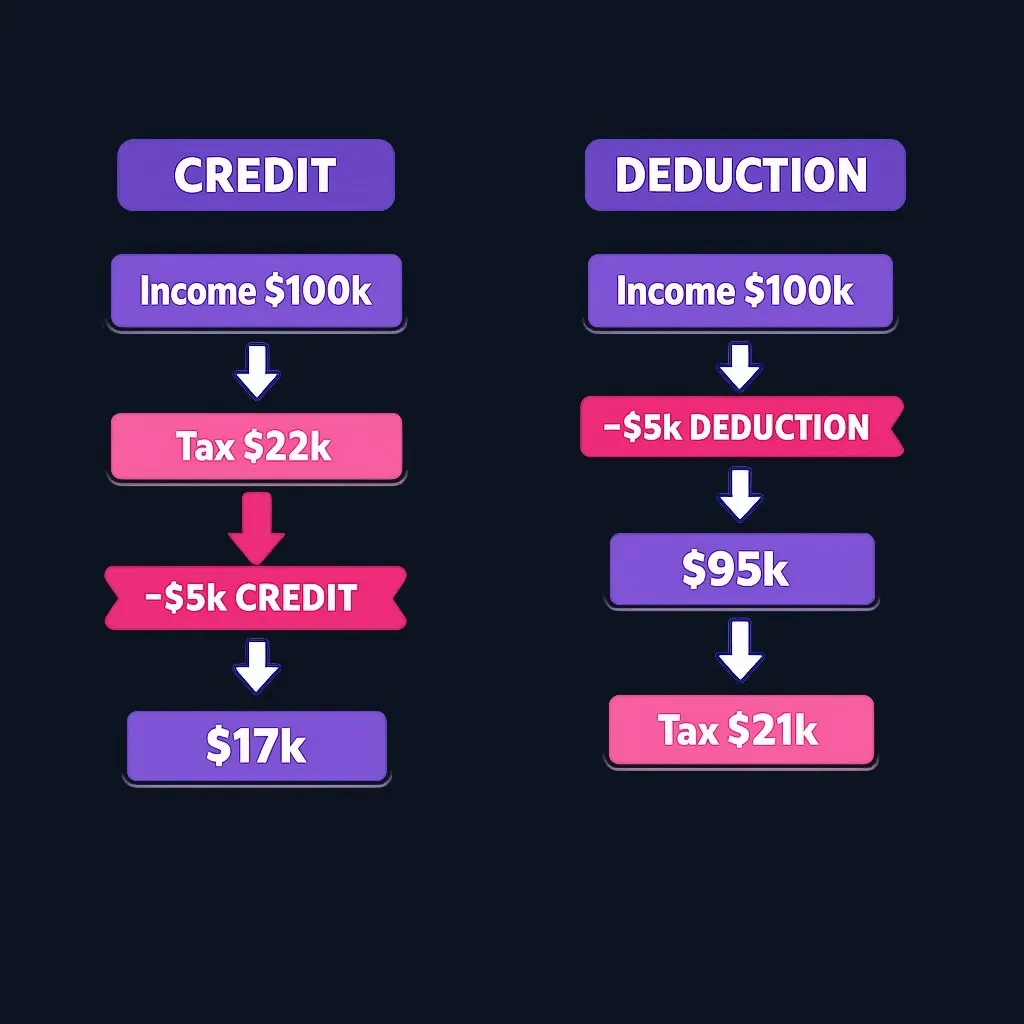
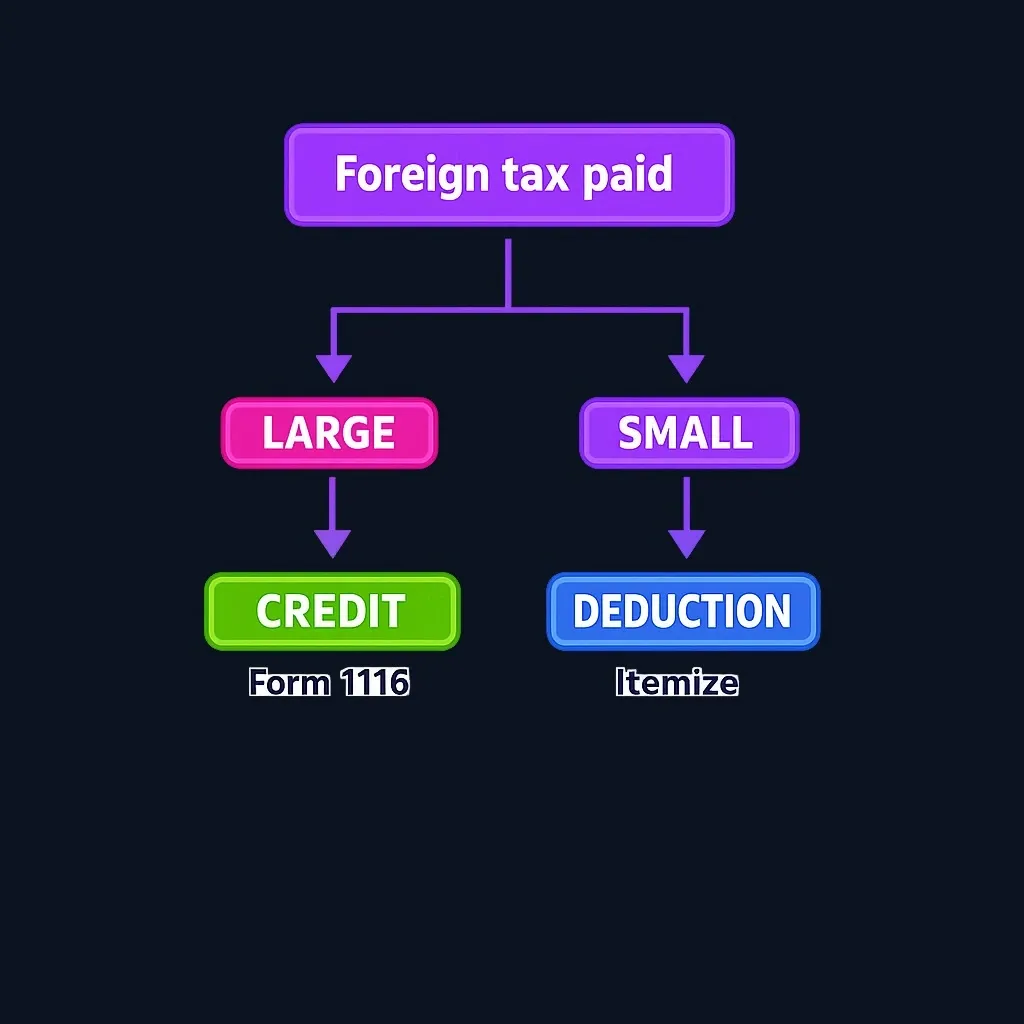
The foreign tax credit directly reduces your U.S. tax liability for qualified foreign income taxes paid, while a foreign tax deduction lowers taxable income and therefore reduces tax indirectly. For most taxpayers with significant foreign income taxes, the credit produces a larger benefit, but a deduction can be preferable when your foreign taxes are small and you already itemize. Finelo provides financial education, not financial or investment advice. For the official rule that you may choose either treatment for qualified foreign taxes, see the IRS guidance on choosing a credit or deduction here. This content is educational, not tax or legal advice.
Side-by-side comparison table
| Feature | Foreign Tax Credit | Foreign Tax Deduction |
|---|---|---|
| Basic effect | Reduces U.S. tax liability dollar-for-dollar for qualified foreign taxes paid or accrued | Reduces taxable income, which indirectly lowers U.S. tax |
| Where claimed | Typically claimed on Form 1116 (unless an exception applies) — see IRS guidance | Taken as an itemized deduction on Schedule A (or other applicable deduction line) — see IRS guidance |
| Legal basis | Statutory provision for foreign taxes of foreign countries and U.S. possessions (26 U.S.C. § 901) — text available here | Tax code and IRS rules that allow itemized deductions for certain foreign taxes (see IRS page above) |
| Who typically benefits | Taxpayers paying material foreign income taxes, especially when foreign rates are high relative to U.S. rates | Taxpayers who already itemize and have modest foreign taxes or when the admin cost of a credit outweighs its benefit |
| Switching methods | You can choose credit or deduction for taxes paid in a year (see IRS guidance) | You may choose either method for a given tax year (see IRS guidance) |
(Notes: table entries and direction to IRS and U.S. Code are supported by IRS guidance and 26 U.S.C. §901; verify current rules on the IRS site.)
Decision criteria
Use these criteria to decide whether to pursue the credit or the deduction:
- Relative size of foreign taxes versus U.S. tax on the same income. A credit offsets U.S. tax liability directly, while a deduction affects taxable income. Compare both treatments using the current.
- Itemization status and marginal U.S. tax rate. If you do not itemize, a deduction may be unavailable or less valuable. If you itemize, compare the deduction’s effect at your marginal rate.
- Administrative cost and recordkeeping. Claiming a credit often requires Form 1116 and supporting documentation; weigh that burden against potential tax savings (see IRS guidance the official guidance linked earlier).
- Type and source of income. Credits and their limitations can vary by category of income and sourcing rules; consider whether the foreign tax corresponds to passive, general limitation, or other income categories.
- Interaction with other provisions. The Foreign Earned Income Exclusion (FEIE), tax treaties, and U.S. possession rules can change which choice is optimal — check official guidance and the underlying treaty text where relevant.
Practical approach: run a quick before-and-after calculation for your tax year under both options (credit vs deduction) and compare net U.S. tax. Use the IRS guidance to confirm eligibility and required forms.
When to choose each option
Below are practical scenarios to illustrate which option often wins.
Scenario A — Credit likely better (illustrative)
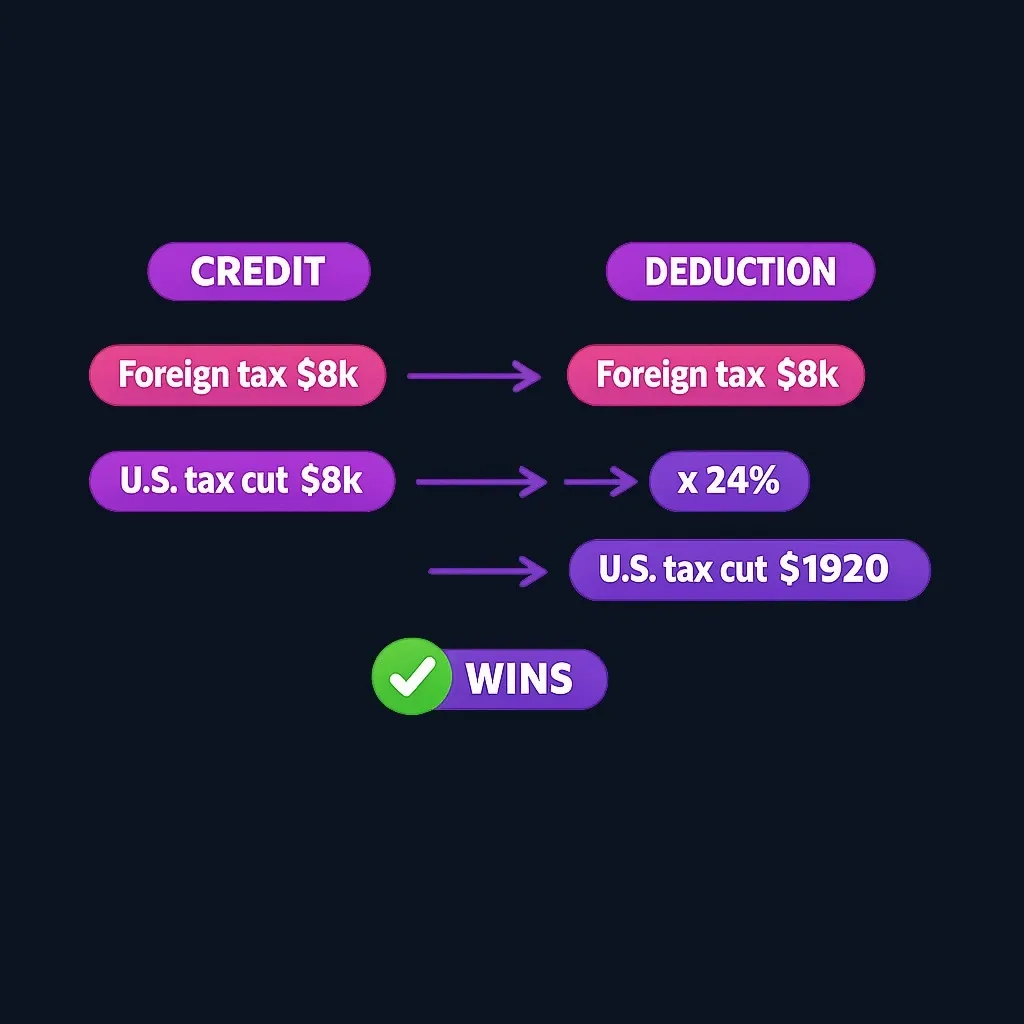
- You earned wages abroad and paid substantial foreign income tax. The foreign tax paid is large relative to the U.S. tax attributable to that income. Because a credit reduces U.S. tax dollar-for-dollar, it often eliminates more U.S. tax than a deduction would.
Scenario B — Deduction may be preferable (illustrative)
- You paid small amounts of foreign taxes (for example, property taxes or minor local levies), you already itemize deductions, and the incremental tax benefit at your marginal rate is close to or greater than the administrative cost of claiming a credit. In such cases, the deduction can be simpler and just as—or more—advantageous.
Additional practical notes
- You can choose the method annually: the IRS allows you to elect credit or deduction for taxes paid or accrued in the tax year (see IRS guidance the official guidance linked earlier).
- If your situation is borderline, compute both outcomes using your actual numbers. The largest factor is typically how much foreign tax you paid relative to the U.S. tax on the same income.
Practice trading with Finelo
Practice in a simulator, learn with bite-sized lessons, and build confidence before risking real money.
How to claim the foreign tax credit
A concise, practical workflow for claiming a credit:
- Confirm the tax is a "qualified foreign tax." Consult IRS guidance on what counts as a qualified foreign tax and whether the payment is eligible.
- Gather documentation: foreign tax returns, receipts, pay statements showing foreign tax withheld, or official statements from the foreign tax authority.
- Complete Form 1116 if required. Form 1116 is the usual mechanism for reporting and computing the allowable credit; follow line instructions and attach the form to your Form 1040 (see IRS guidance linked above).
- Apply the limitation rules and compute the credit as instructed on Form 1116. If the credit is limited for the year, track carryback or carryover rules per IRS instructions.
- Keep records for audit or later review: proof of foreign tax paid, calculations, and copies of foreign filings.
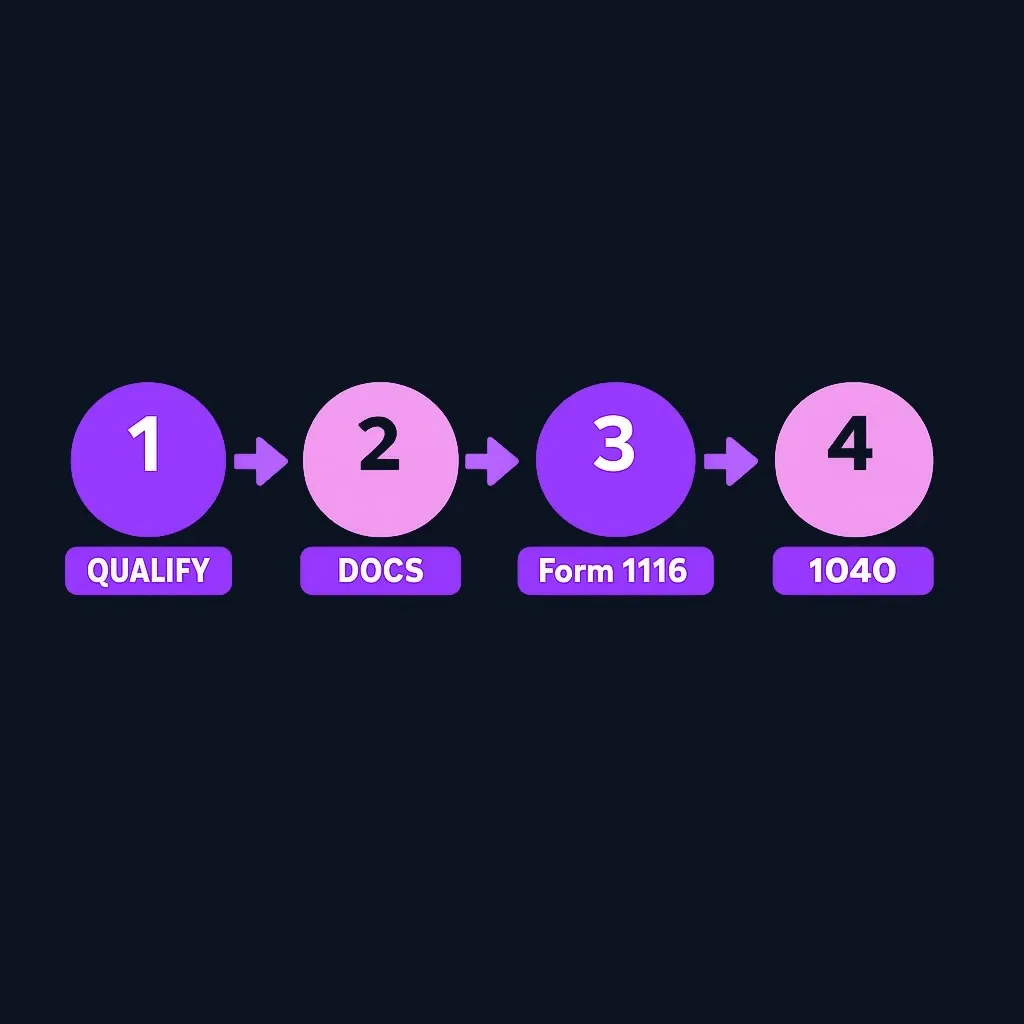
For full filing instructions and exceptions (for example, certain small amounts or specific categories of income), consult the IRS guidance on choosing credit vs deduction and the instructions for Form 1116.
Tradeoffs and caveats
Key cautions to avoid common pitfalls:
- Don’t double-count. You must treat the same foreign tax consistently — either as a credit or a deduction for the tax year in which it was paid or accrued; follow IRS rules on election and consistency.
- Administrative complexity vs benefit. Filing Form 1116 and tracking income categories takes time. If the credit benefit is small, the deduction’s simplicity may outweigh the credit.
- Source and category limitations. Credits may be limited based on how the U.S. sources the income and categorizes it; this can reduce the usable credit even if you paid significant foreign tax.
- Interaction with other rules. The Foreign Earned Income Exclusion, tax treaties, and special rules for U.S. possessions or retirement accounts can change the calculus. Review IRS guidance and treaty text when applicable.
- State tax implications. State tax rules vary; a federal credit or deduction can affect state taxable income differently. Check state guidance or consult a tax professional for state-level impacts.
- Recordkeeping is essential. Keep foreign tax receipts and foreign filings. If you claim a credit, you will need documentation to substantiate the foreign tax paid.
If you have complex foreign-source income or treaty issues, consider professional help to avoid costly mistakes.
FAQ
What is the difference between a tax credit and a tax deduction?
A tax credit reduces your U.S. tax liability directly, while a deduction reduces taxable income and therefore lowers tax indirectly. The IRS explains that taxpayers may choose whether qualified foreign taxes are taken as a credit or as an itemized deduction; see IRS guidance.
How do I claim the foreign tax credit?
Most taxpayers claim the foreign tax credit by completing Form 1116 and attaching it to Form 1040; gather evidence of foreign taxes paid and follow the form instructions. See the IRS guidance for choosing the credit and filing instructions.
Can I switch between the foreign tax credit and deduction each year?
Yes. The IRS allows you to choose whether to take qualified foreign taxes as a credit or an itemized deduction for the tax year in which the taxes are paid or accrued; refer to the IRS guidance.
What types of foreign taxes qualify for the credit?
Qualified foreign taxes generally include income taxes (and taxes in lieu of income taxes) paid to a foreign country or U.S. possession; see the IRS discussion of qualified foreign taxes and 26 U.S.C. §901 for legal context IRS guidance and 26 U.S.C. §901.
Conclusion
Quick recap: the foreign tax credit usually gives a larger tax benefit when foreign income taxes are substantial because it offsets U.S. tax directly; a deduction can be preferable when foreign taxes are small and you already itemize or want simplicity. Run side-by-side calculations for your tax year, review IRS guidance linked above, and keep careful records if you claim a credit. Learn more about tax topics and financial education in the Finelo Blog: Finelo Blog.
Financial LiteracyFinancial Education
Practice trading with Finelo
Practice in a simulator, learn with bite-sized lessons, and build confidence before risking real money.
About the author
Finelo Team
The Finelo Team creates practical investing and trading education designed to help beginners learn faster with structured challenges, simulator practice, and bite-sized lessons.
Keep reading — Related articles

Financial Literacy
Mercury Books Review 2026: Is It Worth It for Startups?
Mercury Books brings double-entry accounting into Mercury. Review its $35 pricing, reports, AI features, integrations, and migration limits.
Finelo Team

Financial Literacy
Why is My FICO Score Lower Than My Credit Score?
Example takeaway: seeing a higher score in a bank app doesn’t guarantee lenders will see the same FICO number at application time; lenders often pull a specific FICO version from a specific bureau.
Finelo Team

Financial Literacy
Why Is My FICO Score Higher Than My Credit Score?
Brief educational note: this article is educational, not financial or investment advice; investing and credit decisions involve risk and possible loss.
Finelo Team