For U.S. readers: This article discusses U.S. rules and financial products. State rules and individual eligibility may differ.
Fraud Alert vs Credit Freeze: Protection, Access, and Setup
Quick answer: A fraud alert tells businesses to take extra steps to verify your identity before opening new credit in your name, while a credit freeze blocks most new creditors from seeing your credit file at the major bureaus until you lift the freeze.
8 min read
Practice trading with Finelo
Practice in a simulator, learn with bite-sized lessons, and build confidence before risking real money.
Want to learn more?
Practice in a simulator, learn with bite-sized lessons, and build confidence before risking real money.
Explore FineloExplore Finelo's 28-day challenges
Turn learning into a daily habit with guided challenge paths.
Quick answer: A fraud alert tells businesses to take extra steps to verify your identity before opening new credit in your name, while a credit freeze blocks most new creditors from seeing your credit file at the major bureaus until you lift the freeze. Use alerts for suspicious activity or short-term protection; use a freeze when you want stronger, ongoing prevention against new-account fraud. Finelo provides financial education, not financial or investment advice.
What is a Fraud Alert?
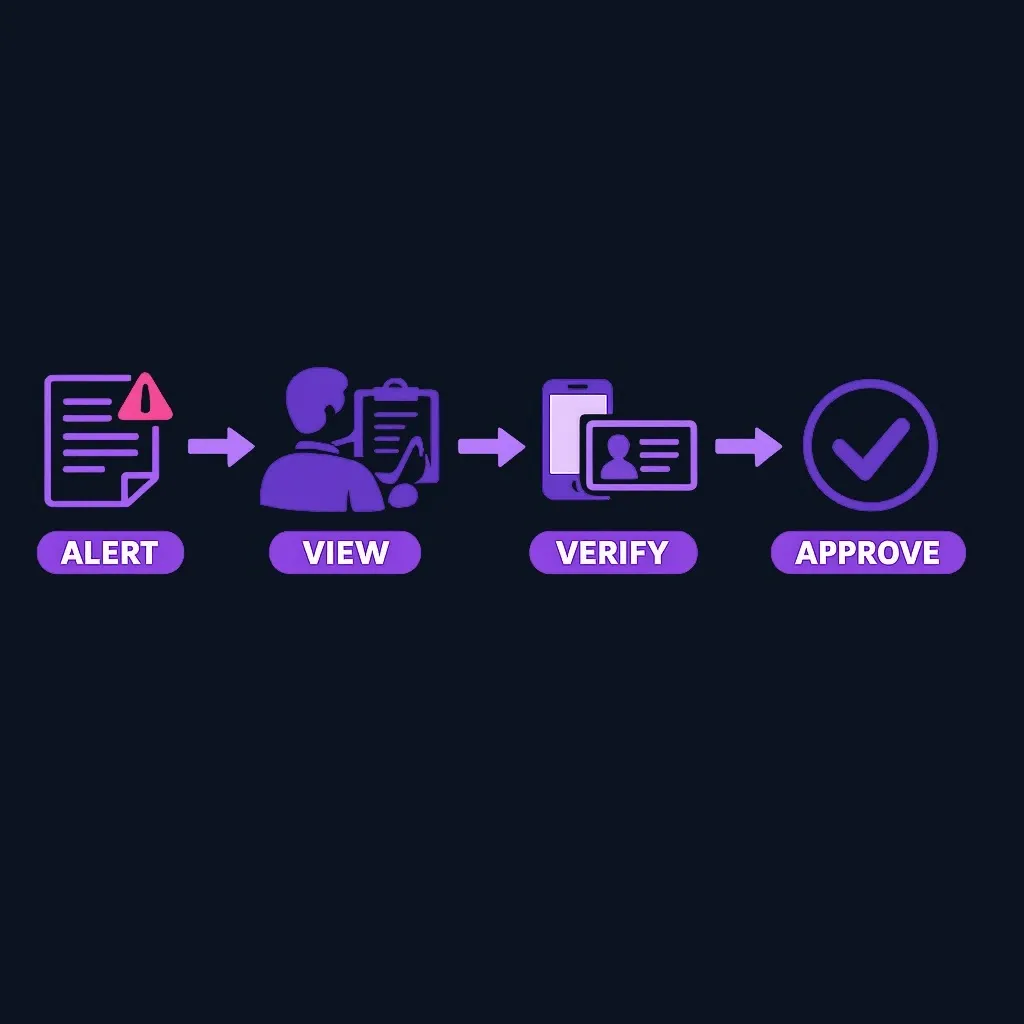
A fraud alert is a flag placed on your credit file that asks lenders and other businesses to verify your identity before approving new credit. The alert is intended to make it harder for someone who stole your personal information to open accounts in your name. The Federal Trade Commission describes fraud alerts and how they warn businesses to confirm identity before extending credit Federal Trade Commission.
Key points readers should know
- Fraud alerts do not block access to your credit reports; they request extra verification by the creditor before new credit is opened.
- Fraud alerts do not directly protect your existing accounts (for example, a compromised debit card or existing credit cards) — you still must monitor and secure live accounts.
- The FTC’s guidance explains the types and usual use cases for fraud alerts, including special alerts for identity-theft victims.
What is a Credit Freeze?
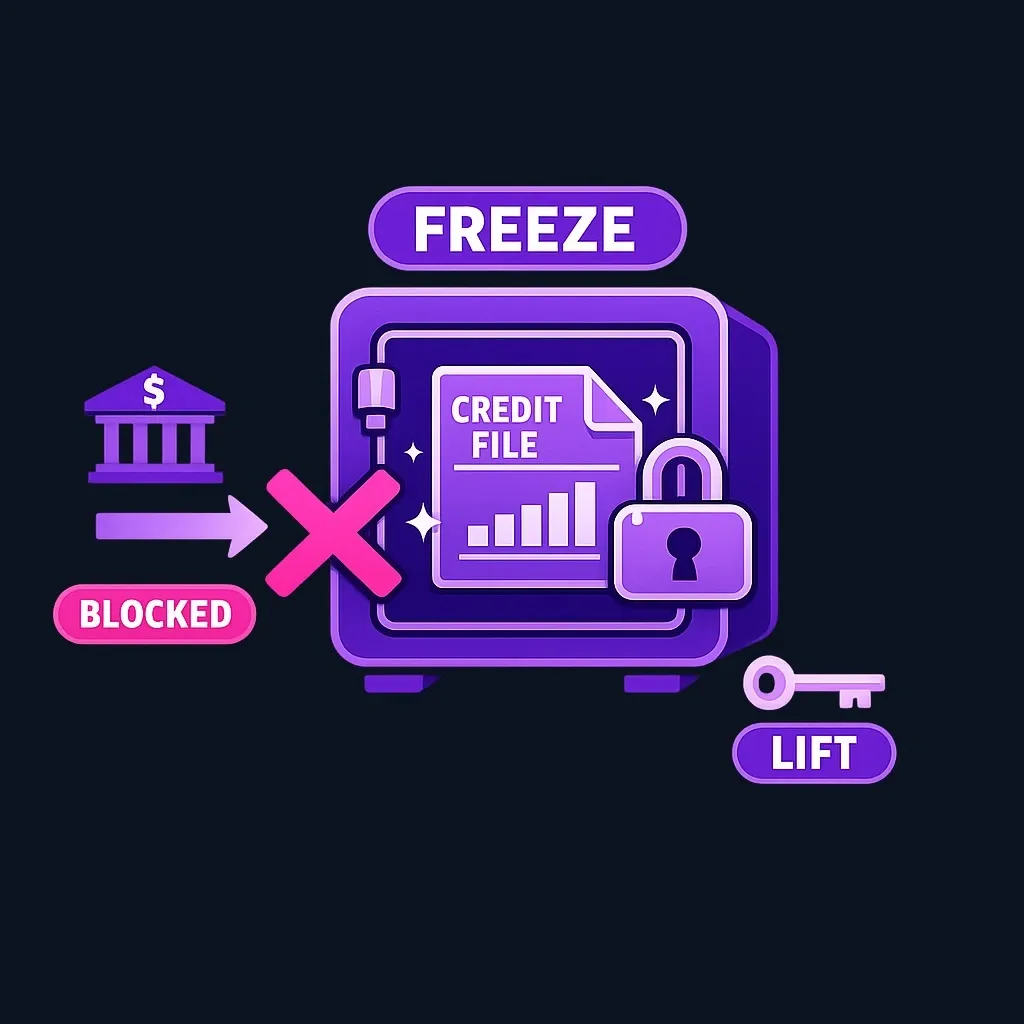
A credit freeze (sometimes called a security freeze) restricts access to your credit reports so most creditors cannot view them and cannot approve new credit in your name without your OK. The Consumer Financial Protection Bureau explains that a credit freeze prevents most new creditors from accessing your file and is an active barrier to new-account fraud Consumer Financial Protection Bureau.
Key points readers should know
- A freeze stops prospective creditors from seeing your credit report, which usually stops them from approving new accounts in your name until you lift the freeze.
- A credit freeze does not remove existing fraud, nor does it prevent misuse of accounts that don’t require a credit check; you still need to monitor current accounts.
- You control when to lift or remove the freeze, making it a stronger and more direct barrier than an alert.
Side-by-side comparison table
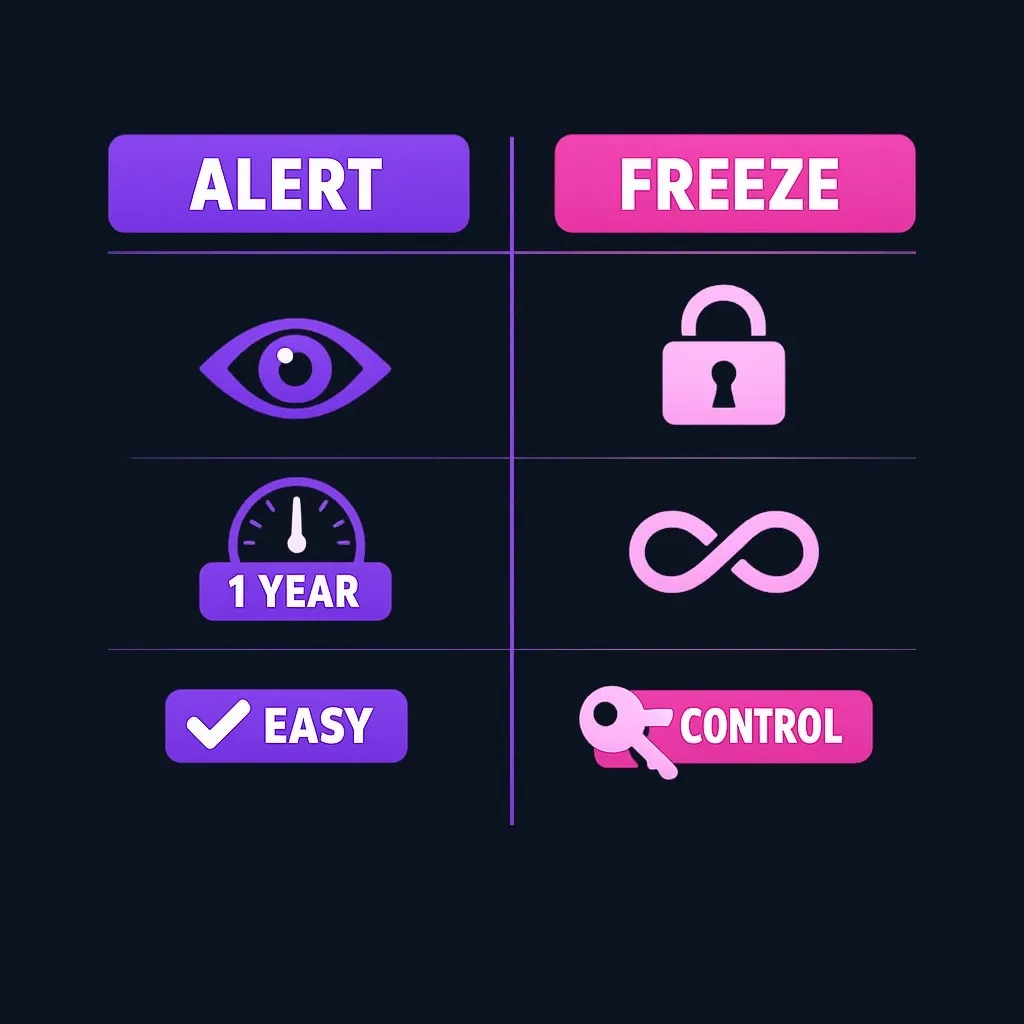
| Feature | Fraud Alert | Credit Freeze |
|---|---|---|
| Primary effect | Asks businesses to verify identity before issuing credit | Prevents most new creditors from accessing your credit report |
| Blocks new accounts? | No — requests extra verification only | Generally yes — blocks most credit checks until lifted |
| Effect on existing accounts | No direct protection; monitor accounts separately | No direct protection for existing accounts; still monitor activity |
| Who controls removal | Can be removed or renewed; types and lengths vary | You must lift/unfreeze to allow credit checks; you control timing |
| Typical use case | Short-term warning after suspected data exposure or to check suspicious activity | Stronger, direct barrier for ongoing protection when you suspect identity theft or simply want to prevent new accounts |
These differences help separate the convenience of a fraud alert from the stronger access restriction of a freeze. Verify the current procedure with each nationwide credit bureau before acting.
Decision criteria
This section gives a short, practical framework to decide between the two options. Use these criteria together rather than in isolation.
- Threat level (how likely or severe is the exposure?): If you suspect that someone can open new credit in your name now, a freeze provides a direct block. If you only saw suspicious activity or a one-off data exposure, an alert gives a lighter, temporary measure.
- Need for new credit soon: If you plan to apply for loans, mortgages, or new credit soon, a fraud alert avoids the administrative step of unfreezing; a freeze requires you to lift access before lenders can check your report.
- Control vs convenience: Freezes give stronger protection at the cost of control steps when you need credit. Alerts are more convenient but rely on third parties to follow the verification request.
Educational note: This content is educational, not financial or investment advice; choosing protection tools involves tradeoffs among convenience, control, and the level of risk you face.
Decision framework (quick mental checklist)
- Are you the victim of confirmed identity theft? If yes, strongly consider a credit freeze and follow identity-theft recovery steps.
- Do you need new credit in the near future? If yes, a fraud alert may be more convenient while you sort the issue.
- Is your concern long-term or ongoing exposure? If yes, a freeze gives a sturdier barrier against new-account fraud.
Practice trading with Finelo
Practice in a simulator, learn with bite-sized lessons, and build confidence before risking real money.
When to choose each option
Practical scenarios and outcomes to help pick one:
- Short-term exposure (e.g., you received a single phishing email or a breached account): Place a fraud alert to force extra checks while you monitor account activity.
- Confirmed identity theft (someone opened accounts in your name): Use a credit freeze to block further account openings and follow identity-theft recovery steps.
- Planning a major credit application (mortgage, car loan) within weeks: Consider keeping files unfrozen or use a fraud alert so lenders can access your credit with minimal delay.
- Ongoing low-level risk (you want robust prevention and don’t expect to apply for credit often): A freeze is the stronger long-term choice because it actively restricts access.
Realistic scenario example
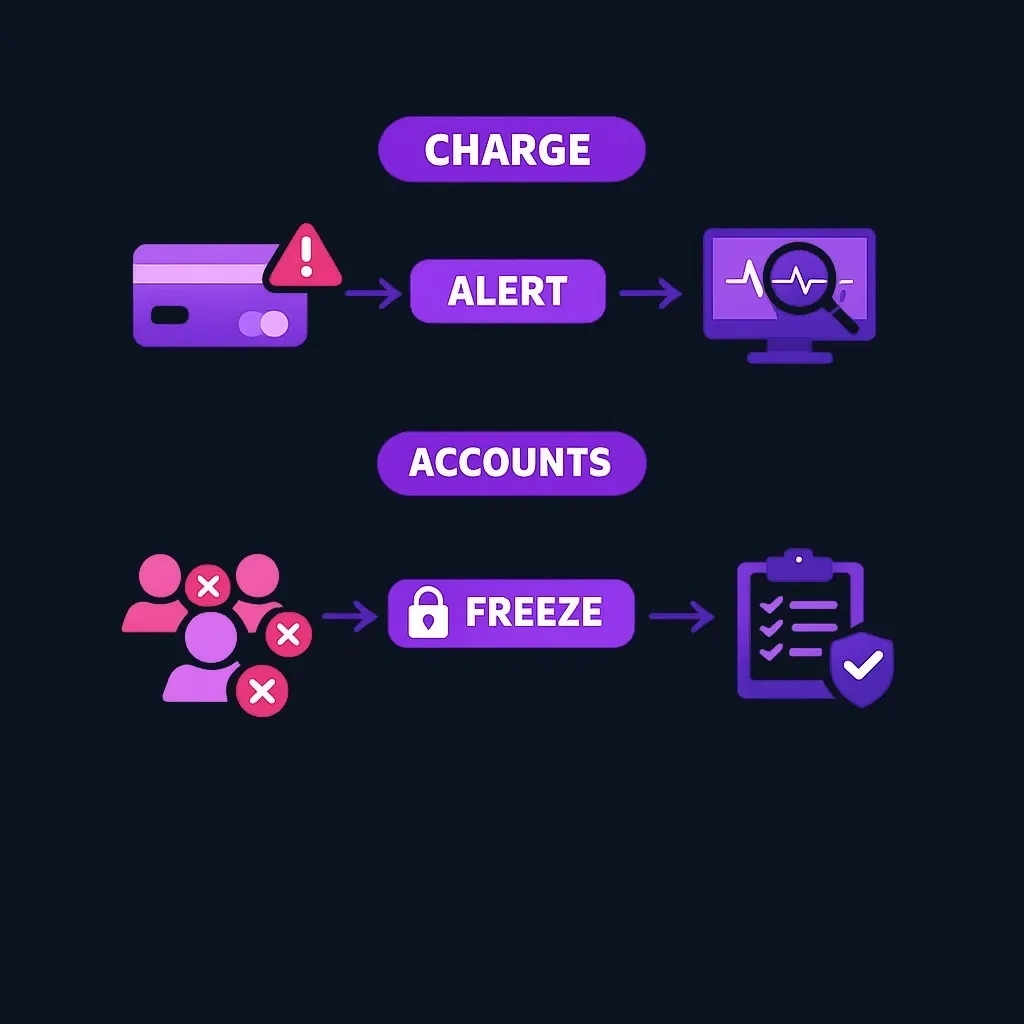
- You find a suspicious charge on an existing card: Immediately secure that account, file a dispute where appropriate, and monitor other accounts; a fraud alert can add a verification step for new credit while you investigate.
- You see multiple new accounts you didn’t open: Freeze your credit to prevent more accounts, then follow identity-theft recovery guidance.
Tradeoffs and caveats
Understand what these tools cannot do and how to use them without false confidence.
Caveats common to both
- Neither tool protects your existing accounts from fraud that doesn’t require a credit check (e.g., fraudulent charges on an existing card); you must monitor statements and lock/close compromised accounts.
- Both rely on the credit reporting system: a determined fraudster can exploit non-credit channels (utilities, medical accounts, tax fraud) that these tools don’t always block.
Monitoring and practical steps (how to maintain protection)
- Check account statements and sign up for transaction alerts with banks and card issuers. Regular monitoring catches misuse that freezes/alerts don’t stop. This guidance aligns with the FTC’s overarching advice to keep watching existing accounts.
- Keep records: note dates you placed an alert or freeze and any confirmation numbers, and store identity-theft recovery documentation if you become a victim.
- If you must allow a credit check while a freeze is active, be prepared to lift or temporarily thaw the freeze under the bureaus’ procedures and reapply the freeze afterward.
Common mistakes and fixes
- Mistake: Assuming a freeze protects existing accounts. Fix: Secure and monitor live accounts separately and report fraudulent activity immediately.
- Mistake: Forgetting to lift a freeze before applying for credit. Fix: Plan ahead and allow time to temporarily remove or pause the freeze if you expect credit checks.
FAQ
How long does a fraud alert last?
The FTC explains that fraud alerts are time-limited and that there are different types (including extended alerts for identity-theft victims); check the FTC guidance for how each alert type applies to your situation.
How do I place a credit freeze?
A credit freeze is placed with the nationwide credit reporting agencies; the Consumer Financial Protection Bureau provides details about what a credit freeze is and its effect on your credit reports.
Will placing a fraud alert or credit freeze affect my credit score?
These tools do not change your credit scores; they affect access to your credit reports for new accounts rather than your credit history or score.
Can I use both a fraud alert and a credit freeze at the same time?
You can use the tools in combination depending on your needs: they serve different functions—alerts ask for identity checks, freezes restrict access—so some people layer them for added protection.
Conclusion
Fraud alerts and credit freezes both help reduce the risk of new-account fraud but do so with different strengths: alerts are lighter and easier for short-term or convenience-sensitive situations, while freezes offer a stronger block when you want to stop new creditors from accessing your file. After reading this page, you should be able to match your threat level and credit plans to the right tool and know to keep monitoring your existing accounts. For more educational material on protecting personal finances, explore Finelo Blog.
Financial LiteracyFinancial Education
Practice trading with Finelo
Practice in a simulator, learn with bite-sized lessons, and build confidence before risking real money.
About the author
Finelo Team
The Finelo Team creates practical investing and trading education designed to help beginners learn faster with structured challenges, simulator practice, and bite-sized lessons.
Keep reading — Related articles

Financial Literacy
Mercury Books Review 2026: Is It Worth It for Startups?
Mercury Books brings double-entry accounting into Mercury. Review its $35 pricing, reports, AI features, integrations, and migration limits.
Finelo Team
Financial Literacy
Why is My FICO Score Lower Than My Credit Score?
Example takeaway: seeing a higher score in a bank app doesn’t guarantee lenders will see the same FICO number at application time; lenders often pull a specific FICO version from a specific bureau.
Finelo Team
Financial Literacy
Why Is My FICO Score Higher Than My Credit Score?
Brief educational note: this article is educational, not financial or investment advice; investing and credit decisions involve risk and possible loss.
Finelo Team