Last editorial review: September 28, 2026
Higher vs. lower car-insurance deductible

Compare premium savings with the extra amount you would pay after a claim, using a simple deductible break-even example.
10 min read
Practice trading with Finelo
Practice in a simulator, learn with bite-sized lessons, and build confidence before risking real money.
Want to learn more?
Practice in a simulator, learn with bite-sized lessons, and build confidence before risking real money.
Explore FineloExplore Finelo's 28-day challenges
Turn learning into a daily habit with guided challenge paths.
A higher deductible usually lowers the premium but increases what you pay toward a covered claim. A lower deductible costs more in premiums in exchange for less out-of-pocket exposure at claim time.
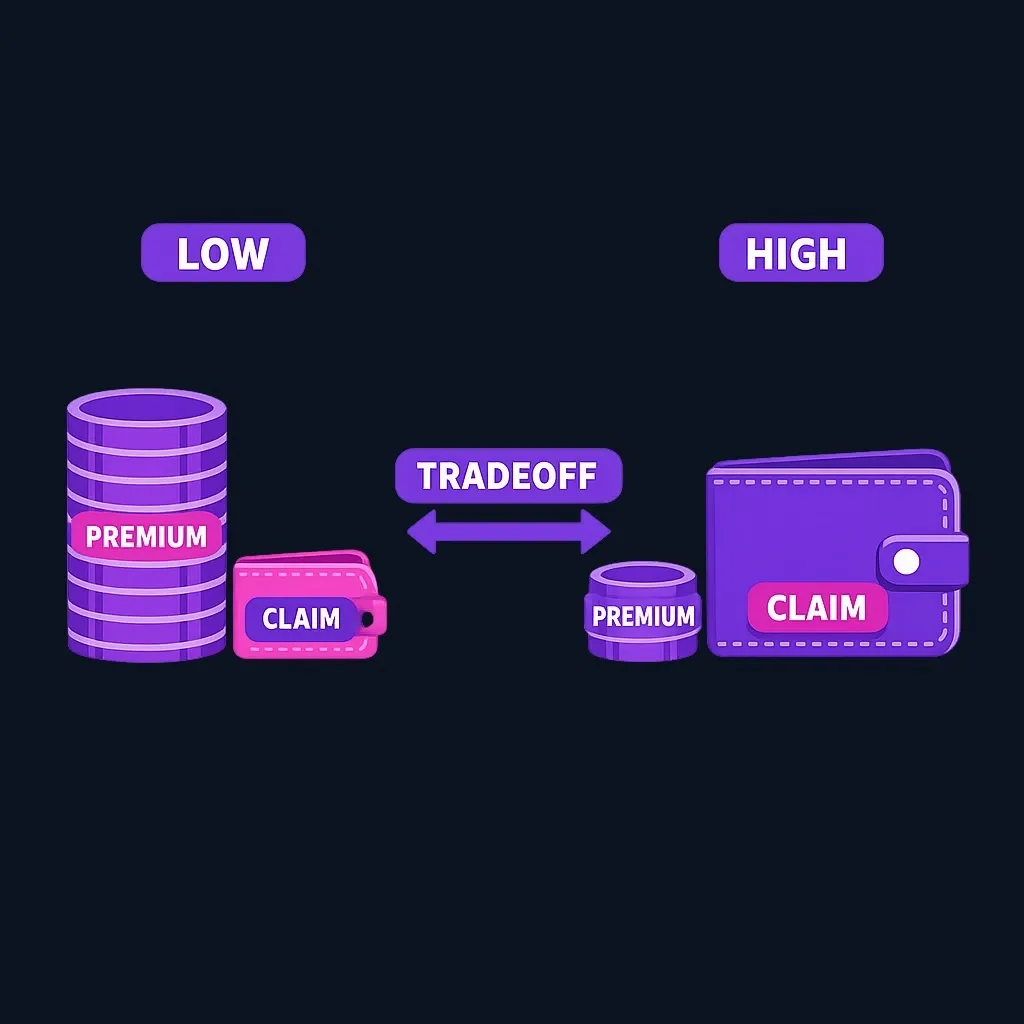
The right comparison uses quotes for the same coverage and limits. Otherwise, the apparent saving may come from less insurance rather than the deductible alone.
Put the tradeoff in dollars
Suppose increasing a collision deductible from $500 to $1,000 saves $120 a year. You accept an extra $500 of exposure per applicable claim. It takes about 4.2 claim-free years of that saving to equal the extra deductible.
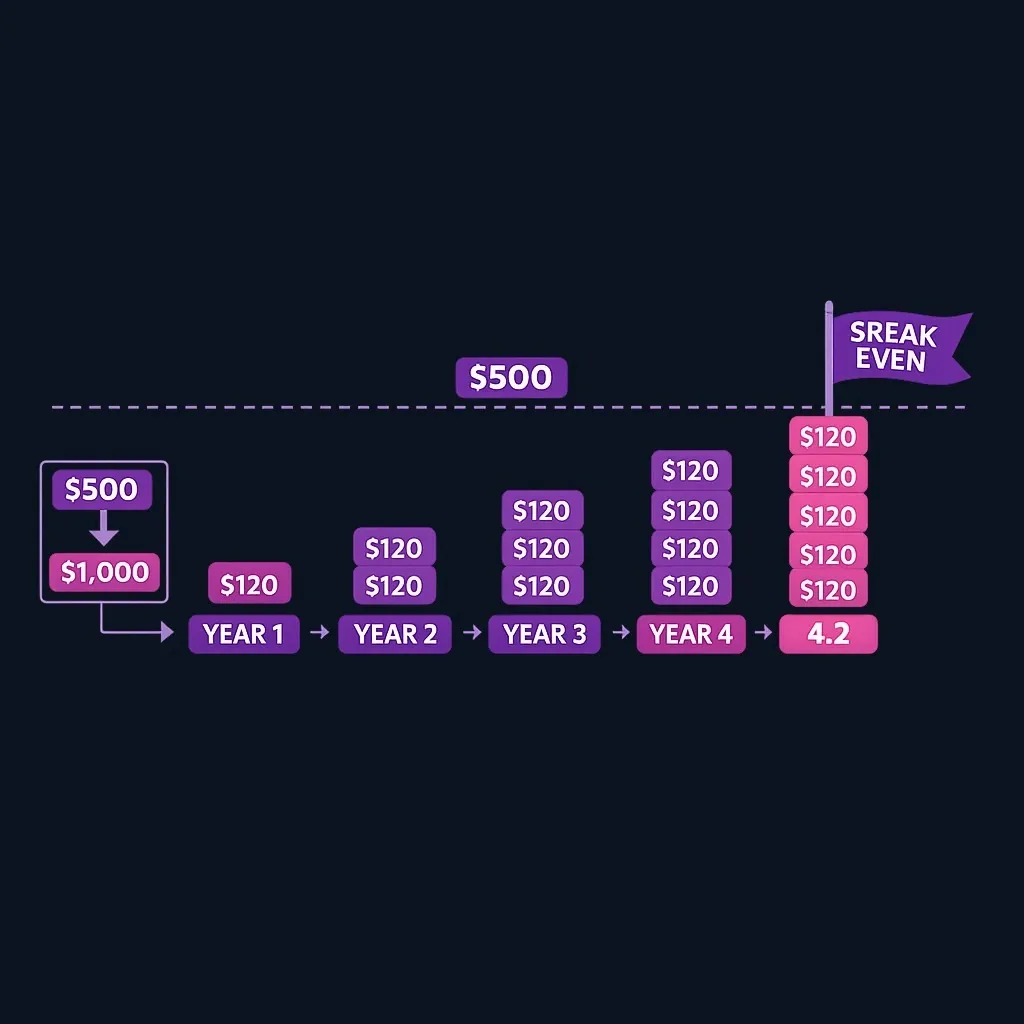
This is a hypothetical illustration, not a forecast. You could have a claim next month or several claims over time. Collision and comprehensive coverage may have separate deductibles, and not every type of claim uses one.
The Washington insurance regulator explains how deductibles affect premiums. Your actual savings depend on the insurer and policy. The Texas regulator explains how a deductible is subtracted from claim payments.
Questions that matter more than the percentage saving
- Could you pay the higher deductible immediately without missing essential bills?
- Does your lender or lease restrict the deductible you can choose?
- How much is the car worth, and what coverage do you need?
- Is the quoted premium saving large enough to matter in your budget?
If an extra $500 claim expense would force you into costly debt, a small annual premium reduction may not solve the underlying cash-flow problem. If you already maintain a suitable reserve, accepting more of the repair cost may be manageable.
Ask for side-by-side quotes and keep the coverage limits identical. Confirm the deductible for each coverage section and retain the amount you choose in accessible savings. An insurance deductible should be a planned expense you could fund, not just a number that makes the quote look cheaper.
Compare the extra exposure with the actual saving
Use two quotes for the same driver, vehicle, limits, and coverages. Changing liability limits at the same time as the collision deductible makes the premium difference harder to interpret. Ask for the annual cost even if you normally pay monthly, and check whether installment charges or payment discounts differ.
Suppose a hypothetical quote saves $180 a year when a deductible rises from $500 to $1,000. The additional exposure on a qualifying claim is $500. Dividing $500 by $180 gives about 2.78 claim-free years of premium savings to equal that additional exposure. This is a comparison of amounts, not a prediction of when an accident will occur or a guarantee that the higher deductible wins.
The size of the covered loss also matters. If a repair costs less than the deductible, there may be no payment under that coverage. Multiple separate claims may each involve a deductible. Your driving history is useful context, but it cannot establish that next year will be claim-free.
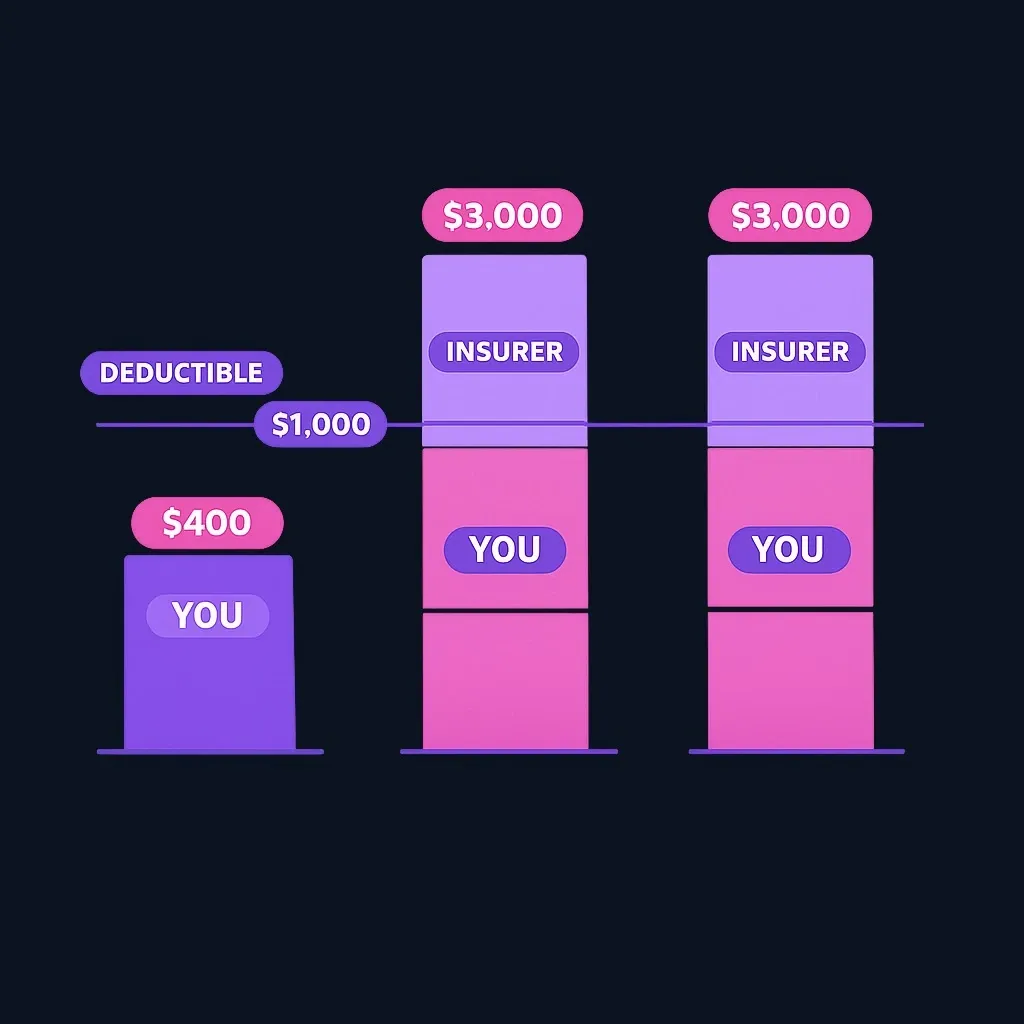
Keep the deductible available in cash
Imagine needing the car back quickly after damage. A higher deductible that can only be paid with an expensive loan may create more stress than the annual premium saving justifies. Assess cash available after rent, food, and other essential payments, rather than treating every dollar in a retirement account as an accessible reserve.
Check collision and comprehensive separately. They cover different categories of loss and may have different deductibles. A financed or leased car can also be subject to insurance requirements in the financing contract. Verify those requirements before choosing a deductible solely because the insurer offers it.
When circumstances change, request fresh quotes. Paying off the car, changing its use, or rebuilding emergency savings may alter what you can comfortably absorb. The goal is a deductible you understand and can fund, paired with coverage limits that address the losses you are trying to insure.
Practice trading with Finelo
Practice in a simulator, learn with bite-sized lessons, and build confidence before risking real money.
Understanding Higher Deductibles
A higher deductible shifts more of a covered loss to you. It may reduce the quoted premium, but the size of the reduction depends on the insurer, coverage, and vehicle. Obtain paired quotes with all other terms unchanged.
Practical takeaways
- Keep a dedicated emergency buffer if you pick a higher deductible. It lets you fund your share when repairs or replacement are needed. Insurers commonly subtract the deductible from the claim payment rather than collecting it from you on the day of the loss.
- If you rarely claim, the cumulative premium savings from a higher deductible can add up. But one large claim may erase those savings in a single year.
- Get side-by-side quotes to see the actual premium effect for your car, location, and driving history.
Understanding Lower Deductibles
A lower deductible reduces the amount you pay when you file a covered claim, giving immediate financial protection. Because insurers expect to pay more on each claim, a lower deductible generally carries a higher premium. A financing contract may restrict the deductible, but the car’s age or value alone does not determine which option is best.
Practical takeaways
- Consider a lower deductible if an unexpected repair bill would cause financial hardship.
- A lower deductible may fit a household that cannot absorb the larger share of a loss. Compare several claim scenarios; commuting or living in a city does not establish a reliable personal claim probability.
- Compare the extra annual premium to the hardship avoided: sometimes paying a little more each year is cheaper than one or more likely deductible payments.
How to compare your options
Use these questions as a checklist to compare deductibles objectively.
- Can you cover the deductible today?
If not, a lower deductible reduces immediate financial strain. If yes, a higher deductible may be reasonable.
- How often do you expect to claim?
Multiple claims multiply deductible payments. More covered losses can increase the value of a lower deductible, but the size of each loss and any later premium changes matter.
- How much will your premium change?
Get insurer quotes for the exact deductible steps you’re considering. Compare the annual premium difference to the extra out-of-pocket exposure you would accept.
- What’s the vehicle’s value and loan/lease status?
Check any lender or lease limit, then compare the premium saving with the amount you can fund. A more valuable car does not automatically make a lower deductible the better choice.
- What’s your risk tolerance and cash flow preference?
If you prefer lower monthly payments and can handle a larger one-time bill, consider a higher deductible. If you prefer steady, predictable costs, consider a lower deductible.
- Scenario comparison:
- Record annual premiums under both quotes.
- Test no covered claims, one covered claim, and more than one claim rather than assigning an unsupported probability.
- For each loss, use the applicable deductible or the covered loss amount if it is smaller. Include damage outside coverage separately.
- Compare premiums plus those costs over the same period. Future premium changes remain uncertain, so this is a stress test rather than a forecast.
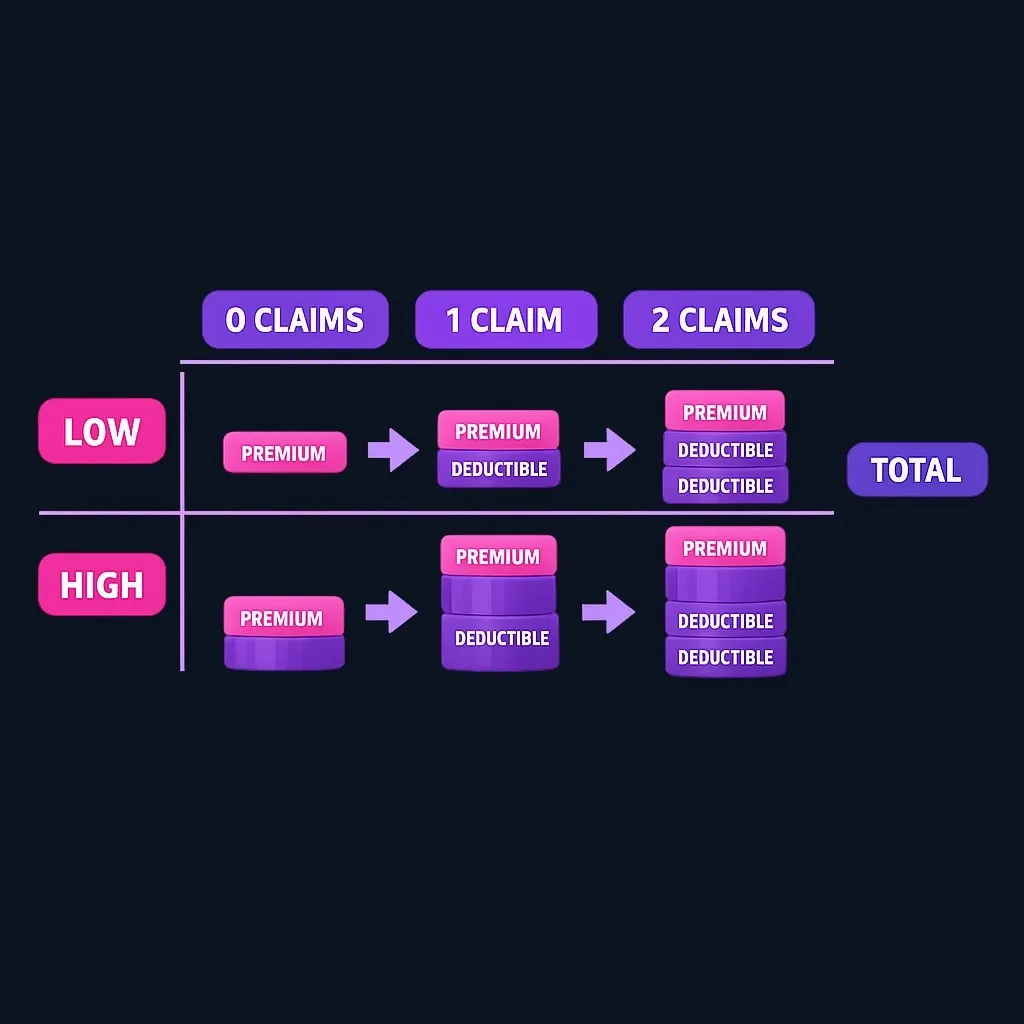
This checklist compresses tradeoffs into measurable steps you can use with real quotes.
When to choose each option
Higher deductible — consider when:
- You have an emergency fund that covers the deductible.
- You drive infrequently or in lower-risk conditions and expect few claims.
- Lower premiums are a higher priority than minimizing one-time expenses.
Lower deductible — consider when:
- You lack savings to meet a large deductible after an accident.
- Your loan or lease requires a particular deductible, or a lower deductible better fits your accessible savings.
- You drive often in high-risk conditions or have a history of frequent claims.
Decision tip: run a one- and three-year comparison: (premiums paid) + (expected deductible payments). Use insurer quotes for the premium numbers and realistic claim-frequency assumptions to see which option is likely cheaper for you.
Tradeoffs and caveats
- Per-claim application: Deductibles generally apply per claim, not per year. Multiple incidents increase cumulative out-of-pocket costs.
- Coverage scope: Deductibles typically apply to collision and comprehensive claims; confirm whether other coverages use different rules with your carrier
- Insurer variation: Carriers use different rating algorithms; the same deductible change can produce different premium changes across insurers. Always compare quotes.
- Contract obligations: Loan or lease agreements can require certain coverage levels or deductible limits—check contract terms.
- Affordability risk: Savings from a higher deductible are only helpful if you can pay the deductible when needed. If a single accident would cause material hardship, prioritize liquidity and a lower deductible.
Hypothetical scenarios: how deductibles affect claims
These hypothetical examples show how the tradeoff works; they are not market quotes or predictions.
Scenario A — Low-claim driver with savings
- Suppose a hypothetical quote lowers the annual premium from $1,200 to $900. That is a $300 saving; actual quotes may differ.
- If the premium drops from $1,200 to $900, you save $300 a year. If you have $1,000 in savings to cover the higher deductible and expect few claims, those savings may accumulate over time and justify the higher deductible.
Scenario B — Frequent commuter with tight savings
- Suppose a driver depends on the car for work and could not fund the higher deductible after a covered loss. A lower deductible may reduce that immediate burden if its premium is affordable. This example is about cash availability; it does not assign a claim probability based only on commuting.
How to run the simulation for yourself
- Request quotes for two deductibles (e.g. $250 and $1,000).
- Note the annual premium for each.
- Test zero, one, and multiple covered losses, including at least one loss below the higher deductible.
- Add the quoted premium to your share of each loss under the applicable policy. For a simple covered loss without special adjustments, that share is the smaller of the loss and the deductible.
- Compare the outcomes and whether you could meet the immediate cash need. These calculations exclude uninsured losses and later premium changes; they do not identify a guaranteed cheapest option.
What is a car insurance deductible?
It is the amount of a covered loss you bear under the policy. The insurer commonly subtracts it from the claim payment. Collision and comprehensive often have separate deductibles that generally apply per claim; check exceptions and other coverage sections.
How does a deductible affect my premium?
Insurers generally charge lower premiums when you choose a higher deductible because you assume more initial cost. Exact premium changes vary by carrier, vehicle, and driving profile—ask your agent for an estimate.
Can I change my deductible amount?
Most insurers allow changes at renewal or by request; such changes affect future premiums and how much you pay on subsequent claims. Contact your insurer or agent to confirm timing and the new premium
What if I can’t afford my deductible after an accident?
If you cannot pay the deductible immediately, contact your insurer promptly—ask how the claim payment is calculated and discuss repair-payment timing with the repairer. Do not assume the insurer will waive or finance your deductible. As a preventive step, choose a deductible that matches your emergency savings or consider a lower deductible to reduce immediate financial strain.
For home coverage, compare the different risks addressed by Flood insurance vs. homeowners insurance.
This guide covers U.S. rules. Finelo provides financial education, not personalized financial, investment, tax, or legal advice.
Financial LiteracyU.S. GuideFinancial Education
Practice trading with Finelo
Practice in a simulator, learn with bite-sized lessons, and build confidence before risking real money.
About the author
Finelo Team
The Finelo Team creates practical investing and trading education designed to help beginners learn faster with structured challenges, simulator practice, and bite-sized lessons.
Keep reading — Related articles

Financial Literacy
USDA vs. FHA loan
Compare location and income eligibility, down payments, credit conditions, and upfront and annual program charges for a home purchase.
Finelo Team

Financial Literacy
Term life vs. accidental death insurance
Compare broad term-life protection with accident-only coverage, including exclusions, underwriting, and the family income gap.
Finelo Team

Financial Literacy
Term life insurance laddering vs. one policy
Compare several term policies ending at different times with one policy, using coverage needs, costs, and future insurability.
Finelo Team


