For U.S. readers: This article discusses U.S. rules and financial products. State rules and individual eligibility may differ.
How Long Does a Charge-Off Stay on Your Credit?
A charge-off can remain on your credit report for up to seven years from the date of the first delinquency that led to the write‑off, according to federal guidance on reporting time limits FTC advisory on time limits.
7 min read
Practice trading with Finelo
Practice in a simulator, learn with bite-sized lessons, and build confidence before risking real money.
Want to learn more?
Practice in a simulator, learn with bite-sized lessons, and build confidence before risking real money.
Explore FineloExplore Finelo's 28-day challenges
Turn learning into a daily habit with guided challenge paths.
A charge-off can remain on your credit report for up to seven years from the date of the first delinquency that led to the write‑off, according to federal guidance on reporting time limits FTC advisory on time limits. Finelo provides financial education, not financial or investment advice.
Quick answer
A charge-off generally stays on your credit report for seven years from the date the account first became delinquent; after that date the negative entry should no longer be reported. This is the main timeline most lenders and reporting rules reference.
What is a Charge-Off?
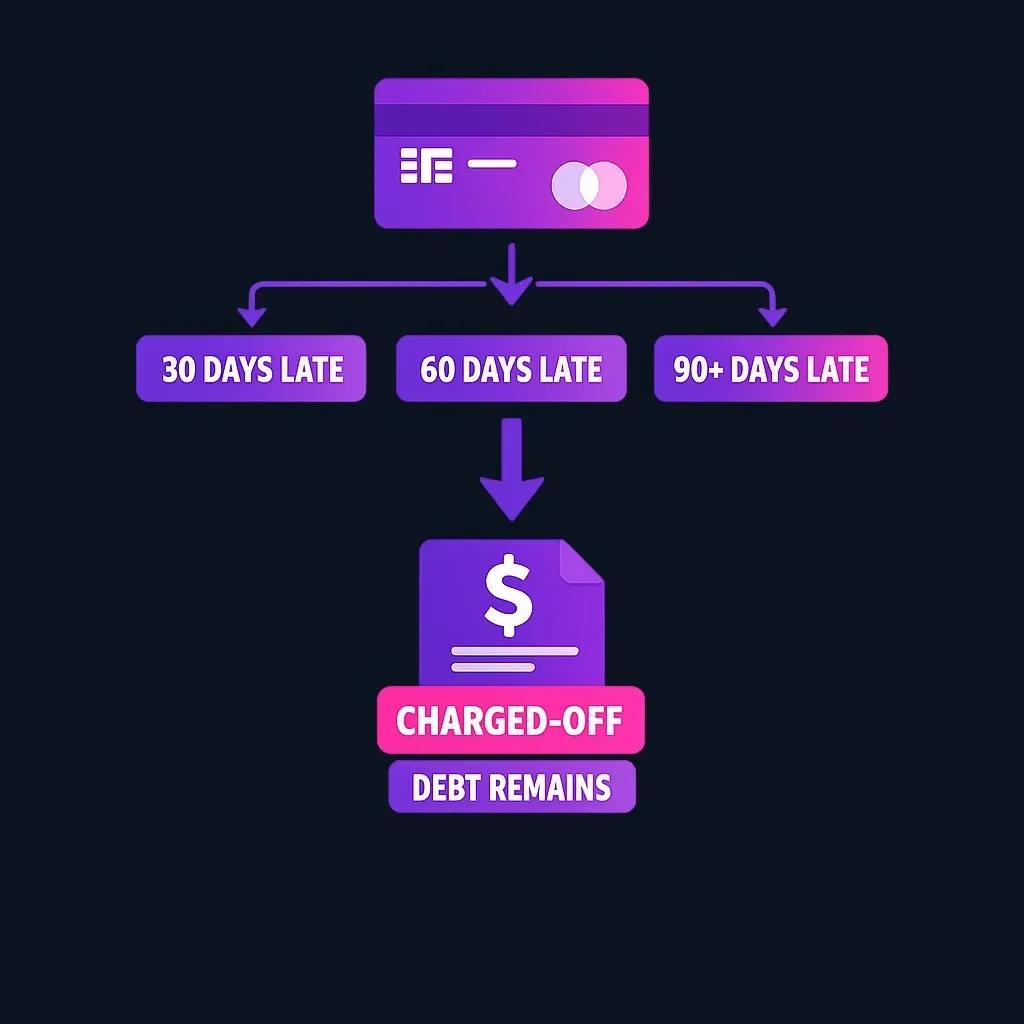
A charge-off is an accounting status a creditor uses when they conclude an account is unlikely to be repaid. It does not erase the debt — the creditor may continue collection efforts, sell the debt to a collector, or report it to credit bureaus. Lenders typically reach this point after several months of missed payments; the exact timing and internal process vary by creditor and account type. A charge-off appears as a derogatory entry on credit reports and signals that the account's payment history includes extended delinquency. That negative history, not the label itself, is what most scoring models and lenders use when evaluating creditworthiness.
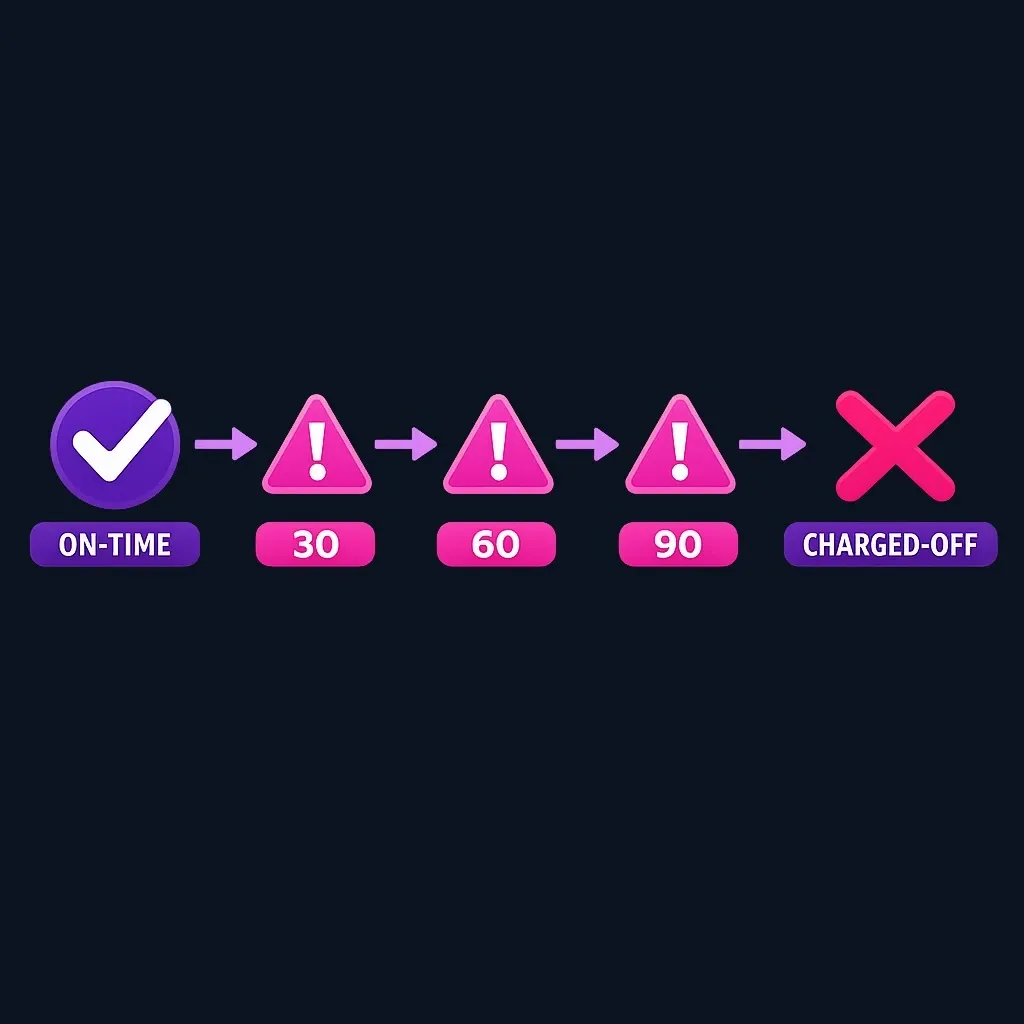
Example scenario: a credit card account becomes 30 days late, then 60, then 90+ days late. If the issuer writes the account off as a loss, they report a charge-off while you still legally owe the balance.
What to know before deciding
This article is educational, not financial or investment advice, and investing can involve loss.
Key points to keep in mind before you act:
- The seven‑year reporting limit for charge-offs is measured from the first missed payment that eventually led to the charge-off, per federal guidance.
- A charge-off and any related collection activity can remain visible to lenders and underwriters even after you pay; paid status does not automatically remove the history.
- Different lenders treat charge-offs differently: some may decline new credit when a recent charge-off appears, while others weigh more recent payment behavior and current balances.
Practical caution: because creditor policies and underwriting vary, weigh short‑term borrowing needs (rate and timing) against long‑term repair of your payment history.
Practice trading with Finelo
Practice in a simulator, learn with bite-sized lessons, and build confidence before risking real money.
Decision framework
Use this brief framework to decide whether to dispute, negotiate, or pay a charged‑off account.
Checklist (quick view)
| Goal | When to choose this | Practical first step |
|---|---|---|
| Dispute an inaccurate charge-off | You find errors (wrong account, wrong date, duplicate reporting) | Get a copy of your credit reports and gather proof (statements, account numbers) |
| Negotiate a settlement or pay‑for‑delete | Account is valid and creditor/collector is open to negotiation; you want to resolve the balance | Offer a lump sum or payment plan and get any agreement in writing before paying |
| Pay to reduce impact | You need to stop collection activity or show current responsibility | Confirm how the account will be reported after payment and get terms in writing |
Step-by-step decision flow
- Check your reports: Pull all three major credit reports to confirm how the charge‑off is reported. (Free annual reports are available through official channels; gather them before disputing or negotiating.)
- Verify accuracy: If account details, dates, or balances are wrong, prioritize a dispute and collect supporting documents.
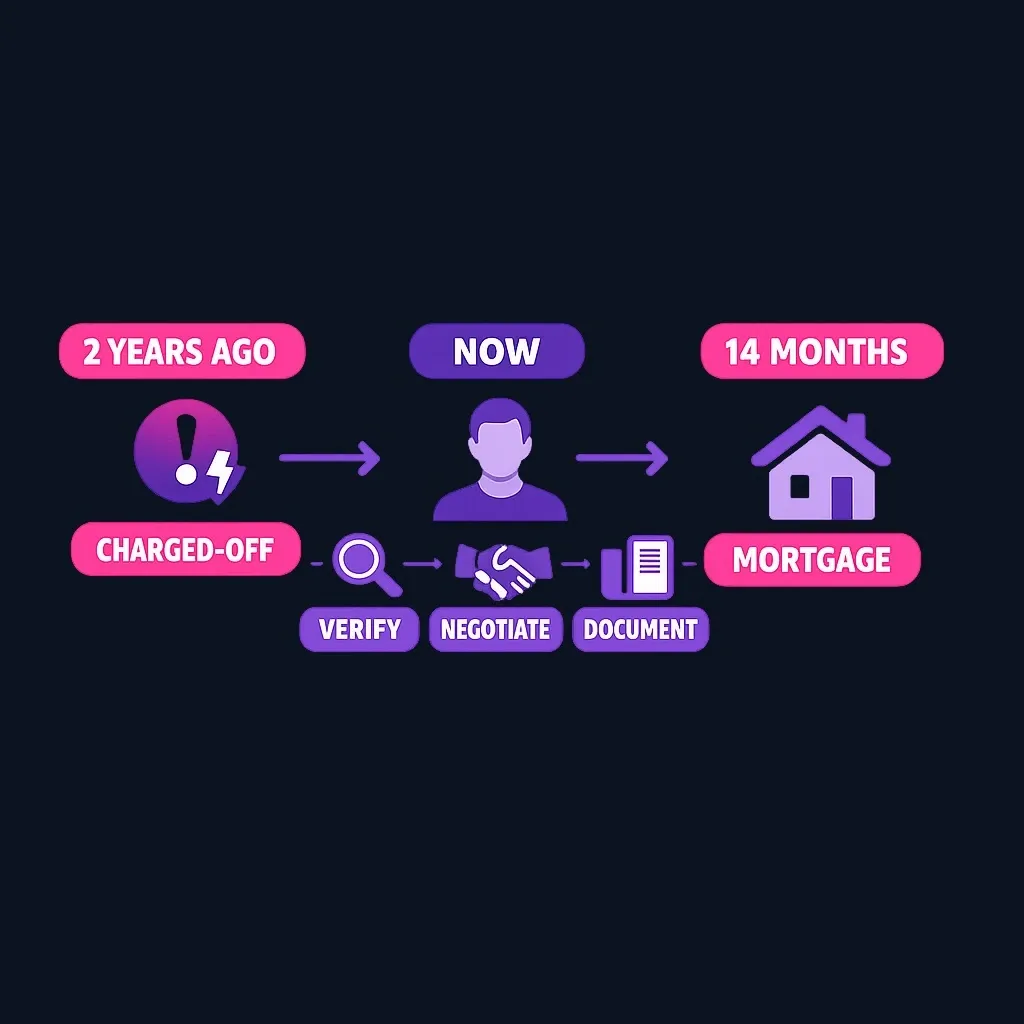
- Negotiate carefully: If the debt is valid, decide whether paying or settling improves your goals (e.g., removing collection calls, preparing to apply for a mortgage). Ask for written confirmation of any reporting changes before you pay.
- Document everything: Keep copies of disputes, communications, and settlement agreements.
Worked example
- Situation: You plan to apply for a mortgage in 14 months and have a two‑year‑old charge‑off for a small credit card balance.
- Consider: Disputing if there are errors; otherwise, negotiate a paid settlement and ask the creditor whether they will update the status to “paid” or include a consumer statement. Lenders may still see the derogatory history, so weigh whether timing and documentation will be enough for underwriting.
(Do not assume a paid charge-off is removed — always get any reporting promises in writing.)
How to Manage Charge-Offs Effectively
Tactics that help stop further harm and rebuild credit:
- Verify and monitor: Order your credit reports, confirm the charge‑off date (so you know when it will fall off), and watch for duplicate or re‑aged entries. The seven‑year reporting clock starts at the first delinquency that led to the charge‑off.
- Dispute errors: If the entry is inaccurate, file disputes with the bureaus and the creditor. Keep a record of communications and supporting documents.
- Negotiate responsibly: If the debt is valid, offer a realistic settlement or payment plan. Before making payment, request written terms that state how the account will be reported after payment. Do not rely on verbal promises.
- Rebuild credit: After resolving the charge‑off, focus on current, on‑time payments, reducing utilization on active accounts, and avoiding new derogatory marks.
Common negotiation script (short)
- State your name and account number.
- Offer an amount you can afford and ask whether the creditor will report the account as “paid in full” or remove the charge‑off upon payment.
- Request written confirmation before sending money.
Avoid these mistakes
- Paying without a written agreement on reporting changes.
- Ignoring the account because collectors may escalate actions.
- Failing to confirm the original delinquency date; knowing that date helps you estimate when the entry should drop off.
FAQ
How long does a charge-off stay on my credit report?
A charge-off can remain on your credit report for up to seven years measured from the date of the first delinquency that led to the charge‑off, according to federal reporting time‑limit guidance.
Can I dispute a charge-off?
Yes — if a charge-off is inaccurate (wrong account, wrong dates, duplicate listing), you can dispute it with the credit bureaus and the reporting creditor. Keep copies of your supporting documents and track responses.
Does paying a charge-off improve my credit score?
Paying resolves the debt and can reduce collection risk, but the original derogatory history typically remains on your report until the reporting time limit elapses. How much your score improves depends on your overall credit profile and the scoring model used.
What is the difference between a charge-off and a collection?
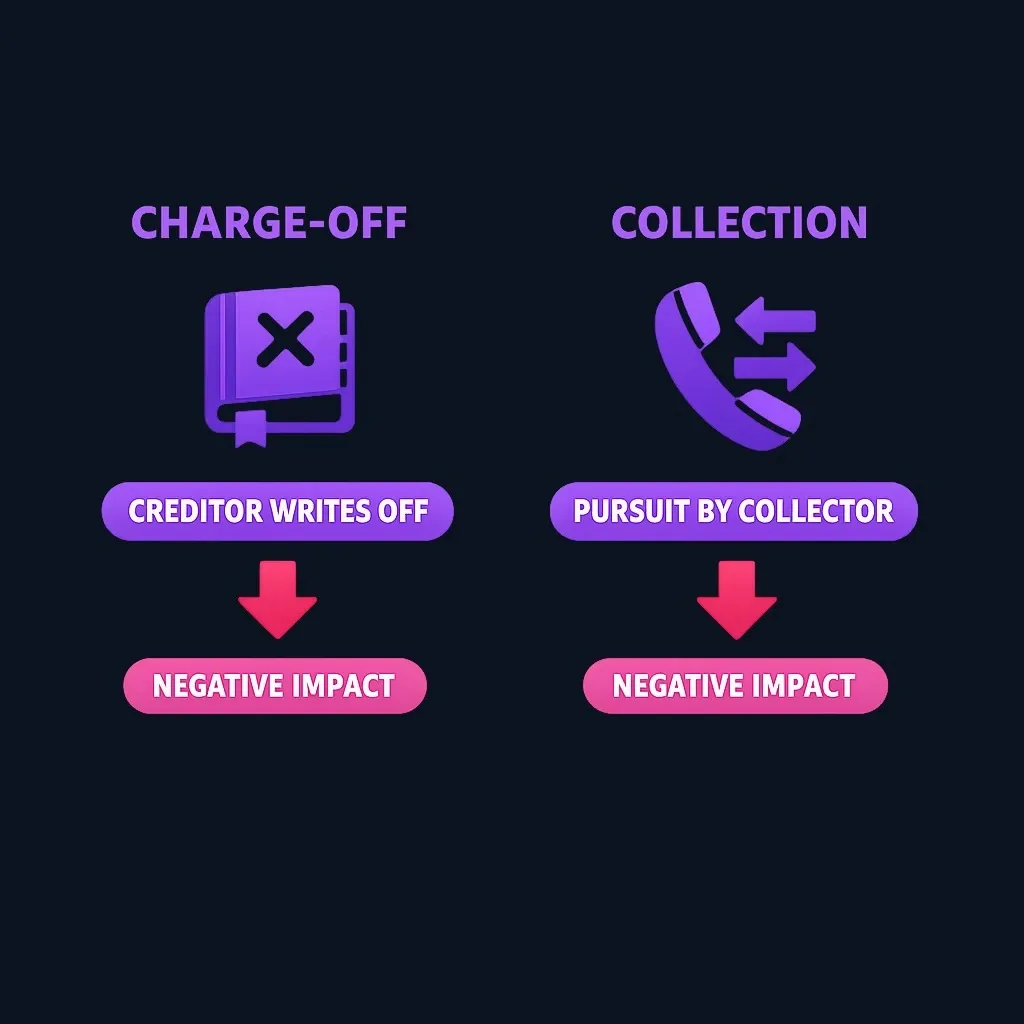
A charge-off is an accounting designation the creditor uses to mark a debt as unlikely to be repaid; a collection entry often appears when the original creditor or a third‑party collector actively reports that they are pursuing the debt. Both are negative, but they reflect different stages of creditor action.
Conclusion
Charge‑offs are serious because they become a long‑lasting negative item on your credit reports, typically for up to seven years from the first delinquency. Your next steps are to verify the entry, decide whether to dispute or negotiate, and focus on rebuilding through timely payments and lower utilization. For a practical starting point and more consumer resources, visit Finelo: Finelo Blog.
Financial LiteracyFinancial Education
Practice trading with Finelo
Practice in a simulator, learn with bite-sized lessons, and build confidence before risking real money.
About the author
Finelo Team
The Finelo Team creates practical investing and trading education designed to help beginners learn faster with structured challenges, simulator practice, and bite-sized lessons.
Keep reading — Related articles

Financial Literacy
Mercury Books Review 2026: Is It Worth It for Startups?
Mercury Books brings double-entry accounting into Mercury. Review its $35 pricing, reports, AI features, integrations, and migration limits.
Finelo Team

Financial Literacy
Why is My FICO Score Lower Than My Credit Score?
Example takeaway: seeing a higher score in a bank app doesn’t guarantee lenders will see the same FICO number at application time; lenders often pull a specific FICO version from a specific bureau.
Finelo Team

Financial Literacy
Why Is My FICO Score Higher Than My Credit Score?
Brief educational note: this article is educational, not financial or investment advice; investing and credit decisions involve risk and possible loss.
Finelo Team