For U.S. readers: This article discusses U.S. rules and financial products. State rules and individual eligibility may differ.
How Long Does Chapter 13 Bankruptcy Stay on Your Credit Report?
A Chapter 13 bankruptcy is typically removed from standard consumer credit reports seven years after the filing date.
9 min read
Practice trading with Finelo
Practice in a simulator, learn with bite-sized lessons, and build confidence before risking real money.
Want to learn more?
Practice in a simulator, learn with bite-sized lessons, and build confidence before risking real money.
Explore FineloExplore Finelo's 28-day challenges
Turn learning into a daily habit with guided challenge paths.
Quick answer
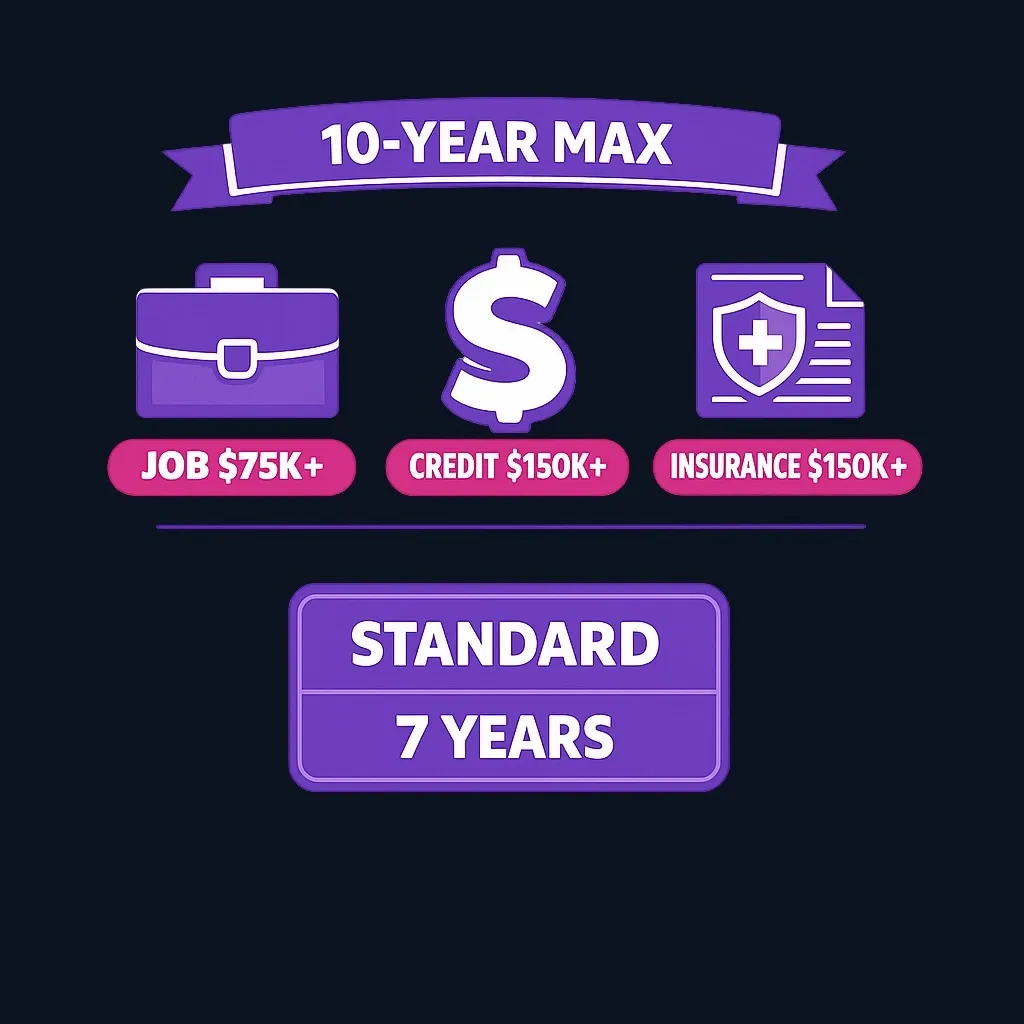
A Chapter 13 bankruptcy is typically removed from standard consumer credit reports seven years after the filing date. Federal law permits bankruptcy information to be reported for as long as 10 years, however, and limited high-value credit, insurance, or employment reports can be subject to different reporting exceptions.
The distinction between the legal maximum and ordinary industry practice explains why official sources can appear to give different answers. The CFPB's current credit-rebuilding guide lists seven years for Chapter 13 and 10 years for Chapter 7. Its separate bankruptcy-reporting answer explains that bankruptcy information can remain for up to 10 years under federal law.
Finelo provides financial education, not legal, credit-repair, financial, or investment advice. A bankruptcy attorney or qualified consumer-law attorney can interpret a disputed report and the facts of a particular case.
Why the answer is usually seven years—but not always
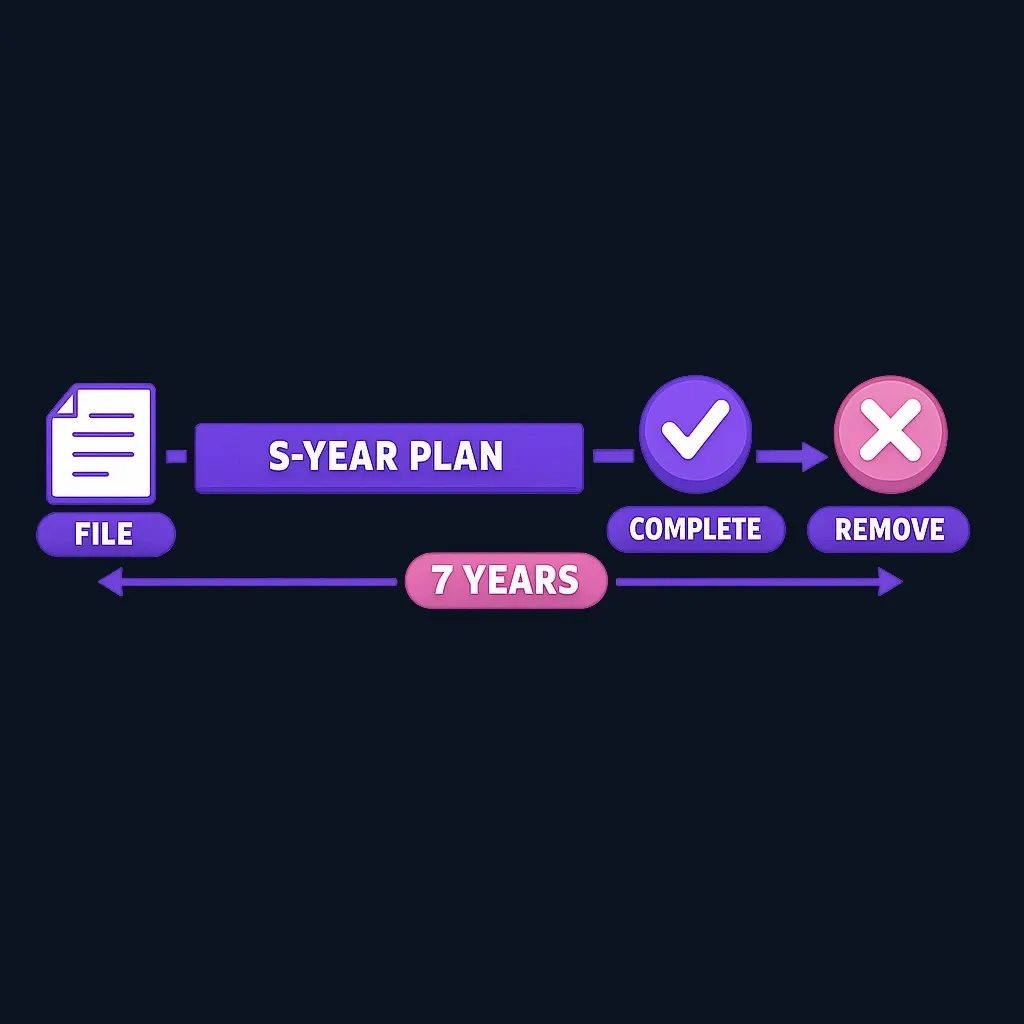
Chapter 13 uses a court-approved repayment plan that generally lasts three to five years. Credit reporting companies commonly remove a Chapter 13 public-record entry seven years from the date the case was filed, including when the plan itself ends later.
The Fair Credit Reporting Act creates the broader outer limit. Several federal bankruptcy courts explain that the Act permits a bankruptcy case to be reported for up to 10 years, while Chapter 13 cases are typically removed after seven. See the U.S. Bankruptcy Court for the Central District of California's credit-report guidance.
Use this framework:
| Question | Practical answer |
|---|---|
| What date normally starts the Chapter 13 reporting period? | The filing date, not the discharge date |
| When is Chapter 13 typically removed from an ordinary report? | Seven years after filing |
| What is the general federal maximum for bankruptcy information? | Up to 10 years |
| Does completing the repayment plan immediately erase the entry? | No; discharge and credit-report removal are separate events |
| Can accurate information be removed just because it is harmful? | Generally no; disputes are for inaccurate, incomplete, or unverifiable information |
Because the reporting period starts at filing, a person who completes a five-year plan may have roughly two years remaining before the ordinary seven-year removal point. That is an illustration, not a guaranteed schedule for a particular report.
Filing date, discharge date, and dismissal date
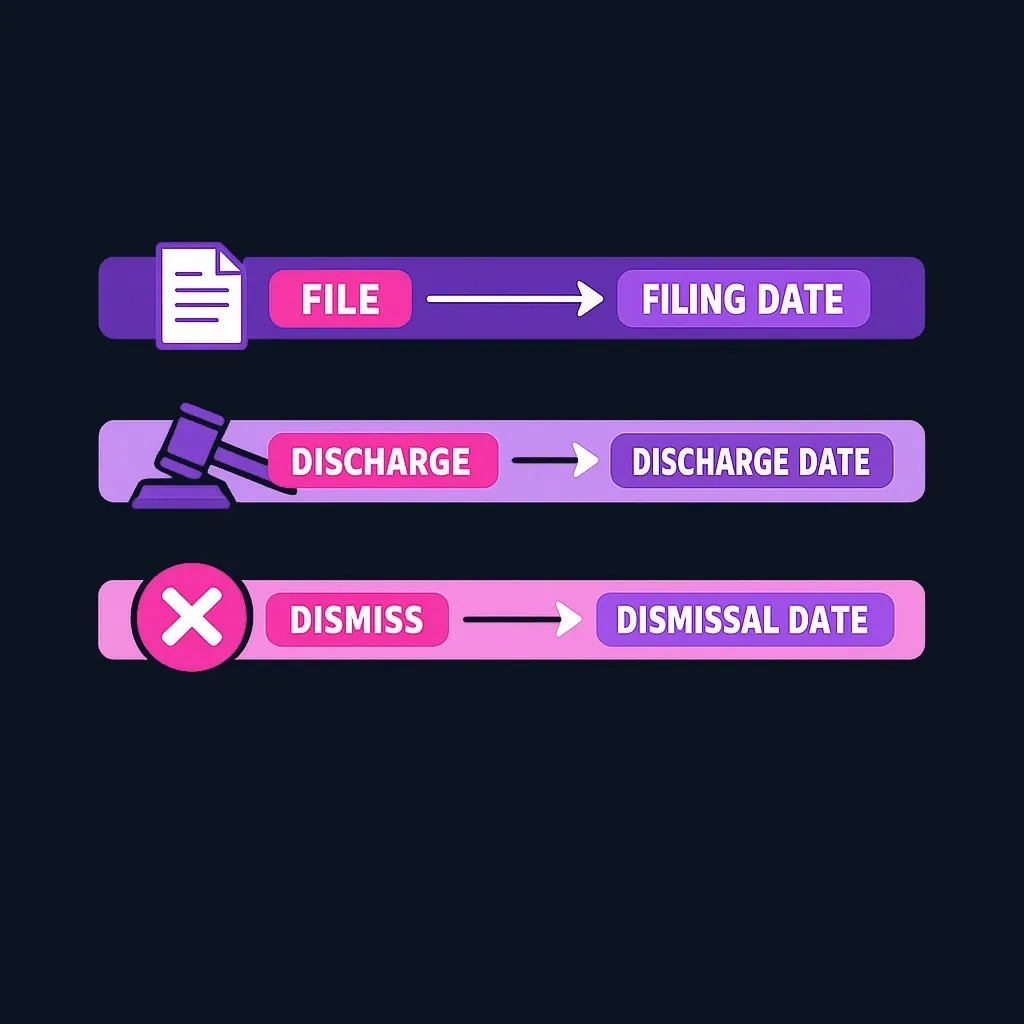
These dates describe different events:
- Filing date: the date the bankruptcy petition opened the case. This is ordinarily the date used to measure the reporting period.
- Discharge date: the date the court releases the debtor from personal liability for qualifying debts after plan completion or another applicable event.
- Dismissal date: the date a case ends without a discharge. A dismissal does not erase the historical fact that the petition was filed.
Credit reports sometimes display more than one date. Do not assume the latest date restarts the bankruptcy reporting period. Compare the entry with the court docket and the original filing date.
The federal judiciary explains that bankruptcy courts do not report cases to consumer reporting companies and do not validate credit-report entries. Bankruptcy filings are public records that reporting companies can collect. The U.S. Courts page on bankruptcy case records and credit reporting directs consumers to the reporting companies, the FTC, and the CFPB for report disputes.
How to calculate the expected removal point
Start with the petition filing date shown on the court record.
Illustrative example:
- Chapter 13 filing date: June 15, 2021
- Typical seven-year point: June 15, 2028
- General 10-year legal maximum: June 15, 2031
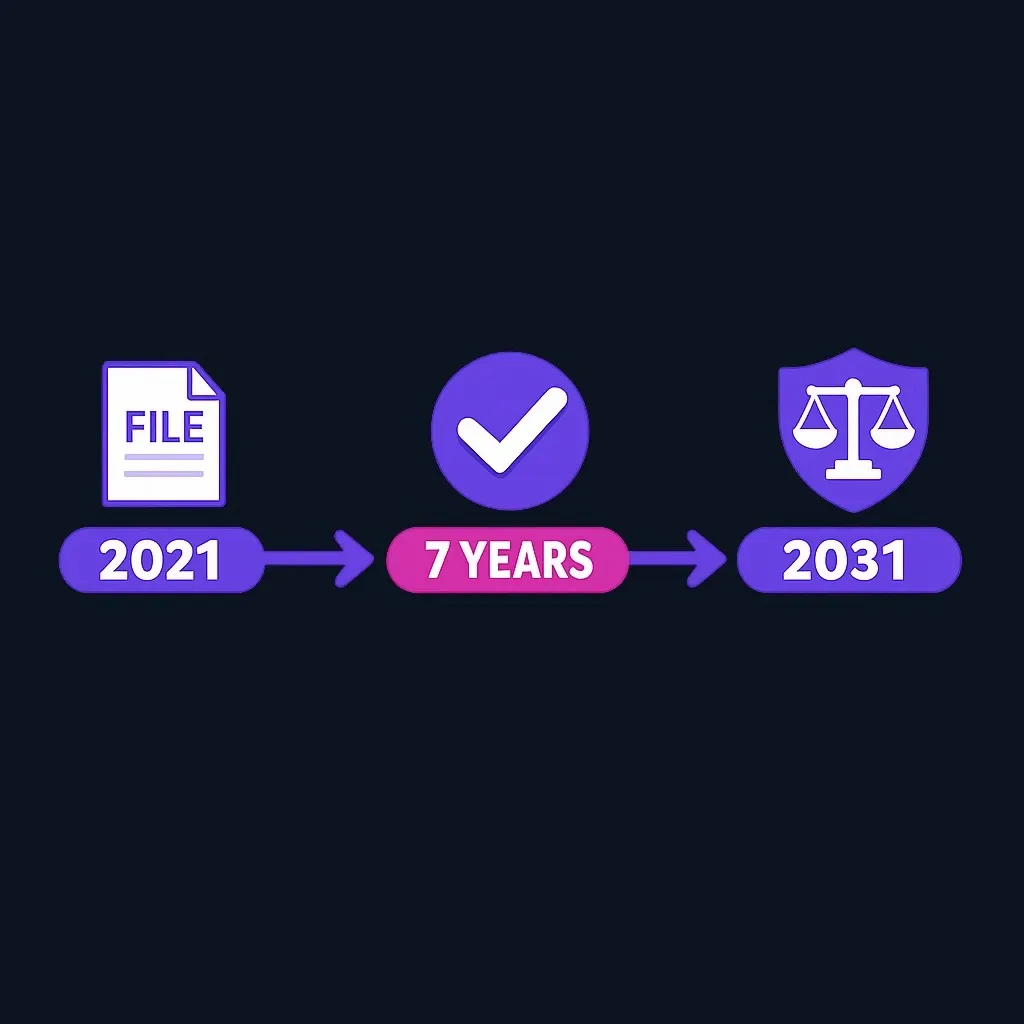
The example does not promise removal on a particular day. Reporting-company processing, the status and accuracy of the entry, and a report's permitted purpose can affect what a consumer sees.
Individual debts included in the bankruptcy can also have their own account-level reporting dates. The public-record entry and each tradeline should be reviewed separately. A discharged account should not continue to show an amount currently due in a way that misstates the consumer's liability, but the historical delinquency and bankruptcy notation may remain for the applicable period.
What to do if the entry appears wrong
Check reports from all three nationwide credit reporting companies through AnnualCreditReport.com, the federally authorized source. An entry can be correct on one report and inaccurate on another.
Compare each report with:
- the bankruptcy petition or notice of filing;
- the case number and chapter;
- the court and filing date;
- any conversion, dismissal, or discharge order; and
- account statements or creditor records relevant to disputed tradelines.
If information is inaccurate, dispute it with both the credit reporting company and the organization that furnished it. The CFPB's credit-report dispute guide explains what to include and links to current contact methods.
A focused dispute identifies the precise error—for example, the wrong consumer, chapter, filing date, case status, balance, or duplicate entry—and attaches copies rather than original documents. Keep the dispute, attachments, delivery confirmation, and response.
Do not dispute an accurate bankruptcy solely in the hope that a reporting company will fail to verify it. A blanket dispute can obscure a genuine error, and no legitimate credit-repair service can guarantee removal of accurate information.
Practice trading with Finelo
Practice in a simulator, learn with bite-sized lessons, and build confidence before risking real money.
What if the bankruptcy is still present after seven years?
First, determine whether the report is an ordinary consumer report and whether the seven years have been measured from the filing date. Then check whether the case information is accurate and whether the reporting company is relying on the 10-year federal maximum rather than the common seven-year Chapter 13 practice.
If the entry is accurate but remains between years seven and 10, ask the reporting company to explain its reporting basis. If the entry is inaccurate or remains beyond the applicable period, submit a documented dispute. Consumers can also submit a complaint through the CFPB after first attempting to resolve the problem with the company.
Certain reports connected with a job paying more than $75,000 or with credit or life insurance of more than $150,000 can fall under federal exceptions to the ordinary time limits. The CFPB describes these exceptions in its current explanation of how long information stays on a credit report. State law may add protections.
How Chapter 13 affects credit before removal
A bankruptcy is a major negative event, but its presence does not produce the same score change for every person. Credit scores depend on the full report, the model used, and the information available at the time of calculation.
During and after a Chapter 13 case:
- plan payments and other obligations should be tracked carefully;
- any new borrowing may require trustee or court approval, depending on the case and local procedure;
- accounts included in bankruptcy should be reviewed for accurate status and balances;
- older negative information generally has less scoring influence than newer information, but the effect is model-specific; and
- removal of the public-record entry does not guarantee a particular score increase or lending outcome.
Avoid taking out a product solely to “build credit” without reviewing its fees, rate, affordability, and any bankruptcy-case restrictions. Low-risk steps include monitoring reports, correcting errors, maintaining a workable budget, and paying ongoing obligations on time.
Common misconceptions
“Chapter 13 always stays for 10 years”
Federal law permits bankruptcy reporting for up to 10 years, but standard guidance commonly lists Chapter 13 at seven years. State the legal ceiling and typical practice separately.
“The seven years begin at discharge”
The reporting period is ordinarily tied to the filing date. A discharge later in the case does not normally start a new seven-year period.
“Completing the plan removes the bankruptcy immediately”
Completion can lead to discharge, but discharge and credit-report removal are different processes.
“A credit-repair company can delete a correct filing”
Accurate negative information generally cannot be removed merely because it is unfavorable. Consumers can dispute errors directly without paying a company.
FAQ
How long does a completed Chapter 13 stay on a credit report?
It is typically removed seven years after the original filing date, not seven years after discharge. Federal law allows bankruptcy information to be reported for up to 10 years, so verify the actual report and its purpose.
Does a dismissed Chapter 13 disappear immediately?
No. A dismissal ends the case without the same discharge outcome, but it does not erase the historical filing. The entry must still be accurate about the case status.
Can the bankruptcy court remove an item from my credit report?
Bankruptcy courts generally do not report to or control consumer reporting companies. Obtain court records from the clerk or PACER if needed, then address reporting errors with the reporting company and furnisher.
Can I remove a correct Chapter 13 before the reporting period ends?
There is generally no right to delete accurate bankruptcy information early. A dispute is appropriate when the entry is not yours, contains the wrong chapter or date, duplicates another entry, misstates the case status, or otherwise is inaccurate or unverifiable.
Will my credit score rise as soon as the bankruptcy disappears?
It may change, but no specific increase is guaranteed. Other accounts, balances, payment history, inquiries, and the scoring model still influence the result.
Bottom line
For an ordinary consumer credit report, the practical answer is usually seven years from the Chapter 13 filing date. The legal framework allows bankruptcy information for up to 10 years, and limited report-purpose exceptions may apply. Review the actual report, compare it with court records, and dispute concrete inaccuracies rather than relying on automatic-removal promises.
For more educational material on credit reports, budgeting, and long-term financial planning, visit the Finelo Blog.
Financial LiteracyFinancial Education
Practice trading with Finelo
Practice in a simulator, learn with bite-sized lessons, and build confidence before risking real money.
About the author
Finelo Team
The Finelo Team creates practical investing and trading education designed to help beginners learn faster with structured challenges, simulator practice, and bite-sized lessons.
Keep reading — Related articles

Financial Literacy
Mercury Books Review 2026: Is It Worth It for Startups?
Mercury Books brings double-entry accounting into Mercury. Review its $35 pricing, reports, AI features, integrations, and migration limits.
Finelo Team

Financial Literacy
Why is My FICO Score Lower Than My Credit Score?
Example takeaway: seeing a higher score in a bank app doesn’t guarantee lenders will see the same FICO number at application time; lenders often pull a specific FICO version from a specific bureau.
Finelo Team

Financial Literacy
Why Is My FICO Score Higher Than My Credit Score?
Brief educational note: this article is educational, not financial or investment advice; investing and credit decisions involve risk and possible loss.
Finelo Team