For U.S. readers: This article discusses U.S. rules and financial products. State rules and individual eligibility may differ.
How Long to Keep Tax Returns After Death: A Comprehensive Guide
Legal and practical limits: statutes of limitation (audit windows), probate timelines, and creditor deadlines determine how long you may need records.
8 min read
Practice trading with Finelo
Practice in a simulator, learn with bite-sized lessons, and build confidence before risking real money.
Want to learn more?
Practice in a simulator, learn with bite-sized lessons, and build confidence before risking real money.
Explore FineloExplore Finelo's 28-day challenges
Turn learning into a daily habit with guided challenge paths.
Quick answer
Keep a deceased person’s tax returns and supporting records until their final tax return is filed, the estate and probate (if any) are settled, and any audit or creditor windows have passed. The IRS warns that you may need to file tax returns for years before the year of death when required File the final income tax returns of a deceased person. Finelo provides financial education, not financial or investment advice.
What to know before deciding
Why you retain records: tax returns prove income, deductions, and withholding; they support estate settlement, creditor claims, and survivor benefit applications. They also serve as evidence if the IRS questions prior filings. The Iceberg risk: even after a death, identity theft and delayed creditor claims can surface months or years later, so records sometimes matter long after probate ends.
Legal and practical limits: statutes of limitation (audit windows), probate timelines, and creditor deadlines determine how long you may need records. These limits vary by jurisdiction and situation. If a deceased person did not file required returns for earlier years, executors or representatives may need to file those returns, per the IRS guidance linked above. Educational note: this article is for information and planning. It is not legal or tax advice. Consult a qualified attorney or tax professional about specific deadlines and state rules.
Decision framework
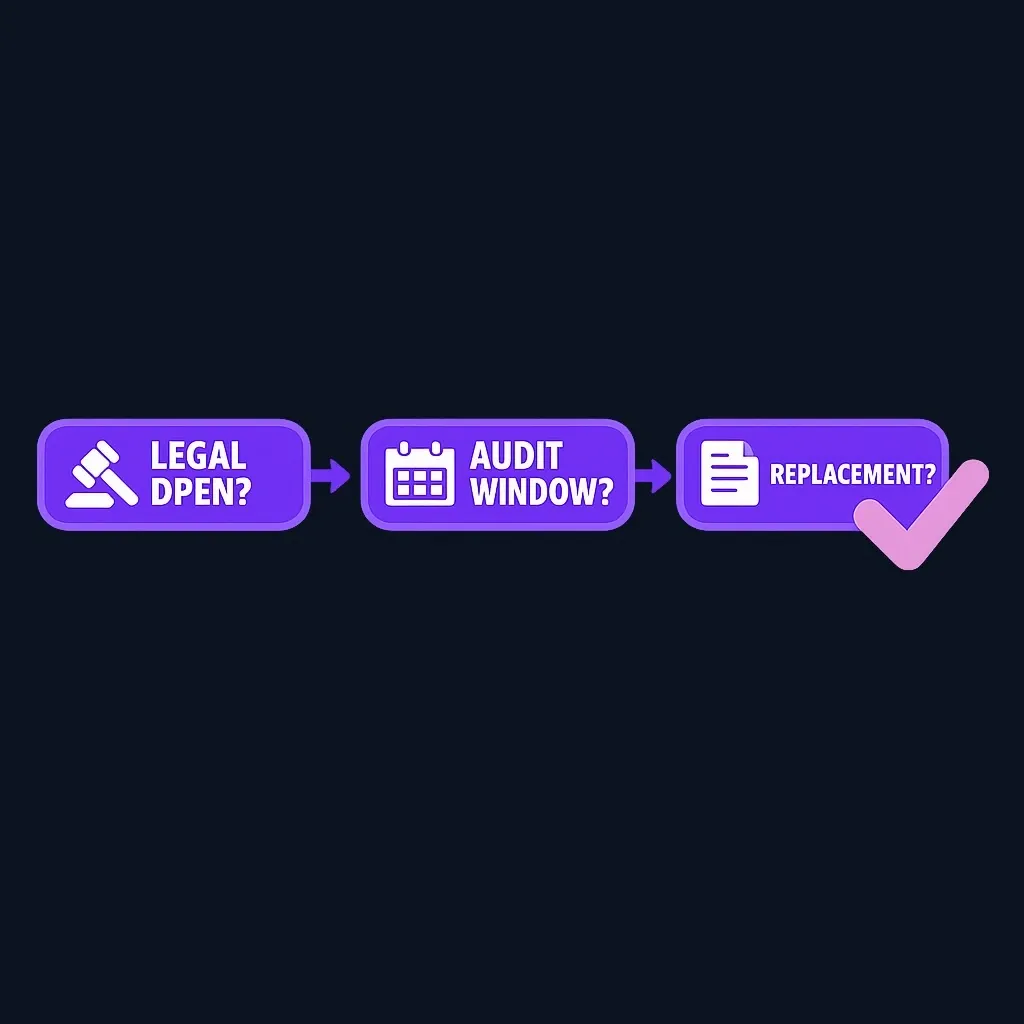
Use this three-step framework to decide how long to keep each document:
-
Confirm whether a legal process is open.
- If probate, trust administration, or estate accounting is active, keep documents until the process concludes and all distributions and creditor claims are resolved.
-
Identify tax and audit exposure.
- Keep records that relate to filed returns until audit windows and refund/credit reclaims are closed (see step 3 for common triggers).
-
Apply replacement and re-use potential.
- If a document will be needed to replace lost originals (e.g., to get a death certificate or claim benefits), keep it until authorities and institutions have accepted replacements.
Practical checklist (quick use)
- Is there an open probate or trust administration? If yes, keep until it closes.
- Have all tax returns for prior years been filed? If not, retain at least until filing and any resulting communications finish.
- Will the document be used to prove identity, ownership, or benefits? If yes, keep longer or make certified copies.
Documents to keep indefinitely
Documents to Keep Indefinitely
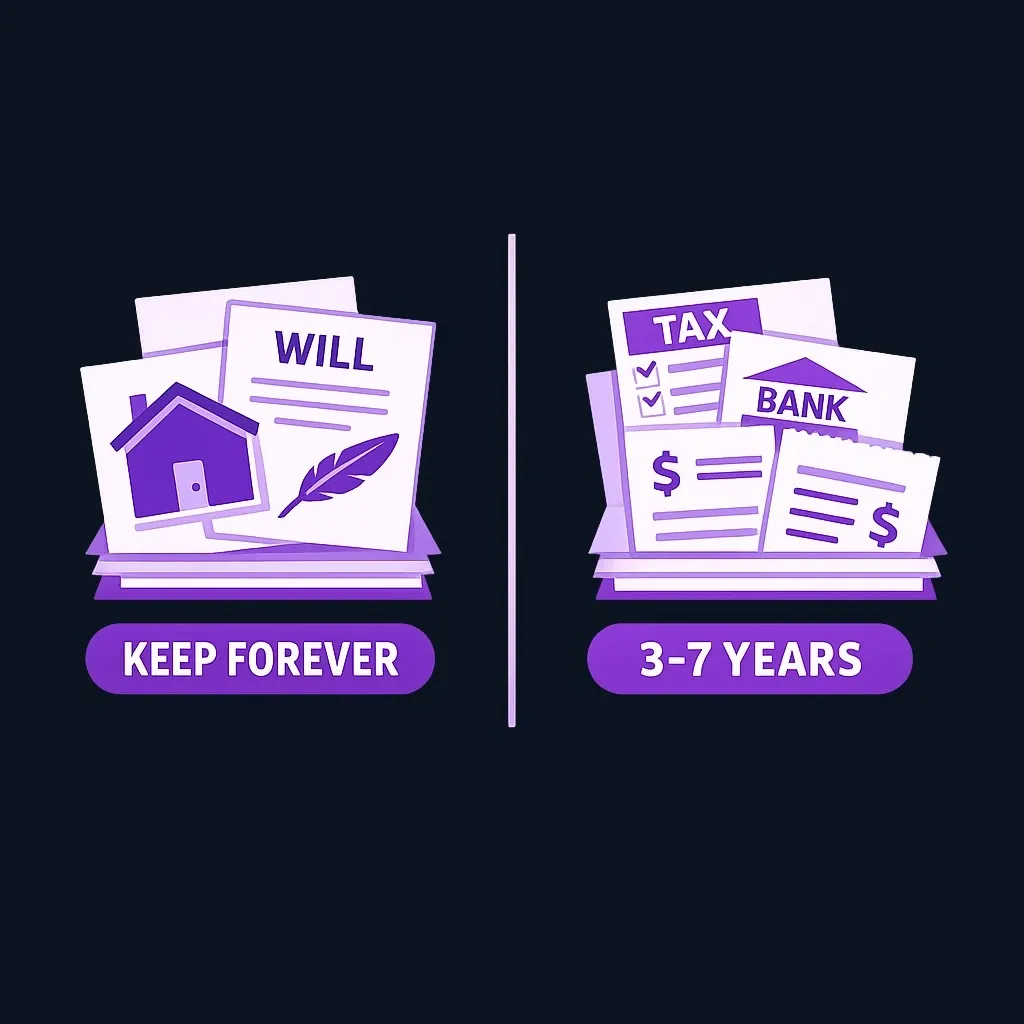
Some records are commonly kept permanently or kept as long as relevant property or beneficiary rights exist. These documents create long-term legal proof of identity, ownership, and estate planning intent.
Core documents to retain indefinitely
- Original will and any codicils, plus proof of where the will is filed.
- Deeds, property titles, and closing statements for real estate ownership.
- Trust documents and trustee records while the trust remains in effect.
- Marriage certificates, divorce decrees, and adoption papers that affect inheritance or beneficiary status.
- Death certificates (keep multiple certified copies — many institutions require them).
- Records of significant lifetime gifts, major transactions, or legal settlements that affect estate basis or ownership.
Why indefinite retention matters
These documents establish long-term ownership and beneficiary rights. If you transfer or sell property later, or questions about title or beneficiary entitlement arise, originals or certified copies will be required. For peace of mind, scan and store certified copies securely and keep the originals or a trusted custodian.
Documents to Keep for 3-7 Years
Documents to Keep for 3-7 Years
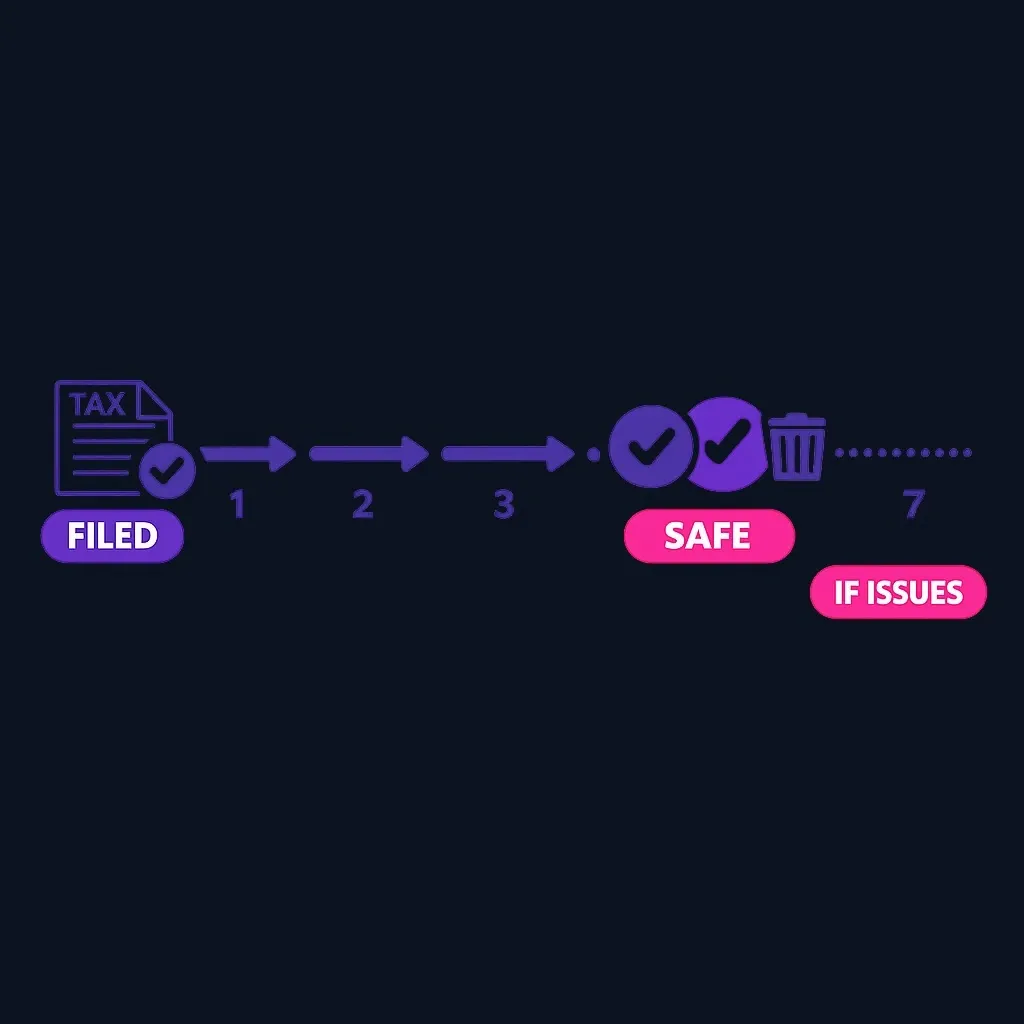
Many advisors group a large class of documents into a medium-term retention window — often described as roughly three to seven years — because that timeframe commonly covers audit and statute-of-limitation risks in practice. If you are uncertain, use the decision framework above and confirm with a tax professional.
Which records typically fall here
- Federal and state income tax returns (copies) and supporting records for the years relevant to the returns.
- Bank statements, canceled checks, and brokerage records supporting tax positions.
- Records of deductible expenses, charitable gifts, and business income or losses.
- Receipts or records for property improvements that affect basis (retain until property is sold or longer if taxes for the sale are still possible).
How to apply the range to your case
- If a tax return was filed and no issues are expected, many people keep the return and supporting documents until any audit/appeal window closes.
- If returns for prior years were not filed at death, keep supporting records until those returns are completed and any resulting communications finish; the IRS expressly notes you may have to file earlier-year returns when required.
- When in doubt, favor caution: keeping electronic copies or certified scans is a low-cost way to preserve evidence while reducing physical clutter.
Special Considerations for Document Retention
Practice trading with Finelo
Practice in a simulator, learn with bite-sized lessons, and build confidence before risking real money.
Special Considerations for Document Retention
State rules, probate, and creditor claims
State probate procedures and creditor notice laws can extend how long records should be kept. Probate timelines vary; some estates close quickly, others take months or years. Check local probate court guidance or consult an estate attorney for state-specific retention triggers.
Digital accounts and passwords
Digital assets — email, cloud storage, financial portals — may contain tax records or account statements. Create a secure inventory of account providers, login methods, and where documents live. Use a password manager or a sealed document (trusted executor only) to transfer access legitimately.
Replacing lost documents
If originals are missing, many agencies issue certified replacements: vital records offices provide death certificates, and financial institutions can reissue statements or produce account histories upon proper authorization. Keep copies of requests and confirmations for replaced items.
Practical Steps for Managing Documents After a Death
Practical Steps for Managing Documents After a Death
Organize and prioritize
- Gather central documents first: will, death certificate(s), bank and investment statements, and recent tax returns.
- Create a simple inventory listing each document, location, and any passwords or account access notes. Include who needs which certified copies.
Secure storage and access
- Keep originals and certified copies in a fireproof safe or bank safe-deposit box (note who has lawful access).
- Store encrypted digital copies in at least two secure locations (cloud plus local encrypted backup).
- Limit who has access; share on a need-to-know basis to reduce identity risk.
Secure disposal
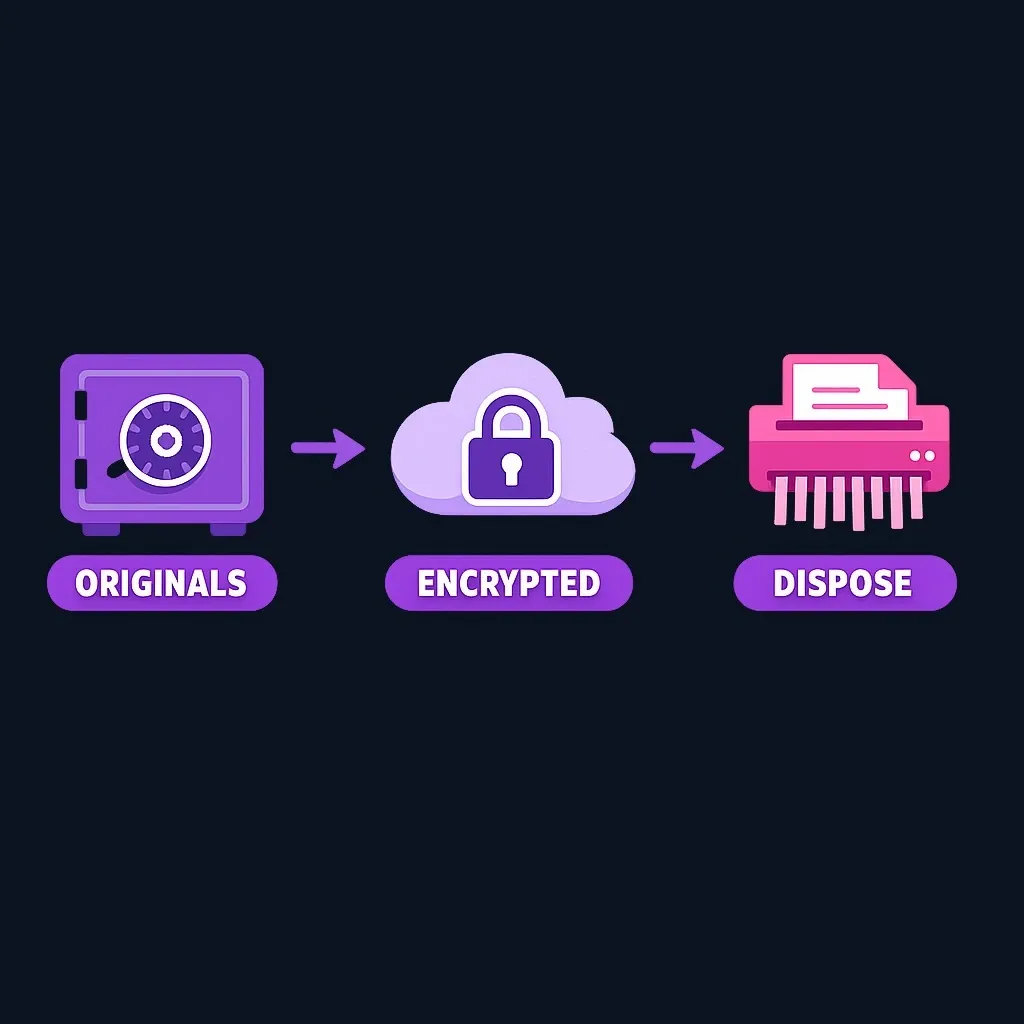
- Shred physical documents containing Social Security numbers, account numbers, or other sensitive data once you determine they are safe to discard. Use cross-cut shredding or a secure shredding service.
- For digital files, overwrite or use secure deletion tools before disposing of drives or devices.
Common Mistakes to Avoid in Document Management
Common Mistakes to Avoid in Document Management
Throwing things away too early
Discarding tax records or legal documents before probate and tax matters are final is a frequent error. Keep critical files until executors and tax professionals confirm they’re no longer needed.
Not getting multiple death certificates
Institutions commonly require original certified death certificates. Order several certified copies early; it reduces repeat requests and delays.
Keeping everything in one unprotected place
Concentrating originals in an unlocked or uninsured location risks loss, theft, or damage. Use a combination of secure physical and encrypted digital storage.
Forgetting digital assets
Failing to track online accounts or passwords creates delays and sometimes legal hurdles. Document access instructions and keep them secure but accessible to the estate’s authorized person.
FAQs About Tax Returns and Document Retention
FAQs About Tax Returns and Document Retention
How long should I keep tax returns after a death?
Keep returns until the final tax return is filed, the estate and probate are complete, and any audit or creditor windows have closed. The IRS notes that you may need to file returns for years prior to the year of death if required.
What documents should be kept indefinitely?
Keep original wills, trust documents, property deeds, and certified vital records (birth, marriage, death) as long as they have legal or title relevance. These documents often serve as permanent proof of ownership and beneficiary rights.
How do I organize documents after a loved one’s death?
Start by gathering the will, death certificates, recent tax returns, and account statements. Create an inventory, store originals securely, and make encrypted digital backups. Share access only with the executor or a designated trusted person.
What should I do if I accidentally throw away important documents?
Contact the issuer (vital records office, bank, or financial institution) as soon as possible to request replacements or certified copies. Keep a record of your requests and any confirmation communications.
Next steps
Next steps
Use the document categories above as a working inventory and print or save this page if useful. Finelo does not currently provide a separate downloadable estate-records template with this article.
Final note Keep decisions proportional to the estate’s complexity and your local legal requirements. When in doubt, preserve records until a tax or legal professional confirms they can be safely discarded.
Financial LiteracyFinancial Education
Practice trading with Finelo
Practice in a simulator, learn with bite-sized lessons, and build confidence before risking real money.
About the author
Finelo Team
The Finelo Team creates practical investing and trading education designed to help beginners learn faster with structured challenges, simulator practice, and bite-sized lessons.
Keep reading — Related articles

Financial Literacy
Mercury Books Review 2026: Is It Worth It for Startups?
Mercury Books brings double-entry accounting into Mercury. Review its $35 pricing, reports, AI features, integrations, and migration limits.
Finelo Team

Financial Literacy
Why is My FICO Score Lower Than My Credit Score?
Example takeaway: seeing a higher score in a bank app doesn’t guarantee lenders will see the same FICO number at application time; lenders often pull a specific FICO version from a specific bureau.
Finelo Team

Financial Literacy
Why Is My FICO Score Higher Than My Credit Score?
Brief educational note: this article is educational, not financial or investment advice; investing and credit decisions involve risk and possible loss.
Finelo Team