For U.S. readers: This article discusses U.S. rules and financial products. State rules and individual eligibility may differ.
How Many Times Can You Recast a Mortgage?

There is no single number that applies to every mortgage.
6 min read
Practice trading with Finelo
Practice in a simulator, learn with bite-sized lessons, and build confidence before risking real money.
Want to learn more?
Practice in a simulator, learn with bite-sized lessons, and build confidence before risking real money.
Explore FineloExplore Finelo's 28-day challenges
Turn learning into a daily habit with guided challenge paths.
Quick answer
There is no single number that applies to every mortgage. Recast availability, frequency, minimum principal reduction, fees, waiting periods, and payment-status rules come from the loan documents, investor requirements, and servicer policy. Some loans cannot be recast. Ask the current servicer for its written policy and an account-specific illustration before sending money for this purpose. Finelo provides financial education, not financial, legal, tax, or mortgage advice.
Why the answer is servicer-specific
A recast, sometimes called re-amortization, generally recalculates the required principal-and-interest payment after the balance is reduced. It normally keeps the existing note rate and scheduled maturity. Unlike refinancing, it does not replace the mortgage with a new loan.
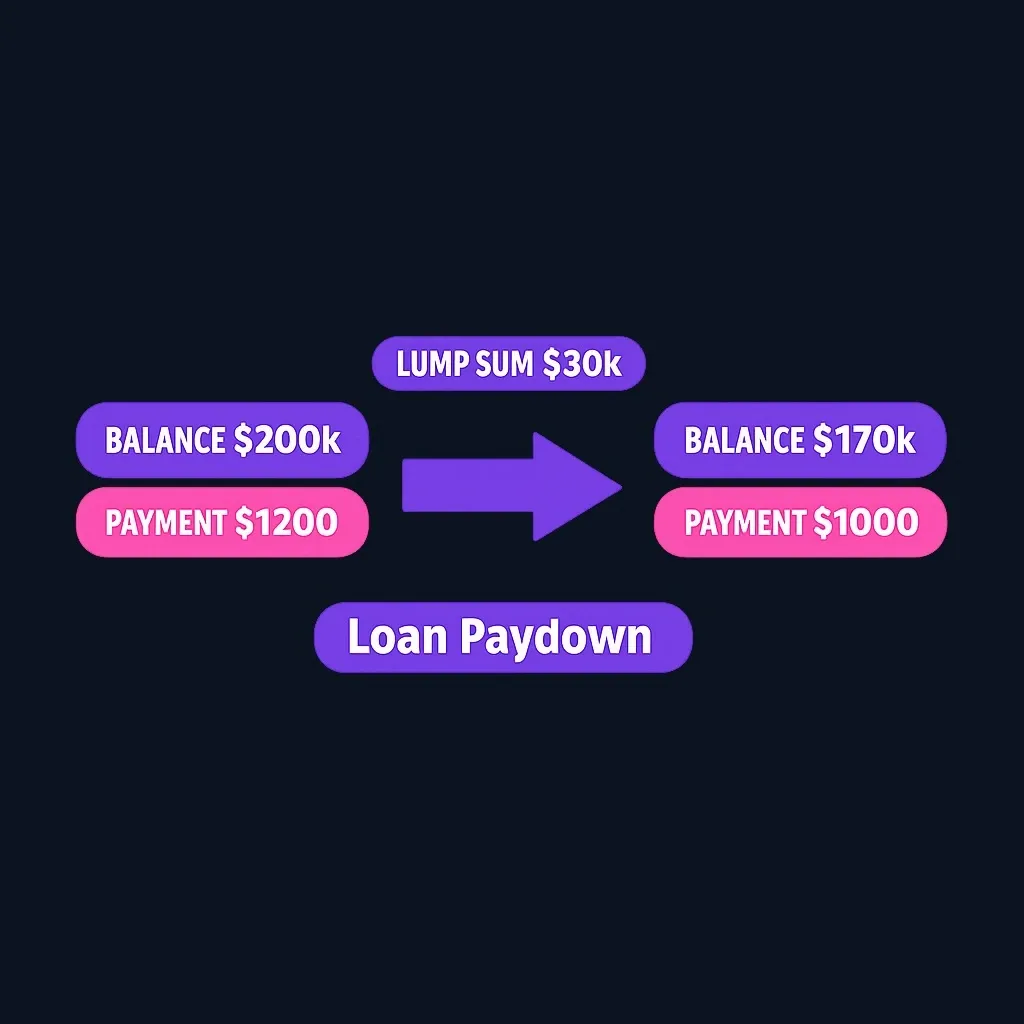
Because a recast is administered under the existing loan, the controlling questions are:
- Does the note, program, and investor allow it?
- Does the servicer offer the option for this account?
- Is the loan current and otherwise eligible?
- Is there a minimum principal payment?
- Is there a fee or waiting period?
- Is more than one recast permitted?
The answer can change if servicing transfers to another company, so an old policy statement may no longer control.
Questions to ask the servicer
Request answers in writing:
- Is this exact loan eligible for recasting?
- How many recasts are permitted during the loan term?
- Is there a waiting period between requests?
- What minimum principal reduction is required?
- What processing fee applies?
- Must the loan be current for a specified period?
- When will the new payment begin?
- Will the servicer provide the proposed amortization schedule before the request becomes final?
- Does the change affect escrow or the process for reviewing mortgage insurance?
- What happens if servicing transfers while the request is pending?
Keep the response, confirmation number, payment instructions, and final schedule.
Repeated recasts versus extra principal payments
An extra principal payment and a recast are not the same action.
- An extra payment reduces principal when properly applied, which may reduce future interest and shorten payoff if the required payment stays the same.
- A recast recalculates the required payment over the remaining schedule after a principal reduction.
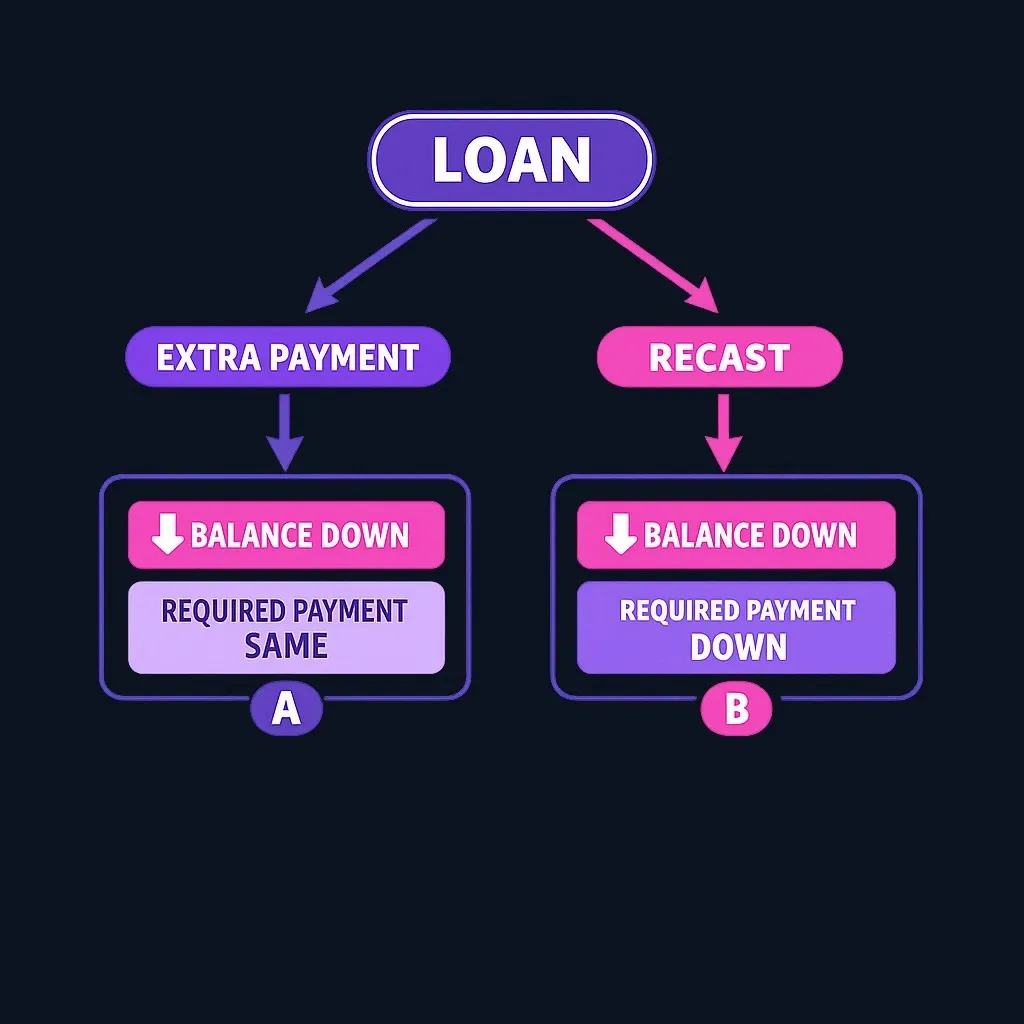
If the borrower repeatedly receives bonuses or other cash, it may be possible to make several principal payments without requesting several recasts. Whether repeated recasts add value depends on the goal, the fee, and the servicer's rules.
Evaluate the cost before repeating
For each proposed recast, record:
| Input | Why it matters |
|---|---|
| Principal payment | Cash becomes home equity and is less liquid |
| Recast fee | Repeating the process can multiply administrative cost |
| New required payment | Shows the cash-flow change |
| Existing rate and remaining term | These generally remain unchanged |
| Expected holding period | A near-term sale may limit the usefulness of another recast |
| Emergency reserves after payment | Lower liquidity can create separate financial risk |
Do not evaluate only the monthly-payment reduction. Compare remaining balance, cumulative payments, fees, and liquidity at the same future date.
Practice trading with Finelo
Practice in a simulator, learn with bite-sized lessons, and build confidence before risking real money.
Hypothetical scenarios
Two bonuses in different years
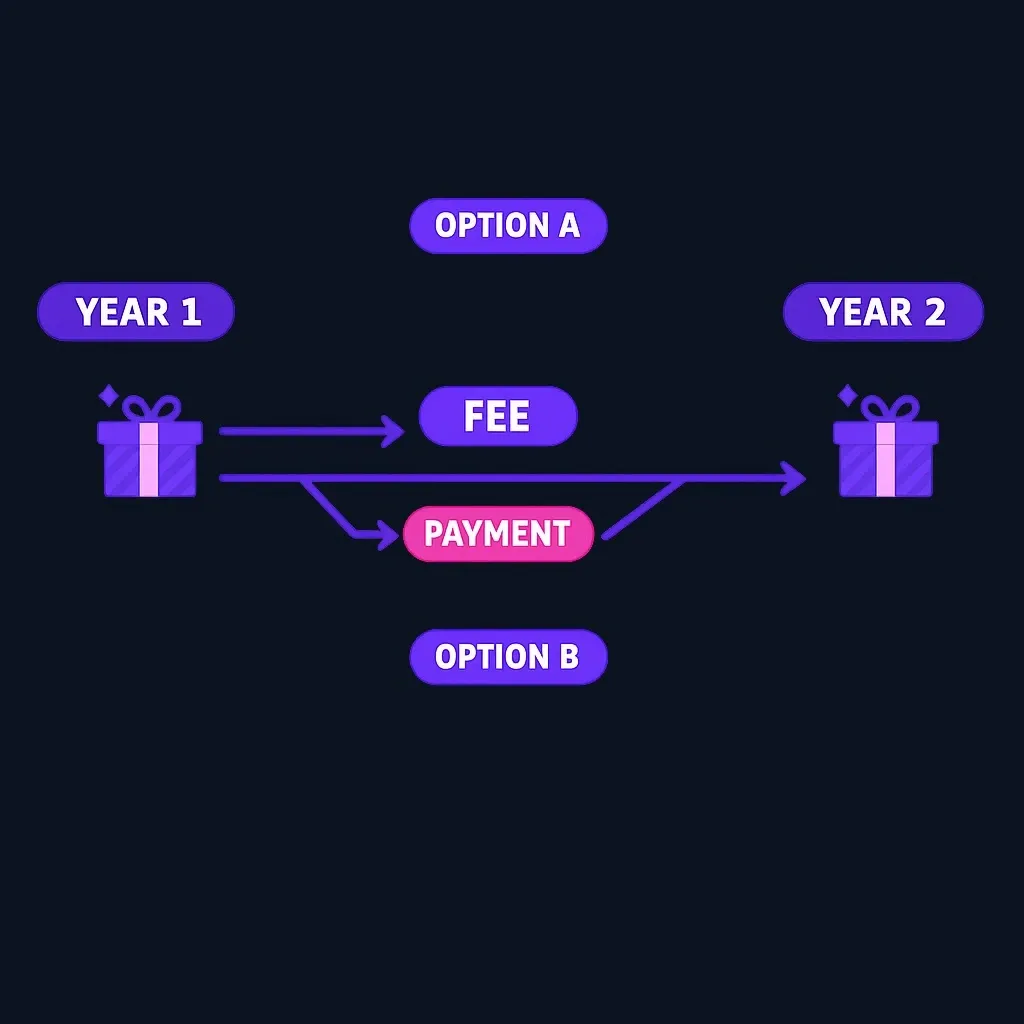
A borrower receives a bonus in each of two years. The servicer allows multiple recasts but charges a fee each time. The borrower could compare two smaller recasts with one later recast or with principal-only payments and no second re-amortization. The useful result depends on the quoted schedules and the value of earlier payment relief.
Planned sale in the near term
A borrower expects to sell soon after making a principal payment. A new lower required payment may provide only a few months of benefit before payoff. The borrower would compare that temporary cash-flow benefit with the fee and the loss of liquidity.
These examples are hypothetical and do not represent customer outcomes.
Recast, refinance, or principal-only payment?
A recast may address
- lowering the required payment while retaining the current loan rate and maturity;
- converting a past principal reduction into a lower scheduled payment; or
- reducing cash-flow pressure without new-loan underwriting, if permitted.
A refinance may address
- changing the interest rate;
- changing the loan term or type;
- adding or removing a borrower, subject to underwriting; or
- obtaining cash from equity.
A principal-only payment may address
- reducing balance and future interest without paying a recast fee; or
- accelerating payoff while keeping the existing required payment.
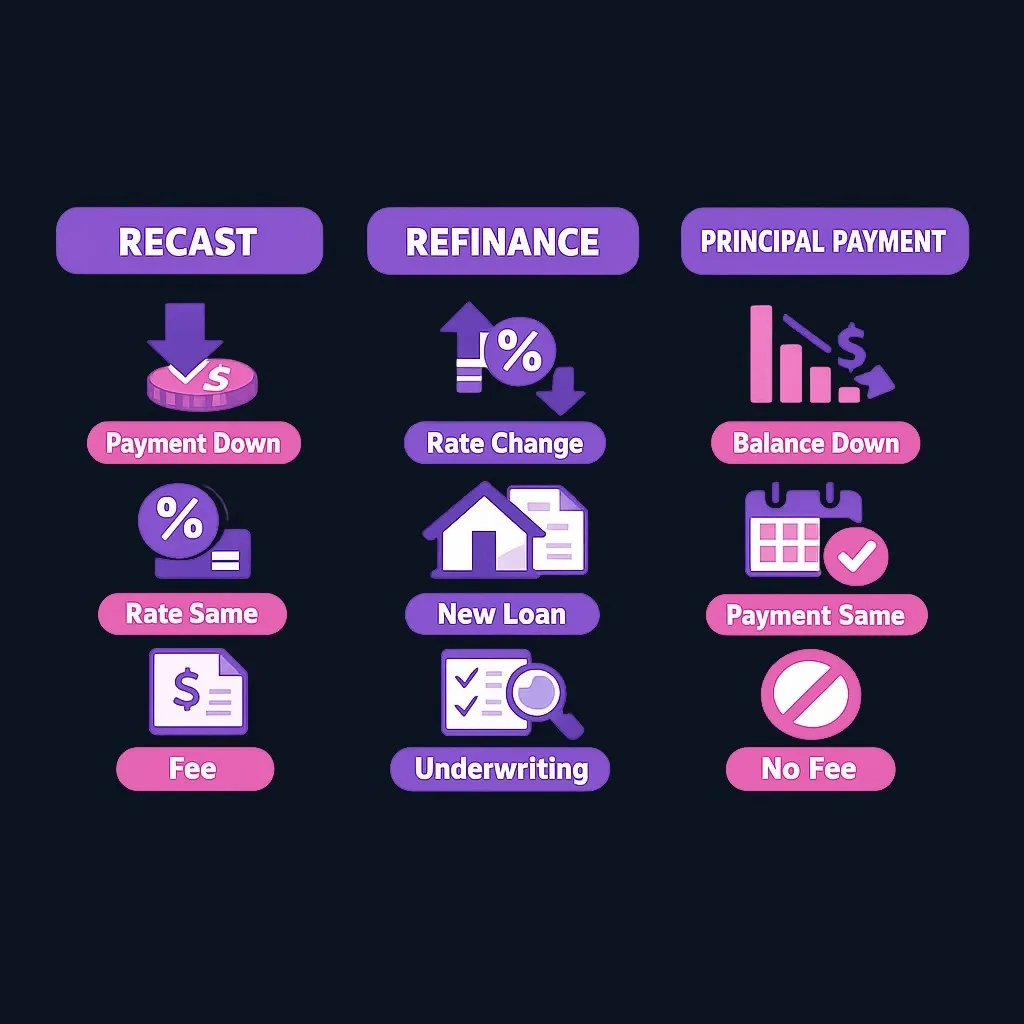
The CFPB's Loan Estimate explainer can help compare a refinance quote. The recast figures must come from the current servicer.
Common mistakes
- Assuming a large payment will automatically lower the required payment.
- Sending funds before receiving principal-payment and recast instructions.
- Assuming a prior servicer's frequency rule still applies.
- Believing a recast changes the note rate or scheduled maturity.
- Using all available cash without considering emergency reserves.
- Assuming lower principal automatically ends mortgage insurance.
- Failing to check whether the new payment includes unchanged escrow amounts.
- Comparing a recast with a refinance rate but ignoring refinance fees and term reset.
FAQ
Is there a federal limit on the number of mortgage recasts?
There is no simple universal number for all mortgages. Contract, program, investor, and servicer rules determine whether and how often a loan can be recast.
Does every mortgage qualify?
No. Eligibility differs by loan and servicer. Government-backed or specially structured loans may have restrictions, and a servicer may not offer recasting at all.
Does recasting require a credit check?
Procedures vary. Do not assume there is or is not a credit review; ask the servicer what it will do and whether any inquiry will be reported.
Does a recast remove mortgage insurance?
Not automatically. Mortgage-insurance cancellation follows separate contractual and legal rules. Ask the servicer for the current written procedure.
Conclusion
The number of permitted recasts is an account-specific fact, not an industry constant. Obtain the policy in writing, request a payment illustration, compare repeated fees and cash-flow benefits, and preserve adequate liquidity before committing principal.
For more educational mortgage and household-finance guides, visit the Finelo Blog.
Financial LiteracyFinancial Education
Practice trading with Finelo
Practice in a simulator, learn with bite-sized lessons, and build confidence before risking real money.
About the author
Finelo Team
The Finelo Team creates practical investing and trading education designed to help beginners learn faster with structured challenges, simulator practice, and bite-sized lessons.
Keep reading — Related articles

Financial Literacy
Mercury Books Review 2026: Is It Worth It for Startups?
Mercury Books brings double-entry accounting into Mercury. Review its $35 pricing, reports, AI features, integrations, and migration limits.
Finelo Team

Financial Literacy
Why is My FICO Score Lower Than My Credit Score?
Example takeaway: seeing a higher score in a bank app doesn’t guarantee lenders will see the same FICO number at application time; lenders often pull a specific FICO version from a specific bureau.
Finelo Team

Financial Literacy
Why Is My FICO Score Higher Than My Credit Score?
Brief educational note: this article is educational, not financial or investment advice; investing and credit decisions involve risk and possible loss.
Finelo Team


