For U.S. readers: This article discusses U.S. rules and financial products. State rules and individual eligibility may differ.
How Often Should You Check Your Credit Report?
Factors that should affect how often you check:
7 min read
Practice trading with Finelo
Practice in a simulator, learn with bite-sized lessons, and build confidence before risking real money.
Want to learn more?
Practice in a simulator, learn with bite-sized lessons, and build confidence before risking real money.
Explore FineloExplore Finelo's 28-day challenges
Turn learning into a daily habit with guided challenge paths.
Quick answer
Check your credit reports from each major bureau at least once a year; review them more often if you suspect fraud or before major borrowing decisions. The Consumer Financial Protection Bureau recommends checking reports at least once a year to catch errors that could affect credit access or loan terms (CFPB). Finelo provides financial education, not financial or investment advice. This article is educational and not a substitute for professional advice.
What to know before deciding
Before you set a schedule, understand two basics:
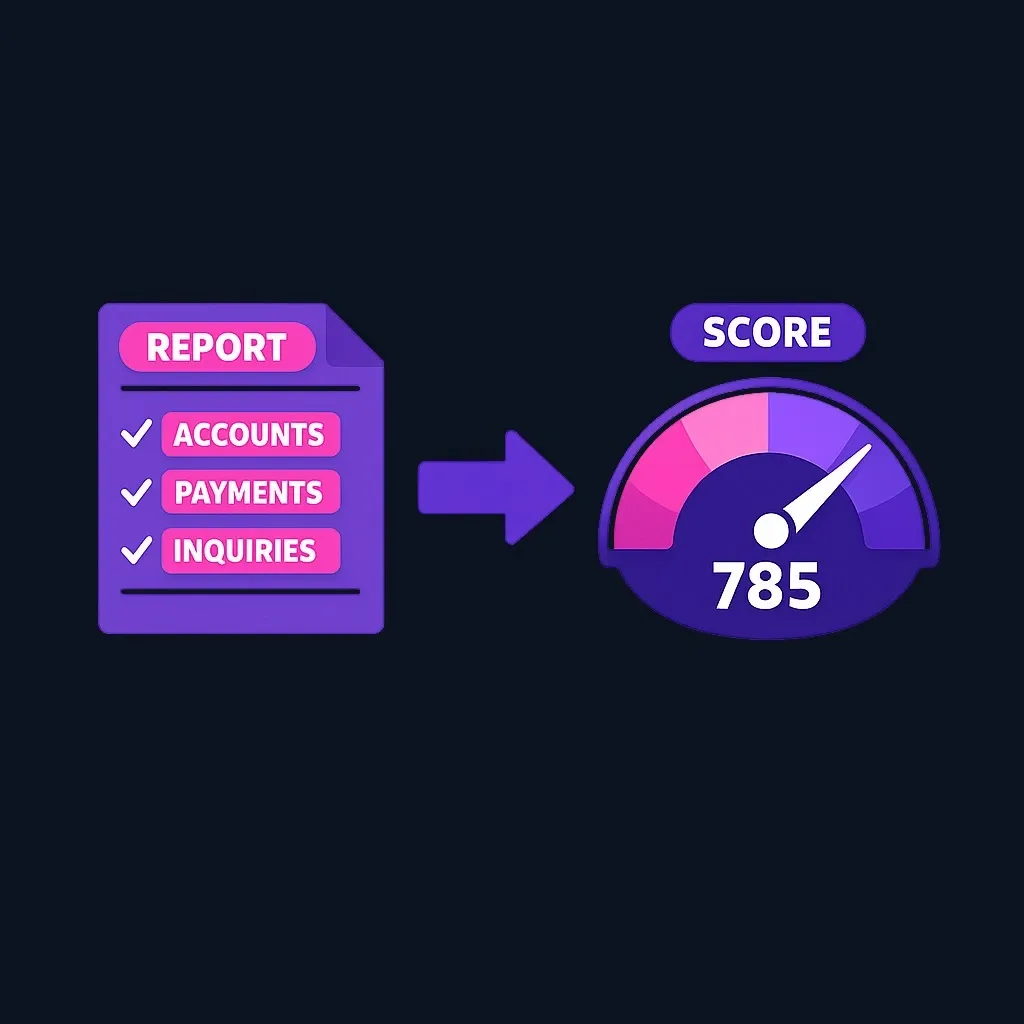
- A credit report is a record of credit accounts, payment history, and certain public records reported to credit bureaus. It isn’t a single “score” but the source data used by scoring models.
- Checking your reports uncovers errors, identity theft, or information that could change how lenders view you. Because errors on a report can affect loan approvals or terms, at minimum plan an annual review (CFPB).
Factors that should affect how often you check:
- Recent identity-theft signals (unexpected bills, unfamiliar accounts).
- Big life or financial moves (mortgage, refinance, auto loan, job-related checks).
- Active credit repair or dispute processes.
- Comfort level and time you can commit to monitoring.
Use the rest of this article to decide a practical cadence and follow-up actions.
How often should you check your credit report?
Short direct answer (featured): Check every major bureau’s report at least once per year; check sooner or more frequently if you suspect fraud or before applying for a major loan. The CFPB specifically recommends annual review to make sure errors don’t block access to credit or better loan terms (CFPB).
Quick comparison table (practical guide)
| Frequency | When to use it | Why it helps |
|---|---|---|
| Annual | General checkup for everyone | Meets the CFPB recommendation to catch errors that could affect credit access (CFPB). |
| Every 3–6 months | If you’re actively managing credit or recently fixed an error | Spots regressions or new issues sooner. |
| Monthly | When you have ongoing fraud risk or are monitoring identity-theft remediation | Lets you detect new accounts or charges quickly. |
| Before a major loan or refinance | 1–3 months before application | Gives time to correct errors and let timely payments settle. |
Note: The CFPB’s explicit benchmark is “at least once a year.” Use the table above as a decision aid — tailor frequency by risk and goals.
Why checking your credit report matters
Regular checks matter because:
- Errors or outdated items on your report can change whether you qualify for credit or the interest rate you receive; the CFPB warns that mistakes could keep you from getting credit or the best available loan terms (CFPB).
- Early detection of identity theft prevents deeper damage and can make disputes simpler.
- Reviewing your file helps you understand how account behavior (late payments, high balances) shows up and may affect future borrowing.
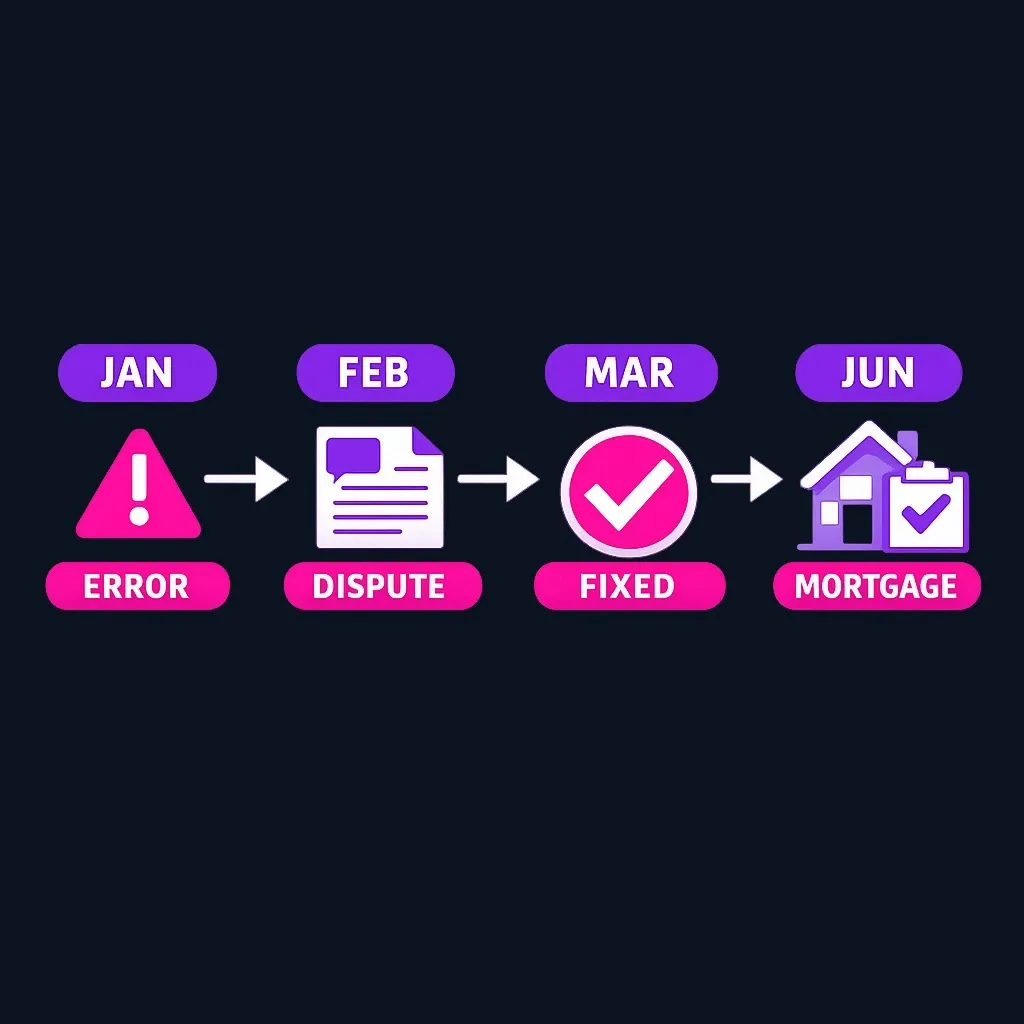
Practical example: catching a mistakenly reported late payment months before applying for a mortgage gives you time to dispute the item and, if corrected, avoid higher rates or denial.
Practice trading with Finelo
Practice in a simulator, learn with bite-sized lessons, and build confidence before risking real money.
How to check your credit report for free (practical steps)
- Request reports from each major bureau (Equifax, Experian, TransUnion). The CFPB recommends reviewing all your reports at least annually (CFPB).
- When you get a report, compare account names, balances, recent payments, and inquiries to your records. Focus on unfamiliar accounts, incorrect balances, and duplicate listings.
- Keep a secure copy (save PDF or print) and note the date you checked each bureau.
Practical tips:
- If you prefer automated monitoring, consider reputable credit-monitoring services—but weighing cost versus value depends on your risk and whether you have reason to monitor constantly.
- Make a simple tracking sheet (spreadsheet or calendar reminder) listing the last-check date for each bureau.
How to check and what to do if you find errors
If you find something wrong, follow a short, reliable checklist and keep records.
Checklist: Disputing errors (step-by-step)
- Step 1 — Document the problem: Take screenshots or print the report page with the error and collect supporting documents (statements, receipts, identity documents).
- Step 2 — Contact the credit bureau that shows the error: Submit a dispute online or by mail with a clear explanation and copies of supporting evidence.
- Step 3 — Contact the creditor or lender: Ask them to correct their reporting; provide the same supporting documents.
- Step 4 — Keep records: Save copies of all correspondence, dates, and names of people you speak with.
- Step 5 — Follow up: If the bureau corrects the item, request a corrected report; if not resolved, escalate to the bureau’s dispute process and consider filing a complaint with a regulator.
Sample dispute message (short template)
- “I’m writing to dispute an item on my credit report. Account [last 4 digits / account name] is listed as [problem]. Enclosed are copies of [documents] proving [reason]. Please investigate and correct this information.”
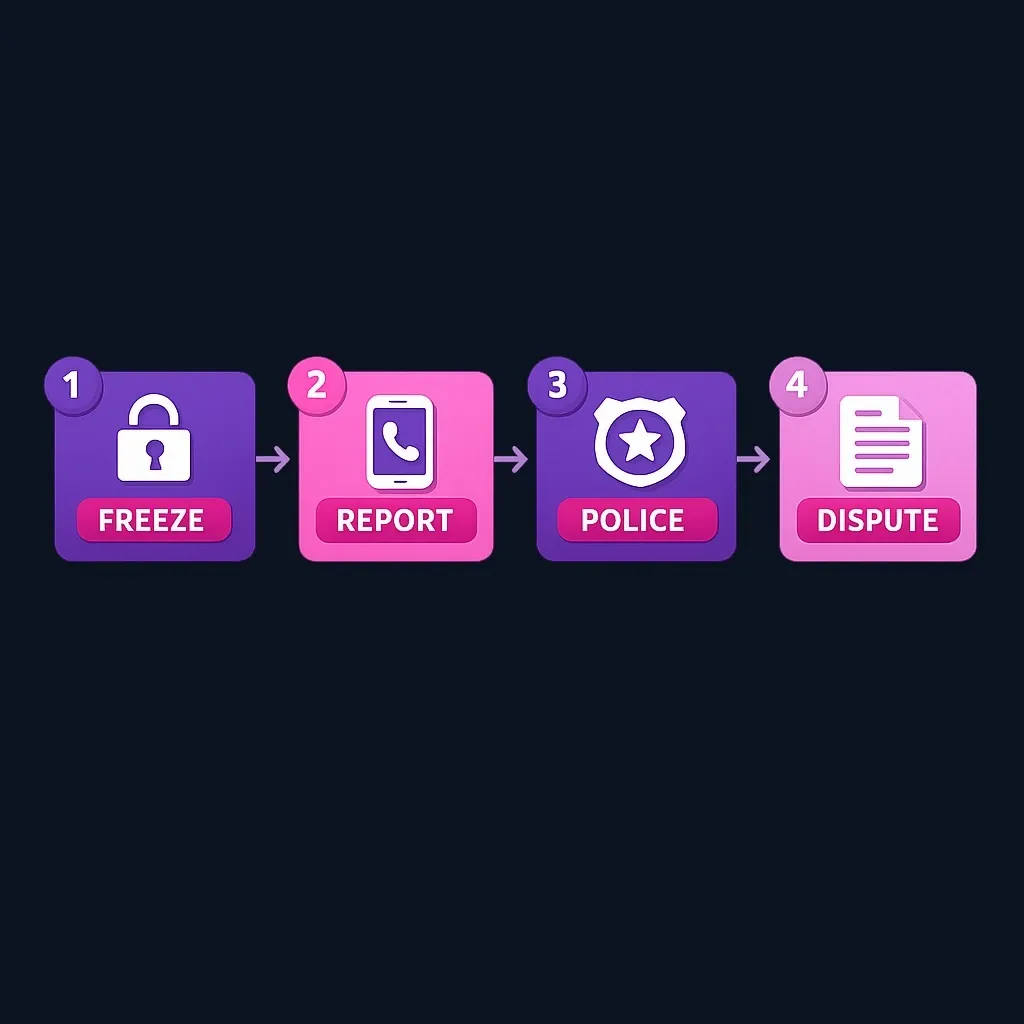
Flow (what to do if you suspect identity theft)
- Freeze or lock your credit files with bureaus and monitor for new accounts.
- Report identity theft to the companies where fraud occurred and ask to close fraudulent accounts.
- File a report with local law enforcement and keep the report number.
- Use your documentation to dispute fraudulent items on your credit reports and follow the checklist above.
Keep in mind: specific dispute timelines or requirements can vary by bureau and situation. Keep detailed records in case you need further escalation.
Decision framework — how to choose a schedule that fits you
Use this short framework to pick a frequency.
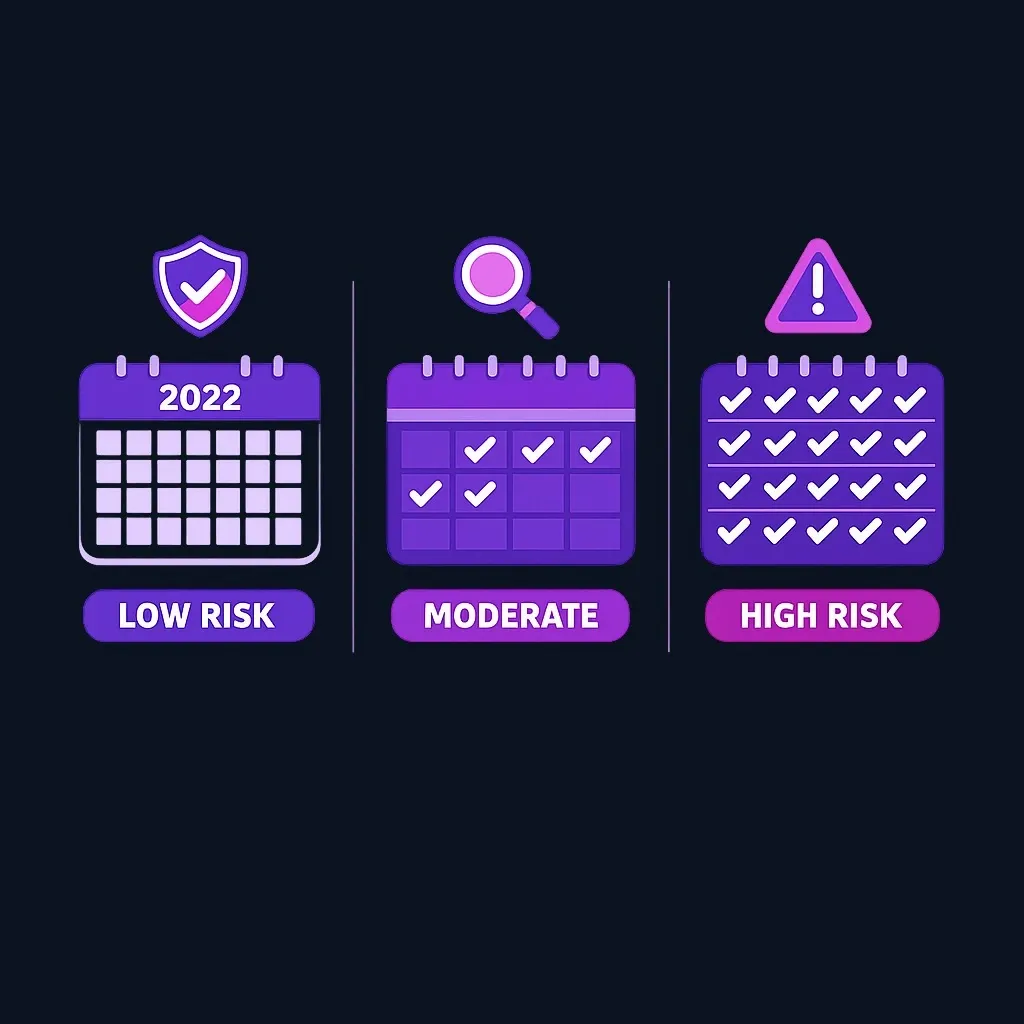
Step A — Identify your current risk level
- Low risk: no recent fraud, stable credit, no imminent large loans.
- Moderate risk: some new accounts in your name, recent moves, or active disputes.
- High risk: confirmed identity theft, missing mail with bills, multiple unfamiliar accounts.
Step B — Match monitoring cadence
- Low risk → Annual check of each bureau (CFPB baseline) plus a quick mid-year review of your top-priority bureau.
- Moderate risk → Check every 3–6 months and use alerts for new accounts.
- High risk → Monthly checks and consider freezing your credit or paid identity-theft services.
Step C — Re-evaluate after an action
- After a large financial event (mortgage, new auto loan) or any dispute resolution, re-check within 30–90 days to ensure records updated.
Worked example
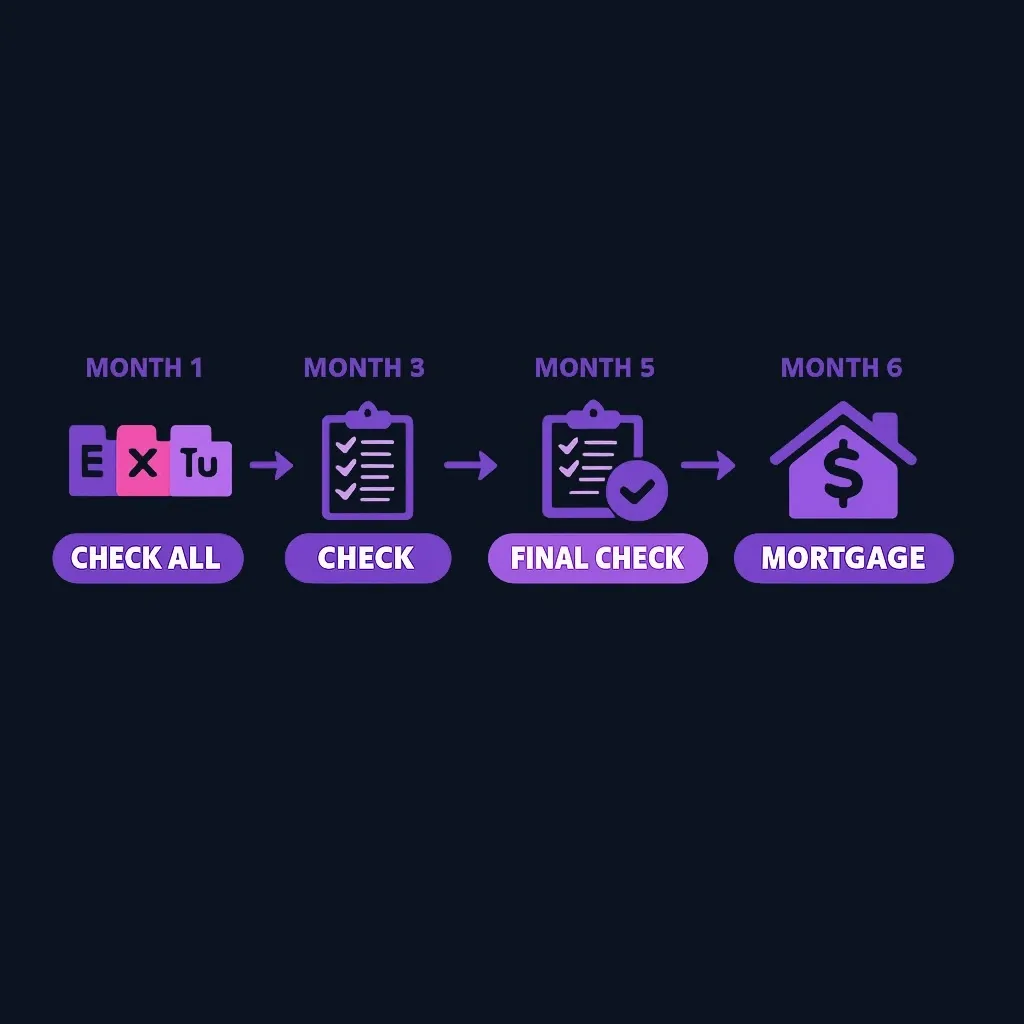
- Maria is applying for a mortgage in six months. She decides: full reports from each bureau now, one follow-up in three months, and one final check a month before her application so she can dispute any surprises.
This framework keeps checks proportional to risk and preserves time while focusing attention where it matters most.
FAQ
How often should I check my credit report?
At minimum, check reports from all three major bureaus at least once a year, per the Consumer Financial Protection Bureau (CFPB). Consider checking more often if you’re preparing for a big loan or suspect fraud.
Does checking my credit report hurt my score?
Viewing your own credit reports is not the same as a lender’s hard inquiry and does not lower your credit score. Use your own report checks to verify accuracy before applying for new credit.
How can I get my credit report for free?
You can obtain copies of your credit reports without cost; the CFPB recommends reviewing your reports at least once a year (CFPB). Follow the bureau instructions or official centralized request options to access them.
What should I do if I see signs of fraud on my credit report?
Follow the checklist above: document the item, dispute with the bureau, contact the creditor, and keep records. Consider freezing your credit files and filing a police report if identity theft is likely.
Conclusion: Next steps for your financial health
Start simple: request each bureau’s report and schedule a recurring reminder to review them at least annually (CFPB). Use the decision framework in this article to increase frequency only when your risk or financial plans require it. Keep clear records of any disputes and consider a credit freeze if you face identity theft.
Learn more about personal finance basics and monitoring options in the Finelo Blog: Finelo Blog.
Financial LiteracyFinancial Education
Practice trading with Finelo
Practice in a simulator, learn with bite-sized lessons, and build confidence before risking real money.
About the author
Finelo Team
The Finelo Team creates practical investing and trading education designed to help beginners learn faster with structured challenges, simulator practice, and bite-sized lessons.
Keep reading — Related articles

Financial Literacy
Mercury Books Review 2026: Is It Worth It for Startups?
Mercury Books brings double-entry accounting into Mercury. Review its $35 pricing, reports, AI features, integrations, and migration limits.
Finelo Team

Financial Literacy
Why is My FICO Score Lower Than My Credit Score?
Example takeaway: seeing a higher score in a bank app doesn’t guarantee lenders will see the same FICO number at application time; lenders often pull a specific FICO version from a specific bureau.
Finelo Team
Financial Literacy
Why Is My FICO Score Higher Than My Credit Score?
Brief educational note: this article is educational, not financial or investment advice; investing and credit decisions involve risk and possible loss.
Finelo Team