Last editorial review: September 28, 2026
Hybrid vs. traditional long-term care insurance
Compare dedicated care coverage with policies combining care benefits and life insurance, including premiums, limits, and flexibility.
8 min read
Practice trading with Finelo
Practice in a simulator, learn with bite-sized lessons, and build confidence before risking real money.
Want to learn more?
Practice in a simulator, learn with bite-sized lessons, and build confidence before risking real money.
Explore FineloExplore Finelo's 28-day challenges
Turn learning into a daily habit with guided challenge paths.
Traditional long-term care insurance focuses on eligible care expenses. A hybrid policy combines care benefits with life insurance or an annuity. The added feature can be useful, but it makes an equal comparison more important.
Compare the amount and duration of care protection before comparing premiums. Two policies with similar prices may provide very different benefits.
What changes?
| Feature | Traditional policy | Hybrid policy |
|---|---|---|
| Main purpose | Long-term care coverage | Care coverage plus life-insurance or annuity features |
| If care is never needed | Benefits may never be used | A death benefit or other contract value may remain |
| Premium arrangement | Ongoing premiums; increases may be possible | Single or scheduled premiums; guarantees depend on contract |
| Main comparison risk | Future affordability | Paying for features that do not meet your care needs |
The NAIC consumer guide recommends comparing covered services, facilities, limits, exclusions, and premiums. A product category cannot tell you whether a particular claim will qualify.
Read the benefit triggers
Ask what level of impairment qualifies, how the elimination period works, which care settings are covered, and whether benefits reimburse actual bills or pay under another method. Check inflation protection and the maximum benefit pool.
With a hybrid contract, care benefits may reduce the amount left to beneficiaries. A chronic-illness rider is not automatically equivalent to comprehensive long-term care insurance. The NAIC shopper’s guide explains combined products, benefit riders, and the comparisons to make.
Test affordability over time
A large single premium ties up money that could otherwise support emergencies or other goals. An ongoing premium must remain affordable if retirement income changes. Do not assume a hybrid premium can never change unless the contract guarantees it.
Request illustrations showing guaranteed benefits separately from assumptions. Compare identical care scenarios, including a long claim and no claim at all. Ask a licensed professional to explain any surrender charges and tax treatment.
The decision is about how much care risk you want to transfer and what you can afford to commit, not simply whether a policy leaves something to heirs.
Compare equivalent care protection before comparing legacy benefits
Two policies can have similar headline benefit pools but provide different support in a long claim. Match the monthly benefit, benefit duration, covered care settings, elimination period, and inflation feature as closely as possible. Then examine how a hybrid contract's care payments reduce its death benefit or other value.
Ask for guaranteed values separately from illustrated values. An illustration may include assumptions about future performance or nonguaranteed elements. A guarantee applies only as stated in the contract and is subject to the insurer's ability to meet its obligations. Do not treat every number on an illustration as a promised result.
Test three hypothetical outcomes: no qualifying care claim, a shorter period of qualifying care, and a prolonged claim. For each, compare premiums paid, care benefits available, remaining death benefit, and access to cash. The purpose is to understand the contract, not to assign a precise probability to your future health.
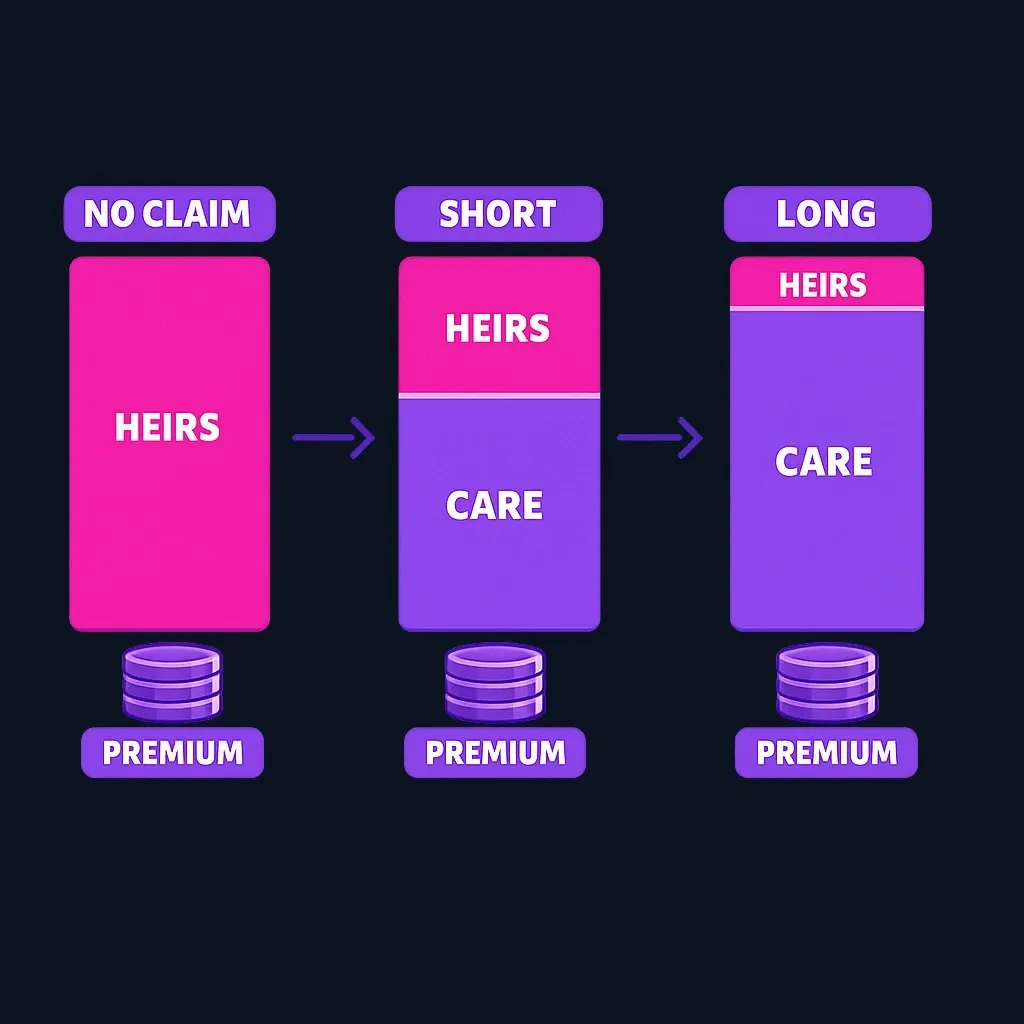
Also test affordability if your income falls. A large upfront premium ties up money that might otherwise support living costs. Ongoing premiums require room in a future budget. Ask what options exist if maintaining the original arrangement becomes difficult, including the consequences for benefits. A policy is most useful when its funding can be sustained without undermining the rest of the household plan.
Practice trading with Finelo
Practice in a simulator, learn with bite-sized lessons, and build confidence before risking real money.
What is Long-Term Care Insurance?
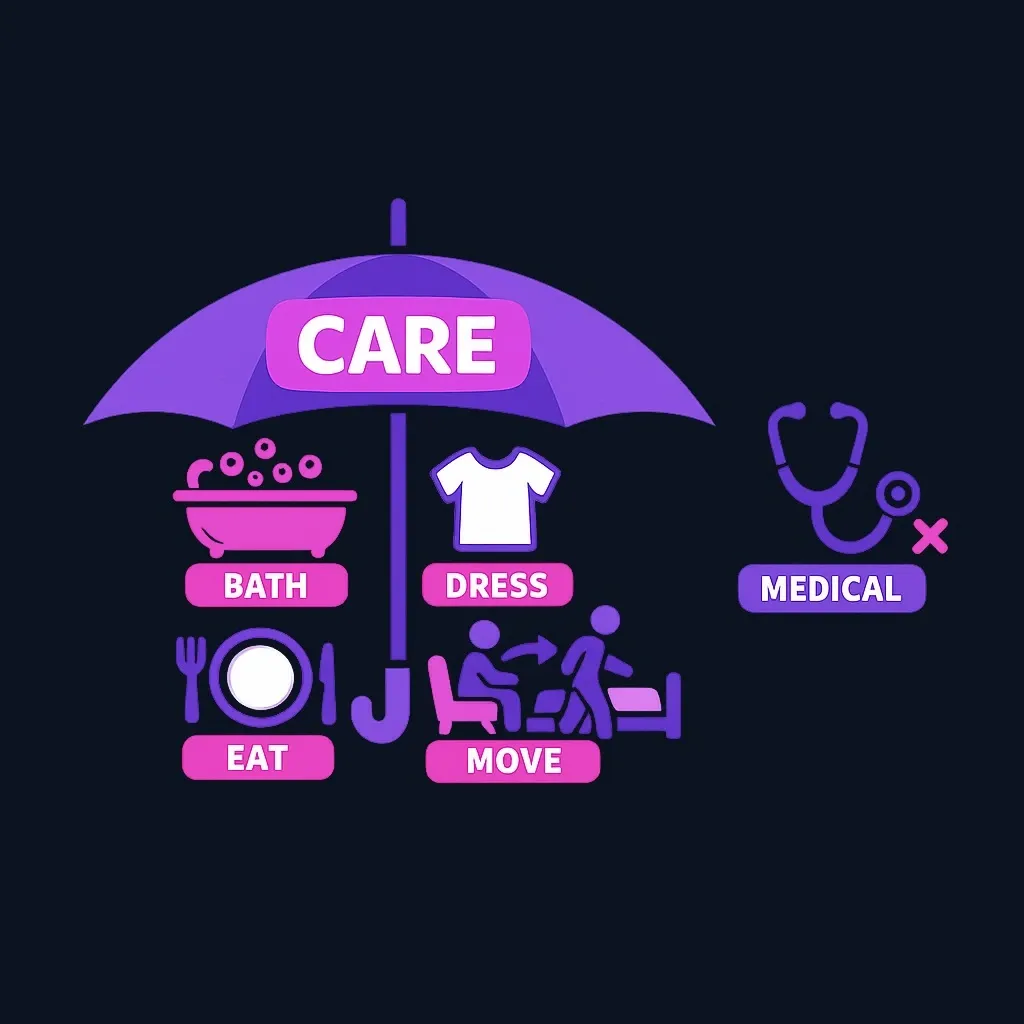
Long-term care insurance helps cover services that assist with daily living—such as help bathing, dressing, eating, or transferring—not standard medical care aimed at curing illness. It generally addresses ongoing assistance related to disability, chronic illness, or cognitive impairment. Covered services can include personal care and some skilled services; it is not a substitute for ordinary medical insurance.
Understanding Traditional Long-Term Care Insurance
Traditional LTC insurance is a standalone policy that pays benefits specifically for qualifying long-term care services. Typical features and behavior in the market include:
- Benefit focus: Pays daily or monthly benefits for approved care settings (home care, assisted living, nursing home) while you meet the policy's eligibility (for example, needing the required level of assistance with activities of daily living or meeting a cognitive-impairment trigger).
- Premium structure: Ongoing premiums may be designed to remain level but can rise for an approved class of policies under the contract and applicable state rules. Guaranteed renewability does not necessarily guarantee a fixed premium.
- Claim processing: Traditional policies require claim verification that you meet the policy's care triggers and documentation from caregivers or providers.
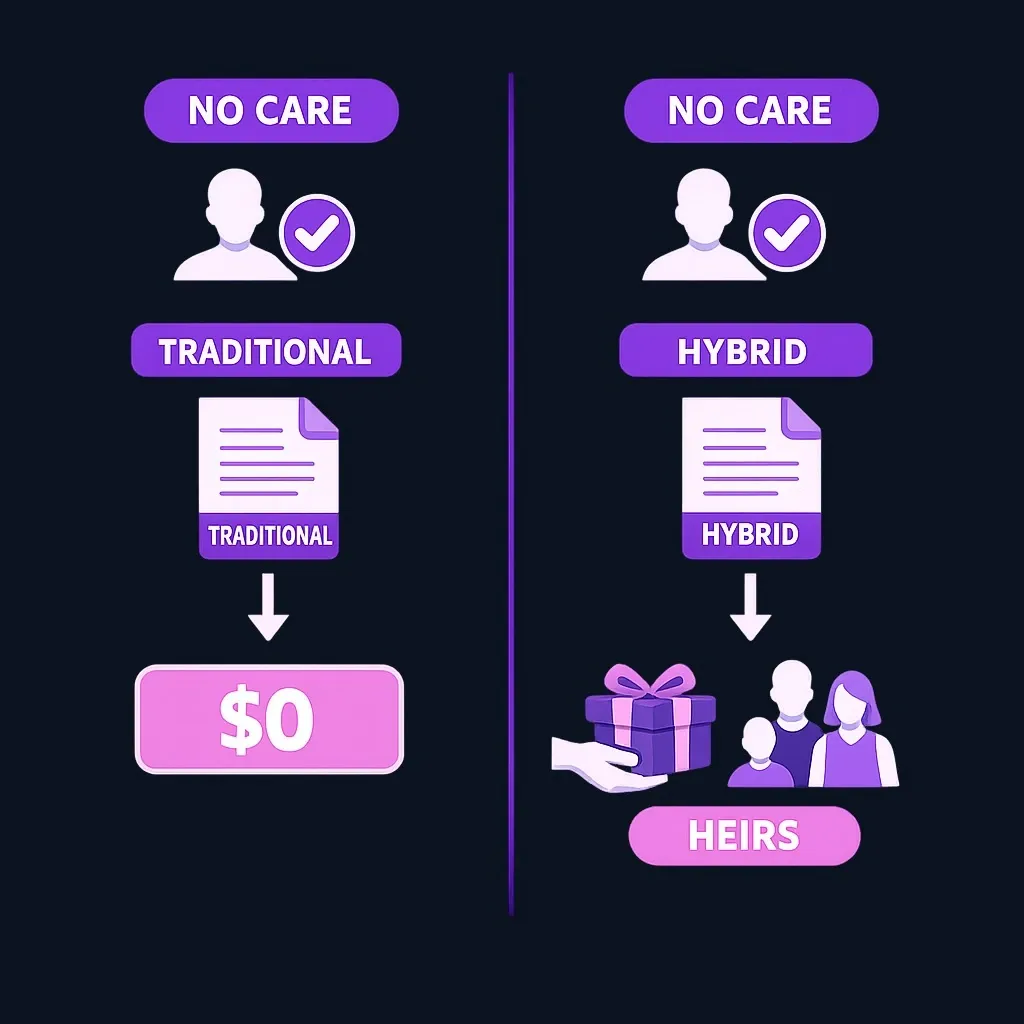
- Outcome if unused: If you never need care, the premiums typically do not return a death benefit or cash value—benefit is protection only.
These characteristics make traditional LTC attractive for buyers focused strictly on maximizing care coverage relative to premium dollars. But they carry risks tied to premium volatility and the "use it or lose it" nature of coverage.
Understanding Hybrid Long-Term Care Insurance
Hybrid LTC solutions combine long-term care protection with another financial product—most commonly life insurance or an annuity—so a death benefit or other contract value may remain if care benefits are not used. A full return of premium is a separate feature that should not be assumed. Typical features described by industry sources include:
- Dual purpose: Pays long-term care benefits if triggered, or preserves a death benefit/cash value for beneficiaries if care isn’t needed.
- Premiums and structure: Usually funded with a single premium or a series of fixed premiums (versus ongoing level premiums in many traditional LTC plans).
- Flexibility: Policyholders may have the option to surrender the policy for cash value or to access benefits in multiple ways depending on the product design.
- Claim processing: Claim triggers are similar (needing help with activities of daily living or cognitive impairment), but benefit payment mechanics and interactions with the life/annuity component differ by contract.
Hybrid policies are often marketed to people who want LTC protection plus a death benefit or return-of-premium feature specified in the contract. The additional benefit has its own price and conditions; it does not eliminate the risk of paying for coverage you never use.
Key Differences Between Hybrid and Traditional Policies
1. Benefit design and “use it or lose it”
- Traditional LTC is focused solely on paying care; if you never need care, there’s generally no residual benefit. Hybrid policies explicitly aim to reduce that downside by pairing LTC coverage with life insurance or annuity value that can pay heirs or return premium if unused.
2. Premium structure and cash planning
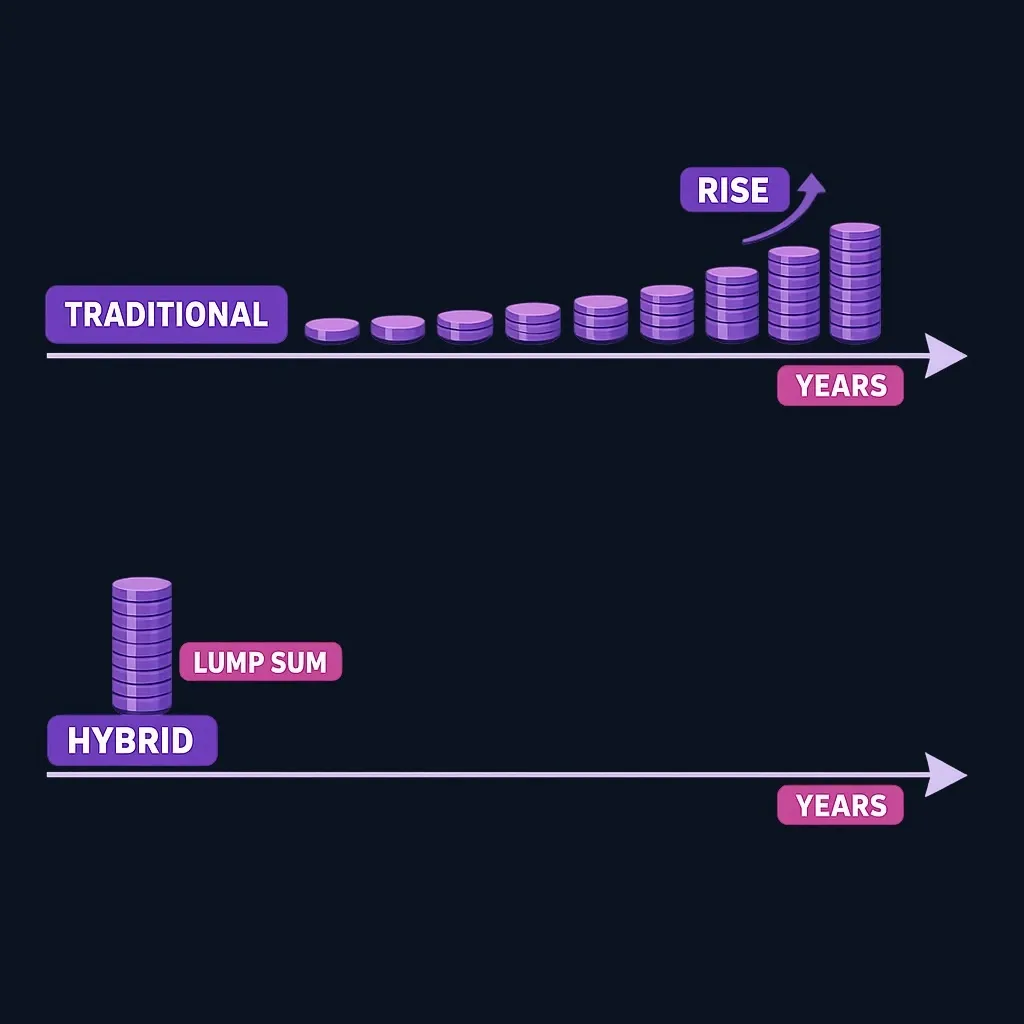
- Traditional policies often use ongoing premium payments, which may be subject to increases over a policy’s life. Hybrid options commonly use a single lump sum or a limited number of fixed payments; that can simplify budgeting but requires larger upfront capital.
3. Cost per dollar of LTC protection
- When you compare pure LTC benefits alone, a traditional policy may cost less than a hybrid because it does not fund the same additional life or annuity features. The exact cost differential depends on age, health, underwriting, and product design; shoppers should request illustrations from insurers to compare like-for-like benefit units.
4. Claim experience and payment mechanics
- Both policy types use eligibility triggers (for example, inability to perform ADLs or cognitive impairment). How benefits are paid differs: traditional LTC pays as defined care benefits; hybrids coordinate care payments with life/annuity provisions (for instance, accelerating a death benefit). Because hybrid contracts combine two legal product types, claim timing, documentation, and beneficiary outcomes will follow the hybrid contract’s rules.
5. Underwriting and availability
- Underwriting differs among traditional, life-linked, and annuity-linked products. Do not assume that combining benefits automatically makes coverage harder or easier to obtain. Ask which health, age, and financial requirements apply to each actual offer.
6. Estate planning and legacy goals
- Hybrid policies can fit estate-planning goals when the contract provides a death benefit if care benefits are not used. Traditional policies generally focus on care benefits; optional return-of-premium or other provisions should be checked separately.
7. Risk of premium increases
- Older traditional LTC blocks have sometimes been subject to rate increases. Hybrid products marketed as life insurance or annuities may offer more predictable premium guarantees, but check the policy language and insurer financial strength.
Practical insight: Request policy illustrations and “buyer’s guides” for each product. Compare assumptions for inflation protection, elimination periods (waiting periods), benefit period, and whether inflation riders compound benefits—small differences substantially affect lifetime value.
If your main need is a death benefit, first distinguish Term life vs. accidental death insurance.
Understand the claim process before buying
Ask how a qualifying need for care is established, who certifies it, and how the elimination period is measured. A period based on calendar days can work differently from one based on days of paid care. Review how home care, assisted living, and facility care are treated under each contract.
Find out whether benefits reimburse eligible bills or are paid through another specified method. Keep any restrictions on providers and services visible in the comparison. A larger headline benefit can be less useful if the care arrangement you expect would not qualify.
Finally, ask who would manage a claim if you could not. A trusted contact should know the insurer and where the policy is stored, without needing unrestricted access to all your financial information. Clear records help the policy serve its intended purpose when a claim is stressful.
This guide covers U.S. rules. Finelo provides financial education, not personalized financial, investment, tax, or legal advice.
Financial LiteracyU.S. GuideFinancial Education
Practice trading with Finelo
Practice in a simulator, learn with bite-sized lessons, and build confidence before risking real money.
About the author
Finelo Team
The Finelo Team creates practical investing and trading education designed to help beginners learn faster with structured challenges, simulator practice, and bite-sized lessons.
Keep reading — Related articles
Financial Literacy
USDA vs. FHA loan
Compare location and income eligibility, down payments, credit conditions, and upfront and annual program charges for a home purchase.
Finelo Team
Financial Literacy
Term life vs. accidental death insurance
Compare broad term-life protection with accident-only coverage, including exclusions, underwriting, and the family income gap.
Finelo Team
Financial Literacy
Term life insurance laddering vs. one policy
Compare several term policies ending at different times with one policy, using coverage needs, costs, and future insurability.
Finelo Team