US corporate insiders — the executives and directors who run public companies — sold a striking amount of their own stock in the first half of 2026, and the number is getting a lot of attention. According to data from EPFR Global reported by Bloomberg, insiders sold about $77.6 billion of shares in the first six months of the year, up roughly 20% from a year earlier and the largest half-year total since 2021 — one of the biggest selling stretches in more than two decades. Over the same period, insiders bought just $6.9 billion, meaning they sold on the order of eleven times more than they bought.
Corporate Insiders Are Selling at a Near-Record Pace: What It Actually Signals

US corporate insiders sold about $77.6 billion of stock in H1 2026 — the largest half-year total since 2021. Here's what heavy insider selling actually signals, and why insider buying is the stronger tell.
8 min read
Practice trading with Finelo
Practice in a simulator, learn with bite-sized lessons, and build confidence before risking real money.
Want to learn more?
Practice in a simulator, learn with bite-sized lessons, and build confidence before risking real money.
Explore FineloExplore Finelo's 28-day challenges
Turn learning into a daily habit with guided challenge paths.
Put like that, it sounds ominous — as if the people who know these companies best are heading for the exits. But insider selling is one of the most misread signals in investing, and the honest answer is more nuanced than the number suggests. Here is what the data shows, why it is happening, and what heavy insider selling does — and does not — actually tell you.
This article is for information and education only and is not financial advice. Nothing here is a recommendation to buy, sell, or hold any security. Figures are drawn from recent reports and may be revised.
The numbers
The half-year data stands out on both sides of the ledger:
- ~$77.6 billion sold by insiders in H1 2026 — up ~20% year over year, the largest half-year total since 2021 and among the biggest in 20+ years.
- ~$6.9 billion bought over the same period — barely above the multi-year low of about $6.7 billion set in 2025.
- Roughly 11-to-1: insiders sold about eleven times more stock than they bought.
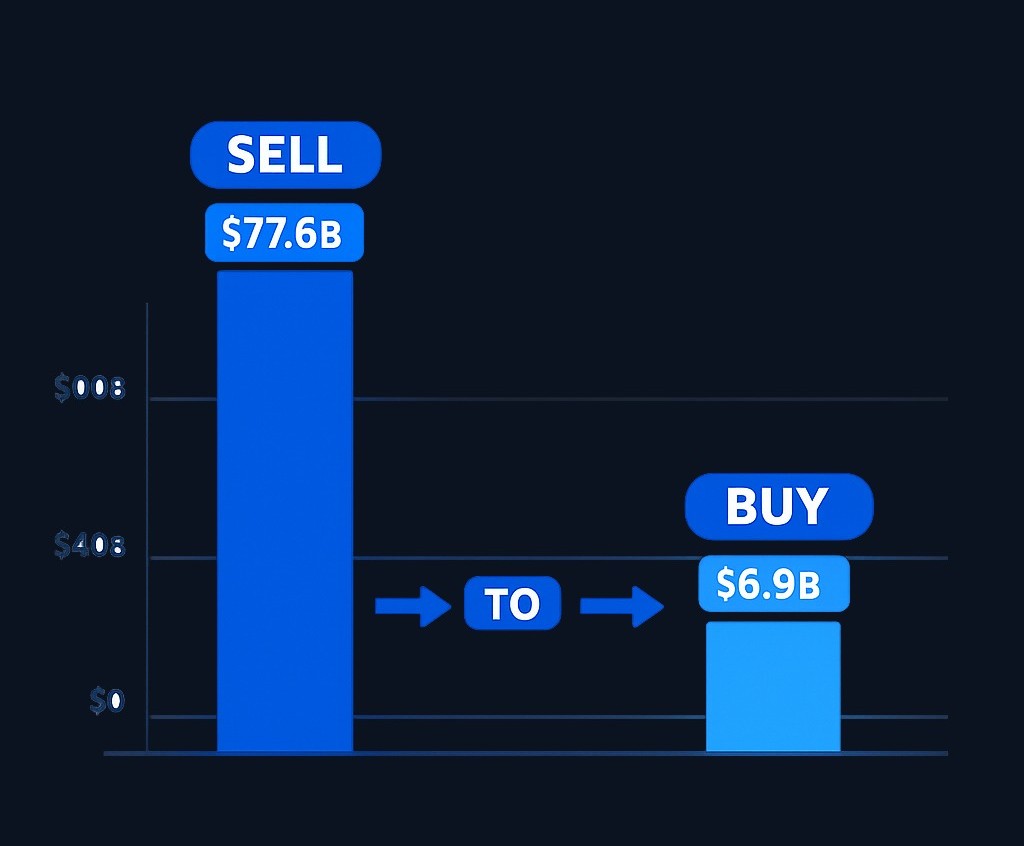
The gap between selling and buying is what caught people's eye — not just that selling was high, but that buying was unusually low.
Why insiders are selling
A few forces are cited for the surge, and none of them require a conspiracy. Coverage points to concerns about stretched valuations after a long market run and geopolitical uncertainty. There is also a simpler explanation that applies in any strong market: after a big rise in share prices, executives lock in gains. When your stock has climbed a long way, selling some of it is ordinary financial planning, not necessarily a prediction.
It is worth noting the backdrop, too. Technology and related sectors have grown to a record share of the US market — by some measures roughly half of the S&P 500's value — so a lot of the paper wealth held by insiders sits in exactly the stocks that have run the hardest. Concentrated gains tend to produce concentrated selling.
What insider selling actually tells you
Here is the part the raw number leaves out, and it is the most important thing to understand. Insiders sell for many reasons that have nothing to do with a dim view of their company. They diversify, because holding most of their wealth in one stock is risky. They raise cash for taxes, homes, divorces, or other life expenses. And a large share of executive selling happens automatically under pre-scheduled plans (known as 10b5-1 plans) set up months in advance, precisely so the sales are not based on any current information.

Because there are so many innocent reasons to sell, heavy insider selling on its own is a weak signal. It tells you executives are taking money off the table — which, after a strong run, is normal — but not necessarily that they expect trouble. This is why treating a big selling number as an automatic warning to head for the exits is one of the classic ways investors scare themselves out of sound decisions. For more on that trap, see Finelo's guide to common mistakes beginners make in investing.
Practice trading with Finelo
Practice in a simulator, learn with bite-sized lessons, and build confidence before risking real money.
Buying is the stronger signal
If selling is noisy, buying is where insiders' actions carry more weight. The logic is simple: there are many reasons to sell a stock, but really only one reason to buy your own company's shares with your own money — you think they are going up. That asymmetry is why seasoned investors tend to pay more attention to insider buying, and especially to clusters of insiders buying at once, than to selling.
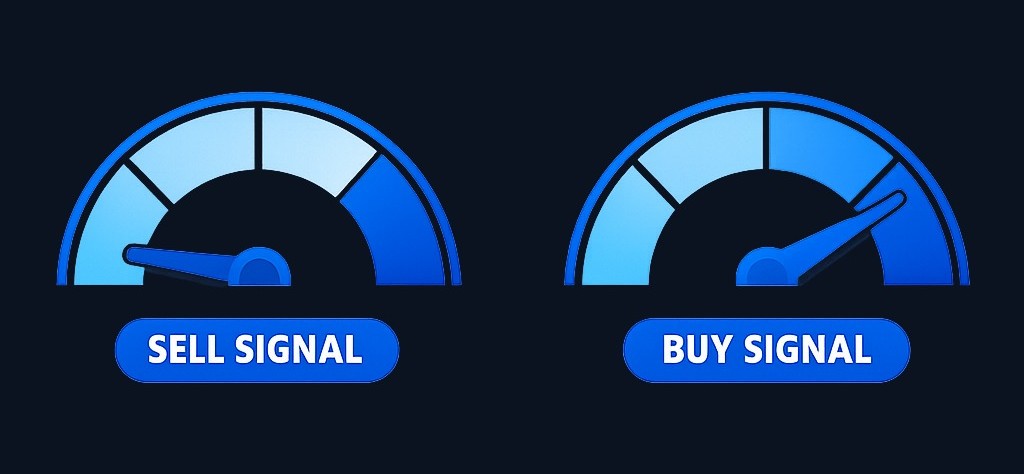
Seen through that lens, the 2026 data has a second story the big selling total obscures: insider buying is near a multi-year low. For those who read insider activity closely, unusually light buying can be as telling as heavy selling — not as a crash signal, but as a sign that few executives currently see their own shares as bargains. All of this activity is public, disclosed to the SEC in filings (Form 4) shortly after each trade, so anyone can see who is buying and selling.
The bull and bear read
As with most market data, reasonable people draw different conclusions. The cautious read is that record selling paired with rock-bottom buying suggests the people closest to these companies are not eager to add at current prices — a hint that valuations may be stretched. The more measured read is that after years of strong gains, especially in technology, heavy selling is exactly what you would expect, that scheduled plans and diversification explain much of it, and that insider selling has a poor track record as a market-timing tool. Both can be partly true at once, which is why the number is a piece of context, not a verdict.
What to watch
For anyone following the story, a few things add signal to the noise:
- Whether insider buying picks up — a jump in buying, particularly clusters of it, would be more meaningful than the selling total.
- How concentrated the selling is — broad selling across many companies reads differently from heavy selling in a few high-flying names.
- Valuations — the backdrop many cite when explaining the selling.
- Whether it is scheduled or discretionary — sales under pre-set plans carry less signal than unplanned ones.
Why it matters for everyday investors
The real lesson here is about how to read a scary-sounding data point without overreacting to it. A record selling number makes for a dramatic chart, but understanding why insiders sell — and why buying is the more reliable signal — turns it from a source of anxiety into a piece of useful context. Learning to ask what a number actually means, rather than reacting to the biggest figure on the page, is one of the most valuable habits an investor can build.
If you are building that foundation, start with Finelo's guides to how the stock market works, stock market basics for beginners, and the intrinsic value of a stock. None of this is a view on any company or the market's direction — it is a way to read the news more clearly.
Finelo is an educational product, not a brokerage. This article is for education and information only and is not financial advice. Figures are based on recent reports (EPFR Global via Bloomberg) as of July 2026 and may be revised; verify current numbers before drawing any conclusions.
Sources: EPFR Global data as reported by Bloomberg, and coverage from Yahoo Finance and The Daily Hodl.
Frequently asked questions
Is heavy insider selling a bad sign?
Not necessarily. Insiders sell for many reasons unrelated to their outlook — diversification, taxes, life expenses, and pre-scheduled automatic plans. Because there are so many innocent reasons to sell, heavy selling on its own is a weak signal and a poor market-timing tool, even when the total is large.
Why do corporate insiders sell their own stock?
Common reasons include reducing the risk of holding too much wealth in one stock, raising cash for taxes or personal needs, and selling automatically under plans set up months in advance. After a strong run in the share price, locking in some gains is routine financial planning.
Is insider buying a better signal than selling?
Generally, yes. There are many reasons to sell but essentially one reason to buy your own company's shares with your own money — expecting them to rise. That makes insider buying, especially several insiders buying at once, more meaningful than selling.
Does insider selling predict a market crash?
It has a poor track record as a timing tool. Big selling totals often simply reflect executives taking profits after prices have risen. It can be one piece of context about sentiment and valuations, but it does not reliably predict market direction.
Where can I see insider trades?
In the US, insiders must report their trades to the SEC shortly after they happen, in filings called Form 4. These are public, so anyone can see which executives and directors are buying or selling and when.
Insider TradingMarket SignalsStocksBeginner
Practice trading with Finelo
Practice in a simulator, learn with bite-sized lessons, and build confidence before risking real money.
About the author
Finelo Team
The Finelo Team creates practical investing and trading education designed to help beginners learn faster with structured challenges, simulator practice, and bite-sized lessons.
Keep reading — Related articles

News
The September Effect Explained: What the Stock Market Data Really Says
September has delivered the S&P 500's weakest average monthly return since 1928, but the result is not a reliable trading signal. Here is how to read the seasonality data.
Finelo Team
News
Nvidia–Hugging Face Deal: What the $12.9 Billion Agreement Changes
Nvidia agreed to acquire Hugging Face for $12.93 billion while promising to keep the platform open. Here is what the price, developer reach, and neutrality pledge mean.
Finelo Team
News
Lululemon Stock Falls to 2018 Levels After Its Q2 Earnings Report
Lululemon shares fell below $100 after revenue declined, comparable sales dropped, and management cut its outlook. The report offers a practical lesson about brand moats and falling knives.
Finelo Team