Shares of pool-supplies retailer Leslie's dropped about 47% in a single session on July 22, 2026, after reports that the company is weighing restructuring options — including a potential Chapter 11 bankruptcy — as soft demand for pool products pressures its finances, according to Bloomberg and other coverage. A near-halving of a stock on a bankruptcy report is dramatic, and it raises a question every investor eventually runs into: what actually happens to a stock when a company goes bankrupt? Here is how Chapter 11 works and why it matters so much for shareholders.
A Stock Just Fell 47% on Bankruptcy Talk: What Chapter 11 Means for Shareholders
Leslie's shares dropped about 47% on reports it's weighing Chapter 11. Here's how Chapter 11 bankruptcy actually works, and why it's usually far worse for shareholders than for the company itself.
8 min read
Practice trading with Finelo
Practice in a simulator, learn with bite-sized lessons, and build confidence before risking real money.
Want to learn more?
Practice in a simulator, learn with bite-sized lessons, and build confidence before risking real money.
Explore FineloExplore Finelo's 28-day challenges
Turn learning into a daily habit with guided challenge paths.
The short version is that bankruptcy is usually far worse for a company's stockholders than for the company itself. A business can go through Chapter 11 and come out the other side still operating — but its original shareholders frequently end up with little or nothing. Understanding why is one of the most useful lessons in how the stock market really works.
This article is for information and education only and is not financial advice. Nothing here is a recommendation to buy, sell, or hold any security. Company details are based on news reports and may change.
What happened
Leslie's, which trades on the Nasdaq under the ticker LESL, saw its shares plunge roughly 47% after reports that it is considering restructuring options, including a possible Chapter 11 filing, amid weak demand and pressure on its liquidity. The company had not filed for bankruptcy as of the reports — it was described as weighing its options — but the mere possibility was enough to send the stock sharply lower. That reaction is the market pricing in a hard truth about what bankruptcy tends to do to shareholders.
What Chapter 11 actually is
"Chapter 11" refers to a section of the US bankruptcy code that lets a company reorganize its debts while continuing to operate. It is different from Chapter 7, which is liquidation — where a company shuts down and sells off its assets. In a Chapter 11, the goal is to restructure: renegotiate debts, shed unprofitable stores or contracts, and emerge as a leaner, financially healthier business.
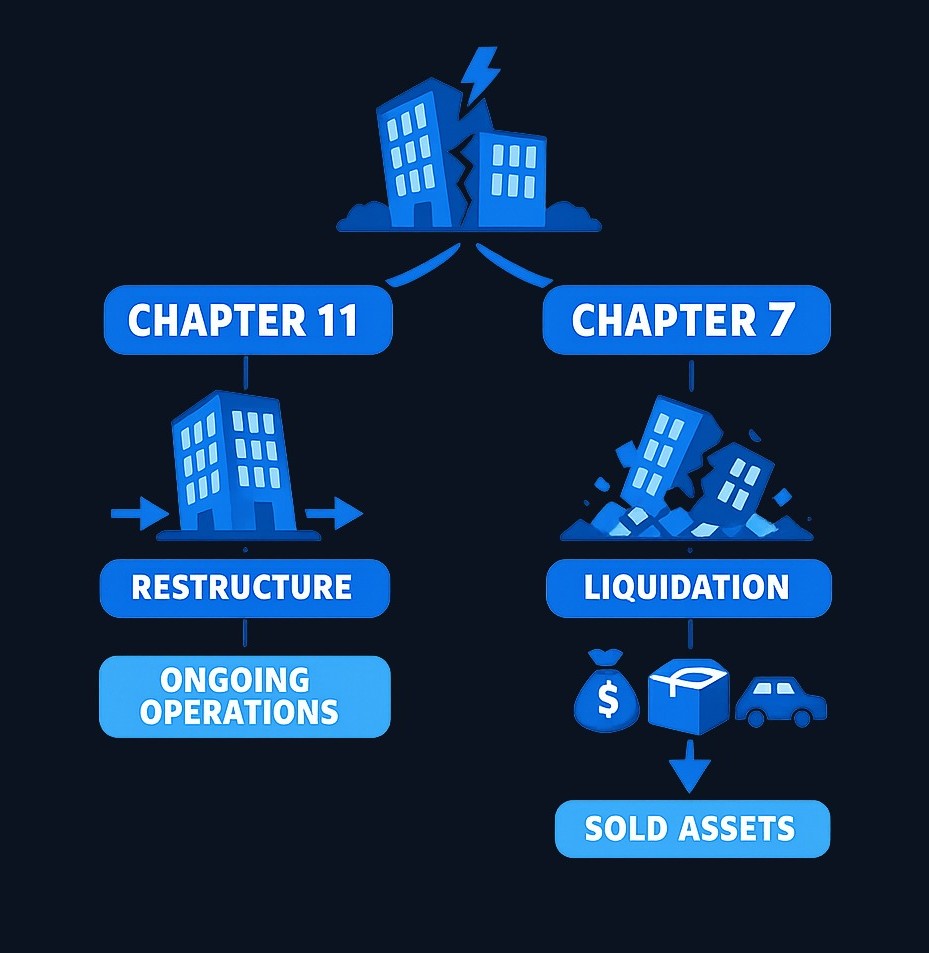
That is why Chapter 11 is sometimes described as a company "buying time." The lights stay on, employees may keep their jobs, and customers may not notice much change day to day. But "the company survives" and "the stock survives" are two very different things — and that distinction is where investors get caught out.
What it means for the stock
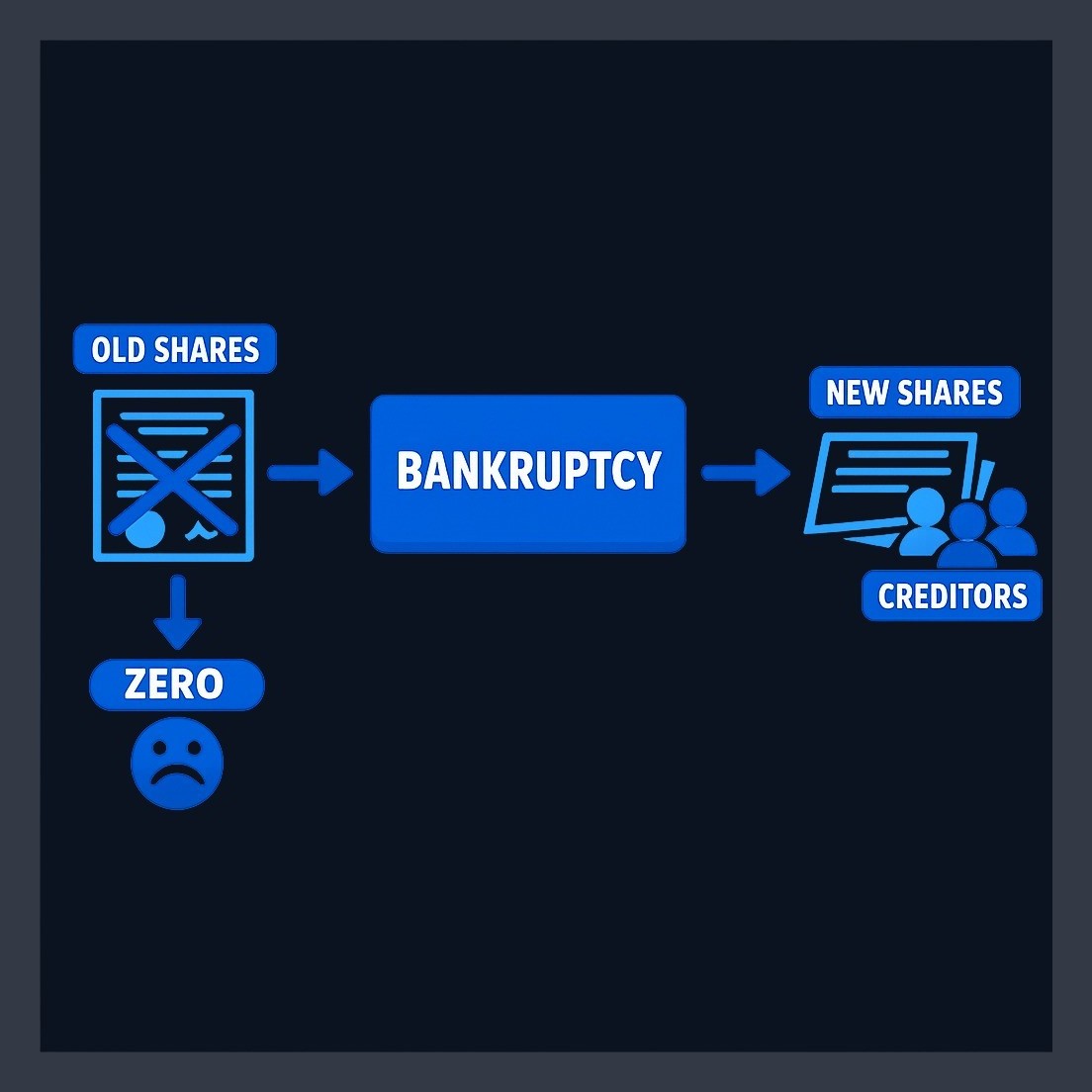
When a company files for Chapter 11, its existing stock usually falls hard, and in many cases the original shares end up worthless or nearly so. The reason is structural. A Chapter 11 reorganization typically involves wiping out or heavily diluting existing shareholders, because the company's debts are restructured by handing ownership to its creditors. When the company emerges, it often issues brand-new shares to those creditors, and the old shares are cancelled.
So even in the "good" outcome — the business reorganizes and survives — the people who owned the stock beforehand are frequently left with nothing, because the company that emerges is effectively owned by its former lenders. That is what the market is anticipating when a stock drops sharply on bankruptcy news: not necessarily that the business will disappear, but that current shareholders are likely to be wiped out or badly diluted.
Practice trading with Finelo
Practice in a simulator, learn with bite-sized lessons, and build confidence before risking real money.
Why shareholders are last in line
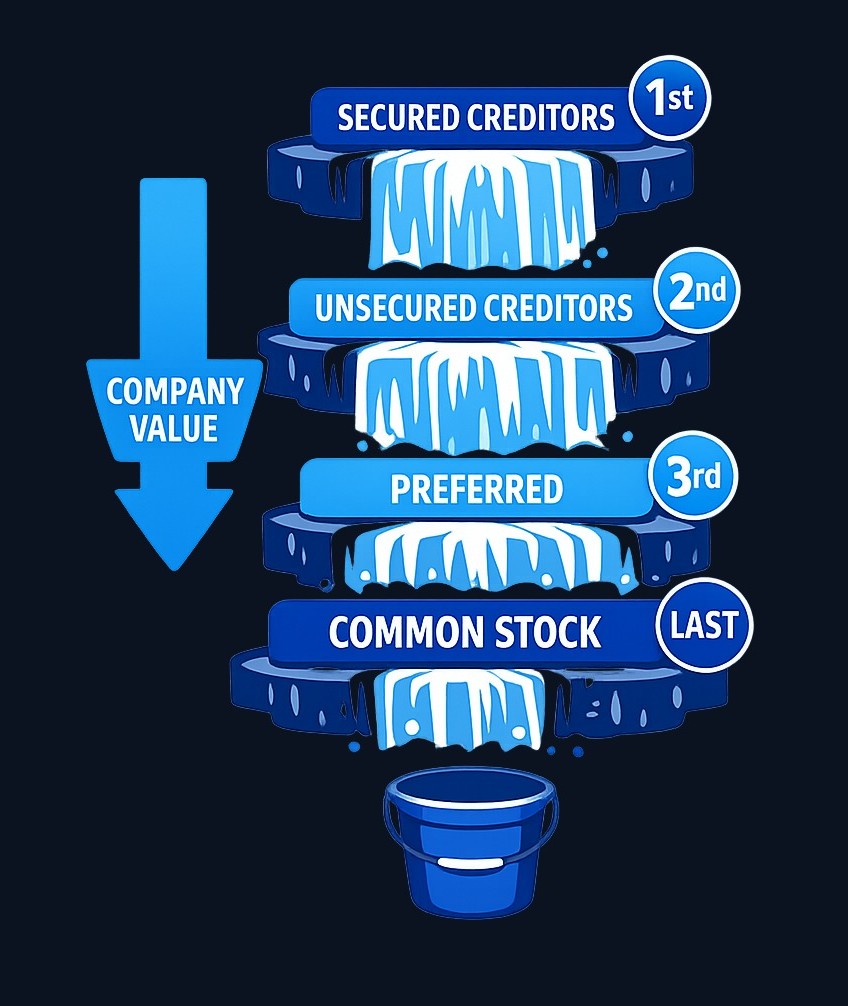
The heart of it is a rule of priority. When a company runs out of money, there is a strict pecking order for who gets paid from whatever value is left, and shareholders sit at the very bottom. Broadly, the order looks like this:
| Priority | Who they are | Typical outcome in bankruptcy |
|---|---|---|
| 1. Secured creditors | Lenders with collateral (e.g., banks) | Paid first, from the assets backing their loans |
| 2. Unsecured creditors | Bondholders, suppliers | Paid next, often only partially |
| 3. Preferred shareholders | Holders of preferred stock | Paid only if anything remains |
| 4. Common shareholders | Ordinary stockholders | Last in line — frequently receive nothing |
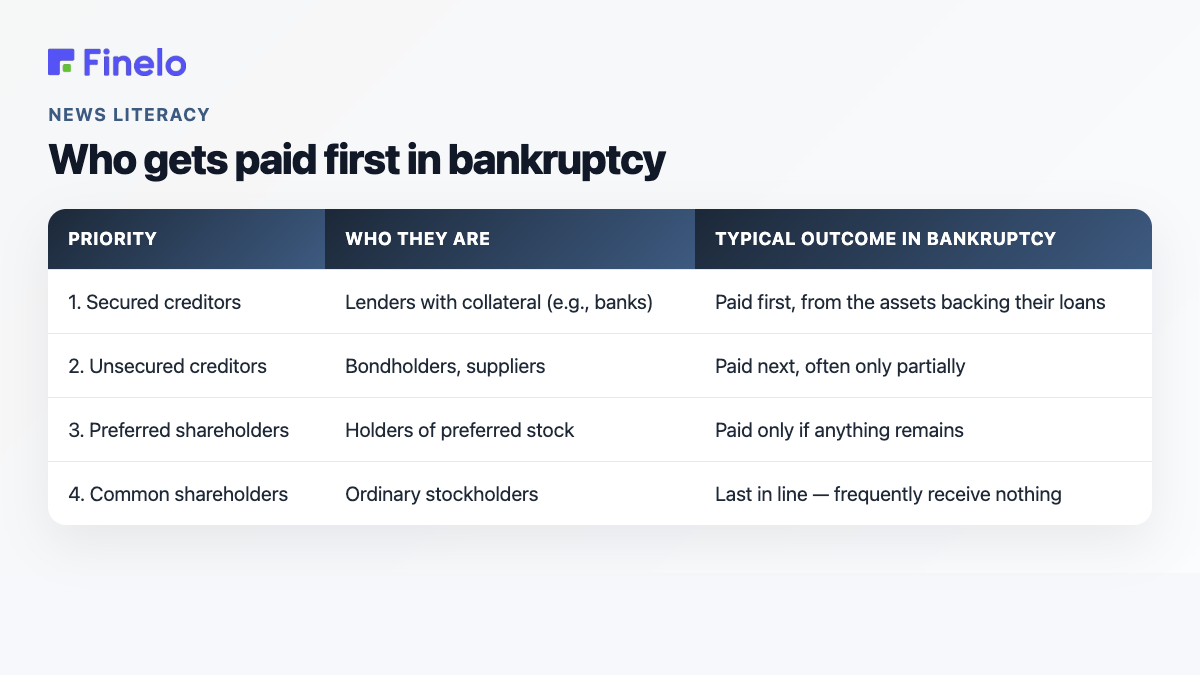
This is often called the "absolute priority" principle: each group is paid in full before the next gets anything. Because a company in bankruptcy usually does not have enough value to satisfy even its creditors, there is typically nothing left by the time you reach common shareholders. Owning a stock means owning the residual — whatever is left after everyone else is paid — and in bankruptcy, that residual is often zero.
Delisting and the risky afterlife
There is another practical consequence. When a company files for bankruptcy, its stock is frequently removed from major exchanges like the Nasdaq or New York Stock Exchange for failing to meet listing standards. The shares may continue to trade "over the counter," often for pennies.
These bankrupt-company stocks can still change hands, and they sometimes see bursts of speculative trading. But they are extremely risky: buying the stock of a company in bankruptcy is a bet against the priority order described above, and more often than not, those shares are heading toward zero. A low price is not the same as a bargain — and mistaking one for the other is a classic trap. For more on that, see Finelo's guide to common mistakes beginners make in investing and what a penny stock is.
Does bankruptcy always mean the stock goes to zero?
Not literally always, but close to it for the original shares. In rare cases where a company is worth more than all its debts, some value can flow down to shareholders — but that is unusual, because companies do not typically file for bankruptcy while they still have plenty of value above their obligations. Far more often, the reorganization cancels the old stock and issues new shares to creditors, leaving prior shareholders with little or nothing.
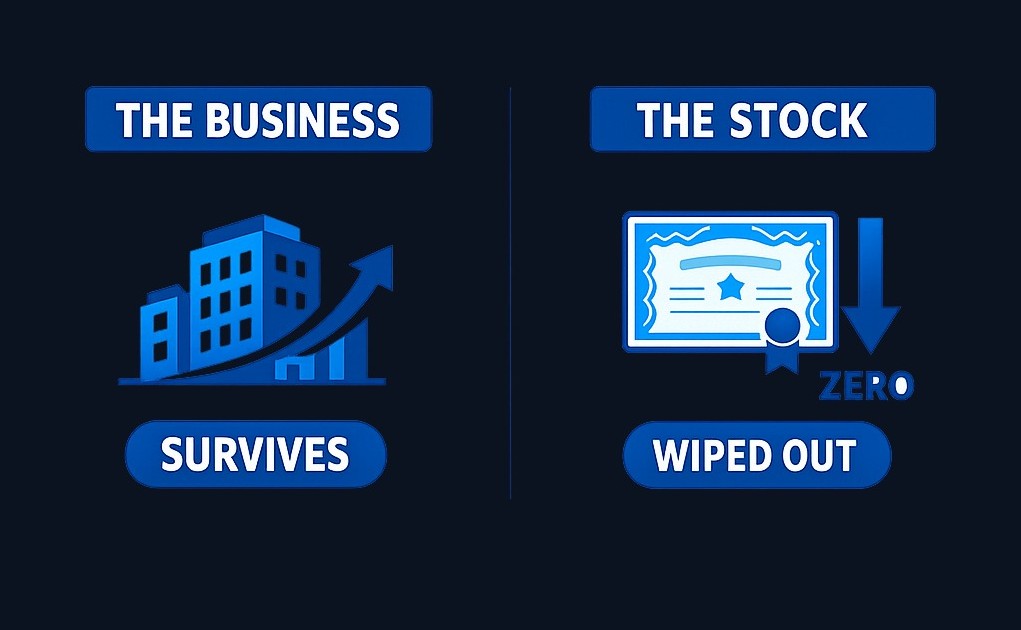
It is worth separating the fate of the business from the fate of the stock. A well-known brand can file for Chapter 11, restructure, and keep operating for years — while the shares people held before the filing are wiped out entirely. The company living on does not mean its former stockholders were made whole.
The lesson for investors
The real takeaway is about understanding what you actually own when you buy a stock. A share represents ownership of whatever is left after a company pays everyone it owes — which is why, in good times, stockholders capture the upside, and in bankruptcy, they are last in line for what remains. That same priority order explains why a company's bonds can hold value while its stock collapses, and why "the company will survive" is not a reason to expect the stock to.
It is also a reminder that a falling price and a low share price are signals to investigate, not automatic bargains. Understanding a company's debts and financial health — not just its stock price — is what separates informed investing from guessing. To build that foundation, see Finelo's guides to how the stock market works, stock market basics for beginners, and risk management in trading.
Finelo is an educational product, not a brokerage. This article is for education and information only and is not financial advice. Company details are based on news reports as of July 2026 and may change; bankruptcy processes and outcomes vary by case and jurisdiction. Verify current facts before drawing any conclusions.
Sources: Bloomberg, Seeking Alpha, and GuruFocus coverage of Leslie's (LESL).
Frequently asked questions
What is Chapter 11 bankruptcy?
Chapter 11 is a part of the US bankruptcy code that lets a company reorganize its debts while continuing to operate, rather than shutting down. The aim is to restructure — renegotiate debts and shed unprofitable operations — and emerge as a financially healthier business.
What's the difference between Chapter 11 and Chapter 7?
Chapter 11 is reorganization: the company keeps operating while it restructures. Chapter 7 is liquidation: the company shuts down and its assets are sold off to pay creditors. In both, shareholders are last in line for any remaining value.
Do you lose your money if a stock goes bankrupt?
Often, yes. When a company files for bankruptcy, existing shares are frequently wiped out or heavily diluted, because ownership is typically handed to creditors as debts are restructured. Shareholders are last in the priority order, so they commonly receive little or nothing.
Can you still trade a stock after a company files for bankruptcy?
Sometimes. The shares are often removed from major exchanges and may trade over the counter for pennies. They can still change hands and occasionally see speculative bursts, but they are extremely risky and frequently head toward zero.
Do shareholders ever get anything in bankruptcy?
Rarely for common shareholders. Value is paid out in a strict order — secured creditors, then unsecured creditors, then preferred shareholders, then common shareholders last. Because a bankrupt company usually cannot cover even its creditors, there is often nothing left for ordinary stockholders.
BankruptcyStocksRiskBeginner
Practice trading with Finelo
Practice in a simulator, learn with bite-sized lessons, and build confidence before risking real money.
About the author
Finelo Team
The Finelo Team creates practical investing and trading education designed to help beginners learn faster with structured challenges, simulator practice, and bite-sized lessons.
Keep reading — Related articles

News
The September Effect Explained: What the Stock Market Data Really Says
September has delivered the S&P 500's weakest average monthly return since 1928, but the result is not a reliable trading signal. Here is how to read the seasonality data.
Finelo Team
News
Nvidia–Hugging Face Deal: What the $12.9 Billion Agreement Changes
Nvidia agreed to acquire Hugging Face for $12.93 billion while promising to keep the platform open. Here is what the price, developer reach, and neutrality pledge mean.
Finelo Team
News
Lululemon Stock Falls to 2018 Levels After Its Q2 Earnings Report
Lululemon shares fell below $100 after revenue declined, comparable sales dropped, and management cut its outlook. The report offers a practical lesson about brand moats and falling knives.
Finelo Team