Last editorial review: September 28, 2026
Is a tax refund advance loan worth it?

Compare how soon a refund advance provides cash with fees, approval conditions, repayment terms, and free filing alternatives.
9 min read
Practice trading with Finelo
Practice in a simulator, learn with bite-sized lessons, and build confidence before risking real money.
Want to learn more?
Practice in a simulator, learn with bite-sized lessons, and build confidence before risking real money.
Explore FineloExplore Finelo's 28-day challenges
Turn learning into a daily habit with guided challenge paths.
A tax refund advance gives you borrowed money before your expected refund arrives. It can help with a short-term cash need, but the advertised loan price may not capture the full cost of obtaining it.
Start by asking whether you would pay for the same tax-preparation service without the advance.
Check the complete offer
| Item | What to ask |
|---|---|
| Loan charge | Is there interest or an advance fee? |
| Preparation cost | Must you buy a particular filing service? |
| Refund transfer | Is a separate fee charged to deduct preparation costs from the refund? |
| Access | Are there card, transfer, or cash-withdrawal charges? |
| Short or delayed refund | What does the contract require you to repay, and when? |
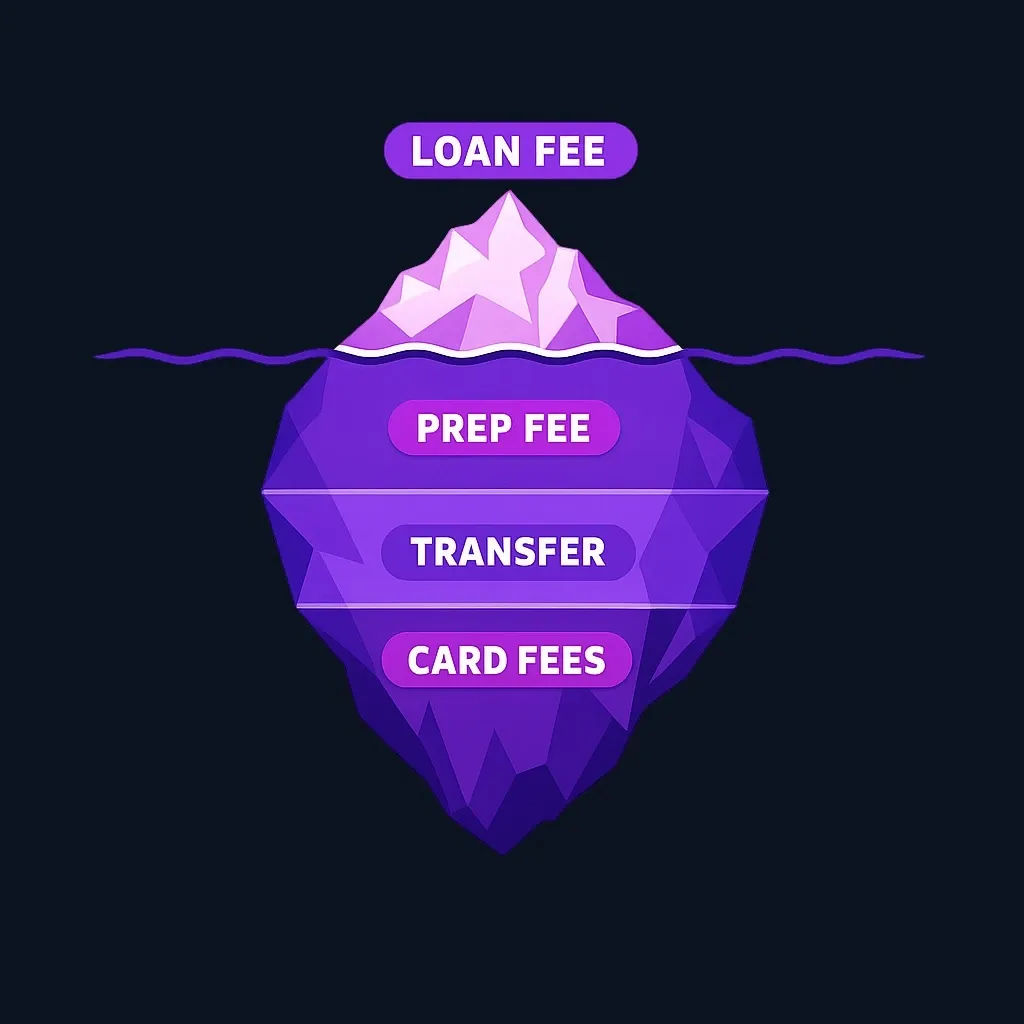
The CFPB tax-filing guide discusses refund products. A refund anticipation check or refund transfer is different from a loan: it may let you pay preparation costs from the refund without advancing the refund itself.
Compare the cost with the problem it solves
Suppose you need $600 to prevent an essential service from being disconnected. An advance with no additional cost could help. But if getting it requires $150 more in preparation and account fees than your alternative, that is a substantial cost for early access.
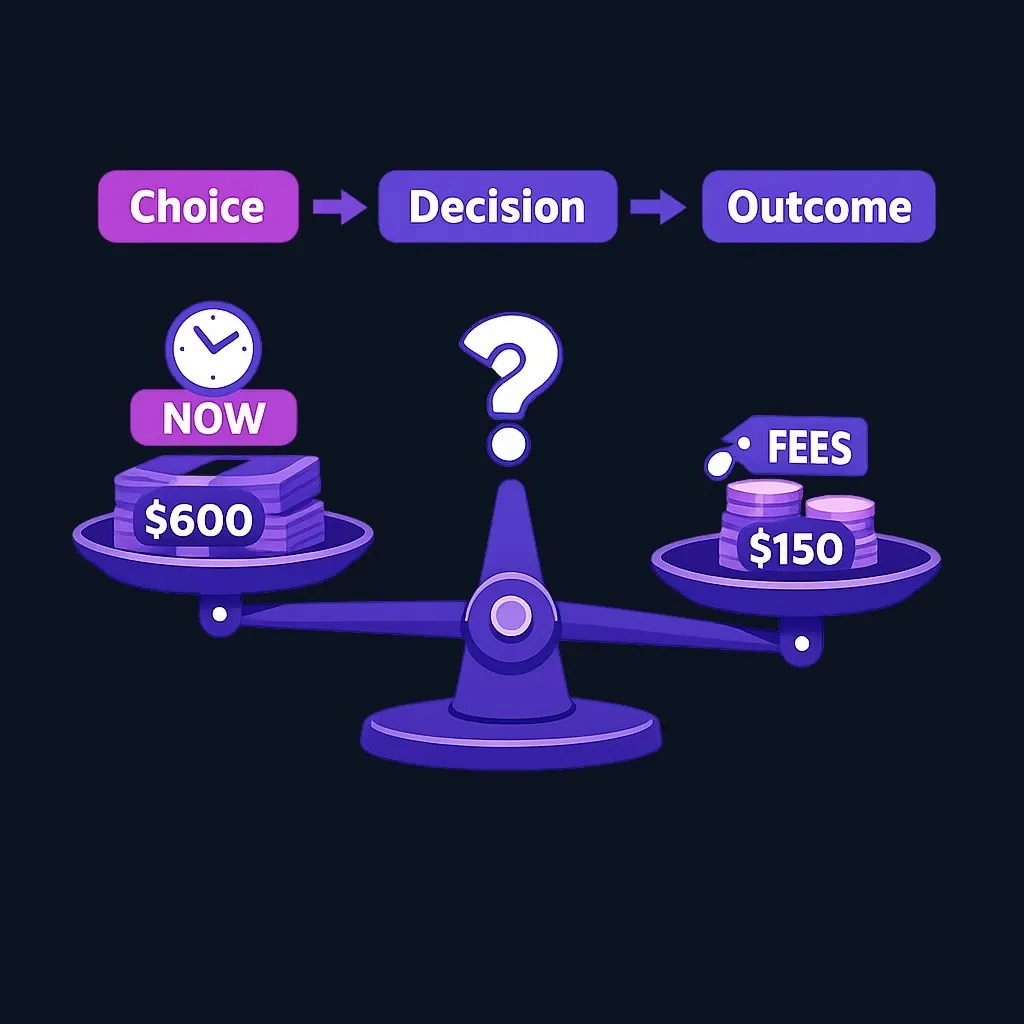
This is a hypothetical example. Count only the costs that genuinely change between your options, and check whether a payment arrangement with the bill provider would cost less.
A refund estimate is not a guarantee
Processing delays, corrections, or offsets can change the timing or amount of a refund. Read the lender's terms instead of assuming that a smaller refund cancels the loan.
Compare waiting, eligible free filing, and lower-cost ways to handle the immediate bill. If you choose an advance, keep a copy of the contract and a written explanation of every charge. The decision should be based on the money you receive now and the refund money you keep later.
Separate the loan price from the cost of obtaining it
A refund advance may advertise no interest while requiring a particular preparation service or disbursement arrangement. Compare the total cost with how you would otherwise file. If you would have used a free or less expensive filing option, an added preparation charge belongs in the practical comparison even when it is not described as loan interest.
Ask for the loan agreement, the identity of the lender, the amount you would receive, and how repayment works. Confirm whether approval is guaranteed—it usually should not be assumed merely because the preparer estimates a refund. A tax refund estimate is based on the return and can change after processing or other adjustments.
Suppose a hypothetical $600 advance carries no loan fee, but obtaining it leads to $150 of additional preparation and account costs compared with your alternative. The household is paying that additional amount to obtain earlier access and the associated services. That example does not establish an APR, and it is not a quote from any provider. It shows why the whole transaction matters.
Practice trading with Finelo
Practice in a simulator, learn with bite-sized lessons, and build confidence before risking real money.
Ask what happens if the refund is delayed or smaller
The repayment clause is particularly important when the refund does not arrive as expected. Ask whether you remain personally liable for a shortfall, when payment becomes due, and whether other fees or collection consequences can follow. Do not rely on an assumption that the lender always bears the risk.
Compare the advance with the actual cost of waiting. A biller might offer a short payment arrangement, while another obligation may have a meaningful late fee. Use the amount and timing of the specific expense rather than treating faster access as automatically worthwhile.
Keep filing decisions separate from marketing pressure. The return should be accurate and based on complete records whether or not a loan is available. An advance is borrowing against an expected payment; it does not increase the refund or make an unsupported tax claim acceptable.
What is a Tax Refund Advance Loan?
A tax refund advance is money advanced to a taxpayer based on their anticipated federal (or state) tax refund; the lender expects repayment from the refund when it arrives. In practice this means:
- You file your tax return (often through a tax-preparation service or provider that partners with a bank).
- The lender approves a small loan sized against your expected refund.
- When the IRS issues the refund, the lender is repaid from it and the remainder (if any) goes to you.
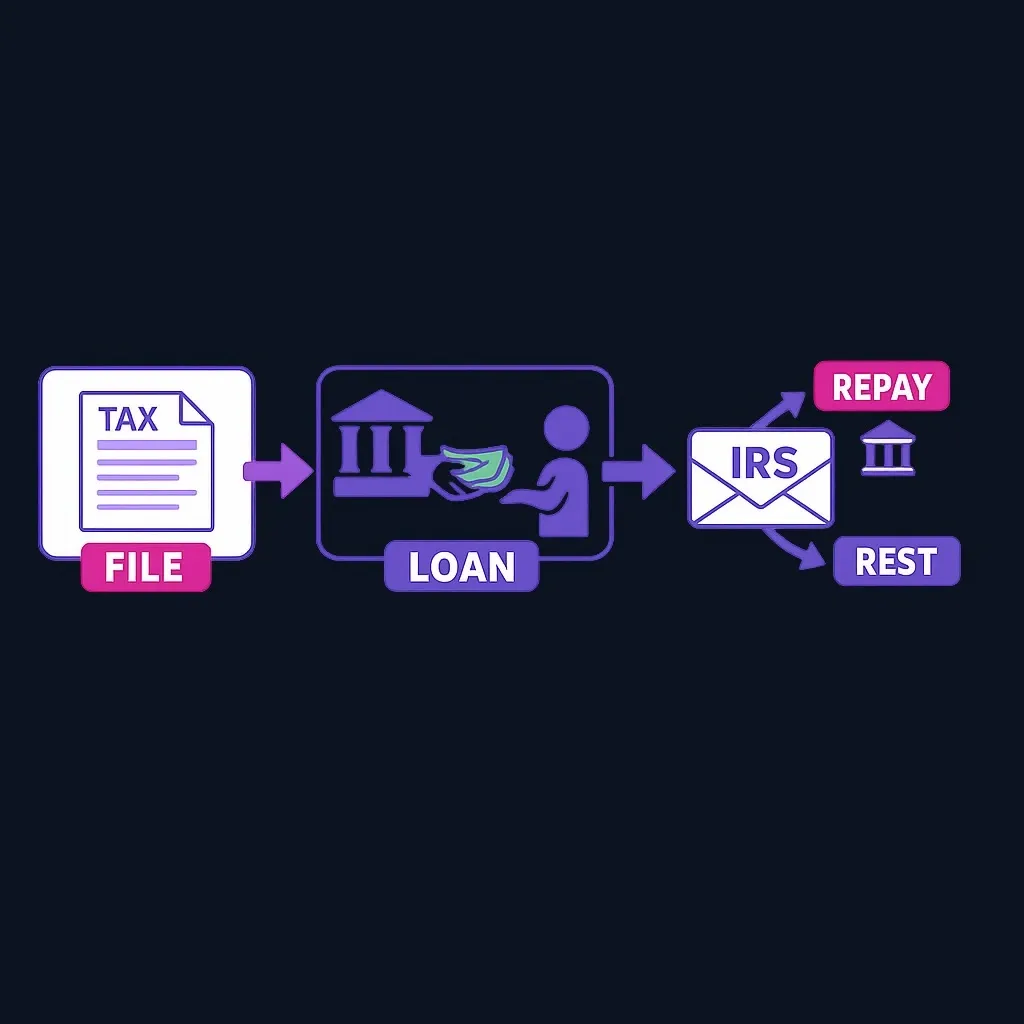
Key features to know (generic, not provider-specific):
- Advance vs. wait: you get money sooner than waiting for the IRS to send the refund.
- Repayment source: the loan is repaid from your tax refund once it is issued.
- Eligibility and underwriting vary by provider and may require identity verification.
Pros and Cons of Tax Refund Advance Loans
Pros
- Speed: advances can deliver cash faster than waiting for an IRS refund, which helps with short-term emergencies.
- Convenience: many tax-preparation services offer advances during filing, simplifying application and repayment logistics.
- If the advance carries no fees or interest from a specific provider, it can be an inexpensive short-term funding option — always confirm with that provider.
Cons and risks
- Reduced immediate refund: the advance is repaid from the refund, so the amount you receive later is reduced by the advance and any applicable charges.
- Fees and effective cost: some advances include fees, interest, or tied product requirements; read terms carefully and compare total outflow versus waiting.
- Underwriting surprises: approval, loan size, or timing can differ from expectations; if your refund is smaller or delayed, follow-up complications can arise.
- Possible delays: loan disbursement is typically quick. But repayment depends on the IRS timeline; issues with your filed return can delay the refund and resolution.
Decision framework (quick):
- How urgent is the cash need? If it’s a true emergency (medical, eviction risk), an advance may be justified.
- Can you cover the shortfall another way (savings, family, employer advance) at lower cost or with clearer terms?
- Does the lender disclose all fees, repayment mechanics, and what happens if the refund is smaller or offset by debt?
- If you must take an advance, choose the option with the clearest, lowest total cost and documented repayment terms.
Worked example
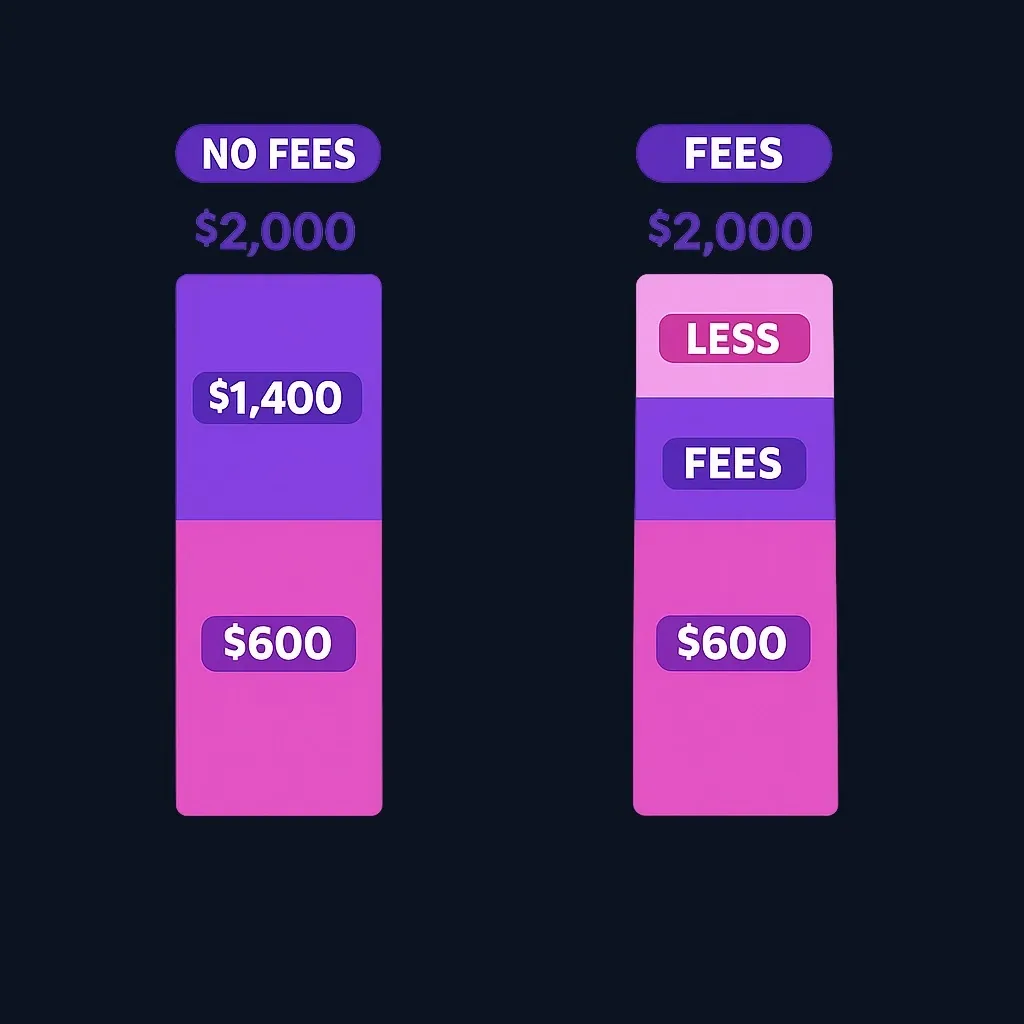
- Scenario: You expect a $2,000 refund but need $600 now to avoid a late bill.
- If a refund advance gives $600 immediately with clearly stated zero fees, the trade may be acceptable.
- If the advance charges fees or requires tied services that reduce your net refund by more than the benefit of early access, waiting or another option is likely better.
Legitimacy and Trustworthiness
A refund advance is a loan based on an expected refund. An accurate description of the product does not establish that every provider or offer is legitimate. Review the lender and contract independently.
- They are not a tax refund themselves; they are loans to be repaid from your refund.
- Legitimacy depends on the lender’s licensing, the bank partner, and clear disclosure of terms.
How to vet a provider (checklist)
- Confirm written terms: repayment method, fees, interest, and what happens if the refund is reduced or offset.
- Ask about credit checks and identity verification requirements.
- Look for a licensed lender or bank partner and clear contact/support channels.
- Avoid providers that pressure you to accept bundled services or that hide fee structures.
Alternatives to Tax Refund Advance Loans
A practical comparison checklist helps you weigh options. The table below compares typical characteristics (qualitative) so you can match the choice to your situation.
| Option | Speed | Typical cost/uncertainty | Repayment complexity | Best when… |
|---|---|---|---|---|
| Tax refund advance | Fast | Varies; check terms | Repaid from refund | You need cash very quickly and accept reduced refund |
| Savings or emergency fund | Fast (if available) | Low | Simple (no repayment) | You have reserves and want to avoid fees |
| Borrow from family/friends | Fast | Potentially low (noncommercial) | Social/relationship cost | You can repay reliably and preserve relationships |
| Short-term personal loan from bank/credit union | Moderate | May have interest; fixed terms | Loan payments over time | You can qualify for a low-rate installment loan |
| Credit card | Depends on the transaction | Purchase and cash-advance costs differ; check interest and fees | Repay the card balance | The exact transaction costs less than the alternatives |
| Employer paycheck advance | Fast | Often small administrative fee or none | Payroll deduction | Employer offers clear terms and you prefer payroll handling |
| Wait for IRS refund | Slow | No cost | N/A | You can cover needs short-term and want to avoid cost |
How to pick
- If you already have low-cost alternatives (savings, family), use them.
- If not, compare the total cost and timing. Ask each lender for a written statement of total fees and what happens if your refund changes.
What is a tax refund advance loan?
A tax refund advance is a short-term loan made to a taxpayer based on an anticipated tax refund; the lender expects repayment from the refund when it is issued.
How do I qualify for a tax refund advance?
Qualification varies by provider and typically depends on your expected refund, identity verification, and the provider’s underwriting. Ask the provider for their eligibility checklist and whether any credit check is performed.
What happens if my refund is less than the loan amount?
Your contract determines whether you owe the shortfall personally and when payment is due. Some products limit borrower liability; others do not. Ask for that clause before accepting the loan, including how refund offsets and delays are handled.
Are there fees associated with tax refund advances?
Fees and costs vary by provider. Some providers may offer advances with no loan fees or interest, while others may charge fees or require tied services. Always request and compare the total cost in writing before deciding.
If your return produces a balance due instead, compare IRS payment plan vs. personal loan.
This guide covers U.S. rules. Finelo provides financial education, not personalized financial, investment, tax, or legal advice.
Financial LiteracyU.S. GuideFinancial Education
Practice trading with Finelo
Practice in a simulator, learn with bite-sized lessons, and build confidence before risking real money.
About the author
Finelo Team
The Finelo Team creates practical investing and trading education designed to help beginners learn faster with structured challenges, simulator practice, and bite-sized lessons.
Keep reading — Related articles

Financial Literacy
USDA vs. FHA loan
Compare location and income eligibility, down payments, credit conditions, and upfront and annual program charges for a home purchase.
Finelo Team

Financial Literacy
Term life vs. accidental death insurance
Compare broad term-life protection with accident-only coverage, including exclusions, underwriting, and the family income gap.
Finelo Team

Financial Literacy
Term life insurance laddering vs. one policy
Compare several term policies ending at different times with one policy, using coverage needs, costs, and future insurability.
Finelo Team