Last editorial review: September 28, 2026
Life insurance loan vs. withdrawal
Compare cash-value access, policy debt, reduced coverage, MEC tax rules, and the risk of a lapse with an outstanding loan.
10 min read
Practice trading with Finelo
Practice in a simulator, learn with bite-sized lessons, and build confidence before risking real money.
Want to learn more?
Practice in a simulator, learn with bite-sized lessons, and build confidence before risking real money.
Explore FineloExplore Finelo's 28-day challenges
Turn learning into a daily habit with guided challenge paths.
Some permanent life-insurance policies let you borrow against or withdraw cash value. A loan creates an interest-bearing balance. A withdrawal removes value from the policy. Both can reduce what beneficiaries receive and can weaken the policy if too much value is removed.
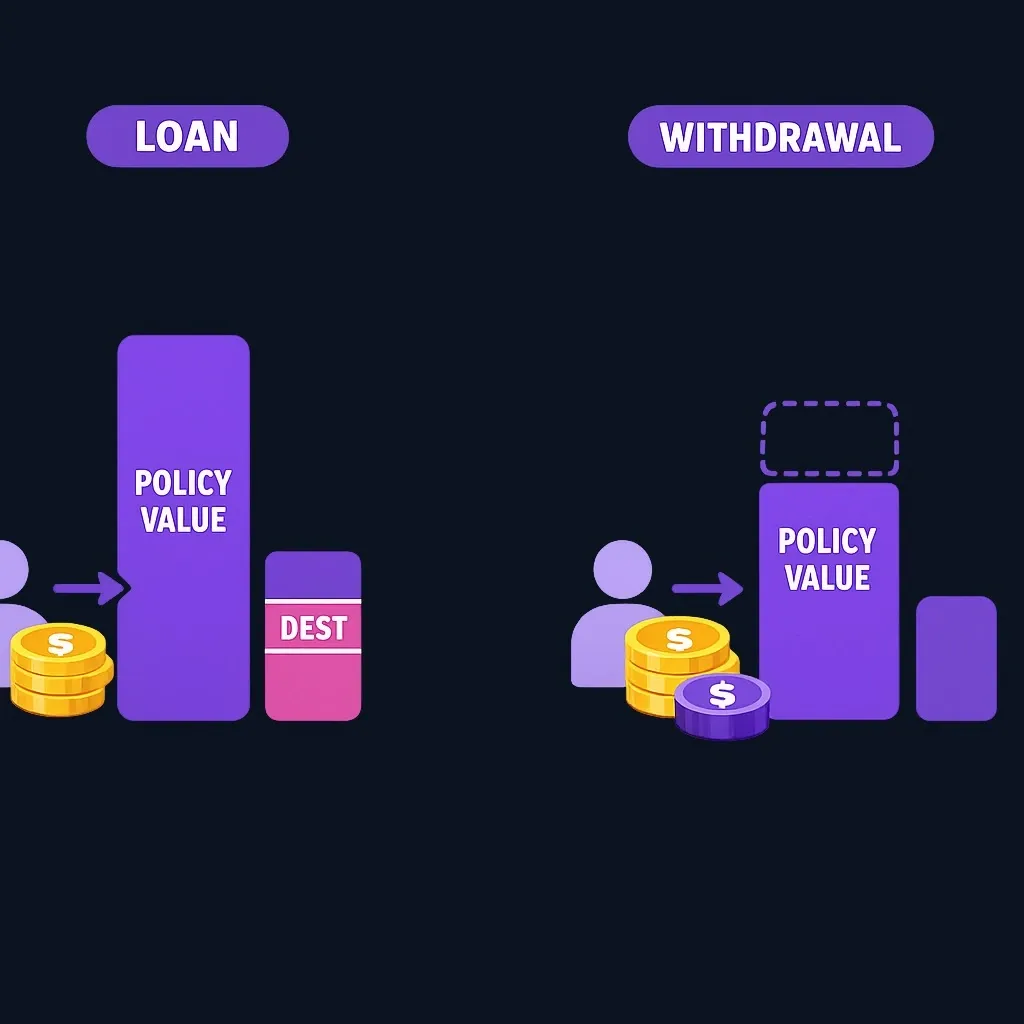
Term life insurance generally has no cash value to access. Start by identifying the policy you own.
Compare the mechanics
| Feature | Policy loan | Withdrawal |
|---|---|---|
| Repayment | An unpaid balance and interest remain against the policy | The withdrawn amount generally is not repaid as a loan |
| Death benefit | Usually reduced by outstanding debt | May be reduced under the contract |
| Ongoing policy | Can remain in force if adequately funded | Can remain in force if adequately funded |
| Main risk | Growing debt, lapse, and possible tax consequences | Reduced coverage, charges, and possible tax consequences |
The Texas insurance regulator's life-insurance guide explains cash value and policy borrowing. Use it for general concepts; your contract controls the actual loan rate, available amount, and effect on coverage.
Do not assume the money is tax-free
There are three separate tax questions:
- An ordinary policy withdrawal: For a qualifying life-insurance policy that is not a modified endowment contract, withdrawals are generally treated as a return of the investment in the contract first. Amounts beyond that basis can be taxable. Early policy changes and other exceptions can alter the result.
- A modified endowment contract, or MEC: Distributions generally reach taxable gain first, and loans can be treated as distributions. A further 10% tax can apply to the taxable amount before age 59½ unless an exception applies.
- A policy ending with debt: A loan that did not create tax when taken can have a different result if the policy later lapses or is surrendered with the debt still outstanding.
The governing rules appear in Internal Revenue Code section 72, including subsections (e) and (v). Confirm the policy’s MEC status rather than inferring it from the product name.
The IRS income guide explains taxation when a policy is surrendered for more than its tax cost. Ask the insurer for the relevant figures and obtain tax guidance before acting.
Compare the cost of keeping the policy alive
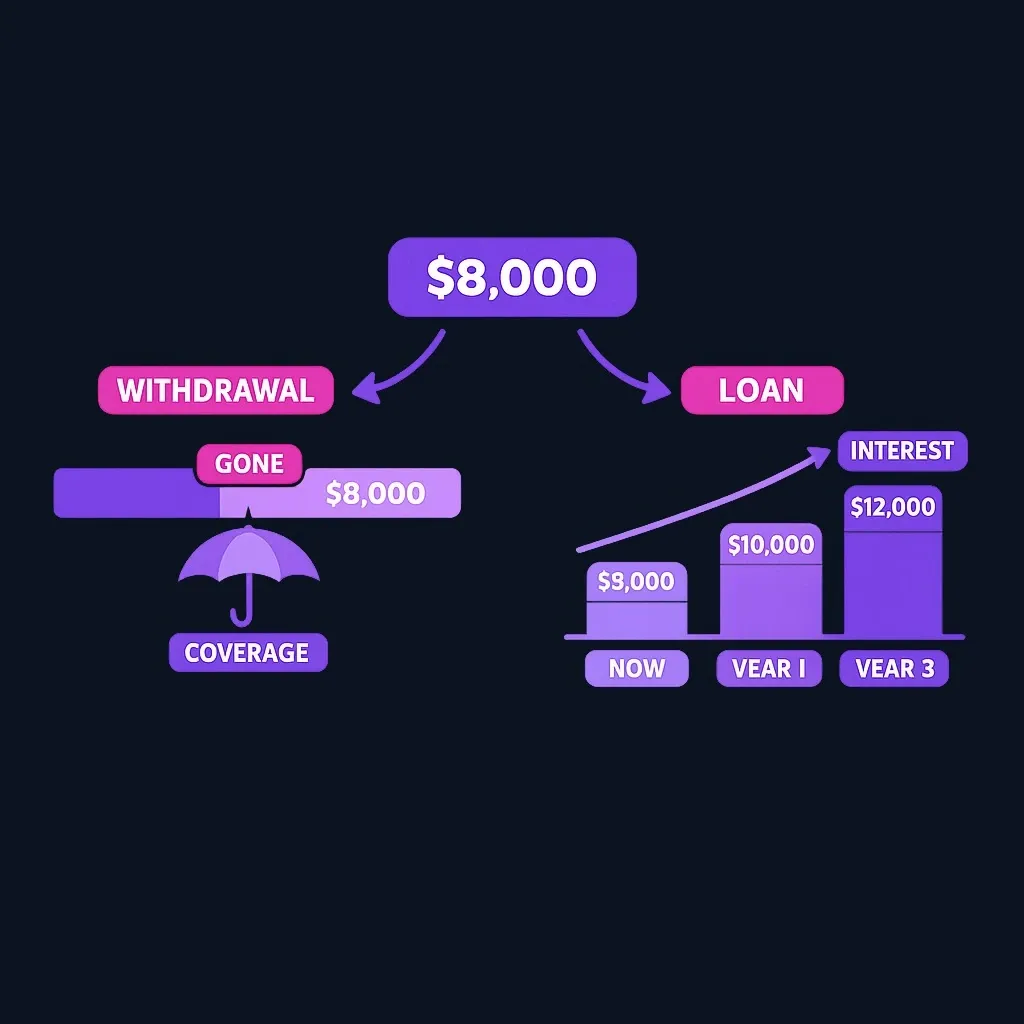
Suppose you need $8,000. A withdrawal removes that amount permanently and may reduce coverage under the contract. A loan leaves an $8,000 debt balance, with interest accumulating if it is not paid. Neither choice should be judged only by the cash arriving today.
Ask the insurer for the current tax basis, cash surrender value, loan balance, interest rate, and projected funding needed after the transaction. Have it show the potential tax reporting if you later surrender the policy. A projection of future cash value is not a guarantee that the policy will support an unpaid loan indefinitely.
Request an updated illustration
Ask the insurer to show the policy with no transaction, the proposed loan, and the proposed withdrawal. Compare premiums needed to maintain coverage, death benefits, loan interest, and lapse risk under less favorable assumptions.
If the policy protects someone who depends on your income, include that person's needs in the decision. Available cash value is not necessarily money you can remove without changing the protection you bought.
Request an illustration that includes an unfavorable outcome
A current statement describes the policy today. An in-force illustration can help show what a proposed loan or withdrawal may do over time. Request separate projections for repaying the loan, paying only interest where allowed, and allowing interest to accumulate. Distinguish guaranteed values from assumptions about nonguaranteed performance.
Ask how much additional premium may be needed to keep the contract in force after the transaction. A policy that appeared self-supporting before cash was removed may need different funding afterward. The important question is whether you can maintain the insurance you still need, not merely whether the insurer will release the requested cash.
For a loan, review the current rate, whether it can change, how interest is charged, and how net death proceeds are calculated. For a withdrawal, review any charge and the permanent effect on cash value and death benefit. Have the insurer identify the policy's tax basis and modified-endowment-contract status rather than estimating either from total premiums alone.
If the policy later becomes unaffordable, a surrender or lapse can have consequences very different from the original cash-access decision. Ask about that outcome before borrowing, especially when there is already an outstanding loan. Keep the updated illustration and review the policy regularly after the transaction.
Practice trading with Finelo
Practice in a simulator, learn with bite-sized lessons, and build confidence before risking real money.
What is a Life Insurance Loan?
A life insurance (policy) loan is borrowing against the cash-surrender value that has built up inside certain permanent life insurance policies. The insurer lends you funds using your policy's cash value as collateral. Key conceptual points:
- Source of funds: The carrier lends against the policy’s available value while the policy remains in force.
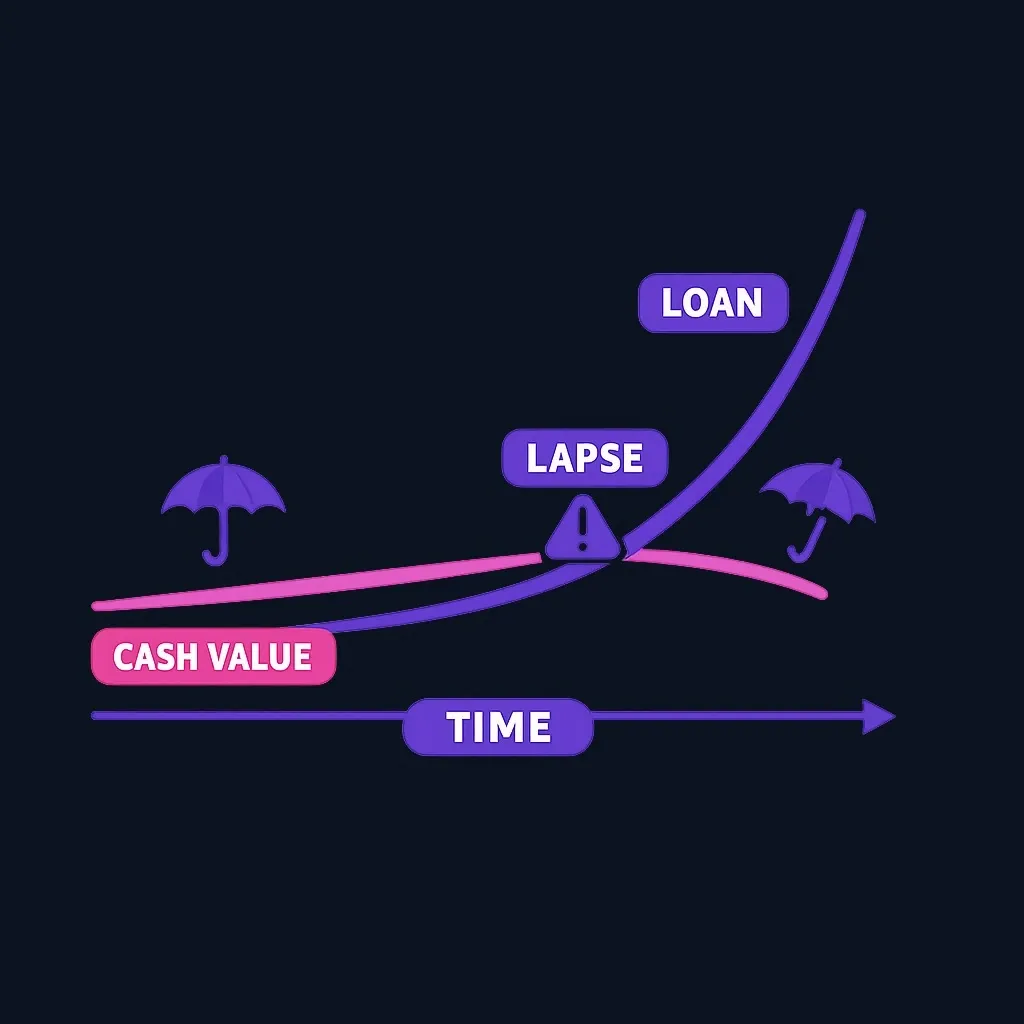
- Repayment: Loans create a balance that accrues interest until repaid. If the outstanding loan plus interest equals or exceeds cash value, the policy can lapse; that reduces or cancels the death benefit.
- Typical uses: Policy loans are used for liquidity events where the owner prefers to keep the policy active and avoid surrendering it.
Concrete example (illustrative, not a quote from any provider): Borrowing to cover a 6–12 month shortfall while you expect wages to resume may provide temporary cash while maintaining the contract, but can alter policy values—assuming you can resume repayments and the loan interest is manageable. Caveat: Exact loan rules, interest rates, and repayment flexibility vary by insurer and product. Confirm policy-specific terms with your carrier.
What is a Life Insurance Withdrawal?
A withdrawal (also called a partial surrender or partial cash-out) is taking money directly from a policy's cash value and reducing that cash value permanently. Core ideas:
- Permanent reduction: Withdrawn cash does not have to be repaid; it generally lowers the policy's accumulated value and, often, the death benefit.
- Availability: Availability depends on the contract. Universal life may allow partial withdrawals; a whole-life contract can use different surrender or paid-up-addition rules. Do not assume every cash-value policy permits the same withdrawal method.
- Use cases: Withdrawals suit needs where you want to remove funds permanently and do not plan to restore the policy value.
Compare the insurer’s projections for both methods. A withdrawal can permanently reduce benefits, while an unpaid loan and interest can also reduce net proceeds or cause a lapse. Neither method automatically preserves the death benefit or future growth.
How to compare your options
What to weigh when choosing between a loan and a withdrawal. Each bullet includes a practical decision point you can apply.
Repayment ability and timeline
- Decision point: If you can realistically repay within months to a few years, a loan may be preferable to preserve policy structure.
Importance of death benefit
- Decision point: If maintaining the face amount for beneficiaries is the primary goal, avoid options that permanently lower that benefit.
Tax considerations and policy basis
- Decision point: Obtain the insurer’s investment-in-the-contract figure and MEC status. Premiums paid are not always the same as current tax basis, and comparing premiums with cash-value growth does not establish how a distribution is taxed.
Policy performance and dividends
- Decision point: With participating policies that pay dividends, withdrawals or loans can change future dividend calculations and long-term policy performance.
Cost of borrowing
- Decision point: Compare loan interest rates and any fees against alternative borrowing (e.g. bank loan, home equity) before tapping policy value.
Alternatives and urgency
- Decision point: If you can delay liquidity needs, consider preserving cash value; if the need is immediate and permanent, a withdrawal may be simpler.
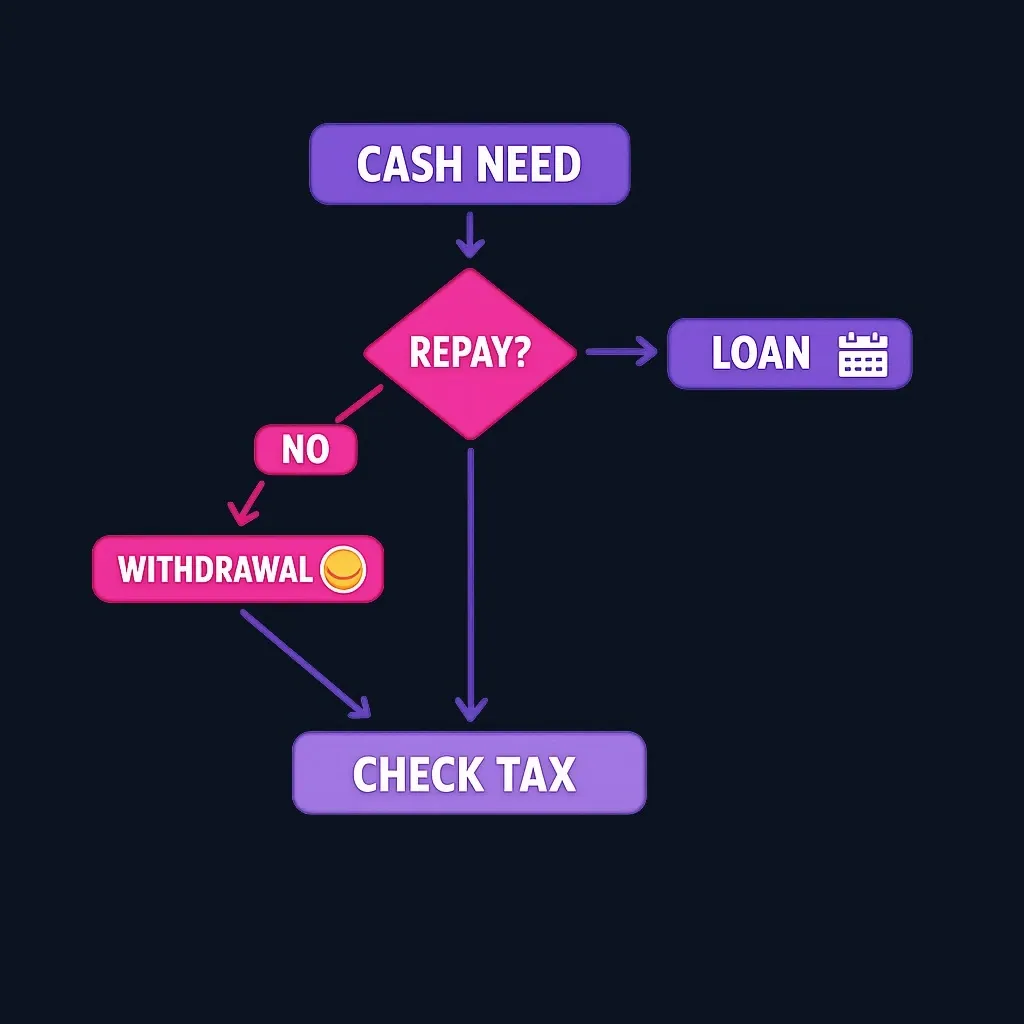
Concrete decision framework (simple checklist):
- Is the cash need temporary and repayable? If yes, evaluate loan interest and policy sustainability.
- Is preserving long-term coverage critical? If yes → prefer options that keep policy intact.
- Will the withdrawal or loan create a taxable event for you? Consult a tax professional.
- Compare loan interest vs. external borrowing costs. Consider the lower-cost, lower-risk path. Practical caveat: Policy contracts vary; always confirm the exact mechanics, fees, and consequences with your insurer or agent.
When to choose each option
Use these scenario-based heuristics to map real needs to a choice.
- Consider a loan when:
- You expect to repay soon and want to keep your policy active.
- You prefer to avoid any immediate, permanent reduction in coverage.
- You want access to funds without surrendering the contract.
- Consider a withdrawal when:
- You need cash and are willing to accept a permanent cut to cash value and death benefit.
- Repayment is unlikely or you prefer no ongoing interest charges.
- You are partially surrendering a policy for other financial restructuring.
Example scenario A (short-term emergency): A temporary income gap makes a policy loan attractive because it can bridge the shortfall while keeping the contract in force while the outstanding debt affects net policy benefits—when repayment is likely. Example scenario B (ongoing need for funds): If you anticipate a long-term need and do not plan to restore the policy value, a withdrawal reduces administrative complexity and ongoing repayment obligations. Caveat: The best choice depends on personal priorities—liquidity, coverage continuity, tax position, and how the policy grows. Confirm policy rules with your carrier.
Tradeoffs and caveats
Loan interest and compounding risk
- Issue: Loan interest can accumulate and erode cash value over time.
- Fix: Monitor outstanding balance and make periodic repayments when possible.
Policy lapse risk
- Issue: Large unpaid loans can cause a lapse and potential taxable income. Any surrender charge depends on the contract and policy year; it is not an automatic additional charge in every lapse.
- Fix: Maintain sufficient cash value margin or make partial repayments.
Permanent loss of upside (withdrawals)
- Issue: Withdrawals reduce future growth potential and any dividends tied to the cash value.
- Fix: Consider a smaller withdrawal combined with other funding sources.
Tax complexity
- Issue: Withdrawals and policy surrenders can create taxable events in some situations.
- Fix: Review policy basis and consult a tax professional before withdrawing large amounts.
Insurer-specific rules and fees
- Issue: Not all insurers treat loans and withdrawals the same way; some products impose surrender charges or minimums.
- Fix: Read your policy contract and ask the carrier for a written illustration of consequences.
Practical monitoring checklist:
- Request a policy status statement showing cash value and loan balance.
- Ask for a written example of how an outstanding loan would affect the death benefit.
- Recheck loan interest rates and whether they are fixed or variable.
- Confirm any withdrawal charges or limits for the current policy year.
The NAIC’s life-insurance roadmap explains cash-value access and other policy considerations. Compare it with your insurer’s written transaction illustration.
What is the difference between a policy loan and a withdrawal?
A policy loan borrows against your policy’s cash value and creates an outstanding balance that accrues interest; a withdrawal permanently removes cash value without repayment. The exact effects on death benefit and tax status depend on your policy and circumstances.
How do I access the cash value of my life insurance policy?
Access methods vary by policy type and insurer. Common methods include policy loans and partial withdrawals; some policies also allow full surrender. Contact your insurer for the exact steps and request a written illustration.
What happens to my policy if I take a loan?
Taking a loan increases your policy’s outstanding balance and interest accrual. If the loan plus interest approaches or exceeds cash value, the policy could lapse, reducing or eliminating the death benefit. Review your policy’s terms and get a current policy status before borrowing.
Are there fees associated with taking a loan or withdrawal?
Insurers may charge interest on loans and may assess withdrawal or surrender charges depending on the product and timing. Check your policy contract and ask for an itemized explanation before transacting.
If the policy protects retirement income for a partner, read Pension survivor benefit vs. life insurance.
This guide covers U.S. rules. Finelo provides financial education, not personalized financial, investment, tax, or legal advice.
Financial LiteracyU.S. GuideFinancial Education
Practice trading with Finelo
Practice in a simulator, learn with bite-sized lessons, and build confidence before risking real money.
About the author
Finelo Team
The Finelo Team creates practical investing and trading education designed to help beginners learn faster with structured challenges, simulator practice, and bite-sized lessons.
Keep reading — Related articles
Financial Literacy
USDA vs. FHA loan
Compare location and income eligibility, down payments, credit conditions, and upfront and annual program charges for a home purchase.
Finelo Team
Financial Literacy
Term life vs. accidental death insurance
Compare broad term-life protection with accident-only coverage, including exclusions, underwriting, and the family income gap.
Finelo Team
Financial Literacy
Term life insurance laddering vs. one policy
Compare several term policies ending at different times with one policy, using coverage needs, costs, and future insurability.
Finelo Team