Last editorial review: September 28, 2026
Medicare Advantage HMO vs. PPO

Compare networks, referrals, out-of-network costs, drug coverage, and provider access when choosing a Medicare Advantage plan.
8 min read
Practice trading with Finelo
Practice in a simulator, learn with bite-sized lessons, and build confidence before risking real money.
Want to learn more?
Practice in a simulator, learn with bite-sized lessons, and build confidence before risking real money.
Explore FineloExplore Finelo's 28-day challenges
Turn learning into a daily habit with guided challenge paths.
An HMO generally relies on a provider network and usually requires referrals for specialists. A PPO typically allows covered out-of-network care at a higher cost and does not require specialist referrals. Neither label tells you whether your doctors, medicines, or treatments are covered.
Compare the specific plans available where you live for the year you need coverage.
The main differences
| Feature | HMO | PPO |
|---|---|---|
| Routine care | Generally within the network, with exceptions | In-network or eligible out-of-network care |
| Primary care doctor | Usually required | Generally not required |
| Specialist referral | Usually required | Generally not required |
| Prior authorization | May apply | May apply |
Medicare's HMO guide and PPO guide explain these structures. Emergency and urgent care have special protections. Some HMO point-of-service arrangements also allow certain out-of-network services.
Check access before price
Confirm each essential doctor and hospital with both the plan and provider. A PPO does not guarantee that every out-of-network provider will treat you or that every service will be covered. Ask how the plan handles the treatment you expect to need.
Review the prescription formulary, pharmacy network, prior authorization, and any ongoing course of treatment. A referral and a prior authorization are different requirements.
Compare total annual cost
A $0 plan premium does not mean healthcare is free. Include the applicable Part B premium, plan premium, deductible, copayments, coinsurance, and drug costs. Compare the medical out-of-pocket limits and what those limits exclude.
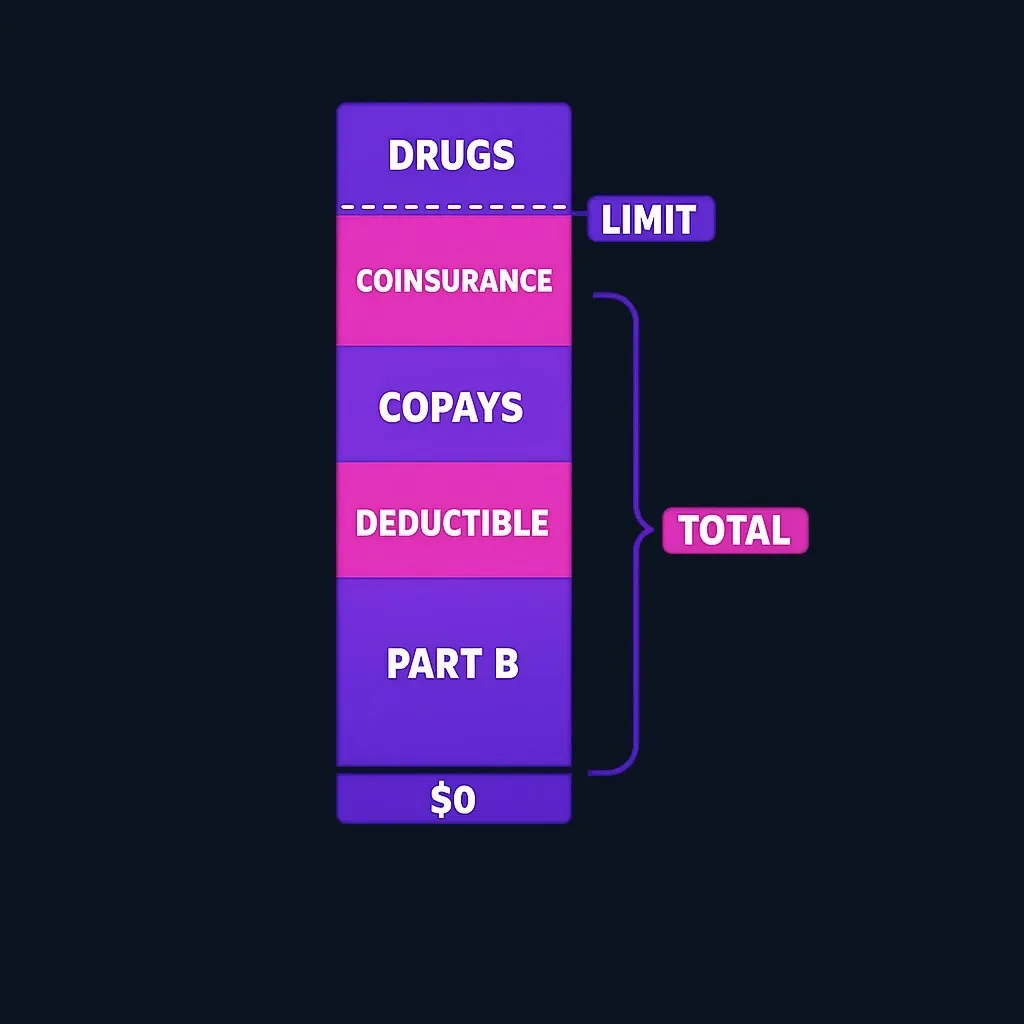
For a hypothetical person with frequent specialist visits, copayments and provider access may outweigh a small premium difference. For someone who travels regularly, the rules for routine care away from home may be especially important.
Use the plan's current Summary of Benefits and Evidence of Coverage. Do not choose based on national averages or an assumed rule that HMOs always cost less.
Build the comparison around your care, not a plan average
List your doctors, hospitals, prescriptions, preferred pharmacies, and treatments already planned. For each candidate plan, confirm participation for the relevant plan year. A provider's participation with one product from an insurer does not necessarily mean participation with every product sold under that insurer's name.
For a PPO, ask whether an out-of-network provider will accept the plan and what your share of the cost would be. Out-of-network benefits do not compel every provider to treat you. For an HMO, check any point-of-service option and the exact exceptions to network restrictions. Use the Evidence of Coverage rather than a general description alone.
Keep routine costs separate from a difficult year
Make one estimate for expected care and another for a year with substantially more covered services. Include premiums separately from cost sharing, and do not simply add every deductible and maximum together. Check which payments count toward the relevant limit and how drug costs are handled.
Prior authorization and referrals are different requirements. A plan can let you see a specialist without a referral while still requiring authorization for a procedure. Ask about the specific service, who submits the request, and what happens if authorization is denied. These details can affect the practical value of a plan even when its provider list looks suitable.
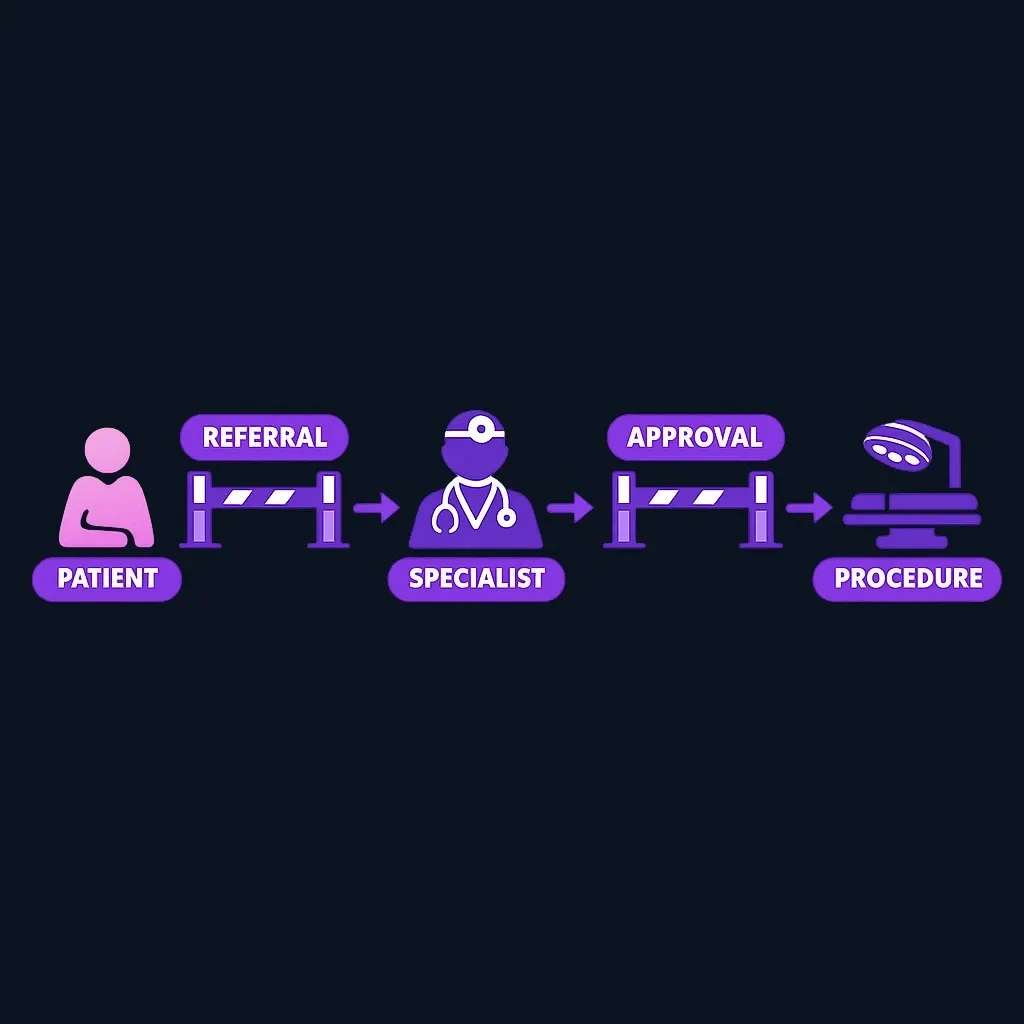
Review the comparison each year. Costs, networks, covered drugs, and health needs can change. Keep a dated copy of the information used for enrollment and confirm effective dates before replacing coverage. The strongest choice is a plan whose actual rules fit the care you need and the costs you can absorb.
Practice trading with Finelo
Practice in a simulator, learn with bite-sized lessons, and build confidence before risking real money.
What is an HMO Plan?
An HMO (Health Maintenance Organization) Medicare Advantage plan generally:
- Uses a defined network of providers; care is covered only when delivered by network doctors and hospitals, subject to exceptions such as emergency care, out-of-area urgent care, and out-of-area dialysis.
- Usually requires you to select a primary care physician (PCP) who coordinates care and provides referrals to specialists in the network. This structure helps control costs and utilization.
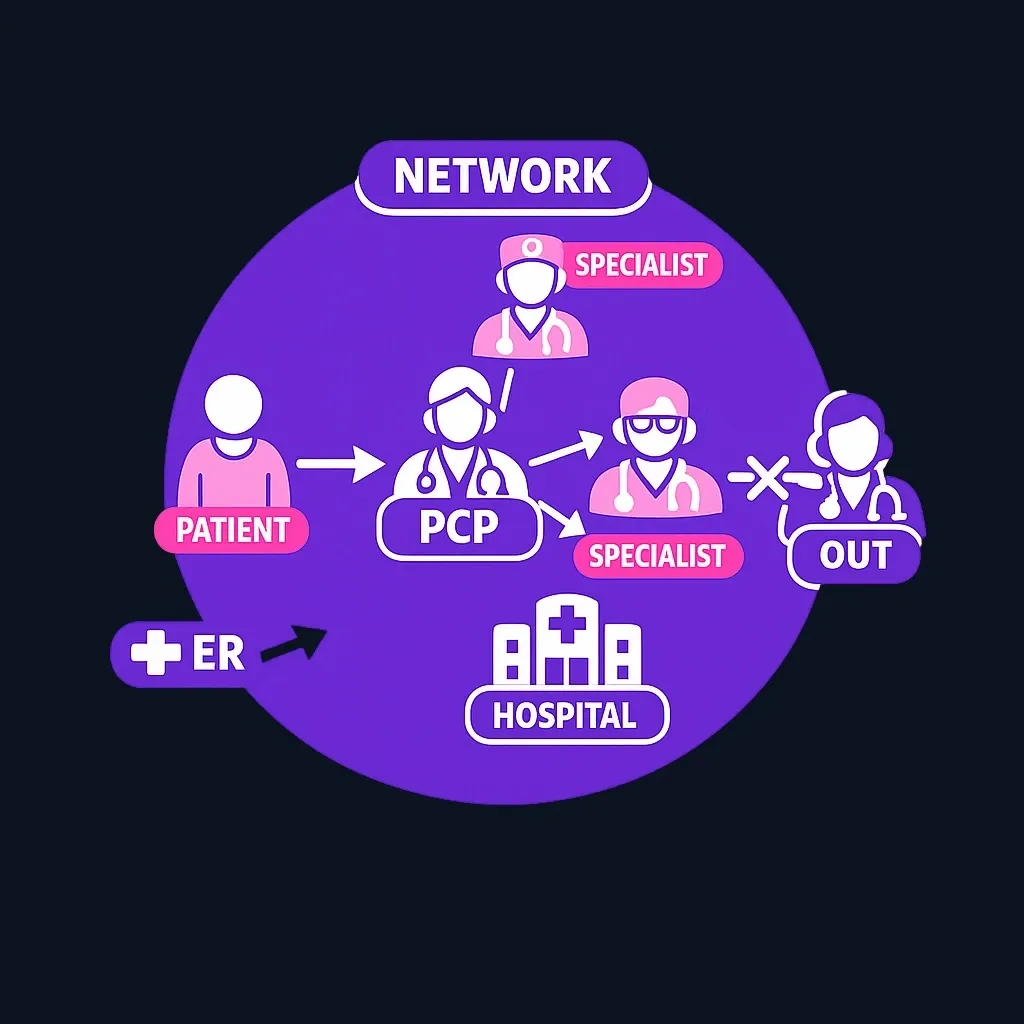
Example: If you live in a single metropolitan area and your local hospital and PCP are in the plan’s network, an HMO can keep out-of-pocket spending low because the plan negotiates rates and requires coordination through the PCP. Caveat: Network limits can be restrictive if you split time between locations or prefer specific out-of-network specialists. Verify provider participation in the plan’s network before enrolling.
What is a PPO Plan?
A PPO (Preferred Provider Organization) Medicare Advantage plan generally:
- Offers a network of preferred providers but pays some benefits for out-of-network care, typically at higher cost-sharing than in-network services.
- Often does not require you to choose a PCP or obtain referrals to see specialists, although prior authorization may still apply to a particular service.
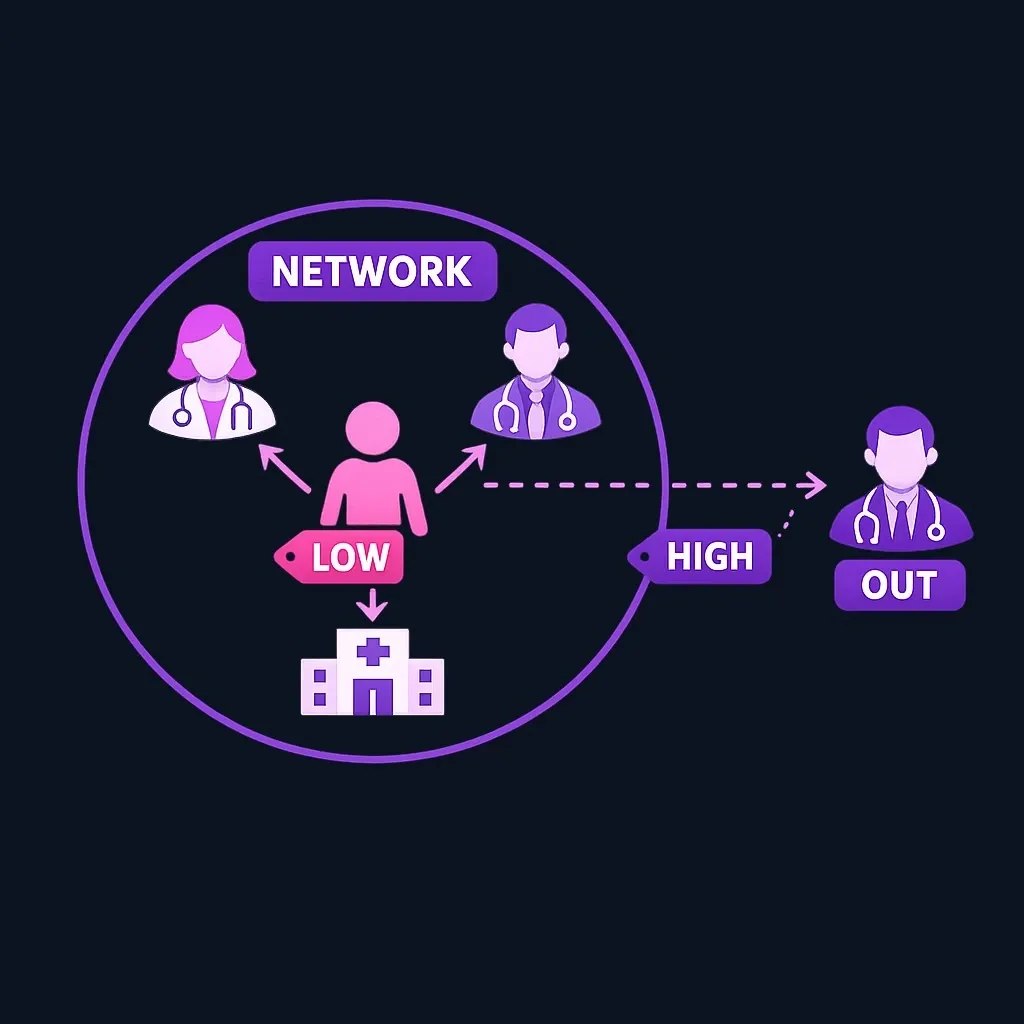
Example: A retiree who splits time between states or travels frequently may value a PPO because it provides more flexibility to see providers outside the plan’s core network. Caveat: Compare the actual premium, out-of-pocket limits, and out-of-network cost sharing. The PPO label alone does not establish how these compare with a particular HMO.
How to compare your options
To choose between HMO and PPO, weigh these practical criteria:
- Provider continuity — Check every essential clinician, hospital, and treatment facility. One unavailable specialist can matter more than a percentage of doctors who happen to be in-network.
- Frequency and type of care — People who need frequent specialist visits or expect referrals benefit from the PPO’s no-referral access; those with predictable primary-care needs may save with an HMO.
- Travel and second homes — If you split time between states or travel seasonally, PPOs typically provide better out-of-network coverage. Verify how the plan handles urgent/emergency care and non-network routine care.
- Cost sensitivity — Compare actual premiums, service copayments, coinsurance, and the applicable out-of-pocket limits in each available plan. The HMO or PPO label is not a price quote.
- Prior authorization and utilization controls — Medicare Advantage plans commonly require prior authorization for certain services; that applies across plan types and can affect access and timing.
Practical tip: Build a simple "expected cost" spreadsheet for the year that includes premium, projected visits, drug costs, and a high-use estimate using the plan’s medical out-of-pocket limits to compare realistic totals between options.
When to choose each option
HMO may be better if:
- The HMO includes your important providers, and its actual premiums and cost sharing fit your expected care. Confirm referrals, authorization, and out-of-area rules before choosing.
PPO may be better if:
- You want flexibility to see out-of-network providers, travel often, or prefer to access specialists without referrals. PPOs allow out-of-network care at higher cost-sharing, which can be valuable for people with multi-state living arrangements.
Hypothetical comparison: Alice needs care from a local network and compares the actual HMO and PPO costs for those services. Ben spends time in another state and first checks whether the PPO will cover the routine care and providers he needs there. Neither can choose reliably from the plan label alone.
Tradeoffs and caveats
- Network changes: Insurers can change their provider networks or contracts. A provider who is in-network one year may not be the next; verify provider participation annually before re-enrolling.
- Prior authorization: Medicare Advantage plans commonly require prior authorization for certain services. That affects both HMOs and PPOs and can delay or limit coverage for some procedures.
- Emergency vs routine out-of-network care: Emergencies are treated differently from routine out-of-network services; emergency care is usually covered regardless of network, but routine non-emergency out-of-network care often is not covered by HMOs.
- Out-of-pocket limits: Check separate in-network and combined limits where applicable, and identify expenses that do not count toward them. A limit is not a substitute for checking whether a service is covered.
- Local variation: Plan design, premiums, and networks vary widely by county and insurer; national generalizations are only a starting point.
Common mistakes and how to avoid them:
- Mistake: Choosing a plan based only on a $0 premium. Fix: Add likely copays and expected specialist visits to a total-cost estimate.
- Mistake: Assuming your doctor will remain in-network. Fix: Confirm network participation for the upcoming contract year and have a backup plan.
- Mistake: Ignoring prior authorization rules. Fix: Check Evidence of Coverage for services that need prior authorization and whether the plan has utilization management that affects scheduling.
What are the main differences between HMO and PPO plans?
HMOs restrict coverage to in-network providers (with specified exceptions) and typically require a PCP and referrals; PPOs allow out-of-network care at higher cost-sharing and usually do not require referrals. For plan-specific rules, see Medicare’s comparison of plan types.
Which plan is better for my healthcare needs?
“Better” depends on priorities: choose HMO if lower premiums, more coordinated care, and strong local network matter; choose PPO if flexibility to see out-of-network providers or specialist access without referrals is important. Use the decision criteria above to estimate expected total costs and access needs.
How do referrals work in HMO and PPO plans?
HMOs commonly require a referral from your PCP before a specialist visit. PPOs typically let you see specialists without a referral. Check each plan’s Evidence of Coverage for authorization requirements, which are separate from referrals.
If you are considering Original Medicare with a supplement instead, compare Medigap Plan G vs. Plan N.
This guide covers U.S. rules. Finelo provides financial education, not personalized financial, investment, tax, or legal advice.
Financial LiteracyU.S. GuideFinancial Education
Practice trading with Finelo
Practice in a simulator, learn with bite-sized lessons, and build confidence before risking real money.
About the author
Finelo Team
The Finelo Team creates practical investing and trading education designed to help beginners learn faster with structured challenges, simulator practice, and bite-sized lessons.
Keep reading — Related articles

Financial Literacy
USDA vs. FHA loan
Compare location and income eligibility, down payments, credit conditions, and upfront and annual program charges for a home purchase.
Finelo Team

Financial Literacy
Term life vs. accidental death insurance
Compare broad term-life protection with accident-only coverage, including exclusions, underwriting, and the family income gap.
Finelo Team

Financial Literacy
Term life insurance laddering vs. one policy
Compare several term policies ending at different times with one policy, using coverage needs, costs, and future insurability.
Finelo Team