Last editorial review: September 28, 2026
Medigap Plan G vs. Plan N

Compare Plan G and Plan N premiums, copays, excess charges, and enrollment rights under Original Medicare.
10 min read
Practice trading with Finelo
Practice in a simulator, learn with bite-sized lessons, and build confidence before risking real money.
Want to learn more?
Practice in a simulator, learn with bite-sized lessons, and build confidence before risking real money.
Explore FineloExplore Finelo's 28-day challenges
Turn learning into a daily habit with guided challenge paths.
Plan G and Plan N help pay certain out-of-pocket costs under Original Medicare. Plan G covers Part B excess charges; Plan N does not and can require copayments for some visits. Both leave the Part B deductible to you.
They are Medigap policies, not Medicare Advantage plans. They also do not make every healthcare expense a covered expense.
Compare standardized benefits
| Cost | Plan G | Plan N |
|---|---|---|
| Part B deductible | You pay | You pay |
| Covered Part B coinsurance | Generally covered | Generally covered, with specified copays |
| Part B excess charges | Covered | Not covered |
| Certain office and emergency visits | No Plan N-style copays | Up to $20 for some office visits and up to $50 for an emergency visit without inpatient admission |
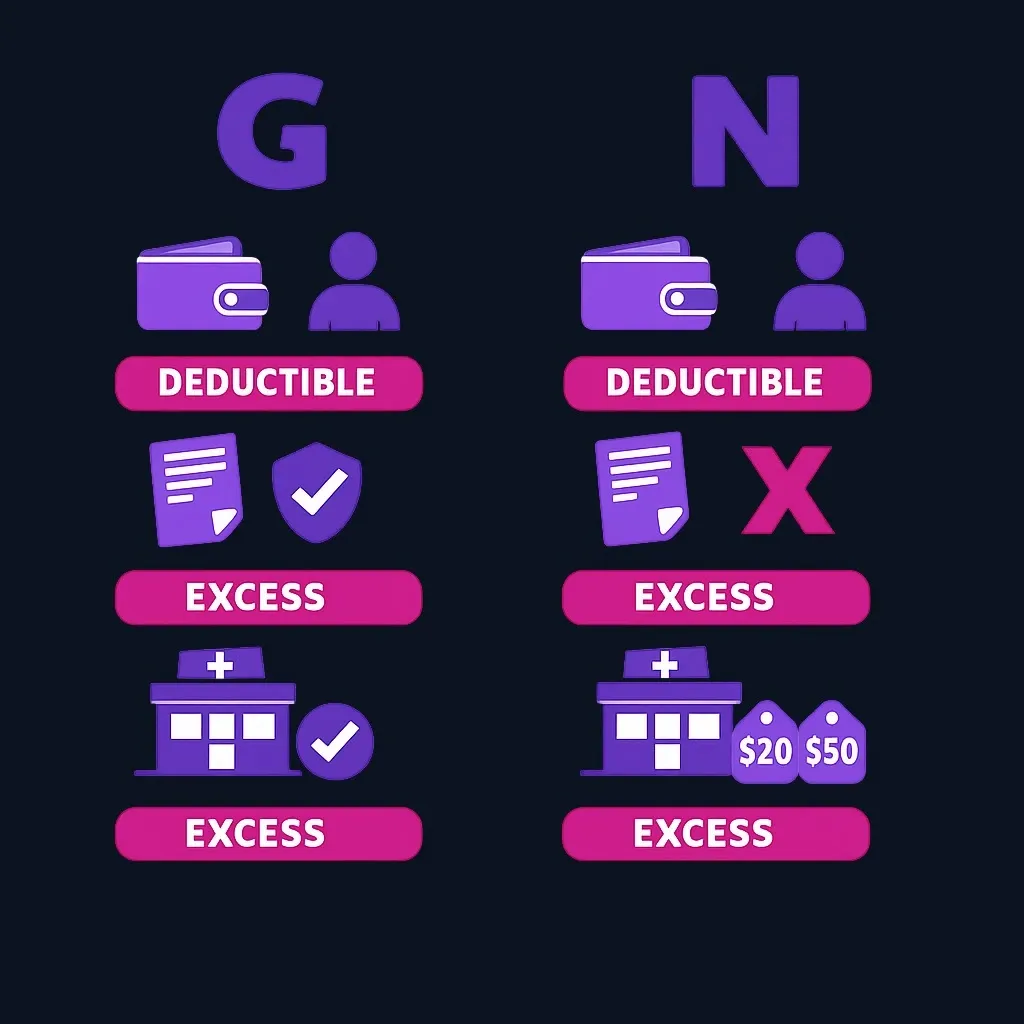
See Medicare's Medigap comparison. Massachusetts, Minnesota, and Wisconsin standardize Medigap differently. A high-deductible Plan G, where offered, is also a separate comparison from ordinary Plan G.
Compare premium savings with likely exposure
Suppose Plan N costs $25 less a month. That is $300 in annual premium savings before differences in copays or excess charges. This hypothetical example is not a quote. Compare actual premiums for your location, age, eligibility, and insurer.
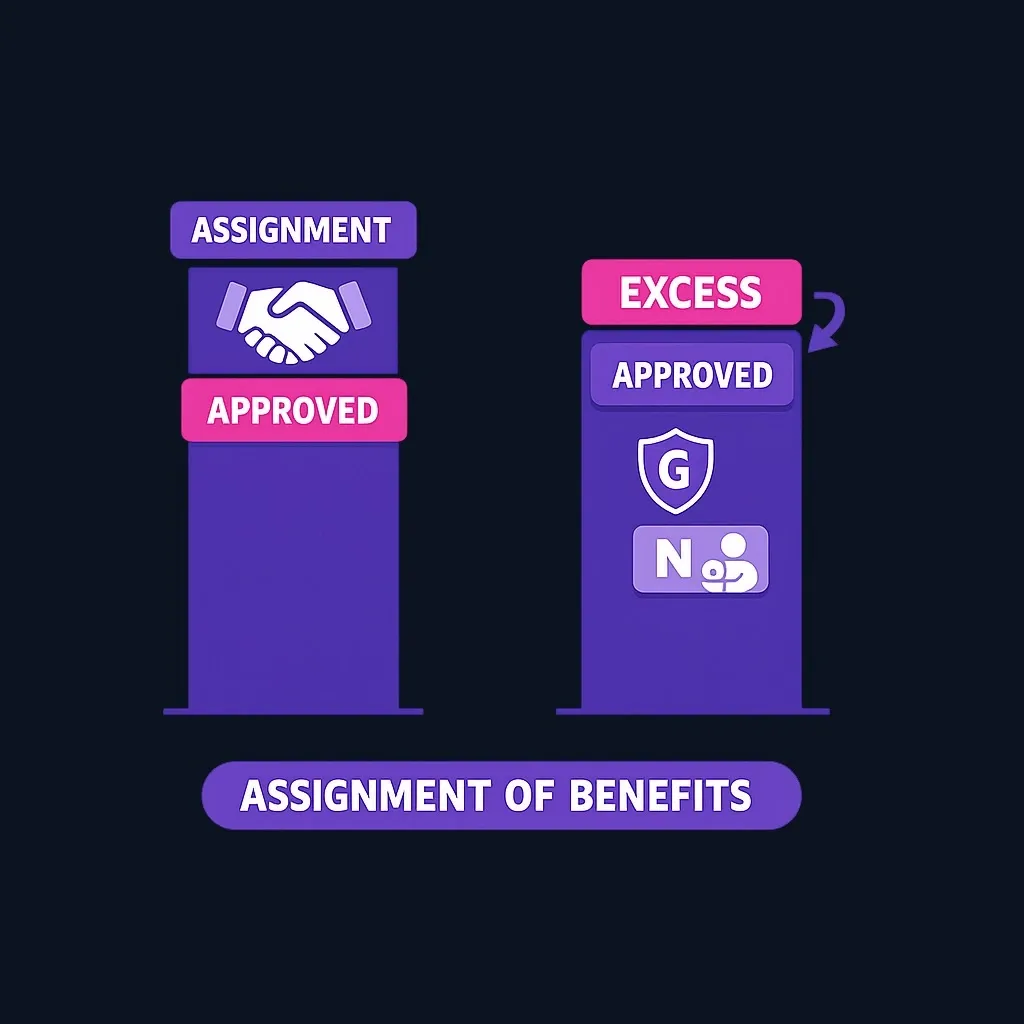
Accepting Medicare assignment means agreeing to the Medicare-approved amount as full payment for a covered service. A provider who does not accept assignment can sometimes bill an allowed excess charge. Plan N leaves that exposure to you; Plan G covers the standardized Part B excess-charge benefit. Ask about assignment for the providers you actually use. Also budget for items Medigap generally does not cover, such as routine dental care, most long-term care, and separate prescription coverage. Do not interpret “Plan G” as a promise of no further medical bills.
Enrollment rights matter
The federal Medigap open-enrollment period lasts six months, starting in the first month you are both 65 or older and enrolled in Part B. During that window, insurers cannot use your health history to deny a policy or charge more on that basis. This is separate from Medicare’s annual fall enrollment period.

Outside that window, medical underwriting may apply unless a guaranteed-issue right or state protection applies. Rights for people under 65 can differ. Medicare’s buying guide explains these protections. Buying Plan N now does not guarantee you can switch to Plan G later on the same terms.
Compare the benefits, total expected cost, and purchase rights together. Verify the proposed policy before ending existing coverage.
Compare the same policy version and eligibility situation
Start by confirming that the quotes refer to the standard benefits you intend to buy. A high-deductible version of Plan G is a separate comparison from standard Plan G. State-specific standardization also matters, so a description written for another state may not map directly onto the choices in front of you.
List annual premiums first, then add the out-of-pocket items each policy leaves to you. For Plan N, consider the relevant visit copayments and potential excess-charge exposure. For both plans, account for the Part B deductible and services that are not covered by Medicare or the supplement. A supplement's more complete cost sharing does not expand Medicare into coverage for every healthcare expense.
Test the premium difference against plausible use
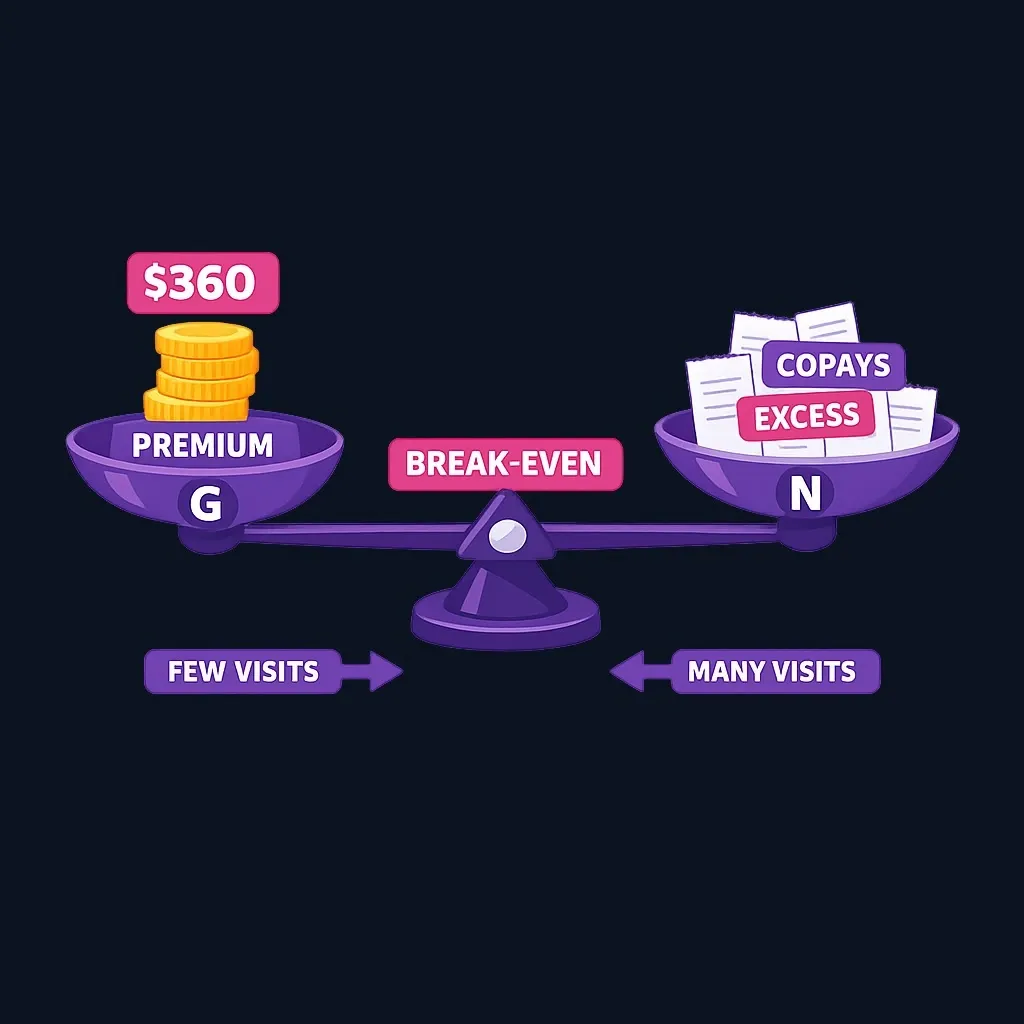
Suppose hypothetical Plan G premiums total $360 more per year than Plan N. That difference is a recurring cost even in a year with few visits. The comparison is whether Plan N's additional potential costs and your preference for predictable spending justify paying it. This is not a claim about actual premiums or a promise that you can forecast next year's care.
Ask the providers you expect to use whether they accept Medicare assignment. Keep that question separate from whether they accept patients with Medicare at all. Also think about specialists you might need later rather than treating today's short provider list as permanent.
Before selecting a cheaper policy with a plan to upgrade later, establish your switching rights. An application outside a protected window can involve underwriting, depending on state law and circumstances. The initial decision should be one you could live with if a later switch is not available on the terms you hoped for.
Practice trading with Finelo
Practice in a simulator, learn with bite-sized lessons, and build confidence before risking real money.
Overview of Medigap Plan G
Plan G is a near-comprehensive Medigap option. Per Medicare’s standardized chart, Plan G covers Medicare Part A coinsurance and hospital costs, Part A deductible, Part B coinsurance, skilled nursing facility coinsurance, the first three pints of blood, Part A hospice care coinsurance, and 80% of eligible foreign-travel emergency costs up to plan limits; it does not cover the Medicare Part B deductible. A distinguishing benefit: Plan G also covers Medicare Part B excess charges (amounts a provider can bill above Medicare’s approved amount), which helps limit surprise billing from non-participating providers.
What that means in practice
- Standard Plan G pays the specified Medicare cost-sharing benefits after applicable deductible rules. You still pay the Part B deductible, premiums, and costs outside the policy’s coverage; high-deductible Plan G has additional requirements.
Overview of Medigap Plan N
Plan N shares many standardized benefits with Plan G but has different cost sharing for some visits and does not cover Part B excess charges. Neither standard Plan G nor Plan N pays the Part B deductible.
What that means in practice
- With Plan N you trade lower premiums (often) for occasional per-visit costs: you may pay small copays at the time of service and remain responsible for any Part B excess charges by a provider who charges above Medicare’s rate.
How to compare your options
Use these concrete questions to decide between Plan G and Plan N. Use actual premiums and expected care, then consider how much uncertainty you can afford. Counting yes answers does not measure the financial tradeoff.
- How often do you visit doctors or use outpatient services?
- Frequent visits: Plan G avoids per-visit copays and may be simpler to budget.
- Few visits: Plan N’s lower premiums plus occasional copays can be cheaper.
- How sensitive are you to unpredictable bills (excess charges and ER copays)?
- Low tolerance for surprises: Plan G covers Part B excess charges and avoids ER copays, reducing billing risk.
- Comfortable accepting some billing variance: Plan N may be acceptable.
-
How much difference in premium do you expect to pay?
-
Do you prefer predictable monthly costs or predictable per-visit costs?
- Prefer predictable monthly budget: Plan G (higher premium, fewer per-visit fees).
- Prefer lower monthly cost with potential per-visit fees: Plan N.
5. Provider network behavior in your area
- If many local providers do not accept Medicare assignment (and thus can bill excess charges), Plan G’s excess-charge protection becomes more valuable.
Compare the dollar amounts using the same annual period.
Cost Comparison: plan structure and examples
How to estimate total annual cost — qualitative worked example
- Scenario A (high usage): If you expect many doctor visits and frequent outpatient testing, plan G’s higher premium can be offset by avoiding per-visit copays and excess charges. The simple cost break-even occurs when Plan N’s extra copays and covered-by-G excess charges equal the annual premium difference. Above that amount, Plan G may cost less for those items; below it, Plan N may cost less.
- Scenario B (low usage): If you rarely see doctors, plan N’s lower premium may save money overall despite occasional copays.
Practical steps to compare costs
- Request identical quotes for Plan G and Plan N from several insurers in your state for your age and tobacco status.
- Estimate your expected annual doctor visits, ER visits, and whether any provider bills allowed Part B excess charges. Ordinary Medigap is not an HMO/PPO network comparison; Medicare SELECT policies have separate restrictions.
- Calculate: (Plan N premium + estimated copays + possible excess charges + Part B deductible) vs (Plan G premium + Part B deductible).
- Consider the plan with the lower expected annual cost given your usage and risk tolerance. Use current personal quotes; a national price range is not an offer.
When to choose each option
Use these scenarios to map the plans to typical reader situations. Pick Plan G if:
- You want minimal surprises and predictable costs after paying the Part B deductible.
- You frequently visit doctors, see specialists, or travel and want excess-charge protection.
- You prefer to avoid per-visit copays and prefer paying a steadier monthly premium.
Pick Plan N if:
- You are generally healthy, see doctors infrequently, and prefer a lower monthly premium in exchange for occasional small copays.
- You are comfortable accepting limited out-of-pocket variability and provider excess charges are unlikely in your area.
Switching or timing considerations
- Benefits for standardized plans are the same across insurers. But premiums and underwriting rules differ by carrier and state.
- If you switch insurers after your Medigap open-enrollment or guaranteed-issue rights expire, insurers may apply medical underwriting; check your guaranteed-issue rights and state rules with the insurer or state insurance department.
Tradeoffs and caveats
Common tradeoffs to weigh and mistakes to avoid.
Tradeoffs
- Premium vs. utilization: Plan G typically has higher premiums and lower point-of-service costs. Plan N is typically lower premium with occasional copays and exposure to Part B excess charges.
- Provider billing practices matter: If many providers in your area bill excess charges, plan G’s protection has higher relative value.
Caveats and common mistakes
- Relying on national price ranges: Public price ranges can be misleading. Get quotes for your ZIP code, age, and sex/ tobacco status. Premiums vary widely by carrier.
- Ignoring claims service and insurer financial strength: Two carriers may offer the same lettered plan but differ in claims handling and rate increases. Check insurer reputation and state insurance department records.
- Forgetting Part B deductible: Neither Plan G nor Plan N covers the Medicare Part B deductible — you must pay that amount before these plans respond to Part B coinsurance.
State differences
- Some states regulate Medigap pricing and underwriting differently; availability and price schedules can vary. Confirm with insurers licensed in your state.
What are the main differences between Plan G and Plan N?
The main differences are that both plans offer the same standardized coverage for hospital and most outpatient services, but Plan G covers Part B excess charges and generally eliminates copays, while Plan N may require copayments for some office/ER visits and does not cover Part B excess charges.
Which plan offers better coverage for my healthcare needs?
“Better” depends on your priorities: Plan G gives broader protection against unexpected bills and is simpler to predict, while Plan N can be cheaper monthly if you rarely use medical services. Compare local premium quotes and estimate your expected visits to decide.
Can I switch from Plan N to Plan G later?
Yes, you can apply to switch, but if outside guaranteed-issue periods you may be subject to medical underwriting and a carrier could charge higher rates or decline coverage. Check your state’s rules and the insurer’s policies before making a change.
If you are comparing a different coverage structure, read Medicare Advantage HMO vs. PPO.
This guide covers U.S. rules. Finelo provides financial education, not personalized financial, investment, tax, or legal advice.
Financial LiteracyU.S. GuideFinancial Education
Practice trading with Finelo
Practice in a simulator, learn with bite-sized lessons, and build confidence before risking real money.
About the author
Finelo Team
The Finelo Team creates practical investing and trading education designed to help beginners learn faster with structured challenges, simulator practice, and bite-sized lessons.
Keep reading — Related articles

Financial Literacy
USDA vs. FHA loan
Compare location and income eligibility, down payments, credit conditions, and upfront and annual program charges for a home purchase.
Finelo Team

Financial Literacy
Term life vs. accidental death insurance
Compare broad term-life protection with accident-only coverage, including exclusions, underwriting, and the family income gap.
Finelo Team

Financial Literacy
Term life insurance laddering vs. one policy
Compare several term policies ending at different times with one policy, using coverage needs, costs, and future insurability.
Finelo Team