Last editorial review: September 28, 2026
Medicare Part D vs. employer drug coverage
Check creditable coverage, enrollment timing, and employer-plan consequences before choosing Medicare prescription coverage.
9 min read
Practice trading with Finelo
Practice in a simulator, learn with bite-sized lessons, and build confidence before risking real money.
Want to learn more?
Practice in a simulator, learn with bite-sized lessons, and build confidence before risking real money.
Explore FineloExplore Finelo's 28-day challenges
Turn learning into a daily habit with guided challenge paths.
Start by asking whether your existing prescription coverage is creditable: expected to pay, on average, at least as much as standard Medicare drug coverage. That status helps determine whether you can delay Part D without a late-enrollment penalty.
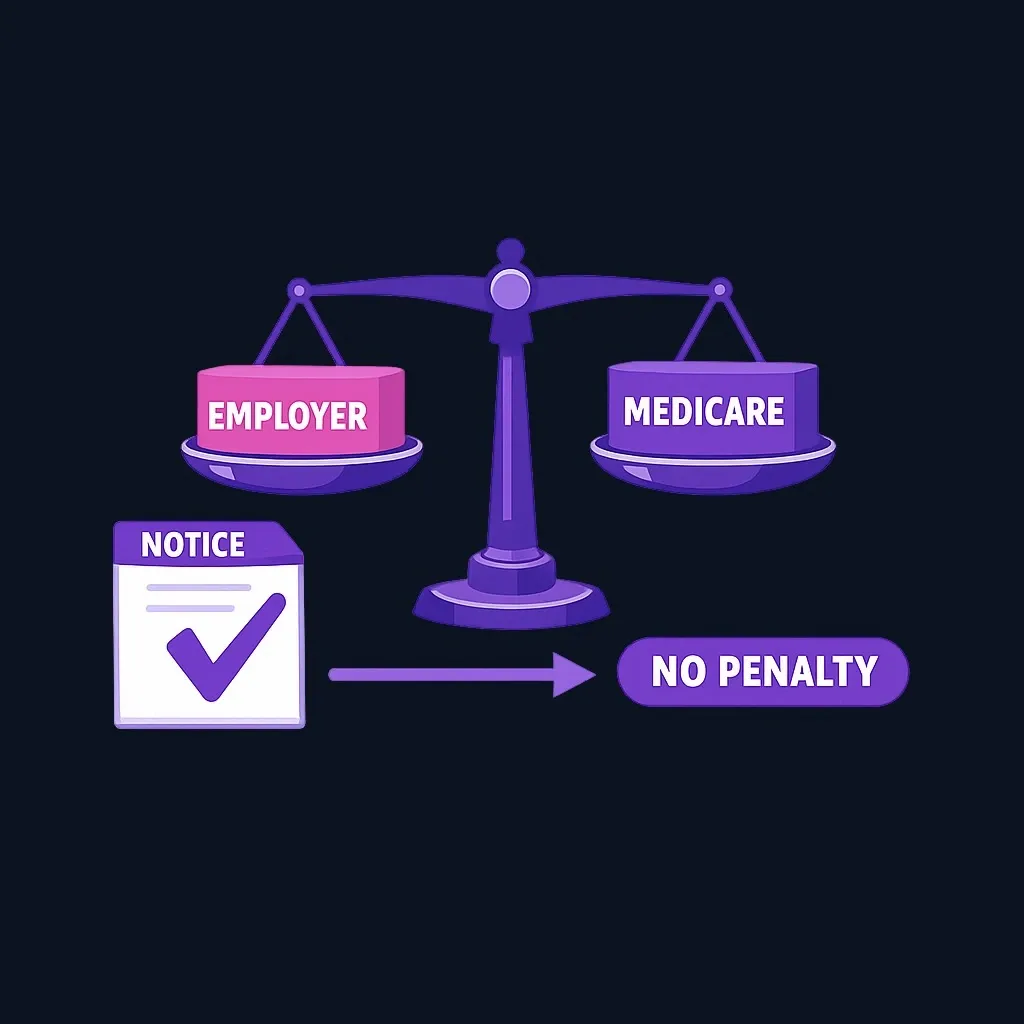
Do not assume coverage is creditable because it comes from an employer. Request the current written notice.
Compare three separate questions
| Question | What to check |
|---|---|
| Can you delay without a penalty? | Creditable coverage status and dates |
| Will your medicines be covered? | Formulary, pharmacy network, and utilization rules |
| Will switching affect your family? | Employer or union rules for losing and restoring coverage |
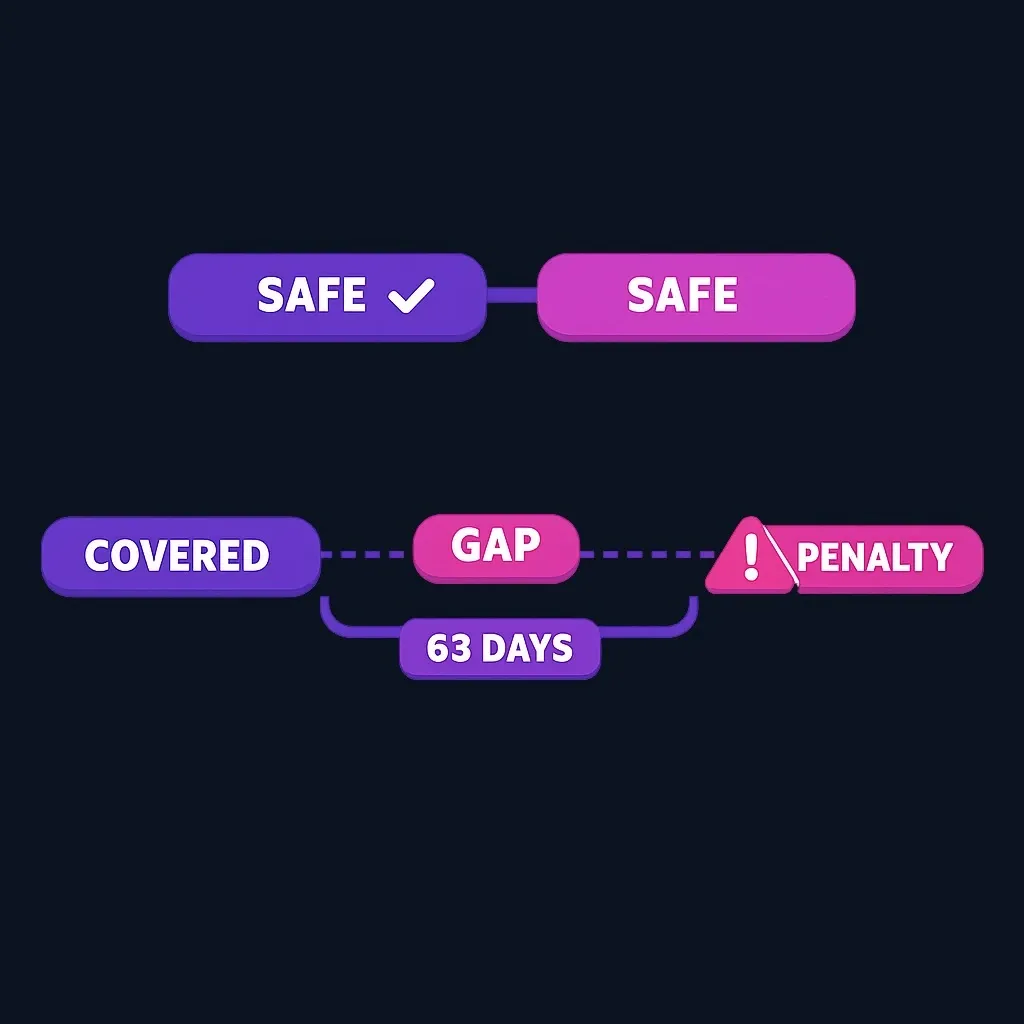
The Medicare creditable-coverage guide explains that a gap of 63 consecutive days or more without Part D or other creditable drug coverage can lead to a penalty when you enroll later. That is not a recommended waiting period: arrange coverage before a gap occurs.
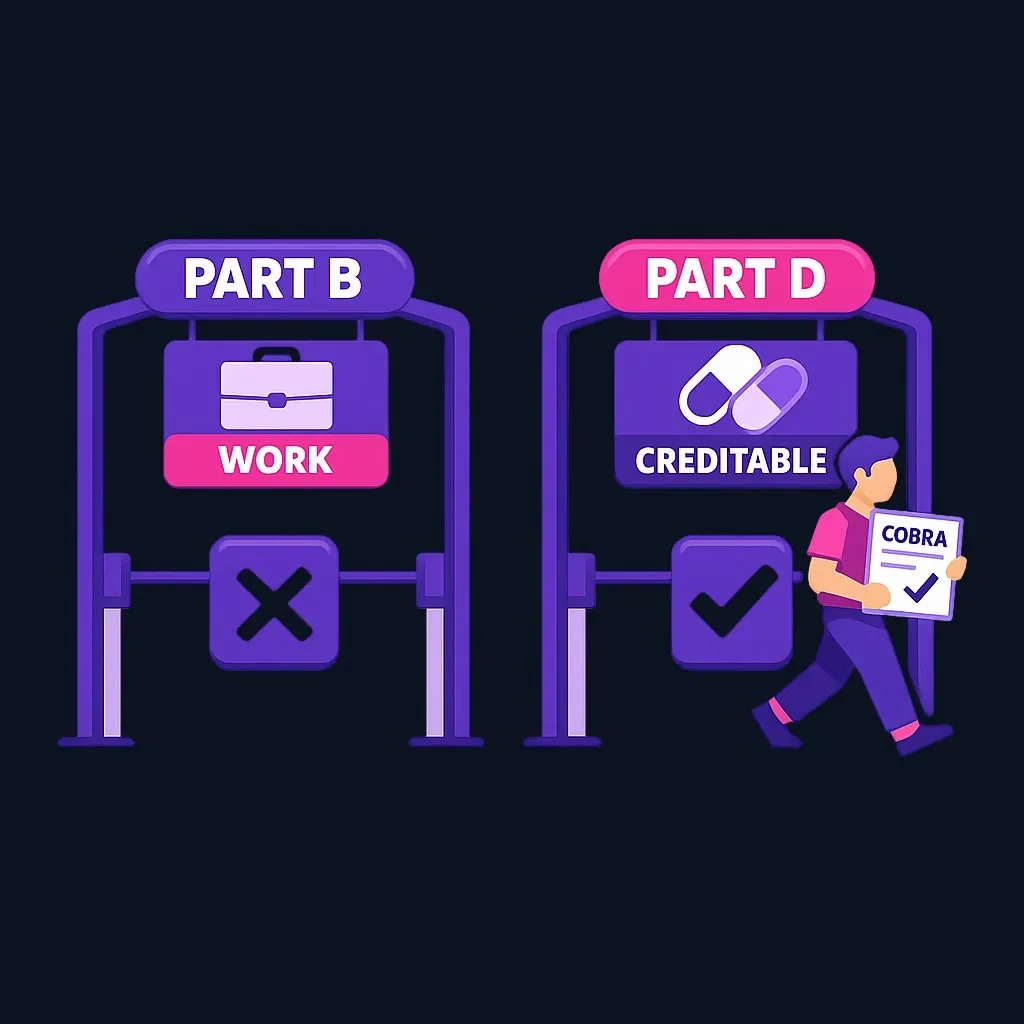
Part B and Part D follow different tests
Creditable drug coverage can come from arrangements such as retiree or COBRA coverage. That does not mean those arrangements protect your ability to delay Part B. Part B's current-employment rules need a separate review.
Enrolling in Part D may affect an employer or union benefit package, including coverage for dependents. Ask the benefits administrator what would happen before enrolling or dropping anything. Do not assume you can rejoin later.
Compare your actual prescriptions
List each medicine, dose, and preferred pharmacy. Then compare premiums and expected prescription spending under each option. Include restrictions such as prior authorization, step therapy, and quantity limits.
Keep creditable-coverage notices and proof of coverage dates. If coverage is ending or losing creditable status, confirm your Special Enrollment Period and the new plan's effective date with Medicare. The best choice preserves access to your medicines while avoiding an unnecessary coverage gap or loss of family benefits.
Get the creditable-coverage notice before making a timing decision
Creditable drug coverage is about the value of the prescription benefit under Medicare's rules. It is not established by a familiar insurer name, a generous-looking medical plan, or the fact that someone is still employed. Ask the benefits administrator for the written notice and save it with the dates of coverage.
Do not import the Part B current-employment test into this decision. Employer, union, or retiree drug coverage can raise a different set of Part D questions. If medical and drug benefits are bundled, a decision that appears to affect only prescriptions may have consequences for other coverage or for dependents.
Price the medicines you actually take
Use the exact medicine name, dose, quantity, and pharmacy. Two plans can cover the same drug but place it on different tiers or apply different restrictions. Ask about prior authorization, step therapy, quantity limits, and whether your preferred pharmacy has a different cost from another network pharmacy.
For a medicine you expect to start later, ask how the plan handles that drug and whether an alternative is clinically appropriate to discuss with your prescriber. Do not assume an inexpensive plan remains inexpensive merely because last year's medicines were covered. Keep medical decisions with the treating clinician while using the plan comparison to understand access and cost.
Before dropping employer coverage, confirm whether it can be reinstated later and whether your enrollment would affect family members. Obtain the replacement plan's effective date. A few days spent aligning those details can be more important than a small difference in monthly premium.
Practice trading with Finelo
Practice in a simulator, learn with bite-sized lessons, and build confidence before risking real money.
Key Differences Between Medicare Part D and Employer Drug Coverage
- Who provides the benefit: Part D plans are private plans operating under Medicare rules; employer drug coverage is controlled by the employer or insurer chosen by the employer (plan design and formularies vary by sponsor).
- Eligibility and control: Part D eligibility follows Medicare rules; employer plans follow employer eligibility and may extend to spouses/dependents under an employer policy. If you enroll in Medicare drug coverage, your employer or union plan could be affected—employers sometimes terminate or change benefits for people who move to Medicare drug coverage.
- Coordination and timing: Whether Medicare or the employer plan pays first depends on coordination-of-benefits rules and which coverage is primary—this affects how claims are processed and out-of-pocket responsibility.
- Formularies and access: Both Part D and many employer plans use formularies (drug lists), which plan covers a particular medicine, requires prior authorization, or offers lower cost sharing can differ by plan and year.
- Enrollment consequences: If your employer’s coverage is “creditable,” you can often delay Part D without penalty; if not, delaying may trigger a late enrollment penalty once you join Part D.
Concrete decision point: before enrolling in Part D, ask your benefits administrator whether the employer plan is creditable, and request written proof you can keep for your records.
Cost Comparison: Medicare Part D vs Employer Drug Coverage
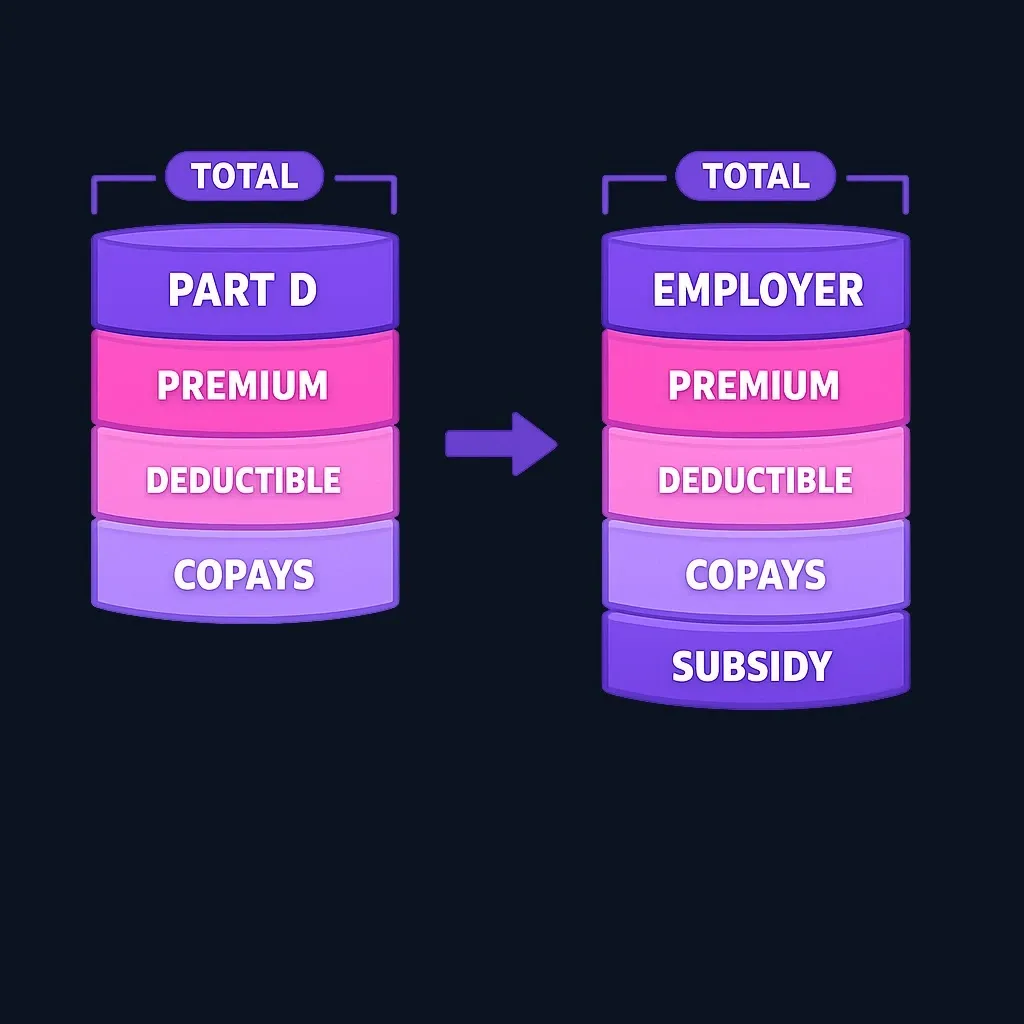
You should compare total expected annual cost, not just the monthly premium. Common cost components to include, subtracting any employer subsidy and avoiding double counting:
- Annual premiums (monthly payments for plan enrollment).
- Deductibles that apply before lower cost sharing begins.
- Per-prescription copayments or coinsurance.
- Any employer contributions or subsidies that lower your premium.
- Actual costs for specialty medicines and any expenses not covered. Separately check authorization and step-therapy requirements; these are coverage rules, not automatic extra fees.
Build a worksheet with each medicine, dose, frequency, pharmacy, and expected covered cost. Add annual premiums and the cost sharing that actually applies through the plan year. Avoid counting the deductible again if it is already reflected in the prescription-cost estimate. Decision rule example: if the employer plan requires little or no premium from you and covers your drugs with low copays, it may be cheaper even if Part D premiums are modest — but only if the employer plan is creditable and keeps providing the coverage and dependent benefits you need. Verify current pricing and plan cost details on official plan documents and on Medicare’s plan finder before deciding.
Enrollment Periods and Requirements
Enrollment timing depends on whether you’re newly eligible for Medicare, covered by creditable employer or retiree drug insurance, or losing employer coverage. If your employer coverage is creditable, you can generally delay Part D without triggering a penalty. Get written proof from your employer that coverage is creditable and keep it for your records. If you lose employer coverage, you typically have a special opportunity to enroll in Part D; details and timing vary, so confirm with your benefits administrator and Medicare resources. Checklist before changing coverage:
- Request a written “creditable coverage” notice from your employer.
- Compare formularies and pharmacy networks for both plans.
- Ask whether enrolling in Part D will terminate or change your employer health benefits or dependent coverage.
- Keep records of communications and enrollment confirmations.
When to Choose Medicare Part D Over Employer Coverage
Scenarios where Part D may be preferable.
- Your employer plan is not creditable or offers weak coverage for the medicines you need. If employer coverage is non-creditable, joining Part D may avoid a late enrollment penalty and provide better drug benefit access.
- Your employer plan exposes you to high out-of-pocket costs for specialty or ongoing medications, while a Part D plan in your area offers better formulary placement or lower copays for those drugs.
- You plan to stop working and will lose employer coverage; enrolling in Part D during the correct enrollment window can prevent coverage gaps. Confirm timing with your benefits administrator and Medicare resources.
Scenario checklist: if any of these are true, run the cost worksheet above and compare plan formularies and pharmacy rules before switching.
Tradeoffs and caveats
What to watch for, and common mistakes to avoid.
- Loss of employer benefits: Enrolling in Medicare drug coverage can trigger changes to employer/union coverage; verify the employer’s policy before you enroll.
- Formularies change yearly: Both Part D plans and employer plans can update formulary lists and utilization rules annually — review next year’s formulary during open enrollment.
- Records and proof: Keep a copy of any creditable coverage notices, enrollment confirmations, and communications about benefit changes.
- Appeals and exceptions: If a Part D plan won’t cover a needed medicine, plans typically have internal coverage determination and appeals processes; you can request exceptions or appeal denials through the plan (check the plan’s evidence of coverage for exact steps).
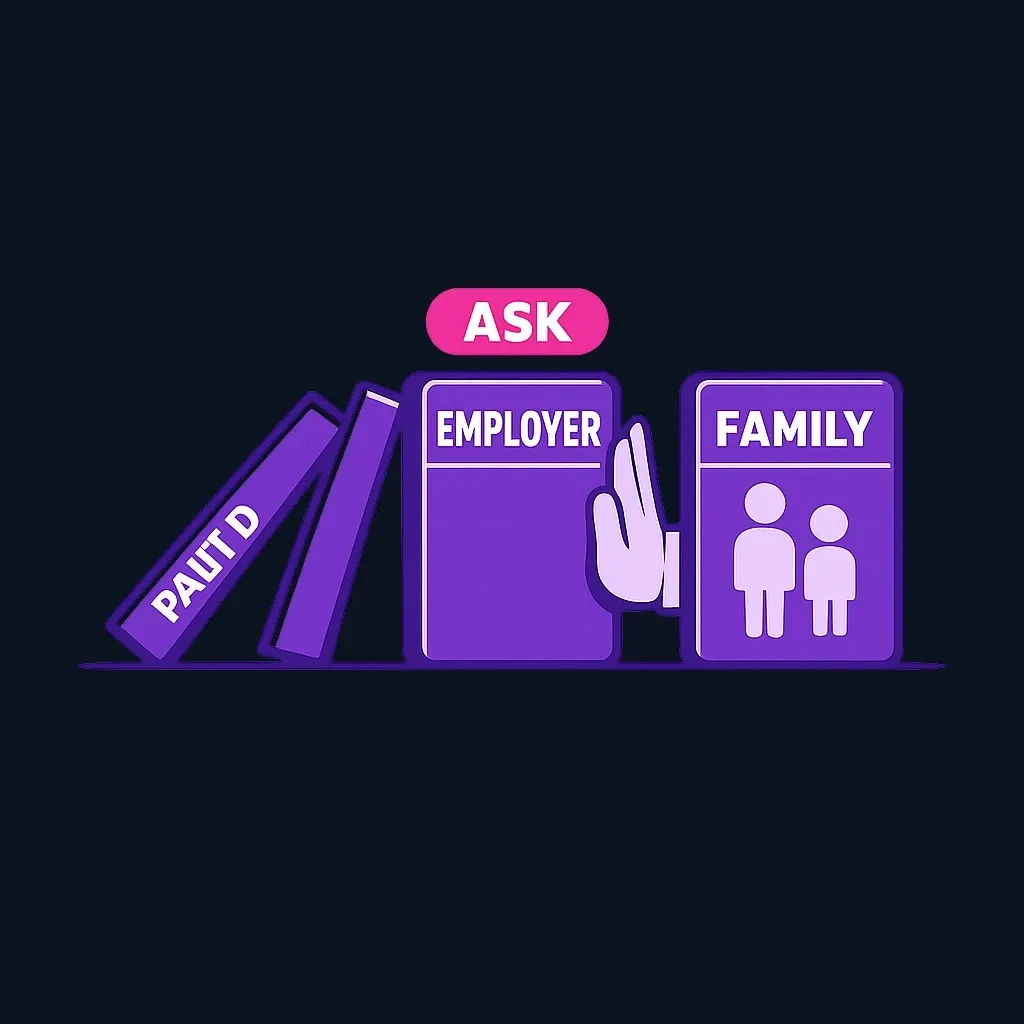
- Dependents and family coverage: Employer plans often cover spouses and dependents; Part D covers only the Medicare enrollee. Don’t assume enrolling in Part D preserves benefits for family members.
Common mistake: dropping employer drug coverage without confirming whether dependents will still be covered, or without securing creditable-coverage documentation. Always confirm with your benefits administrator before making changes.
What is Medicare Part D?
Medicare Part D is the federal outpatient prescription drug benefit administered through private insurers and authorized under Medicare; it provides prescription coverage options for people with Medicare.
How do I know if my employer's drug coverage is creditable?
Ask your employer or benefits administrator for a written “creditable coverage” notice. Medicare.gov explains creditable coverage and why you should keep documentation showing your employer plan’s status.
What happens to my employer coverage if I enroll in Part D?
Your employer or union may change or end drug or other health benefits if you enroll in Medicare drug coverage; check with your employer benefits administrator to understand the specific impact for your plan.
Will I pay a penalty if I delay Part D?
If you have creditable employer coverage and keep records proving it, you can often delay Part D without penalty; if you don’t have creditable coverage, delaying Part D enrollment may result in a late enrollment penalty once you apply. Ask your employer for proof of creditable coverage and keep that documentation.
Part B is a separate enrollment decision; read Should you delay Medicare Part B if you are still working.
This guide covers U.S. rules. Finelo provides financial education, not personalized financial, investment, tax, or legal advice.
Financial LiteracyU.S. GuideFinancial Education
Practice trading with Finelo
Practice in a simulator, learn with bite-sized lessons, and build confidence before risking real money.
About the author
Finelo Team
The Finelo Team creates practical investing and trading education designed to help beginners learn faster with structured challenges, simulator practice, and bite-sized lessons.
Keep reading — Related articles

Financial Literacy
USDA vs. FHA loan
Compare location and income eligibility, down payments, credit conditions, and upfront and annual program charges for a home purchase.
Finelo Team
Financial Literacy
Term life vs. accidental death insurance
Compare broad term-life protection with accident-only coverage, including exclusions, underwriting, and the family income gap.
Finelo Team

Financial Literacy
Term life insurance laddering vs. one policy
Compare several term policies ending at different times with one policy, using coverage needs, costs, and future insurability.
Finelo Team