Last editorial review: September 28, 2026
IRS payment plan vs. personal loan
Compare IRS payment-plan costs and conditions with a personal loan’s APR, fees, payment schedule, and affordability.
8 min read
Practice trading with Finelo
Practice in a simulator, learn with bite-sized lessons, and build confidence before risking real money.
Want to learn more?
Practice in a simulator, learn with bite-sized lessons, and build confidence before risking real money.
Explore FineloExplore Finelo's 28-day challenges
Turn learning into a daily habit with guided challenge paths.
An IRS payment plan keeps the tax debt with the IRS and spreads repayment over time. A personal loan can pay the IRS balance, replacing it with debt to a lender. Compare the full repayment cost and the payment you can sustain.
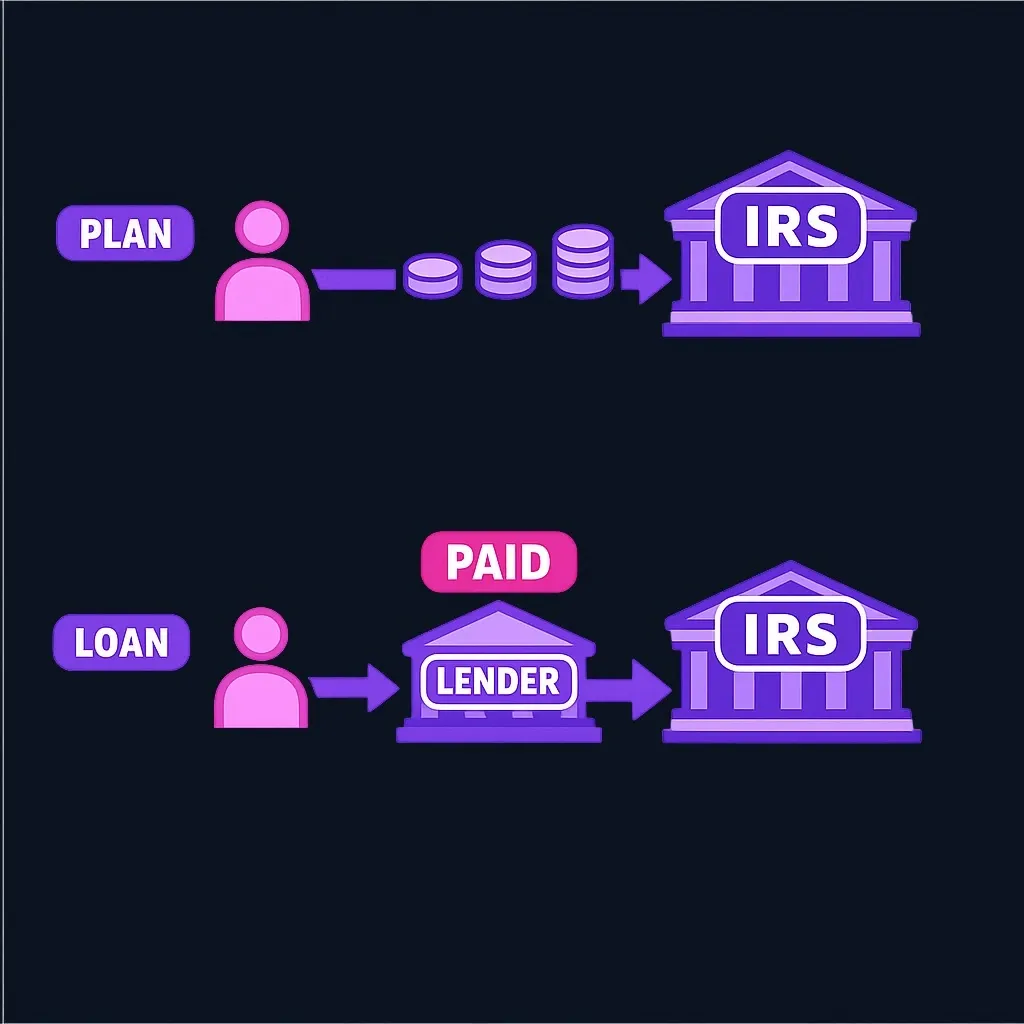
A quoted loan interest rate and an IRS interest rate are not an equal comparison by themselves.
Include every cost
| IRS payment plan | Personal loan |
|---|---|
| IRS interest, which can change | Loan interest under the contract |
| Applicable failure-to-pay penalties | Any origination and other charges |
| Possible setup fee | Potentially reduced cash proceeds after fees |
| Ongoing filing and payment conditions | Lender repayment and default terms |
The IRS payment-plan page explains available arrangements. The failure-to-pay penalty guidance describes when the reduced penalty rate applies. Enrollment does not mean all interest and penalties disappear.
Avoid the simple-rate trap
Multiplying a monthly penalty percentage by the total number of months is not a reliable estimate of the final cost. Payments reduce the unpaid balance, interest accrues separately, and penalty conditions and limits matter.
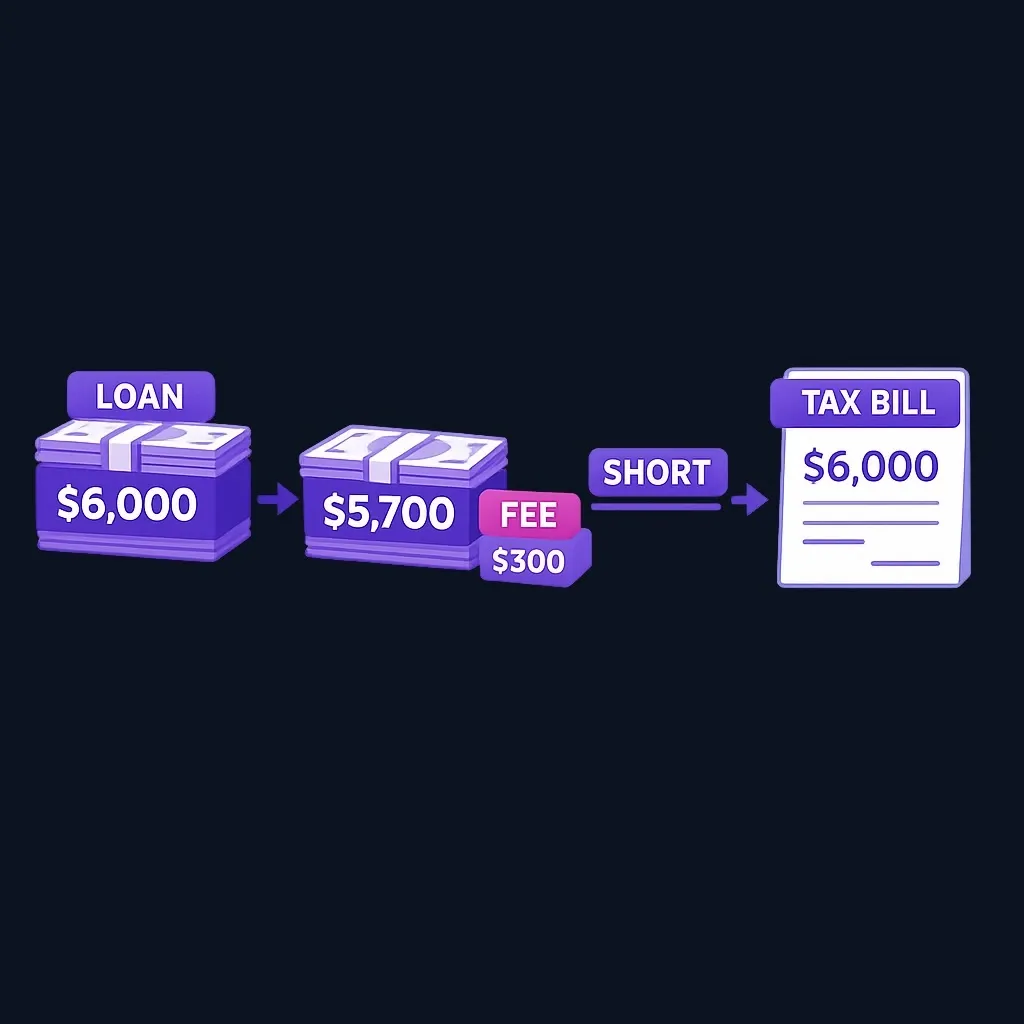
For a personal loan, compare APR, finance charge, payment schedule, and net proceeds. If fees are withheld from the advance, a loan with a face value equal to the tax bill may not provide enough cash to pay it in full.
Test the same repayment period
For a hypothetical $6,000 balance, request an IRS payoff projection and a lender offer using the same target repayment period. Compare total outlay and payment flexibility, including what happens if you repay early.
Keep filing on time even if you cannot pay in full. If either payment is unaffordable, contact the IRS about hardship or other collection alternatives before adding private debt.
Paying the IRS with borrowed money resolves only the amount actually paid. Confirm the tax payment was applied correctly and check for any remaining interest, penalties, or other tax periods.
Compare repayment schedules rather than headline rates
An IRS balance can include tax, interest, and penalties with different calculation rules. A personal-loan APR is an annual borrowing-cost measure. Simply adding an IRS monthly penalty percentage across several years and comparing the result with APR does not produce an equivalent cost comparison. Payments reduce balances, interest rates can change, and penalty rules and caps matter.
Use an IRS account balance and the available payment-plan terms as the starting point. Then obtain a written loan offer showing net proceeds, fees, monthly payments, and total payments. If a fee is deducted from the loan, confirm that the cash received is enough to pay the tax balance in full. Otherwise, you could end up with both debts.
Use the same expected payoff date for the first comparison. If the personal loan runs longer, separately identify how much of its lower payment comes from extra time. Also ask what happens if you repay early. A household expecting a bonus or asset sale may care about the cost over that shorter period rather than the scheduled full term.
Practice trading with Finelo
Practice in a simulator, learn with bite-sized lessons, and build confidence before risking real money.
Check affordability after the tax debt changes hands
Paying the IRS with borrowed funds replaces the creditor; it does not erase the financial obligation. The lender can still collect a missed payment under the loan contract, and secured borrowing can introduce collateral risk. Consider whether the new payment remains workable if income falls.
An IRS arrangement has its own compliance requirements. Keep current with new returns and tax payments so another balance does not undermine the plan. If neither option is affordable after essential expenses, the next question may be which IRS collection alternative applies, rather than which lender will approve a larger loan.
Before acting, identify the payment method, processing time, and tax period to which funds should apply. Retain confirmation and check the account after processing. The decision is complete only when the intended tax payment is credited and the remaining repayment obligation is understood.
How to compare your options
Use these four practical criteria to decide which path is likely better for your situation.
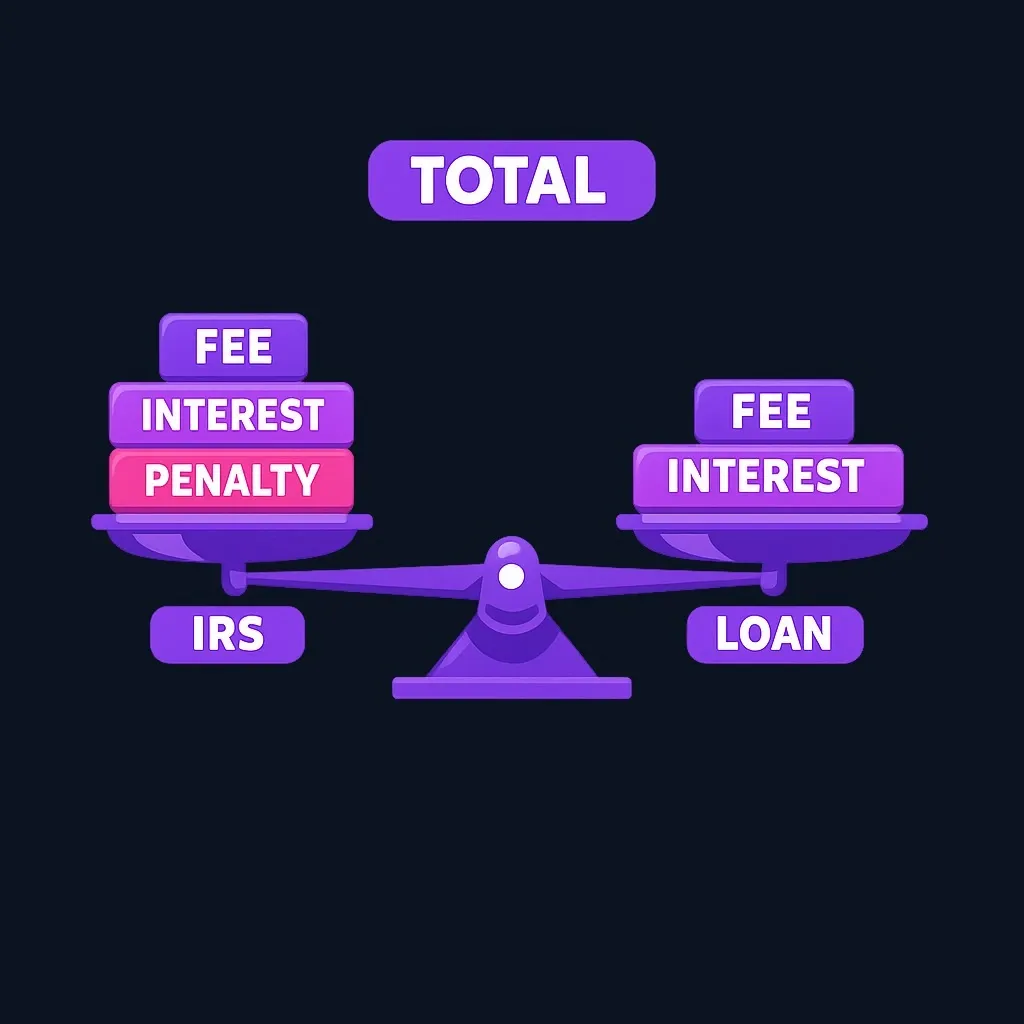
1) Total dollars cost (fees + interest + penalties)
Understand two cost types:
- IRS costs: setup fees, interest, and applicable late-payment penalties. The reduced failure-to-pay rate depends on eligibility, including timely filing by an individual with an approved installment agreement. Official IRS pages describe the plan framework and fees; compare those against any loan offer.
2) Time horizon and predictability
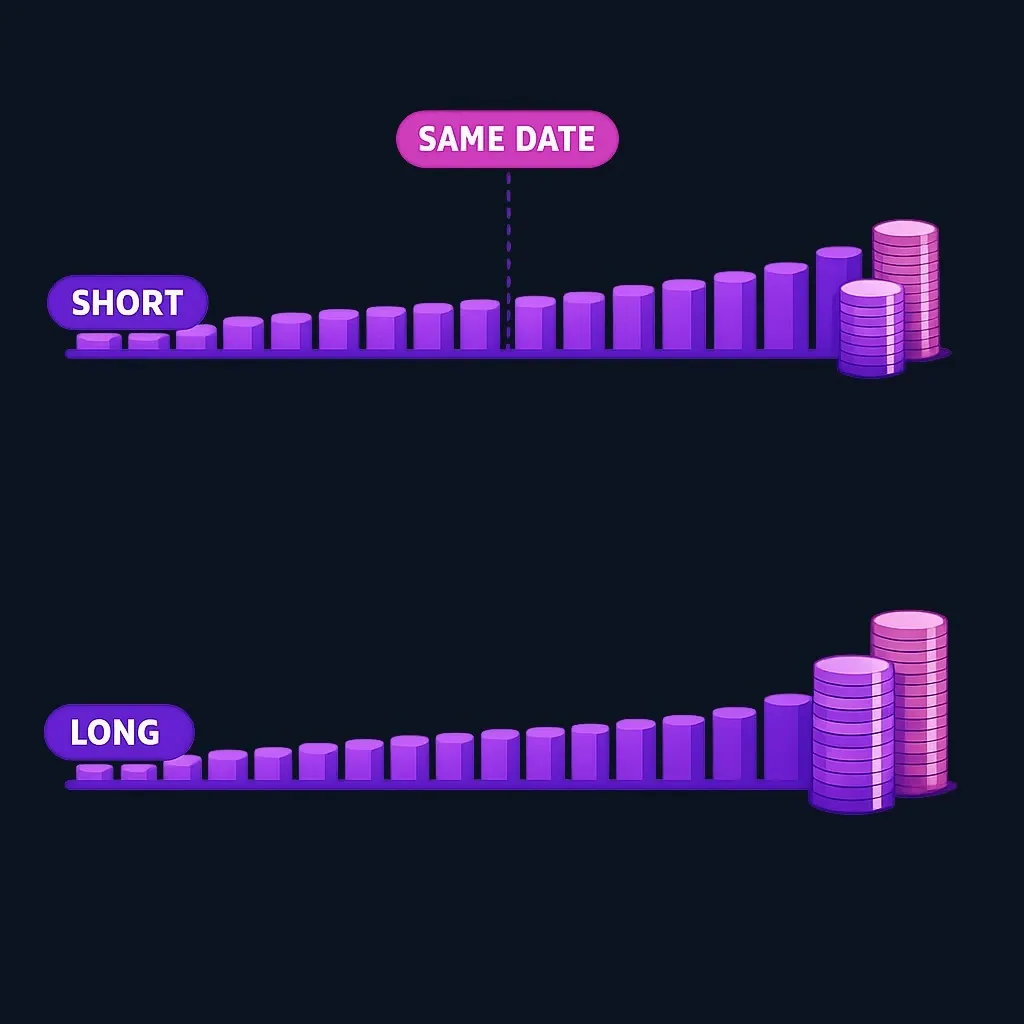
- Short horizon: prefer an IRS short-term plan if you can pay off quickly and avoid loan origination fees.
- Long horizon: a fixed-rate personal loan can provide predictable monthly payments and may be simpler to budget despite a possible upfront fee.
3) Credit profile and loan availability
Lenders set loan rates and fees based on your credit and income; better credit usually yields lower APRs and fees. The better-priced option depends on the actual offer and applicable IRS charges; compare both schedules before applying.
4) Non-financial priorities
- Avoiding IRS collections or levies may motivate paying the IRS in full now via a loan.
- If you prefer to avoid any third-party debt, an IRS plan keeps the relationship directly with the IRS.
- Simplicity vs control: lenders offer a single monthly loan payment; the IRS plan ties you to tax-specific rules and possible enforcement steps if you default.
When an IRS payment plan is likely the better choice
- You owe tax but can manage smaller monthly payments and prefer to avoid lender origination fees. The IRS documents multiple plan options and enrollment routes for taxpayers who cannot pay in full.
- Example case: You owe $6,000 and can pay within 24 months. An IRS plan avoids a lender’s origination fee and keeps payments directly with the IRS; penalties and interest still accrue but the reduced failure-to-pay rate applies only if the IRS conditions are met, including timely filing by an individual.
When a personal loan is likely the better choice
- You want the IRS balance paid, while confirming the timing of account updates and any existing lien-release process, and you can get a loan with total cost (origination fee + interest) lower than the expected IRS cumulative penalties and interest.
- Example case: You have good credit and a lender offers a short-term, fixed-rate loan with a total cost you calculate to be less than continued IRS penalties and interest over your expected repayment period. Before borrowing, compare the loan’s one-time and recurring costs with the IRS plan’s fees and projected penalty accrual.
How to apply
IRS payment plan (typical steps)
- Determine eligibility for short-term vs long-term plans and the best application route; the IRS explains plan types and how to enroll.
- Submit the IRS online application or Form 9465 if appropriate, select payment method, and accept the plan terms.
Personal loan (typical steps)
- Check lender prequalification options, compare APR and origination fees, and verify total cost over your chosen term.
- Apply. Submit required documents, and if approved use the loan proceeds to pay the IRS in full; keep records of the tax payment.
Tradeoffs and caveats
Caveat: IRS fees, penalties and enforcement
- The IRS publishes setup fees and specifics for installment agreements — check the IRS page for current amounts and methods.
Common mistake: Focusing only on monthly payment size and ignoring one-time loan origination fees or cumulative IRS penalties. Fix: Compute total cost across the expected payoff period: IRS payments plus setup charges versus all lender payments plus fees paid separately. Do not add an origination fee twice if it is already included in the financed balance or disclosed total.
Caveat: Loan fees and underwriting
- A lender’s advertised minimum rate is not an approved offer. Check the actual APR, net proceeds, repayment term, and whether fees are financed or paid separately.
Common mistake: Treating a low monthly payment from a long-term loan as automatically cheaper. Fix: Compare total scheduled payments and separately paid charges, counting each fee once.
Caveat: Credit and default consequences
- Using a loan shifts the default risk from the IRS to your lender; defaulting on a loan can harm credit and trigger collections by private lenders.
- Using an IRS plan and then failing to comply can expose you to IRS enforcement. An eligible agreement can reduce certain penalties, but does not remove tax liability.
Practical checklist before choosing
- Compare total projected cost over the realistic payoff period.
- Confirm the exact IRS setup fee and program you qualify for.
- Check whether prequalification uses a soft credit inquiry before submitting information; a final application may involve a hard inquiry.
- Consider non-financial priorities: speed to clear tax debt, appetite for third-party borrowing, and simplicity of payments.
What are the fees associated with IRS payment plans?
The IRS publishes setup fees and enrollment procedures for installment agreements on its payments page; fees depend on how you apply and whether you use direct debit — check the IRS page for current fee amounts and enrollment options.
Can I pay my taxes with a personal loan?
Yes—people use personal loans to pay tax bills, typically to avoid IRS collections or to secure a single fixed monthly payment. Compare the approved loan’s full cost with IRS interest, applicable penalties, and setup charges over the same payoff period. Either option can cost more depending on the terms.
A card is another borrowing route with separate processing costs; read Should you pay taxes with a credit card.
This guide covers U.S. rules. Finelo provides financial education, not personalized financial, investment, tax, or legal advice.
Financial LiteracyU.S. GuideFinancial Education
Practice trading with Finelo
Practice in a simulator, learn with bite-sized lessons, and build confidence before risking real money.
About the author
Finelo Team
The Finelo Team creates practical investing and trading education designed to help beginners learn faster with structured challenges, simulator practice, and bite-sized lessons.
Keep reading — Related articles
Financial Literacy
USDA vs. FHA loan
Compare location and income eligibility, down payments, credit conditions, and upfront and annual program charges for a home purchase.
Finelo Team
Financial Literacy
Term life vs. accidental death insurance
Compare broad term-life protection with accident-only coverage, including exclusions, underwriting, and the family income gap.
Finelo Team
Financial Literacy
Term life insurance laddering vs. one policy
Compare several term policies ending at different times with one policy, using coverage needs, costs, and future insurability.
Finelo Team