Last editorial review: September 28, 2026
Should you pay taxes with a credit card?
Compare card processing fees, interest, rewards, and repayment risk before charging a federal tax payment.
8 min read
Practice trading with Finelo
Practice in a simulator, learn with bite-sized lessons, and build confidence before risking real money.
Want to learn more?
Practice in a simulator, learn with bite-sized lessons, and build confidence before risking real money.
Explore FineloExplore Finelo's 28-day challenges
Turn learning into a daily habit with guided challenge paths.
You can pay eligible federal taxes through an IRS-listed card processor. The processor charges a fee, and your card may charge interest if you carry the balance. The payment can be convenient, but the cost can exceed any rewards.
Use the IRS payment page to find current processors, fees, supported tax types, and payment limits. Fees can change, so an old article is not a reliable quote.
Do the complete calculation
| Potential benefit | Cost or condition to include |
|---|---|
| Cash-back rewards | Processing fee and reward eligibility |
| Introductory promotion | End date, repayment ability, and card terms |
| Short-term flexibility | Interest if the balance is not paid on time |
| Convenient payment | Correct tax form, period, and taxpayer details |
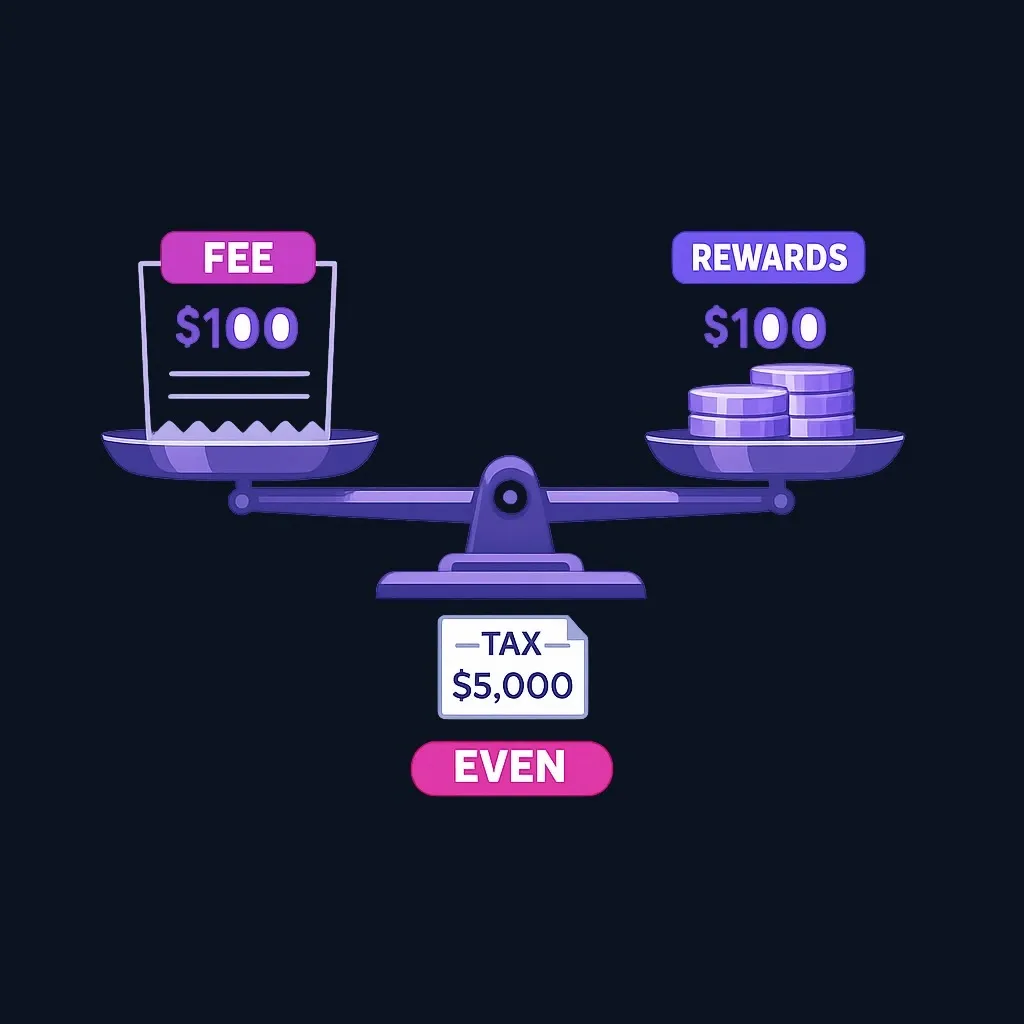
For a hypothetical $5,000 tax payment with a 2% processor fee, the charge is $100. If the card earns 2% on the $5,000 tax amount, that is also $100 before interest and other conditions. Check whether fees earn rewards and whether the transaction qualifies; do not assume a positive return.
Compare alternatives before borrowing
Direct bank payment may avoid the card-processing charge. If you need months to repay, compare a card's total expected cost with an IRS arrangement. The IRS payment-plan guide explains available options; IRS interest and penalties can still apply.
A promotional rate helps only if you can follow its terms and repay on a realistic schedule. A large card balance can also reduce available credit and affect credit utilization.
Make sure the payment reaches the right balance
Choose the correct tax year and payment type, check taxpayer information, and save the confirmation. Paying does not file your return. Check your IRS account after processing if you need to confirm application of the payment.
Use a card because the documented benefit exceeds the full cost and fits your repayment plan, not simply because rewards are available.
Calculate the transaction before submitting it
Use the fee displayed by the IRS-listed processor for the exact payment you are making. Check the accepted card, tax form or payment type, tax year, minimum fee, and any payment-frequency limit. A rate quoted in an old article may not be the rate at checkout.
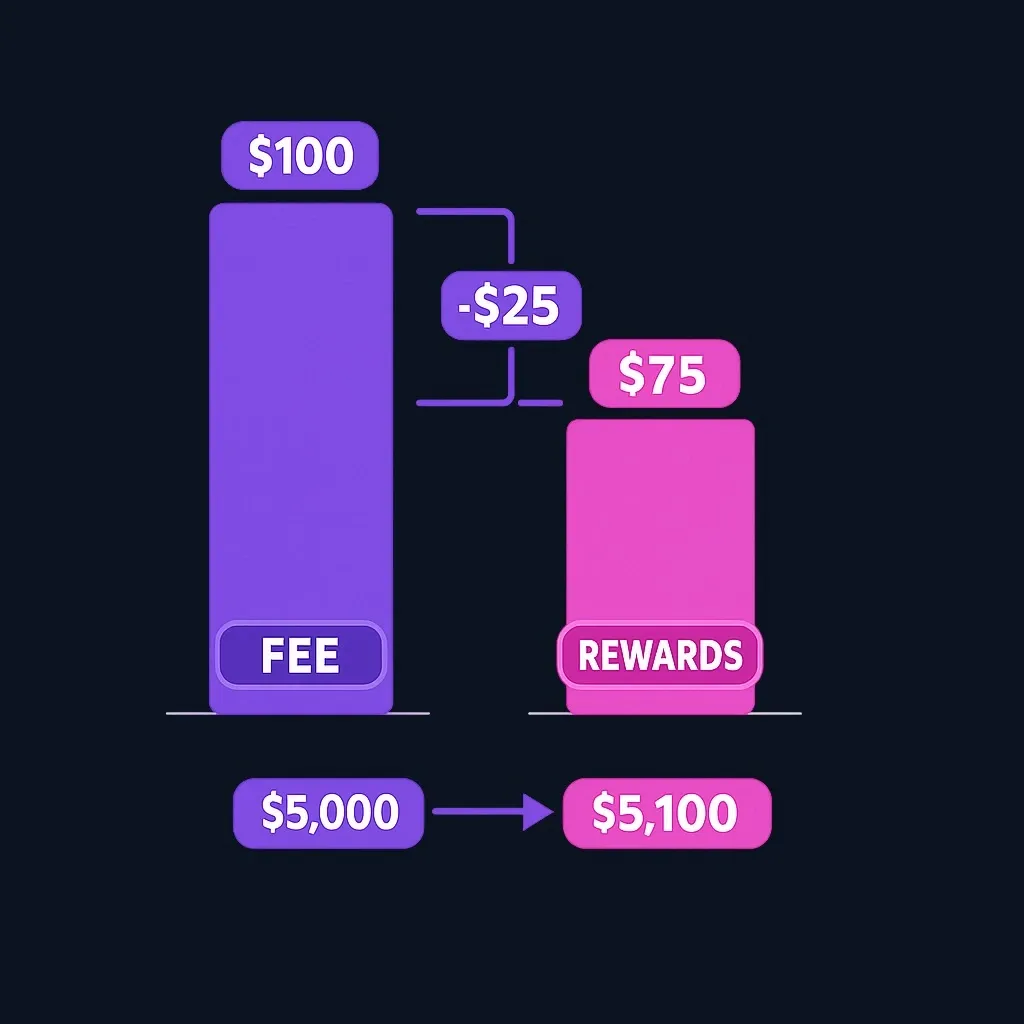
Suppose a hypothetical $5,000 tax payment has a 2% processing fee. The fee is $100 and the total charge is $5,100. If the card earns eligible rewards of 1.5% on the $5,000 tax amount, those rewards are $75, leaving a $25 shortfall before interest or other charges. Reward treatment for the fee itself depends on the card terms; do not count it without confirmation.
A sign-up bonus or promotional rate requires its own eligibility check. Confirm qualifying purchases, spending deadlines, the end of any introductory period, and the rate afterward. Treat a bonus you have not verified as uncertain rather than using it to justify a transaction that would otherwise be expensive.
Separate paying the IRS from repaying the card
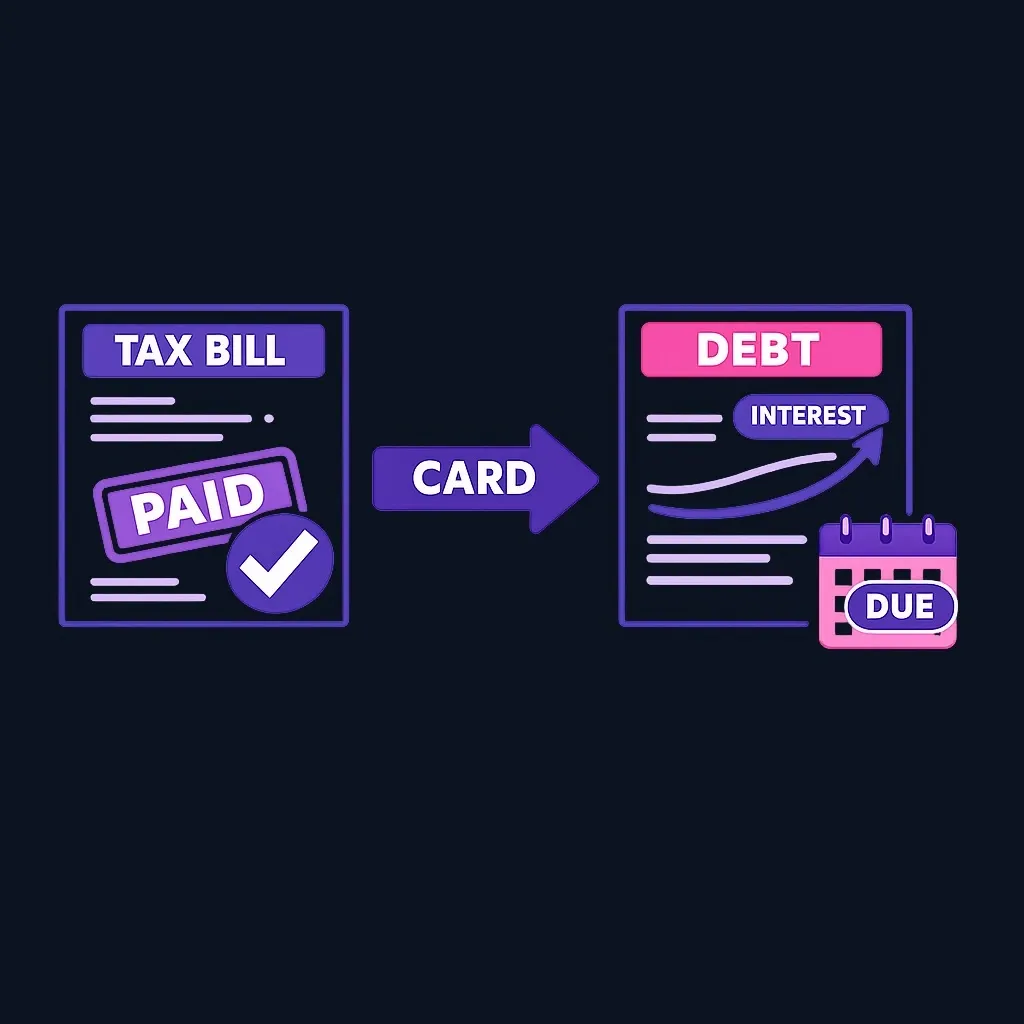
A successful card payment can settle the specified tax payment, but the card balance remains your debt. If you carry it, interest can outweigh a small reward difference. Review the card's grace-period rules and how an existing balance affects them. Compare with available IRS payment options using the same intended repayment period.
Credit utilization is another practical consideration. A large tax charge can consume a substantial share of the limit and leave less room for ordinary spending. Confirm that the full charge, including the fee, fits the available credit and the planned repayment amount.
Practice trading with Finelo
Practice in a simulator, learn with bite-sized lessons, and build confidence before risking real money.
Verify the tax payment after processing
Save the confirmation number, receipt, payment type, and tax year. Check the IRS account after the transaction has had time to process, and reconcile the card statement. If the transaction fails, use the processor's and IRS's official guidance; do not assume an attempted payment met a deadline.
Avoid submitting a second payment merely because the first has not appeared instantly. First confirm its status so a delay does not create an unintended duplicate. Correct application to the intended tax period is part of the payment, just as much as the card authorization.
Can You Pay Taxes with a Credit Card?
Short answer: federal tax payments can be made by credit card through IRS-approved third-party payment processors. The IRS does not accept direct credit-card payments itself and the processor explains how the payment and fee will appear on your statement.
Clarifications and common misconceptions
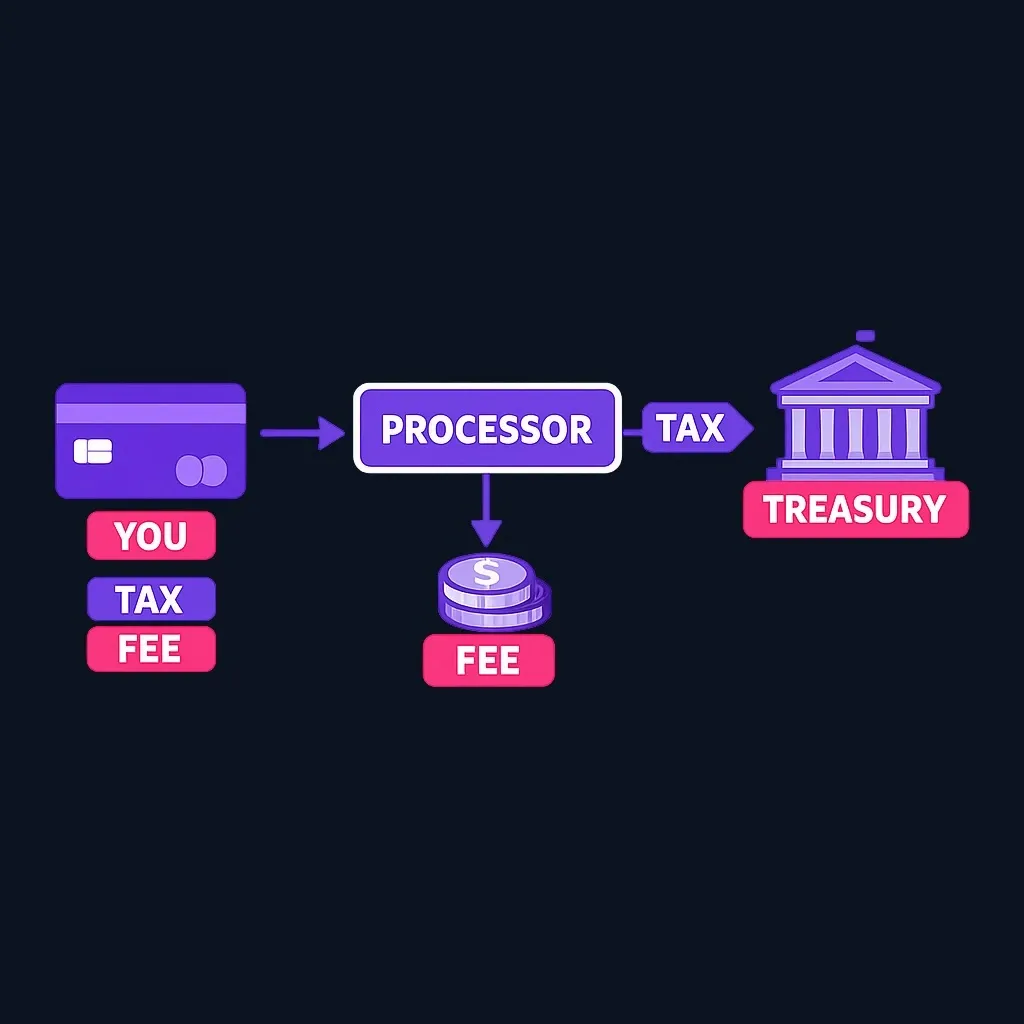
- The IRS instructs taxpayers to use an approved processor (not the IRS itself) to make card payments. Processors collect the fee and remit the tax payment to the Treasury.
- Card payments are processed by private vendors. Your card statement typically lists the charge as “United States Treasury Tax Payment” and the fee separately as a “Tax Payment Convenience Fee” or similar wording.
- State tax agencies may accept credit cards too. But fees and processors differ by state; check your state taxing authority for details.
How to Pay Your Taxes with a Credit Card
Step-by-step (high level, per the IRS)
- Choose an IRS-approved payment processor from the IRS list of vendors.
- Enter your taxpayer and payment information (SSN/EIN, tax type, tax year, amount).
- Provide credit-card details and billing information.
- Review the total: tax amount + processor convenience fee.
- Complete the transaction and save the confirmation number or receipt.
Practical tips for the payment flow
- Confirm the fee percentage and any minimum fee before you submit payment. Processors disclose these on the payment page or terms on the payment screen.
- Save the processor confirmation and the last four digits of the card. Reconcile the tax payment and fee with the processor receipt and card statement.
- If you have a problem (no confirmation, duplicate charge, or a dispute), contact the processor first and keep your IRS payment details handy. If unresolved, contact the IRS payments help line or follow the IRS guidance for disputed payments.
The $5,000 examples above show the fee calculation. Use your processor’s displayed fee and the card’s actual reward terms for your own payment.
Benefits of Paying Taxes with a Credit Card
Possible advantages (what people typically seek)
- Short-term liquidity: paying by card can buy a short period before you must fund the tax payment from cash or other sources.
For a promotional offer, divide the full charge by the months available before the promotion ends. This is a repayment-planning check, not a substitute for the card’s required minimum payment. Leave room for ordinary spending and unexpected expenses.
Considerations and Drawbacks
Key downsides and decision points
- Processing fees reduce or can eliminate reward benefits: the convenience fee is typically a percentage of the tax amount, which often outweighs routine reward rates.
- Interest if you carry a balance: if you don’t pay the card balance by the due date, interest charges will generally make the card payment much more expensive than the convenience fee alone
- Limits and frequency: the IRS publishes frequency limits by payment type, and federal tax deposits cannot be paid by card. Verify processor and IRS rules for your situation
- Business vs. personal deductibility: processing fees may be deductible for businesses as a business expense in some circumstances; check tax rules or consult a tax professional for your business’s specific tax treatment.
Common mistakes and how to avoid them
- Mistake: not saving confirmation or ignoring the processor’s receipt. Fix: always save confirmation numbers and the processor receipt, and check your card statement for the Treasury payment and the convenience fee.
Keep the rewards comparison conservative
Use the value of rewards you can actually redeem, not the highest promotional valuation you can find. A point that is worth more only on a trip you would not otherwise take is not necessarily equivalent to cash available for the card bill. If a spending bonus is involved, check whether the tax transaction qualifies and whether the remaining required spending fits ordinary purchases.
Also compare a straightforward bank payment. If it avoids a card processing fee, that avoided cost is part of the decision even though it does not appear as a reward. A credit-card transaction should stand on its complete cost and repayment plan rather than on the appeal of earning points from a bill you already owe.
Can I pay my taxes with a credit card?
Yes — federal taxes can be paid by credit card through IRS-approved third-party payment processors; the IRS provides a list and instructions for using these vendors.
What should I do if a payment fails or is disputed?
First, save any on-screen confirmations and contact the payment processor’s support with your confirmation number. If the processor cannot resolve a duplicate or missing payment, follow the IRS guidance or contact the IRS payments help resources for next steps.
For alternatives to a card, compare IRS payment plan vs. personal loan.
This guide covers U.S. rules. Finelo provides financial education, not personalized financial, investment, tax, or legal advice.
Financial LiteracyU.S. GuideFinancial Education
Practice trading with Finelo
Practice in a simulator, learn with bite-sized lessons, and build confidence before risking real money.
About the author
Finelo Team
The Finelo Team creates practical investing and trading education designed to help beginners learn faster with structured challenges, simulator practice, and bite-sized lessons.
Keep reading — Related articles

Financial Literacy
USDA vs. FHA loan
Compare location and income eligibility, down payments, credit conditions, and upfront and annual program charges for a home purchase.
Finelo Team

Financial Literacy
Term life vs. accidental death insurance
Compare broad term-life protection with accident-only coverage, including exclusions, underwriting, and the family income gap.
Finelo Team

Financial Literacy
Term life insurance laddering vs. one policy
Compare several term policies ending at different times with one policy, using coverage needs, costs, and future insurability.
Finelo Team