Last editorial review: September 28, 2026
Personal line of credit vs. personal loan
Compare reusable credit with a fixed loan, including payment uncertainty, borrowing discipline, fees, and total cost.
10 min read
Practice trading with Finelo
Practice in a simulator, learn with bite-sized lessons, and build confidence before risking real money.
Want to learn more?
Practice in a simulator, learn with bite-sized lessons, and build confidence before risking real money.
Explore FineloExplore Finelo's 28-day challenges
Turn learning into a daily habit with guided challenge paths.
A personal loan usually provides one lump sum with a repayment schedule. A personal line of credit lets you draw up to an approved limit as needed, subject to its terms. The useful starting point is whether you know the amount you need and when you can repay it.
Compare the structure
| Feature | Personal loan | Personal line of credit |
|---|---|---|
| Funding | One advance | Draws when permitted |
| Reuse | Repayment does not usually create new borrowing capacity | Repayment may restore available credit |
| Rate | Often fixed; check the contract | Often variable; check the contract |
| Main budgeting issue | A scheduled payment on the full loan | Payments can change with draws and rates |
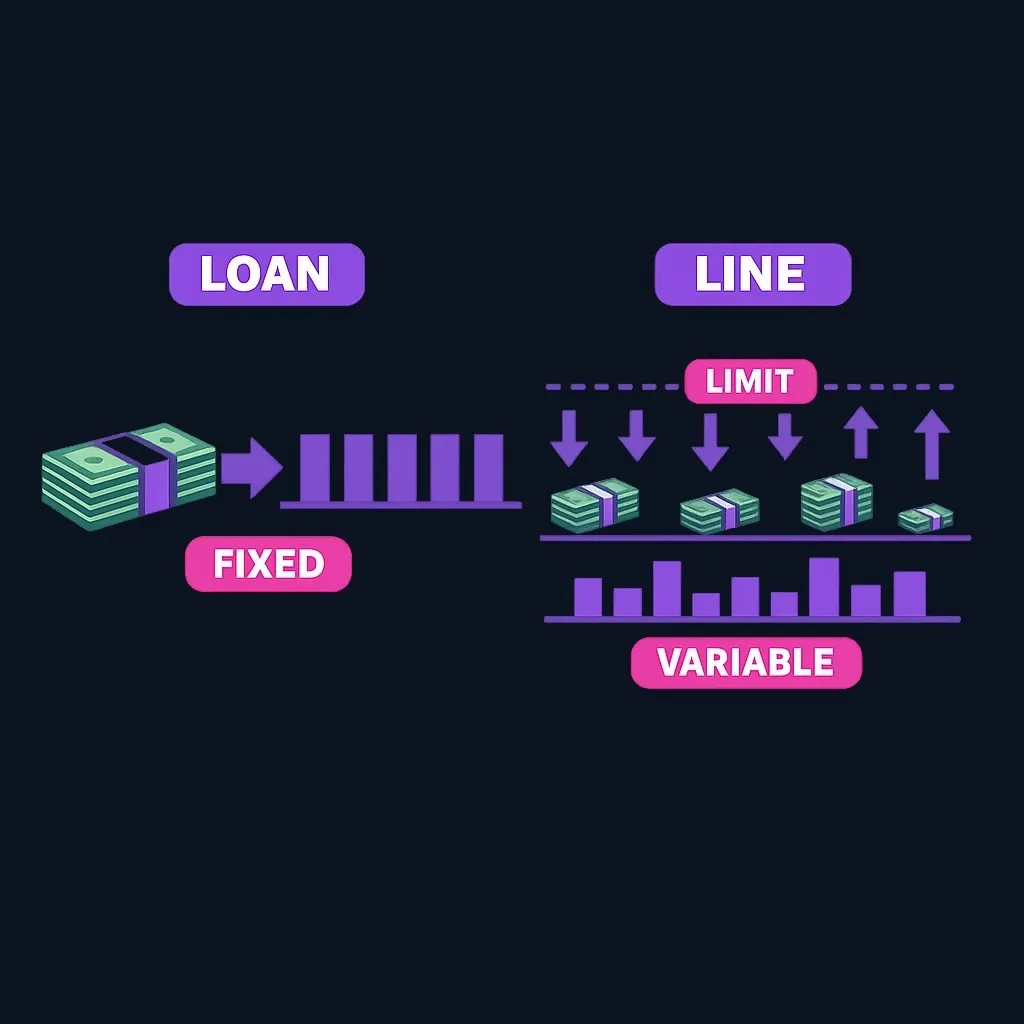
The CFPB explains personal installment loans and personal lines of credit.
Match borrowing to the expense
A known one-time bill may be easier to compare with a fixed-rate installment loan. An uncertain series of expenses may suit a line, but only if the draw rules and repayment costs work for you.
For a hypothetical project with several stages, a line can avoid borrowing the entire budget immediately. That flexibility can also make it easier to keep borrowing after the original project ends.
Read beyond the rate
Check origination, annual, draw, inactivity, and late-payment fees where applicable. Find out whether a line's limit can change and whether a draw period ends before the final repayment period. Do not treat undrawn credit as a guaranteed emergency fund.
Compare the total cost under the same borrowing and repayment scenario. Include a higher-rate scenario for variable borrowing. If the payment fits only at today's rate or only while making minimum payments, the arrangement may leave little room for a setback.
Choose a repayment date before choosing a product. The ability to borrow again should not replace a plan to get the balance back to zero.
Match the borrowing structure to the expense
A personal loan can fit a known amount needed at one time. A line of credit can fit staged borrowing, but only if you have a plan for each draw and repayment. The flexibility to borrow again can be useful; it can also allow a temporary expense to become a continuing balance.
Before comparing price, estimate when money is needed. Borrowing the full project budget upfront can mean paying interest before part of the money is used. Drawing gradually can reduce that unused borrowing, but line fees, a variable rate, and minimum-payment rules can offset the advantage. Compare the actual pattern rather than assuming either structure is cheaper.
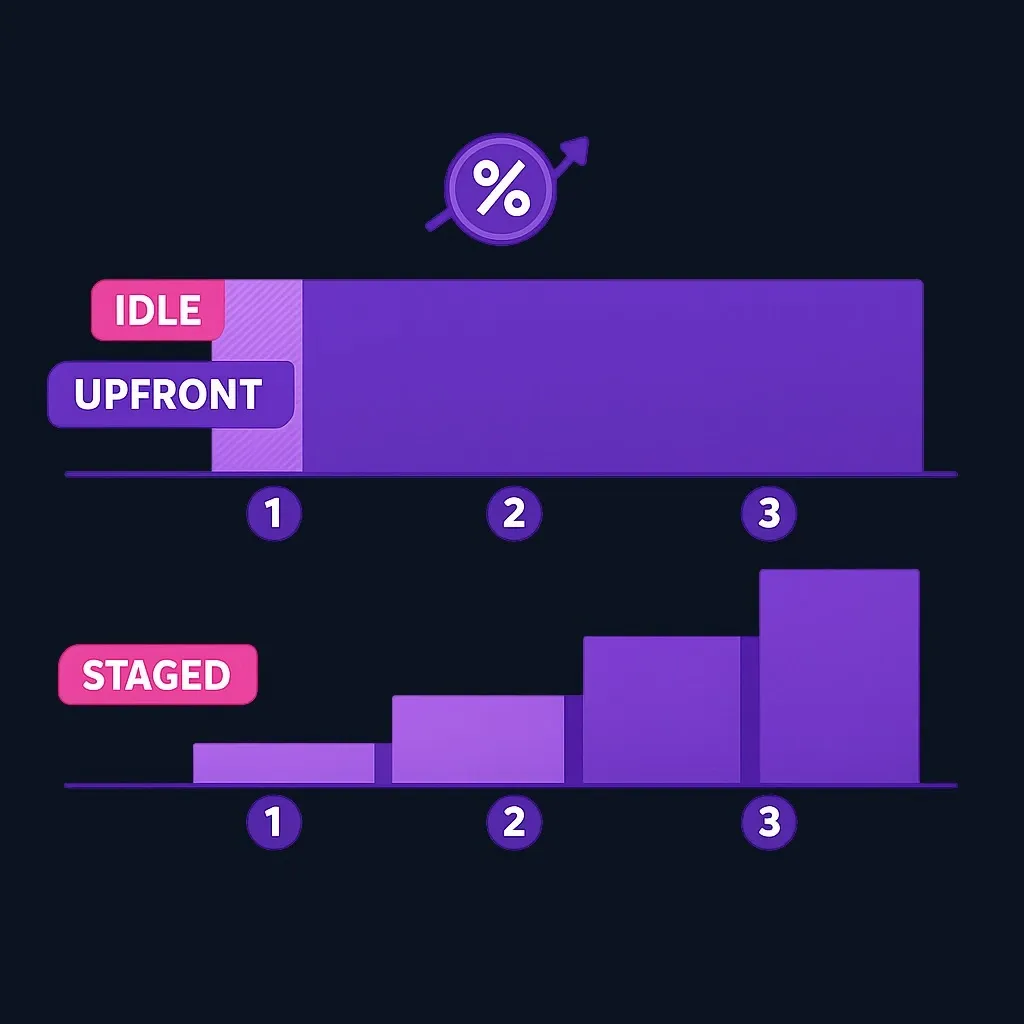
For a line, ask how long borrowing is available, whether the lender can change or suspend access under the agreement, and what happens at renewal or the end of a draw period. An unused limit should not be treated as guaranteed emergency savings. Cash you own and credit a lender may restrict have different roles.
For either option, set a target repayment date independent of the minimum required payment. Calculate what must be paid to meet it, and check whether future draws would extend it. A clear end date helps distinguish a manageable financing need from a budget gap that borrowing alone will not resolve.
What is a Personal Line of Credit?
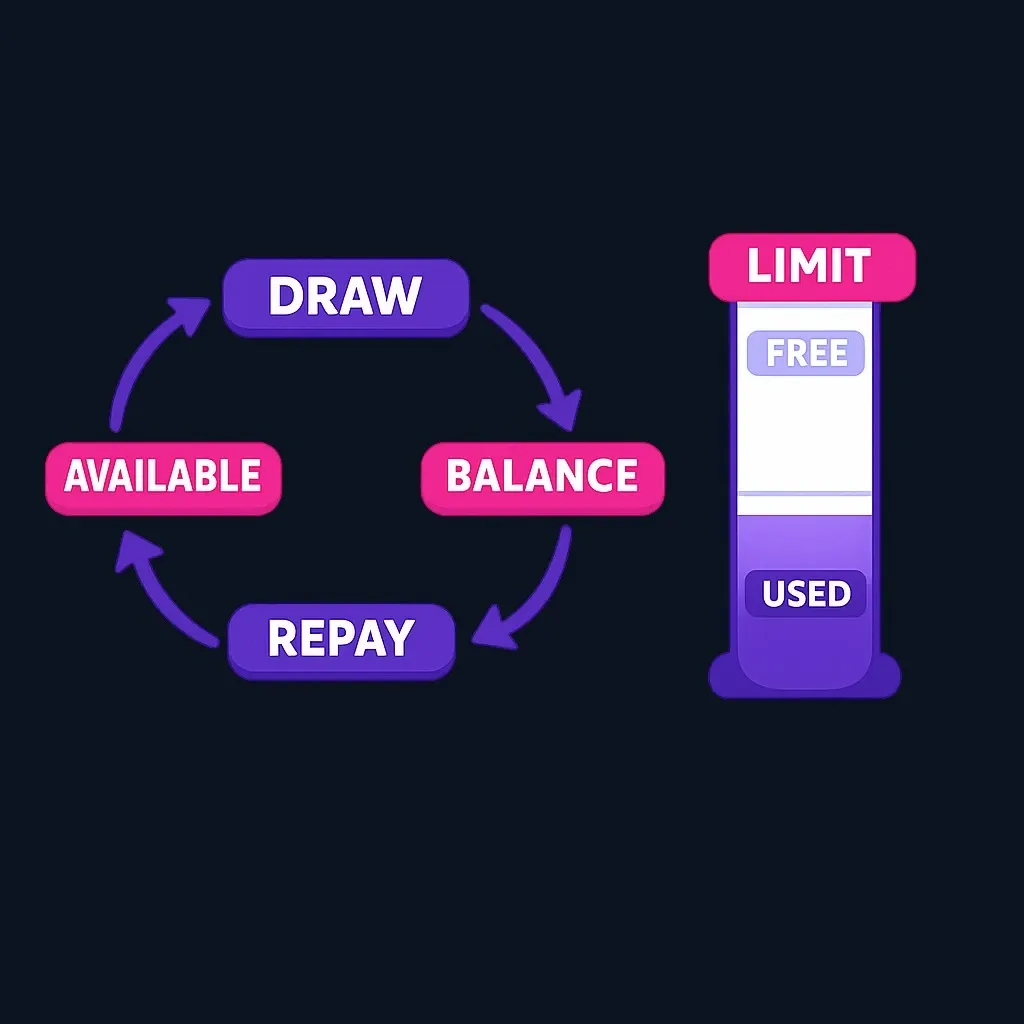
A personal line of credit is a revolving loan you can access from time to time up to an approved limit. The CFPB describes access through checks or account transfers, with a credit limit, monthly bill, minimum payment, and interest on the outstanding balance.
Key features and practical takeaways
- Revolving access: once approved you can borrow, repay, and borrow again up to your limit, without applying again.
- Flexibility: lines are typically used for ongoing or uncertain cash needs (examples: seasonal income gaps, staggered home repairs, or emergency buffers).
- Interest and fees: lenders set interest and fee terms; interest is commonly charged on amounts you draw (confirm with the lender). Always compare how each lender calculates interest, any maintenance or inactivity fees, and how draws are made.
Practical tip: Treat a line of credit like a safety net. It may help with uncertain timing or amounts while access remains available, but it is not a substitute for cash reserves. Confirm the draw mechanics (online transfer, checks, card) and any periodic review or renewal conditions with the lender before relying on it.
Practice trading with Finelo
Practice in a simulator, learn with bite-sized lessons, and build confidence before risking real money.
What is a Personal Loan?
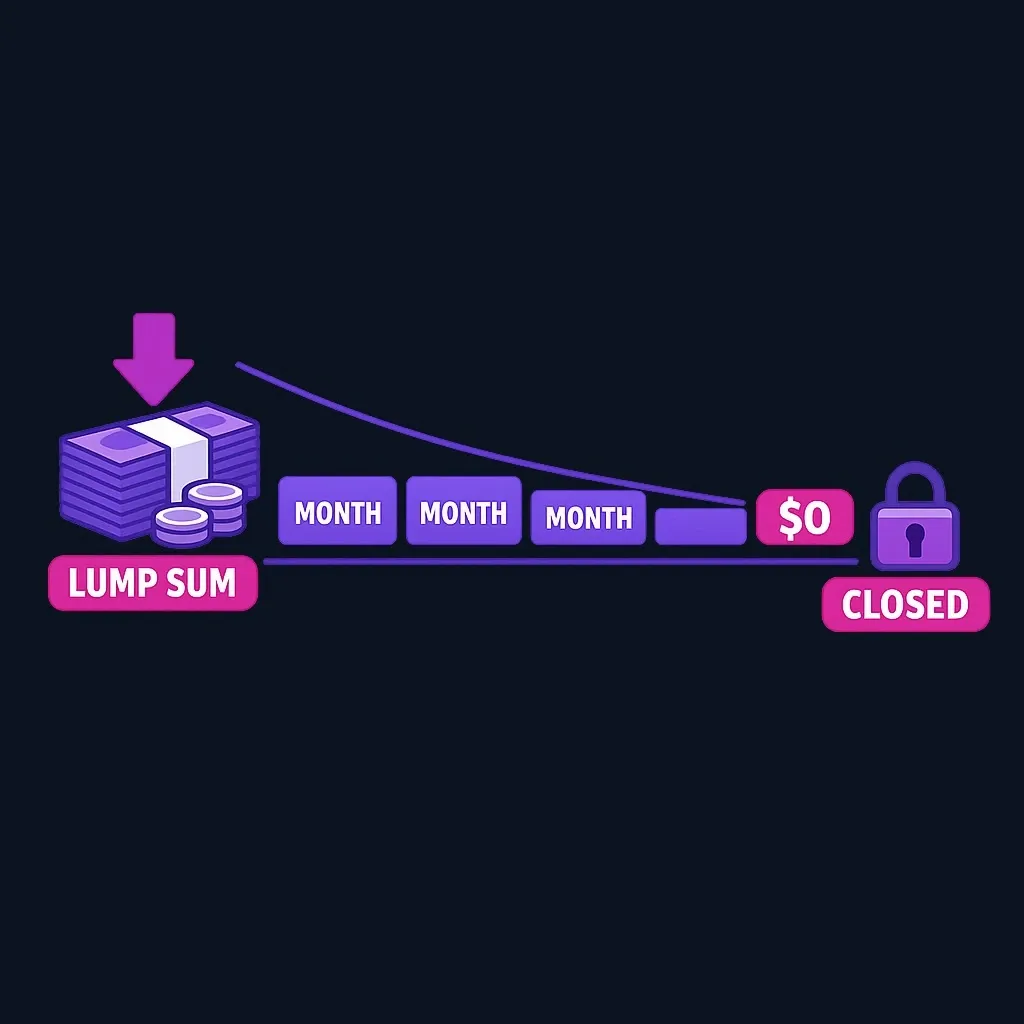
A personal loan (often called an installment loan) gives you a single lump-sum disbursement that you repay in fixed installments over a set term. The CFPB describes a personal installment loan as borrowing a sum you must pay back in fixed amounts (“installments”); it’s a closed-end loan where the lender gives you all the money at the start.
Key features and practical takeaways
- Lump sum disbursement: you receive the full loan amount up front, then make regular payments that include principal and interest.
- Predictability: fixed installment schedules make budgeting easier because monthly payments are usually constant.
- Best for defined expenses: suitable for planned, one-time costs (examples: a single home renovation project, medical bills, or consolidating several smaller debts into one payment).
Practical tip: If you know the exact amount you need and prefer stable monthly payments, a personal loan often simplifies planning. Compare APRs, terms, and any origination fees.
How to compare your options
Use this checklist to compare offers and decide which product fits your situation. Use the questions to identify requirements; a favorable answer elsewhere cannot make an unaffordable payment or an ineligible loan suitable.
1. Planned vs unpredictable need
- One-time, fixed-cost need → favors a personal loan.
- Uncertain or ongoing needs → favors a line of credit.
2. Need for payment predictability
- Strong need for stable monthly payments → favors a personal loan.
- Comfortable with variable payments based on balance → line of credit may fit.
3. Desired interest-rate structure
- Want fixed APR for budgeting certainty → personal loan often better.
- Comfortable with potential variability and paying interest only on amounts borrowed → line of credit can be more flexible.
4. Total expected borrowing duration
- Short-term, one-off borrowing → personal loan may be cheaper overall.
- Repeated or long-term intermittent borrowing → a line may avoid a new application for each permitted draw, but ongoing fees can offset that convenience.
5. Fees and origination costs
- If lenders charge substantial origination fees for loans, compare whether any interest savings outweigh the upfront cost over your planned repayment period.
- For lines, confirm annual or maintenance fees.
6. Credit and approval considerations
- Shop prequalification tools to compare expected APRs without hard pulls where possible.
- Compare required documentation and collateral (most personal loans/lines are unsecured, but check with lenders).
How to use the checklist: first rule out offers that fail your eligibility or affordability requirements. Then compare the remaining offers for the same planned borrowing and payoff dates. Treat flexibility and predictability as preferences, not as points that override the actual cost.
When to choose each option
When a personal line of credit is likely better
- You expect repeated or unpredictable small withdrawals over time (e.g. ongoing home repairs, staggered medical bills, a series of permitted personal expenses). A line lets you borrow only what you need when you need it, without reapplying.
- You want a ready source of funds for emergencies and prefer to pay interest only on amounts drawn.
When a personal loan is likely better
- You have a single, definite expense (examples: a planned renovation, a known medical bill, or consolidating multiple credit-card balances into one predictable payment).
- You value fixed monthly payments for budgeting and want to lock a repayment schedule and (often) a fixed APR.
Realistic scenarios (qualitative)
- Scenario A — One-off: You need a defined amount to replace an HVAC system. A personal loan gives you the funds upfront and steady payments, simplifying budgeting.
- Scenario B — Rolling needs: You run into small, staggered car repairs over months. A line of credit provides flexibility to draw as each repair arises without applying multiple times.
Practical checklist before applying
- Estimate total expected borrowing and compare total interest + fees for a loan vs repeated draws on a line.
- Ask lenders for sample repayment schedules under likely draw scenarios.
- Confirm any maintenance, inactivity, or renewal fees on lines and origination or prepayment penalties on loans.
Tradeoffs and caveats
Common tradeoffs
- Flexibility vs predictability: Lines offer flexibility; loans offer budgeting predictability.
- Fee structures: Loans may have origination fees; lines may have maintenance or review fees. Ask each lender for a fee schedule and examples of total cost under realistic scenarios.
- Interest cost over time: A line can lower interest if you borrow small amounts briefly, but prolonged balances on a higher-rate line could cost more than a loan with the rate structure stated in the agreement.
Common mistakes and how to avoid them
- Mistake: Assuming “available credit” is cost-free. Fix: Understand how and when interest and fees apply to draws; request sample statements or amortizations.
- Mistake: Ignoring renewal or review conditions on lines. Fix: Confirm how long the line remains available and whether the lender can reduce or cancel it.
- Mistake: Comparing advertised APRs without comparing fees and amortization. Fix: Request the annual percentage rate and a projected repayment schedule for your expected borrowing amount.
Practical negotiation tip
- Use multiple prequalification offers (soft inquiries where available) to compare likely APRs without multiple hard credit pulls. Then request full disclosures from top lenders before accepting an offer.
Impact on Credit Score
General mechanisms to watch
- Applications (both lines and loans): applying typically results in a hard credit inquiry that may have a short-term effect on your credit score. Lenders vary in whether they offer prequalification tools that use soft inquiries.
- Account type and utilization: revolving credit (like a line) can affect credit utilization ratios; the treatment of revolving balances differs from installment balances and varies by scoring model.
- Payment history: on-time payments on either product help credit; missed payments can harm credit.
Practical steps to protect your credit
- Before applying, use lenders’ prequalification tools if available to estimate offers without a hard inquiry.
- Keep balances low relative to approved limits on revolving lines to avoid high utilization.
- Prioritize on-time payments. Set reminders or autopay to avoid late fees and credit-reporting issues.
Note: Lenders report accounts differently; confirm with your lender how they report balances and payments to the credit bureaus so you understand what information reaches your credit reports. This cannot predict a particular score change. The CFPB’s credit-score guidance explains the importance of payment history and credit use.
What is a personal line of credit?
A personal line of credit is a revolving credit product you can access from time to time up to an approved limit. The Consumer Financial Protection Bureau defines it as “a loan that you access from time to time” and describes its reusable nature.
What is a personal loan?
A personal loan is a closed-end installment loan: you receive a lump sum and repay it in fixed installments over the loan term. The CFPB explains that a personal installment loan gives you all of the money at the beginning and requires fixed payments.
How much do personal loans usually cost?
Personal-loan pricing varies by lender, loan term, credit profile, and market conditions. Compare current written offers and review the APR, origination fee, monthly payment, and total repayment amount before applying.
Which option is better for debt consolidation?
If you want to consolidate multiple balances into one steady monthly payment and know the exact payoff amount, a personal loan is often chosen because of its fixed payment schedule. If you expect to need ongoing credit after consolidation, consider whether a line’s flexibility is more appropriate. Compare total cost, term, and any origination fees for both options.
The interest-rate structure needs its own comparison; read Fixed vs. variable interest on a personal loan.
This guide covers U.S. rules. Finelo provides financial education, not personalized financial, investment, tax, or legal advice.
Financial LiteracyU.S. GuideFinancial Education
Practice trading with Finelo
Practice in a simulator, learn with bite-sized lessons, and build confidence before risking real money.
About the author
Finelo Team
The Finelo Team creates practical investing and trading education designed to help beginners learn faster with structured challenges, simulator practice, and bite-sized lessons.
Keep reading — Related articles
Financial Literacy
USDA vs. FHA loan
Compare location and income eligibility, down payments, credit conditions, and upfront and annual program charges for a home purchase.
Finelo Team
Financial Literacy
Term life vs. accidental death insurance
Compare broad term-life protection with accident-only coverage, including exclusions, underwriting, and the family income gap.
Finelo Team
Financial Literacy
Term life insurance laddering vs. one policy
Compare several term policies ending at different times with one policy, using coverage needs, costs, and future insurability.
Finelo Team