Last editorial review: September 28, 2026
Offer in compromise vs. IRS installment agreement
Compare settling eligible tax debt with paying over time, including qualification, costs, and continuing compliance requirements.
9 min read
Practice trading with Finelo
Practice in a simulator, learn with bite-sized lessons, and build confidence before risking real money.
Want to learn more?
Practice in a simulator, learn with bite-sized lessons, and build confidence before risking real money.
Explore FineloExplore Finelo's 28-day challenges
Turn learning into a daily habit with guided challenge paths.
An offer in compromise, or OIC, is a request to settle an IRS debt for less than the full amount. An installment agreement arranges payment over time. An OIC is not automatically available because the balance is large or difficult to pay.
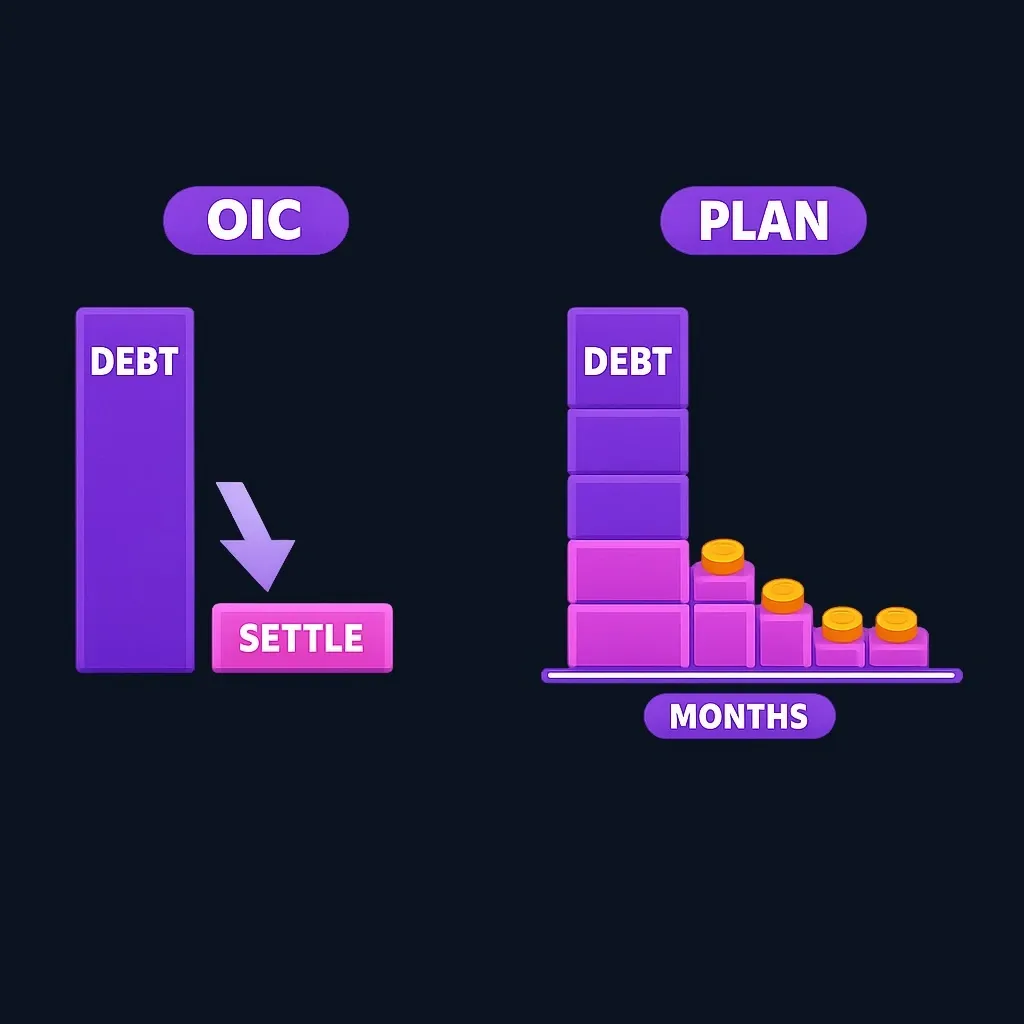
The IRS evaluates eligibility and the relevant financial or legal basis for the offer. This comparison focuses on inability-to-pay offers. Separate grounds exist for a genuine dispute about the tax liability or exceptional hardship and fairness circumstances; those are not interchangeable applications.
Compare the options
| Feature | Offer in compromise | Installment agreement |
|---|---|---|
| Goal | Settle under accepted terms | Repay through an approved schedule |
| Approval | Requires IRS evaluation and acceptance | Depends on the arrangement and eligibility |
| Financial review | Can include income, expenses, and asset equity | Varies with the type of plan |
| Ongoing obligations | Accepted offers carry compliance conditions | Required payments and tax compliance must continue |
The IRS OIC overview explains the grounds and requirements. If the IRS believes you can pay through assets or an installment arrangement, a hardship-based settlement may not be accepted.
Compare affordable payments with collectible resources
A person with low income but substantial accessible assets has a different case from someone with neither a payment surplus nor assets. Use accurate records rather than focusing only on the monthly budget.
An OIC application can involve a fee and initial payments, subject to applicable exceptions. Submitting an offer does not mean the debt is settled. Collection protections have conditions, and interest or penalties may continue while the matter is unresolved.
Prepare before applying
Confirm required returns and current estimated payments are up to date, and check the IRS’s bankruptcy and employer-deposit eligibility rules. Gather balances by tax period, income records, necessary expenses, and assets. Review the IRS payment-plan options alongside the offer requirements.
If you cannot meet basic living expenses, ask whether temporary collection relief is relevant. If someone promises a guaranteed reduction for an upfront fee, verify the claim against IRS criteria.
The useful outcome is a resolution you qualify for and can maintain, not merely the smallest proposed payment on an application.
Determine what is realistically collectible
An offer in compromise is not a discount available merely because a tax balance is large. For an inability-to-pay offer, the IRS evaluates financial circumstances under its rules, including assets, income, and allowable expenses. A monthly budget that feels tight does not by itself establish that the proposed offer will be accepted.
Gather current balances and financial records before deciding which application to pursue. Separate the value of an asset from the cash it would actually provide after relevant debt or sale costs. Identify income that is reliable and expenses supported by records. A complete financial picture is necessary to evaluate either an offer or a payment arrangement.

Practice trading with Finelo
Practice in a simulator, learn with bite-sized lessons, and build confidence before risking real money.
Account for the application period and the years afterward
Ask what payments, fees, or supporting documents must accompany the request and whether an exception applies. Also understand how an application affects the collection timeline. A rejected or returned offer can leave the original problem unresolved, so the plan should not depend on acceptance being certain.
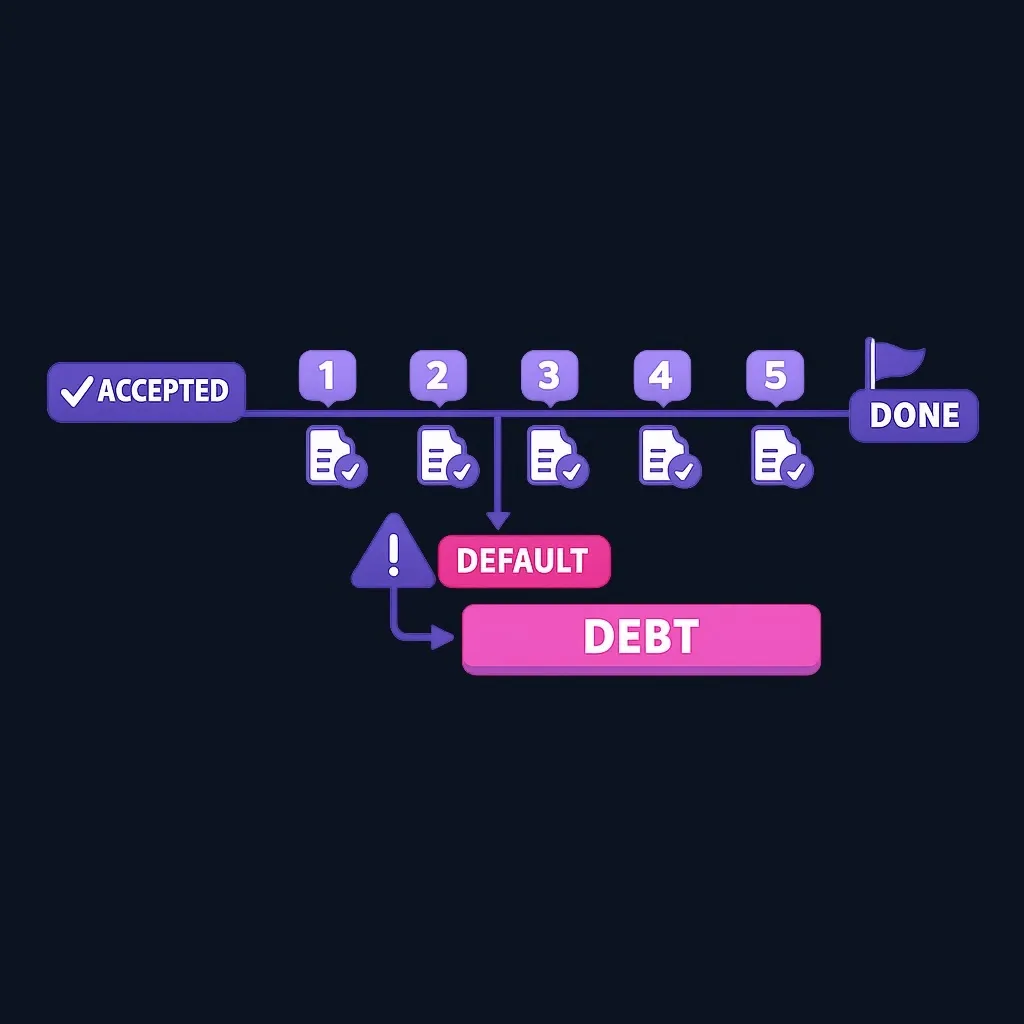
An accepted offer carries conditions, including continuing compliance. For collectibility and effective-tax-administration offers, this generally includes timely filing and payment for five years after acceptance; default can restore collection of the original debt less payments made. A payment agreement similarly depends on meeting its terms and staying current with new taxes. Fixing withholding or estimated payments may be part of making either outcome sustainable.
Be wary of a provider promising a settlement amount before reviewing your finances. Compare the cost and scope of professional help, the basis for the proposed approach, and what happens if the request is unsuccessful. The useful service is an accurate assessment and properly prepared request, not a guaranteed result the provider cannot control.
How to compare your options
Use these criteria to decide which option to pursue:
- Ability to pay now or soon: If assets and projected income do not support full payment under IRS rules, a collectibility OIC may be worth evaluating. Inability to pay immediately alone does not establish eligibility. If you can afford monthly payments, an IA preserves the full liability but spreads payments.
- Speed and certainty: IAs are typically quicker to set up; OICs require IRS review and documentation. Check both IRS pages for process details.
- Collection protection needs: Requesting an IA generally halts most levies while the agreement is pending and you remain compliant.
- Long-term consequences: An accepted OIC resolves the liability per its terms; an IA keeps the debt but makes payments manageable. Review IRS guidance on each outcome.
This page is educational, not financial or investment advice. Tax decisions can materially affect your finances; consult a tax professional or the IRS for guidance tailored to your situation.
When to choose an Offer in Compromise
Choose an OIC if your financial picture makes full collection unlikely and you can document that to the IRS. The OIC process exists to allow settlement for less than the full liability when the IRS determines the amount offered represents the most it can reasonably expect to collect. Practical indicators an OIC may be worth exploring:
- Your monthly income and asset values leave little or no excess cash after essential living expenses.
- You cannot realistically liquidate assets without undue hardship.
- You want a permanent resolution that eliminates part of the liability if accepted.
Pitfalls and process notes:
- An OIC requires complete financial disclosure and documentation. The IRS will review ability to pay and other factors.
- OIC reviews can take time. Plan for a longer decision window than a simple payment plan. See the IRS OIC page for application steps and documentation requirements.
- If accepted, the agreed settlement replaces the original liability per the IRS terms. (Example scenario) If a taxpayer’s payroll has been reduced, their bank reserves are low, and selling nonexempt assets would still not cover the tax bill without causing severe hardship, pursuing an OIC may be appropriate. Use the IRS OIC guidance to check eligibility and required forms.
When to choose an Installment Agreement
Choose an IA if you can pay the tax over time through monthly payments and want quicker relief from aggressive collection while compliant. When a payment plan is requested and you meet the requirements, the IRS is generally prohibited from levying, and the time to collect may be suspended while the IA is pending. Practical indicators an IA may be preferable:
- You can afford a monthly payment that will, over time, satisfy the liability.
- You need faster protection from levies and garnishments and want a predictable payment schedule.
- You prefer to avoid the documentation and review timeline required by an OIC.
Pitfalls and process notes:
- An IA does not reduce the principal tax owed. Interest and penalties may continue to accrue per IRS rules—review the IRS payment-plan guidance for program details.
- Missing payments under an IA can bring the account back into active collection. Remaining compliant is essential.
- Setting up an IA is typically faster than completing an OIC application; consult IRS instructions for how to request a plan. (Example scenario) If a taxpayer has steady income and can commit to monthly payments that cover the balance within a reasonable time, an accepted agreement can provide a structured payment arrangement, subject to its terms and IRS collection rules.
Tradeoffs and caveats
- Certainty vs. forgiveness: An IA sets a repayment arrangement (subject to compliance); an accepted OIC may permanently reduce what you owe.
- Administrative burden: OIC applications generally require detailed financial disclosure and IRS review; IAs are typically simpler to request.
- Collection posture: Certain pending and accepted requests restrict levy action, with exceptions. Check whether the IRS has accepted the request for processing and what rules apply; do not assume submitting paperwork stops every action.
- Credit, tax records, and future filings: Both options carry consequences for your financial records and obligations; follow IRS instructions carefully and remain compliant with filing and payment requirements.
- Appeals and alternatives: If an OIC is rejected, other options (including payment plans) remain possible; check IRS procedures for next steps.
Common mistakes to avoid:
- Assuming an OIC is "easy"—a collectibility offer requires a supported financial analysis; other legal grounds have their own requirements.
- Entering an IA without confirming payment affordability—defaulting can remove collection protections.
- Failing to stay current with filing and estimated-tax obligations while under an agreement—noncompliance can jeopardize both OICs and IAs.
What is the difference between an Offer in Compromise and an Installment Agreement?
An Offer in Compromise is an IRS program that can settle tax liabilities for less than the full amount owed; an Installment Agreement allows a taxpayer to pay the assessed balance over time. See the IRS pages for each program for details on eligibility and process.
How do I know which option is best for me?
Compare your realistic ability to pay now versus over time, the applicable collection rules and notice deadlines, and how quickly you want a final resolution. Use the IRS guidance on OICs and payment plans to assess documentation needs and protections. Consider consulting a tax professional for personalized analysis.
What happens if my Offer in Compromise is rejected?
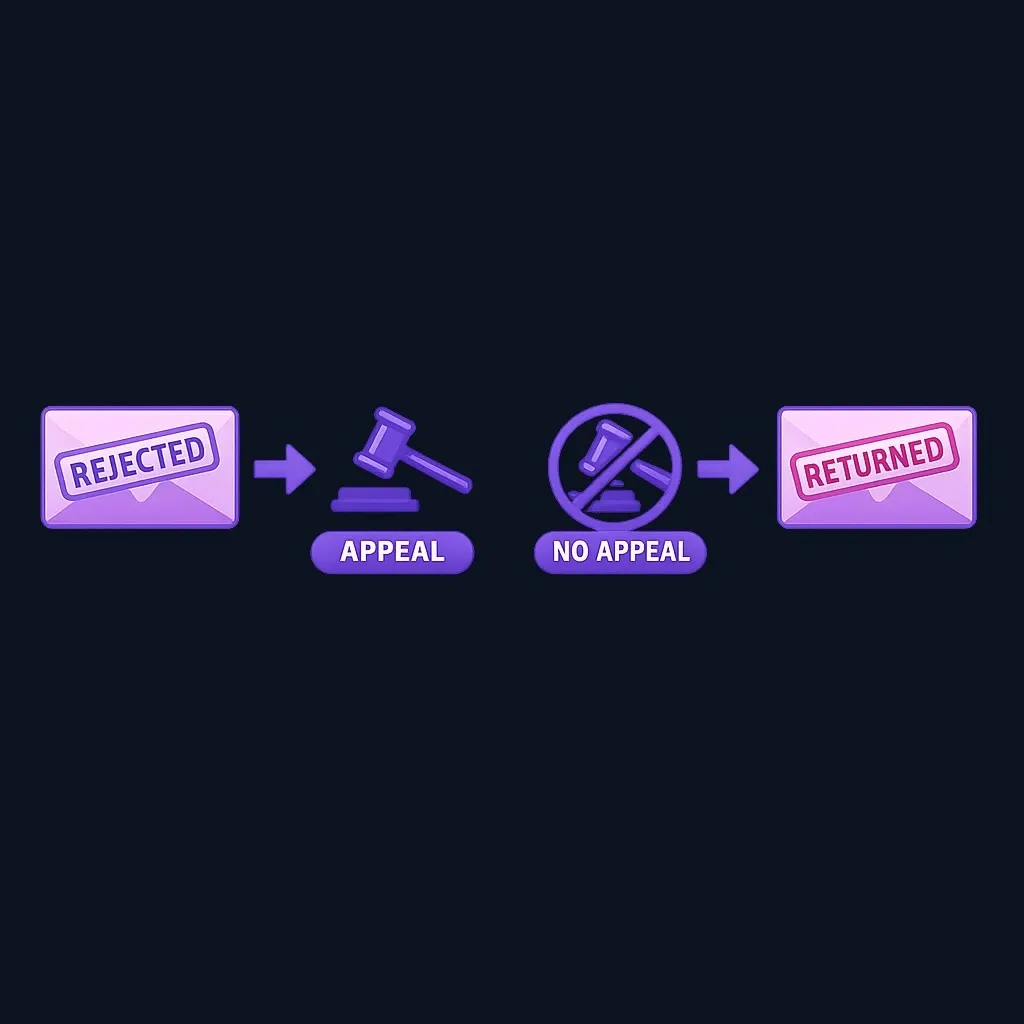
A rejection letter explains appeal rights; the ordinary appeal deadline is 30 days from the letter’s date. A returned, unprocessable offer is different and does not carry that rejection appeal right. Read the notice and compare payment plans or other available alternatives.
Can requesting an Installment Agreement stop levies and collection?
Certain pending or accepted installment requests restrict levy action, subject to exceptions. Confirm that the IRS has accepted the request for processing and read the applicable notices; do not assume all collection activity stops immediately.
If you cannot currently afford payments, also compare IRS currently not collectible vs. installment agreement.
This guide covers U.S. rules. Finelo provides financial education, not personalized financial, investment, tax, or legal advice.
Financial LiteracyU.S. GuideFinancial Education
Practice trading with Finelo
Practice in a simulator, learn with bite-sized lessons, and build confidence before risking real money.
About the author
Finelo Team
The Finelo Team creates practical investing and trading education designed to help beginners learn faster with structured challenges, simulator practice, and bite-sized lessons.
Keep reading — Related articles
Financial Literacy
USDA vs. FHA loan
Compare location and income eligibility, down payments, credit conditions, and upfront and annual program charges for a home purchase.
Finelo Team
Financial Literacy
Term life vs. accidental death insurance
Compare broad term-life protection with accident-only coverage, including exclusions, underwriting, and the family income gap.
Finelo Team
Financial Literacy
Term life insurance laddering vs. one policy
Compare several term policies ending at different times with one policy, using coverage needs, costs, and future insurability.
Finelo Team