Last editorial review: September 28, 2026
Mortgage protection insurance vs. term life insurance
Compare mortgage-related life coverage with term life, including who receives the benefit and how protection changes over time.
8 min read
Practice trading with Finelo
Practice in a simulator, learn with bite-sized lessons, and build confidence before risking real money.
Want to learn more?
Practice in a simulator, learn with bite-sized lessons, and build confidence before risking real money.
Explore FineloExplore Finelo's 28-day challenges
Turn learning into a daily habit with guided challenge paths.
Mortgage protection insurance is marketed around paying a home loan after a covered event. Term life insurance pays a death benefit if the insured person dies during the covered term, subject to the policy. The important comparison is the actual contract, not the marketing name.
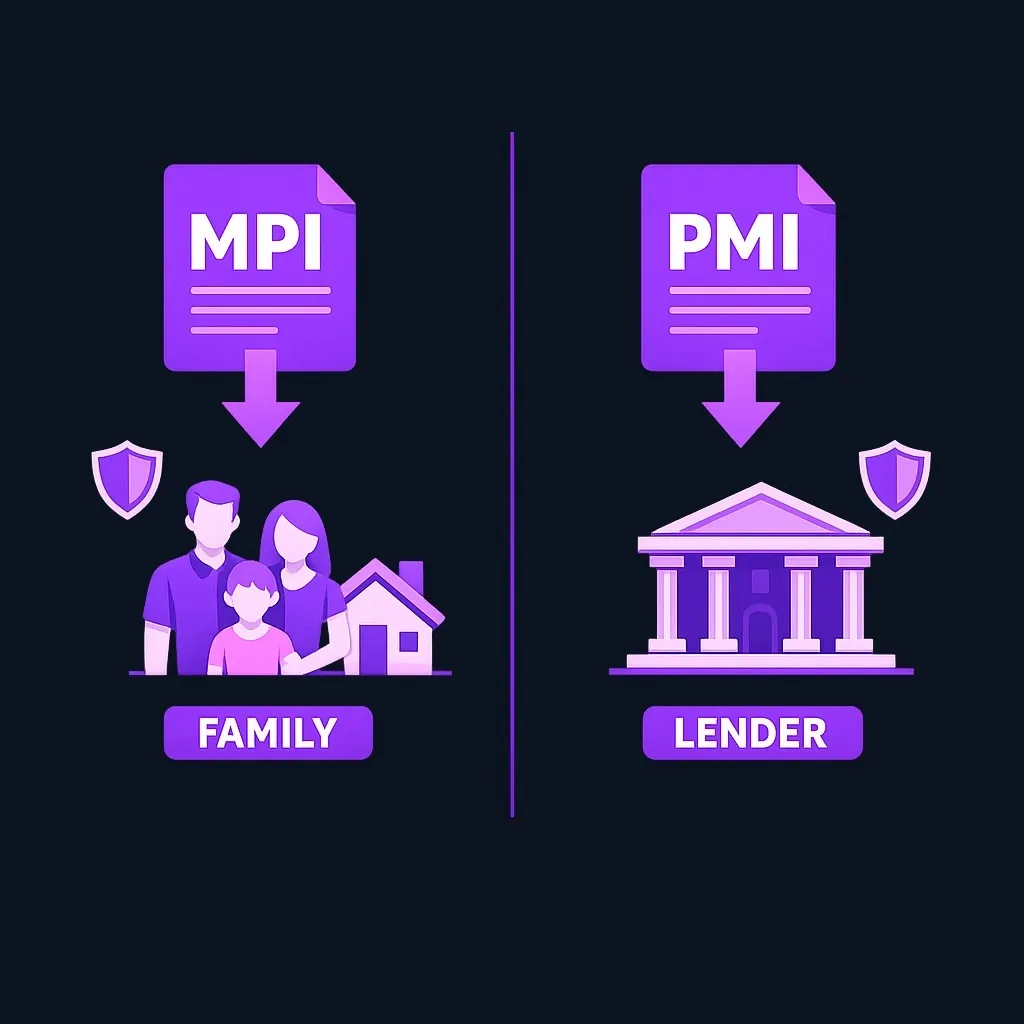
Mortgage protection is also different from private mortgage insurance, or PMI, which protects the lender against borrower default.
Compare the benefits
| Question | Mortgage protection product | Term life policy |
|---|---|---|
| Who receives the benefit? | Depends on the contract; may be the lender or a named beneficiary | Named beneficiaries |
| Does coverage decline? | It may track the mortgage balance | Level-term coverage generally stays level during the term |
| Can proceeds cover other needs? | Depends on benefit structure | Beneficiaries generally choose how to use the money |
| Is underwriting required? | Varies by product | Varies by policy and insurer |
The Texas insurance regulator's life-insurance guide explains term coverage, beneficiaries, and policy features. Texas-specific rules should not be generalized to every state.
Think beyond the mortgage balance
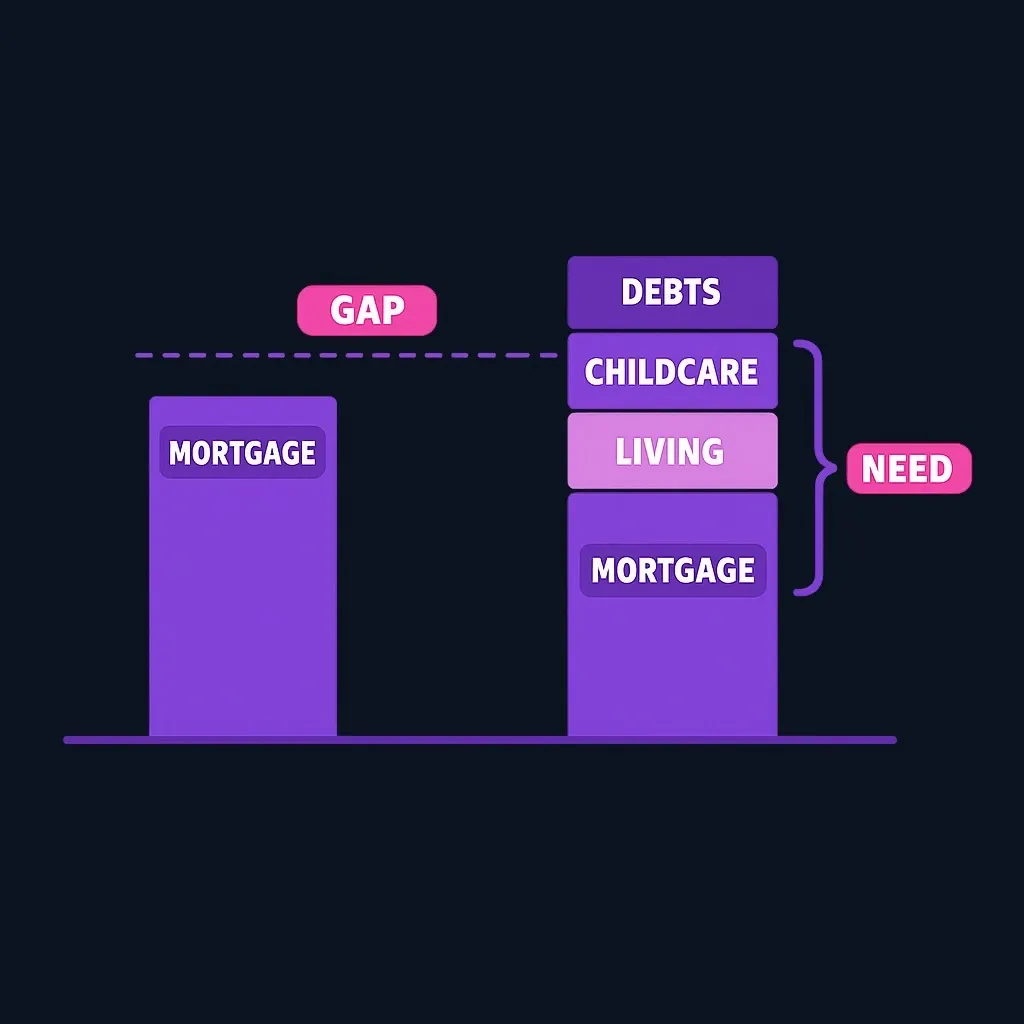
If a household would also lose income for food, childcare, and utilities, paying off the mortgage may not cover the full need. Conversely, an existing policy may already provide enough protection without an additional mortgage-focused product.
Ask whether refinancing, moving, or repaying the mortgage affects the proposed coverage. Also check exclusions, waiting periods, premium guarantees, and any disability or unemployment riders. Those riders have their own qualification rules.
Compare equivalent quotes
Request quotes for the same insured person, initial benefit, and coverage period. Examine the benefit at later dates, not just at purchase. A lower premium can reflect a shrinking benefit or narrower coverage.
Choose an amount and duration based on the household's obligations and existing resources. Do not cancel an existing policy until replacement coverage is issued, effective, and reviewed.
Identify who receives money and what triggers payment
“Mortgage protection” is a marketing description, so begin with the contract. Is it life insurance, disability coverage, another credit-insurance product, or a combination? Who is insured, what event triggers a benefit, who receives the payment, and does the benefit decrease over time? Those questions are more useful than assuming every mortgage-branded policy works alike.
Also distinguish protection for your household from mortgage insurance that protects a lender against borrower default. Paying a mortgage-insurance charge does not generally mean the family's mortgage will be paid because an insured household member dies. Check the policy or loan documents rather than relying on similar names.
Size the household need beyond the mortgage balance
A surviving household may need money for living expenses, childcare, other debts, or time away from work. Paying the mortgage could reduce a major expense, but it may not cover those other needs. Conversely, a household with substantial accessible assets may not need coverage equal to every possible expense added together.
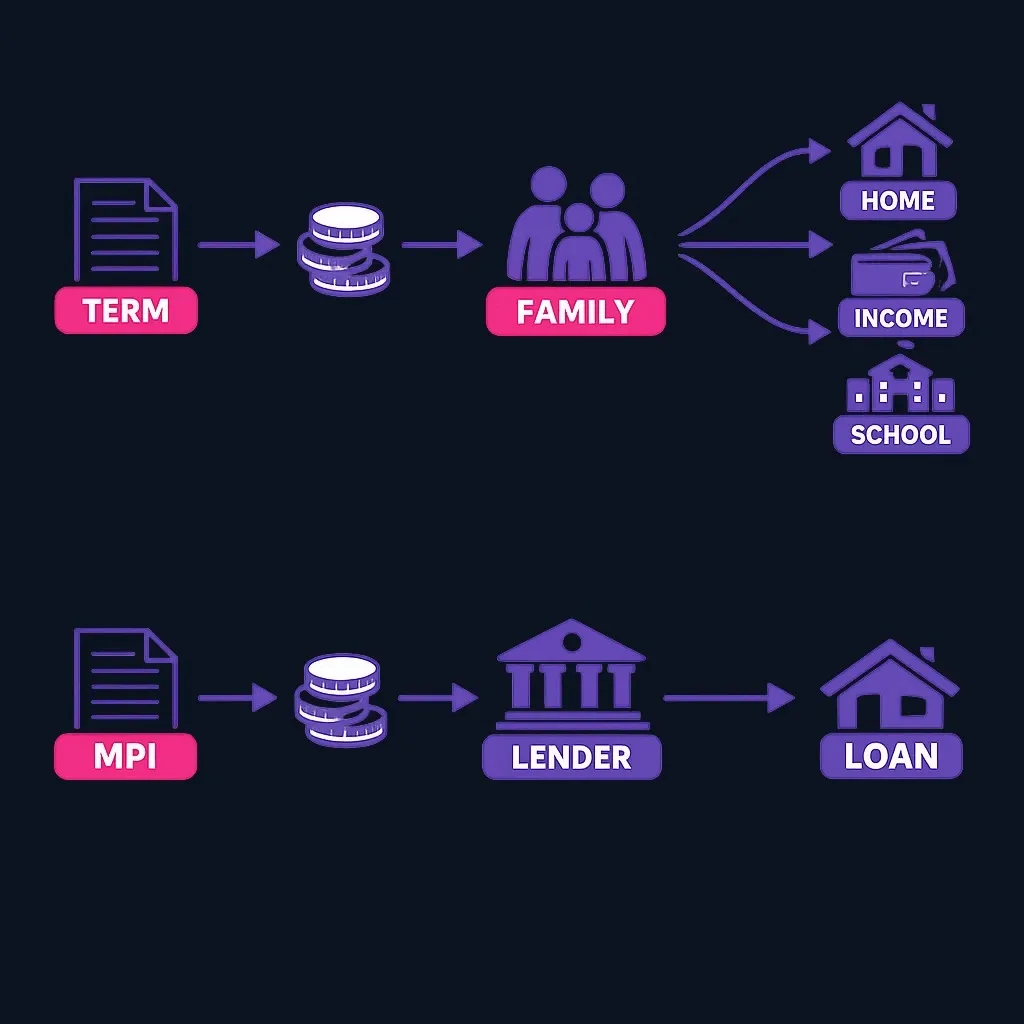
Compare how the benefit can be used. A general term-life policy typically pays the named beneficiary under its terms, while a mortgage-related contract's payment structure may be more restricted. The value of that flexibility depends on the family's priorities and the actual beneficiary arrangement.
Review what happens after a sale, refinance, or early payoff. Ask whether the coverage continues, whether the benefit changes, and whether the policy can still serve the household. A purchase tied to today's mortgage should be evaluated against the possibility that the home loan will change before the insurance term ends.
Practice trading with Finelo
Practice in a simulator, learn with bite-sized lessons, and build confidence before risking real money.
What is Mortgage Protection Insurance?
Mortgage protection insurance (MPI) is a marketing label for mortgage-related protection, rather than one uniform contract. Depending on the product, coverage may:
- Tie the death benefit to the outstanding mortgage balance, so the benefit can decrease as the loan principal is paid down.
- Name the lender as beneficiary or assign proceeds to it. Other policies pay a person you name, so confirm the actual arrangement.
- Follow a scheduled decrease in coverage or keep a level benefit. Check whether the schedule still matches the mortgage after a refinance or payment change.
Common buyer expectations and caveats: A product with a shrinking benefit or restricted beneficiary arrangement may not cover other household needs (income, education expenses, funeral costs). Verify contract terms and beneficiary assignment with the insurer and lender before buying.
What is Term Life Insurance?
Term life insurance provides a death benefit for a defined period (the “term”), such as 10, 20, or 30 years. Key characteristics:
- A level term policy pays a stated benefit amount if the insured dies during the term; the benefit does not automatically decrease as a mortgage balance falls.
- Policyholders name the beneficiary (typically a family member or trust), so proceeds can be used for mortgage payoff, income replacement, education, or other expenses.
- Premiums for term policies vary by age, health, coverage amount, and term length; buyers commonly compare term prices to MPI to judge value.
Term life is a general-purpose death benefit product. To assess that flexibility, compare a level-term quote with the mortgage-related product for the same person, starting benefit, and coverage period.
How to compare your options
Use these practical questions to decide which policy type better matches your needs. For each question, answer honestly and let the results point you toward MPI or term life.
- Primary goal for the payout?
- If the sole objective is to ensure the mortgage is paid and the lender is satisfied, MPI may match that narrow goal.
- If you need flexible funds for mortgage, income replacement, childcare, or education, level term life is more versatile.
- Who should control the payout?
- If you want proceeds to go directly to your family, name them as beneficiary on a term policy.
- If the lender must be paid directly, MPI often accomplishes that by design.
- Cost sensitivity and coverage needed?
- Compare quotes for the same underwriting profile: compare actual premiums and the benefit at later dates. The mortgage-protection label alone does not establish which policy provides more coverage per dollar.
- Remember reported MPI premium ranges vary widely; get multiple quotes.
- Portability and long-term plans?
- If you plan to move, refinance, or pay off the mortgage early, a portable term policy keeps protection in place.
- MPI tied to a specific mortgage may not follow you or your new loan.
Decision shortcut checklist:
- Want coverage specifically intended for the mortgage and lender involvement → consider MPI after reading the policy closely.
- Want maximum flexibility, broader family protection, and portability → compare level term life quotes.
When to choose each option
- Mortgage protection insurance may fit if:
- You want a policy explicitly tied to a mortgage balance, and you prefer the lender to be paid directly. Confirm beneficiary assignment and whether the policy decreases with the mortgage.
- You face simplified-issue MPI options as part of mortgage closing and accept the limited payout flexibility.
- Term life insurance may fit if:
- You need broader financial protection — mortgage payoff, lost income replacement, college funds, or estate liquidity — and you want the beneficiary to choose how to use the proceeds.
- You plan to move, refinance, or want a portable policy independent of a specific lender.
Practical tip: Obtain identical underwriting quotes (same age, health, coverage target for mortgage payoff) for an MPI product and for a level term policy to compare true cost and coverage.
Tradeoffs and caveats
- Decreasing benefit vs fixed benefit: A decreasing MPI benefit may match a mortgage schedule but offers less protection for non-mortgage needs; level term keeps a fixed amount available to dependents.
- Beneficiary control: If the lender is beneficiary, family members may not directly receive funds. Confirm assignment rules and whether the beneficiary can be changed.
- Underwriting differences: A mortgage-related offer may use a different health-review process from another life policy. Mortgage approval does not establish insurance approval, and less medical underwriting can come with different premiums, limits, or waiting periods. Read the actual eligibility and exclusions.
- Cost variability: Published MPI monthly premium ranges are wide; get personalized quotes.
- Policy expiration and survivors: A term policy generally pays no death benefit if the insured survives its term. Paying off a mortgage does not necessarily end every policy marketed as mortgage protection. Confirm what happens at term-end and whether conversion options exist in any specific policy contract.

Risk note (educational): Insurance choices depend on goals, time horizon, health, and family structure. This content is educational, not financial advice, and investments or insurance purchases can involve loss.
What is the difference between mortgage protection insurance and term life insurance?
MPI is usually designed to pay off a mortgage and often ties the benefit to the outstanding loan, sometimes listing the lender as beneficiary; level term life delivers a fixed death benefit to the named beneficiary for the policy term, usable for any purpose.
Can mortgage protection insurance be used for expenses other than the mortgage?
If the contract names or assigns proceeds to the lender, the benefit may go directly toward the loan. If a family member is the beneficiary, the permitted use may be broader. Read the policy’s beneficiary and assignment language to confirm how proceeds are handled.
Is mortgage protection insurance required?
A lender may encourage or offer MPI, but it is not universally required. Mortgage requirements vary; check your loan documents and state rules. If in doubt, ask the lender and compare independent term life options.
How do premiums typically compare?
Compare actual quotes for the same insured person and coverage period. The mortgage-protection label does not establish a uniform benefit schedule or premium; use the contract’s terms.
To match protection to debts that end at different times, compare Term life insurance laddering vs. one policy.
This guide covers U.S. rules. Finelo provides financial education, not personalized financial, investment, tax, or legal advice.
Financial LiteracyU.S. GuideFinancial Education
Practice trading with Finelo
Practice in a simulator, learn with bite-sized lessons, and build confidence before risking real money.
About the author
Finelo Team
The Finelo Team creates practical investing and trading education designed to help beginners learn faster with structured challenges, simulator practice, and bite-sized lessons.
Keep reading — Related articles
Financial Literacy
USDA vs. FHA loan
Compare location and income eligibility, down payments, credit conditions, and upfront and annual program charges for a home purchase.
Finelo Team
Financial Literacy
Term life vs. accidental death insurance
Compare broad term-life protection with accident-only coverage, including exclusions, underwriting, and the family income gap.
Finelo Team
Financial Literacy
Term life insurance laddering vs. one policy
Compare several term policies ending at different times with one policy, using coverage needs, costs, and future insurability.
Finelo Team


