Last editorial review: September 8, 2026
Is Long-Term Care Insurance Worth It? Costs, Coverage, and Alternatives
This is long term care insurance worth it comparison focuses on the rules, costs, risks, and practical trade-offs a reader should verify before deciding.
17 min read
Practice trading with Finelo
Practice in a simulator, learn with bite-sized lessons, and build confidence before risking real money.
Want to learn more?
Practice in a simulator, learn with bite-sized lessons, and build confidence before risking real money.
Explore FineloExplore Finelo's 28-day challenges
Turn learning into a daily habit with guided challenge paths.
U.S. scope: This article discusses U.S. institutions, financial products, tax rules, and dollar examples unless stated otherwise. Rules and product terms may change; verify current official guidance for your situation.
This is long term care insurance worth it comparison focuses on the rules, costs, risks, and practical trade-offs a reader should verify before deciding.
Quick answer
Long-term care insurance is one way to transfer part of future care-cost risk to an insurer, subject to the policy's eligibility, benefit, exclusion, elimination-period, premium, and claims terms. Its potential value depends on household assets, expected caregiving resources, available public programs, premium affordability, insurer strength, and alternatives; eligibility for public support should be verified rather than assumed.
The real answer is not “yes” or “no.” It depends on your health, assets, family support, local care costs, and the exact policy terms. Benefits and eligibility can vary by state, and your choices for where and how you receive care may be limited by the policy and state rules, according to Fidelity.
Educational note: this is general financial education, not financial, investment, tax, or legal advice. Insurance and investing decisions can involve costs, tradeoffs, and possible loss.
What to know before deciding
Long-term care planning is about one uncomfortable question: if you needed extended help later in life, who would provide it, who would pay, and what would happen to your savings?
Long-term care insurance is one possible answer. It is a contract designed to help pay for qualifying long-term care costs, subject to the policy’s benefit rules. Those rules matter more than the marketing brochure. Fidelity notes that benefits and eligibility vary by state, and the choices for where and how care is received could be limited Fidelity.
What long-term care insurance may cover
The most important coverage question is not simply, “Does it cover care?” It is, “What benefit trigger must be met, what elimination period applies, where can benefits be used, and what daily, monthly, or lifetime limits apply?” The NAIC's consumer guide recommends comparing these contract terms and inflation-protection options and checking the insurer with the applicable state insurance department (NAIC).
When reviewing a policy, focus on these points:
- What conditions trigger benefits?
- Whether care at home, in a facility, or through another setting qualifies.
- Whether the policy limits where and how you can receive care.
- How long benefits can last.
- Whether benefits adjust over time.
- What documentation the insurer requires before paying.
Because eligibility and benefits can vary by state, do not assume two policies with similar names work the same way Fidelity. Ask for sample policy language, not just a summary.
Who this page is for
This page is for people who are close enough to retirement planning to take long-term care seriously, but not so deep into insurance jargon that they want a product manual.
You will get the most value if you are asking questions like:
- “Would long-term care costs put my spouse or family at risk?”
- “Should I compare traditional and hybrid policies?”
- “What if I never use the policy?”
- “Could I self-fund instead?”
- “How do I avoid buying the wrong coverage?”
By the end, you should be able to evaluate whether long-term care insurance deserves a place in your planning conversation. You should also know which assumptions need outside verification before you request quotes or sign anything.
Costs and statistics: what matters more than national averages
Many articles answer this topic with national cost averages. Those numbers can be useful for awareness, but they are often a weak basis for your decision. Your actual risk depends on your location, care setting, family support, health, and how long care is needed.
A better approach is to build a personal cost range before shopping for insurance.
Build your own long-term care cost range
Start with three scenarios:
| Scenario | What to estimate | Why it matters |
|---|---|---|
| Short need | A limited period of paid help | Tests whether savings could absorb a smaller shock |
| Moderate need | Ongoing support that changes your budget | Shows whether premiums may protect retirement income |
| Severe need | Extended care that strains assets | Tests whether insurance protects your spouse, heirs, or estate goals |
You do not need perfect precision at this stage. You need a range that shows whether the risk is small, manageable, or life-changing for your household.
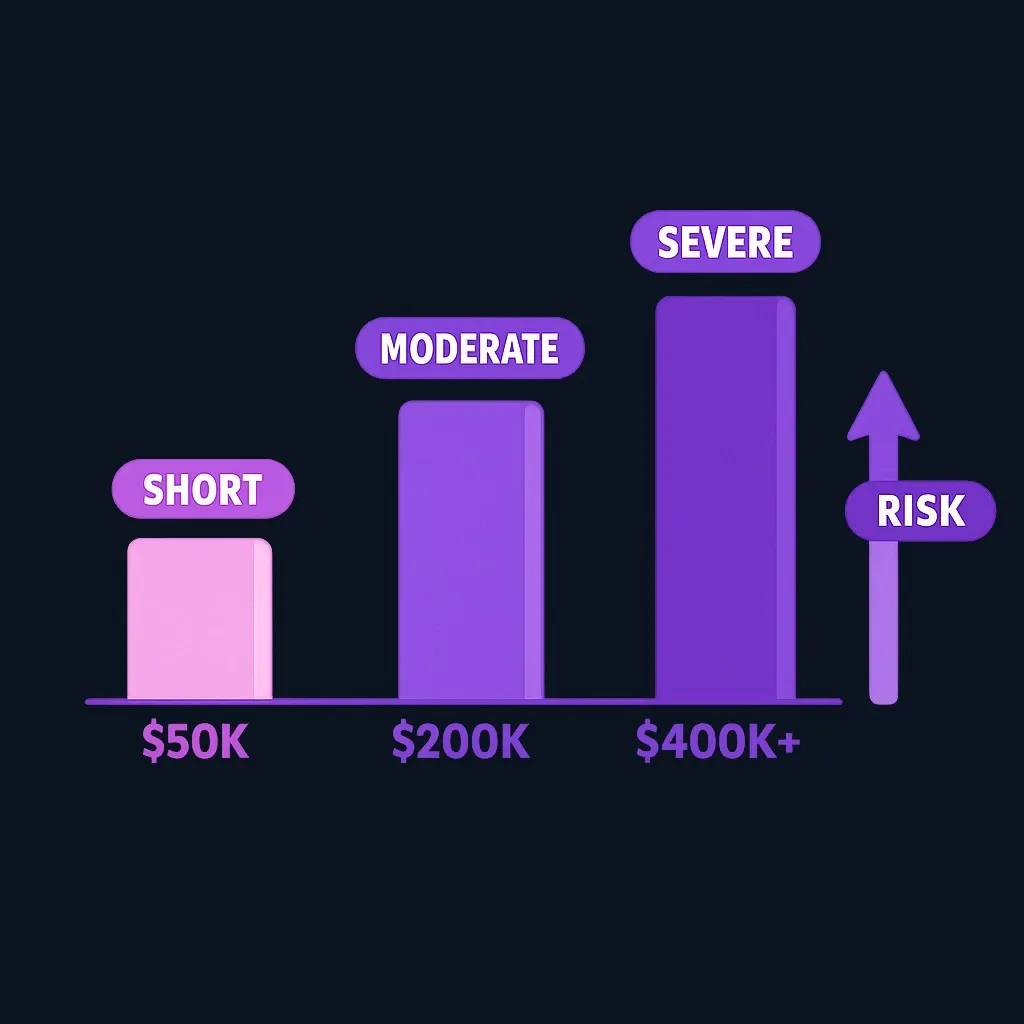
For example, imagine a couple with enough savings to handle a short period of paid care. A severe, extended care need could still force difficult tradeoffs. They might spend assets meant for the healthy spouse, sell investments at a bad time, or rely more heavily on adult children.
Now imagine a single retiree with substantial liquid assets and no estate goal. That person may prefer flexibility over premiums. The same care risk exists, but the emotional and financial tradeoff looks different.
What to verify before trusting any cost estimate
Before using any number in your plan, check:
- Local care rates, not only national articles.
- Whether costs differ by care setting.
- Whether family support is realistic.
- Whether a spouse or dependent would still need assets.
- Whether your state affects available benefits or eligibility.
That last point is important because Fidelity states that benefits and eligibility vary by state Fidelity. A policy that looks flexible in a brochure may feel narrower when you examine the actual contract.
The hidden cost: family capacity
Long-term care planning is not only about money. It is also about time, distance, stress, and decision-making.
If you assume a family member will help, ask whether that person lives nearby, can miss work, understands your preferences, and can handle the emotional load. “My daughter will help” is not a plan. “My daughter can coordinate care, but paid help may be needed after a certain point” is closer to a plan.
Pros and cons of long-term care insurance
Long-term care insurance works best when it solves a clear problem. It works poorly when someone buys it out of fear, without checking affordability or policy limits.
Potential advantages
The main benefit is risk transfer. Instead of keeping the entire long-term care risk on your balance sheet, you pay premiums to shift part of that risk to an insurer.
That can help in several situations:
- You want to protect retirement savings from a large care event.
- You want to reduce pressure on a spouse or adult children.
- You want more options if you need paid care later.
- You want to preserve assets for heirs or charitable goals.
- You are uncomfortable relying only on savings.
The emotional benefit can also matter. Some people value knowing they have a defined funding source if care becomes necessary. That peace of mind is not easy to price, but it is a real planning input.
Potential disadvantages
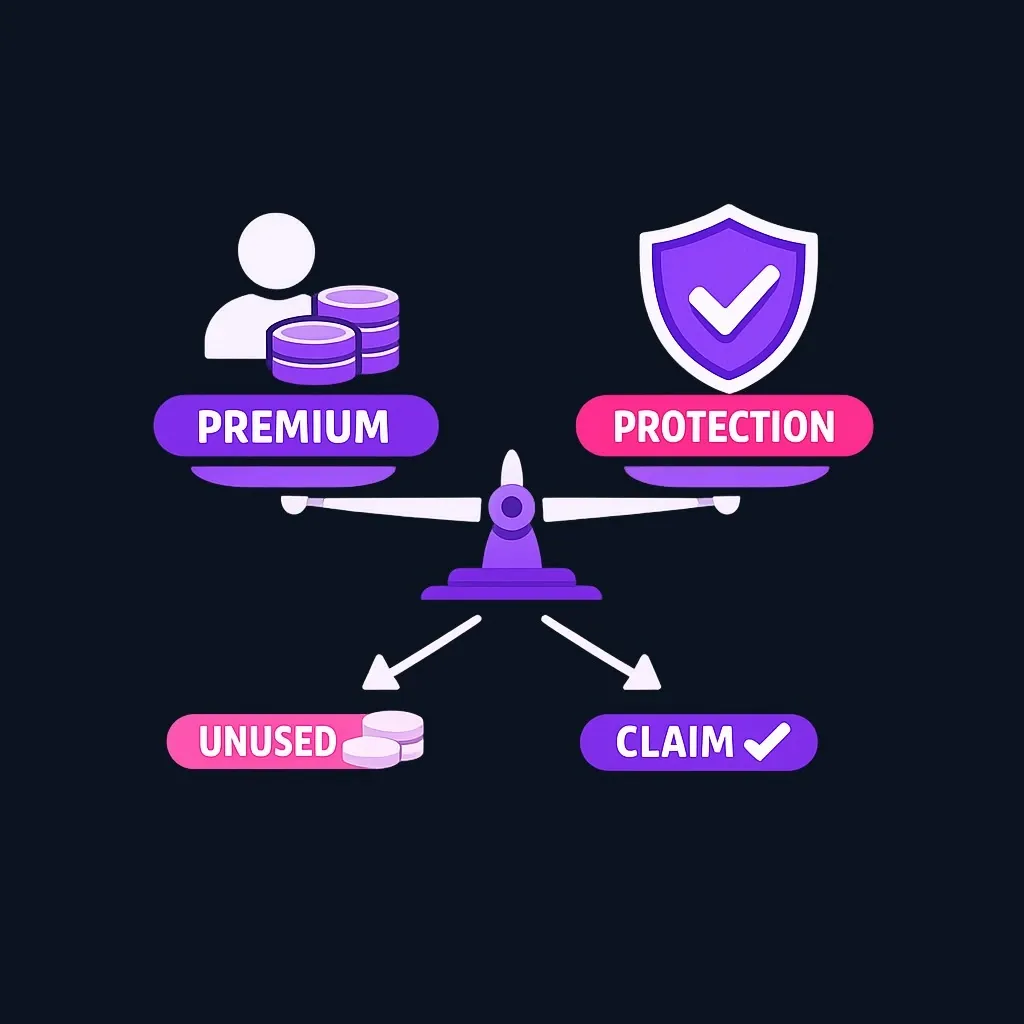
The biggest downside is paying for coverage you may never use. That does not automatically make the policy bad. Homeowners may never file a major claim either. But it does mean the premium must fit your budget without crowding out higher priorities.
The second downside is complexity. Policy terms can affect whether a claim qualifies, how much is paid, and where care can be received. Fidelity notes that choices for where and how you receive care could be limited Fidelity.
The third downside is timing. If you wait until health concerns appear, coverage may become harder to obtain or less attractive. If you buy too early, you may pay premiums for longer. The useful planning question is not “What age is perfect?” It is “When can I still qualify, afford the premium, and make a clear decision?”
Common mistakes to avoid
A common mistake is comparing only the premium. A cheaper policy may have tighter benefit rules, shorter coverage, or less flexibility. A more expensive policy may still be a poor fit if it protects against a risk you could handle yourself.
Another mistake is ignoring inflation. If care costs rise over time, a fixed benefit may buy less care later. Ask how the policy handles future cost changes and what that feature costs.
A third mistake is treating family help as free. Family care can reduce paid expenses, but it may create lost income, burnout, and conflict. Put those tradeoffs into the decision before you decide insurance is unnecessary.
When to buy long-term care insurance
The best time to consider long-term care insurance is before the decision feels urgent. Once care is already needed, insurance is no longer a planning tool in the same way. It becomes a question of how to fund current care.
This does not establish an ideal purchase age. It means that eligibility, pricing, and available policy choices can change over time and should be compared using current quotes and policy documents.
Health and insurability matter
Insurance pricing and approval depend on underwriting. In plain English, the insurer reviews risk before offering coverage. If your health changes, your options may change too.
A practical approach is to begin with a planning review, not a purchase. Look at your assets, family situation, health history, and willingness to pay premiums. Then decide whether getting quotes is worth your time.
Affordability matters more than fear
A policy that causes financial stress today may not be a good solution for possible stress later. Premiums need to fit your retirement plan through good and bad markets, household changes, and unexpected expenses.
Use this simple test: if paying the premium would force you to reduce emergency savings, carry debt, or underfund basic retirement needs, pause. Long-term care insurance should support financial resilience, not weaken it.
A useful timing checklist
Consider getting quotes when most of these are true:
- You have assets you want to protect.
- You could pay premiums without straining cash flow.
- You are healthy enough to apply.
- You have reviewed local care costs.
- You understand that benefits and eligibility can vary by state Fidelity.
- You are comparing actual policy language, not only sales summaries.
If several items are missing, start with planning. You may still buy later, but you will make a better decision with clearer assumptions.
Practice trading with Finelo
Practice in a simulator, learn with bite-sized lessons, and build confidence before risking real money.
Alternatives to long-term care insurance
Long-term care insurance is not the only way to plan. Many households use a mix of strategies because no single option solves every risk.
Self-funding
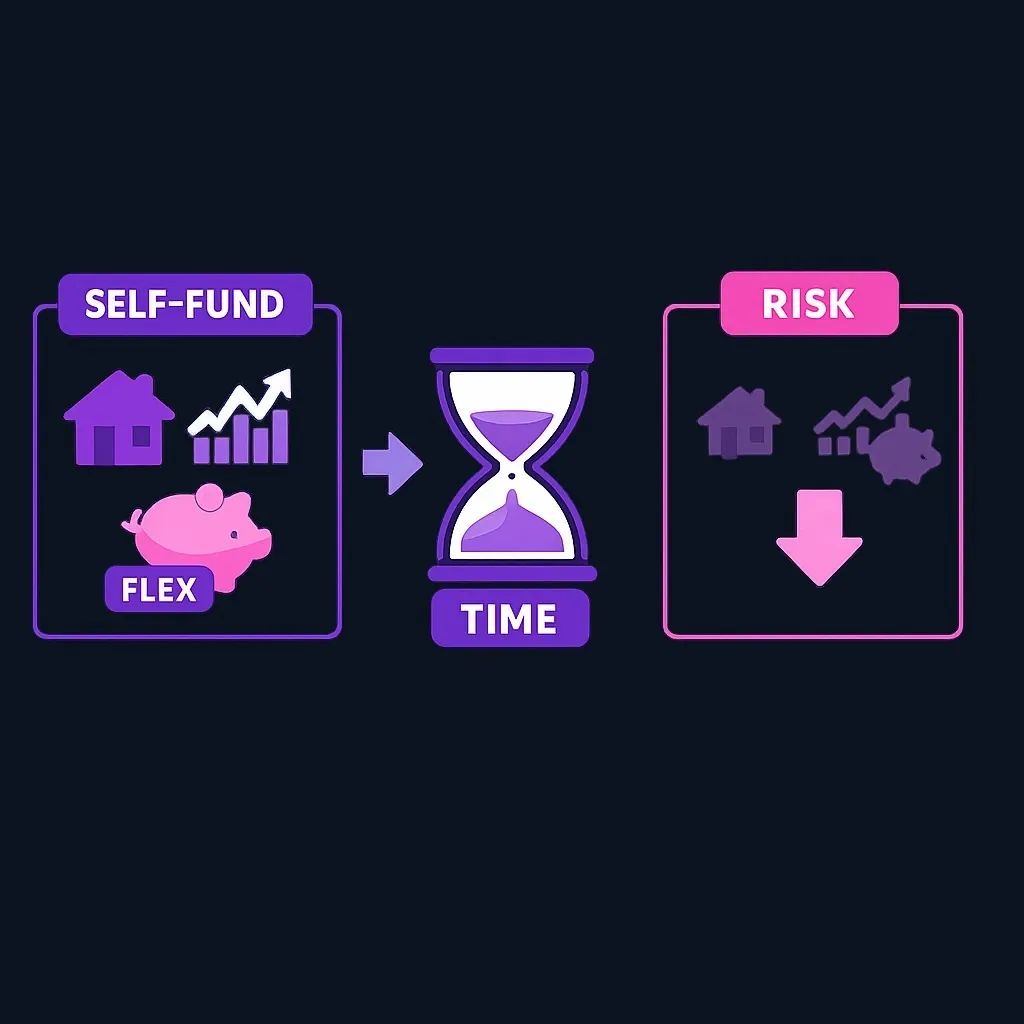
Self-funding means using savings, investments, home equity, income, or other assets to pay for care. It offers flexibility because you are not bound by policy rules. It also keeps money available if care is never needed.
The tradeoff is exposure. If care lasts longer than expected, self-funding can drain assets quickly. It can also reduce money available for a spouse, heirs, or other goals.
Self-funding may fit people with substantial assets, simple estate goals, or a strong preference for control. It may be risky for people whose retirement plan depends on preserving a limited pool of savings.
Traditional long-term care insurance
Traditional long-term care insurance is the straightforward version of the product category. You pay premiums for long-term care benefits, subject to the policy’s terms. Fidelity specifically references traditional long-term care insurance policies in its discussion of long-term care options Fidelity.
The main appeal is targeted protection. The main concern is whether you will use the benefit and whether the policy terms match your future needs.
Traditional coverage may fit someone who wants dedicated care protection and accepts that unused coverage may not create value elsewhere. Review the policy’s benefit trigger, limits, renewal terms, and care-setting rules before comparing premiums.
Hybrid or combination policies
Some shoppers are offered products described as hybrid or combination policies. Instead of assuming those are better or worse, compare the contract questions side by side.
| Question to ask | Traditional LTC policy | Hybrid or combination policy |
|---|---|---|
| What problem is it solving? | Dedicated long-term care risk | Long-term care risk plus another planning goal |
| What happens if care is never needed? | Verify in the contract | Verify in the contract |
| How do benefits start? | Check the benefit trigger | Check the benefit trigger |
| Where can care be received? | Confirm limits | Confirm limits |
| What costs more over time? | Compare total premiums | Compare total funding required |
| What is lost if benefits are used? | Review benefit limits | Review any effect on other policy values |
This comparison avoids a common trap. People often ask, “Which type is best?” The better question is, “Which contract solves my problem at a cost I can afford?”
If you are comparing a hybrid policy, ask the agent to explain every moving part in plain language. Then ask for the same explanation in writing.
Family care
Family support can be part of a plan, but it should not be the whole plan unless everyone involved agrees. Caregiving can affect work, sleep, travel, relationships, and health.
A better family plan names roles. One person might manage bills, another might coordinate appointments, and paid help might cover physical care. This is more realistic than assuming one relative will absorb every task.
Public programs and state-specific options
Public support may play a role for some households, but rules can be state-specific. Since Fidelity notes that benefits and eligibility vary from state to state for long-term care options, state rules belong in your source-checking process Fidelity.
Do not assume public programs will preserve the same choices you would have with private funds. Before relying on this path, verify eligibility, covered settings, and how your state handles long-term care support.
Medicare and health insurance assumptions
Many people confuse medical coverage with long-term care planning. Before you decide against long-term care insurance, verify what your health coverage does and does not pay for. Do this using official plan documents, not summaries from friends or social media.
This is especially important if your plan assumes extended help at home or in a care setting. A wrong assumption can leave your family making rushed decisions during a health crisis.
Legitimacy, reviews, and complaints
Long-term care insurance is not a scam just because it is complicated. It is also not automatically worth buying just because care can be expensive. The legitimacy question is really about provider strength, policy clarity, and claims handling.
How to evaluate a provider
Start with the insurer, not the salesperson. Look for financial strength, a clear claims process, and policy documents you can understand. If an agent cannot explain the benefit trigger, waiting period, limits, and exclusions in plain language, slow down.
Also check your state insurance department. State-level resources can help you understand approved products, consumer protections, and complaint channels. This matters because long-term care benefits and eligibility can vary by state Fidelity.
How to read reviews without overreacting
Reviews can be useful, but they are often emotional. A denied claim may reflect a bad insurer, a misunderstood policy, incomplete paperwork, or a benefit trigger that was not met. You need enough detail to know which issue occurred.
When reading complaints, sort them into categories:
- Premium concerns.
- Claim delays.
- Claim denials.
- Confusing policy language.
- Agent miscommunication.
- Trouble changing coverage.
Patterns matter more than one dramatic review. If many customers describe the same issue, ask the insurer or agent to address it before you buy.
Questions to ask before signing
Use these questions to reduce surprises:
- What exactly triggers benefits?
- Where can care be received?
- What limits apply to benefits?
- Can premiums change?
- What happens if I stop paying?
- How are claims documented?
- Which rules vary by state?
- What is excluded?
Ask for written answers. If the written contract conflicts with a verbal explanation, the contract deserves more weight.
Decision framework
Use this framework to decide whether long-term care insurance is worth exploring. It will not tell you what to buy, but it will show whether the conversation is worth continuing.
Step 1: Define the risk you want to protect
Write one sentence that explains your main concern.
Examples:
- “I want to protect my spouse from spending down shared assets.”
- “I want to reduce the chance that my children need to provide daily care.”
- “I want more control over where I receive care.”
- “I want to preserve part of my estate.”
If you cannot name the risk, do not shop yet. Insurance works best when it solves a specific problem.
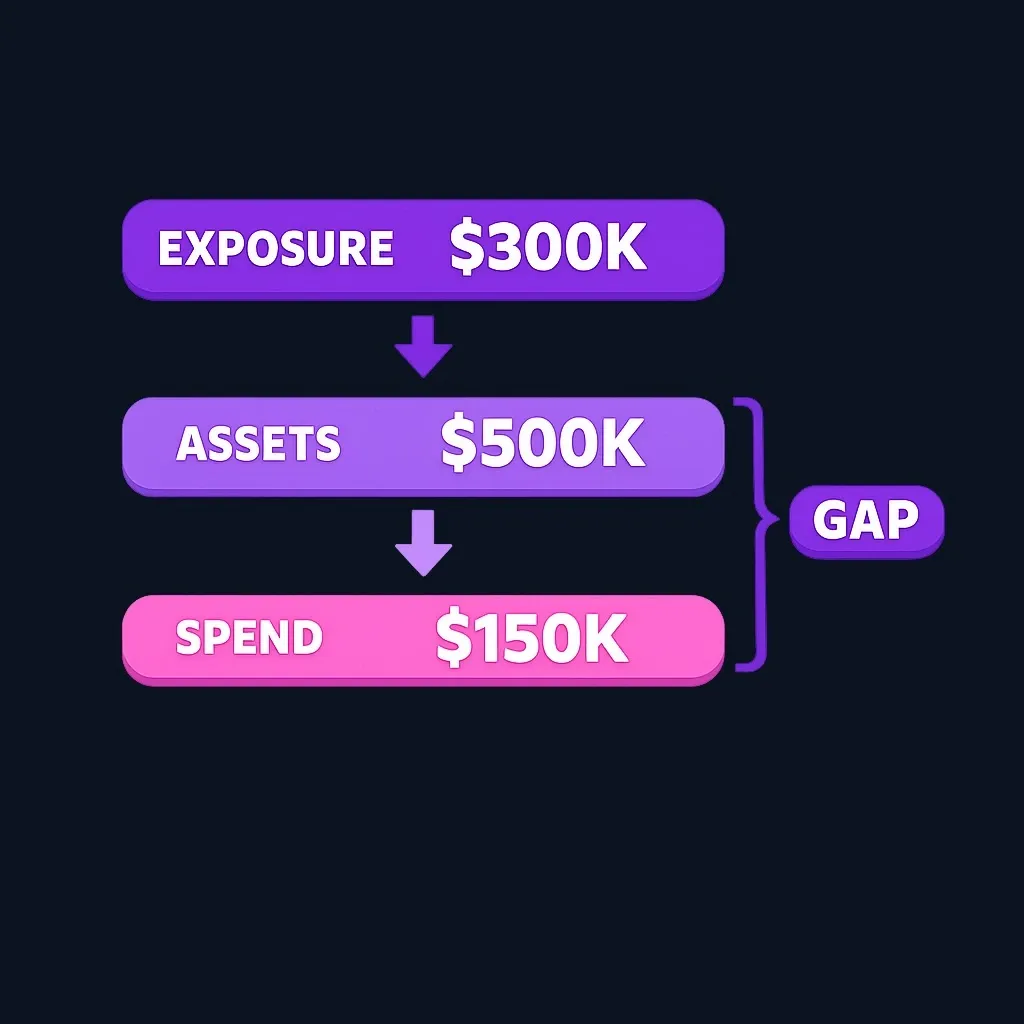
Step 2: Estimate your funding gap
Next, compare three numbers:
| Planning input | What to write down |
|---|---|
| Assets available for care | Savings or income you would be willing to use |
| Assets you want protected | Money needed for a spouse, heirs, or other goals |
| Potential care exposure | A local range for care costs and duration |
The gap between potential exposure and assets you are willing to spend is the risk insurance may cover. If the gap is small, self-funding may be enough. If the gap is large, insurance may deserve serious review.
Step 3: Test premium affordability
A policy is only useful if you can keep it. Ask whether the premium still works if markets fall, inflation pressures your budget, or household income changes.
If premiums feel manageable only in an optimistic scenario, be cautious. A smaller policy, different strategy, or self-funding plan may be more realistic.
Step 4: Compare policy fit, not just price
A low premium can hide weak fit. A higher premium can still be reasonable if the policy matches your real risk.
Compare:
- Benefit trigger.
- Care-setting rules.
- Benefit limits.
- Inflation features.
- Waiting period.
- Premium flexibility.
- State-specific rules.
- Claims process.
Fidelity’s reminder is useful here: benefits and eligibility can vary by state, and choices for where and how you receive care could be limited Fidelity.
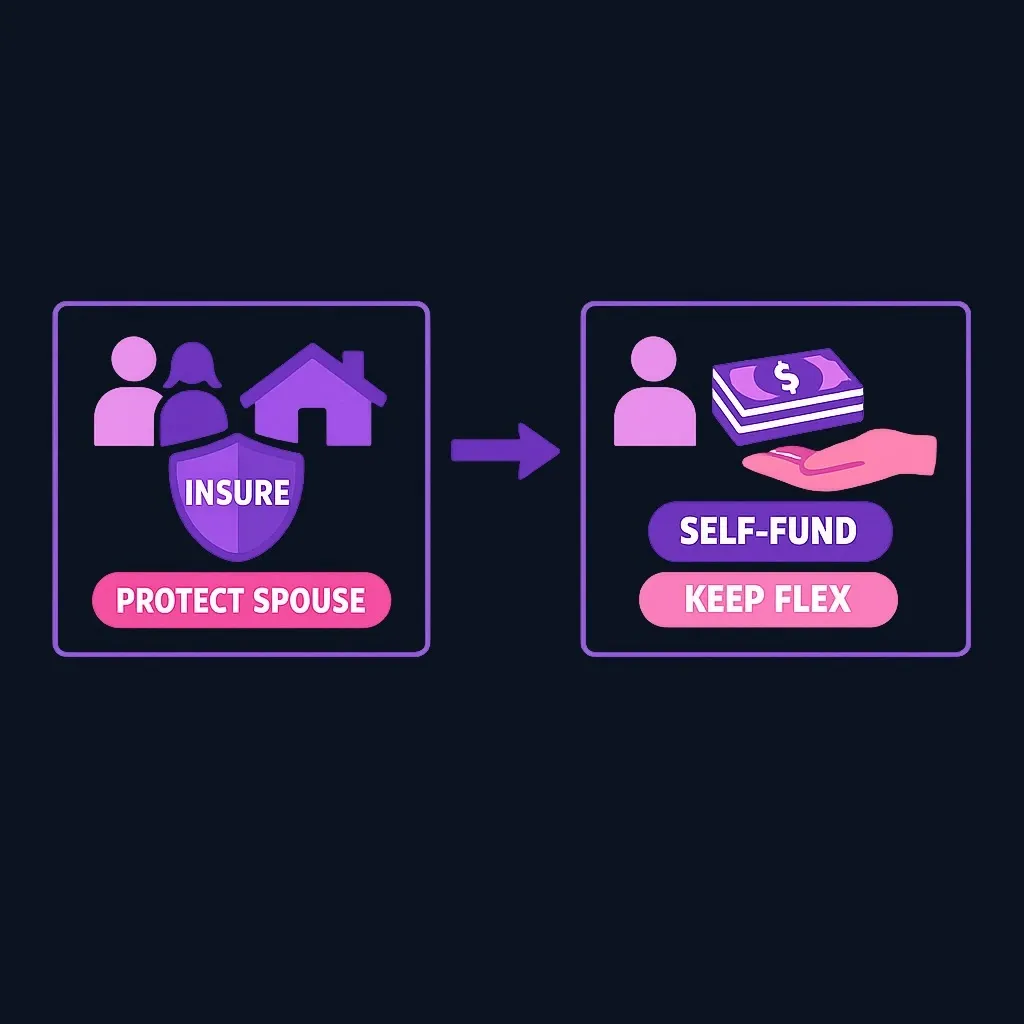
Worked example: the “middle-assets” household
Consider a couple with meaningful retirement savings, a paid-down home, and adult children. They could pay for some care, but an extended need could weaken the surviving spouse’s security.
For them, long-term care insurance may be worth pricing. The goal is not to eliminate every possible cost. It is to reduce the chance that one person’s care need damages the other person’s retirement.
They might compare a traditional policy against a hybrid proposal. They would ask which contract protects the spouse better, what happens if care is never needed, and whether the premium remains affordable after retirement.
Worked example: the “high-flexibility” household
Now consider a single person with substantial liquid assets and no strong inheritance goal. This person values flexibility and dislikes complex contracts.
Long-term care insurance may still be useful, but the case is weaker. Self-funding could fit if care costs would not threaten core financial security. A smaller policy could also make sense if the person wants partial protection without insuring the full risk.
The key is matching the tool to the goal. Long-term care insurance is not a moral obligation. It is one planning option among several.
FAQ
What does long-term care insurance cover?
Coverage depends on the contract and state rules. Review the benefit trigger, elimination period, covered settings, exclusions, inflation protection, renewal provisions, and claim requirements. Use the relevant state insurance department to verify that the insurer and producer are licensed and to check complaint or enforcement information (NAIC).
How much does long-term care insurance cost?
The cost depends on the policy design, benefits, age, health, and insurer underwriting. Instead of relying only on averages, request quotes using the same benefit assumptions across providers. Also verify current pricing directly with insurers or licensed agents before deciding.
When is the best time to purchase long-term care insurance?
The best time to evaluate it is before health changes make options narrower. That does not mean everyone needs to buy immediately. Start when you can still compare choices calmly, afford premiums, and understand how state rules may affect benefits and eligibility Fidelity.
What are the alternatives to long-term care insurance?
Common alternatives include self-funding, family support, public programs, and policies marketed as hybrid or combination products. Each option has tradeoffs around control, cost, flexibility, and risk. The strongest plan often combines more than one approach.
Sources and Further Verification
- Fidelity
- NAIC: Long-Term Care Insurance consumer resources
- NAIC: A Shopper's Guide to Long-Term Care Insurance
More from Finelo
- Private Credit vs. Private Equity: Returns, Liquidity, Fees, and Risks
- REIT vs. Rental Property: Costs, Income, Liquidity, and Key Trade-Offs
- 1031 Exchange vs. Opportunity Zone: Key Differences
Disclaimer
This article is provided by Finelo for educational and informational purposes only. Finelo does not provide financial, investment, tax, legal, or insurance advice. Consider your circumstances and consult an appropriately qualified professional before making financial decisions.
Financial LiteracyBeginner GuidePersonal Finance
Practice trading with Finelo
Practice in a simulator, learn with bite-sized lessons, and build confidence before risking real money.
About the author
Finelo Team
The Finelo Team creates practical investing and trading education designed to help beginners learn faster with structured challenges, simulator practice, and bite-sized lessons.
Keep reading — Related articles

Financial Literacy
Mercury Books Review 2026: Is It Worth It for Startups?
Mercury Books brings double-entry accounting into Mercury. Review its $35 pricing, reports, AI features, integrations, and migration limits.
Finelo Team

Financial Literacy
Why is My FICO Score Lower Than My Credit Score?
Example takeaway: seeing a higher score in a bank app doesn’t guarantee lenders will see the same FICO number at application time; lenders often pull a specific FICO version from a specific bureau.
Finelo Team

Financial Literacy
Why Is My FICO Score Higher Than My Credit Score?
Brief educational note: this article is educational, not financial or investment advice; investing and credit decisions involve risk and possible loss.
Finelo Team