Last editorial review: September 8, 2026
REIT vs. Rental Property: Costs, Income, Liquidity, and Key Trade-Offs
REITs are companies that buy and operate income-producing real estate as part of a pooled portfolio; they let investors access property exposure without directly managing buildings…
9 min read
Practice trading with Finelo
Practice in a simulator, learn with bite-sized lessons, and build confidence before risking real money.
Want to learn more?
Practice in a simulator, learn with bite-sized lessons, and build confidence before risking real money.
Explore FineloExplore Finelo's 28-day challenges
Turn learning into a daily habit with guided challenge paths.
U.S. scope: This article discusses U.S. institutions, financial products, tax rules, and dollar examples unless stated otherwise. Rules and product terms may change; verify current official guidance for your situation.
Quick comparison answer
REITs are companies that buy and operate income-producing real estate as part of a pooled portfolio; they let investors access property exposure without directly managing buildings Investor.gov. Rental properties are direct ownership of individual units and typically require ongoing time, effort, and operational decisions from the owner Fidelity. Which is “better” depends on whether you prioritize liquidity and passive exposure or control and operational upside — read the criteria and scenarios below to decide.
What is a REIT?
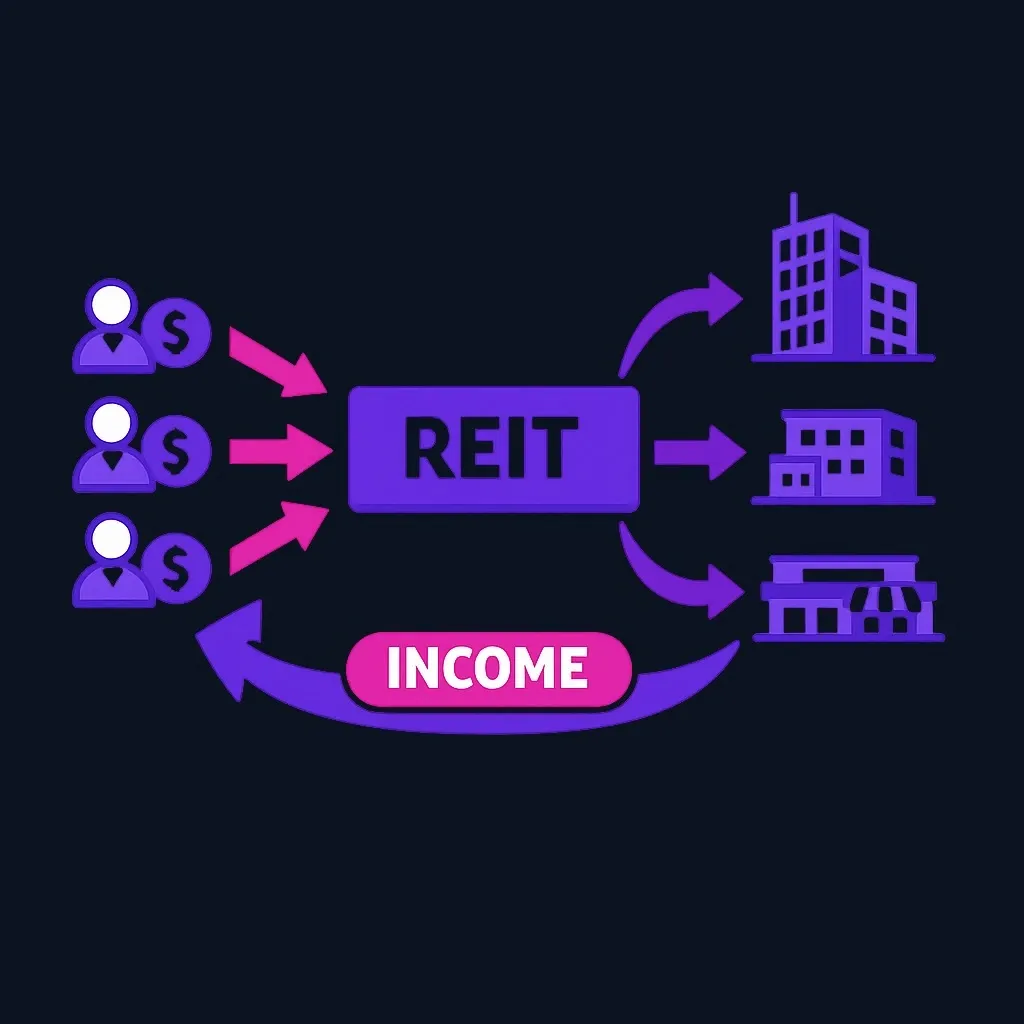
A Real Estate Investment Trust (REIT) is a company that acquires, owns, and operates income‑producing real estate as part of its investment portfolio. The essential idea is pooled property ownership under a corporate structure; investors gain exposure by buying an interest in that company rather than owning individual buildings directly Investor.gov.
Key REIT features to understand
- Pooled property ownership: a REIT manages many properties together instead of a single landlord managing one rental unit Investor.gov.
- Professional management and operations are handled at the company level; individual investors do not manage tenants or repairs day-to-day.
- REITs come in different forms (equity, mortgage, hybrid) and corporate structures; that affects cashflow sources and sensitivity to interest rates, but specifics vary by REIT and require checking the REIT’s regulatory filings.
(For readers comparing ownership styles: think of a REIT as “real estate via a company” rather than “owning a building.”)
What is a Rental Property?
A rental property is direct ownership of a residential or commercial unit that you lease to tenants. As the owner, you control the asset, set rents, and are responsible for maintenance, tenant screening, leasing, and legal compliance.
Typical rental-property owner responsibilities
- Day-to-day operations: tenant relations, repairs, and vendor coordination.
- Capital and liquidity decisions: financing, down payment, refinancing, and possible renovation costs.
- Market and location sensitivity: performance depends on local rent demand, property condition, and regional economic trends.
Owning rentals can offer hands-on control and the potential to increase value through active management, but it also requires time, systems, and an appetite for operational risk. Rental ownership can concentrate risk in one property or one market; careful underwriting and diversification are how owners manage that exposure Fidelity.

Side-by-side comparison table
| Dimension | REIT (pooled company) | Rental Property (direct ownership) |
|---|---|---|
| Ownership form | Shares/interest in a company that holds properties | Deed holds title to a specific building or unit |
| Operational role | Mostly passive for investors; company manages assets | Active owner role unless you hire property management |
| Income source | Company-level cash distributions (dividends) | Tenant rent receipts (net of expenses) |
| Liquidity | Generally higher (can be traded more easily than a property) | Lower (real estate takes time to sell or finance) |
| Diversification | Built-in across properties/sectors | Concentrated unless you own multiple properties |
| Upfront capital | Typically lower per investor (no single property down payment) | Higher up-front capital and transaction costs |
| Control & upside | Less direct control; limited to choosing which REITs | Direct control over rents, renovations, and tenant mix |
| Tax profile | Different corporate/holder tax treatments (varies by REIT and jurisdiction) | Owner-level deductions and depreciation; tax events on sale |
(Use the table to focus follow-up reading where you value liquidity, control, or tax treatment.)
Decision criteria
Use these practical criteria to weigh the two paths. Below are the four high-level axes that matter most, each with short, actionable guidance.
Returns and expected cashflow
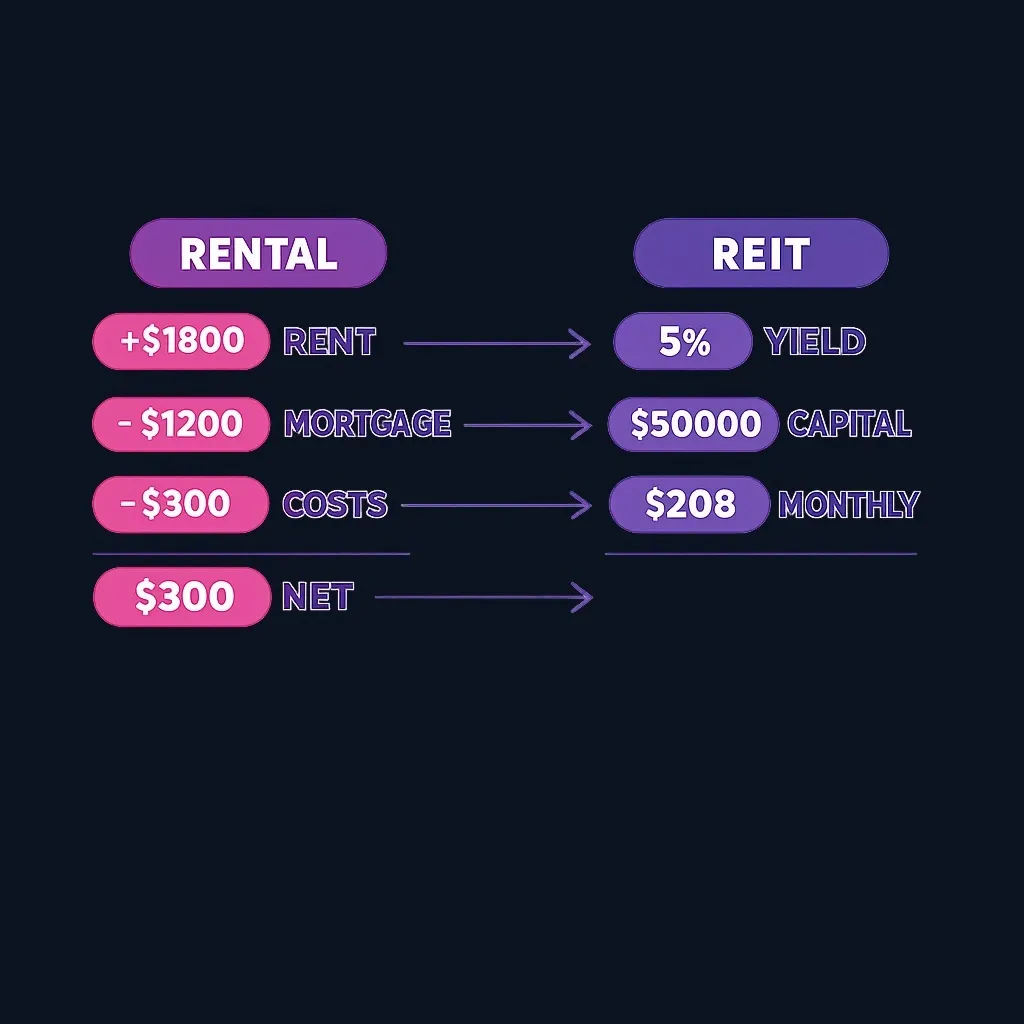
How you’ll get paid matters: REITs deliver company-level distributions; rental properties generate rent after expenses. Expect variability across individual REITs and individual properties. When modeling expected returns, compare net cashflow after all expenses, the likely capital growth path, and how each investment fits your holding horizon.
Practical tip: run a two-year cashflow projection for a rental (rent, vacancy allowance, mortgage, taxes, maintenance) and compare that to your target dividend/cash yield assumptions for the REITs you’re considering.
Management, time, and systems
REITs remove most landlord work; rental property ownership requires systems for leasing, maintenance, bookkeeping, and legal compliance. If you do not want to be a landlord, REITs or third‑party property managers are the practical alternatives.
Cite: rental ownership carries ongoing time and effort to manage properties and tenants Fidelity.
Taxes and cashflow timing
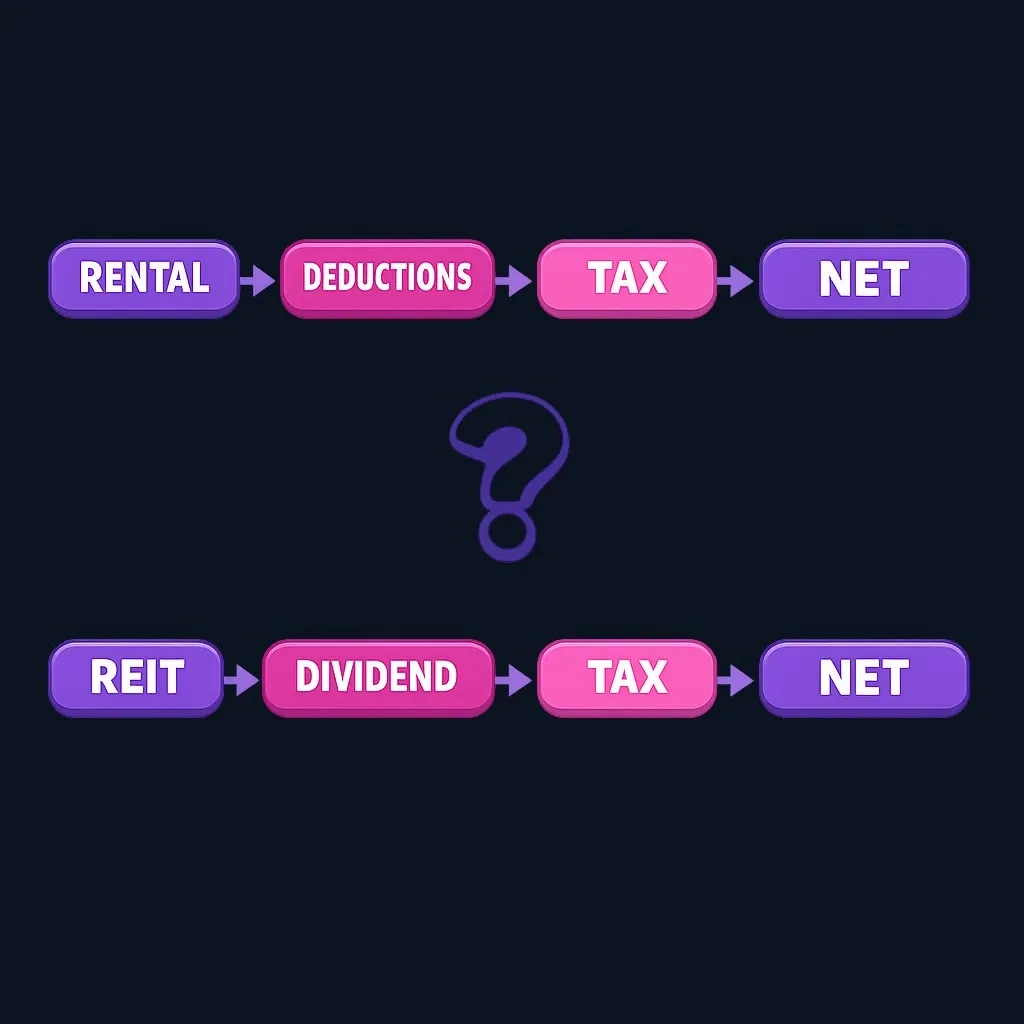
Tax treatments differ fundamentally. Direct ownership commonly offers owner-level deductions, depreciation, and the ability to defer or manage taxable events through 1031-like strategies (jurisdiction dependent). REITs present different holder-level tax consequences because they are corporate entities that distribute income; exact outcomes depend on the REIT type and your tax status. Check a tax advisor for your situation — taxation can change whether an investment is cashflow-positive after-tax.
Practical framework: estimate after-tax cashflow under both options using your marginal tax rate and likely deductions; the after-tax outcome often shifts the preferred choice.
Risk, concentration, and liquidity
Rental properties concentrate idiosyncratic risk: tenant turnover, local market shocks, and capital needs. REITs concentrate entity-level risks (management decisions, financing) but are often diversified across multiple properties and geographies. Liquidity differences can be decisive if you may need to sell quickly.
Cite: REITs operate properties as part of an investment portfolio Investor.gov.
Educational note (read before choosing)
This content is educational, not financial advice. Investing can involve loss. Use the decision criteria above to learn which assumptions matter for your goals, and consult a licensed advisor for personalized recommendations.
Practice trading with Finelo
Practice in a simulator, learn with bite-sized lessons, and build confidence before risking real money.
When to choose each option
Below are practical scenarios and the typical investor profiles that make each choice attractive.
When a REIT is often a better fit
- You want exposure to real estate without direct landlord responsibilities. REIT management handles property operations, subject to the structure and strategy described in its disclosures.
- You value easier entry and exit or smaller capital commitments.
- Diversification across property types or regions is a priority and you prefer passive income.
Example scenario: an investor who wants real estate income but lacks time to manage tenants or capital to buy multiple local properties can select REITs that align with the desired sector (e.g., residential, industrial) and risk profile.
When a rental property is often a better fit
- You want active control to improve property value (renovations, rent adjustments).
- You can manage operational risks or are willing to pay for professional property management.
- You prefer potential leverage benefits and direct tax deductions available to owners.
Example scenario: a hands-on investor living near a strong rental market who can source below-market properties and oversee renovations may unlock higher localized returns than a passive vehicle.

Hybrid approaches
Many investors use both: REITs for diversification and liquidity, plus one or two rental properties for control and local market exposure. A blended portfolio can capture advantages from both sides while balancing operational time.
Tradeoffs and caveats
No approach is uniformly superior. Below are common pitfalls and how to avoid them.
- Underestimating total rental costs. Owners often forget vacancy buffers, maintenance spikes, and capital expenditures. Mitigation: build conservative expense assumptions and maintain a capital reserve.
- Overlooking REIT-specific risks. REIT dividends and share prices depend on firm-level financing, management decisions, and sector cycles. Mitigation: review a REIT’s holdings, debt levels, and investor materials before buying.
- Confusing liquidity for low risk. Liquidity (being able to sell quickly) is not the same as protection from permanent loss. Mitigation: model stress scenarios for both assets under recession or local market downturns.
- Ignoring taxes and transaction costs. Upfront transaction fees, closing costs, and tax timing materially change returns. Mitigation: include realistic transaction costs and after-tax scenarios when comparing options.
- Failing to match investment horizon to asset type. Real estate often rewards longer holding periods; short-term flips face timing and execution risk. Mitigation: align expected hold period with the asset’s liquidity profile.
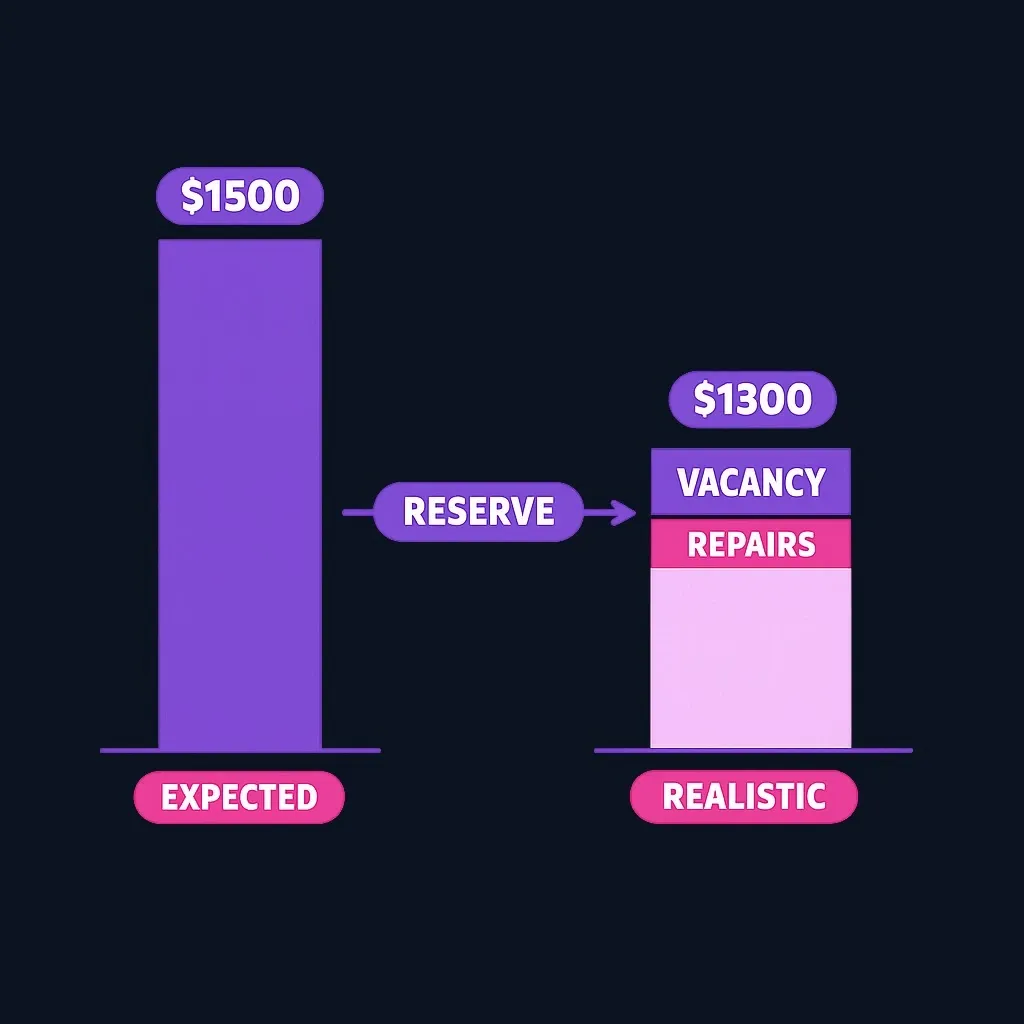
Common mistake (concrete): expecting a single rental to deliver stable monthly income without factoring in a 5–10% vacancy cushion and periodic capital repairs. Build contingency reserves into monthly cashflow models.
FAQ
What are the main differences between REITs and rental properties?
REITs provide pooled exposure to property portfolios and remove most landlord tasks; rental properties are direct ownership with operational responsibilities and more control over cashflow and capital decisions Investor.gov Fidelity.
How do I choose between investing in REITs and rental properties?
Match the choice to your priorities: pick REITs if you want passive exposure and easier liquidity; pick rental properties if you want control, are prepared for active management, and can handle concentrated capital and operational risk. Use the decision criteria (returns, management, taxes, risk) on this page to test your assumptions.
What are the tax benefits of each investment type?
Tax outcomes differ by structure and jurisdiction. Direct ownership commonly allows owner-level deductions and depreciation; REIT distributions follow company and holder tax rules. Because tax rules are complex and personal, consult a tax professional to model after-tax cashflows for your situation.
What risks should I consider when investing?
For rentals: tenant turnover, maintenance costs, local market weakness, and concentration risk. For REITs: corporate-level management choices, leverage at the REIT level, and sector or financing risk. Both face macroeconomic factors such as interest-rate changes and economic downturns.
For a repeatable comparison, create a worksheet that records acquisition costs, financing, vacancy assumptions, ongoing expenses, taxes, liquidity, and the REIT’s published expense and distribution data. Keep the assumptions dated and update them when property or fund information changes.
Sources and Further Verification
More from Finelo
- Bitcoin vs. Ethereum: Uses, Costs, Risks, and Key Differences
- Stablecoins vs. Bitcoin: Uses, Volatility, Risks, and Key Differences
- Private REIT vs. Public REIT: Key Differences
Disclaimer
This article is provided by Finelo for educational and informational purposes only. Finelo does not provide financial, investment, tax, legal, or insurance advice. Consider your circumstances and consult an appropriately qualified professional before making financial decisions.
Financial LiteracyBeginner GuidePersonal Finance
Practice trading with Finelo
Practice in a simulator, learn with bite-sized lessons, and build confidence before risking real money.
About the author
Finelo Team
The Finelo Team creates practical investing and trading education designed to help beginners learn faster with structured challenges, simulator practice, and bite-sized lessons.
Keep reading — Related articles

Financial Literacy
Mercury Books Review 2026: Is It Worth It for Startups?
Mercury Books brings double-entry accounting into Mercury. Review its $35 pricing, reports, AI features, integrations, and migration limits.
Finelo Team

Financial Literacy
Why is My FICO Score Lower Than My Credit Score?
Example takeaway: seeing a higher score in a bank app doesn’t guarantee lenders will see the same FICO number at application time; lenders often pull a specific FICO version from a specific bureau.
Finelo Team

Financial Literacy
Why Is My FICO Score Higher Than My Credit Score?
Brief educational note: this article is educational, not financial or investment advice; investing and credit decisions involve risk and possible loss.
Finelo Team