Last editorial review: September 8, 2026
Bitcoin vs. Ethereum: Uses, Costs, Risks, and Key Differences
Bitcoin vs. Ethereum comes down to role. Bitcoin is the larger cryptocurrency by market capitalization, while Ethereum’s token is the second-largest behind bitcoin, according to Fidelity’s…
12 min read
Practice investing with Finelo
Build practical investing skills with guided lessons, simulator practice, and structured challenges.
Want to learn more?
Build practical investing skills with guided lessons, simulator practice, and structured challenges.
Explore FineloExplore Finelo's 28-day challenges
Turn learning into a daily habit with guided challenge paths.
U.S. scope: This article discusses U.S. institutions, financial products, tax rules, and dollar examples unless stated otherwise. Rules and product terms may change; verify current official guidance for your situation.
Quick comparison answer
Bitcoin vs. Ethereum comes down to role. Bitcoin is the larger cryptocurrency by market capitalization, while Ethereum’s token is the second-largest behind bitcoin, according to Fidelity’s overview of Ethereum and Bitcoin. Ethereum is described as a digital asset network, while CME Group highlights market infrastructure around bitcoin, including a Bitcoin Reference Rate and bitcoin futures used to manage bitcoin volatility and risk. For a practical decision, compare them by purpose, cost of use, complexity, liquidity needs, and risk tolerance—not by recent price alone.
What is Bitcoin?
Bitcoin is best understood as the benchmark crypto asset many people compare other cryptocurrencies against. One reason is market position: Fidelity describes ether as the second-largest cryptocurrency by market capitalization behind bitcoin, which places bitcoin at the top of that ranking in Fidelity’s comparison context Fidelity.
Bitcoin also has established market infrastructure around it. CME Group offers educational material on the CME CF Bitcoin Reference Rate and explains that bitcoin futures can help market participants manage bitcoin volatility and risk CME Group. That does not make bitcoin low-risk. It means there are formal market tools built around bitcoin exposure.
For a reader comparing bitcoin and ethereum, the practical takeaway is simple: bitcoin is usually evaluated as a crypto asset with deep recognition, broad market attention, and institutional trading infrastructure. Its investment case often depends on whether someone wants exposure to the most established cryptocurrency, rather than exposure to an application network.
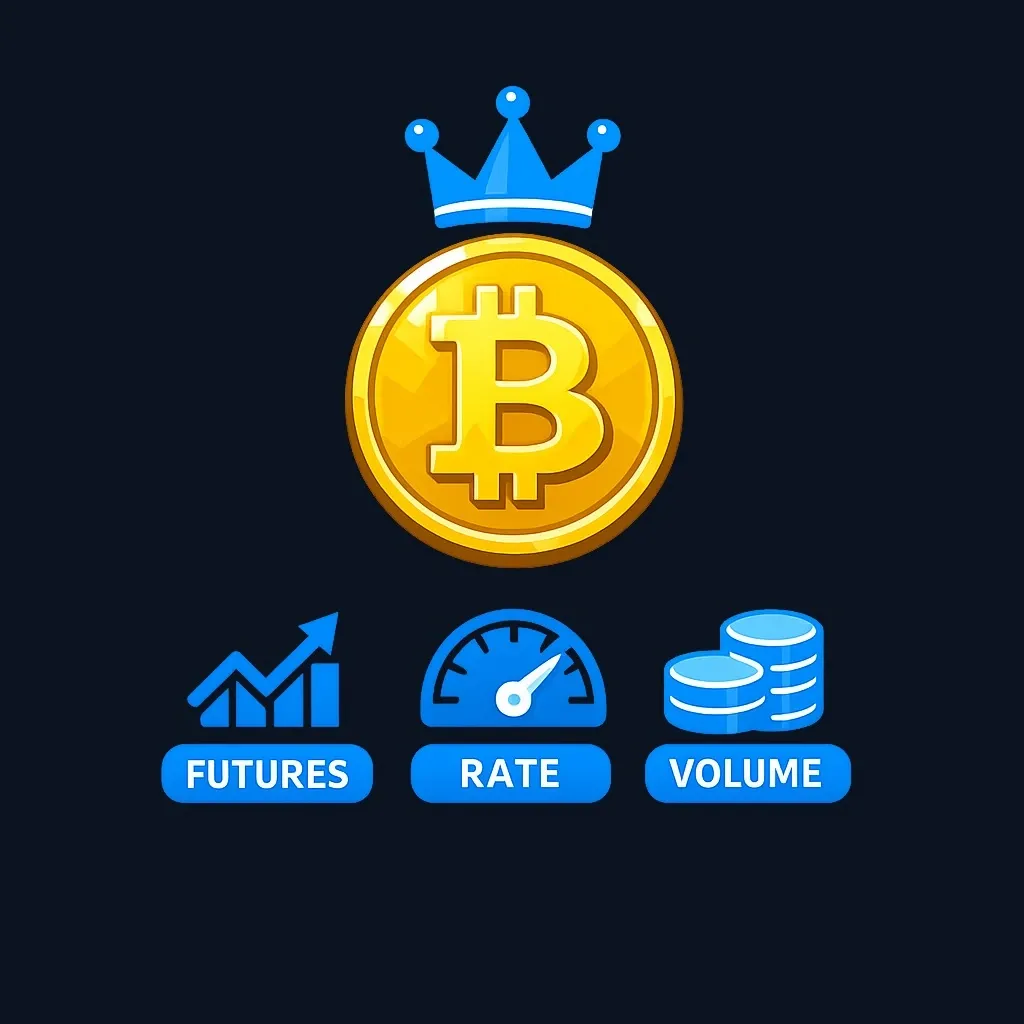
What “work” does bitcoin do in a portfolio or use case?
Think of bitcoin as a simpler decision question: “Do I want exposure to the leading cryptocurrency?” That question still requires work. A buyer needs to evaluate custody, liquidity, volatility, fees, taxes, time horizon, and whether crypto risk fits their broader finances.
A common mistake is treating bitcoin as automatically “safer” because it is better known. Familiarity does not remove volatility, operational risk, or the risk of buying at an unsuitable time.
What is Ethereum?
Ethereum is different because the comparison is not only about one token versus another token. Fidelity describes Ethereum as a digital asset network, and its token as the second-largest cryptocurrency by market capitalization behind bitcoin Fidelity. That framing matters because Ethereum is often evaluated as both a crypto asset and a network.
For investors, that creates a different set of questions. With bitcoin, the focus is often market exposure to the leading cryptocurrency. With ethereum, the focus may include how the network is used, how demand for the token develops, and how network-related risks affect the asset.
This extra layer can be useful, but it can also add complexity. A reader comparing bitcoin vs ethereum should avoid assuming that “more use cases” automatically means “better investment.” More moving parts can also mean more ways for expectations to disappoint.
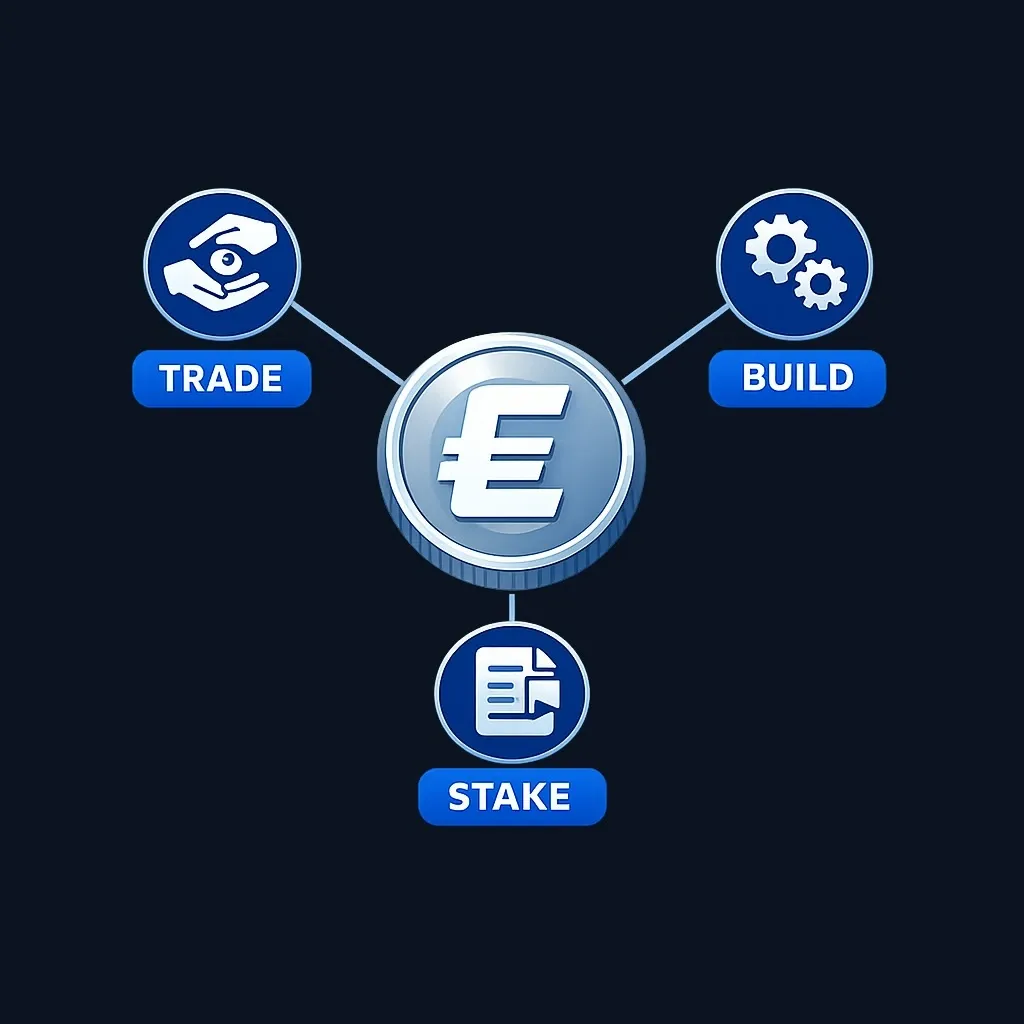
What “stake” does ethereum have in the crypto market?
Ethereum’s stake in the market is partly defined by its size. Fidelity identifies ether as the second-largest cryptocurrency by market capitalization behind bitcoin Fidelity. That gives it a major role in crypto discussions, but market rank alone does not decide suitability.
A practical way to frame Ethereum is this: it may appeal to someone who wants exposure to a large digital asset network, not only to the largest cryptocurrency by market value.
Side-by-side comparison table
| Decision factor | Bitcoin | Ethereum |
|---|---|---|
| Market position | Larger cryptocurrency by market capitalization in Fidelity’s comparison context Fidelity | Token is second-largest cryptocurrency by market capitalization behind bitcoin Fidelity |
| How many investors first evaluate it | Often as the benchmark crypto asset | Often as both a token and a digital asset network |
| Market infrastructure cited in supplied sources | CME Group describes a Bitcoin Reference Rate and bitcoin futures for managing bitcoin volatility and risk CME Group | Fidelity describes Ethereum as a digital asset network and ether as a major cryptocurrency Fidelity |
| Main comparison question | “Do I want exposure to the leading cryptocurrency?” | “Do I want exposure to a major digital asset network?” |
| Cost check before using or buying | Review trading spread, platform fee, withdrawal cost, custody method, and tax impact | Review trading spread, platform fee, network-related cost, custody method, and tax impact |
| Risk lens | Volatility, custody, liquidity, regulation, concentration, and timing risk | Volatility, network expectations, custody, regulation, liquidity, and timing risk |
The table avoids fixed transaction-speed or fee numbers because those can change by venue, network conditions, and transaction type. Before sending or trading either asset, check the all-in cost at the point of action.
Decision criteria
A strong bitcoin vs ethereum decision starts with your use case, not with a price chart. The same crypto asset can look attractive or unsuitable depending on your goal, time horizon, liquidity needs, and tolerance for sharp losses.
1. Purpose: benchmark asset or network exposure?
If your main goal is exposure to the most prominent cryptocurrency, bitcoin is usually the cleaner comparison point. Fidelity’s market-cap framing places bitcoin ahead of ether Fidelity. CME Group also points to bitcoin-specific market tools, including futures and a reference rate CME Group.
If your goal is exposure to a large digital asset network, Ethereum may be the more relevant asset to study. Fidelity describes Ethereum as a digital asset network, not just as a token ticker Fidelity.
2. Complexity: simple thesis or layered thesis?
Bitcoin can still be risky, but its thesis is often easier to state. A buyer is usually making a view on the leading cryptocurrency, market adoption, liquidity, and long-term demand.
Ethereum asks for a more layered view. You are still exposed to crypto-market volatility, but you may also be weighing the future role of a digital asset network. That can make the research process broader.
3. Costs: purchase cost, holding cost, and exit cost
Do not compare costs only by looking at a headline trading fee. A realistic cost check includes:
- the spread between buy and sell prices;
- platform or brokerage fees;
- transfer or withdrawal costs;
- custody costs, if any;
- tax consequences;
- the cost of exiting during a stressed market.
This matters because a small position can be heavily affected by fixed fees or poor execution. A larger position can be affected by slippage, custody choices, and tax planning.
4. Liquidity and market access
Bitcoin has named institutional infrastructure in the supplied evidence. CME Group discusses bitcoin futures and the CME CF Bitcoin Reference Rate in the context of managing bitcoin volatility and risk CME Group.
That infrastructure may matter to traders, funds, and advanced investors. For everyday buyers, the more practical question is whether their chosen platform offers transparent pricing, reliable custody choices, and a clear process for deposits and withdrawals.
5. Risk capacity
Risk capacity is not the same as excitement. Someone may believe strongly in crypto but still have limited capacity for large drawdowns, job uncertainty, debt payments, or near-term cash needs.
A useful test is simple: if the position dropped sharply and stayed down, would your financial plan still work? If the answer is no, the position size or timing may need more thought.

When to choose each option
There is no universal winner in bitcoin vs ethereum. The better fit depends on what you want the asset to do.
Bitcoin may fit better when…
Bitcoin may be more relevant if your main question is exposure to the leading cryptocurrency by market capitalization. Fidelity’s comparison identifies ether as second behind bitcoin, which supports bitcoin’s role as the primary benchmark in this pair Fidelity.
It may also be more relevant if institutional market structure matters to your research. CME Group highlights bitcoin futures and a Bitcoin Reference Rate as tools market participants can use when managing bitcoin volatility and risk CME Group.
A simple example: a long-term learner wants to understand crypto without analyzing network-specific adoption. Starting with bitcoin may make the research scope narrower.
Ethereum may fit better when…
Ethereum may be more relevant if you want to study a major digital asset network rather than only the largest cryptocurrency. Fidelity describes Ethereum as a digital asset network and ether as the second-largest cryptocurrency by market capitalization behind bitcoin Fidelity.
This can appeal to someone who wants a broader thesis. Instead of asking only whether the top cryptocurrency will remain important, they may ask how digital asset networks develop over time.
A simple example: a learner wants to understand why some crypto assets are valued as networks. Ethereum may offer a more direct case study for that question than bitcoin.
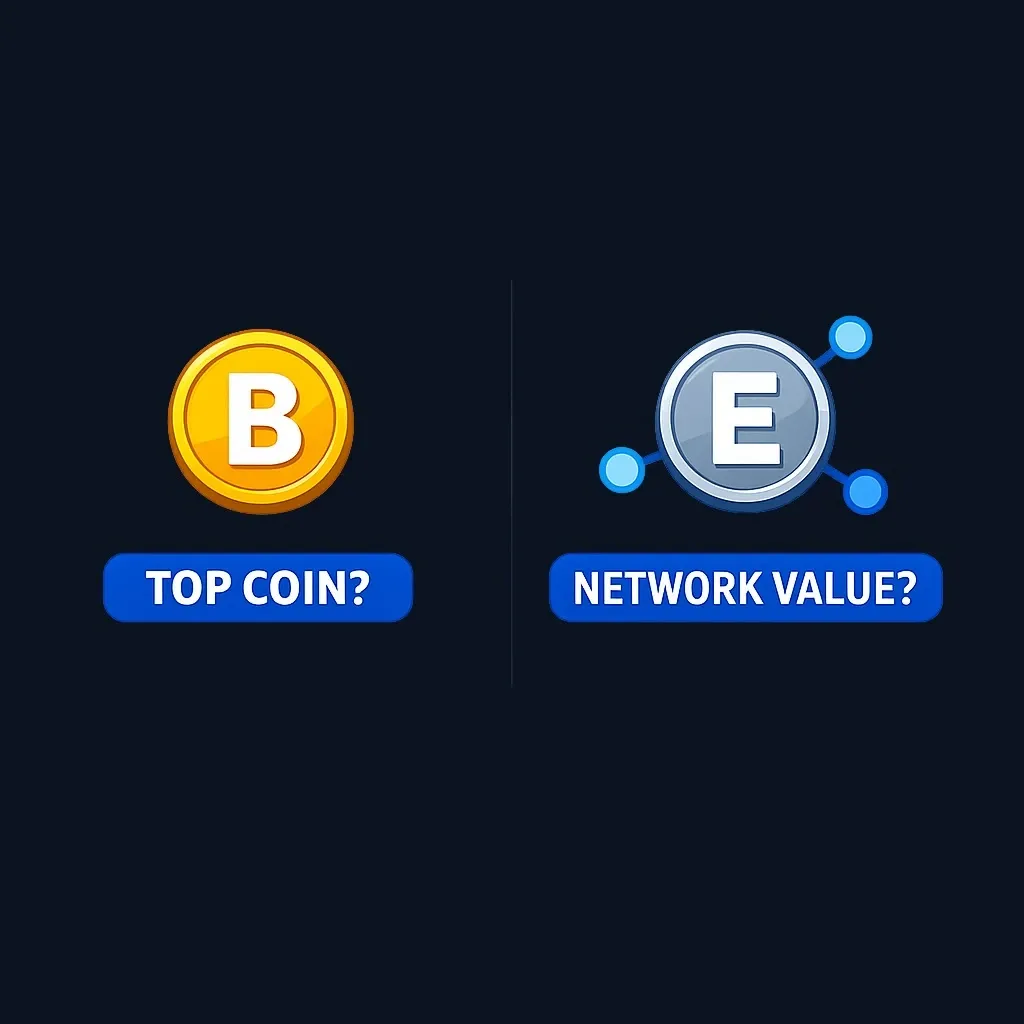
A split approach may fit when…
Some readers compare bitcoin and ethereum as substitutes. Others treat them as different risk exposures within the same broad asset class.
A split approach can make sense as a research framework, not as a recommendation. It forces you to define what each holding is supposed to represent. If both assets serve the same purpose in your plan, you may be duplicating risk instead of diversifying it.
Practice investing with Finelo
Build practical investing skills with guided lessons, simulator practice, and structured challenges.
Use cases for Bitcoin and Ethereum
Use cases should be separated from investment returns. An asset can have real use and still perform poorly after someone buys it. It can also rise in price for reasons unrelated to your original thesis.
Bitcoin use-case lens
The cited evidence supports bitcoin’s role in market infrastructure. CME Group discusses bitcoin futures, a Bitcoin Reference Rate, and how market participants can use these tools to manage bitcoin volatility and risk CME Group.
For an individual, that points to bitcoin’s role as a widely watched crypto exposure. The practical use case may be learning how crypto markets trade, how benchmark pricing works, and how volatility management enters institutional markets.
Ethereum use-case lens
Fidelity frames Ethereum as a digital asset network and ether as the second-largest cryptocurrency behind bitcoin Fidelity. That makes Ethereum useful to study when the question is not only “which coin is bigger?” but also “how do digital asset networks get valued?”
For an individual, Ethereum’s use-case lens may involve understanding network demand, token utility, and how expectations can influence price. Those ideas are more complex than simply comparing two tickers.
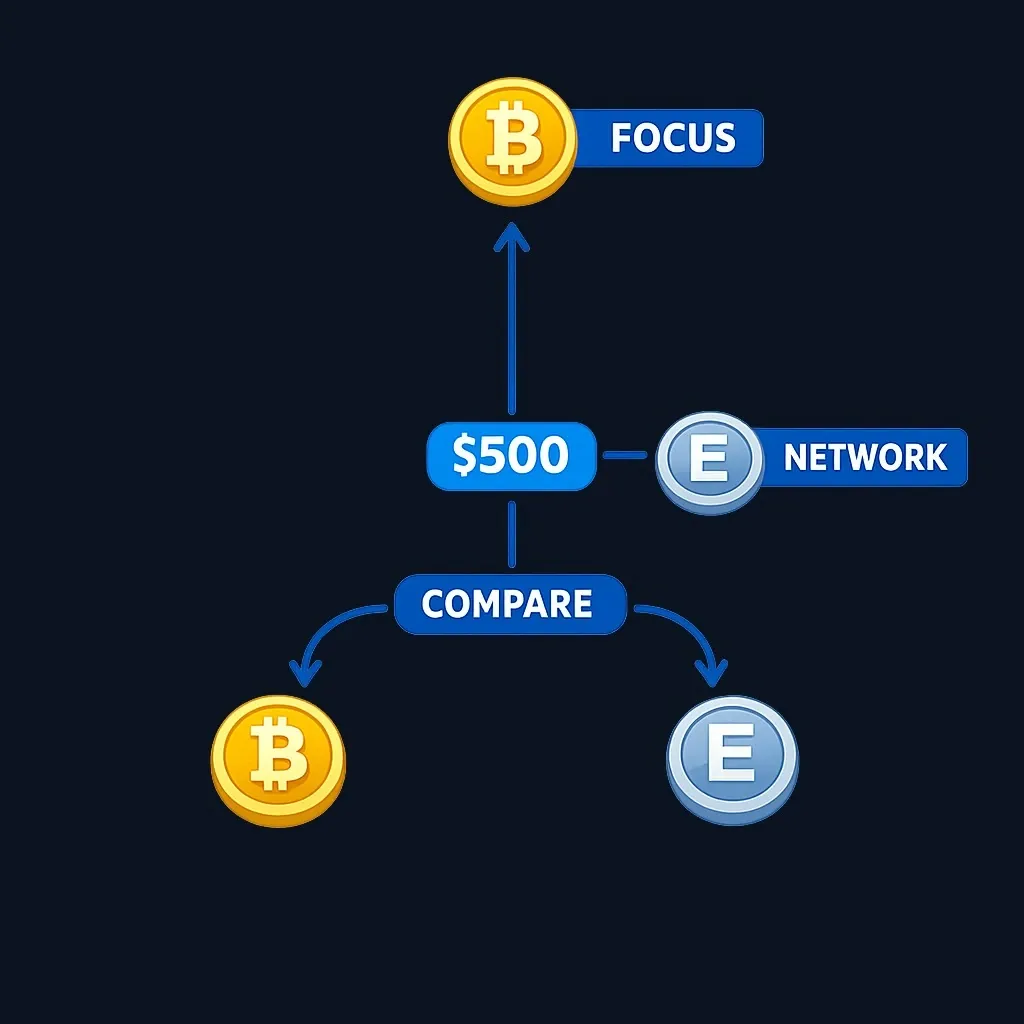
Worked example: comparing a $500 learning allocation
Suppose a learner sets aside a small educational allocation to understand crypto mechanics. They are not trying to predict the next winner. They want to learn how purchases, custody, fees, price swings, and exits feel in practice.
A bitcoin-only approach keeps the lesson focused on the leading cryptocurrency. An ethereum-only approach shifts the lesson toward a major digital asset network. A split approach teaches comparison, but it also creates more records to track and more decisions to manage.
The key lesson is process. Before buying either asset, the learner would define the maximum acceptable loss, the holding period, the reason for the position, and the exit conditions.
Tradeoffs and caveats
Bitcoin and Ethereum both sit inside a risky asset class. The comparison is not “safe versus risky.” It is a comparison of different kinds of risk.
Volatility and timing risk
CME Group explicitly discusses bitcoin volatility and risk in the context of futures and reference-rate education CME Group. That is a useful reminder for both assets. Crypto prices can move quickly, and a sound thesis can still suffer from poor timing.
Avoid making the decision based only on a recent rally or decline. A better question is whether the asset still fits your plan after a large price move.
Source and data checks
For live decisions, verify current prices, fees, spreads, custody rules, transfer limits, tax reporting, and platform terms at the source you plan to use. Market data changes quickly, and a comparison page can only explain the framework.
When reviewing historical price trends, look at multiple periods. A one-month chart can tell a very different story from a multi-year chart. Also compare drawdowns, recovery periods, and your own ability to stay disciplined.
Regulatory and tax caveats
Rules can affect where and how crypto assets trade, how platforms offer access, and how gains, losses, rewards, or other transactions are reported. For U.S. federal tax purposes, the IRS treats cryptocurrency and stablecoins as digital assets and publishes current reporting guidance by tax year (IRS). Regulatory treatment can depend on the asset, transaction, and intermediary, so do not treat “crypto” as one fixed legal category.
If taxes, business use, estate planning, or cross-border transfers are involved, get qualified help. Those issues can matter more than the bitcoin-versus-ethereum choice itself.
Conclusion
The best answer to bitcoin vs ethereum is conditional. Bitcoin is the clearer benchmark if you want exposure to the leading cryptocurrency and its established market infrastructure. Ethereum is the clearer study case if you want exposure to a major digital asset network whose token ranks second behind bitcoin by market capitalization Fidelity.
For most readers, the decision should start with purpose, risk capacity, time horizon, custody, and all-in cost. Price predictions should come last, if they belong in the process at all.
FAQ
What are the main differences between Bitcoin and Ethereum?
The simplest difference is market role. Bitcoin is the larger cryptocurrency by market capitalization in Fidelity’s comparison context, while Ethereum is described as a digital asset network whose token is second-largest behind bitcoin Fidelity.
Which cryptocurrency is better for investment?
Neither is automatically better. Bitcoin may fit a thesis focused on the leading cryptocurrency, while Ethereum may fit a thesis focused on a major digital asset network. Suitability depends on risk tolerance, time horizon, costs, liquidity needs, and the rest of your financial plan.
How do bitcoin and ethereum handle transaction costs?
The all-in cost depends on where and how you trade or transfer. Check the live spread, platform fee, withdrawal cost, custody setup, and any tax impact before acting. Do not rely on a single quoted fee.
What are the risks of investing in bitcoin vs ethereum?
Both involve volatility, custody risk, liquidity risk, regulatory uncertainty, and timing risk. Bitcoin also has market tools such as futures used to manage bitcoin volatility and risk, according to CME Group CME Group. Ethereum adds the need to understand digital asset network exposure, not just token price movement.
Sources and Further Verification
More from Finelo
- Stablecoins vs. Bitcoin: Uses, Volatility, Risks, and Key Differences
- REIT vs. Rental Property: Costs, Income, Liquidity, and Key Trade-Offs
- 1031 Exchange vs. Opportunity Zone: Key Differences
Disclaimer
This article is provided by Finelo for educational and informational purposes only. Finelo does not provide financial, investment, tax, legal, or insurance advice. Consider your circumstances and consult an appropriately qualified professional before making financial decisions.
InvestingBeginner GuideFinancial Education
Practice investing with Finelo
Build practical investing skills with guided lessons, simulator practice, and structured challenges.
About the author
Finelo Team
The Finelo Team creates practical investing and trading education designed to help beginners learn faster with structured challenges, simulator practice, and bite-sized lessons.
Keep reading — Related articles
Investing
Yield to Call vs Yield to Maturity: Assumptions and Bond Risks
Yield to call (YTC) estimates a bond's yield if the issuer redeems it on an eligible call date; yield to maturity (YTM) estimates yield if it remains outstanding to final maturity.
Finelo Team

Investing
Will My Employer Know If I Take a 401(k) Loan?
Who this page is for: readers new to 401(k) loans who want a practical, privacy‑focused explanation — what your employer can see, how to limit visibility, and the financial tradeoffs to weigh.
Finelo Team

Investing
What Medical Expenses Qualify for a 401(k) Hardship Withdrawal?
Before you decide, confirm three things with your plan administrator:
Finelo Team


