“Level 2” is a general retail label for displayed depth beyond the best bid and offer. The exact view depends on the exchange, feed, broker, and entitlement: one product may show a single venue's displayed book, while another aggregates several sources. It never represents every order or every place the security can trade. This page explains what displayed depth can and cannot show so readers can decide whether a current broker or vendor product is useful.
Level 2 Market Data: What It Shows and Whether You Need It
“Level 2” is a general retail label for displayed depth beyond the best bid and offer. The exact view depends on the exchange, feed, broker, and entitlement: one product may show a single venue's displayed book, while…
7 min read
Practice trading with Finelo
Practice in a simulator, learn with bite-sized lessons, and build confidence before risking real money.
Want to learn more?
Practice in a simulator, learn with bite-sized lessons, and build confidence before risking real money.
Explore FineloExplore Finelo's 28-day challenges
Turn learning into a daily habit with guided challenge paths.
What level 2 market data shows
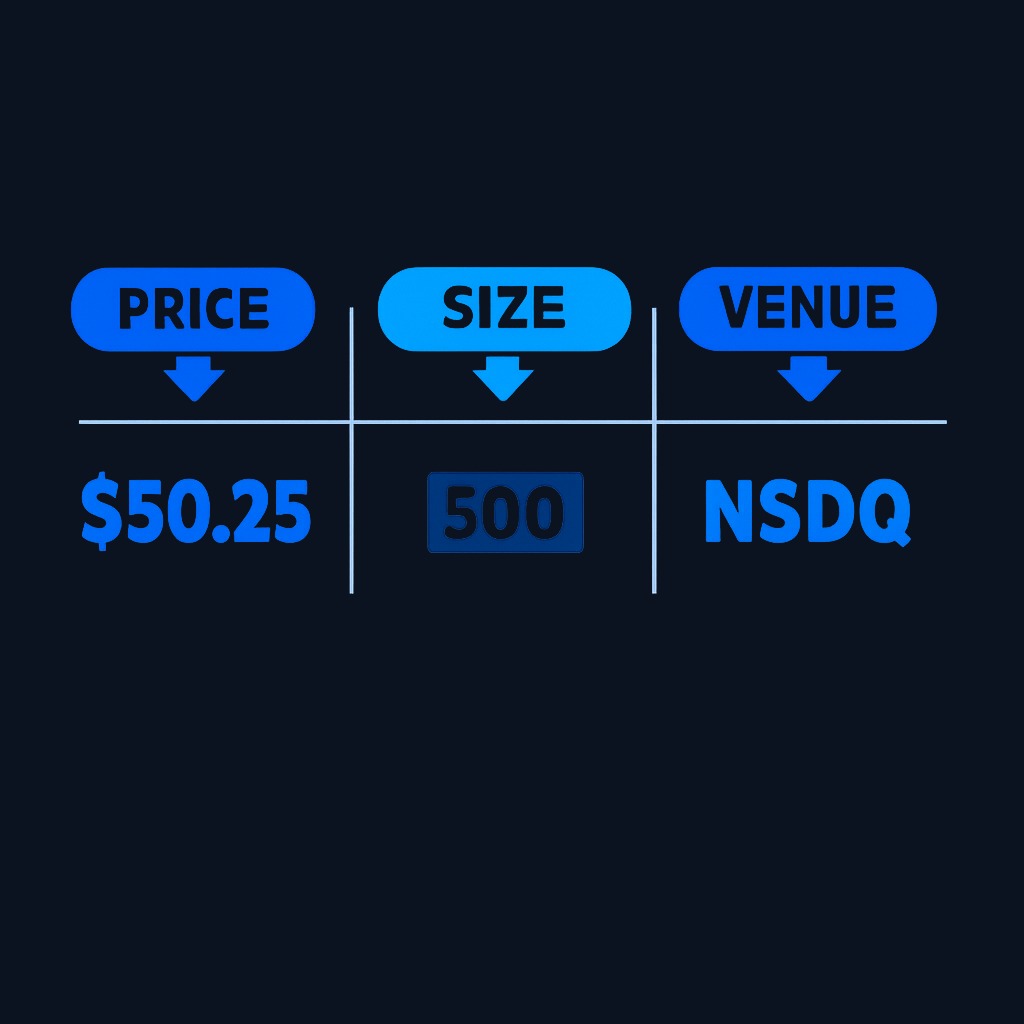
A level 2 window has two stacked ladders. The bid side lists buyers from the highest price downward; the ask side lists sellers from the lowest price upward. Each row shows three things:
- Price level — a limit price where orders are resting.
- Size — how many shares or contracts are posted at that level.
- Participant or venue ID — the market maker, ECN, or exchange displaying the order.
Alongside the ladder, many platforms pair depth with time and sales, the running record of reported executions. Depth shows displayed, cancelable interest; the tape shows completed transactions covered by that feed. Neither reveals a participant's motive, and a large displayed quote can be changed or canceled before execution.
Nasdaq offers several products with different scope. Its TotalView product description, for example, describes Nasdaq's full displayed order-book depth and auction imbalance information. It is not the same as the older Nasdaq Level 2 market-participant view, and neither product alone is a consolidated picture of all U.S. venues. Check the product specification and the broker's entitlement before interpreting the screen.
Level 1 vs level 2 market data
| Feature | Level 1 | Level 2 |
|---|---|---|
| Best bid and ask | Yes | Yes |
| Depth beyond best quote | No | Yes, multiple price levels |
| Participant/venue identity | No | Yes |
| Typical cost to retail | Broker/vendor specific | Broker/vendor and exchange-entitlement specific; verify current official pricing |
| Main audience | Long-term investors | Day traders, scalpers, active traders |
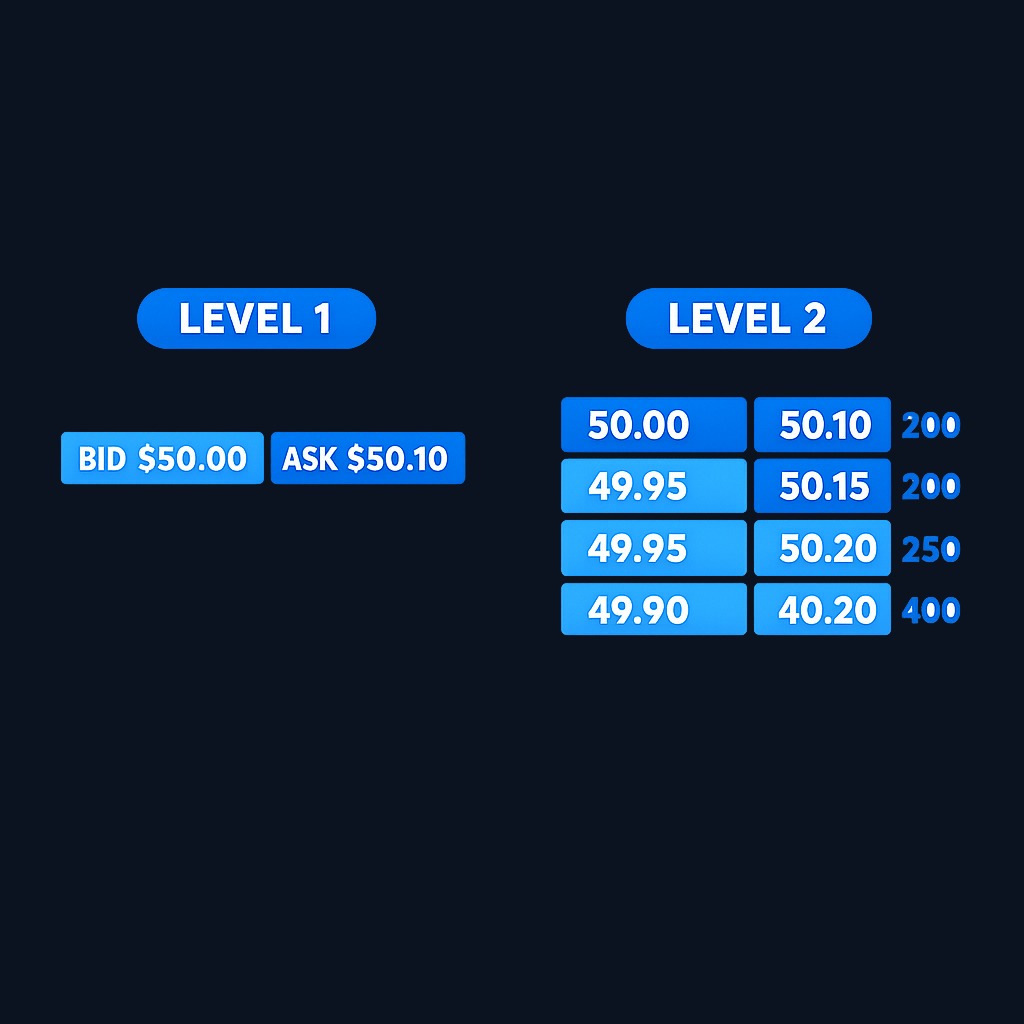
Level 1 summarizes the best displayed quote and last-sale information. A depth feed adds more displayed prices and sizes within that feed's scope. This can inform execution planning for active traders, but access to public depth is not an edge by itself and does not reveal the complete supply or demand for a security.
How traders actually use the order book
- Inspecting displayed liquidity. The ladder shows posted interest in the feed, but the imbalance can disappear and may omit other venues or hidden size.
- Planning limit prices. Displayed queues can help frame an order, while queue priority, routing, and fast cancellations still affect execution.
- Estimating immediate visible depth. The screen is a lower bound on some available liquidity, not a guarantee of how much can trade without price impact.
- Reviewing order-book changes. Traders can study additions, cancellations, and executions, but must test whether those observations improve decisions after latency and costs.
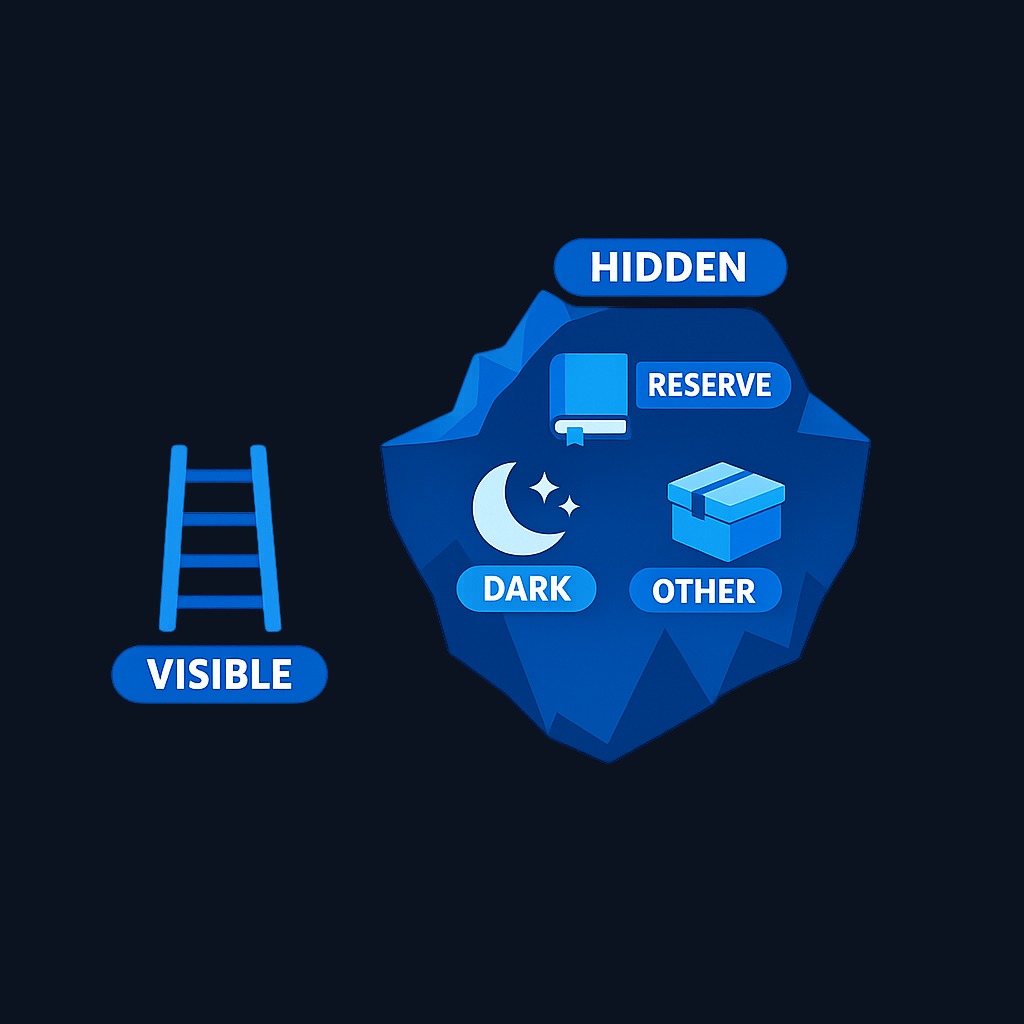
The visible book is incomplete for several reasons: hidden and reserve orders do not display full size; other exchanges, wholesalers, ATSs, and conditional orders may be absent; and displayed quotes can be canceled quickly. A depth screen is evidence about a specified feed at a moment in time, not a promise of execution or a consolidated map of the market.
How to access level 2 data and what it costs
Retail traders normally get level 2 through their broker. Many US brokers now bundle basic depth data free with active accounts, while others charge a monthly subscription fee that is often waived above a trading-volume threshold; check the market-data section of your broker's pricing page for exact figures and verify current pricing on the official site before subscribing. Serious platforms may also offer premium tiers with full depth-of-book from specific exchanges.
At the professional end, direct exchange feeds and consolidated depth products are licensed by data vendors, and per the current listings of specialist market-data providers, institutional-grade level 2 feeds can run into thousands of dollars per month. That tier exists for firms building trading systems, not for individuals watching a ladder.
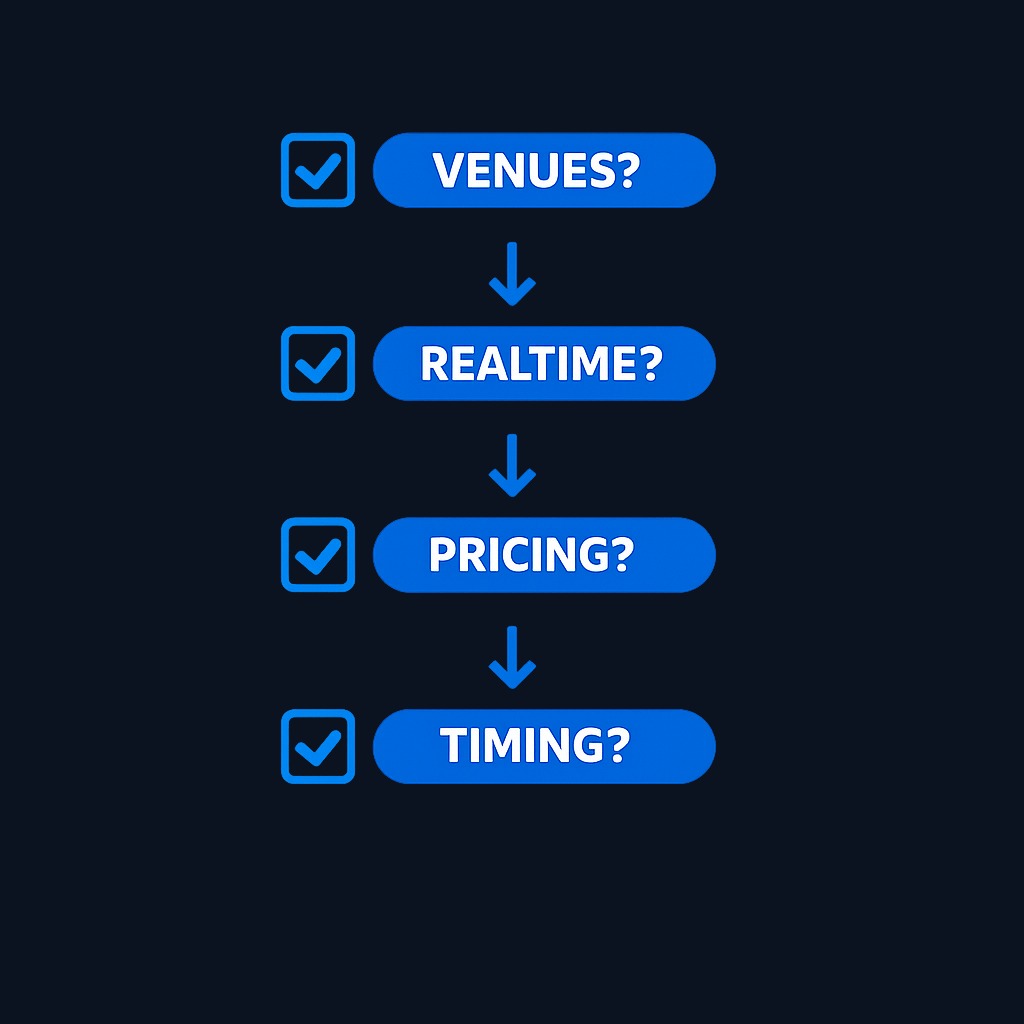
Practical checklist before paying anything: confirm which venues the feed covers, whether quotes are real-time or delayed, whether non-professional pricing applies to you, and whether your typical holding period is short enough for depth to matter at all.
Practice trading with Finelo
Practice in a simulator, learn with bite-sized lessons, and build confidence before risking real money.
What to know before deciding
Depth data is most relevant when execution at nearby prices matters to the strategy. For a long-horizon investor making small trades in a liquid security, it may add little beyond a limit order and current spread. For an active trader, usefulness still must be demonstrated: record the exact feed, latency, decision rule, fill quality, and costs rather than assuming the ladder predicts price.
Decision framework: do you need level 2 market data?
| Your trading profile | Recommended next step |
|---|---|
| Day trader or scalper | Yes — get depth from your broker and pair it with time and sales daily |
| Swing trader (days to weeks) | Optional — useful for timing entries on volatile names, skippable otherwise |
| Long-term investor | No — level 1 quotes and limit orders cover your needs |
| Beginner still learning order types | Learn market vs limit mechanics first, then revisit depth later |
FAQ
What is the difference between level 1 and level 2 market data?
Level 1 shows best-quote and last-sale information. A Level 2 or depth product adds multiple displayed price levels, sizes, and venue or participant identifiers within that product's stated scope; it is not necessarily the full market queue.
Is level 2 market data worth it for beginners?
Usually not at the very start. A beginner gets more value from mastering order types and position sizing. Depth becomes useful once your strategy depends on short-term timing and liquidity.
Can level 2 data show hidden orders?
No. Hidden and iceberg orders display little or none of their true size, and institutions intentionally fragment large orders. The ladder shows displayed liquidity only, which is why prints on the tape matter as confirmation.
How much does level 2 market data cost?
Costs range from free with many retail brokerage accounts to modest monthly subscription fees for premium retail depth, up to institutional exchange feeds priced for firms rather than individuals. Verify current pricing with your broker or data vendor directly.
Conclusion and next steps
Level 2 market data turns the market from a single quote into a visible auction: stacked bids, stacked offers, and the tape deciding the argument between them. It is genuinely valuable for fast, frequent trading and largely decorative for long-horizon investing. Decide based on your holding period, start with whatever depth your broker already includes, and only pay for premium feeds once you know precisely which decision the extra data will improve. If you are still building foundations, spend the first month watching the ladder and the tape side by side on one liquid stock; the patterns you internalize there transfer everywhere else.
TradingMarketsBeginner
Practice trading with Finelo
Practice in a simulator, learn with bite-sized lessons, and build confidence before risking real money.
About the author
Finelo Team
The Finelo Team creates practical investing and trading education designed to help beginners learn faster with structured challenges, simulator practice, and bite-sized lessons.
Keep reading — Related articles
Trading
Understanding Walk Forward Analysis in Trading
Brief educational note: this article is educational — not investment advice — and trading involves the risk of loss.
Finelo Team
Trading
VWAP vs Moving Average: Formulas, Uses, and Limits
VWAP weights price by recorded volume over a defined period, while a moving average summarizes a sequence of prices over a rolling lookback.
Finelo Team
Trading
Volume Profile vs Market Profile: What Each Chart Measures
Volume Profile groups traded volume by price level.
Finelo Team