This guide does not repeat the basic distinction between float and shares outstanding. It explains why “low float” is a vendor estimate rather than a complete liquidity measure and how stale share data, lockups, registration statements, warrants, convertibles, insider holdings, lending, and venue fragmentation can change the trading risk.
Low-Float Stock Liquidity: Data Quality, Dilution, and Execution Risk

This guide does not repeat the basic distinction between float and shares outstanding. It explains why “low float” is a vendor estimate rather than a complete liquidity measure and how stale share data, lockups,…
8 min read
Practice trading with Finelo
Practice in a simulator, learn with bite-sized lessons, and build confidence before risking real money.
Want to learn more?
Practice in a simulator, learn with bite-sized lessons, and build confidence before risking real money.
Explore FineloExplore Finelo's 28-day challenges
Turn learning into a daily habit with guided challenge paths.
Build a float and dilution reconciliation
- Start with period-end shares outstanding from the latest filing.
- Reconcile subsequent issuances, repurchases, splits, mergers, option exercises, and at-the-market sales.
- Identify restricted and affiliate holdings, but document the vendor or legal definition used; “float” is not calculated identically everywhere.
- Review registration statements, shelf capacity, resale registrations, warrants, convertibles, earnouts, and lockup expirations for potential supply.
- Compare float with median daily dollar volume, displayed depth, spreads, volatility, borrow availability, and concentration. Share count alone does not determine liquidity.
Low float does not guarantee volatility or a squeeze, and high float does not guarantee easy execution. Use limit prices where appropriate, model gaps and halts, and avoid sizing a position from average volume alone.
Float is the number of a company's shares actually available for public trading: shares outstanding minus insider holdings, employee-plan shares, and other locked-up or restricted stock. If a company has 100 million shares outstanding and insiders plus restricted holders control 35 million, the float is 65 million shares. Float drives liquidity and volatility, which is why traders check it before sizing any position. This page is for beginning traders and investing students who keep seeing "low float" in market chatter and want to use the number properly. You will get the calculation, comparisons, a worked squeeze scenario, and a decision framework, and you can practice the concepts risk-free in the Finelo app.
The sections below focus on how definitions, stale filings, dilution instruments, and actual market depth complicate a headline float number.
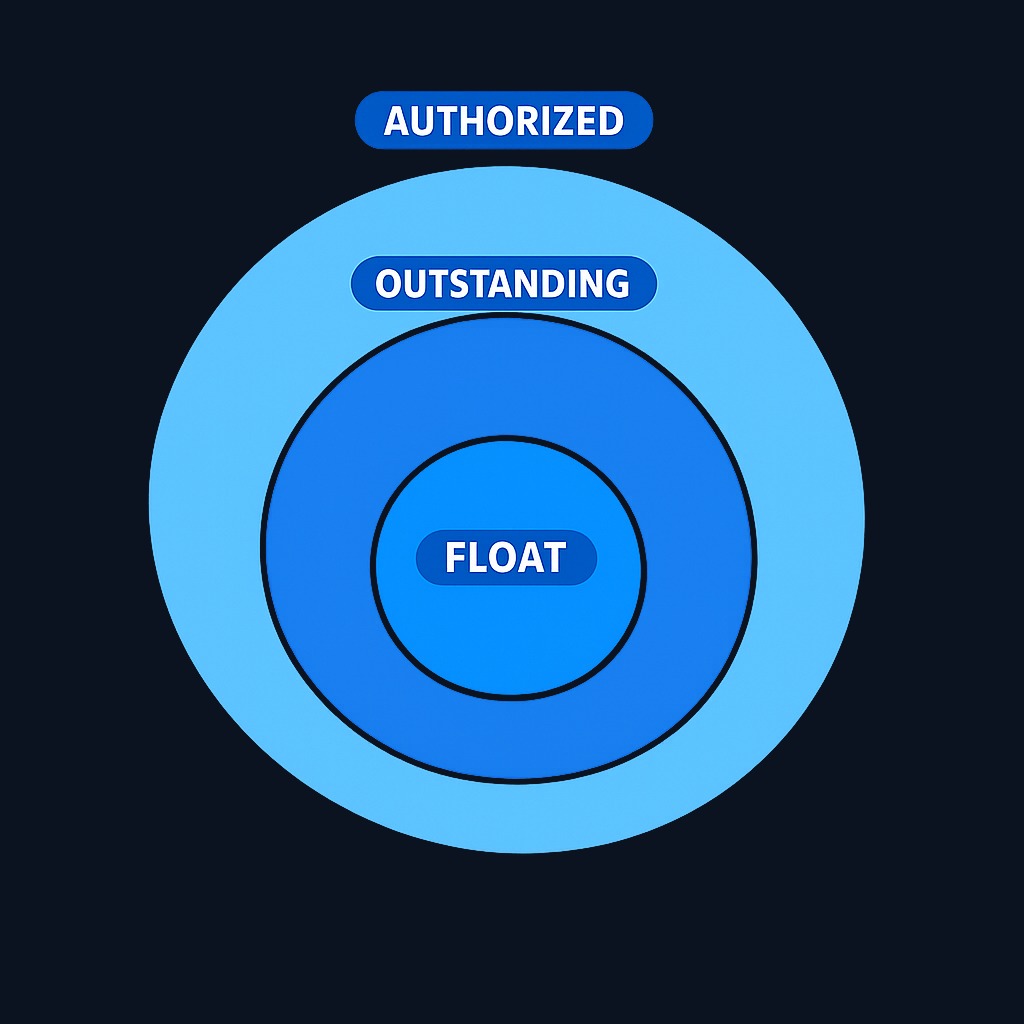
What float means in stocks
Think of a company's equity as three nested circles. The widest is authorized shares, the maximum the charter allows the company to issue. Inside that sits shares outstanding, everything actually issued and held. The innermost circle is the float: the shares that can freely change hands on the open market today. Insider stakes, founder holdings, employee stock still vesting, and shares locked by agreement all sit outside the float even though they count as outstanding. The float is the market's true supply. When demand surges, price is negotiated only among floating shares, so the same buying pressure that nudges a large-float stock can launch a small-float one.
How stock float is calculated
Float = Shares outstanding − restricted and closely held shares
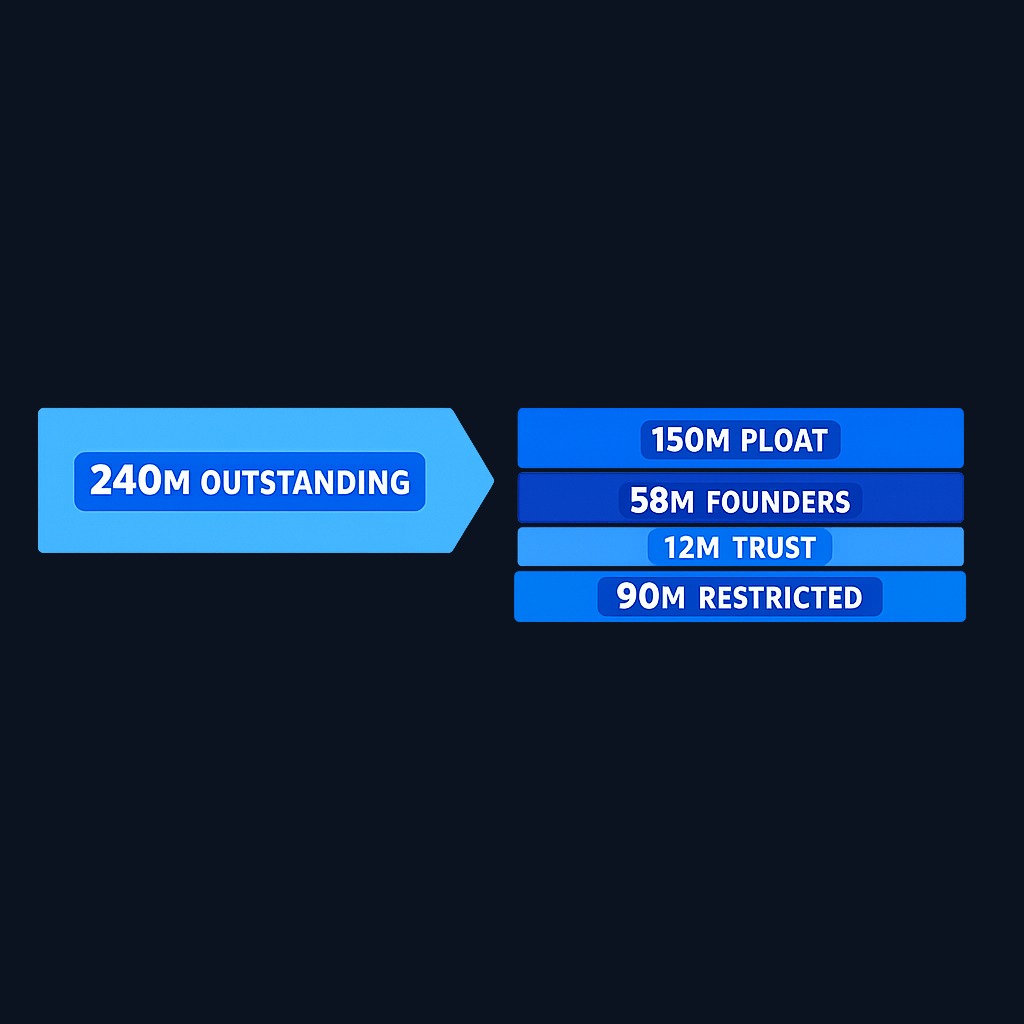
The inputs are public. Share counts appear on the cover page of every 10-K and 10-Q, and insider ownership is disclosed in proxy statements and ownership filings, all retrievable free from the SEC's EDGAR database. A quick worked example: Meridian Semiconductors reports 240 million shares outstanding. Founders and executives hold 58 million, an employee trust holds 12 million, and a strategic partner holds 20 million under a standstill agreement. Float = 240 − 58 − 12 − 20 = 150 million shares, or 62.5% of shares outstanding. Screeners publish float figures too, but they lag corporate events, so verify against filings when the number drives a trade.
Float vs shares outstanding vs authorized shares
| Measure | What it counts | Why it matters |
|---|---|---|
| Authorized shares | Maximum the charter permits | Ceiling for future issuance |
| Shares outstanding | All issued shares, including insiders | Basis for market cap and per-share math |
| Float | Freely tradable shares only | True supply; drives liquidity and volatility |
Market capitalization uses shares outstanding, but tradability lives in the float. Two companies with identical market caps can trade completely differently if one floats 90% of its shares and the other floats 15%.
Why float matters in market dynamics
- Liquidity. A big float means tight spreads and easy fills. Thin floats widen the bid-ask spread and make large orders move the price against you.
- Volatility. Scarce supply amplifies every demand shock. Low-float stocks routinely post daily ranges that large-float names see only in crises.
- Short squeezes. Short interest is often quoted as a percentage of float. When a heavily shorted, small-float stock starts rising, shorts must buy back shares from that same tiny supply, and covering itself fuels the spike.
- Index and institutional demand. Major indexes weight companies by float-adjusted capitalization, and funds tracking them must buy proportionally more of what actually trades. Institutions also avoid positions they cannot exit, so very thin floats often lack institutional support entirely.
Low float vs high float stocks
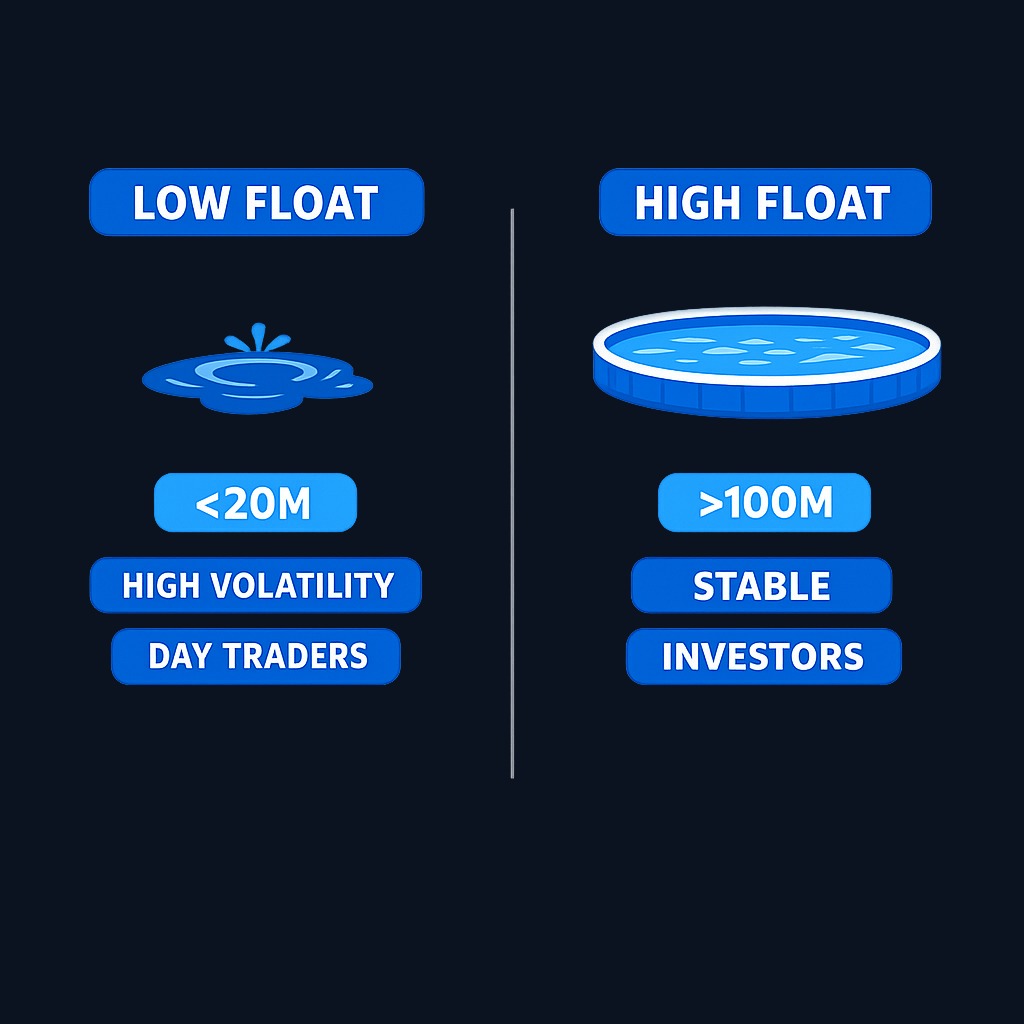
There is no official cutoff, but traders commonly treat floats under roughly 20 million shares as low and floats in the hundreds of millions as high. Low-float names are the natural habitat of day traders hunting fast percentage moves, and of painful lessons: the same scarcity that produces 50% up days produces 40% down days when sentiment flips and everyone exits through the same narrow door. High-float mega caps absorb enormous volume with small price changes, which suits position traders and long-term investors who prize execution quality over explosiveness.
Practice trading with Finelo
Practice in a simulator, learn with bite-sized lessons, and build confidence before risking real money.
Worked example: how a thin float turns news into a squeeze
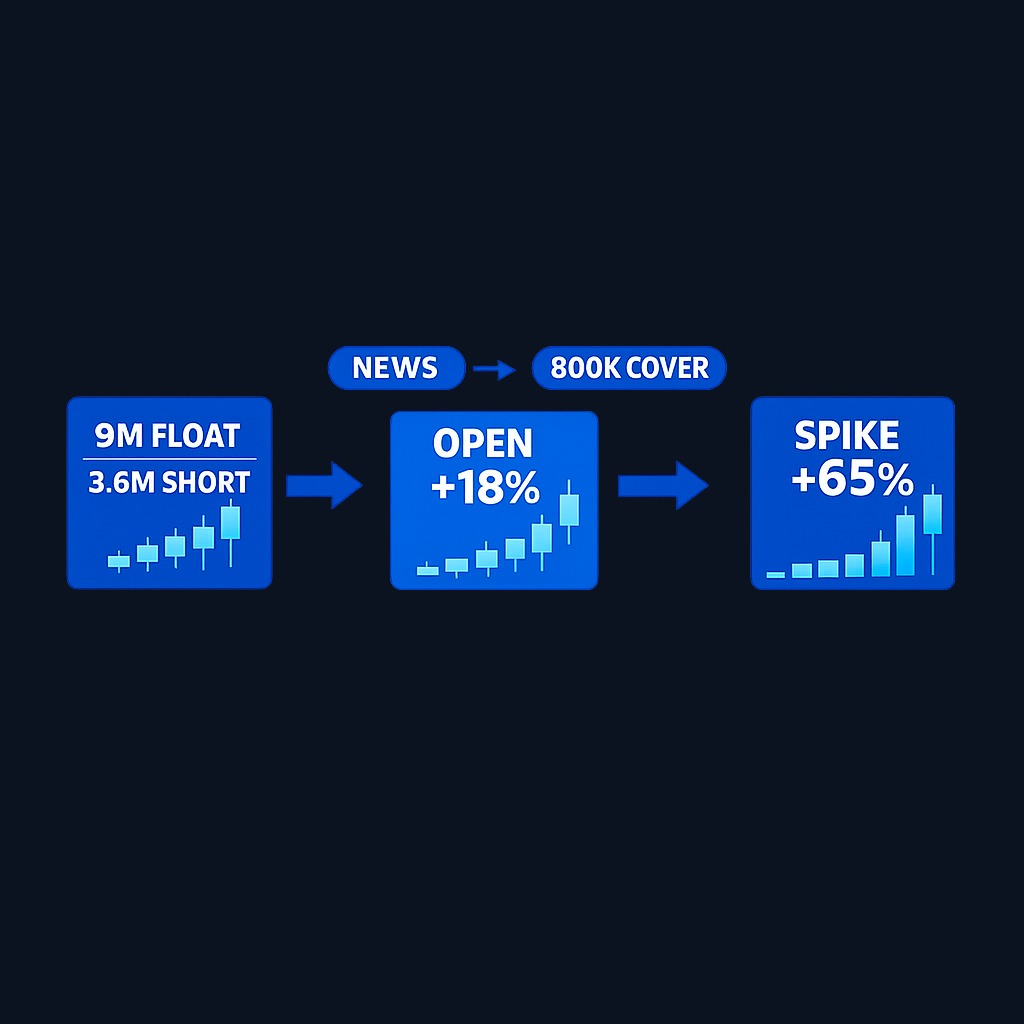
Meridian Biotech floats 9 million of its 30 million outstanding shares; 3.6 million shares, 40% of the float, are sold short. On Tuesday the company posts positive trial results and the stock opens up 18%. Buyers want in, but only a sliver of the 9 million floating shares is actually offered for sale at any moment. Early short covering, 800,000 shares bought back in the first hour, is nearly 9% of the entire float hitting the bid side as demand. Price gaps again, triggering margin calls on remaining shorts, whose forced buying consumes still more supply. By afternoon the stock is up 65% on volume triple the float, meaning the average floating share changed hands three times in one session. Nothing about the company's value tripled; the float was simply too small for the demand that arrived. Reverse the news and the identical mechanics run downhill.
How float changes over time
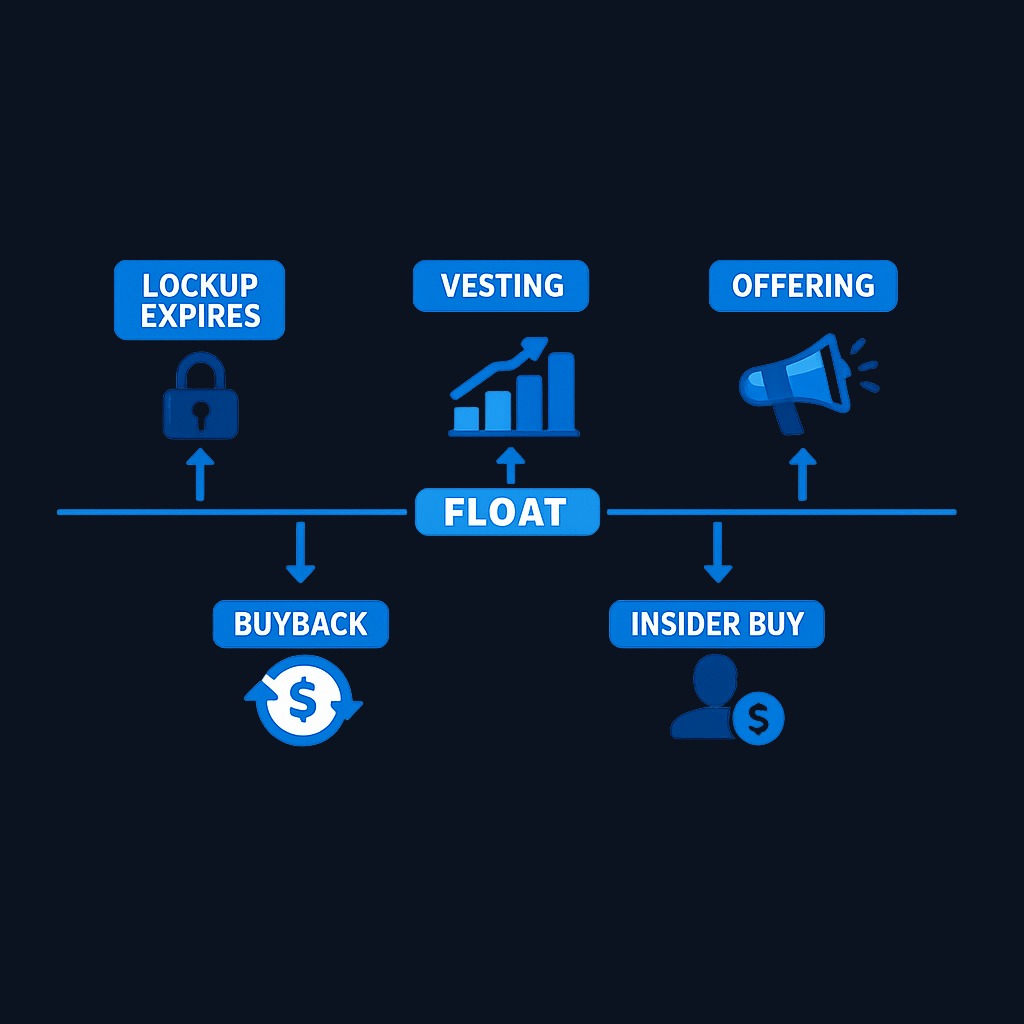
Float is not fixed. It grows when lockups from an IPO expire, when insiders sell, when restricted stock vests, or when the company issues new shares in a secondary offering. It shrinks when companies buy back stock or when large holders accumulate and hold. Watching the calendar matters: a lockup expiration can add double-digit percentages to supply overnight, and buyback programs quietly tighten supply for years.
What to know before deciding
Low float cuts both ways: it multiplies upside and downside alike, and exits are hardest exactly when you need them most. Thin names are also frequent vehicles for pump-and-dump promotions, since small supply makes prices easy to push; be skeptical of sudden social-media enthusiasm around a tiny float. Float data can be stale after offerings, vesting events, or buybacks, so confirm against the latest filing dates. And liquidity risk compounds position-sizing errors: a position you cannot exit at a fair price is larger than it looks on paper.
Decision framework: using float in your process
- Check float before sizing any trade. Keep positions to a fraction of typical daily volume so you can exit without moving the market.
- Match float to your strategy. Momentum scalps favor small floats; multi-year holdings favor large ones.
- Pair float with short interest. High short interest as a percentage of a small float is squeeze fuel in both directions.
- Track supply events. Lockup expirations, offerings, and buybacks change the float and often the price path with it.
- Demand a liquidity margin of safety. If a realistic exit would take days of average volume, the position is too big.
FAQ
What is a good float for a stock?
It depends on your goal. Long-term investors generally prefer large floats for smooth execution and institutional sponsorship, while short-term traders often seek floats under about 20 million shares precisely because scarce supply produces outsized moves.
Is a low float stock good or bad?
Neither. Low float means low supply, which amplifies both gains and losses. It rewards fast, disciplined traders with strict risk control and punishes anyone who oversizes or hesitates on the exit.
How is float different from shares outstanding?
Shares outstanding count every issued share, including insider and restricted holdings. Float counts only shares freely available for public trading. Float is always equal to or smaller than shares outstanding.
Where can I find a stock's float?
Most brokers and screeners display it, and you can compute it yourself from share counts and ownership disclosures in company filings. Verify against recent filings after offerings or lockup expirations, when screener data most often lags.
Conclusion and next steps
Float is the market's real supply of a stock: shares outstanding stripped of everything locked away. It sets the terms for liquidity, spreads, volatility, and squeeze potential, which makes it a first-check number rather than trivia. Confirm the float, size positions against it, and track the events that change it. Then build the reflex safely: screen a handful of low-float and high-float names, watch how each behaves on a news day, and log the difference before trading real money.
TradingMarketsBeginner
Practice trading with Finelo
Practice in a simulator, learn with bite-sized lessons, and build confidence before risking real money.
About the author
Finelo Team
The Finelo Team creates practical investing and trading education designed to help beginners learn faster with structured challenges, simulator practice, and bite-sized lessons.
Keep reading — Related articles

Trading
Understanding Walk Forward Analysis in Trading
Brief educational note: this article is educational — not investment advice — and trading involves the risk of loss.
Finelo Team

Trading
VWAP vs Moving Average: Formulas, Uses, and Limits
VWAP weights price by recorded volume over a defined period, while a moving average summarizes a sequence of prices over a rolling lookback.
Finelo Team

Trading
Volume Profile vs Market Profile: What Each Chart Measures
Volume Profile groups traded volume by price level.
Finelo Team