Order routing is the process your broker uses to decide where your buy or sell order goes for execution. When you tap "buy," the order does not go straight to a stock exchange. Your broker chooses among exchanges, wholesale market makers, and other trading venues, and that choice can affect the price you get.
Order Routing: How Your Stock Trades Actually Get Executed
Learn what order routing is, how brokers choose trading venues, what best execution means, and how SEC Rule 606 reports reveal where your orders go.
7 min read
Practice trading with Finelo
Practice in a simulator, learn with bite-sized lessons, and build confidence before risking real money.
Want to learn more?
Practice in a simulator, learn with bite-sized lessons, and build confidence before risking real money.
Explore FineloExplore Finelo's 28-day challenges
Turn learning into a daily habit with guided challenge paths.
This page is for investors who want to understand what happens between clicking the button and seeing a fill, and for anyone comparing brokers on execution quality. Read how the venues differ, what the best-execution rule requires, and how to check your own broker's routing disclosures. This article is educational, not financial advice.
What order routing means
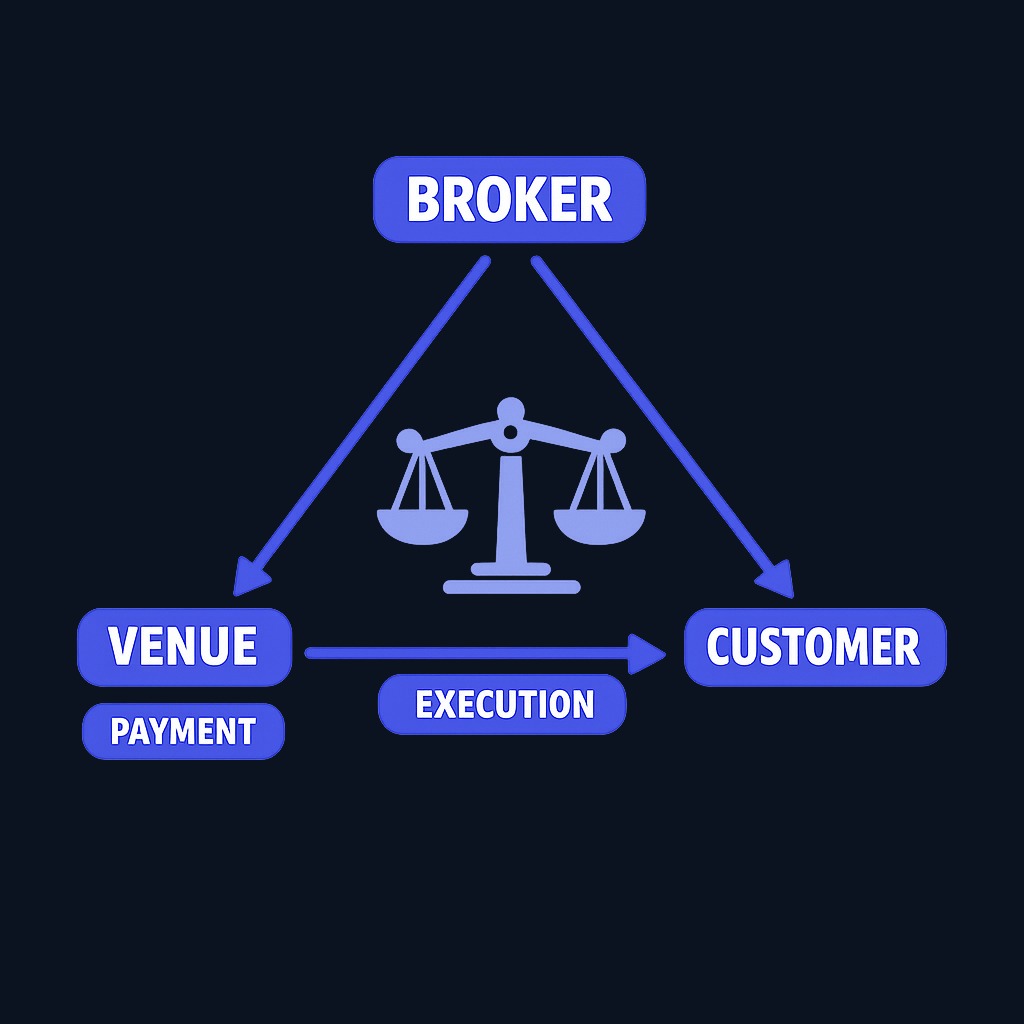
Every order needs a venue: a place where buyers and sellers actually meet. In the US equity market there are many competing venues quoting the same stocks at slightly different prices and sizes. Routing is the broker's real-time decision about which venue receives your order.
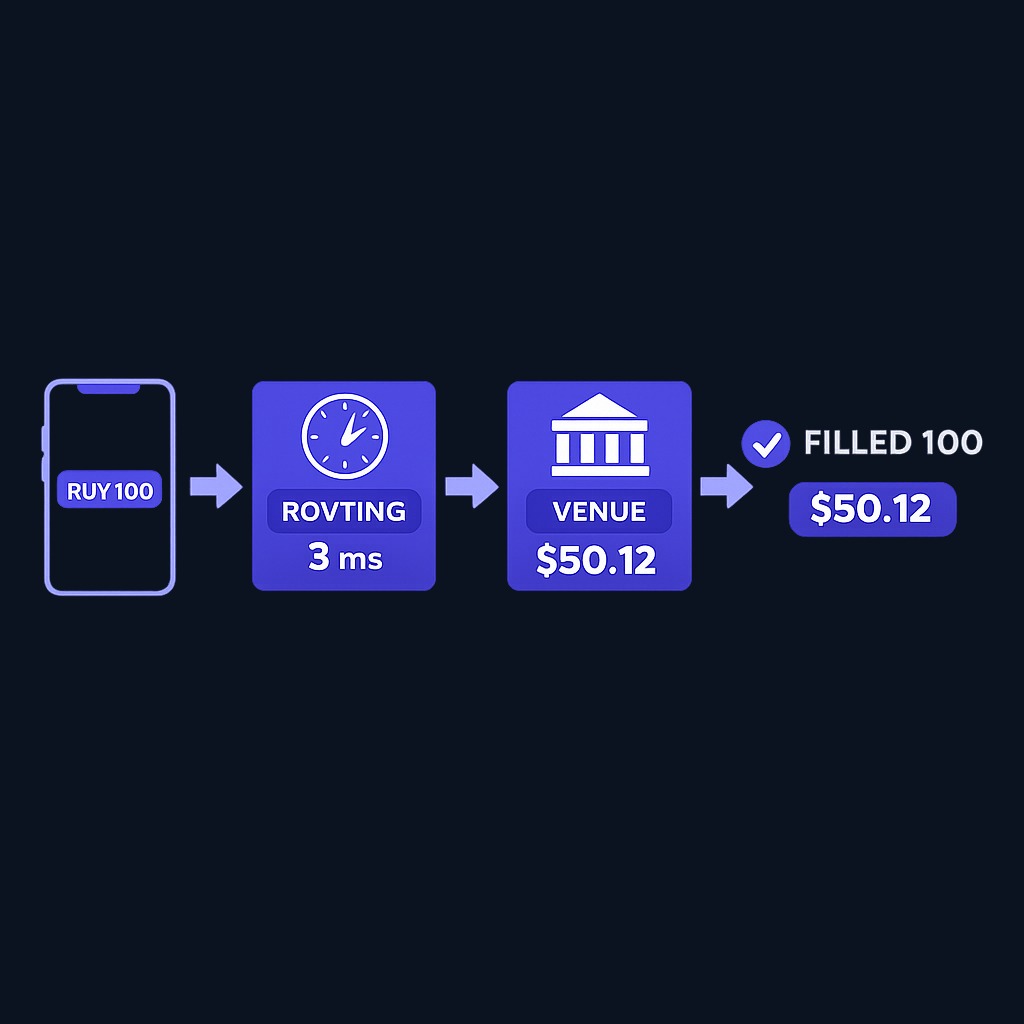
Consider a simple example. You send a market order to buy 100 shares of a large-cap stock. Your broker's routing system looks at the available quotes, applies its routing logic, and sends the order to a venue, often within milliseconds. The order fills, and the confirmation appears in your app. The entire routing decision happened invisibly, but it determined your execution price down to the cent.
Where orders can be routed
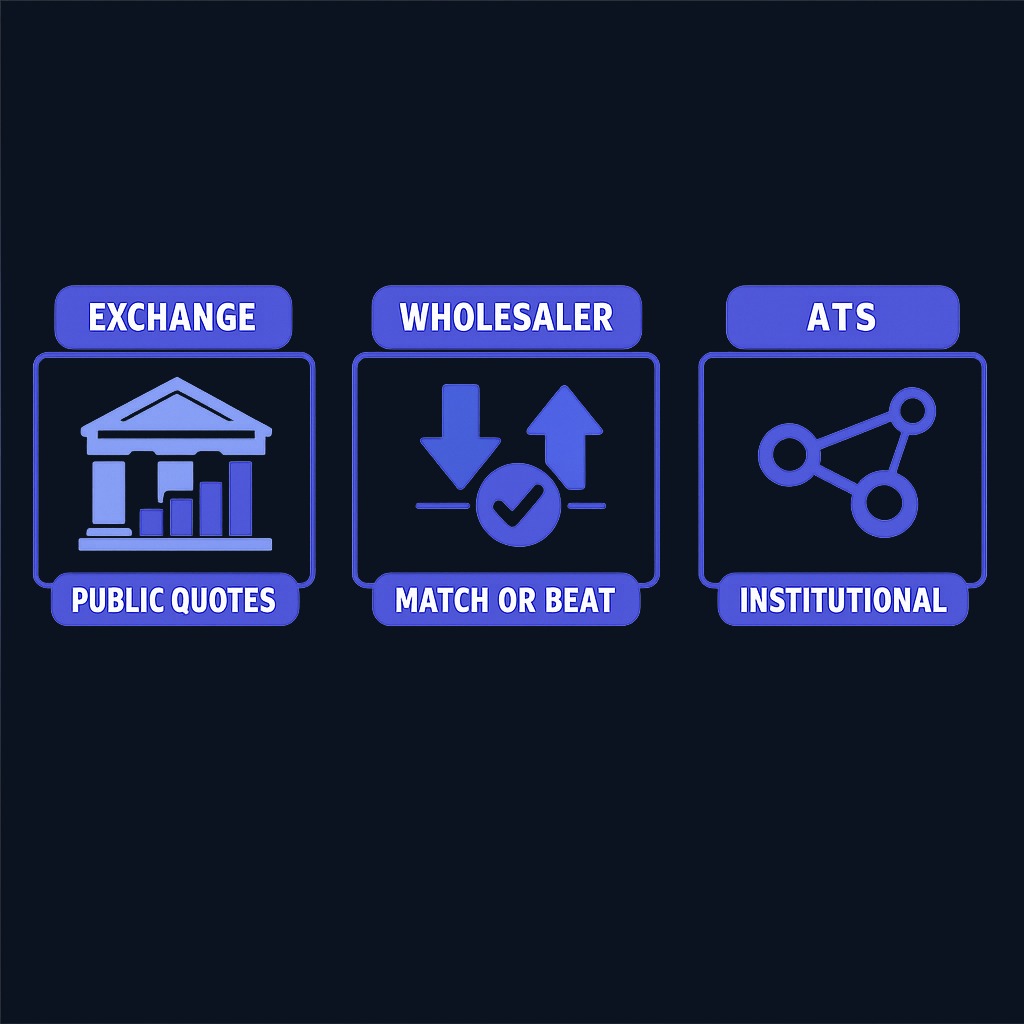
Retail orders generally end up at one of three kinds of destinations:
| Venue type | What it is | Typical role for retail orders |
|---|---|---|
| National exchange | A public marketplace with a visible order book | Displays quotes; executes directed and institutional flow |
| Wholesaler / market maker | A firm that executes retail orders from its own inventory | Executes a large share of retail market orders, often with price improvement |
| Alternative trading system (ATS) | A private matching venue, including dark pools | Matches larger or institutional orders away from public quotes |
Many retail brokers route most non-directed market orders to wholesalers, which commit to execute at the national best quoted price or better. Exchanges remain central because their displayed quotes set the reference prices everyone else must match or beat. ATSs matter more for institutional flow, though their executions still print to the public tape.
Best execution: the rule behind routing
Brokers do not get to route anywhere they like. Under FINRA Rule 5310, a firm must use reasonable diligence to find the best market for a security so the resulting price to the customer is as favorable as possible under prevailing conditions. This duty is known as best execution.
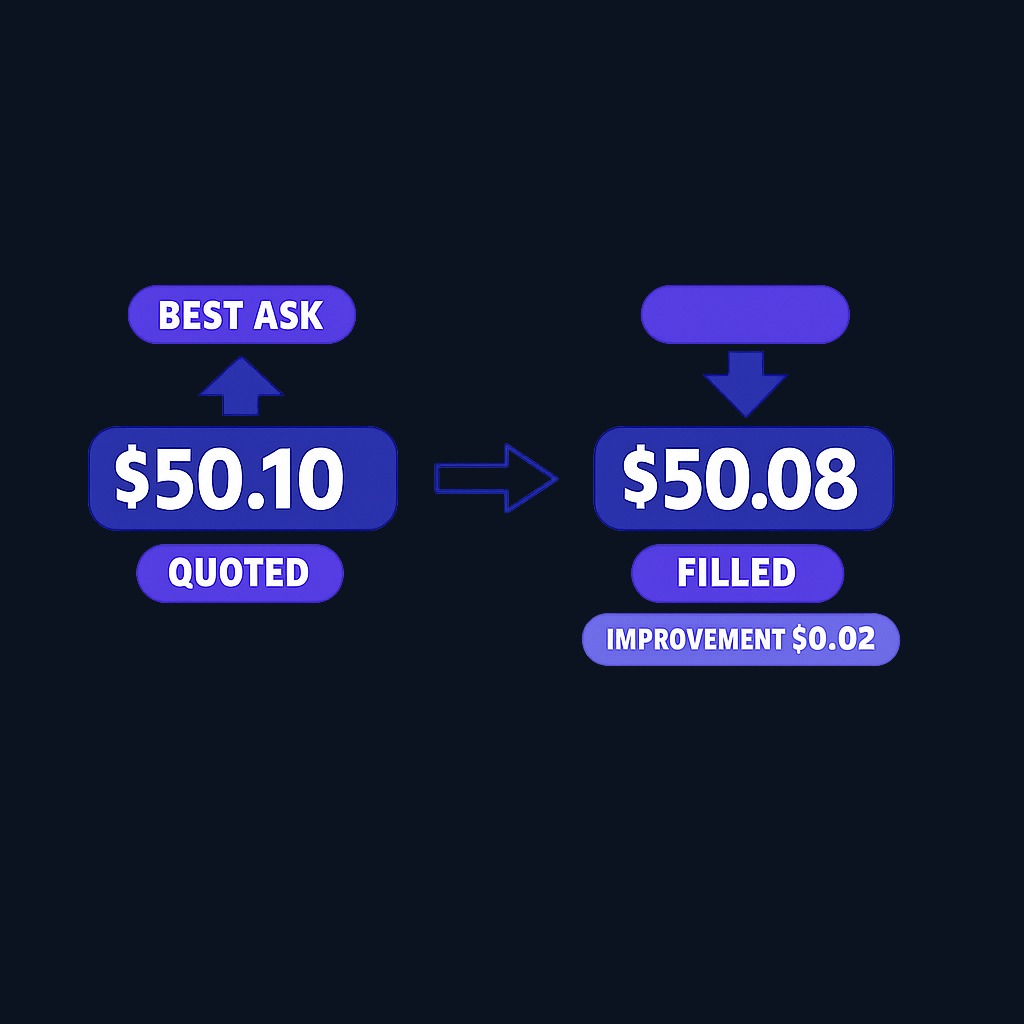
In practice, FINRA expects firms to run regular and rigorous reviews of the execution quality their routing produces, compare it against what competing venues could have delivered, and adjust routing when the comparison says they should. FINRA's oversight findings show this is actively examined: firms have been cited for not comparing venues, not reviewing specific order types, and using routing logic not based on execution quality. One measure that matters in these reviews is price improvement, meaning execution at a price better than the best quoted price at the time.
Payment for order flow and conflicts of interest
Some venues pay brokers for sending them orders, an arrangement called payment for order flow (PFOF). It helps fund low- or zero-commission trading, but it also creates a potential conflict: the venue paying the most is not automatically the venue executing best.
Regulators address this through disclosure rather than prohibition in the US. Routing disclosures required under Rule 606 of Regulation NMS must describe the broker's PFOF arrangements and other payments for each major venue, so customers can see the financial relationships behind the routing. The best-execution duty still applies with full force: accepting PFOF never excuses routing that produces worse prices for customers.
Practice trading with Finelo
Practice in a simulator, learn with bite-sized lessons, and build confidence before risking real money.
How to see where your orders go
You do not have to guess. Two disclosure tools exist:
- Quarterly Rule 606(a) reports. Every broker-dealer that routes customer orders must publish a quarterly report identifying the venues it sent non-directed orders to, the percentages by order type, and the material terms of its payment arrangements. Brokers post these on their websites, usually in a legal or disclosures section, and FINRA Rule 6151 requires firms to submit them to FINRA for centralized publication on FINRA's site.
- Per-customer requests under Rule 606(b). You can ask your broker where your own orders were routed for the past six months, including venue and time details for each order.
Alongside routing reports, market centers publish execution-quality statistics under Rule 605 of Regulation NMS, covering measures like effective spreads. Reading a 606 report next to venue 605 data gives a fuller picture of what a broker's routing actually delivers.
Directed vs non-directed orders
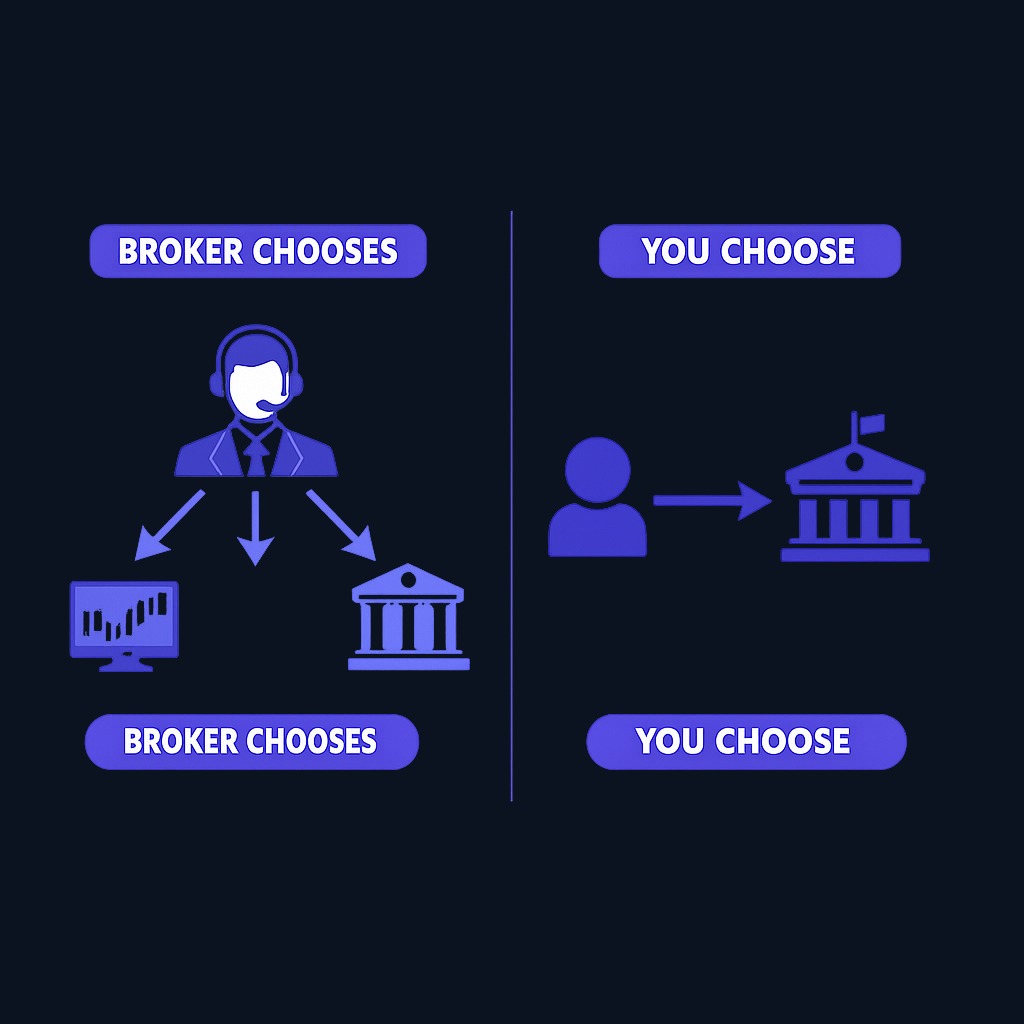
By default, most retail orders are non-directed: the broker chooses the venue. Per FINRA's investor guidance, many firms let you direct an order to a specific exchange instead. The tradeoff is that a directed order makes you responsible for that venue choice, and you may miss a better price available elsewhere. For most long-term investors, non-directed routing under the best-execution duty is the practical default; directed orders are mainly a tool for active traders with a specific reason.
What to know before deciding
Routing quality is one input when choosing or evaluating a broker, not the only one. Before weighing it, check four things: whether the broker publishes clear 606 reports and where; whether it reports price-improvement statistics; how it describes its PFOF arrangements; and whether your typical order type (small market orders vs large limit orders) is the kind its routing handles well. Execution differences are usually measured in fractions of a cent per share, which matters more the larger and more frequent your trades are.
Decision framework: how much should routing matter to you?
- Estimate your trading volume. A few small trades a year make routing differences economically tiny. Frequent or large trades amplify them.
- Read your broker's latest 606 report. Note the top venues and whether PFOF is disclosed for them.
- Look for execution-quality claims you can verify. Price-improvement statistics and average execution speed are the useful ones.
- Compare against one alternative broker. Same measures, same order types, so the comparison is fair.
- Re-check annually. Routing arrangements change, and so do the reports.
A common mistake is assuming all brokers route identically because commissions are all zero. The commission line converged; the routing behind it did not.
Conclusion and next steps
Order routing is the hidden machinery between your order ticket and your fill: brokers choose among exchanges, wholesalers, and ATSs, constrained by the best-execution duty of FINRA Rule 5310 and made visible through SEC Rule 606 disclosures. Understanding it turns execution quality from a mystery into something you can actually check.
Next steps: pull up your broker's most recent quarterly 606 report, identify its top three venues, and note the disclosed payment arrangements. Then request your own order-routing data if you trade often. To build the surrounding market-structure basics at a beginner-friendly pace, Finelo offers structured lessons on how markets and orders work.
Frequently asked questions
What is order routing in simple terms?
It is how your broker picks the marketplace that will execute your trade. Multiple venues trade the same stocks, so the broker's routing system chooses one based on price, speed, and its own arrangements, all under a legal duty to seek the best reasonably available terms.
Does order routing affect the price I pay?
It can, usually by small amounts per share. Different venues offer different execution quality, including price improvement over the quoted price. Across many trades, those small differences accumulate, which is why regulators require routing and execution-quality disclosures.
What is payment for order flow?
It is compensation a broker receives for sending orders to a particular venue, most often a wholesale market maker. It is legal in the US but must be disclosed in the broker's Rule 606 reports, and it never overrides the broker's best-execution duty.
How do I find my broker's Rule 606 report?
Search the broker's website for "606 report" or look in its disclosures/legal section; firms also submit these reports to FINRA for centralized publication. For your own trades, you can request six months of order-by-order routing detail under Rule 606(b).
orderroutingstocktradesactuallyget
Practice trading with Finelo
Practice in a simulator, learn with bite-sized lessons, and build confidence before risking real money.
About the author
Finelo Team
The Finelo Team creates practical investing and trading education designed to help beginners learn faster with structured challenges, simulator practice, and bite-sized lessons.
Keep reading — Related articles
Trading
Understanding Walk Forward Analysis in Trading
Brief educational note: this article is educational — not investment advice — and trading involves the risk of loss.
Finelo Team
Trading
VWAP vs Moving Average: Formulas, Uses, and Limits
VWAP weights price by recorded volume over a defined period, while a moving average summarizes a sequence of prices over a rolling lookback.
Finelo Team
Trading
Volume Profile vs Market Profile: What Each Chart Measures
Volume Profile groups traded volume by price level.
Finelo Team


