Something is happening in the Pacific Ocean right now that could show up in your grocery cart by Christmas — and keep showing up well into 2027.
A "Super El Niño" Is Coming — and Wall Street Is Already Betting on Your Grocery Bill
Forecasters say El Niño is a near-certainty through 2026 — and more than half their models predict one of the strongest events ever recorded. Here's what it could do to coffee, sugar, wheat, and the price of your weekly shop.
7 min read
Practice trading with Finelo
Practice in a simulator, learn with bite-sized lessons, and build confidence before risking real money.
Want to learn more?
Practice in a simulator, learn with bite-sized lessons, and build confidence before risking real money.
Explore FineloExplore Finelo's 28-day challenges
Turn learning into a daily habit with guided challenge paths.
Water temperatures along the equator have climbed well past the threshold that defines an El Niño — and they're still rising. Climate forecasters at Columbia's IRI, working with NOAA data, now put the probability that El Niño persists through the fall at essentially 100%. More striking: over half of the two dozen forecast models they track predict it will strengthen into what analysts are calling a "Super El Niño" — a top-tier event of the kind seen only a handful of times in the last 75 years.
Wall Street isn't waiting for the weather. Bank of America strategists have already mapped out which crops get hit — and their projections include words like "collapse."
This article is for information and education only and is not financial advice. Projections cited are forecasts by third parties and may not materialize.
The forecast, in one scoreboard
- Pacific temperatures: +1.7°C above normal and rising — well past the El Niño threshold
- Odds El Niño lasts through fall: ~100% (IRI/NOAA)
- Models predicting a "very strong" event: 13 of 24; NOAA pegs the probability at 63%
- Events this strong in the past 75 years: about 6 out of 20
- Expected peak: fall 2026 — mid-planting-season in South America
- When food prices feel it: 6–12 months after the peak, historically
That last line matters most for your wallet — more on it below.
What is a "Super El Niño," in plain English?
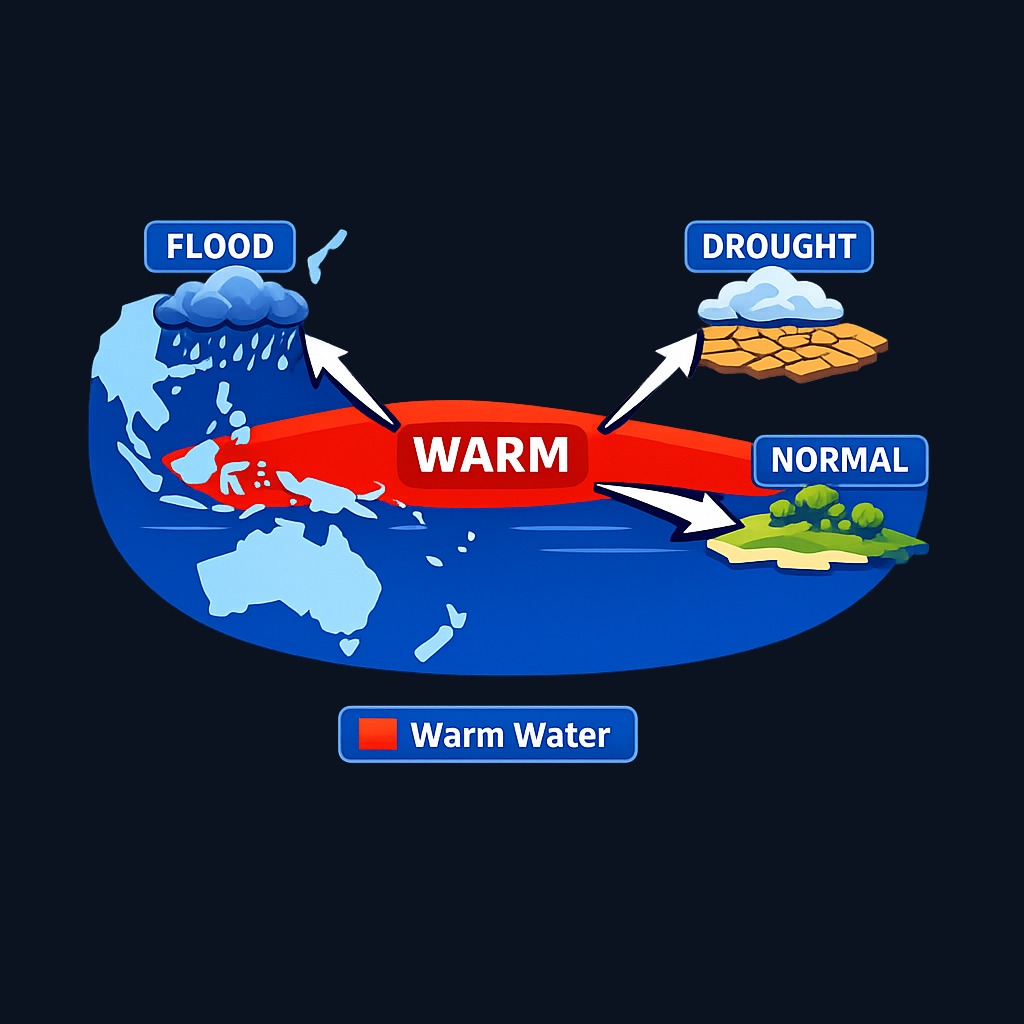
El Niño is a recurring climate pattern where unusually warm water spreads across the central and eastern Pacific. That warm water shifts rainfall around the globe: some regions flood, others dry out, and harvests on multiple continents get disrupted at the same time.
Most El Niños are mild. But of the 20 events recorded in the past 75 years, only about six have reached the intensity forecasters expect this time, according to Bank of America. The event is projected to peak in the fall — right in the middle of South America's planting season.
The crops in the crosshairs
Here's what bank analysts project if the forecasts hold, per BofA and JPMorgan estimates reported by Yahoo Finance:
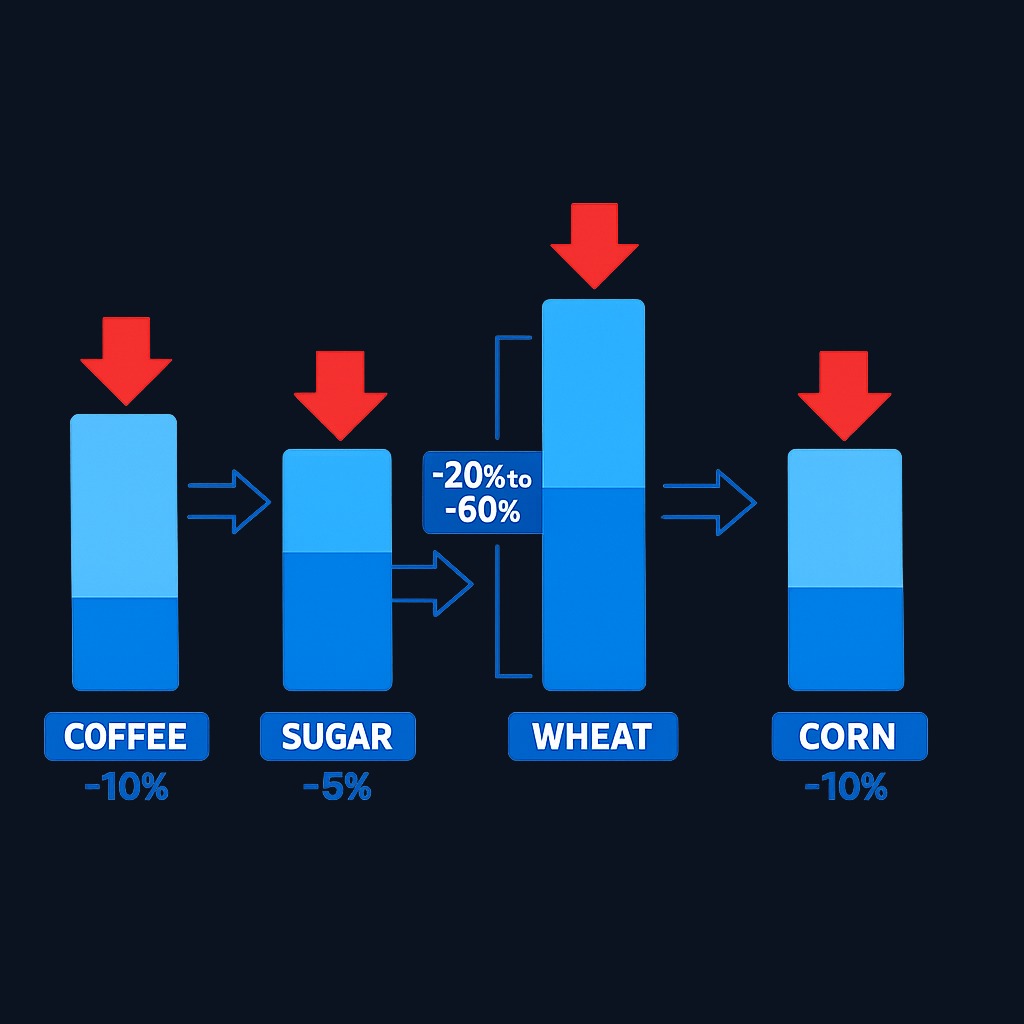
- Coffee: down 5–15%. Drought in Vietnam and Indonesia — two of the world's biggest producers — could cut output sharply.
- Sugar: down ~5% globally. JPMorgan calls it the single most El Niño-exposed commodity. Brazil faces a 5% loss; India and Thailand up to 10%.
- Australian wheat: down 20–60%. Australian wheat output has fallen in almost every past El Niño; this range depends on how extreme the drought gets.
- Brazilian corn: down ~10% — at the same time U.S. corn supplies have already tightened. BofA's warning on grains overall: supplies "could collapse."
What happened the last few times
Forecasts are guesses; history is data. The record of strong El Niños is not reassuring for food prices.
During the most recent major event, in 2023–24, cocoa prices rallied roughly 250% as West African harvests failed, sugar reached its highest price in over a decade, and the disruption echoed for years — coffee was still setting record highs in 2025. The 2015–16 super El Niño slashed Vietnam's coffee output and fueled a sharp rally in robusta coffee futures — the same Vietnam-drought scenario analysts are projecting now. And both 1997–98 and 2015–16 triggered steep production drops in Ivory Coast cocoa, the backbone of the world's chocolate supply.
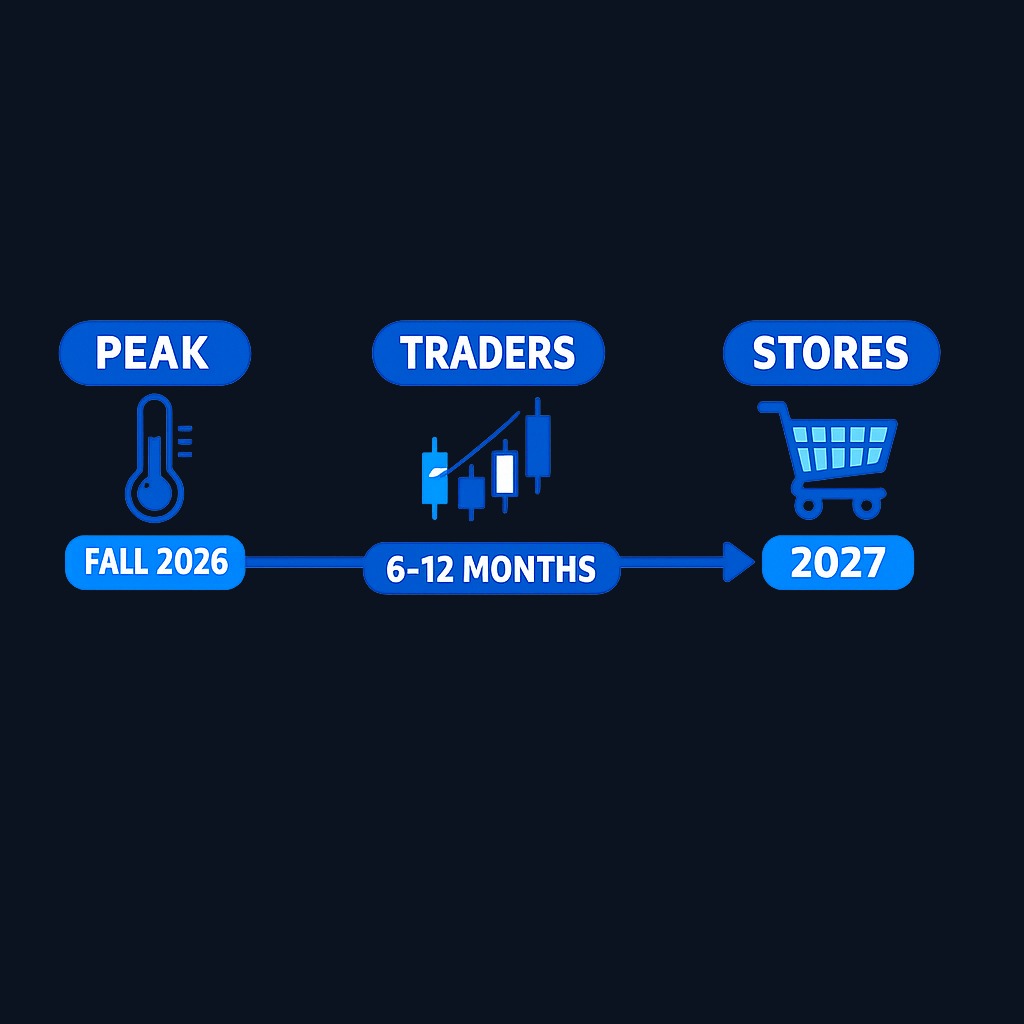
Notice the pattern in the timing, too: the price surges arrived with a lag, historically six to twelve months after the event's peak. Commodity traders move on the forecast; your supermarket moves on the harvest. If this El Niño peaks in fall 2026 on schedule, the checkout-line effect lands across 2027.
Practice trading with Finelo
Practice in a simulator, learn with bite-sized lessons, and build confidence before risking real money.
The honest caveat
Everything above is forecast, not fact — and there's a respectable counterargument. World Bank researchers have noted that even record El Niños disrupt production locally without always spiking global prices, because bumper crops elsewhere can offset regional failures. Weather models are probabilistic, banks have been wrong before, and a weaker-than-expected event would soften every number in this article. What makes this one worth your attention is the rare level of model agreement — and a global backdrop with unusually little slack to absorb another shock.
The terrible timing
That backdrop is the real story. In a normal year, markets could absorb a bad harvest. This is not a normal year.
Commodity markets are already strained by the conflict in the Middle East and blocked traffic through the Strait of Hormuz, which has kept oil above $80 a barrel. Food and fuel are the two prices consumers feel most — and both are now under pressure at once.
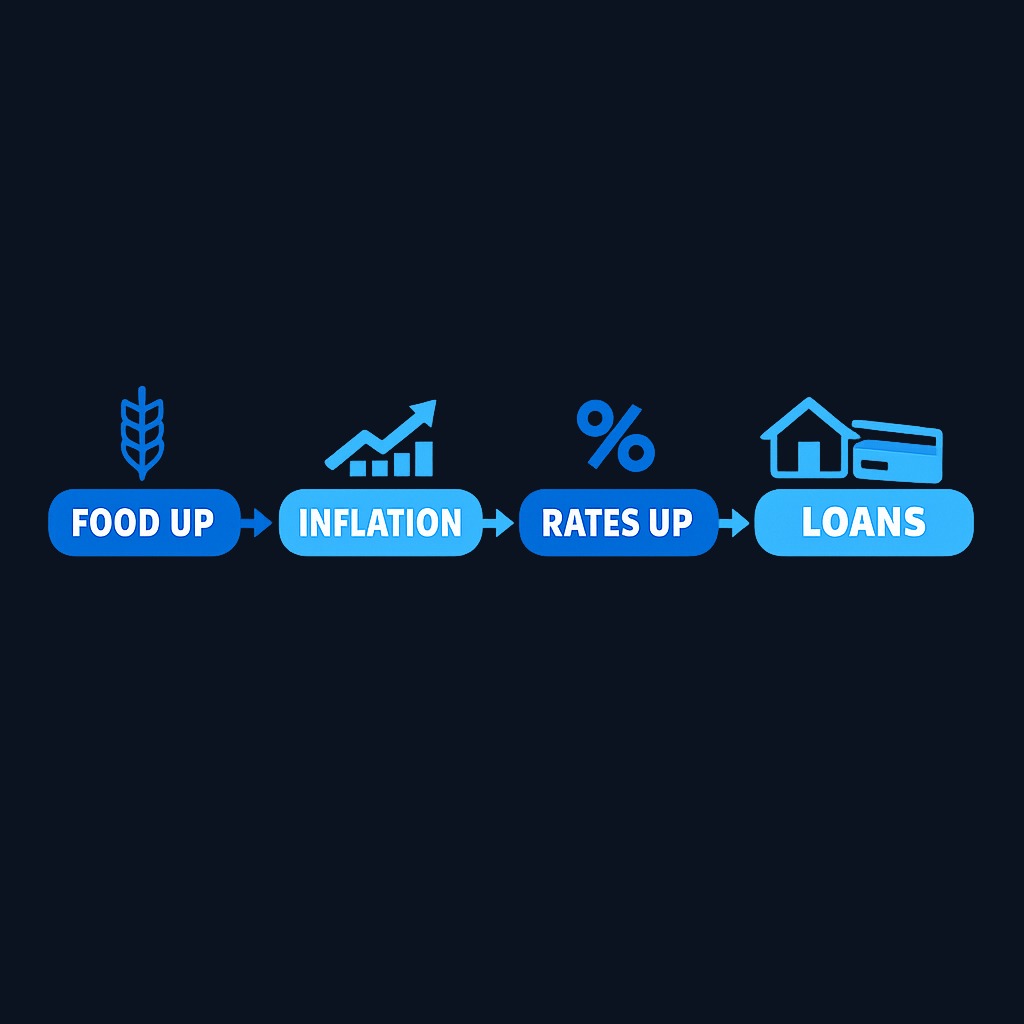
That combination matters beyond the checkout line. Rising food and energy prices are exactly the kind of inflation that keeps central banks cautious. With the Federal Reserve deciding on interest rates this week and markets already debating whether the next move is a hike, a weather-driven food shock would make the inflation fight harder — and that affects mortgage rates, credit card APRs, and everything else tied to the cost of money.
Why this matters to YOU
Your grocery bill has a lag. Commodity prices move first; store prices follow months later. History says the full effect of a fall 2026 peak reaches retail shelves across 2027. The time to notice this story is now, not when your coffee goes up.
This is what "commodities" actually means. When investors talk about commodity markets, this is it: real-world supply (a drought in Vietnam) meeting global demand (your morning latte), with prices set in between. Few events teach it more vividly than an El Niño.
Volatility cuts both ways. Weather scares can send agricultural futures soaring — and reverse just as fast when rain arrives. If you're ever tempted to trade a scary forecast like this one, remember that professionals with satellite feeds and crop models are on the other side of that trade.
What to watch next
Three signals will tell you whether this story is escalating or fading: NOAA's monthly ENSO updates (do models keep pointing to a "very strong" peak?), sugar and coffee futures (the market's live vote on harvest damage), and food-price components in upcoming inflation reports. We'll be watching all three — and we'll update this article with actual harvest numbers as they arrive.
Curious how one region's supply shock ripples through a global market? We broke down the same mechanics in oil here: WTI vs Brent Crude: The Two Oil Prices Explained.
Finelo does not provide investment advice. This article is for informational and educational purposes only. Projections cited are forecasts by third parties and may not materialize.
Sources: Yahoo Finance / Bank of America & JPMorgan estimates, IRI/Columbia ENSO Forecast, NOAA Climate Prediction Center, IFA Magazine — El Niño and agricultural commodities in 2026, Neuberger Berman — commodity markets and El Niño risk, World Bank — El Niño and global agricultural prices
Frequently asked questions
What is a Super El Niño?
El Niño is a recurring climate pattern of unusually warm Pacific water that shifts rainfall and disrupts harvests. A "Super El Niño" is a top-tier event — of the roughly 20 El Niños in the past 75 years, only about six have reached the intensity forecasters expect this time, according to Bank of America.
How could El Niño affect grocery prices?
Bank analysts project possible output cuts for coffee, sugar, Australian wheat, and Brazilian corn if forecasts hold. Historically, retail food prices often feel the full effect six to twelve months after the event's peak — so a fall 2026 peak would tend to show up across 2027.
Is a food-price spike guaranteed?
No. These are forecasts, and World Bank researchers have noted that even record El Niños can disrupt production locally without always spiking global prices if bumper crops elsewhere offset losses. Weather models are probabilistic, and a weaker event would soften every projection.
El Niñocommoditiesfood pricesinflationclimateinvesting
Practice trading with Finelo
Practice in a simulator, learn with bite-sized lessons, and build confidence before risking real money.
About the author
Finelo Team
The Finelo Team creates practical investing and trading education designed to help beginners learn faster with structured challenges, simulator practice, and bite-sized lessons.
Keep reading — Related articles
News
U.S. Gas Prices Reach $4.46: What the Increase Means for Inflation and Household Costs
The EIA's U.S. all-grades gasoline average reached $4.455 per gallon. See what changed, why regions differ and how fuel prices affect inflation.
Finelo Team

News
China Sets a Stronger Yuan Fix at 6.7521: What It Means for USD/CNY
China set its September 18 yuan reference rate at 6.7521 per dollar. Learn how the official fixing differs from market rates and why the move matters.
Finelo Team
News
BOJ Raises Its Policy Rate to 1.25%: What the Decision Means for the Yen
The BOJ raised its overnight policy-rate target to around 1.25%. Learn why the yen can still weaken after a rate increase and what the decision says.
Finelo Team


