A secondary offering is a sale of stock that happens after a company has already gone public through its IPO. Either the company issues new shares to raise fresh capital, or existing shareholders sell shares they already own. The shares trade on the open market afterward, just like any other stock.
What is a Secondary Offering?

A secondary offering is a sale of stock that happens after a company has already gone public through its IPO. Either the company issues new shares to raise fresh capital, or existing shareholders sell shares they…
5 min read
Practice trading with Finelo
Practice in a simulator, learn with bite-sized lessons, and build confidence before risking real money.
Want to learn more?
Practice in a simulator, learn with bite-sized lessons, and build confidence before risking real money.
Explore FineloExplore Finelo's 28-day challenges
Turn learning into a daily habit with guided challenge paths.
This page is for beginner investors who saw a "secondary offering" headline and want to know what it means for the company and the share price. Below you will find the mechanics, the main types, the typical market reaction, and a short FAQ. The content is educational, not financial advice, so verify details before acting on any investment idea.
How a secondary offering works
Once a company is public, its shares trade between investors on the secondary market every day. A secondary offering is different from that routine trading. It is an organized event in which a large block of shares is offered to the public at once, usually with the help of investment banks that manage the sale.
The general flow looks like this:
- The company or large shareholders decide to sell and hire underwriters.
- The offering is registered with securities regulators and disclosed to the public.
- A price is set, often at a small discount to the current market price to attract buyers.
- Shares are sold to institutional and retail investors, and the sellers receive the proceeds.
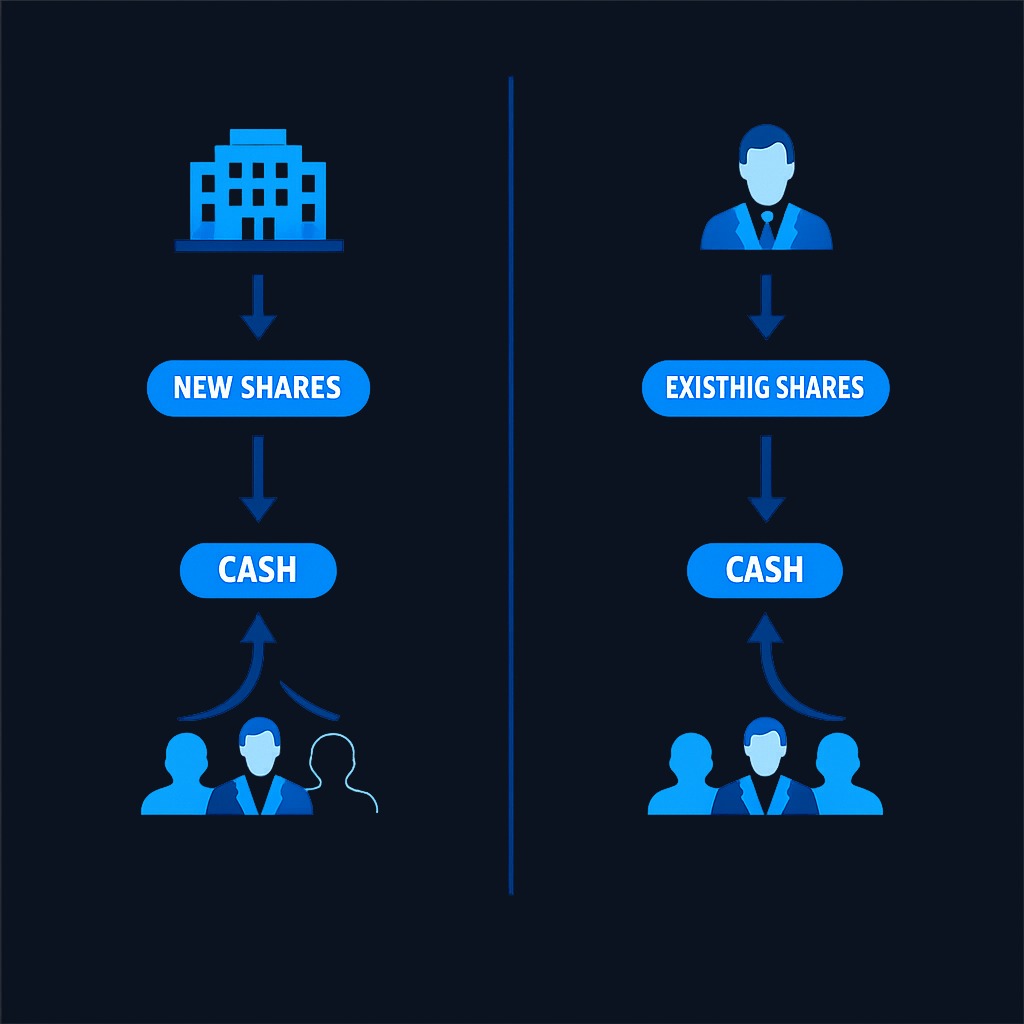
For everyday investors, the key detail is who receives the money. If the company sells new shares, the cash lands on the company's balance sheet to fund growth, pay down debt, or cover operations. If insiders or early backers sell, the money goes to those sellers, not the business.
Types of secondary offerings
There are two main types, and they affect shareholders very differently:
| Type | Who sells | New shares created? | Who gets the money |
|---|---|---|---|
| Dilutive (follow-on) offering | The company | Yes | The company |
| Non-dilutive offering | Existing shareholders | No | The selling shareholders |
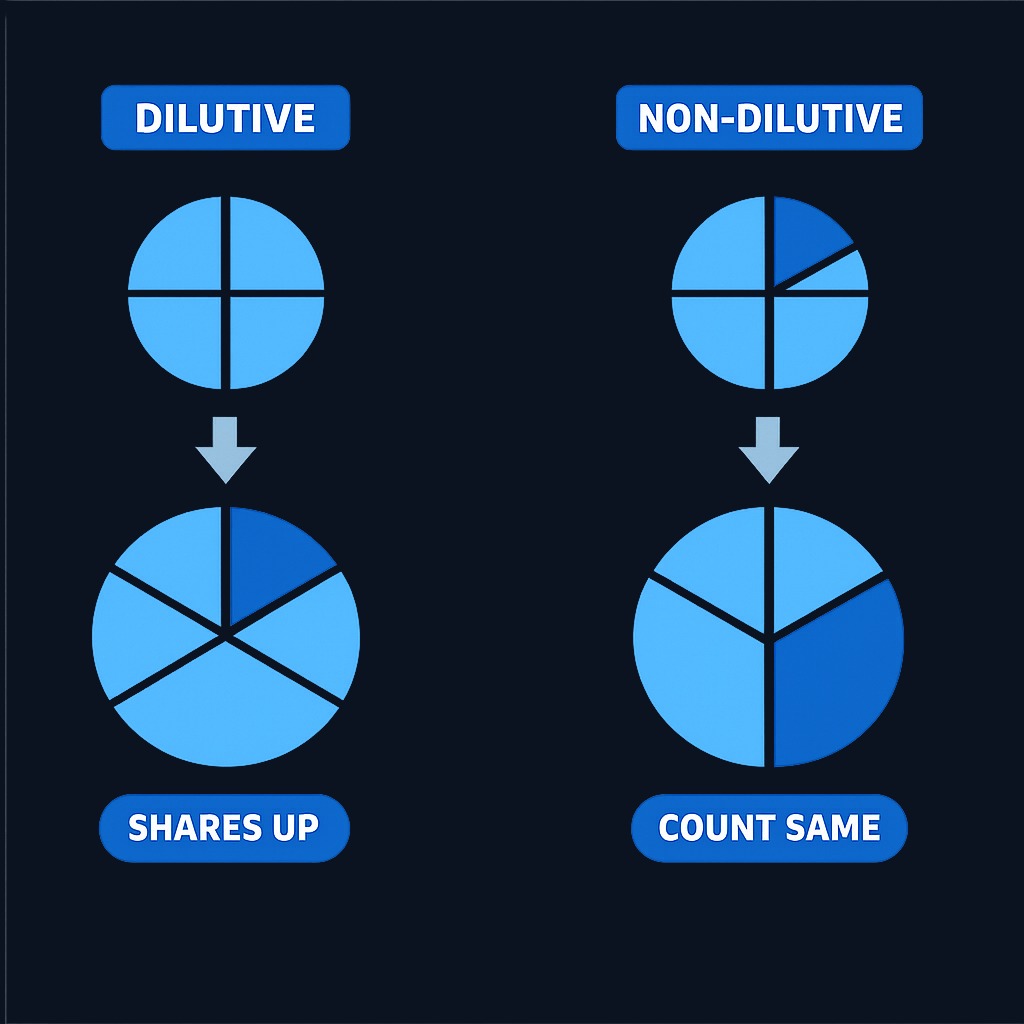
A dilutive follow-on offering increases the total share count. Each existing share then represents a smaller slice of the company, which is why the word "dilution" carries a negative tone for current holders. The trade-off is that the company gains capital that may fund future growth.
A non-dilutive offering leaves the share count unchanged. Founders, executives, or early investment funds simply sell part of their stake to the public. Ownership percentages of other holders stay the same, though a large insider sale can still raise questions about why insiders are cashing out.
How a secondary offering affects the stock price
Share prices often dip when a secondary offering is announced. Three forces are usually at work. First, supply increases: more shares chasing the same demand tends to push the market price down. Second, the offering is commonly priced below the last traded price, which anchors expectations lower. Third, investors read signals: a dilutive raise may suggest the company needs cash, while heavy insider selling may suggest reduced confidence.
The dip is not a law of nature. If investors believe the new capital will fund high-return projects, the stock can recover quickly or even rise. The reaction depends on why the company is raising money, market conditions, and how large the offering is relative to existing shares. A small sale by one early fund matters far less than a raise that expands the share count by a large percentage.
Practice trading with Finelo
Practice in a simulator, learn with bite-sized lessons, and build confidence before risking real money.
Regulatory considerations
Secondary offerings are regulated events. In the United States, they generally require a registration statement and a prospectus filed with the SEC, and you can read these documents yourself for free in the SEC's EDGAR database. The filings show who is selling, how many shares are involved, and how proceeds will be used. Companies that already report publicly can often use a streamlined shelf registration, which lets them prepare an offering in advance and launch it when conditions look right. Always read the offering documents; the "use of proceeds" section is short and tells you a lot.
Decision framework: how to judge a secondary offering
When an offering hits a stock you own or watch, run through four questions in order. First, is it dilutive or non-dilutive? Check whether new shares are being created. Second, how big is it? Compare the offered shares to the total share count; single-digit percentages are routine, larger raises deserve more scrutiny. Third, where does the money go? Growth projects read differently than plugging losses or funding insider exits. Fourth, what is the pricing discount? A steep discount to the market price can signal weak demand. Keep the offering prospectus open while you work through these questions; every answer is in the filing itself.
A worked example
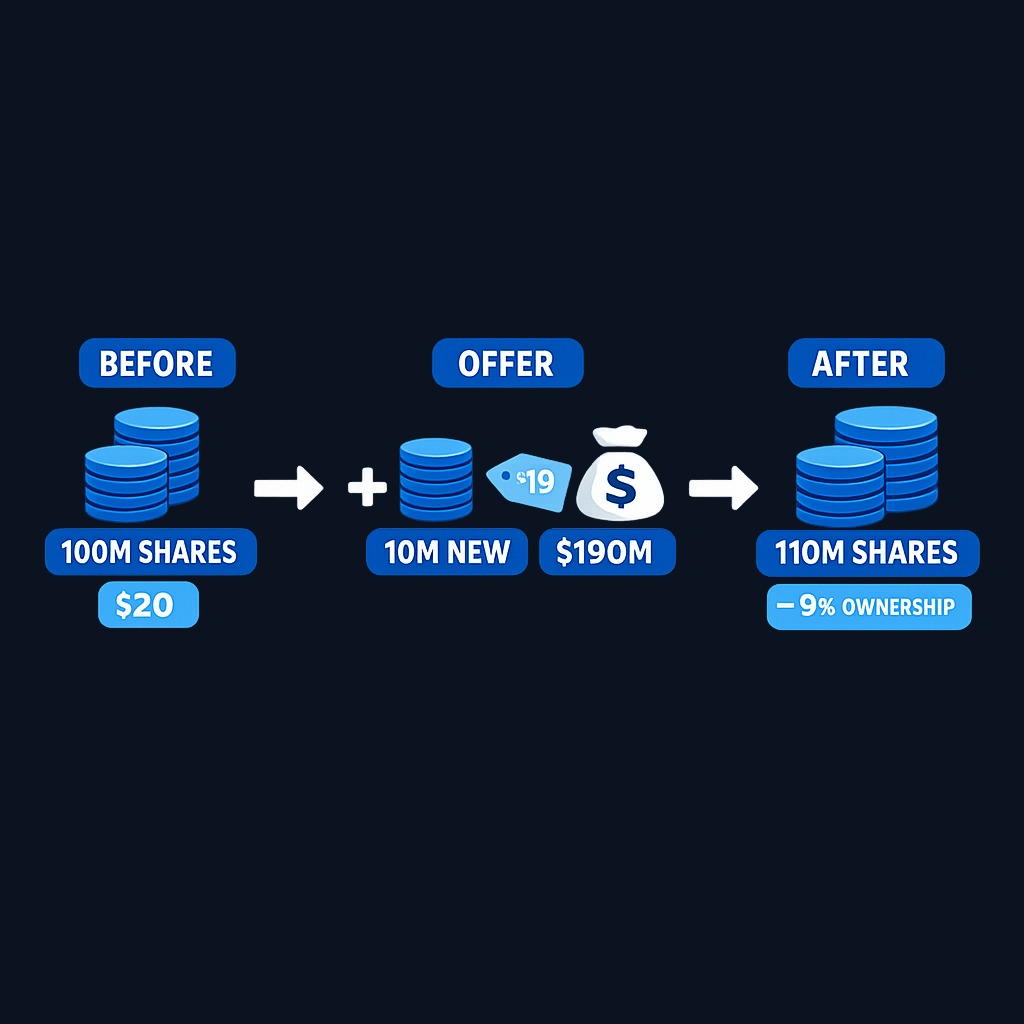
Imagine a company with 100 million shares outstanding trading at $20. It announces a follow-on offering of 10 million new shares priced at $19. After the sale, the share count is 110 million, so each old share owns about 9% less of the company than before. In exchange, the company banks roughly $190 million before fees. Whether that trade is good for you as a holder depends on what the money earns: if it funds projects that grow earnings faster than the dilution, the offering can build value; if it plugs ongoing losses, dilution may repeat. This is the core question to ask each time a secondary offer crosses your feed.
Conclusion and next steps
A secondary offering is a post-IPO sale of stock that either raises new capital for the company (dilutive) or lets existing holders sell (non-dilutive). Expect some price pressure, read the filing to see who gets the money, and judge the deal by what the proceeds will fund. Next step: pull up the most recent offering announcement from a stock you follow and identify its type, size, and use of proceeds.
Frequently asked questions
What is the difference between a secondary offering and an IPO?
An IPO is the first time a company sells shares to the public and lists on an exchange. A secondary offering happens later, once the stock already trades. IPOs create a public market for the stock; secondary offerings add shares or transfer existing ones within that market.
What is a follow-on offering?
A follow-on offering is the dilutive form of a secondary offering: the company itself issues brand-new shares after its IPO to raise additional capital. The share count rises, and the proceeds go to the business rather than to individual shareholders.
What are the risks associated with secondary offerings?
The main risks are dilution of your ownership stake, short-term price pressure from added supply, and negative signaling if insiders sell heavily. There is also execution risk: the market may not absorb the shares at the hoped-for price during weak conditions.
How can I participate in a secondary offering?
Most allocations go to institutional investors through the underwriters, but some brokers give retail clients access to offerings. In practice, most individual investors simply buy shares on the open market afterward. Check what your broker supports and read the prospectus first.
secondaryoffering
Practice trading with Finelo
Practice in a simulator, learn with bite-sized lessons, and build confidence before risking real money.
About the author
Finelo Team
The Finelo Team creates practical investing and trading education designed to help beginners learn faster with structured challenges, simulator practice, and bite-sized lessons.
Keep reading — Related articles

Trading
Understanding Walk Forward Analysis in Trading
Brief educational note: this article is educational — not investment advice — and trading involves the risk of loss.
Finelo Team
Trading
VWAP vs Moving Average: Formulas, Uses, and Limits
VWAP weights price by recorded volume over a defined period, while a moving average summarizes a sequence of prices over a rolling lookback.
Finelo Team
Trading
Volume Profile vs Market Profile: What Each Chart Measures
Volume Profile groups traded volume by price level.
Finelo Team