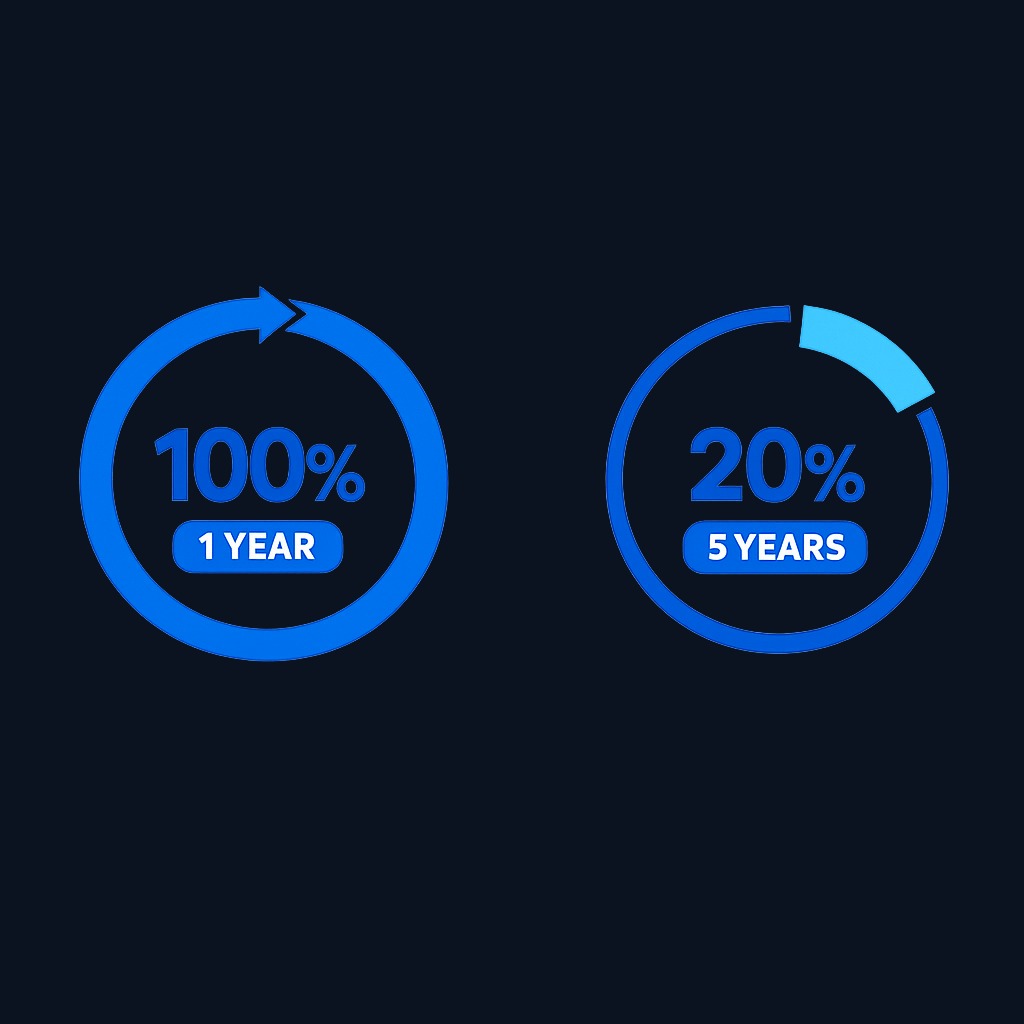
Portfolio turnover measures how often the holdings inside a fund or portfolio are bought and sold during a year. A turnover ratio of 100% means the fund replaced the equivalent of its entire portfolio within twelve months. A ratio of 20% means holdings changed slowly, with an average security kept for about five years.
What is Portfolio Turnover and Why Does It Matter?
Portfolio turnover measures how often the holdings inside a fund or portfolio are bought and sold during a year. A turnover ratio of 100% means the fund replaced the equivalent of its entire portfolio within twelve…
6 min read
Practice trading with Finelo
Practice in a simulator, learn with bite-sized lessons, and build confidence before risking real money.
Want to learn more?
Practice in a simulator, learn with bite-sized lessons, and build confidence before risking real money.
Explore FineloExplore Finelo's 28-day challenges
Turn learning into a daily habit with guided challenge paths.
Turnover matters because trading is not free. Every buy and sell carries costs, and in taxable accounts it can trigger tax bills too. This guide explains how the ratio is calculated, what it costs you, how it connects to strategy, and how to judge a fund's number in context. It is educational content, not financial advice, so verify any fund's figures in its official documents before investing.
How to calculate portfolio turnover
The standard formula takes the lesser of a fund's total purchases or total sales over a period, then divides it by the fund's average net assets:
Portfolio turnover = (lesser of purchases or sales) ÷ average net assets
Using the smaller of the two figures filters out flows caused by investors entering or leaving the fund, so the ratio reflects the manager's actual trading decisions. Funds report the number in their official shareholder documents, usually for each fiscal year.
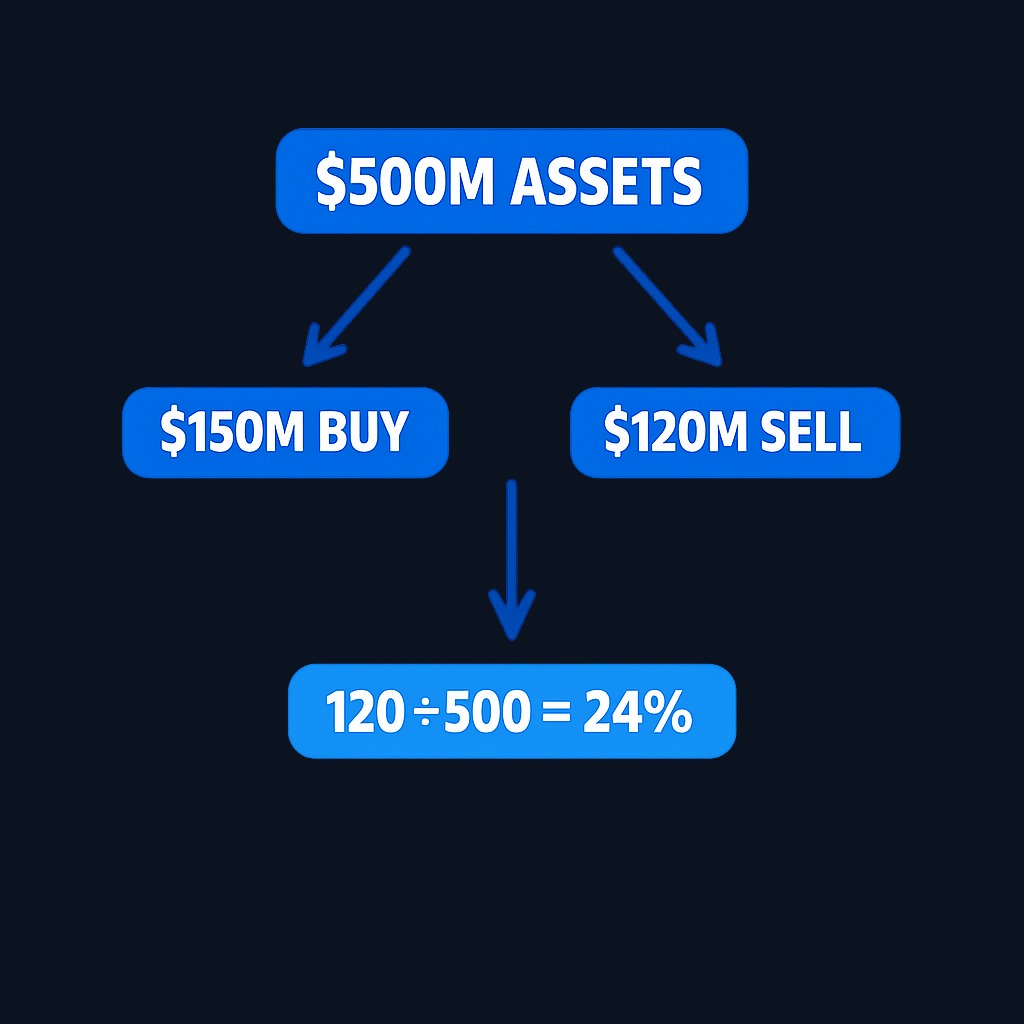
A quick example: a fund holds an average of $500 million in assets during the year. It bought $150 million of securities and sold $120 million. The lesser figure is $120 million, so turnover is 120 ÷ 500 = 24%. On average, the fund replaces roughly a quarter of its portfolio each year, implying a typical holding period of about four years.
Reading the number is straightforward:
- Under about 30%: patient, low-trading approach, common for index funds.
- Around 50-100%: moderate to active trading.
- Above 100%: the portfolio changes completely within a year, sometimes several times.
The impact of portfolio turnover on investment costs
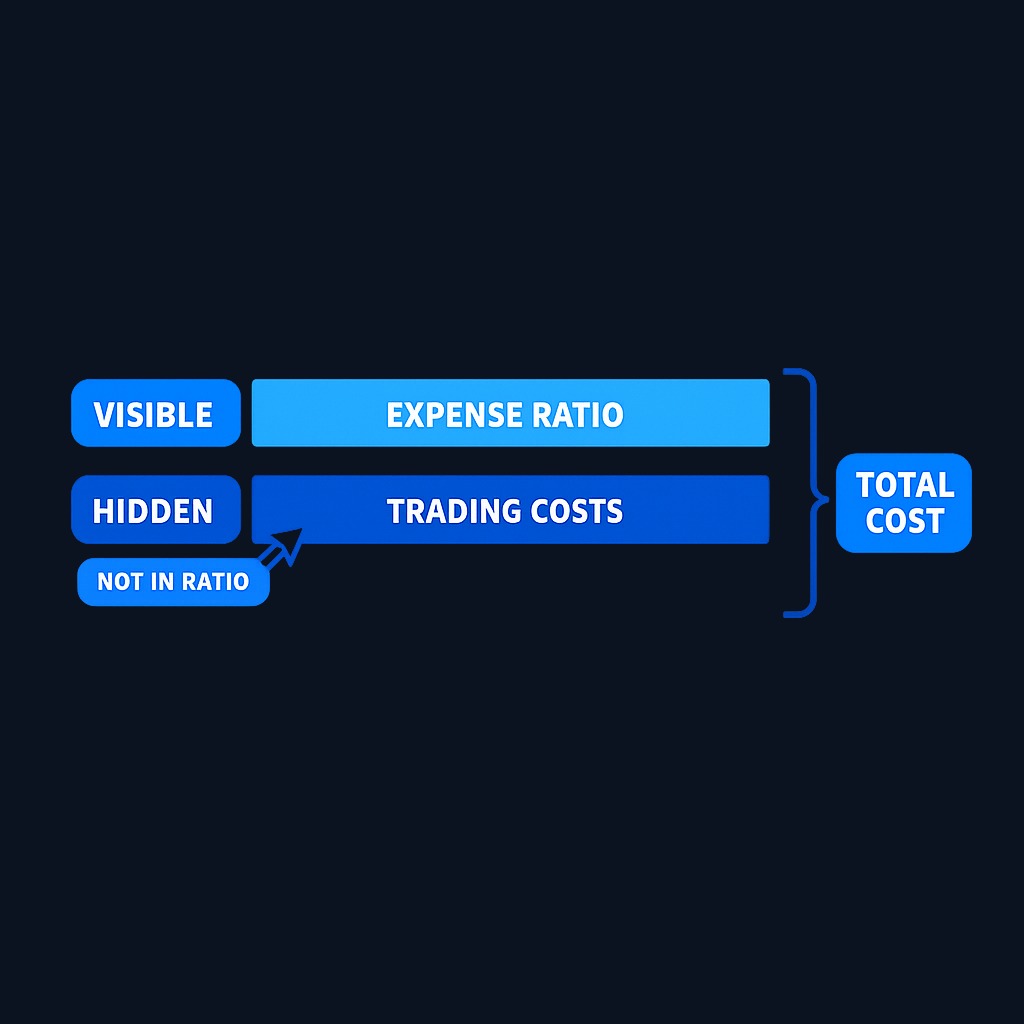
Turnover creates costs that never appear in a fund's expense ratio. Each trade pays a bid-ask spread, possible commissions, and market impact, which is the way large orders move prices against the buyer or seller. These frictions come straight out of fund returns before anything is reported to you.
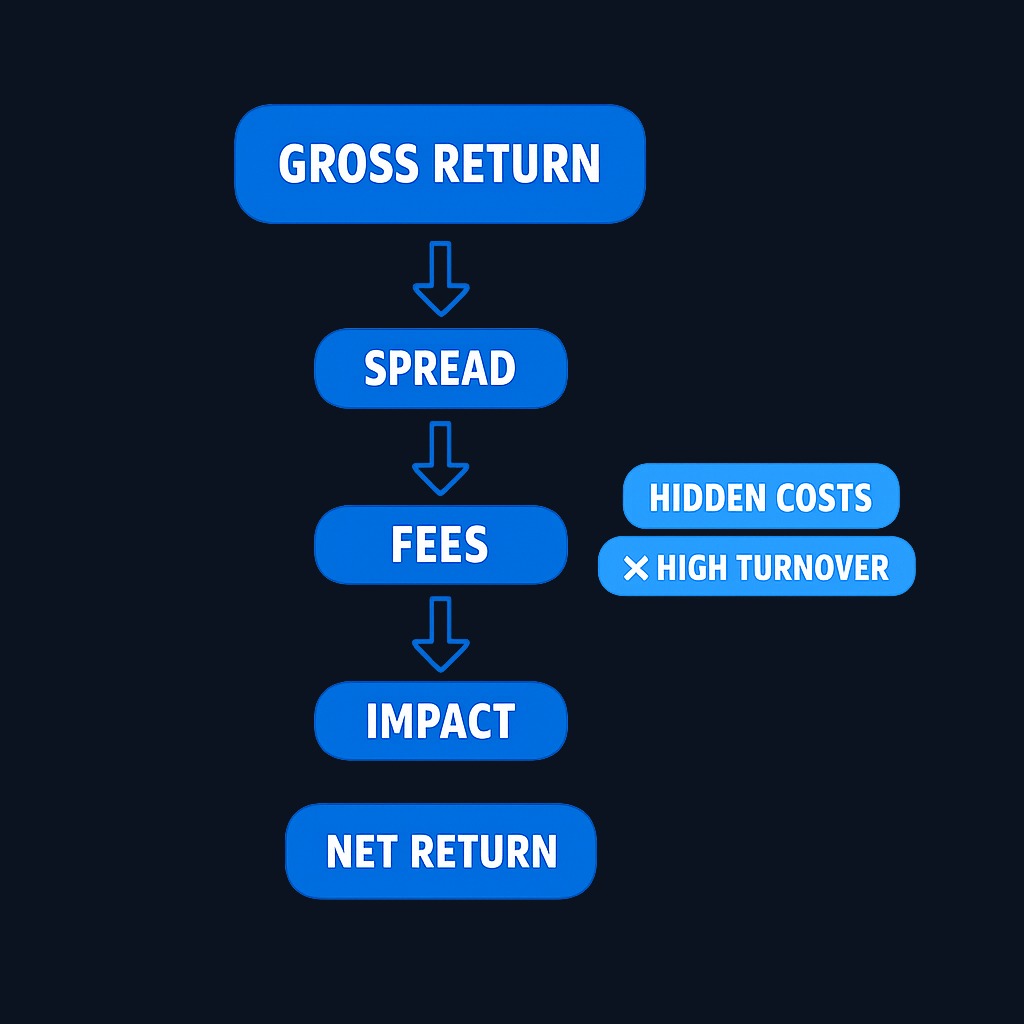
The individual costs look tiny. Repeated hundreds of times a year, they compound into a meaningful drag. A high-turnover fund must outperform a comparable low-turnover fund by the size of that drag just to break even. That is a real hurdle, and it rises with portfolio size, trade frequency, and the illiquidity of the assets traded.
This is one structural reason low-cost index funds are hard to beat: they keep both the visible expense ratio and the invisible trading drag small at the same time. An active fund can still justify high turnover, but only if its trading genuinely adds more value than it costs, year after year.
Portfolio turnover and investment strategies
Turnover is not a flaw; it is a fingerprint of the strategy.
- Index funds trade mainly when the index itself changes or to handle investor flows, so turnover stays low.
- Buy-and-hold and quality strategies aim to own businesses for years, keeping turnover modest.
- Value and contrarian strategies trade when prices cross their estimates of worth, producing moderate turnover.
- Momentum strategies must rotate into recent winners as rankings change, which forces high turnover by design.
- Quantitative and tactical strategies can rebalance monthly or faster, pushing turnover well past 100%.
So judge the number against the strategy, not in isolation. A momentum fund with low turnover is not following its own playbook. An index fund with high turnover deserves hard questions. The mismatch is the warning sign, not the level itself.
Practice trading with Finelo
Practice in a simulator, learn with bite-sized lessons, and build confidence before risking real money.
Tax implications of portfolio turnover
In taxable accounts, turnover has a second bill. Selling winners inside a fund realizes capital gains, and funds pass those gains to shareholders as taxable distributions, even if you never sold a share yourself. Frequent trading also tends to realize more gains as short-term, which many tax systems tax at higher rates than long-term gains. The IRS explains how capital gains and losses are categorized and offset in Topic 409, Capital Gains and Losses.
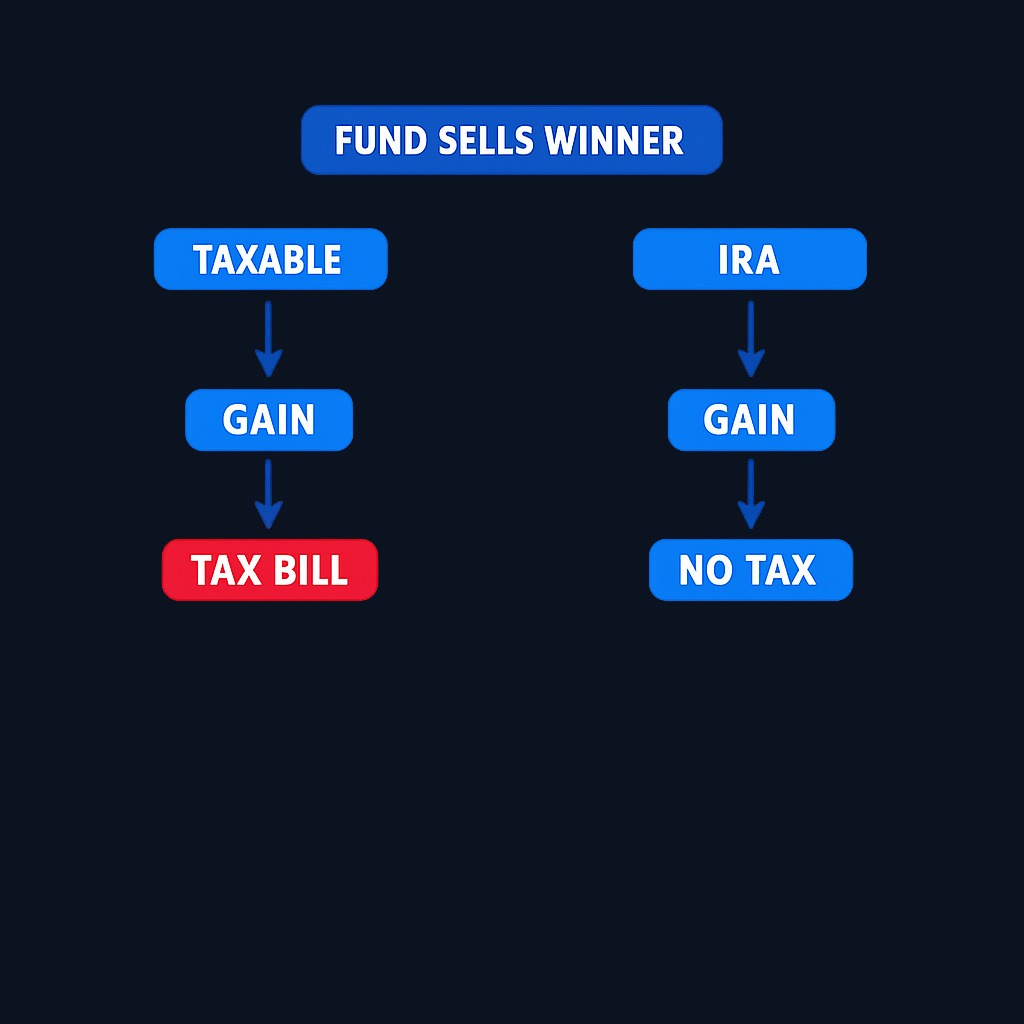
Practical consequences follow directly:
- In taxable accounts, prefer lower-turnover funds when comparing otherwise similar options; less realized gain means less annual tax drag.
- Hold higher-turnover strategies in tax-advantaged accounts where distributions do not create yearly tax bills.
- Check a fund's distribution history, not just its turnover ratio, since tax efficiency also depends on how the fund manages realized gains.
Tax rules differ by country and situation, so treat this as a map of the terrain rather than personal tax guidance.
Common misconceptions about portfolio turnover
"High turnover means a bad fund." Not necessarily. Some strategies require trading, and a few managers earn back their costs. The correct reading is that high turnover raises the bar the manager must clear, and most funds historically struggle to clear it consistently.
"Low turnover means nothing is happening." A patient fund is still making an active decision every day: the decision to keep holding. Low turnover usually signals conviction and cost discipline, not neglect.
"Turnover is included in the expense ratio." It is not. The expense ratio covers management fees and operating costs. Trading costs are separate, invisible, and often comparable in size for active funds.
"My own account has no turnover." Every investor has a personal turnover rate. Frequent tinkering with your own holdings creates the same spread costs and tax events a fund manager creates, without the institutional trading desk that softens them.
What to know before deciding
When you evaluate a fund, find its turnover ratio in the official fund documents and read it next to three companions: the expense ratio, the strategy description, and the after-tax return history if you will hold it in a taxable account. Compare the ratio only against funds running the same kind of strategy. Watch for trend changes too: a quiet fund that suddenly doubles its turnover may have changed managers or drifted from its mandate. For your personal portfolio, count your own trades for the past year. If your activity looks like a high-turnover fund without a strategy that demands it, the costs are yours too.
Conclusion and next steps
Portfolio turnover tells you how much a portfolio trades, and through that, how much invisible cost and potential tax drag it carries. Calculate it as the lesser of purchases or sales divided by average assets, judge it against the fund's strategy, and remember that every point of trading cost is a point the manager must earn back before you profit.
Next steps: look up the turnover ratio for each fund you own, then estimate your own personal turnover from last year's trades. If either number surprises you, you have found a cost worth managing. To build fluency with fund metrics like this one, Finelo offers step-by-step investing education designed for beginners.
Frequently asked questions
What is a good portfolio turnover ratio?
There is no universal target. Broad index funds often run well under 30%, patient active funds under 50%, and systematic strategies far higher. A ratio is good when it matches the fund's stated strategy and the fund's results justify its total costs.
How do I find a fund's turnover ratio?
Look in the fund's official shareholder documents, where the ratio is reported for each fiscal year, or on the fund company's website. Compare several years rather than one, since flows and market events can distort a single year.
Does portfolio turnover matter in a retirement account?
The tax consequences largely disappear in tax-advantaged accounts, but trading costs still reduce returns before taxes ever enter the picture. Lower friction helps in every account type; taxes simply raise the stakes in taxable ones.
Is portfolio turnover the same as rebalancing?
No. Rebalancing is periodic trading to restore target weights and usually produces modest turnover. A high turnover ratio reflects strategy-driven trading far beyond simple maintenance.
portfolioturnover
Practice trading with Finelo
Practice in a simulator, learn with bite-sized lessons, and build confidence before risking real money.
About the author
Finelo Team
The Finelo Team creates practical investing and trading education designed to help beginners learn faster with structured challenges, simulator practice, and bite-sized lessons.
Keep reading — Related articles
Trading
Understanding Walk Forward Analysis in Trading
Brief educational note: this article is educational — not investment advice — and trading involves the risk of loss.
Finelo Team
Trading
VWAP vs Moving Average: Formulas, Uses, and Limits
VWAP weights price by recorded volume over a defined period, while a moving average summarizes a sequence of prices over a rolling lookback.
Finelo Team
Trading
Volume Profile vs Market Profile: What Each Chart Measures
Volume Profile groups traded volume by price level.
Finelo Team