Last editorial review: September 8, 2026
Crypto Staking for Beginners: How It Works, Costs, Rewards, and Risks
Crypto staking means committing eligible cryptocurrency to help a blockchain validate transactions, usually in exchange for rewards; Fidelity describes it as a process used by blockchain…
12 min read
Practice investing with Finelo
Build practical investing skills with guided lessons, simulator practice, and structured challenges.
Want to learn more?
Build practical investing skills with guided lessons, simulator practice, and structured challenges.
Explore FineloExplore Finelo's 28-day challenges
Turn learning into a daily habit with guided challenge paths.
U.S. scope: This article discusses U.S. institutions, financial products, tax rules, and dollar examples unless stated otherwise. Rules and product terms may change; verify current official guidance for your situation.
Quick answer
Crypto staking means committing eligible cryptocurrency to help a blockchain validate transactions, usually in exchange for rewards; Fidelity describes it as a process used by blockchain networks such as Ethereum to validate transactions in return for a reward (Fidelity). In plain terms, staking is one way some crypto networks keep records accurate without traditional mining.
This guide is for beginners who want to understand what staking is, how it works, what can go wrong, and how to compare staking options before taking action. It is educational only, not financial or investment advice. Crypto assets can lose value, and staking rewards do not remove market, liquidity, technical, or platform risk.
What is crypto staking?
Crypto staking is the process of using eligible cryptocurrency to support transaction validation on a blockchain network in exchange for potential rewards. Fidelity explains that staking and crypto mining are both ways to validate blockchain transactions, though they are different methods (Fidelity).
A simple analogy helps: imagine a blockchain as a shared record book. Instead of one company maintaining that book, the network relies on participants to help confirm activity. In staking, participants commit crypto to the network’s validation process. If the process works correctly, stakers may receive rewards.

That does not mean staking is the same as a bank account. The staked asset can still move in price. A reward paid in crypto may be worth more or less by the time you receive or sell it. The practical question is not only “What reward can I earn?” It is also “What risks am I taking to earn it?”
Staking matters because it connects individual asset holders to blockchain operations. For some users, it is a way to participate more actively in a network. For others, it is simply a way to seek additional crypto-denominated rewards while holding an asset they already own.
How does crypto staking work?
At a high level, staking has three moving parts: the asset, the network, and the validation process. The asset must be eligible for staking on its blockchain. The network uses staking as part of its transaction validation design. The participant either validates directly or uses another staking method.
The word “validator” often appears in staking discussions. A validator is the participant, service, or node involved in confirming network activity. Beginners do not need to run technical infrastructure to understand the core idea: staking connects committed assets with the network’s process for confirming transactions.
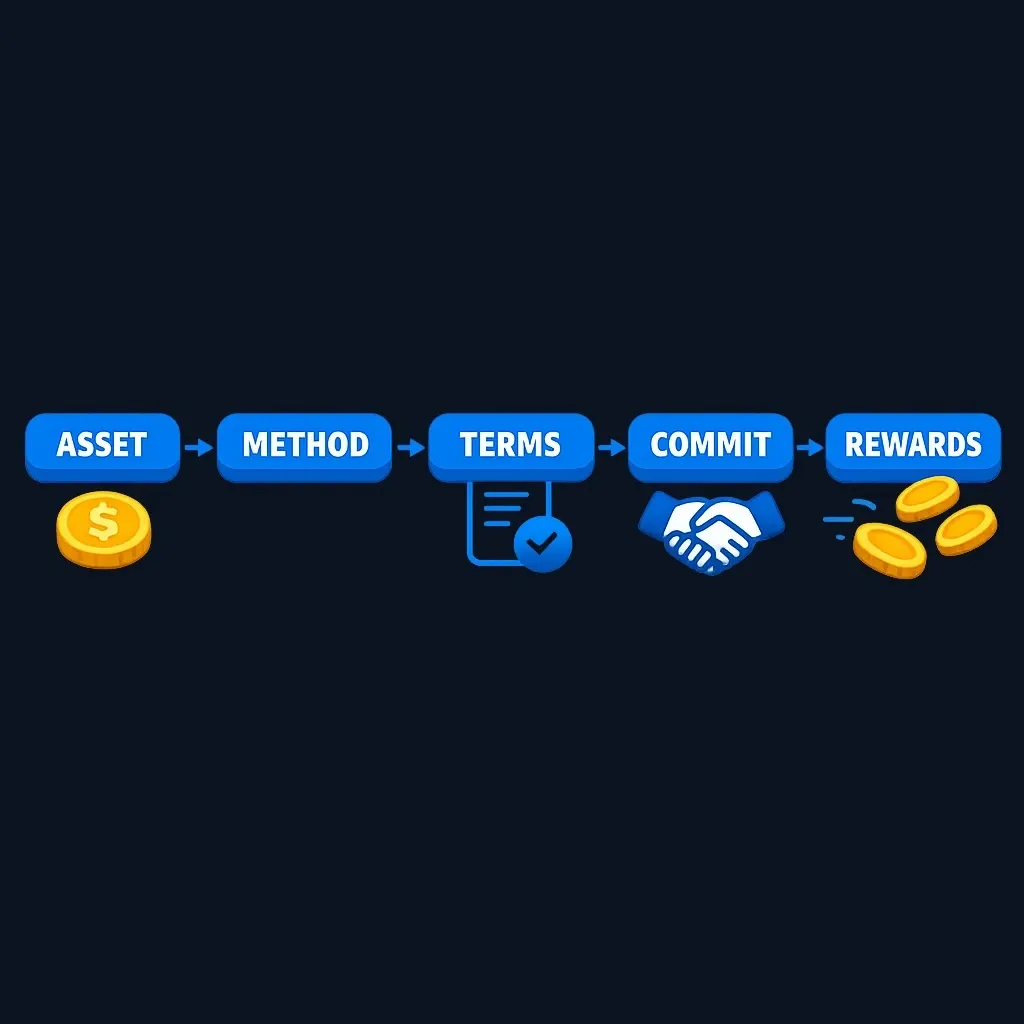
A basic staking flow looks like this:
- You identify a crypto asset that supports staking.
- You choose a staking method.
- You review the reward structure, lock-up terms, fees, and risks.
- You commit the asset through the chosen route.
- Rewards, if earned, are distributed according to that route’s rules.
The most important detail is that rewards are not the whole story. A higher advertised reward can come with higher uncertainty, less flexibility, or more operational risk. A lower reward with clearer terms may be more appropriate for someone who values simplicity and access.
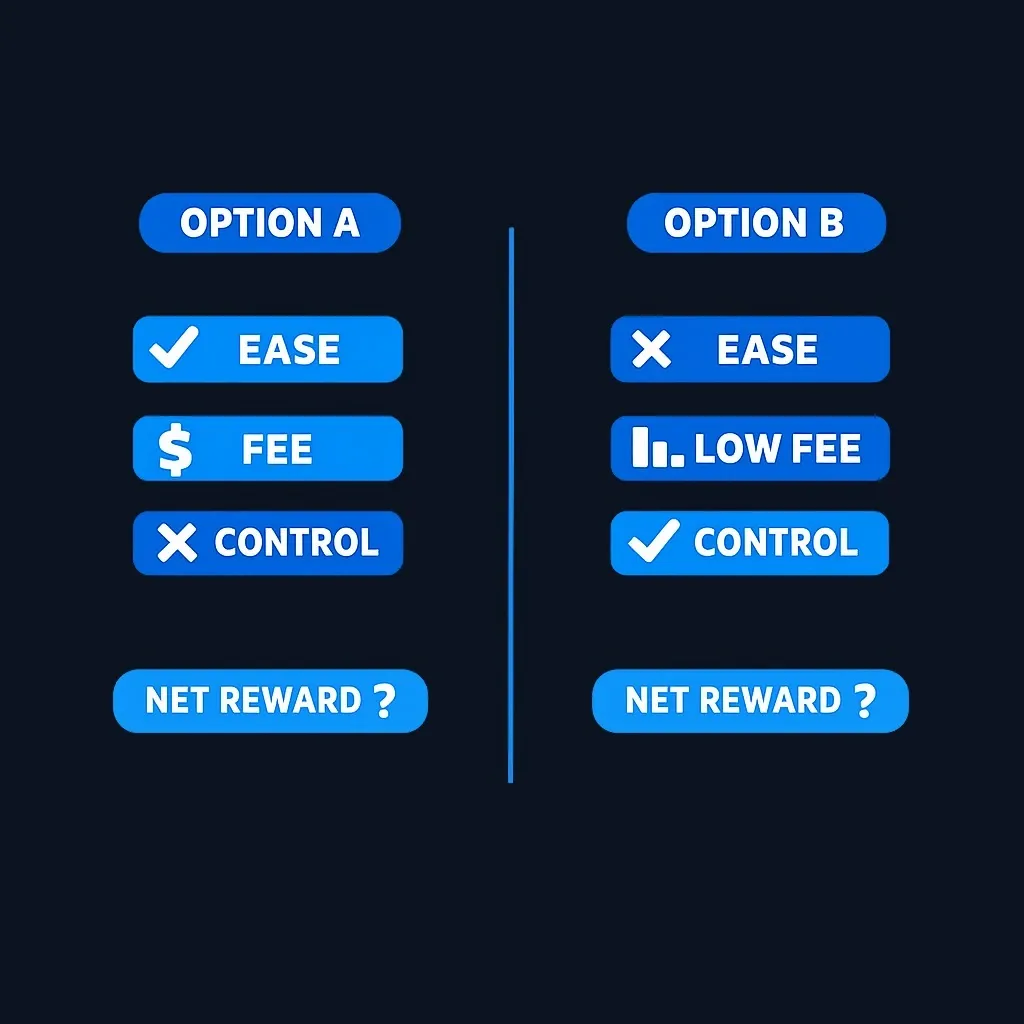
Here is a practical example. Suppose two staking options both involve the same asset. Option A offers easier setup through a platform but charges a fee. Option B gives more control but requires more technical responsibility. The right comparison is not only the reward rate. It is the net reward after fees, the time your assets may be unavailable, the reliability of the setup, and your comfort with managing mistakes.
Types of crypto staking
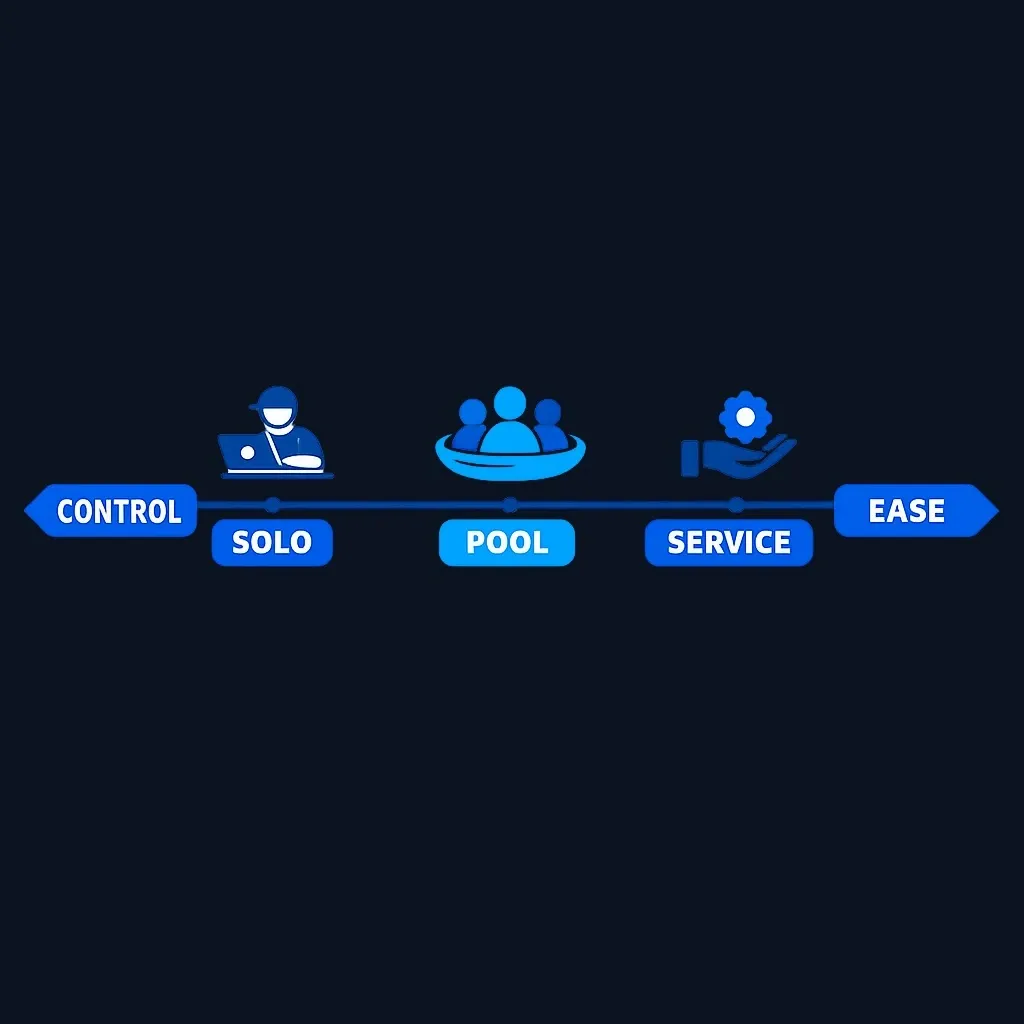
Fidelity lists several common ways to participate in staking, including solo crypto staking, staking as a service, and pooled crypto staking (Fidelity). These categories are useful because they show the main tradeoff: control versus convenience.
Solo staking
Solo staking means participating more directly. This route tends to appeal to experienced users who want control and are comfortable with technical setup, security, and ongoing maintenance.
The benefit is independence. The tradeoff is responsibility. If you do not understand wallets, keys, uptime, and network-specific rules, solo staking can be an unforgiving first step.
Pooled staking
Pooled staking combines assets from multiple participants. This can make staking more accessible for users who do not want to operate everything themselves.
The main appeal is practicality. The tradeoff is that you rely on the pool’s structure, fees, and performance. Before using a pool, examine who operates it, how rewards are distributed, and what happens if you want to exit.
Staking as a service
Staking as a service means a provider handles much of the operational work. This can be simpler for beginners, but simplicity can create blind spots.
You still need to understand custody, fees, withdrawal conditions, platform risk, and how rewards are calculated. A convenient interface does not make the underlying asset risk-free.
What to know before deciding
Staking is easiest to evaluate when you separate four questions: asset risk, reward quality, access to funds, and operational risk. Many beginners focus only on the headline reward. That is usually the least complete way to compare options.
Benefits of crypto staking
The most obvious benefit is the potential to receive staking rewards. Fidelity defines staking as transaction validation in exchange for a reward, which is the core reason many holders explore it (Fidelity).
Staking can also make holding an asset more active. Instead of simply storing crypto in a wallet, the holder may participate in a network function. For people who believe in a specific blockchain’s long-term use, that participation can feel more aligned than passive holding.
Another benefit is that staking options vary by complexity. Some users want hands-on control. Others prefer a simpler route. Because common methods include solo staking, pooled staking, and staking as a service, readers can compare approaches instead of treating staking as one single product (Fidelity).
Risks of crypto staking
The main risk is that staking rewards are paid around a volatile asset. If the asset price falls sharply, rewards may not offset the decline. This matters because the reward is only one part of total outcome.
Liquidity is another key issue. Some staking arrangements may limit when or how quickly you can access assets. Before staking, check whether unstaking is instant, delayed, restricted, or subject to network conditions.
Operational risk also matters. With self-managed staking, mistakes can come from setup, wallet security, or misunderstood network rules. With a service or pool, you add counterparty risk because someone else helps operate the process.
Fees can quietly reduce returns. A headline reward may look attractive, but the useful comparison is the reward after fees, delays, and any spread between when rewards are earned and when they become usable.
U.S. tax and reporting checkpoint
Staking rewards and later dispositions can create U.S. federal tax-reporting obligations. The IRS digital-assets page identifies rewards and staking activity in its reporting guidance and should be checked for the applicable tax year (IRS). Timing, valuation, basis, disposition, and state-tax treatment can require individualized analysis; a platform tax form may not capture every reporting obligation.
Long-term implications for asset value
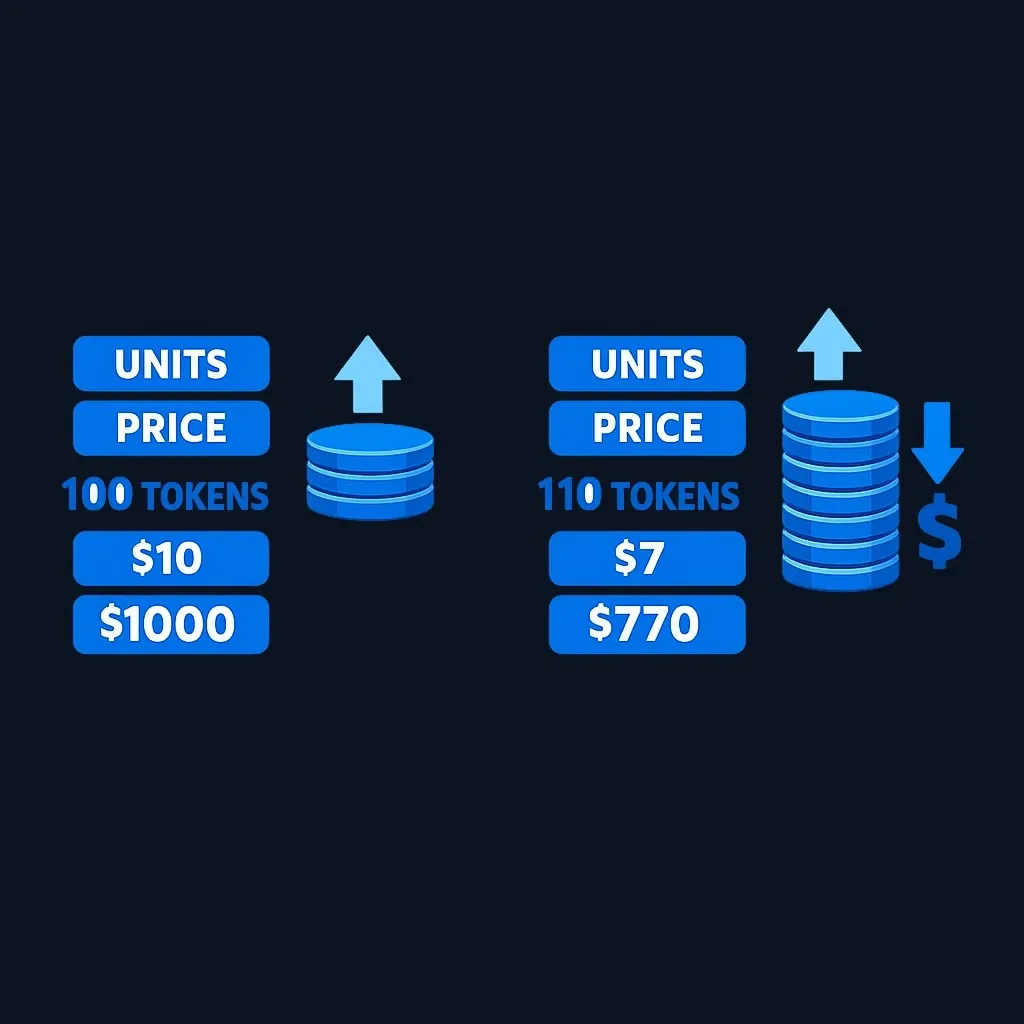
Staking can change how you experience an investment. If you receive rewards, your crypto balance may grow. But the value of that balance still depends on the market price of the asset.
A useful mental model is “units versus value.” Staking may increase the number of units you hold. It does not guarantee those units will be worth more in your local currency. This distinction helps avoid a common mistake: confusing more tokens with a better overall result.
Decision framework
Use this framework before choosing a staking asset, method, or platform. It is designed for beginners who want a practical checklist, not a technical audit.
Compare staking options by tradeoff, not just reward
Fidelity identifies solo staking, staking as a service, and pooled staking as common participation methods (Fidelity). The table below shows how to compare them without relying on headline rewards alone.
| Staking route | Better fit when | Main tradeoff | Questions to ask first |
|---|---|---|---|
| Solo staking | You want maximum control and can handle technical responsibility | More setup and ongoing responsibility | Do I understand the network rules, wallet security, and maintenance needs? |
| Pooled staking | You want access without managing everything alone | Dependence on pool rules and operator quality | How are rewards, fees, and exits handled? |
| Staking as a service | You value convenience and guided setup | Dependence on a provider | Who controls the assets, what fees apply, and how does unstaking work? |
This is also the right way to compare staking rewards across platforms. Do not compare only the displayed percentage. Compare the asset, lock-up terms, fees, custody model, reward frequency, unstaking process, and risks. A lower-looking reward can be more suitable if the terms are clearer and the liquidity fits your needs.
A beginner-friendly scoring checklist
Before staking, give each option a simple score from 1 to 5 in these areas:
- Asset conviction: Do you understand why you hold this asset beyond the staking reward?
- Liquidity fit: Can you tolerate delays or limits before accessing the asset?
- Fee clarity: Can you explain every fee in plain language?
- Operational comfort: Do you understand what can go wrong?
- Custody comfort: Are you clear on who controls the asset during staking?
- Exit plan: Do you know what would make you unstake?
If an option scores poorly on liquidity, custody, or operational comfort, pause before focusing on reward. Those categories often create the most painful surprises.
What is the best cryptocurrency to stake?
There is no universal “best” cryptocurrency to stake. A better question is: which eligible asset already fits your risk tolerance, time horizon, and understanding?
Starting with the reward rate can lead to poor decisions. A high reward on an asset you do not understand may be less attractive than a lower reward on an asset whose risks you can explain. For beginners, the strongest filter is comprehension: if you cannot describe how the asset, staking method, fees, and exit process work, it is too early to stake.
Common mistakes to avoid
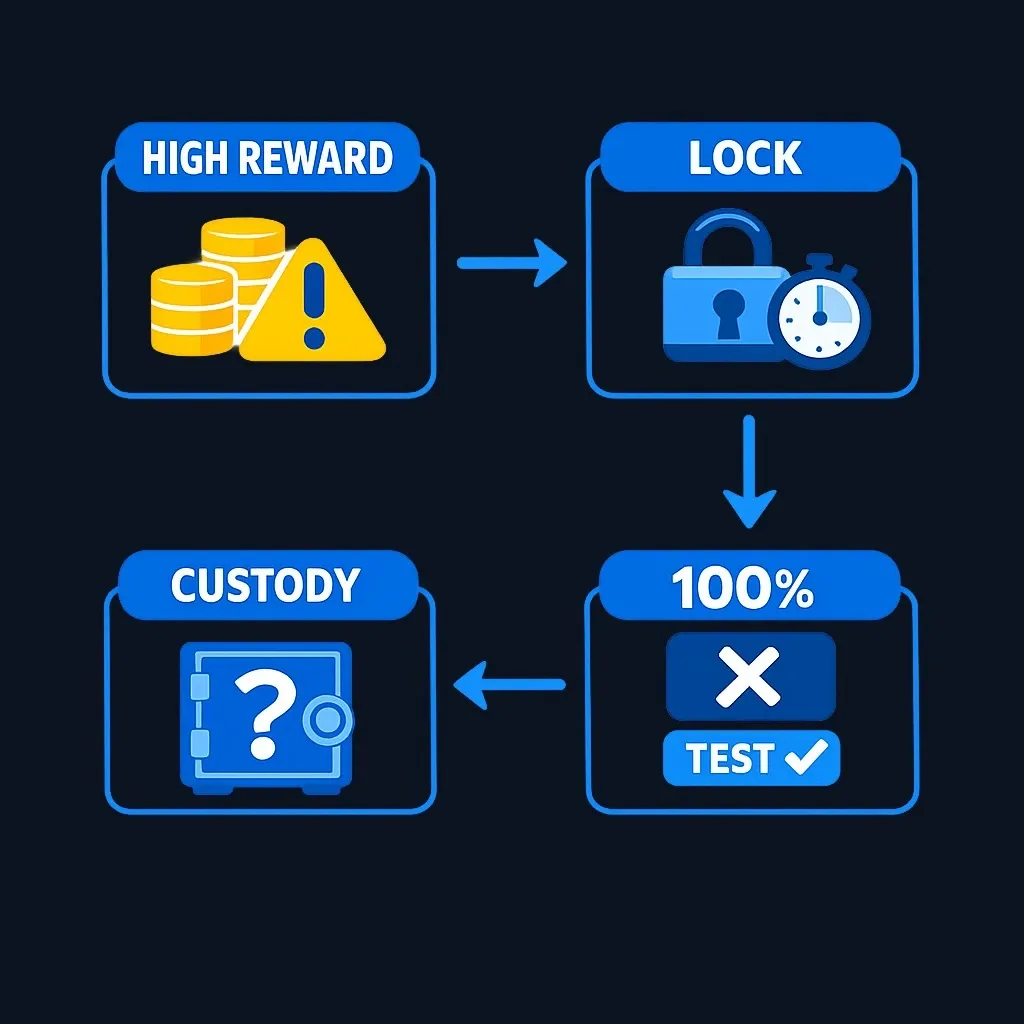
The first mistake is staking only because the reward looks high. Rewards are not the same as profit, and crypto prices can move against you.
The second mistake is ignoring unstaking rules. Always know whether access is immediate, delayed, or conditional before committing assets.
The third mistake is using a platform without understanding custody. Ask whether you remain in control of the asset, whether a provider controls it, or whether the arrangement uses another structure.
The fourth mistake is staking your entire position at once. A smaller test can reveal how rewards, fees, reporting, and withdrawals actually work before you commit more.
Practice investing with Finelo
Build practical investing skills with guided lessons, simulator practice, and structured challenges.
How to start staking your crypto
Start slowly. Your first goal is not to maximize rewards. It is to understand the process well enough to avoid basic mistakes.
Step 1: Confirm the asset supports staking
Not every cryptocurrency can be staked. Staking applies to networks that use staking as part of transaction validation, such as Ethereum and other cryptocurrencies referenced by Fidelity’s staking overview (Fidelity).
If you already own crypto, check whether that specific asset is eligible for staking through the route you plan to use. If you do not own it yet, avoid buying only because staking is available.
Step 2: Choose your staking method
Decide whether you want solo staking, pooled staking, or staking as a service. Fidelity identifies these as common staking methods (Fidelity).
For beginners, the choice often comes down to control versus convenience. More control usually means more responsibility. More convenience usually means more reliance on another party.
Step 3: Read the terms before committing
Review the reward calculation, fees, lock-up or unstaking terms, custody model, and risks. If any term is unclear, slow down.
A good test is whether you can explain the staking arrangement to someone else in two minutes. If you cannot, you may not understand it well enough to use it.
Step 4: Start with a small amount
A small test helps you learn how the interface, reward timing, and exit process work. It also reduces the cost of early mistakes.
Track what happens after you stake. Note when rewards appear, whether fees apply, and how easy it is to view or change your position.
Step 5: Reassess regularly
Staking is not a set-and-forget decision. Revisit the asset, the method, the provider, and your liquidity needs.
If your reason for holding the asset changes, your reason for staking it may change too. The staking reward should not override your broader risk view.
FAQ
What is the best answer for “crypto staking”?
Crypto staking is committing eligible cryptocurrency to help a blockchain validate transactions, usually in exchange for rewards. Fidelity describes staking as a transaction validation process used by blockchain networks such as Ethereum in return for a reward (Fidelity).
Can I unstake my assets at any time?
It depends on the asset, network, and staking method. Before staking, check the exact unstaking rules, including whether access is immediate, delayed, restricted, or affected by provider terms.
What are the risks of staking?
Key risks include asset price declines, reduced liquidity, fees, technical mistakes, and reliance on a pool or service provider. The reward can help increase your crypto balance, but it does not remove the risk that the asset’s market value falls.
How do I start staking my crypto?
First confirm the asset supports staking, then choose a method such as solo staking, pooled staking, or staking as a service; Fidelity lists these as common staking routes (Fidelity). Review fees, custody, reward rules, and unstaking terms before committing funds.
Conclusion and next steps
Crypto staking can be useful for people who want to participate in blockchain transaction validation and potentially receive rewards. It can also create risks that beginners often underestimate, especially around liquidity, custody, fees, and asset price movement.
A research next step is to compare the asset, staking method, custody, tax reporting, fees, and exit process side by side. If any element is unclear, pause before committing assets and verify it with the network or provider's official documentation.
Sources and Further Verification
More from Finelo
- Art Investing for Beginners: Costs, Liquidity, Valuation, and Risks
- Business Development Companies: Yields, Fees, Risks, and How to Evaluate BDCs
- Currency-Hedged ETFs: Costs, Risks, and When Hedging May Fit
Disclaimer
This article is provided by Finelo for educational and informational purposes only. Finelo does not provide financial, investment, tax, legal, or insurance advice. Consider your circumstances and consult an appropriately qualified professional before making financial decisions.
InvestingBeginner GuideFinancial Education
Practice investing with Finelo
Build practical investing skills with guided lessons, simulator practice, and structured challenges.
About the author
Finelo Team
The Finelo Team creates practical investing and trading education designed to help beginners learn faster with structured challenges, simulator practice, and bite-sized lessons.
Keep reading — Related articles

Investing
Yield to Call vs Yield to Maturity: Assumptions and Bond Risks
Yield to call (YTC) estimates a bond's yield if the issuer redeems it on an eligible call date; yield to maturity (YTM) estimates yield if it remains outstanding to final maturity.
Finelo Team

Investing
Will My Employer Know If I Take a 401(k) Loan?
Who this page is for: readers new to 401(k) loans who want a practical, privacy‑focused explanation — what your employer can see, how to limit visibility, and the financial tradeoffs to weigh.
Finelo Team

Investing
What Medical Expenses Qualify for a 401(k) Hardship Withdrawal?
Before you decide, confirm three things with your plan administrator:
Finelo Team