Wednesday night staged the cleanest experiment the AI trade has ever run. Two of the world's biggest AI spenders reported earnings within hours of each other. One stock sank more than 11% in extended trading. The other jumped as much as 9%.
Microsoft Stock Jumps as Azure Revenue Tops $100 Billion — the Earnings Night That Split the AI Trade
Microsoft shares rose as Azure surpassed $100 billion in annual revenue and contracted business surged. Here's why the market rewarded its huge AI bill.
4 min read
Practice trading with Finelo
Practice in a simulator, learn with bite-sized lessons, and build confidence before risking real money.
Want to learn more?
Practice in a simulator, learn with bite-sized lessons, and build confidence before risking real money.
Explore FineloExplore Finelo's 28-day challenges
Turn learning into a daily habit with guided challenge paths.
Meta was the first. Microsoft was the second — and the difference between them answers the question that has haunted markets all month.
Microsoft's night, by the numbers
Microsoft beat expectations across the board in its fiscal fourth quarter, per CNBC and analyst summaries:
- Azure, its cloud business, surpassed $100 billion in annual revenue for the first time — with quarterly Azure growth still running around 40%+ at that enormous scale.
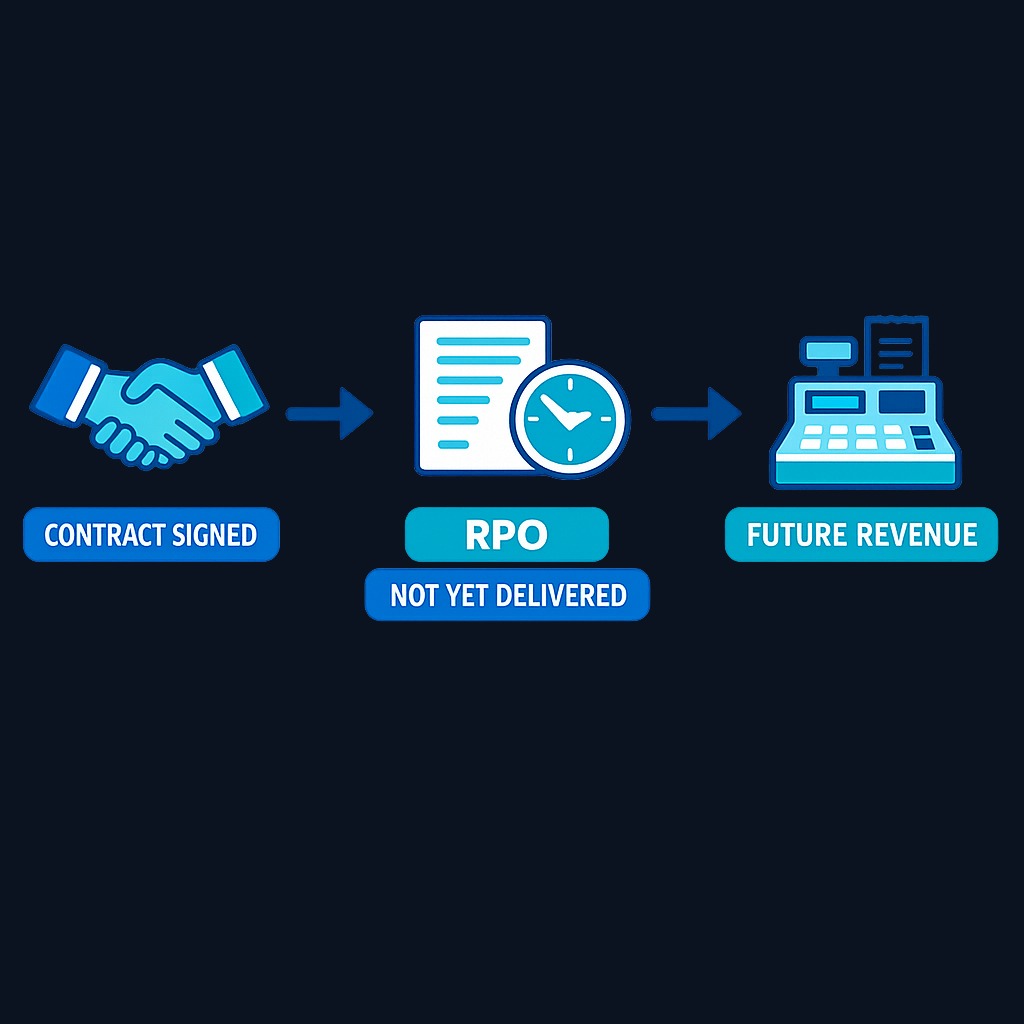
- Commercial remaining performance obligations — contracted future revenue not yet delivered — surged 84%, meaning customers have signed up for far more cloud and AI services than Microsoft has even billed yet.
- Microsoft stock (MSFT) rose sharply after hours, with gains reported between 4% and 9% as the results sank in.
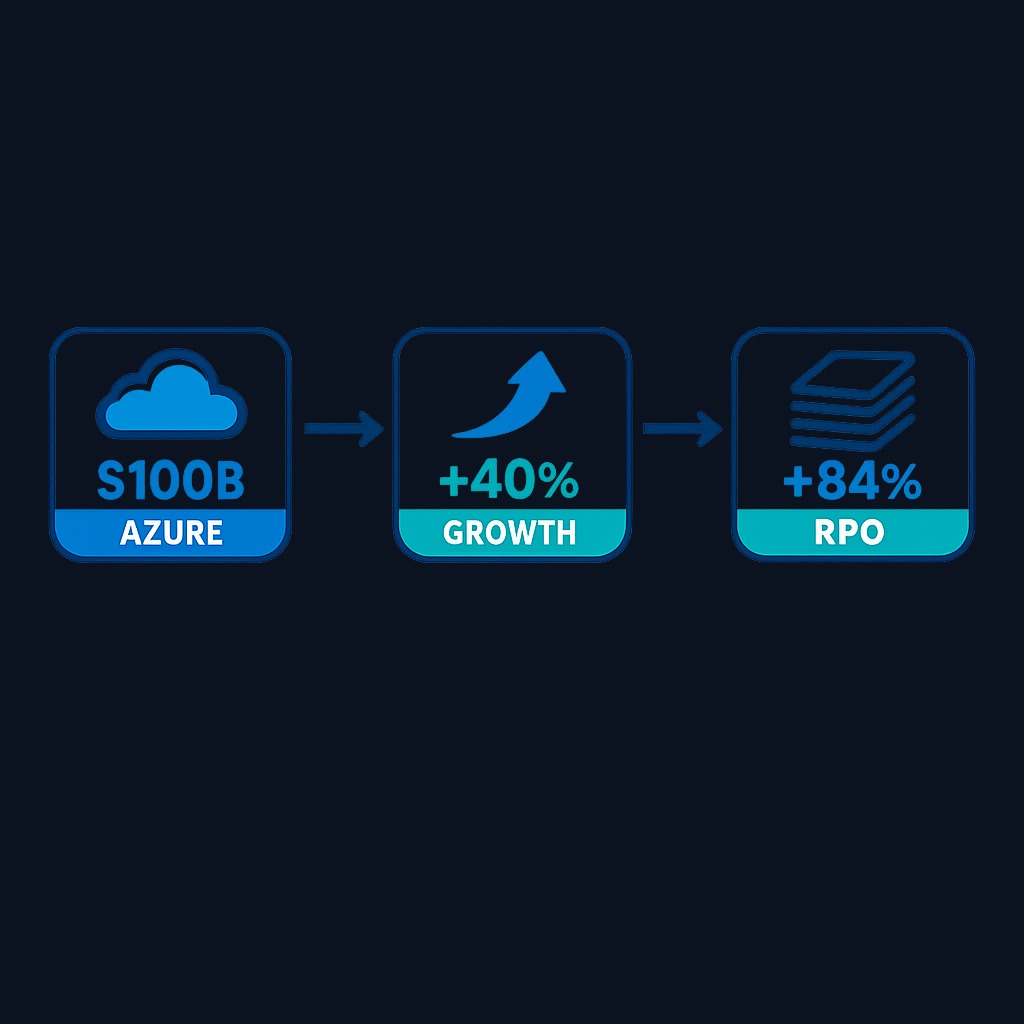
And here's the detail that makes the market's reaction remarkable: Microsoft is not spending less than its peers. Its capital spending guidance for the coming fiscal year is reported around $255–260 billion — roughly double Meta's. The market cheered anyway.
Practice trading with Finelo
Practice in a simulator, learn with bite-sized lessons, and build confidence before risking real money.
The lesson: markets don't hate AI spending. They hate spending without receipts.
All month, the AI selloff has been framed as investors turning against the cost of the boom — Korea's crash, the Nvidia circular-financing worries, Meta's double-digit drop after raising its budget. Microsoft just showed the other side of the trade.
The difference isn't the size of the bill. It's the visibility of the return. Azure crossing $100 billion is a receipt: proof that the data centers being built are filling up with paying customers. The 84% jump in contracted future revenue is a stack of receipts for next year. When Meta raises its spending, investors see costs today and promised benefits someday. When Microsoft raises its spending, investors see a cloud business already converting that capacity into nine-figure daily revenue.
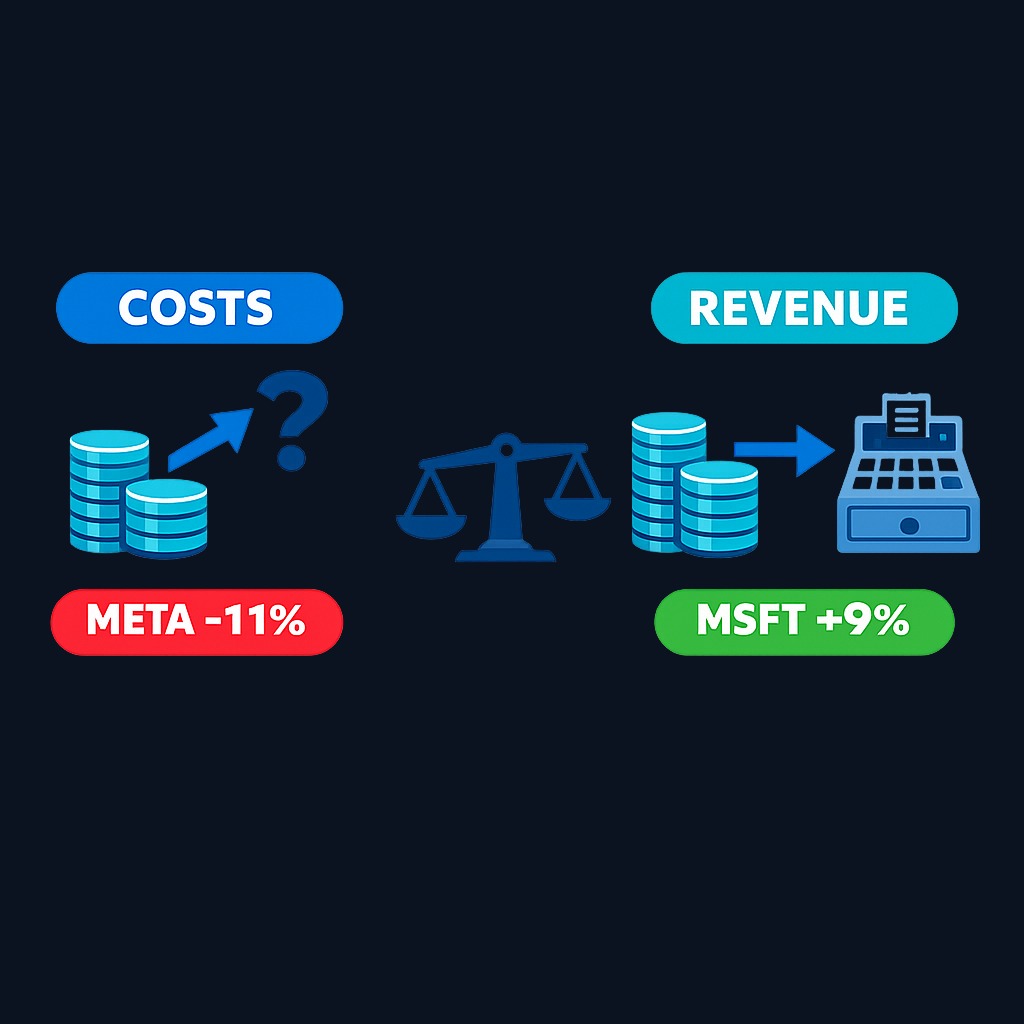
Same boom, same night, same kind of spending — opposite verdicts. Expectations and evidence, not enthusiasm, set the price.
Why this matters to YOU
This is how the AI shakeout will work. The market is no longer buying "AI" as one trade. It's separating companies that can show revenue from their AI investments from companies still asking for patience. Expect every earnings report to be graded on this curve now.
"RPO" is worth knowing. Remaining performance obligations — contracted business not yet delivered — is one of the most honest forward-looking numbers in any earnings report, much harder to dress up than "guidance." An 84% surge is why professionals reacted faster than headlines did.
Index-fund holders: this tug-of-war is inside your portfolio. Microsoft, Meta, Apple, and Nvidia are the giants of every broad index. Nights like Wednesday — one up 9%, one down 11% — partially cancel out at the index level, which is precisely the diversification argument working as intended.
The other half of Wednesday night — the Fed's three-dissent hold and Meta's report — is here: Fed Rate Decision and Meta Earnings. Apple reports tonight, completing the week's Big Tech scorecard.
Finelo does not provide investment advice. This article is for informational and educational purposes only.
Sources: CNBC — Microsoft Q4 results, TradingKey — beat details and share reaction, TradingKey — Azure and RPO figures
Frequently asked questions
How much annual revenue did Microsoft Azure reach?
Azure surpassed $100 billion in annual revenue for the first time, while quarterly growth remained around 40% at that scale.
What are remaining performance obligations?
RPO represents contracted future revenue that has not yet been delivered or recognized, making it a useful measure of business already signed for future periods.
Why did investors reward Microsoft despite high AI spending?
Azure revenue and an 84% increase in contracted future business gave investors visible evidence that Microsoft's data-center investment is already producing demand.
MicrosoftAzureAIcloud computingearningscapital spending
Practice trading with Finelo
Practice in a simulator, learn with bite-sized lessons, and build confidence before risking real money.
About the author
Finelo Team
The Finelo Team creates practical investing and trading education designed to help beginners learn faster with structured challenges, simulator practice, and bite-sized lessons.
Keep reading — Related articles

News
U.S. Gas Prices Reach $4.46: What the Increase Means for Inflation and Household Costs
The EIA's U.S. all-grades gasoline average reached $4.455 per gallon. See what changed, why regions differ and how fuel prices affect inflation.
Finelo Team
News
China Sets a Stronger Yuan Fix at 6.7521: What It Means for USD/CNY
China set its September 18 yuan reference rate at 6.7521 per dollar. Learn how the official fixing differs from market rates and why the move matters.
Finelo Team
News
BOJ Raises Its Policy Rate to 1.25%: What the Decision Means for the Yen
The BOJ raised its overnight policy-rate target to around 1.25%. Learn why the yen can still weaken after a rate increase and what the decision says.
Finelo Team