Wednesday packed the whole month's story into one trading day. In the morning, roughly $800 billion came off US stocks in the first three hours — a number that sounds apocalyptic on social media until you do the math (it's about 1.3% of a ~$60 trillion market). In the afternoon, the Federal Reserve held its benchmark rate at 3.50% — but with three policymakers dissenting in favor of a hike, a level of open disagreement rarely seen at the modern Fed. And after the close, Meta — the AI boom's biggest spender — reported earnings that missed on profit while raising its spending plans yet again.
Fed Rate Decision and Meta Earnings: Rates Hold at 3.50% as Meta Stock Slides on AI Spending
The Fed held rates at 3.50% with three hike dissents as Meta raised AI spending and shares fell. Here's how tighter money is reshaping the AI trade.
5 min read
Practice trading with Finelo
Practice in a simulator, learn with bite-sized lessons, and build confidence before risking real money.
Want to learn more?
Practice in a simulator, learn with bite-sized lessons, and build confidence before risking real money.
Explore FineloExplore Finelo's 28-day challenges
Turn learning into a daily habit with guided challenge paths.
Rates on hold, hawks circling, and the AI bill still growing. Here's what each piece means, and what they add up to.
The decision: a hold that didn't feel like one
The vote to keep rates at 3.50% came with three dissents in favor of hiking — the "good family fight" the Fed chair had publicly welcomed. The message from the press conference was blunt: the Fed "won't hesitate" to act against inflation, with the annual rate still at 3.5% against a 2% target and oil above $80 keeping the pressure on.
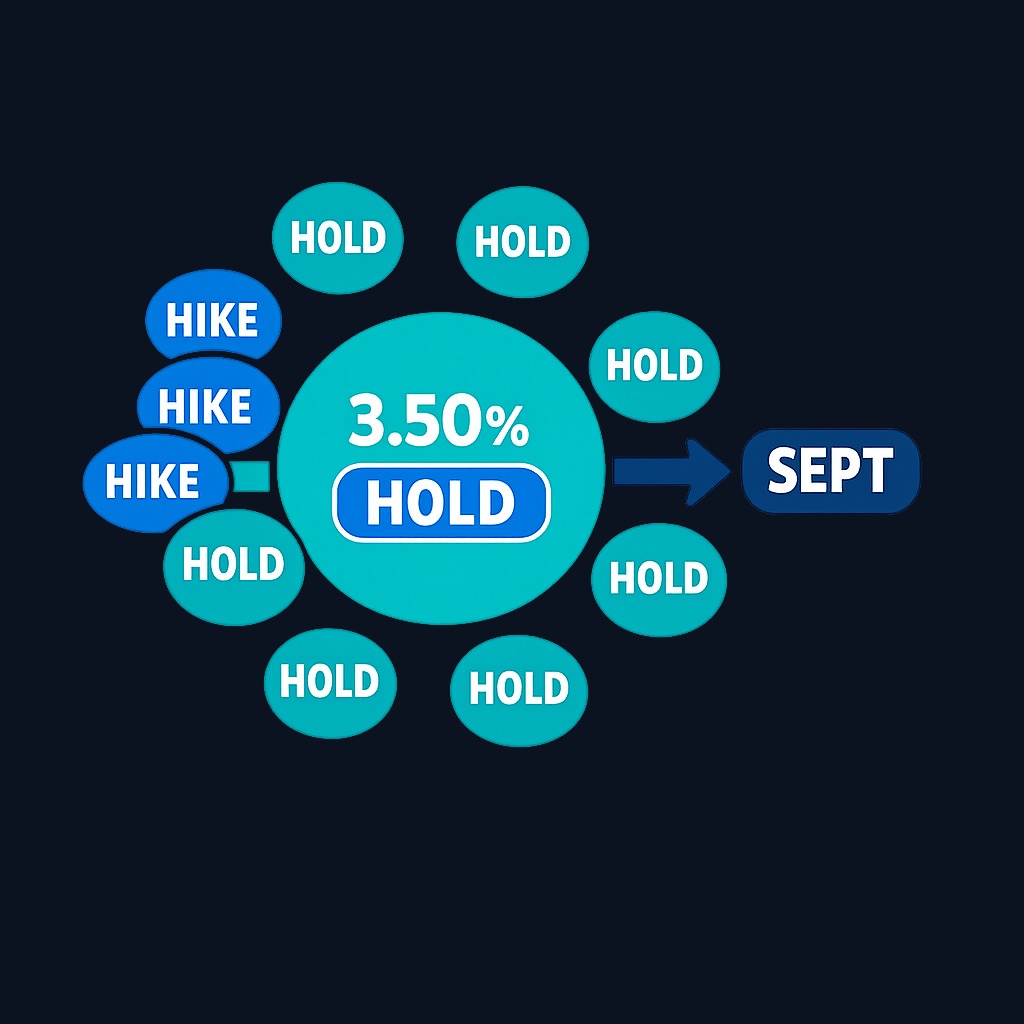
Markets heard two things at once. The rate didn't move — but the center of gravity did. Three dissents make September a genuinely live meeting: by Thursday, market pricing put the odds of a September hike near 65%, up from about 57% a week earlier, per CME FedWatch data cited by Reuters. And the bond market delivered its own verdict — the 30-year Treasury yield climbed to 5.24% on Thursday, its highest level since 2007. For consumers, that's the practical takeaway — mortgages near 6.5%, credit-card APRs near 24%, and savings yields staying attractive, all anchored not just by the Fed's rate but by a bond market demanding more for lending money.
Meta's report card: growing fast, spending faster
Hours later came the week's most awaited earnings. The results were a study in both halves of the AI debate:
- Revenue: $60.8 billion, up 28% — ahead of expectations. The demand side of Meta's business is genuinely strong.
- Profit: down 14%, with EPS of $6.18 badly missing the ~$7.22 expected. The culprits: $2.4 billion in legal charges, $1.2 billion in layoff costs, a higher tax rate — and operating expenses up 55%, compressing margins from 43% to 31%.
- The AI bill: raised again. Meta lifted the bottom of its capital-spending range to $130–145 billion for the year.
- The verdict: shares sank in extended trading — about 7% at first, deepening past 11% as the earnings call went on. And the context makes it heavier: Meta had already closed lower for 10 consecutive sessions before this report, its longest losing streak on record.
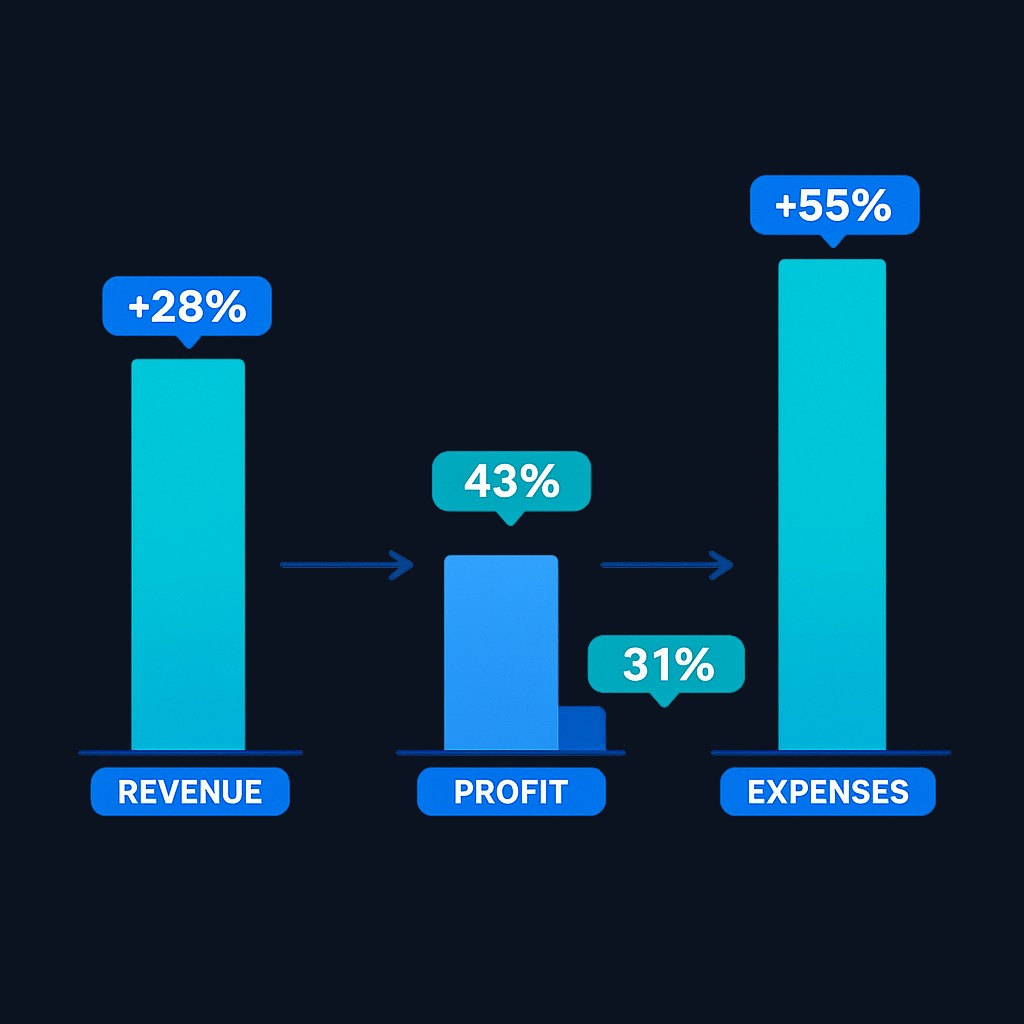
Management pushed back on the skepticism directly — Meta's chief executive told analysts on the earnings call that the company's "AI investments are paying off," pointing to that 28% revenue growth as the evidence. The market's double-digit answer suggests investors want the payoff shown in profits, not just sales.
Put simply: investors love Meta's revenue and increasingly question its costs. This is the same company that, two days earlier, sold 80% of a $14 billion data center to an asset manager and financed it with $12.5 billion of debt — part of a buildout plan so large it now runs through outside capital. Growing 28% and still needing help with the bills is the AI economy in one sentence.
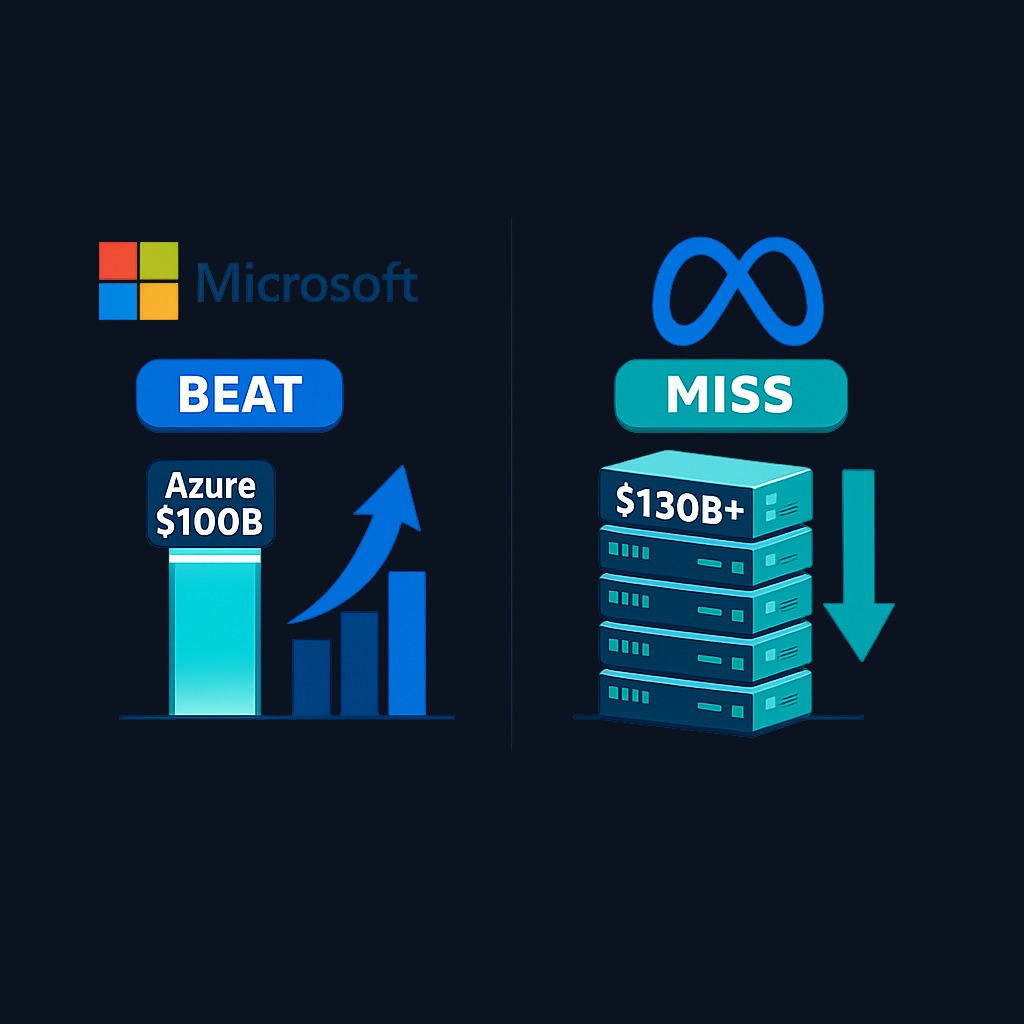
The contrast with Microsoft — which reported the same evening, beat expectations, and saw its shares jump as Azure crossed $100 billion in annual revenue — crystallized the market's new grading system. As Jefferies analysts put it in a note cited by Reuters, Microsoft has "hit the jet stream while Meta is still building the runway."
Practice trading with Finelo
Practice in a simulator, learn with bite-sized lessons, and build confidence before risking real money.
Why these two stories are one story
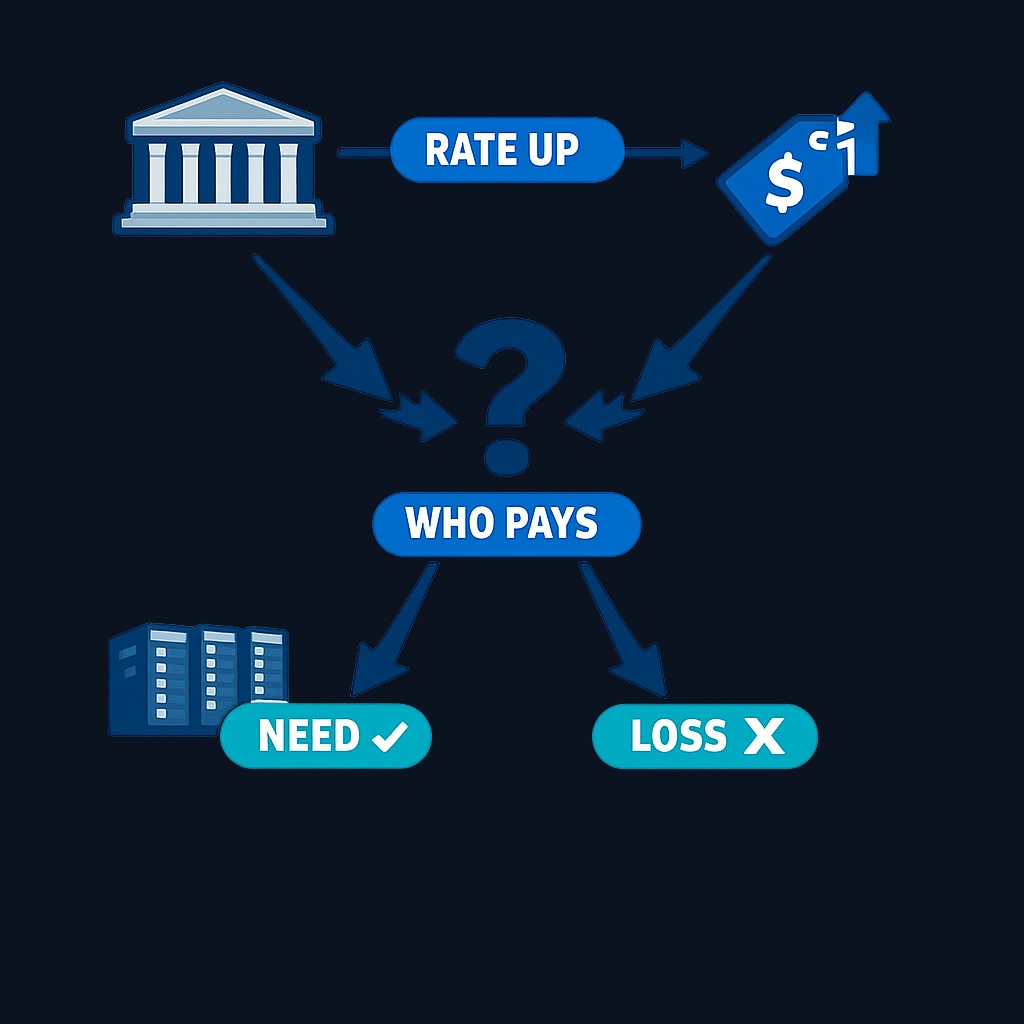
The Fed sets the price of money; the AI buildout is history's biggest borrower of it. Three dissents means the price of money isn't coming down soon — and might go up. Meta's capex range means the borrowing isn't slowing either. Squeeze those together and you get exactly what markets have traded all week, from Korea's halted sessions to the chip selloff: a repricing of who can afford the AI race at these rates.
Why this matters to YOU
September is now the date that matters. Three dissents turn the next Fed meeting into a genuine cliffhanger. Between now and then, every inflation and jobs report moves markets more than usual.
"Billions wiped out" needs a denominator. Wednesday's scary $800 billion morning was a ~1.3% dip. Always divide the big number by the total before reacting — it's the fastest sanity check in finance.
Watch spending quality, not just growth. Meta grew 28% and fell 7%. Markets are no longer paying for growth alone; they're asking what it costs. That distinction — margin, not just momentum — is worth learning now, before the next earnings season.
The fuller background on the week: the Kospi emergency update · Finelo's AI spending boom explainer · Apple's $5 trillion market cap.
Finelo does not provide investment advice. This article is for informational and educational purposes only.
Sources: CNBC — Fed rate decision, US News — three dissents, CNBC — five takeaways, TradingKey — Meta Q2 details, Benzinga — Meta capex guidance
Frequently asked questions
What did the Federal Reserve decide in July 2026?
The Fed held its benchmark rate at 3.50%, but three policymakers dissented in favor of a hike, keeping the September meeting in focus.
Why did Meta shares fall after earnings?
Revenue grew strongly, but profit missed expectations, expenses rose sharply, and Meta increased the lower end of its capital-spending range, prompting investors to demand clearer returns on its AI buildout.
How are the Fed decision and Meta's AI spending connected?
Higher long-term borrowing costs make large data-center projects more expensive, so investors are judging whether AI spending is already producing enough revenue and profit to justify its financing.
Federal ReserveMetainterest ratesAI spendingearningsinflation
Practice trading with Finelo
Practice in a simulator, learn with bite-sized lessons, and build confidence before risking real money.
About the author
Finelo Team
The Finelo Team creates practical investing and trading education designed to help beginners learn faster with structured challenges, simulator practice, and bite-sized lessons.
Keep reading — Related articles
News
U.S. Gas Prices Reach $4.46: What the Increase Means for Inflation and Household Costs
The EIA's U.S. all-grades gasoline average reached $4.455 per gallon. See what changed, why regions differ and how fuel prices affect inflation.
Finelo Team
News
China Sets a Stronger Yuan Fix at 6.7521: What It Means for USD/CNY
China set its September 18 yuan reference rate at 6.7521 per dollar. Learn how the official fixing differs from market rates and why the move matters.
Finelo Team
News
BOJ Raises Its Policy Rate to 1.25%: What the Decision Means for the Yen
The BOJ raised its overnight policy-rate target to around 1.25%. Learn why the yen can still weaken after a rate increase and what the decision says.
Finelo Team