In a week when markets punished nearly everything related to AI, one AI company just got showered with money — and it isn't American.
Moonshot AI Raises $3.5 Billion at a $35 Billion Valuation: Kimi AI's Rise, Explained
China's Moonshot AI raised $3.5 billion at a $35 billion valuation after Kimi K3 gained traction. Here's how to read the round and its IPO implications.
5 min read
Practice trading with Finelo
Practice in a simulator, learn with bite-sized lessons, and build confidence before risking real money.
Want to learn more?
Practice in a simulator, learn with bite-sized lessons, and build confidence before risking real money.
Explore FineloExplore Finelo's 28-day challenges
Turn learning into a daily habit with guided challenge paths.
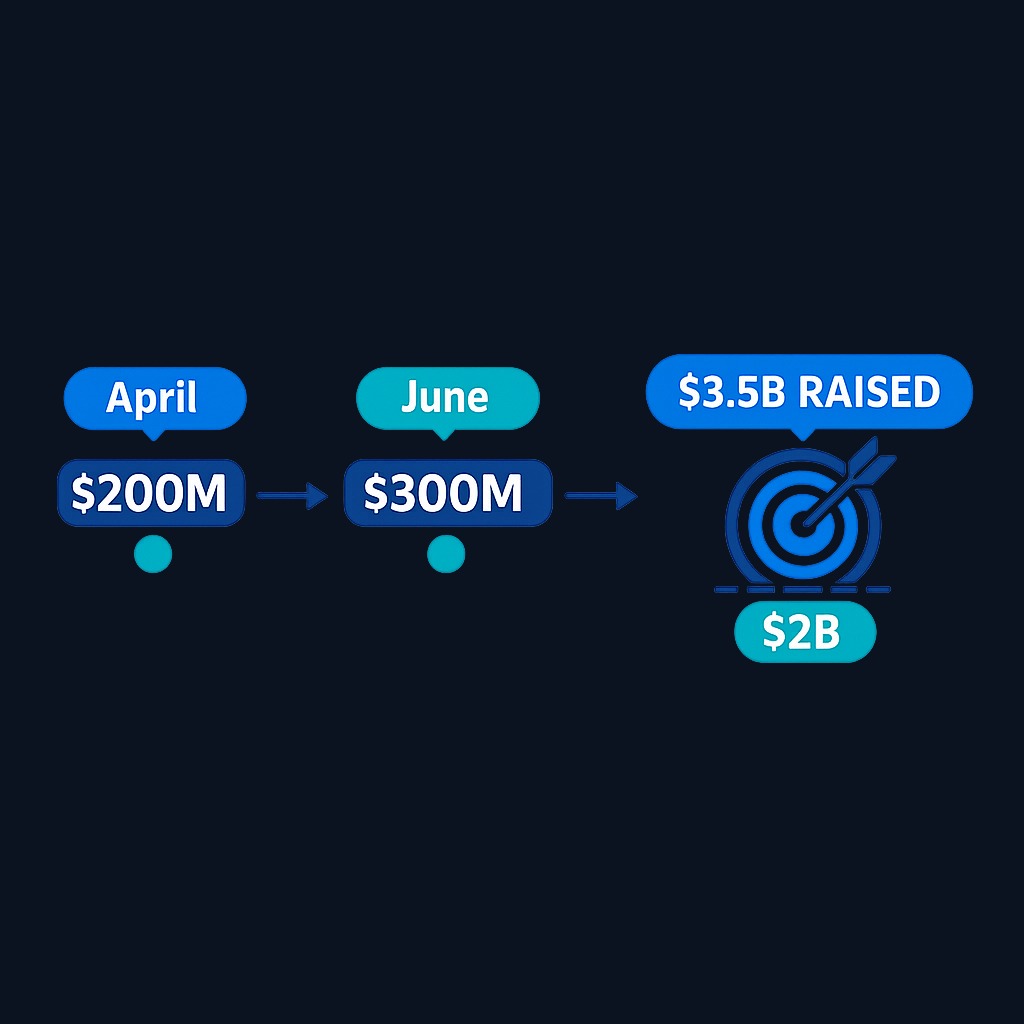
Moonshot AI, the Chinese startup behind the Kimi AI chatbot, closed a $3.5 billion funding round at a $35 billion valuation, according to Bloomberg. The company had reportedly set out to raise about $2 billion; investors offered nearly twice that. The momentum comes from its latest model, Kimi K3, whose strong benchmark results "sent ripples through Silicon Valley" — and, per reporting around the raise, sharply accelerated the company's revenue. A Hong Kong stock-market listing is reportedly planned as soon as this year.
After a week of Chinese chipmakers (CXMT) and Chinese chip machines (the DUV breakthrough) rattling markets, this completes the set: chips, tools, and now models. Here's what it means — and how to read a private-market number like $35 billion.
Why investors piled in
Three things stand out in the reporting. First, the raise was oversubscribed — Moonshot got $3.5 billion after targeting $2 billion, which tells you demand exceeded supply. Second, the trigger was a product: Kimi K3's release reportedly multiplied daily sales and pushed annualized revenue past the $300 million mark by June, roughly 50% above where it stood in April. Third, the follow-on chatter — talk of an even higher valuation in a future round — suggests investors see this as early, not late.
There's a strategic wrinkle that makes Moonshot particularly interesting: it releases open-weights models. While US leaders sell access to closed models and spend historic sums on data centers (see: Meta's $130–145 billion capex range, announced the same day), Moonshot's approach has won global developer adoption at a fraction of the infrastructure cost — though analysts note open weights come with their own commercial and data-governance questions for Western enterprises using a Chinese model.
Practice trading with Finelo
Practice in a simulator, learn with bite-sized lessons, and build confidence before risking real money.
How to read a $35 billion valuation
This is the educational heart of the story, because private valuations are a different animal from stock prices.
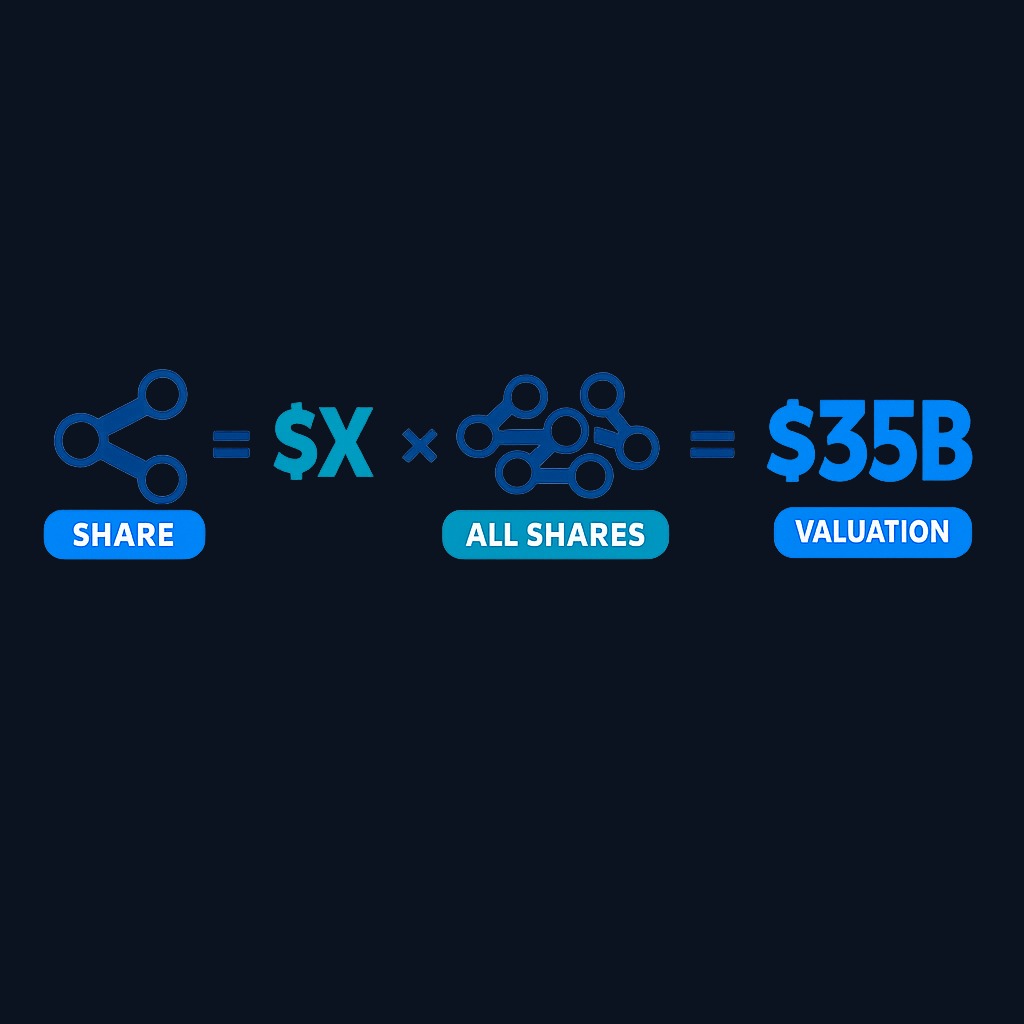
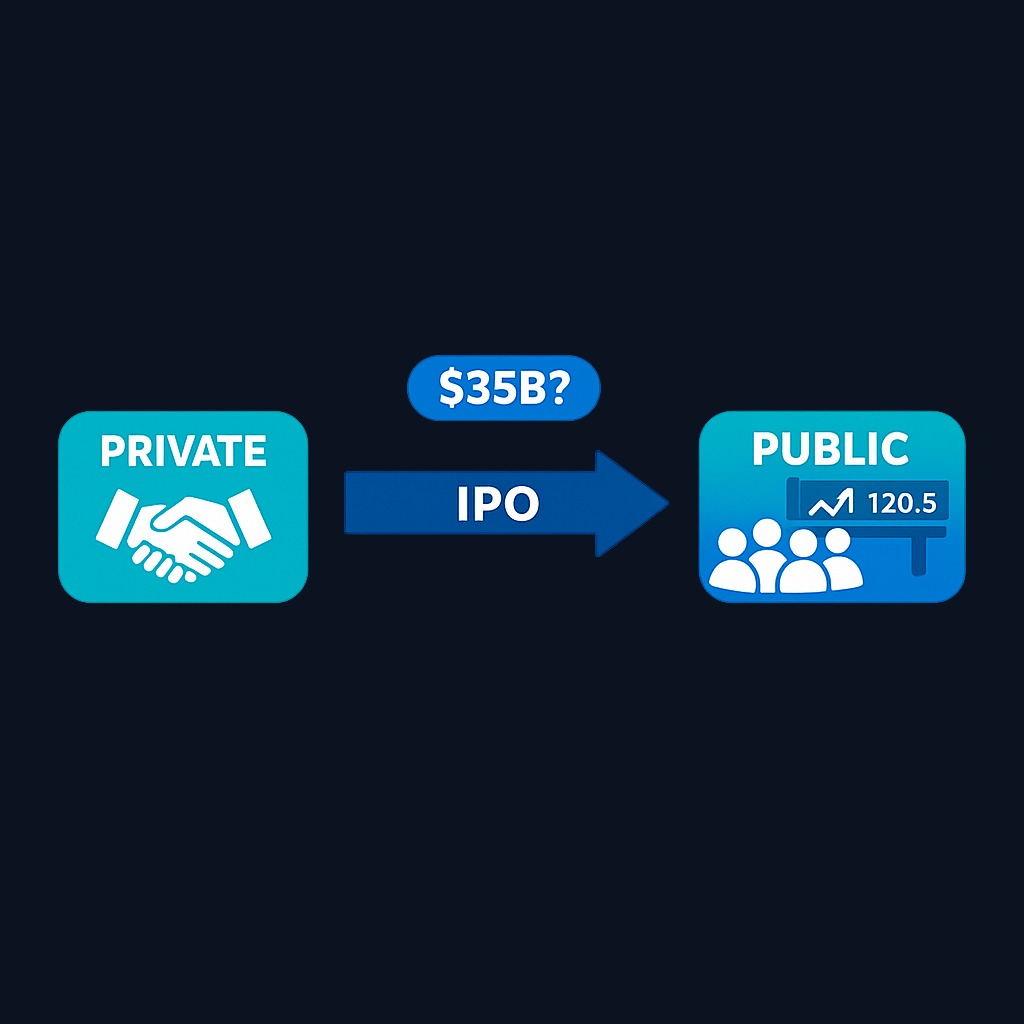
A valuation is negotiated, not traded. $35 billion is what the newest investors agreed to pay per share, extrapolated across the whole company. Nobody can sell the whole company at that price tomorrow; there's no daily market vote like a listed stock has.
The revenue multiple is the reality check. At roughly $300 million in annualized revenue, $35 billion is over 100x revenue. That's not unusual for a hot AI startup — but it prices in years of flawless growth. For comparison, this week the public market cut SanDisk in half and knocked 7% off Meta for a profit miss. Private markets are currently more forgiving than public ones — a gap the planned Hong Kong IPO would put to the test.
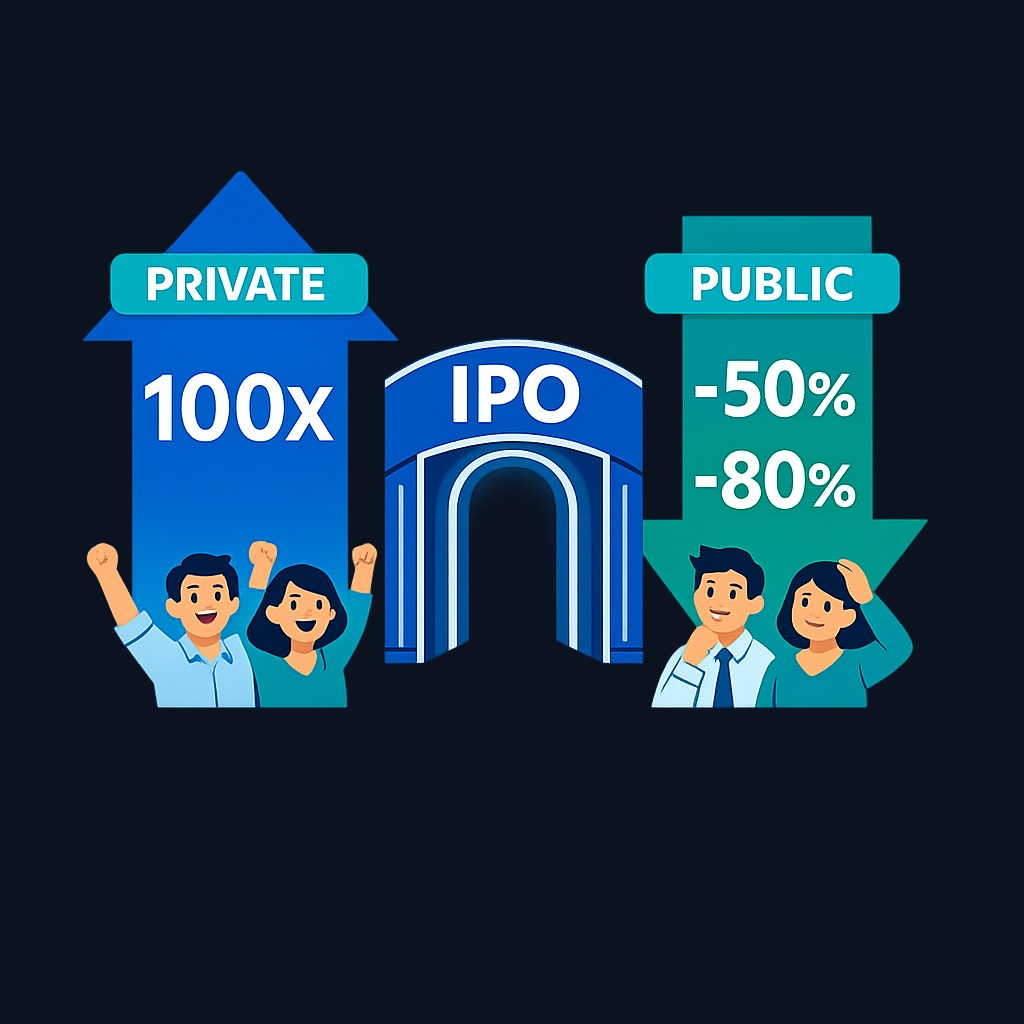
An IPO is where the two worlds meet. If Moonshot lists this year, its private price faces public judgment — the same test SK Hynix's ADRs and SanDisk just failed, and CXMT's 466% debut spectacularly passed. Few events teach valuation better than watching that handoff.
Why this matters to YOU
The AI race is now visibly two-track. The US model: closed systems, colossal capex, financed with debt and partners. The Chinese model: open weights, capital efficiency, state-backed infrastructure. This week delivered evidence for both — and markets are still deciding which economics they trust.
Watch the Hong Kong IPO pipeline. After CXMT's debut made it China's most valuable listed company, a Moonshot listing would be the next referendum on China's AI valuations — and a likely mover of the whole sector's sentiment.
Private-market euphoria is a signal, not a guarantee. Oversubscribed rounds at 100x revenue mark the excitement phase of every technology cycle. Sometimes the excitement is right. The discipline is remembering that "investors paid it" and "it's worth it" are different statements.
The rest of this week's China-AI thread: China's DUV lithography breakthrough · the Kospi emergency update.
Finelo does not provide investment advice. This article is for informational and educational purposes only. Figures for private companies are based on media reporting and may not be independently verifiable.
Sources: Bloomberg — Moonshot passes funding goal, Yahoo Finance — Bloomberg syndication, Seeking Alpha — round details, TechTimes — open-weights considerations
Frequently asked questions
How much did Moonshot AI raise?
Moonshot AI raised $3.5 billion at a reported $35 billion valuation after initially seeking about $2 billion, indicating that investor demand exceeded the planned supply.
What does a $35 billion private valuation mean?
It extrapolates the price paid by the newest investors across the company's shares; it is a negotiated financing value, not a daily market price at which the whole company could necessarily be sold.
Why would a Moonshot AI IPO matter?
A public listing would test whether stock-market investors accept the private valuation and would create a new public benchmark for Chinese AI companies.
Moonshot AIKimi K3Chinaartificial intelligenceventure capitalIPO
Practice trading with Finelo
Practice in a simulator, learn with bite-sized lessons, and build confidence before risking real money.
About the author
Finelo Team
The Finelo Team creates practical investing and trading education designed to help beginners learn faster with structured challenges, simulator practice, and bite-sized lessons.
Keep reading — Related articles
News
U.S. Gas Prices Reach $4.46: What the Increase Means for Inflation and Household Costs
The EIA's U.S. all-grades gasoline average reached $4.455 per gallon. See what changed, why regions differ and how fuel prices affect inflation.
Finelo Team
News
China Sets a Stronger Yuan Fix at 6.7521: What It Means for USD/CNY
China set its September 18 yuan reference rate at 6.7521 per dollar. Learn how the official fixing differs from market rates and why the move matters.
Finelo Team
News
BOJ Raises Its Policy Rate to 1.25%: What the Decision Means for the Yen
The BOJ raised its overnight policy-rate target to around 1.25%. Learn why the yen can still weaken after a rate increase and what the decision says.
Finelo Team