When we covered SanDisk's 55% collapse earlier this week, we posed the question hanging over the whole memory sector: is this a broken story, or a broken price? Three developments since then have sharpened the answer — in both directions at once.
Samsung Stock, SK Hynix Stock, and SanDisk: $100 Billion in Profits Meets a Historic Crash

Samsung and SK Hynix posted roughly $100 billion in combined quarterly profit during a historic selloff. Here's what changed for memory-stock investors.
4 min read
Practice trading with Finelo
Practice in a simulator, learn with bite-sized lessons, and build confidence before risking real money.
Want to learn more?
Practice in a simulator, learn with bite-sized lessons, and build confidence before risking real money.
Explore FineloExplore Finelo's 28-day challenges
Turn learning into a daily habit with guided challenge paths.
Development one: the profits arrived. All of them.
This week, the two giants of memory reported the best numbers in their histories. SK Hynix posted record revenue of ₩79.3 trillion with profit up roughly sixfold; Samsung's profit jumped nineteen-fold on AI chip demand. Combined quarterly profit: roughly ₩150 trillion — about $100 billion — per Reuters. Yet Samsung stock and SK Hynix stock led their market to its worst month ever, down 35–47% each — with Micron stock and SanDisk dragged along in sympathy.
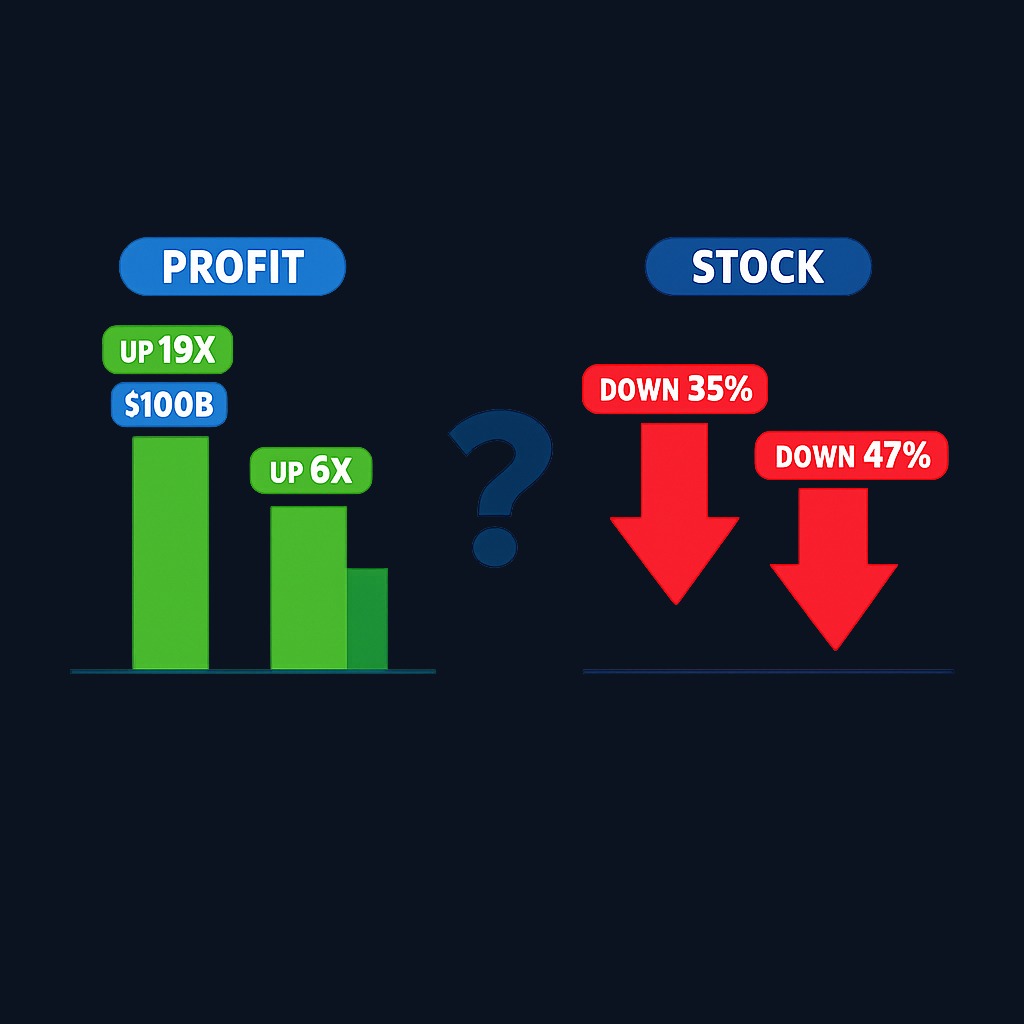
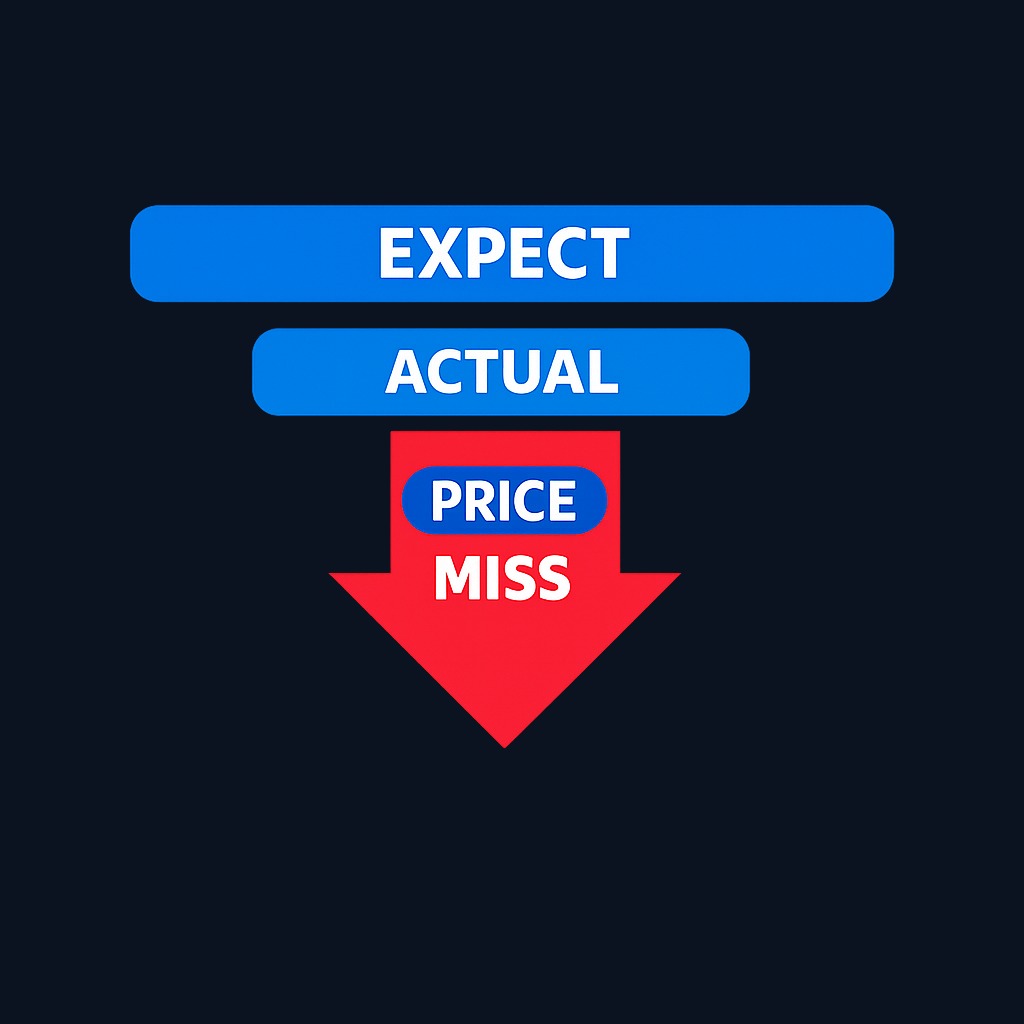
So the demand story is not just intact — it's spectacular. What crashed wasn't the business; it was the price, dragged down by forced selling from leveraged products (a mechanism we've covered in the Korea series) and by fear of what comes next: Chinese competition and the possibility that this profit peak is the peak. Both SK Hynix and Samsung missed sky-high analyst expectations even while breaking records — the purest example yet of this week's recurring lesson that prices track expectations, not results.
Development two: Washington entered the memory market
A bipartisan group of US senators urged Apple to abandon reported plans to source memory from China's CXMT and YMTC, with an August 21 deadline — the story we covered in detail here: Apple, CXMT, and YMTC. For the memory incumbents — Samsung, SK Hynix, Micron, SanDisk — this is quietly supportive news: it signals political will to keep the world's biggest device maker buying from them, slowing the Chinese-supply scenario that has been crushing their valuations. The bear case on memory runs through cheap Chinese chips; Washington just placed an obstacle on that road.
Practice trading with Finelo
Practice in a simulator, learn with bite-sized lessons, and build confidence before risking real money.
Development three: the forced selling may be ending
JPMorgan's estimate — that the leveraged-ETF unwind in Korea is essentially complete and hedge-fund deleveraging about 90% done — matters for memory stocks specifically, because Samsung and SK Hynix were the assets those products were forced to dump. If mechanical selling fades, prices get a chance to re-attach to fundamentals. The usual caveat applies: that's an analyst call, not a fact, and foreigners were still net sellers of $13 billion of Korean stock in July.
Where that leaves the question
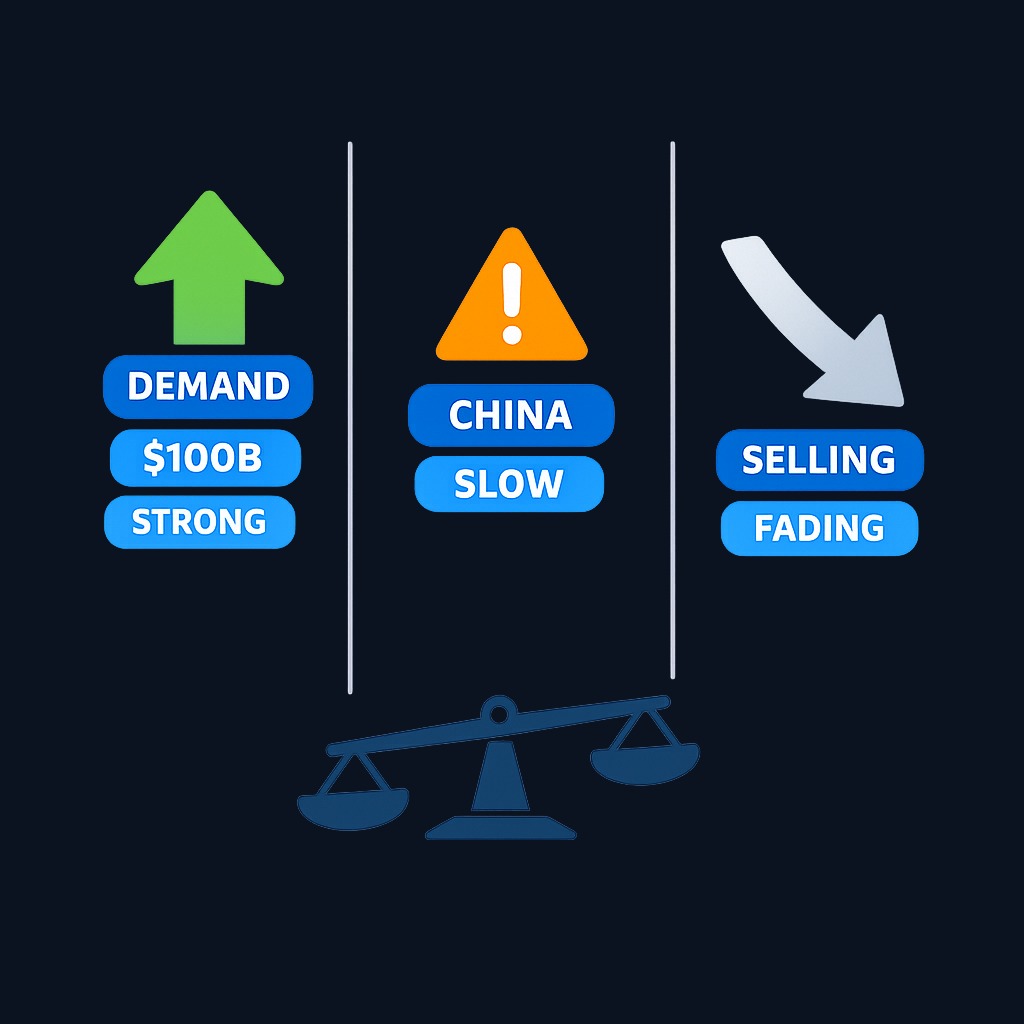
The evidence now cuts cleanly: demand is proven (the $100 billion says so), supply-side fear is real but slower than the panic implies (Chinese memory at scale is a next-years story, and now faces political friction), and the crash was amplified by mechanics that appear to be exhausting themselves. What remains genuinely unknowable is the cycle: memory has always been boom-and-bust, and record profits have historically arrived near cycle tops. Both bulls and bears are holding real cards.
Why this matters to YOU
"Record profits" is not a buy signal, and "crash" is not a sell signal. The same week produced both. What matters is which was already priced in — and at these levels, expectations have reset dramatically lower than a month ago.
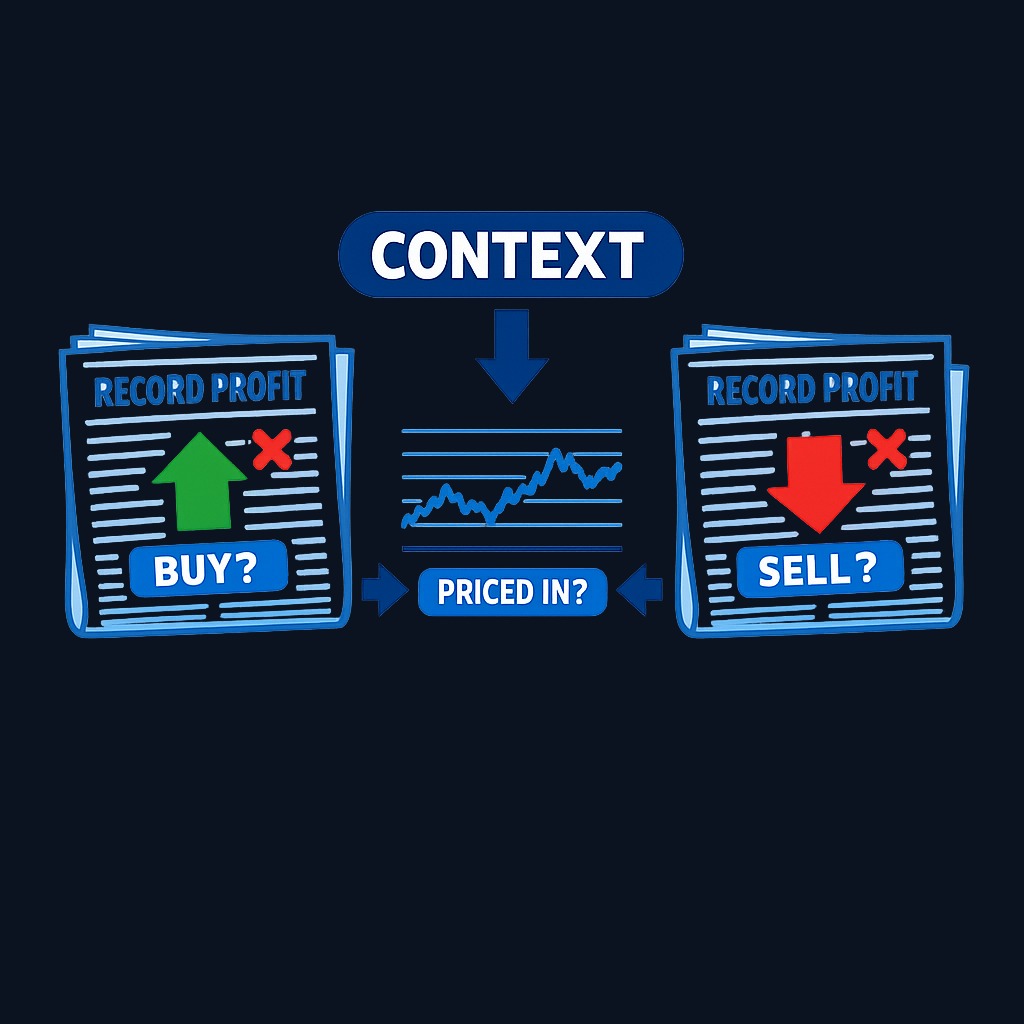
Watch August 21. Apple's response to the Senate letter is now a scheduled event that moves this sector.
Cycles demand humility. Memory investors who've seen prior cycles know the hardest question isn't "is the business good?" — it's "where in the cycle are we?" Nobody rings a bell at the top or the bottom.
The origin of this thread: the SanDisk selloff breakdown · the Kospi emergency update.
Finelo does not provide investment advice. This article is for informational and educational purposes only.
Sources: Reuters — Samsung Q2 profit jumps 19-fold, Reuters — SK Hynix results, Bloomberg — senators' warning to Apple, Reuters — $2 trillion rout and curbs
Frequently asked questions
Why did memory stocks fall despite record profits?
Results were strong but missed extremely high expectations, while leveraged-ETF unwinds and worries about future Chinese competition triggered selling unrelated to current demand.
How does Apple's chip decision affect memory suppliers?
Political pressure on Apple to avoid CXMT and YMTC could preserve demand for established Korean and US suppliers and slow one part of the Chinese-competition bear case.
Does the selloff mean the memory cycle has bottomed?
Not necessarily. Forced selling may be fading, but memory remains cyclical and record profits can occur near peaks as well as during durable growth periods.
SamsungSK HynixSanDiskMicronmemory chipssemiconductors
Practice trading with Finelo
Practice in a simulator, learn with bite-sized lessons, and build confidence before risking real money.
About the author
Finelo Team
The Finelo Team creates practical investing and trading education designed to help beginners learn faster with structured challenges, simulator practice, and bite-sized lessons.
Keep reading — Related articles

News
U.S. Gas Prices Reach $4.46: What the Increase Means for Inflation and Household Costs
The EIA's U.S. all-grades gasoline average reached $4.455 per gallon. See what changed, why regions differ and how fuel prices affect inflation.
Finelo Team
News
China Sets a Stronger Yuan Fix at 6.7521: What It Means for USD/CNY
China set its September 18 yuan reference rate at 6.7521 per dollar. Learn how the official fixing differs from market rates and why the move matters.
Finelo Team
News
BOJ Raises Its Policy Rate to 1.25%: What the Decision Means for the Yen
The BOJ raised its overnight policy-rate target to around 1.25%. Learn why the yen can still weaken after a rate increase and what the decision says.
Finelo Team