Last editorial review: September 28, 2026
Reverse mortgage vs. downsizing
Compare borrowing against home equity with moving to a less expensive home, including ongoing housing costs and remaining cash.
8 min read
Practice trading with Finelo
Practice in a simulator, learn with bite-sized lessons, and build confidence before risking real money.
Want to learn more?
Practice in a simulator, learn with bite-sized lessons, and build confidence before risking real money.
Explore FineloExplore Finelo's 28-day challenges
Turn learning into a daily habit with guided challenge paths.
A reverse mortgage can provide access to home equity while you remain in the home. Downsizing releases equity by selling and moving. The decision combines borrowing costs with a larger question: will this home still meet your needs as you age?
For federally insured Home Equity Conversion Mortgages, or HECMs, eligibility and counseling requirements apply. Other reverse-mortgage products can have different rules.
Compare the ongoing responsibilities
| Reverse mortgage | Downsizing |
|---|---|
| Lets an eligible borrower remain in the property | Requires finding and paying for another home |
| Loan balance generally grows with interest and fees | Sale proceeds are reduced by debt and transaction costs |
| Requires property charges, maintenance, and occupancy compliance | May lower or raise costs depending on the replacement |
| Can leave less equity for later needs or heirs | Can release accessible funds after the move |
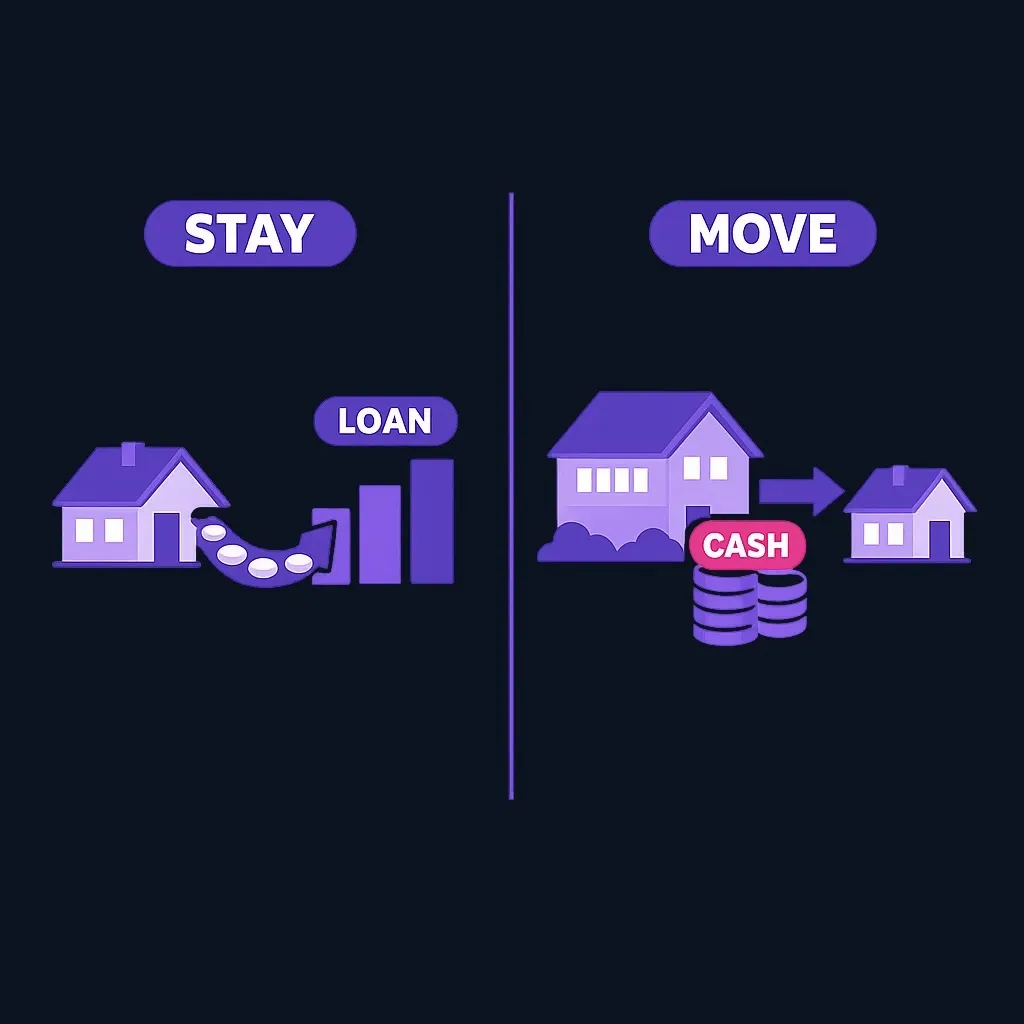
The FTC reverse-mortgage guide explains costs and obligations. No required monthly principal-and-interest payment does not mean no housing bills. Taxes, insurance, repairs, and other obligations can still put the home at risk if unpaid.
Compare net resources
Suppose selling produces $300,000 after paying the mortgage, but the replacement home and all moving and transaction costs total $260,000. The released cash is $40,000, not $300,000. This hypothetical example shows why gross home equity is not spendable proceeds.
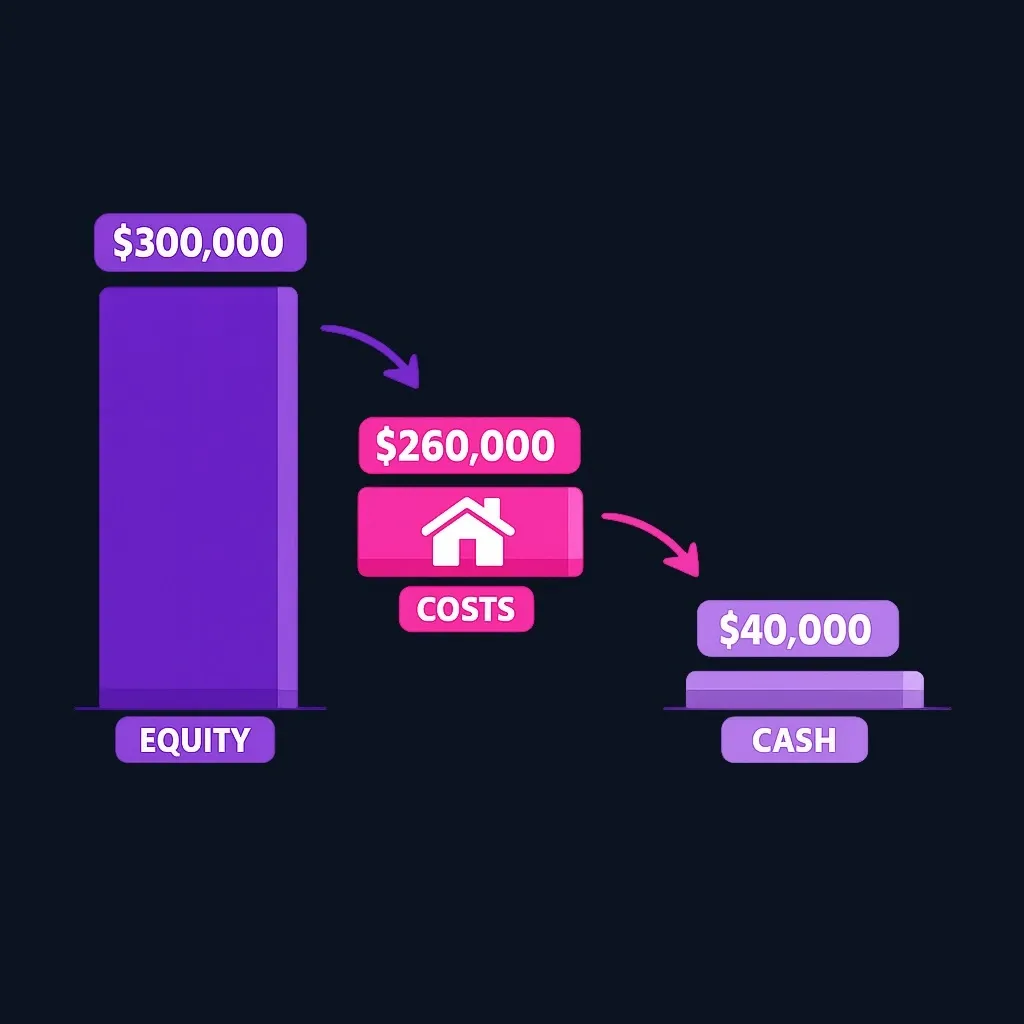
For a reverse mortgage, request the actual available proceeds, fees, interest structure, and projected balance. Include the cost of staying in the home and the possibility of needing a later move for care.
Include the household and heirs
Ask what happens if a borrower dies or permanently leaves. Protections for an eligible nonborrowing spouse are conditional, so verify them for the proposed loan. Understand heirs' options and deadlines too.
Compare accessible cash, monthly expenses, housing suitability, and future flexibility. If considering a HECM, use the required independent counseling to work through those scenarios before committing.
Compare the home you would live in under each option
A reverse mortgage generally keeps you in the current property while changing how home equity supports the budget. Downsizing changes the property as well as the financing. Start with whether the present home will meet your physical, transport, maintenance, and social needs over time. A financing product cannot solve an inaccessible layout or a location that no longer works.
For downsizing, price a realistic replacement home rather than assuming a smaller property is automatically much cheaper. Include transaction costs, moving costs, repairs, any homeowners-association fees, and ongoing taxes and insurance. If you plan to rent, compare the rent budget and how future increases could be handled.
Practice trading with Finelo
Practice in a simulator, learn with bite-sized lessons, and build confidence before risking real money.
Use net proceeds in both calculations
Suppose a hypothetical home sells for $400,000, selling and moving costs total $30,000, and the existing mortgage payoff is $100,000. That leaves $270,000 before buying or funding replacement housing and before any applicable tax. The full $400,000 sale price is not money available for retirement spending.
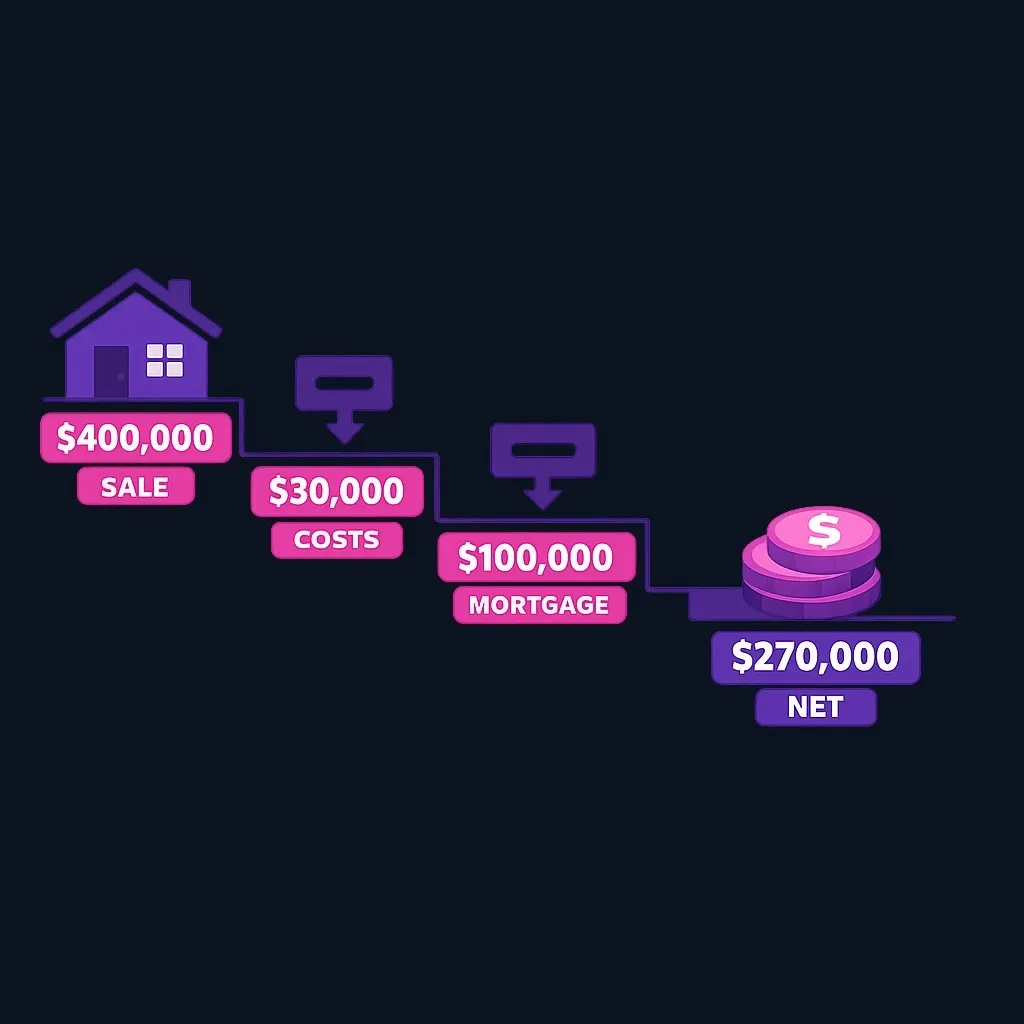
For a reverse mortgage, request the amount actually available after required payoffs and financed charges. Review how the balance can grow and when the debt becomes due. The maximum theoretical borrowing amount is not the same as spendable proceeds under a particular offer.
Plan for leaving the home later
Health changes, a move to care, or the death of a household member can alter the arrangement. Ask how the contract treats occupancy, eligible nonborrowing spouses, heirs, and a later sale. Do not assume that staying in the house today settles every future housing decision.
Keep a budget for property taxes, insurance, maintenance, and other continuing obligations. A reverse mortgage can change principal-and-interest payment requirements without making ownership cost-free. For a HECM, use the required counseling process to work through the actual offer and alternatives before deciding.
What a reverse mortgage is and how it works
A reverse mortgage lets an eligible homeowner borrow against equity without scheduled monthly principal-and-interest payments. The balance becomes repayable under the loan’s terms, including when the home is sold or occupancy requirements are no longer met. Death of the last borrower can also trigger repayment, but an eligible nonborrowing spouse may qualify for a deferral.
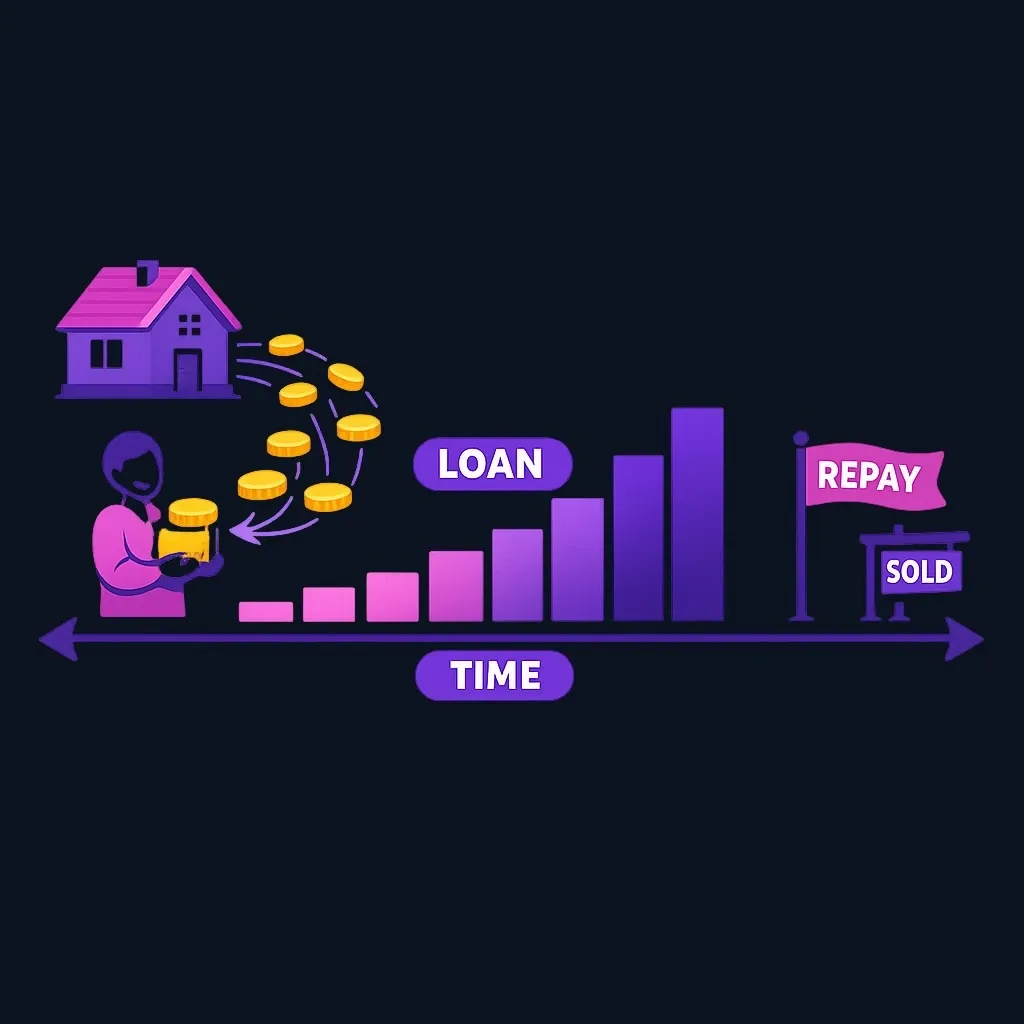
HECMs are federally insured reverse mortgages with nonrecourse protections. Their payment options depend on the chosen loan structure. Borrowers still have to meet property-tax, insurance, maintenance, and occupancy obligations; a loan without scheduled principal-and-interest payments is not a cost-free way to own a home.
What downsizing means
Downsizing means selling your current home and buying (or renting) a smaller, typically less expensive residence. The sale converts home equity into proceeds you can use for living expenses, investments, or a new home purchase. Downsizing may reduce utilities or maintenance, but the replacement property’s taxes, insurance, fees, rent, or financing can offset those savings. Price the actual move before assuming the ongoing budget improves.
How to compare your options
Use these criteria to sort the choice that fits your goals:
- Cash needs and timing — Do you need a steady cash flow, a line of credit, or a single lump sum today? Reverse-mortgage payout choices depend on the product; a sale releases net proceeds after debt and closing costs.
- Desire to stay in your home — If staying put matters, a reverse mortgage may support that choice if you qualify and continue meeting the loan’s obligations.
- Ongoing obligations — Reverse mortgages keep you responsible for taxes, insurance, and maintenance; skipping these risks default.
- Transaction tolerance — Downsizing requires selling, moving, and possibly buying in a competitive market; timeline and stress matter.
- Estate goals — Compare the assets and debts left under each route. A growing reverse-mortgage balance can reduce remaining equity; after a sale, the replacement home, spending, and estate arrangements determine what remains for heirs.
When to choose each option
- Consider a reverse mortgage if you: want to remain in your home, need to convert equity into cash without scheduled monthly principal-and-interest payments, understand and can meet ongoing tax/insurance/maintenance obligations, and have completed HUD-approved counseling; HECM and proprietary product features differ.
- Consider downsizing if you: prefer a clean sale and immediate control of proceeds, want lower ongoing housing expenses, are comfortable moving, and the actual replacement costs fit your budget.
Use the Decision Framework table below (condensed) to match common intents to practical actions.
| Your main goal | Likely better fit | Immediate next step |
|---|---|---|
| Stay in your longtime home, unlock cash | Reverse mortgage (evaluate HECM vs proprietary) | Speak with a HUD-approved counselor and a lender whose written offer you can compare |
| Reduce housing costs and simplify possessions | Downsizing (sell and buy smaller) | Get a market appraisal, estimate selling costs, and interview real estate agents |
| Need funds for a smaller home | A sale may release equity for the purchase | Subtract debt, transaction costs, and the replacement purchase price before estimating spare cash |
| Concerned about leaving an inheritance | Neither route guarantees a larger estate | Compare projected net assets, loan payoff, ownership, and estate documents |
Tradeoffs and caveats
- Loan balance growth. Added interest and financed charges can increase the debt over time. Future property values also affect the equity left for a sale or inheritance.
- Nonrecourse protection. A HECM is secured by the home, with protections against collecting a shortfall from other estate assets. Heirs still need to follow the applicable payoff or sale process; proprietary products require a separate contract review.
- Ongoing homeowner responsibilities. Failure to pay property taxes, insurance, or to maintain the property can trigger foreclosure on a reverse mortgage.
- Emotional cost of moving. Downsizing often requires letting go of possessions, adjusting routines, and coping with attachment to a longtime home. These non-financial costs can be the decisive factor for many.
- Tax and local law issues. Selling may have tax consequences and local transaction costs; consult a tax professional to understand capital gains or exemptions for your primary residence.
What is a reverse mortgage?
It is a loan secured by home equity that generally does not require scheduled monthly principal-and-interest payments. Repayment triggers include sale, failure to meet occupancy requirements, and the last borrower’s death, subject to eligible nonborrowing-spouse protections. Taxes, insurance, and maintenance remain ongoing responsibilities.
How does downsizing affect my taxes?
Selling your primary residence can produce taxable gain in some situations; the tax outcome depends on your cost basis, how long you owned and lived in the home, and local tax rules. The IRS home-sale guide explains the federal gain exclusion and its conditions. Estimate after-tax proceeds for your own ownership and use history before deciding.
Can I still leave my home to heirs if I take a reverse mortgage?
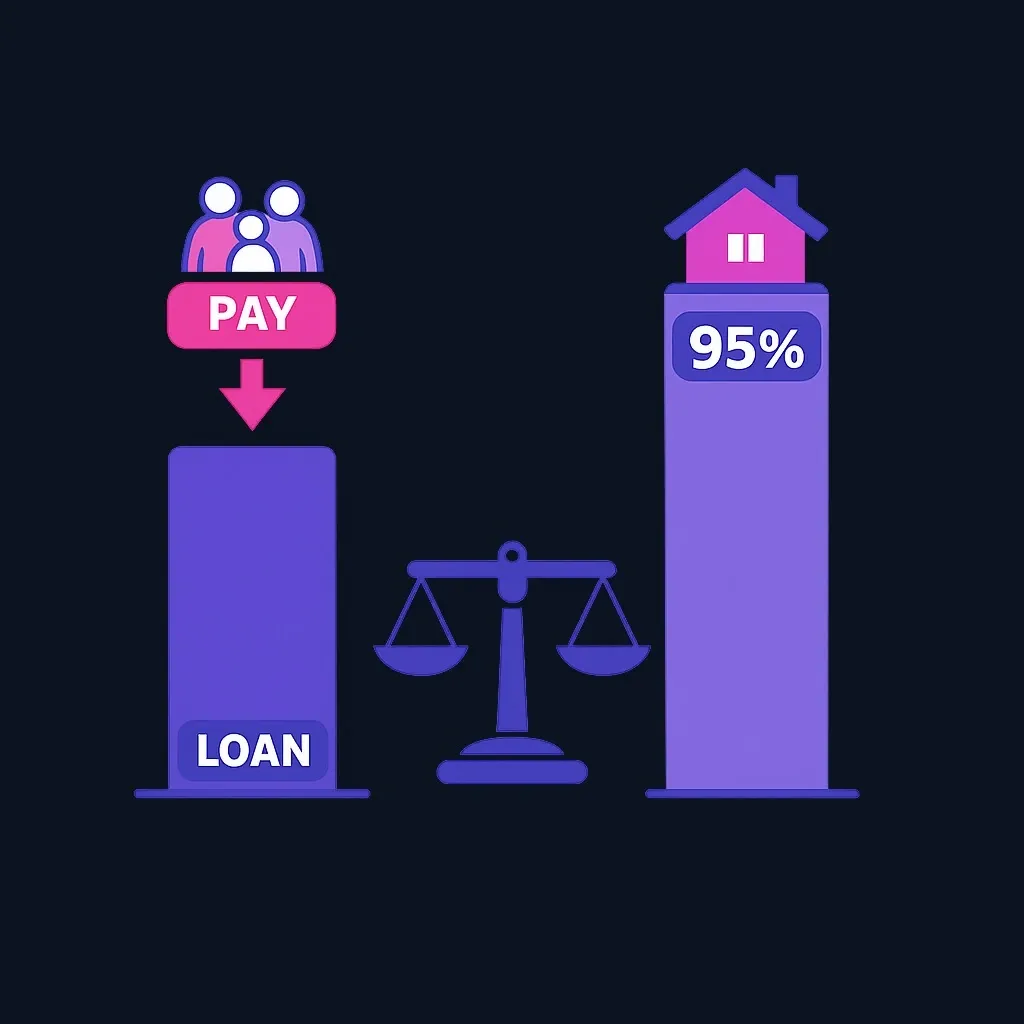
Yes, but inheriting the property does not erase the debt. For a HECM, heirs may be able to retain the home by paying the lesser of the loan balance or 95% of its appraised value, or sell it through the applicable repayment process. The CFPB explains the rules after a borrower dies. Obtain the servicer’s written payoff figure, deadlines, and requirements; an eligible surviving spouse’s rights can change when repayment is due. Proprietary loans may work differently.
How do I find a reputable reverse mortgage lender or get counseling?
Start with a HUD-approved reverse mortgage counseling session and use resources the counselor provides to compare lenders; the FTC recommends counseling and gives guidance on spotting scams and reporting fraud.
If keeping or transferring an existing mortgage is part of the move, read Mortgage assumption vs. refinance.
This guide covers U.S. rules. Finelo provides financial education, not personalized financial, investment, tax, or legal advice.
Financial LiteracyU.S. GuideFinancial Education
Practice trading with Finelo
Practice in a simulator, learn with bite-sized lessons, and build confidence before risking real money.
About the author
Finelo Team
The Finelo Team creates practical investing and trading education designed to help beginners learn faster with structured challenges, simulator practice, and bite-sized lessons.
Keep reading — Related articles

Financial Literacy
USDA vs. FHA loan
Compare location and income eligibility, down payments, credit conditions, and upfront and annual program charges for a home purchase.
Finelo Team
Financial Literacy
Term life vs. accidental death insurance
Compare broad term-life protection with accident-only coverage, including exclusions, underwriting, and the family income gap.
Finelo Team
Financial Literacy
Term life insurance laddering vs. one policy
Compare several term policies ending at different times with one policy, using coverage needs, costs, and future insurability.
Finelo Team


