Last editorial review: September 28, 2026
Section 179 vs. bonus depreciation

Compare first-year business deductions, eligibility, limits, elections, and the consequences of using property less for business later.
8 min read
Practice trading with Finelo
Practice in a simulator, learn with bite-sized lessons, and build confidence before risking real money.
Want to learn more?
Practice in a simulator, learn with bite-sized lessons, and build confidence before risking real money.
Explore FineloExplore Finelo's 28-day challenges
Turn learning into a daily habit with guided challenge paths.
Section 179 and bonus depreciation can accelerate deductions for eligible business property. They differ in limits, elections, and how they interact with taxable income. Neither makes the purchase free: a deduction reduces taxable income, not the purchase price dollar for dollar.
First confirm the asset, business use, acquisition date, and placed-in-service date.
Compare the rules
| Feature | Section 179 | Bonus depreciation |
|---|---|---|
| Choice | Generally elected for selected eligible property and amounts | Generally applies to eligible property unless an applicable election is made |
| Limits | Dollar, investment, and business-income limits apply | Different eligibility and limitation rules |
| Income effect | Business-income limitation can restrict the current deduction | Can create or increase a loss, subject to other rules |
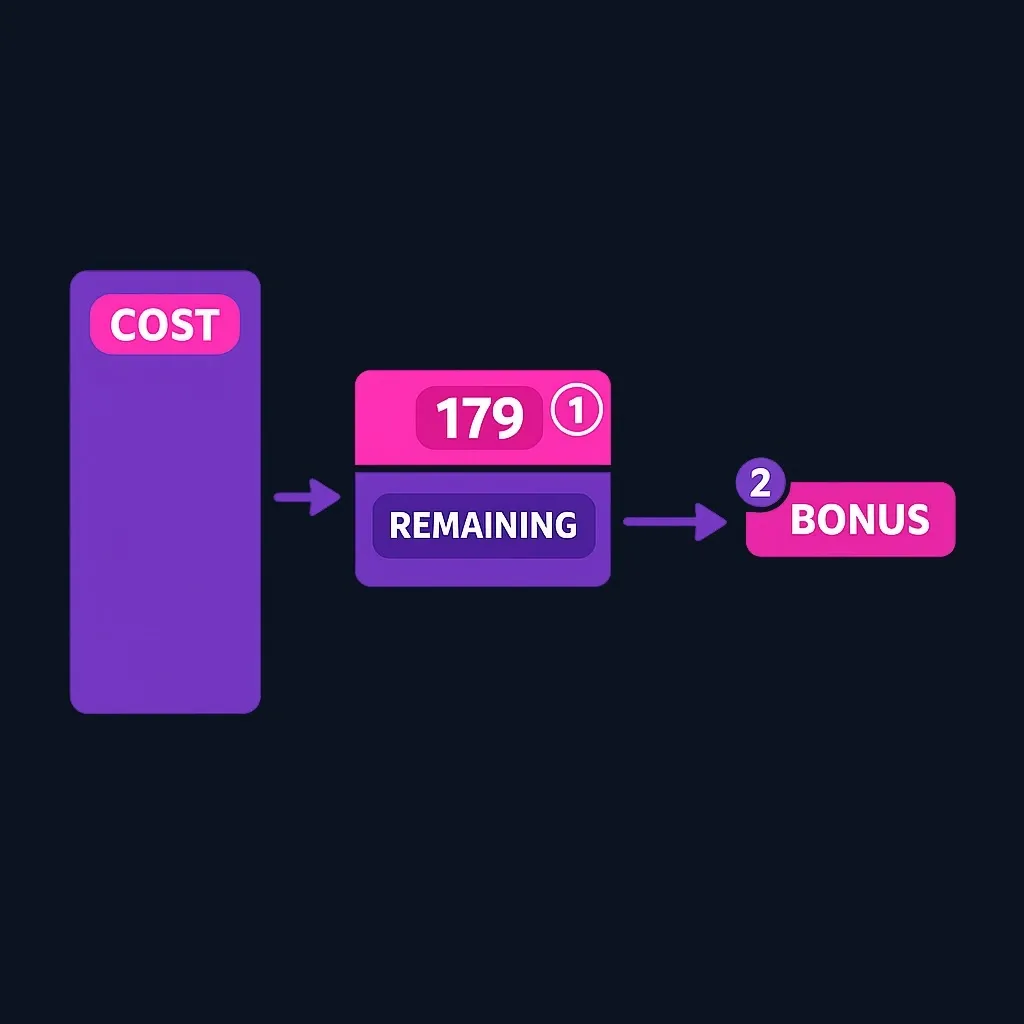
| Interaction | Generally considered before bonus depreciation | Applies to remaining eligible basis |
The IRS depreciation publication explains the ordering and limitations. Vehicle caps and special property rules can prevent a full immediate deduction.
Use the current effective dates
The IRS's 2026 bonus-depreciation guidance addresses restored 100% additional first-year depreciation for qualifying property acquired after January 19, 2025, subject to the applicable requirements. Older phase-down tables should not be applied without checking acquisition and service dates.
State treatment may differ from federal treatment. Verify the relevant year's Section 179 limits as well.
Compare current and future deductions
Suppose an eligible $10,000 expense reduces taxable income by $10,000. At a hypothetical 22% marginal rate, the direct federal income-tax effect would be $2,200 before other interactions, not $10,000. The asset still costs money.
Consider expected future income, loss limitations, financing, and the possibility of selling the asset or reducing business use. Recapture can change later taxes.
Have the preparer compare permissible elections across the full return. Choose based on actual business needs and the tax timeline, rather than buying an asset solely to obtain a deduction.
Start with the asset and placed-in-service date
Before selecting a deduction, identify what was purchased, when it was acquired, when it was ready and available for its business use, and the business-use percentage. Paying a deposit or ordering equipment does not necessarily place it in service. Keep invoices and records showing the actual facts rather than choosing dates to fit the desired deduction.

Different assets can have different eligibility and limitations. Vehicles, property used partly personally, and certain improvements deserve specific review. A general example involving ordinary business equipment should not be applied automatically to a passenger vehicle or real-estate purchase.
A deduction is not a reimbursement of the purchase price
Suppose a hypothetical eligible purchase supports a $10,000 deduction and, in a simplified calculation, every deducted dollar reduces tax at 24%. The federal income-tax reduction would be $2,400, not $10,000. That example excludes other taxes, limitations, state treatment, and interactions. The business still needs to fund the purchase.
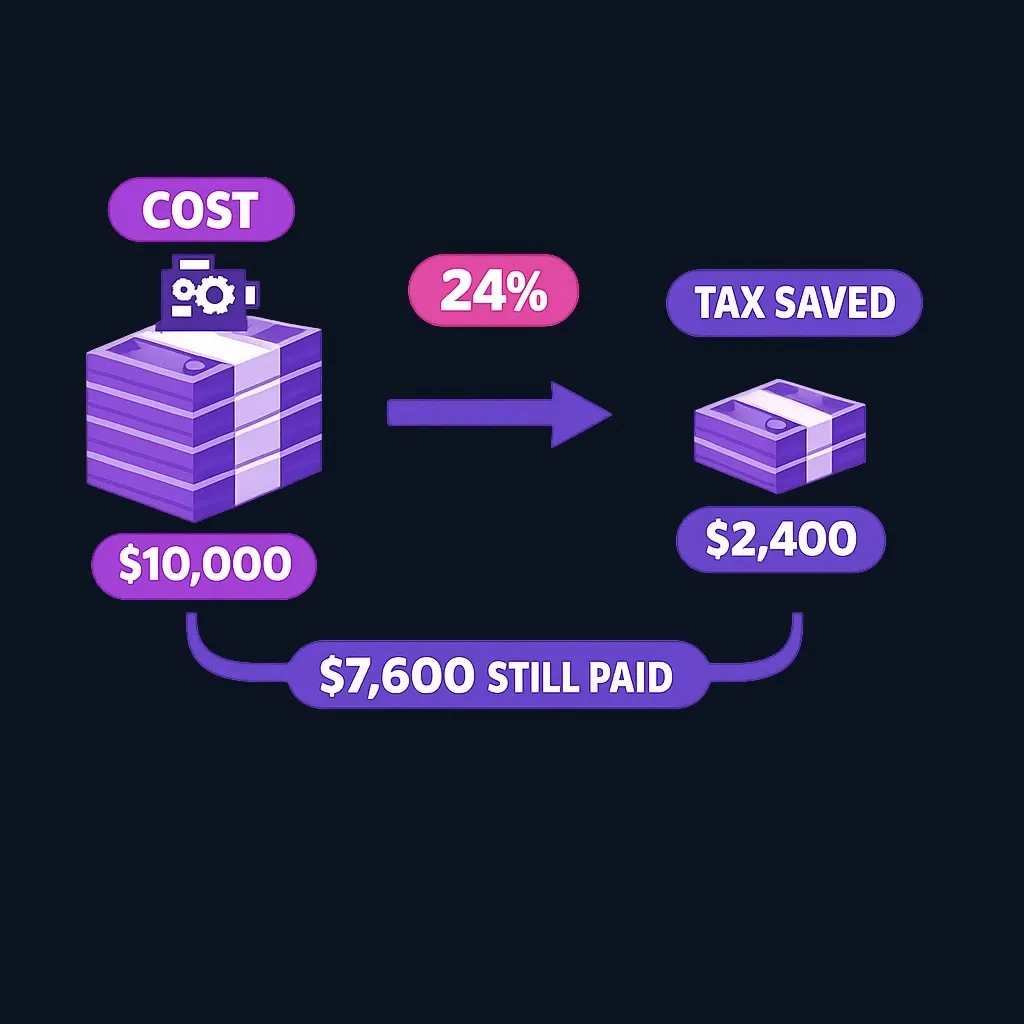
Buying equipment solely to obtain a deduction can therefore leave the business with less cash and an asset it did not need. Start with the commercial purpose and affordability, then consider the tax treatment. Financing the purchase changes the cash schedule but does not make the equipment free.
Practice trading with Finelo
Practice in a simulator, learn with bite-sized lessons, and build confidence before risking real money.
Compare this year with later years
Accelerating depreciation generally uses deductions sooner, leaving less depreciation on the same basis later. That can be useful, but the value depends on when the business can use the deduction and its expected tax position. A year with limited taxable income may require a different analysis from a profitable year, including how carryovers or losses are treated.
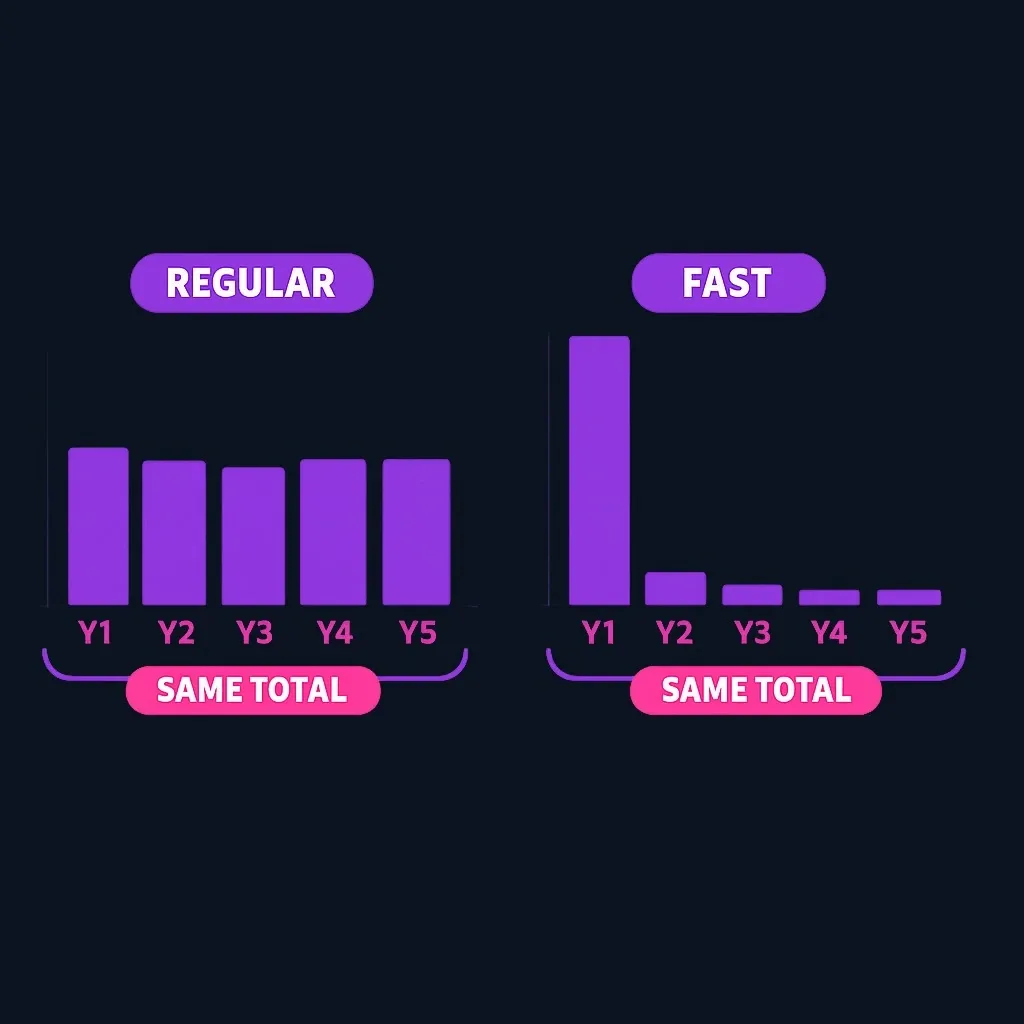
Ask the preparer to show the result using the available methods and elections under the current rules. Check which elections apply asset by asset and which operate by class. Also identify any state adjustment where state law does not follow the federal result.
Keep an asset register after the return is filed. Record basis, deductions claimed, business-use changes, and eventual sale or disposal. A large first-year deduction does not end the recordkeeping: later events can affect gain, recapture, or other tax consequences. The method should fit the asset's actual use and the business's longer-term plan, not just the largest deduction displayed by the software.
What is Section 179?
Section 179 lets a taxpayer elect to expense the cost of qualifying business property in the year it is placed in service instead of recovering that cost over several years through regular depreciation. The election is asset-level and subject to statutory limits and eligibility rules set by the IRS; Publication 946 describes electing the Section 179 deduction and which property may qualify for that election. Practical takeaway: Section 179 gives you control — you decide which qualifying assets to expense immediately — but that election is governed by IRS rules and annual limits.
What is Bonus Depreciation?
Bonus depreciation is a tax provision that permits additional first-year depreciation for qualifying property placed in service. It operates differently from Section 179 because it applies by property class under the tax code’s depreciation rules rather than by an individual elective write-off for each asset. For official guidance on claiming depreciation and related rules, consult Publication 946 linked above. Practical takeaway: bonus depreciation is typically used to take larger first-year deductions across groups of qualifying assets without making an individual election asset-by-asset.
How to compare your options
Use these criteria to decide which deduction (or combination) fits your situation:
- Taxable income availability: If you have enough taxable business income to absorb an immediate write-off, an asset-level election (Section 179) may be preferred; otherwise, consider the broader application of bonus depreciation.
- Asset control: Do you want to pick and choose which assets to expense now? Section 179 gives that control; bonus depreciation applies more broadly.
- Future tax planning: Expensing cost now reduces future depreciation deductions; consider years when you expect higher vs. lower tax rates.
- Complexity and recordkeeping: Section 179 elections are asset-specific; bonus depreciation works across classes and may simplify or complicate records depending on your purchases.
Practical checklist (use before year-end):
- List assets you placed in service this year.
- Estimate current-year taxable business income.
- Decide whether you want asset-by-asset control or a class-wide approach.
- Consult your tax preparer and Publication 946 for required elections and forms.
When to choose each option
- Consider Section 179 when you want to target specific assets for immediate expensing and you have sufficient business income to use the deduction.
- Consider bonus depreciation when you have large purchases across asset classes, need to maximize immediate deductions without per-asset elections, or when you want to accelerate deductions even if they exceed current income.
You can evaluate combinations: in many situations businesses apply an asset-level election where useful and use bonus depreciation for remaining basis. Discuss the optimal ordering and filing with a tax professional and consult IRS guidance when preparing returns.
Tradeoffs and caveats
- Permanence vs. flexibility: Large first-year deductions reduce future depreciation, which may increase future taxable income. Weigh near-term cash-flow benefits against longer-term tax planning.
- State conformity: State tax rules may differ from federal treatment for either deduction; always check state tax law or state tax forms for conformity adjustments.
- Recordkeeping and recapture: Expensing assets now can trigger recapture rules later if property is sold; see IRS materials on depreciation and recapture for guidance.
- Filing details: Electing Section 179 and claiming depreciation requires following IRS procedures and forms; use Publication 946 and IRS forms when filing.
Common mistakes to avoid (quick list):
- Assuming federal treatment automatically matches state treatment (verify state rules).
- Taking immediate expensing without checking whether you have taxable income to use it this year.
- Ignoring future tax and cash-flow implications when accelerating deductions.
What is the core difference between Section 179 and bonus depreciation?
Section 179 is an elective, asset-by-asset immediate expensing option for qualifying property; bonus depreciation is an additional first-year depreciation rule applied by property class. See IRS Publication 946 for official definitions and rules.
How do I claim Section 179 or bonus depreciation?
Follow IRS instructions in Publication 946 and on the applicable tax forms for your return year; the publication outlines electing Section 179 and claiming depreciation.
Can using these deductions create a tax loss?
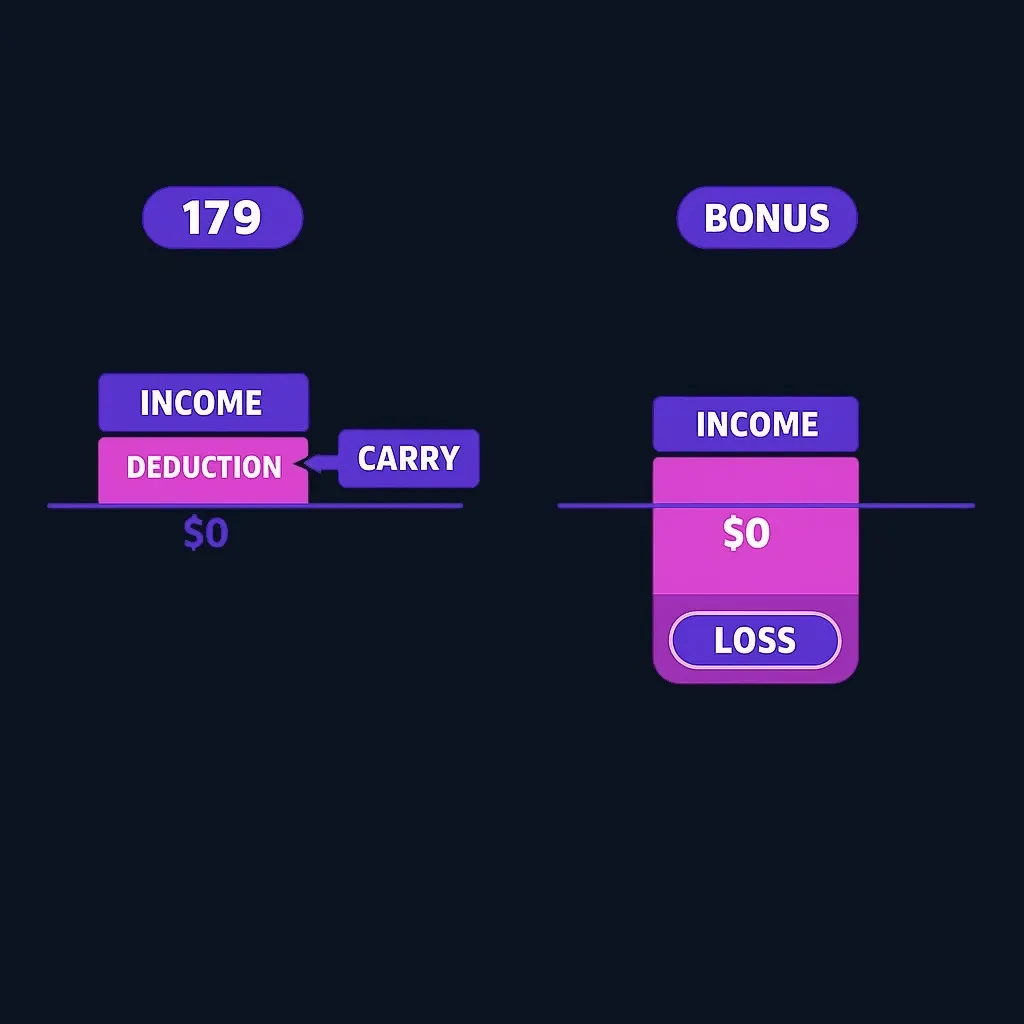
Section 179 is subject to its business-income limit, with eligible disallowed amounts carried forward. Bonus depreciation can create or increase a loss, but other loss limitations can restrict its use. Do not apply the same income rule to both methods.
Where can I get the authoritative rules and examples?
The IRS Publication 946 and related IRS FAQs provide the official rules, qualification tests, and examples for depreciation, Section 179 elections, and recapture. Use those sources when preparing elections and returns. Bring the asset list, acquisition documents, service dates, and business-use records to the return review. Ask the preparer to show both the current deduction and the basis remaining afterward.
For a business vehicle, first compare Standard mileage vs. actual vehicle expenses.
This guide covers U.S. rules. Finelo provides financial education, not personalized financial, investment, tax, or legal advice.
Financial LiteracyU.S. GuideFinancial Education
Practice trading with Finelo
Practice in a simulator, learn with bite-sized lessons, and build confidence before risking real money.
About the author
Finelo Team
The Finelo Team creates practical investing and trading education designed to help beginners learn faster with structured challenges, simulator practice, and bite-sized lessons.
Keep reading — Related articles

Financial Literacy
USDA vs. FHA loan
Compare location and income eligibility, down payments, credit conditions, and upfront and annual program charges for a home purchase.
Finelo Team

Financial Literacy
Term life vs. accidental death insurance
Compare broad term-life protection with accident-only coverage, including exclusions, underwriting, and the family income gap.
Finelo Team

Financial Literacy
Term life insurance laddering vs. one policy
Compare several term policies ending at different times with one policy, using coverage needs, costs, and future insurability.
Finelo Team