Last editorial review: September 28, 2026
Should you amend a tax return for a small amount?

Identify whether an error needs an amended return, then weigh filing deadlines, supporting records, and state-return effects.
8 min read
Practice trading with Finelo
Practice in a simulator, learn with bite-sized lessons, and build confidence before risking real money.
Want to learn more?
Practice in a simulator, learn with bite-sized lessons, and build confidence before risking real money.
Explore FineloExplore Finelo's 28-day challenges
Turn learning into a daily habit with guided challenge paths.
The size of the error is only part of the question. What matters is whether the filed return needs correction and how that correction affects tax, credits, filing status, or future years. There is no general rule that an error is safe to ignore because it is small.
Identify the type of error
| Issue | Usual starting point |
|---|---|
| Simple arithmetic mistake | The IRS often corrects it during processing |
| Missing form or schedule | The IRS may request it; follow any notice |
| Incorrect income, deduction, credit, or filing status | An amended return may be needed |
| IRS adjustment you disagree with | Follow the notice's response instructions and deadline |
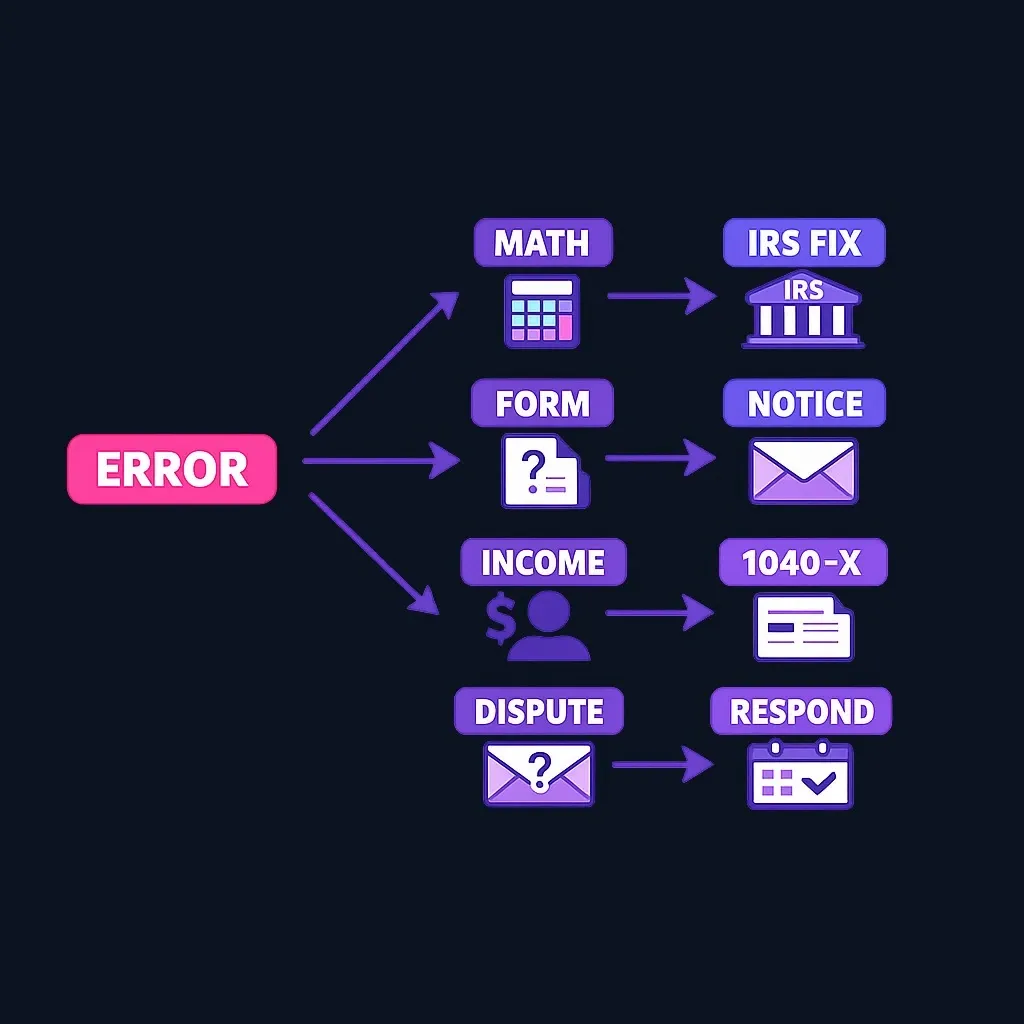
The IRS amended-return guidance explains when Form 1040-X is appropriate. Do not simply duplicate the original filing. A corrected return filed before the applicable original due date can supersede the first return; use the IRS procedure appropriate to the timing and issue.
Look for consequences beyond this year's refund
A small omission can change a loss carryforward, tax basis, or eligibility calculation. A federal correction may also affect a state return. The time and preparation cost matter, but they do not determine whether the original information was accurate.
If a correction produces a refund, the general claim deadline is the later of three years after filing or two years after paying the tax, with exceptions. Check the dates and special rules for your case in the IRS amendment FAQs.
A practical next step
Recalculate the complete return with the correction before deciding. Record what changes in tax, credits, carryovers, and state filing. If you owe more, prompt payment can limit additional charges; filing an amendment does not itself pay the balance.
Keep the original return, corrected calculation, and supporting document together. If you received an IRS notice, use its instructions rather than assuming an amendment is the right response. The goal is an accurate return and a clear record of how the error was resolved.
Recalculate the complete return before judging the size
A small omitted item can affect more than the line on which it belongs. It may change income-based credits, a deduction limitation, or a state return. Conversely, a corrected document may not change the final tax after the complete calculation. Establish the result before deciding what correction process applies.

Gather the original filed return, the new or corrected information, and any notices. Work from the return as processed if the IRS has made adjustments. Keep a clear explanation of what changed and why, so the amendment is not merely a different total with no supporting trail.
Consider payment and refund timing separately
If the correction increases tax, determine how to pay and how interest or penalties may apply. An amendment's processing time is not a reason to assume payment can wait without consequence. If it reduces tax, check the applicable refund-claim deadline and any special rule for the issue involved.
A federal correction can affect state filings, but state procedures and deadlines are separate. Check the return for each affected jurisdiction rather than assuming the federal amendment automatically updates them. If a preparer handled the original filing, give them the new document and ask what additional work is required.
Practice trading with Finelo
Practice in a simulator, learn with bite-sized lessons, and build confidence before risking real money.
Keep the correction easy to follow
Use the proper year and form, include the required changed schedules, and follow current filing instructions. Save a copy of the submission, supporting records, and payment confirmation. Track processing through the official service when available.
The useful question is not only whether the amount seems worth your time. It is whether the return remains accurate, what the correction changes, and which procedure resolves it. A careful recalculation often makes that decision clearer than a rule based on an arbitrary dollar cutoff.
When to Consider Amending Your Tax Return
Review amendment requirements when the filed return contains a substantive error. Concrete examples include:
- You omitted income that increases the tax you owe or reduces a refund in a way that raises penalties or interest risk.
- You discovered a missed deduction or credit that increases your refund or lowers your tax liability.
- You need to change filing status, dependent claims, or items that affect tax credits (for example, education or earned-income credits) and the change alters your tax calculations.
Decision framework: ask three questions. If the answer to any is “yes,” consider amending:
- Does the filed information need correction, even if the tax difference is small?
- Will this change eligibility for tax credits or affect filing status?
- Does the correction affect a carryover, basis, or another year or jurisdiction?
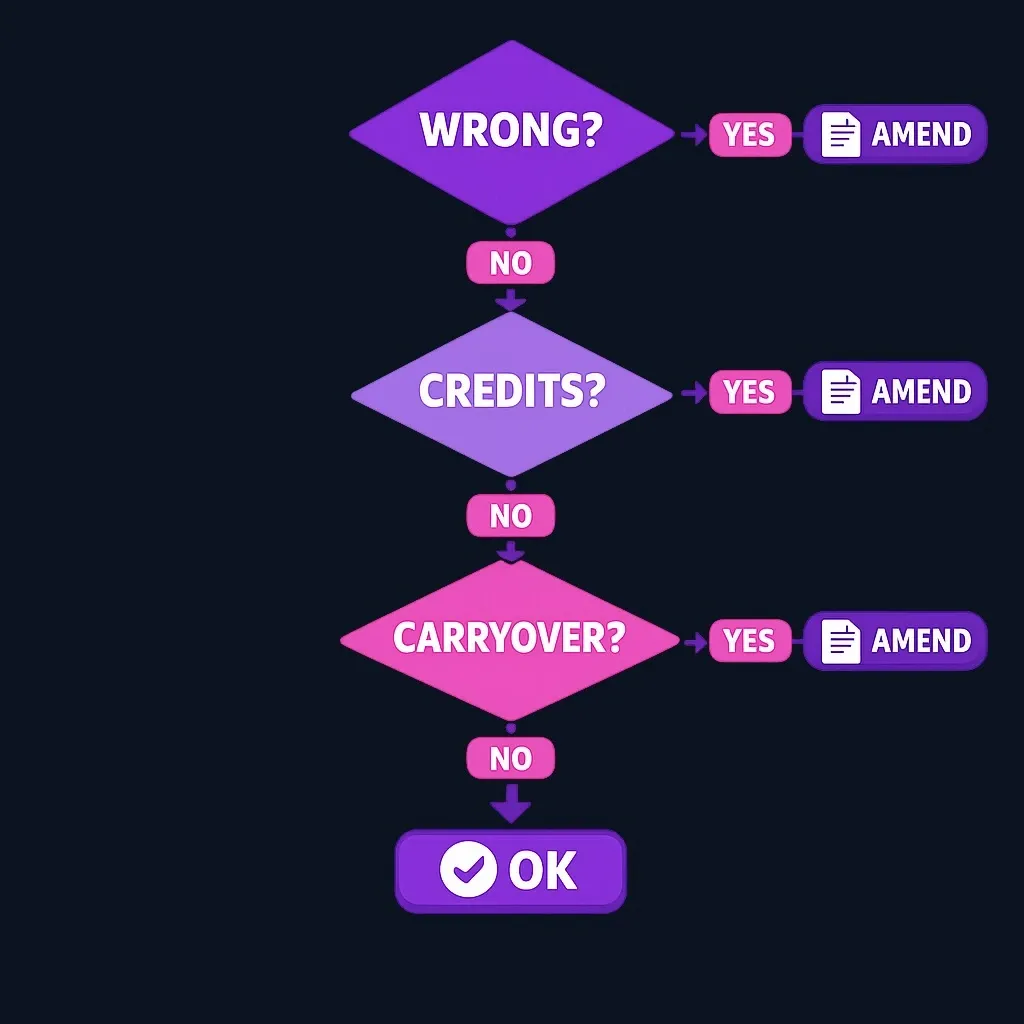
Whether someone else is likely to detect an error is not the test for accurate reporting. If you decide to amend, use Form 1040-X and attach documentation that supports the change. The IRS explains the purpose of Form 1040-X and what it corrects.
Distinguish a corrected calculation from changed return information
The IRS often corrects mathematical errors and may request a missing form. A substantive change to income, deductions, credits, dependents, or filing status is a different issue. Use the correction instructions for the type of error rather than treating a small dollar amount as permission to omit income or leave an inaccurate claim.
Read any IRS notice before filing another return. If the IRS has already adjusted the item, an amendment that ignores that adjustment can create confusion. Reconcile the filed return, later information, and any agency changes first.
How to File an Amended Tax Return
Step-by-step guide (federal):
- Confirm you need to amend. Review whether the change affects tax owed, refund, credits, or filing status. The IRS describes the purpose of an amended return and when to use Form 1040-X.
- Get Form 1040-X (Amended U.S. Individual Income Tax Return). Use the form to show original amounts, corrected amounts, and reasons for changes.
- Attach supporting documents. Include schedules, corrected W-2s or 1099s, and any forms that change because of the amendment.
- File the amended return. Follow the IRS instructions on Form 1040-X for filing. (The IRS page on amended returns provides the basic filing pathway and purpose.)
- Track the amended return. Use the IRS “Where’s My Amended Return?” tool to follow progress.
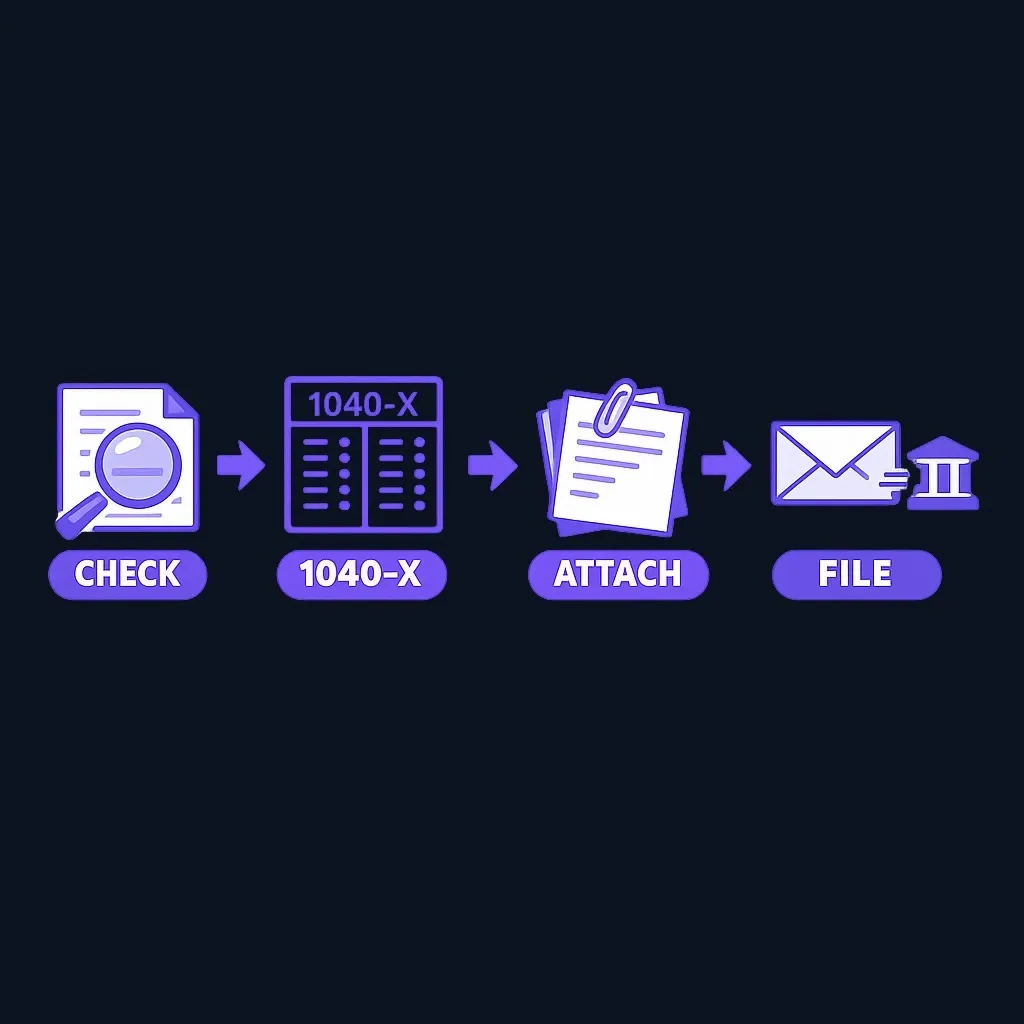
If a tax professional originally filed your return, first consult them: they may handle the amendment for you or advise whether it’s necessary.
Potential Consequences of Amending Your Return
Filing an amended return can have downstream effects you should consider:
- It may change your refund or balance due; if you owe extra tax, interest and penalties could apply depending on timing.
- Amending federal returns can prompt corresponding changes to state returns; many states require a separate amendment process.
- The IRS will review the amendment; in some cases, that triggers follow-up questions or additional documentation requests.
You can monitor the amendment’s progress through the IRS tools referenced earlier. If your amendment creates a tax liability, plan how you will pay any additional amount and understand that timing affects interest and potential penalties.
A small correction can have a wider effect
Imagine receiving a corrected income statement after filing. Before deciding that the difference is too small to matter, rerun the return with the corrected amount. Check not only tax due but also any credit, carryover, or related state calculation. The question is whether the filed information and resulting calculations need correction, not whether the income falls in a new headline bracket.
A different example is a simple arithmetic error already corrected in an IRS notice. Compare the notice with the filed return and your records. Filing an amendment that repeats the agency's correction without understanding it may add confusion. Keep the notice, confirm whether you agree, and follow its response instructions where a response is needed.
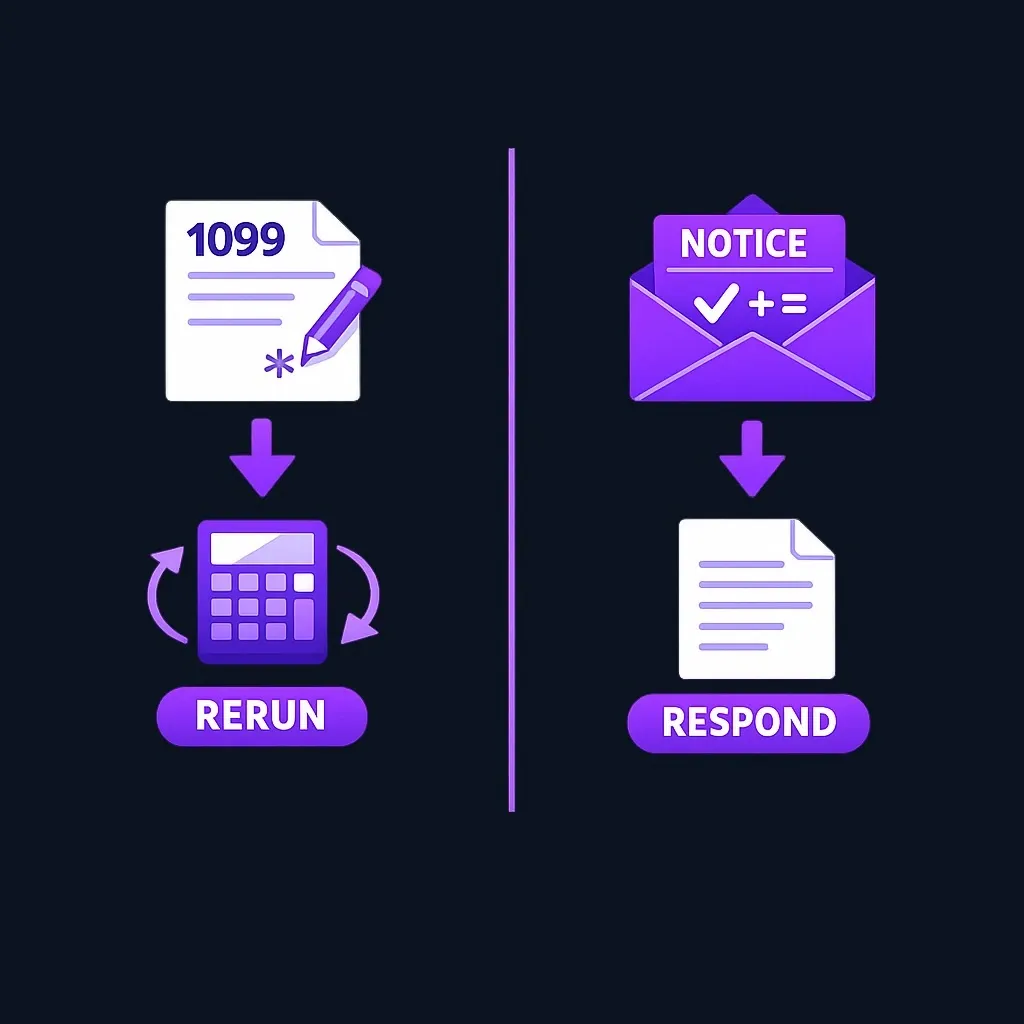
If the expense of professional help exceeds a possible refund, you can still ask which filing procedure applies and whether the correction is required. Cost is a practical consideration in obtaining help; it is not a universal exemption from accurate reporting.
What is an amended return?
An amended return corrects or changes a previously filed Form 1040-series return. The IRS directs taxpayers to use Form 1040-X for corrections and explains when an amendment is appropriate.
When should I file an amended return?
Review Form 1040-X requirements when income, deductions, credits, filing status, or other reported information needs correction. A small tax difference is not a general exemption. Arithmetic errors or changes already handled in an IRS notice may follow a different process.
How do I track an amended return?
Track an amended return with the IRS “Where’s My Amended Return?” tool described and linked by the IRS.
Can I amend a return that was filed by a tax preparer or tax software?
Yes. If a preparer filed the original return, contact them first — they can usually prepare and file the amendment. If you used software, check whether the software supports preparing Form 1040-X or if you need to file manually. For the federal form and instructions, see the IRS guidance on amended returns.
If you are unsure which filing action applies, compare Tax extension vs. amended return.
This guide covers U.S. rules. Finelo provides financial education, not personalized financial, investment, tax, or legal advice.
Financial LiteracyU.S. GuideFinancial Education
Practice trading with Finelo
Practice in a simulator, learn with bite-sized lessons, and build confidence before risking real money.
About the author
Finelo Team
The Finelo Team creates practical investing and trading education designed to help beginners learn faster with structured challenges, simulator practice, and bite-sized lessons.
Keep reading — Related articles

Financial Literacy
USDA vs. FHA loan
Compare location and income eligibility, down payments, credit conditions, and upfront and annual program charges for a home purchase.
Finelo Team

Financial Literacy
Term life vs. accidental death insurance
Compare broad term-life protection with accident-only coverage, including exclusions, underwriting, and the family income gap.
Finelo Team

Financial Literacy
Term life insurance laddering vs. one policy
Compare several term policies ending at different times with one policy, using coverage needs, costs, and future insurability.
Finelo Team