Last editorial review: September 28, 2026
Tax extension vs. amended return
An extension gives more time to file; an amendment corrects a filed return. Compare payment deadlines and the right next step.
9 min read
Practice trading with Finelo
Practice in a simulator, learn with bite-sized lessons, and build confidence before risking real money.
Want to learn more?
Practice in a simulator, learn with bite-sized lessons, and build confidence before risking real money.
Explore FineloExplore Finelo's 28-day challenges
Turn learning into a daily habit with guided challenge paths.
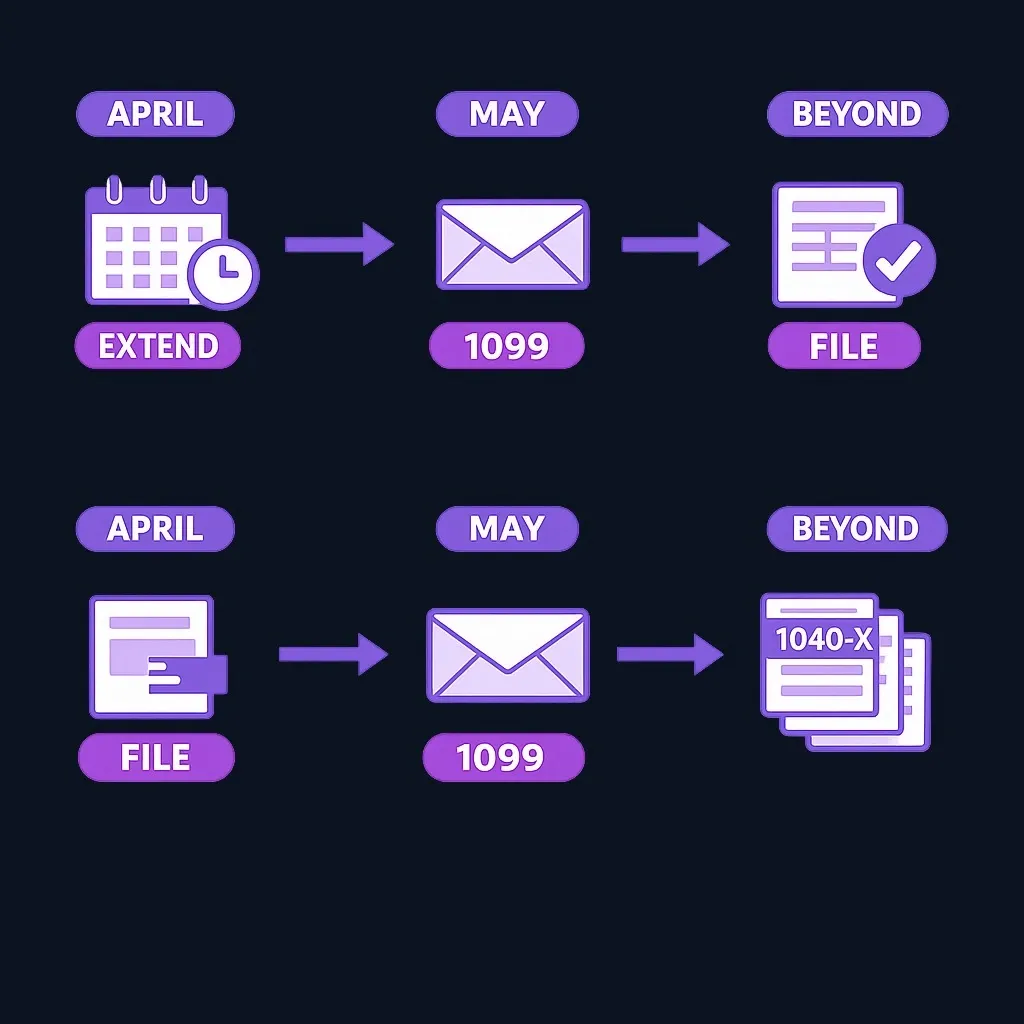
A filing extension gives you more time to submit a return. An amended return corrects a return already filed. The right step depends on whether the original return has been filed and what needs to change.
An extension to file generally does not extend the time to pay.
Match the action to the situation
| Situation | Usual next step |
|---|---|
| You have not filed and need more time | Request an eligible filing extension by the deadline |
| You filed but reported something incorrectly | Determine whether Form 1040-X is needed |
| You cannot pay the full balance | File on time or obtain an extension, and address payment separately |
| You received an IRS notice | Follow the notice's instructions and deadline |
The IRS extension guide explains how eligible individual taxpayers request additional filing time. Special deadlines can apply for disasters, overseas taxpayers, and other situations.
Estimate and pay while preparing the return
If you request an extension, make a reasonable estimate of the tax and pay what you can by the applicable payment deadline. Interest and penalties can apply to unpaid amounts. The final return reconciles the estimate with actual tax.
For a hypothetical taxpayer waiting for a corrected income statement, an extension can provide preparation time. It does not make an unpaid expected tax balance disappear.
Amend only when the filed return needs it
The IRS amended-return FAQs distinguish corrections from simple errors the IRS may handle during processing. An amendment is not a substitute for filing an original return, and a duplicate original return is not the usual correction route. A corrected return filed by the applicable original due date can supersede the earlier return under IRS procedures.
Keep the original documents, corrected figures, payment confirmations, and filing acknowledgments. Check whether a federal change also affects a state return.
First identify the return's status, then deal separately with filing, payment, and correction deadlines. That prevents a common mistake: solving the paperwork problem while overlooking the unpaid tax.
Separate three dates in the filing process
Write down the original filing deadline, the applicable payment deadline, and the extended filing deadline if an extension is obtained. They do not become one date merely because the return is unfinished. Special circumstances can alter deadlines, so use the rules for the taxpayer and tax year involved.
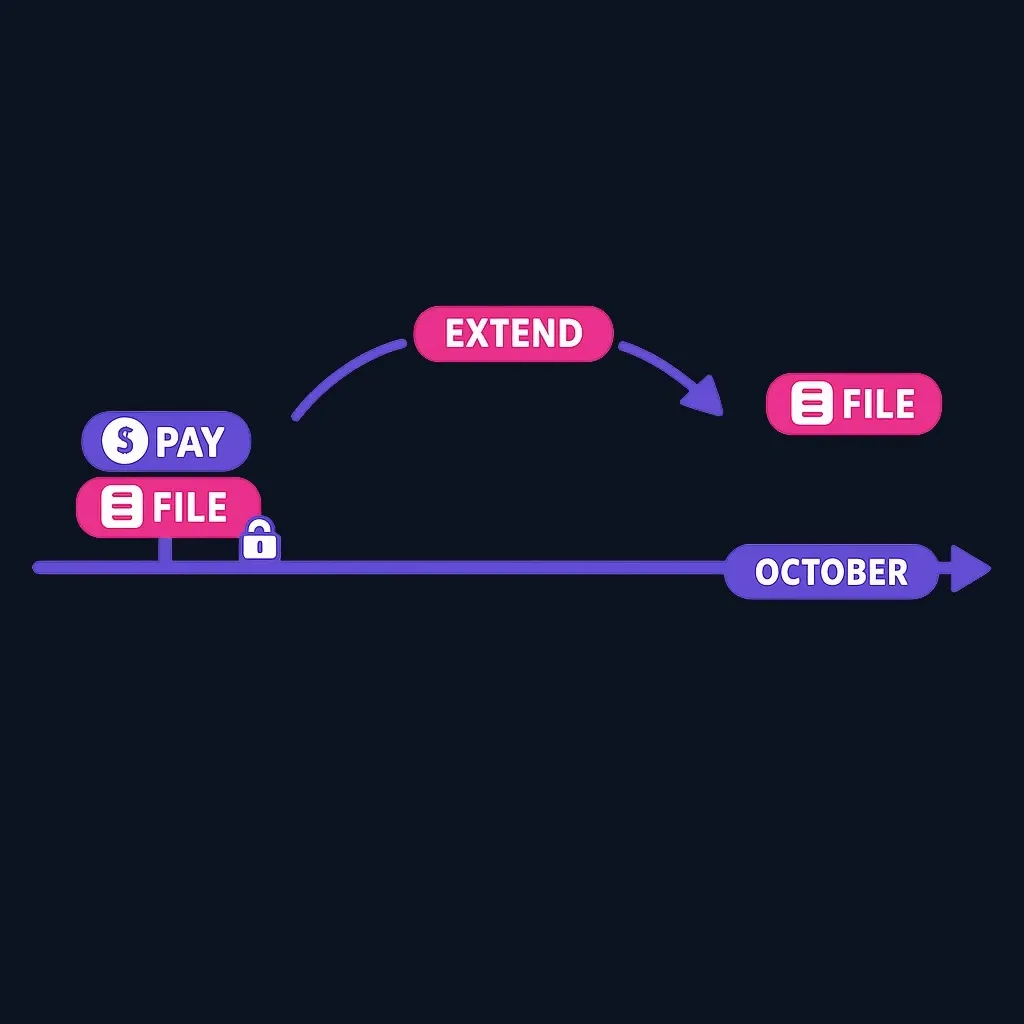
If documents are missing, estimate the tax from the best available records and follow the extension and payment instructions. Keep proof of the extension request and any payment. An extension gives time to prepare an accurate original return; it is not a way to postpone estimating the obligation indefinitely.
Reconcile later information with what was already filed
After filing, compare a corrected form or newly found record with the original return. Determine whether it changes income, deductions, credits, filing status, or tax. Read any IRS notice as well, since the agency may already have adjusted an item or requested information.
A mathematical correction handled by the IRS is not the same as an omitted income item. Use the appropriate correction process rather than automatically filing a second original return. Where an amendment is required, explain the changes clearly and include the relevant schedules under current instructions.
Check state requirements separately. A federal extension or amendment does not automatically satisfy every state's process. Keep all confirmations and copies together so the filing history shows the original submission, extension if any, later corrections, and payments. That record is especially helpful when different actions occur months apart.
Practice trading with Finelo
Practice in a simulator, learn with bite-sized lessons, and build confidence before risking real money.
What is a Tax Extension?
A tax extension is a formal request to push the deadline for filing your federal income tax return beyond the normal April due date. The request generally needs to reach the IRS by the applicable original filing deadline.
Key practical points about extensions
- Purpose: Buy time to finish and file an accurate return when you cannot meet the filing deadline. The IRS describes the extension as a request you must make by the original April deadline.
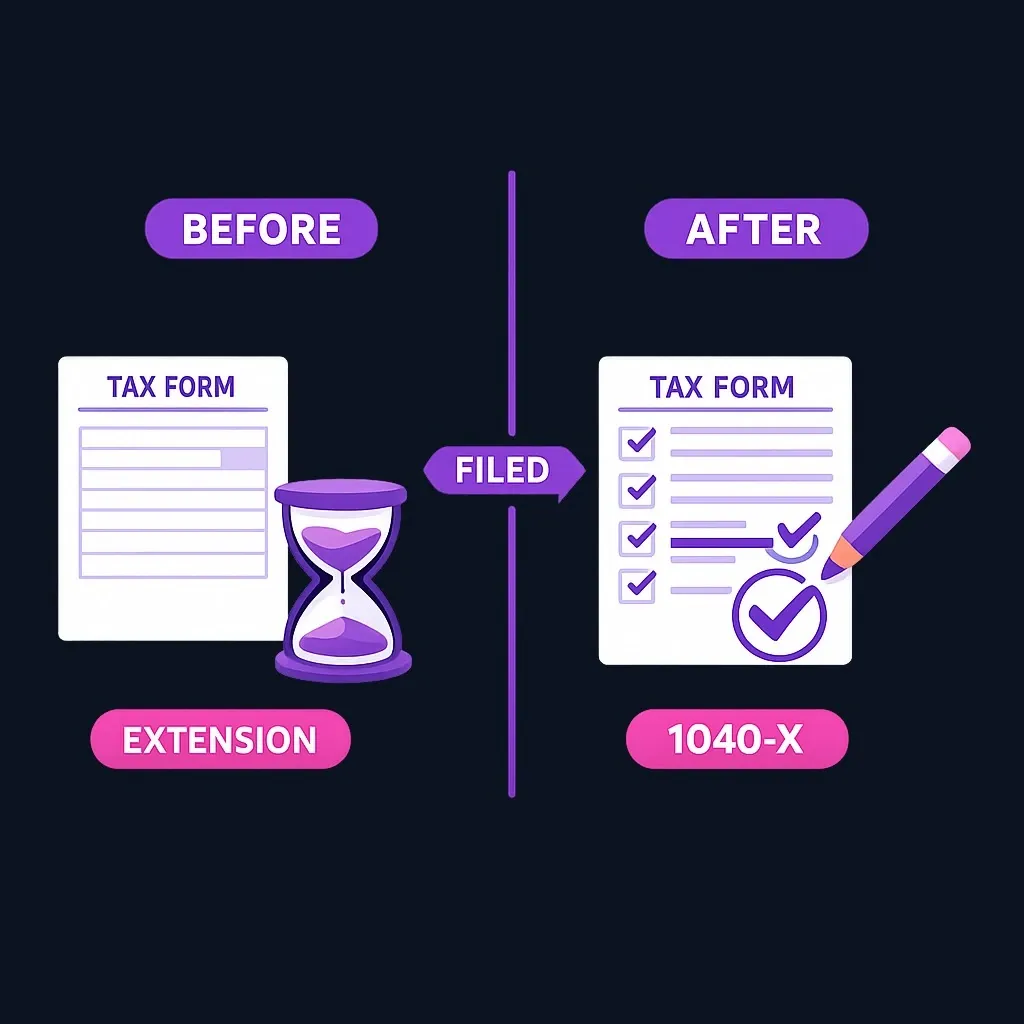
- Effect: An extension postpones the filing deadline. It does not, by itself, correct mistakes on a return already filed. If you later find errors after filing, you would submit an amended return (see below).
- Timing: Request the extension by the filing due date to avoid late-filing issues. For most calendar-year individual returns, that is the April deadline; special extensions or relief may change the applicable date.
What is an Amended Return?
An amended return corrects or changes information on a tax return you already filed. Use Form 1040-X when the filed return needs changes to income, deductions, credits, dependents, filing status, or other reported tax information.
Key practical points about amended returns
- Purpose: Fix errors or omissions that alter your tax liability or refund after the original return is filed.
- When to use: Use Form 1040-X when you need to change filing status, income, credits, deductions, or other tax items listed by the IRS.
- Interaction with extensions: An amended return corrects a filed return. An extension delays filing so you can avoid filing an incorrect return in the first place.
How to compare your options
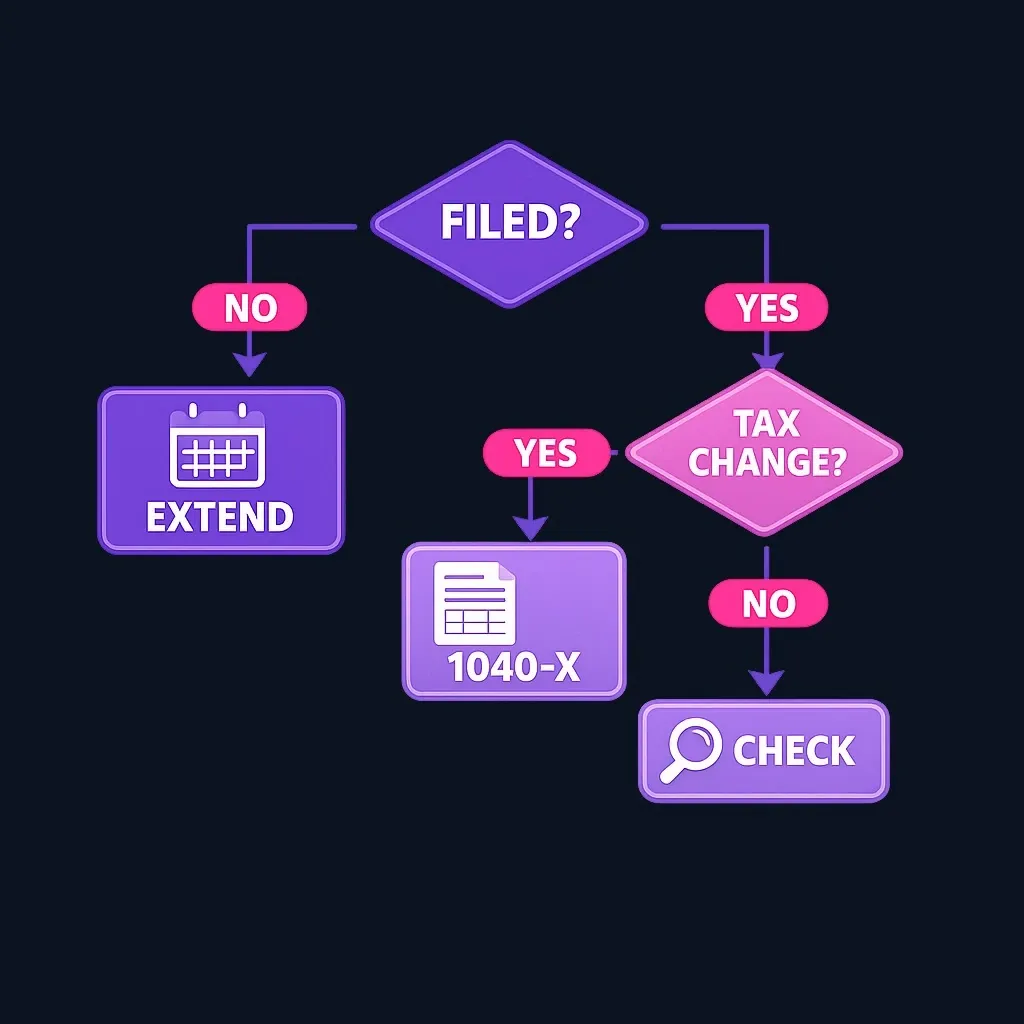
Decide between an extension and an amendment by checking these concrete criteria in order:
- Do you already have a filed return for the tax year?
- No → Consider an extension to avoid filing an incorrect return at the deadline.
- Yes → Determine whether the issue is a change to reported tax information, an arithmetic error, or a matter already addressed by an IRS notice; use the appropriate correction procedure.
- Will the missing or incorrect item change tax owed or refund?
- If yes, an amended return corrects your tax liability and avoids ongoing errors on IRS records.
- Can you gather the needed documentation before the April filing deadline?
- If gathering docs will take longer, an extension gives breathing room to collect accurate information and may avoid the need to amend.
Practical tip: when in doubt before the filing deadline, an extension often reduces paperwork later. If you’ve already filed, prioritize accuracy and timeliness in submitting an amended return when required.
When to choose each option
When to file an extension
- Choose an extension if you need more time to gather W-2s, 1099s, receipts, or to resolve complex tax situations before filing. The IRS tells taxpayers to request an extension by the April filing due date when they need more time to file.
When to file an amended return
- File Form 1040-X if you discover after filing that you reported the wrong filing status, omitted income, or misreported credits or deductions that affect your tax outcome.
Scenario guidance
- Missing a late-arriving 1099 before filing? If you can’t obtain it by the deadline, an extension to file may be preferable.
- Found an error after filing that increases tax owed? File an amended return to correct tax records and resolve outstanding liability.
Tradeoffs and caveats
Common tradeoffs
- Administrative overhead: Filing an extension is a single action to postpone filing; filing an amended return adds extra paperwork after you’ve already processed a return.
- Accuracy vs timing: An extension buys time to file accurately; an amendment fixes accuracy after the fact. If you file on time without an extension and later must amend, expect additional steps.
Important caveats
- Request an extension by the April filing due date as the IRS requires for extension requests.
- Use Form 1040-X for changes the IRS lists (filing status, income, deductions, credits, dependents, withholding).
- Tax compliance: filing an extension delays the deadline to submit paperwork. It generally does not extend the payment deadline; estimate and pay what is due by the applicable original deadline.
Common mistakes and how to avoid them
- Mistake: Filing on time without all documents and then assuming small omissions won't matter. Fix: If you foresee incomplete or uncertain items, request an extension to reduce the need for an amendment.
- Mistake: Waiting too long to file an amended return after discovering an error. Fix: File Form 1040-X promptly when an error affects tax liability or refund.
Hypothetical filing examples
Example 1 — Missing a late 1099: You expect a 1099-NEC that arrives in May. If you face the April filing deadline and cannot confirm the amount, filing an extension allows you to include that income on the original return and avoid a later amendment. The IRS advises requesting an extension by the filing due date if you need more time to file. Example 2 — Discovered omitted income after filing: You file on time but later receive a corrected pay statement showing additional taxable income. Since the return is already filed, you would file Form 1040-X to correct the income and any tax due. Example 3 — Wrong filing status claimed: If you filed under the wrong status and it changes your tax calculation or refund, amend using Form 1040-X to correct your filing status and recompute tax consequences. Practical workflow tip: Keep a dedicated folder for the tax year with W-2s, 1099s, receipts, and notes. If you find yourself missing documents close to the April deadline, an extension can convert a hurried filing into a single clean submission rather than a later amended return.
What is the difference between a tax extension and an amended return?
A tax extension postpones the deadline to file your return; an amended return corrects a return you already filed. The IRS instructs taxpayers to request an extension by the April filing due date if they need more time to file, and to use Form 1040-X when correcting filed returns for issues like filing status, income, or deductions.
How do I know if I need to file an amended return?
File an amended return if you discover after filing that you reported the wrong filing status, omitted income, or need to change deductions or credits that affect your tax outcome. The IRS lists those specific reasons as appropriate uses for Form 1040-X.
What are the consequences of filing an extension?
Filing an extension delays the deadline to submit your return; the IRS requires the extension request by the April filing due date if you need more time to file. An extension to file generally does not extend the time to pay.
Can I file an extension if I owe taxes?
If you need more time to file, request an extension by the April filing due date per IRS instructions. If you owe taxes, consult IRS guidance or a tax professional about payment options and any responsibilities tied to the original due date.
For an error you have already identified, read Should you amend a tax return for a small amount.
This guide covers U.S. rules. Finelo provides financial education, not personalized financial, investment, tax, or legal advice.
Financial LiteracyU.S. GuideFinancial Education
Practice trading with Finelo
Practice in a simulator, learn with bite-sized lessons, and build confidence before risking real money.
About the author
Finelo Team
The Finelo Team creates practical investing and trading education designed to help beginners learn faster with structured challenges, simulator practice, and bite-sized lessons.
Keep reading — Related articles

Financial Literacy
USDA vs. FHA loan
Compare location and income eligibility, down payments, credit conditions, and upfront and annual program charges for a home purchase.
Finelo Team

Financial Literacy
Term life vs. accidental death insurance
Compare broad term-life protection with accident-only coverage, including exclusions, underwriting, and the family income gap.
Finelo Team

Financial Literacy
Term life insurance laddering vs. one policy
Compare several term policies ending at different times with one policy, using coverage needs, costs, and future insurability.
Finelo Team


