Last editorial review: September 28, 2026
Standard deduction vs. itemized deductions

Compare eligible itemized expenses with the applicable standard deduction, while keeping tax credits and separate deductions distinct.
9 min read
Practice trading with Finelo
Practice in a simulator, learn with bite-sized lessons, and build confidence before risking real money.
Want to learn more?
Practice in a simulator, learn with bite-sized lessons, and build confidence before risking real money.
Explore FineloExplore Finelo's 28-day challenges
Turn learning into a daily habit with guided challenge paths.
The standard deduction is a set amount based on your filing circumstances. Itemizing means adding up eligible expenses under the relevant deduction rules. If you can choose, compare the allowable totals and the effect on your complete return.
A deduction reduces taxable income. It does not reduce the tax bill dollar for dollar like a credit can.
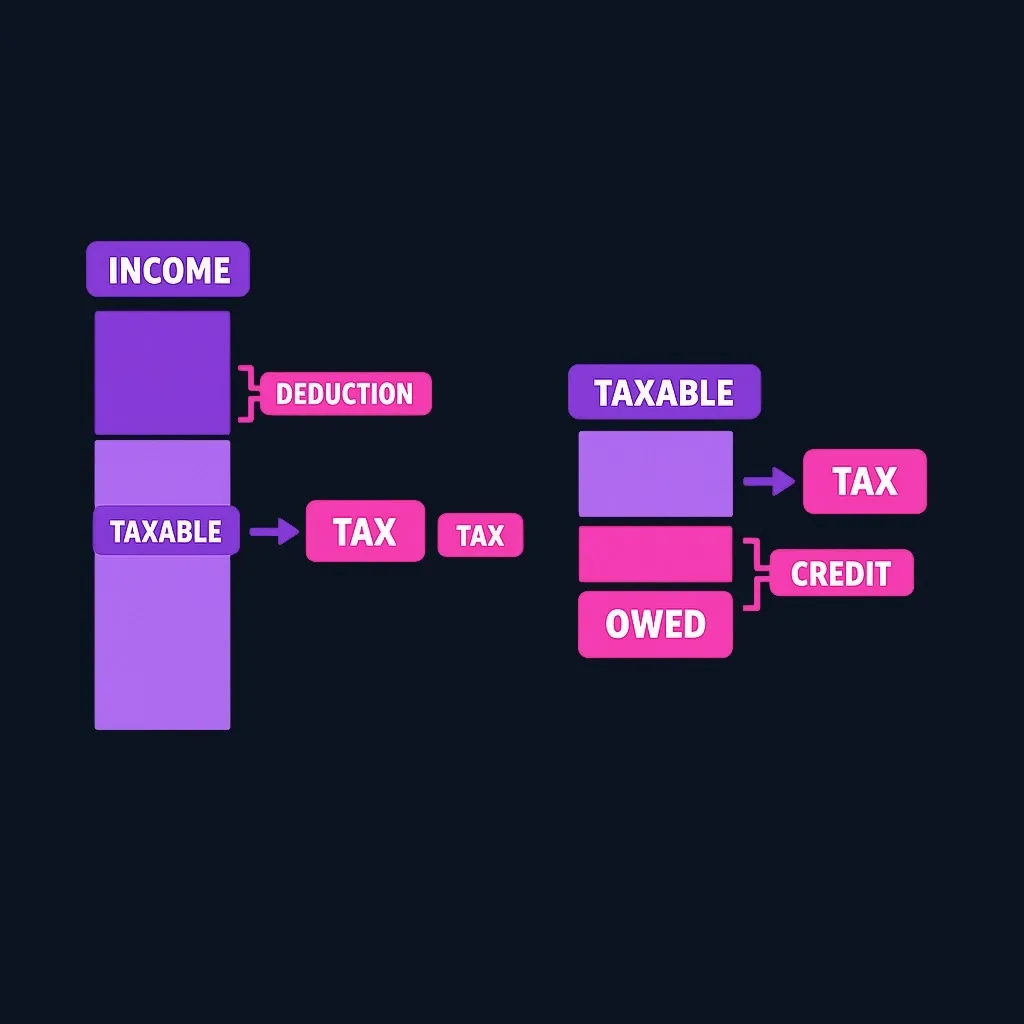
Compare the methods
| Standard deduction | Itemized deductions |
|---|---|
| Amount depends on tax year and filing circumstances | Amount depends on qualifying expenses and limitations |
| Usually less recordkeeping | Supporting records are needed |
| Available only if you qualify | Reported on Schedule A |
| Often preferable when eligible expenses are lower | May help when eligible expenses exceed the standard amount |
The IRS itemizing guide explains the choice and exceptions. For example, a married person filing separately generally cannot take the standard deduction if the spouse itemizes. Other eligibility restrictions apply.
Count only allowable expenses
Mortgage interest, state and local taxes, charitable contributions, and certain medical expenses can be relevant, but each category has conditions or limits. Your total spending is not automatically your deduction total.
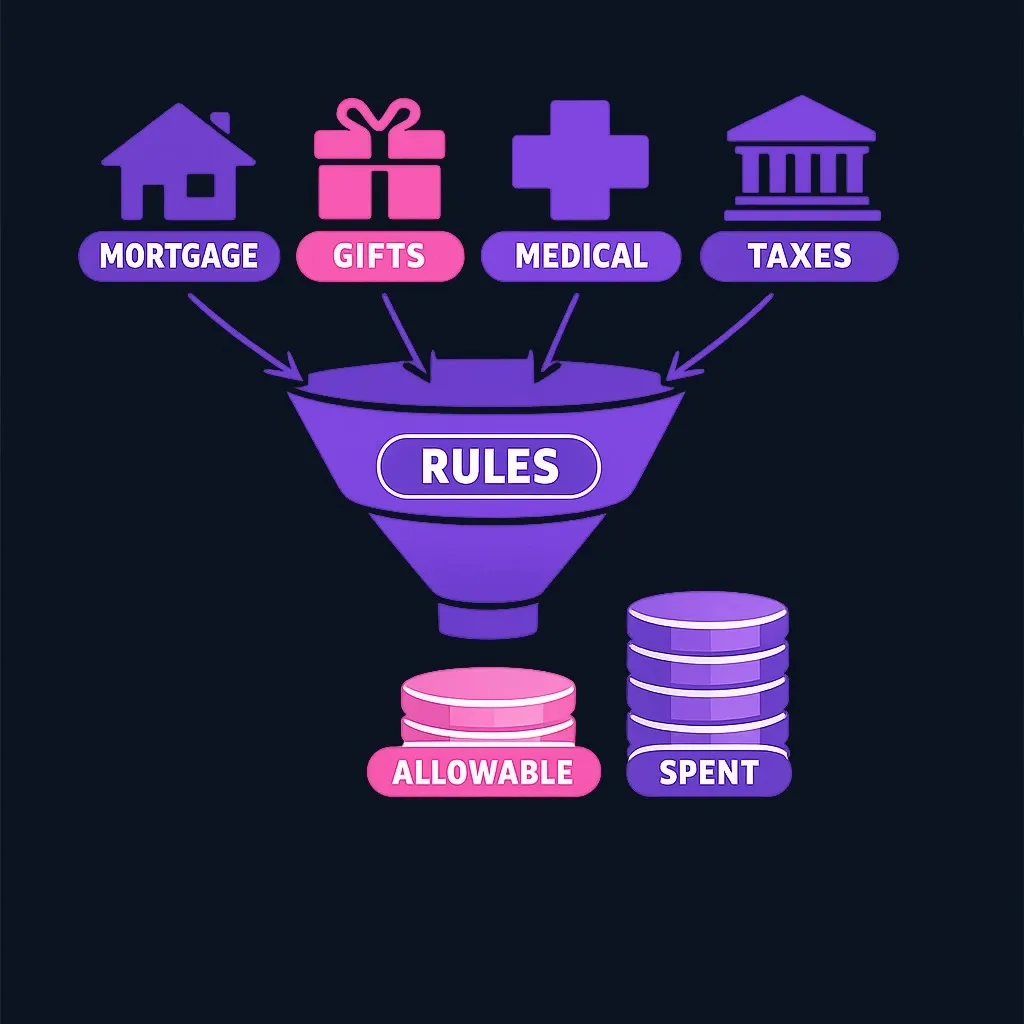
Use the amounts and rules for the return's tax year. Age, blindness, dependency, filing status, and current legislation can affect the calculation. Some deductions are available separately from itemizing, so do not assume the choice controls every deduction on the return.
Work through a simple comparison
If your hypothetical allowable itemized total exceeds your applicable standard deduction by $2,000, itemizing reduces taxable income by another $2,000. At an assumed 22% marginal rate, that suggests $440 of federal tax effect before other interactions. It is not a $2,000 refund.
Calculate both methods in the complete return and check state treatment separately. Keep receipts and records even when the difference appears small. The best method is the one permitted by the rules that produces the better overall result for that year.
Compare allowable deductions, not total spending
Make a list of potential Schedule A categories and apply the rules for each one before adding them. A medical bill, property-tax payment, donation, or mortgage-interest statement does not automatically mean the full amount is deductible. Eligibility, limits, thresholds, and substantiation determine the allowable total.
Then identify the standard deduction that applies to the correct tax year and filing situation. Additional amounts or restrictions can affect the comparison. Do not use last year's figure or assume that two households with the same expenses have the same available deduction.
Translate the difference into tax savings
Suppose a purely hypothetical comparison gives an allowable standard deduction of $20,000 and allowable itemized deductions of $22,000. Itemizing provides $2,000 more deduction. If that entire difference reduces taxable income at a 22% marginal rate in the simplified example, the income-tax difference is $440—not $2,000. These are invented comparison figures, not current statutory deduction amounts.
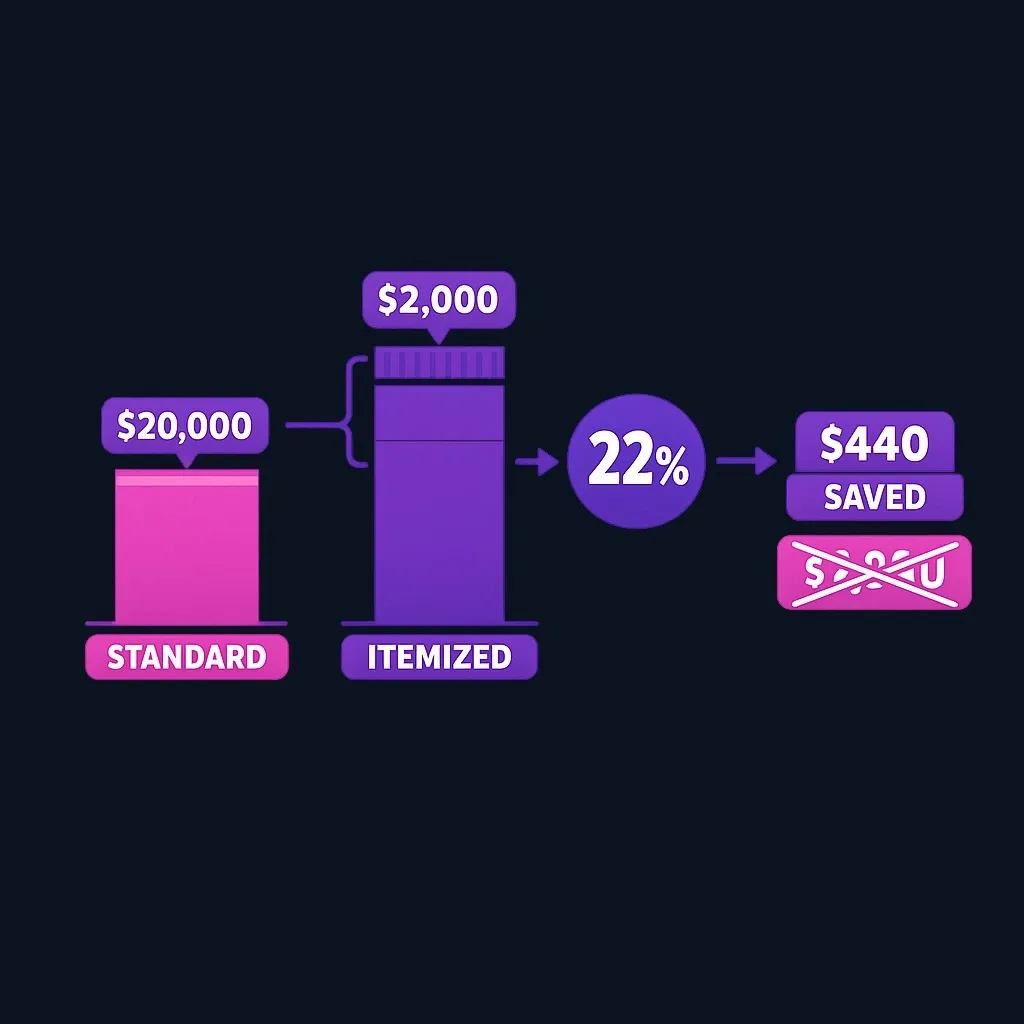
The example shows why a deductible purchase is not free. Spending extra money solely to increase deductions can cost more than the tax saved. Start with legitimate expenses and intended giving, then compare how the tax rules apply.
Practice trading with Finelo
Practice in a simulator, learn with bite-sized lessons, and build confidence before risking real money.
Keep other deductions and state treatment separate
Some deductions or adjustments are available outside Schedule A under their own rules. Choosing the standard deduction does not automatically mean abandoning every other tax benefit. Review each item in the appropriate part of the return rather than treating all deductions as one mutually exclusive choice.
A state return may also follow different rules or interact with the federal election. If the federal difference is small, check the combined result before filing. Retain receipts and statements even when you expect to use the standard deduction so a later correction or change in circumstances can be evaluated from records rather than memory.
What is the Standard Deduction?
The standard deduction is a fixed-dollar reduction in your taxable income offered by the IRS to most filers. It replaces the need to track and report individual deductible expenses; instead you subtract the set amount appropriate for your filing status when computing taxable income.
How to treat it
- It's a single-line, pre-set deduction you claim on your federal return. The IRS updates the amount each tax year, so use the current IRS tables when filing.
- You cannot claim the standard deduction and also claim the same itemized deductions for the same year. You choose one approach when preparing your return.
Practical note: because the standard deduction is simple and requires no receipts, many taxpayers choose it. The IRS explicitly notes that most people take the standard deduction. Always check the IRS pages for the current yearly amounts before filing.
What are Itemized Deductions?
Itemized deductions are specific expenses that the IRS allows you to list (itemize) on Schedule A. Instead of taking the standard deduction, you total allowable expenses and subtract that sum from your income — itemizing is often preferable when that allowable total is larger, but eligibility restrictions and the combined federal/state result still matter.
Common categories (examples cited by the IRS)
- Mortgage interest, charitable contributions, certain medical and dental expenses, and other qualifying costs are typical itemizable expenses. The IRS lists these types on its guidance for credits and deductions for individuals.
- Itemizing requires documentation: receipts, statements, or other records that substantiate the amounts you claim.
How the process works
- Gather records for eligible expenses.
- Total the eligible amounts on Schedule A.
- Compare the itemized total to your standard deduction for the same filing status.
- If both methods are available, compare their effect on the full federal and state returns.
How to compare your options
Use a short decision checklist, then apply a simple arithmetic comparison to decide. Checklist (step-by-step)
- List each eligible itemized expense you can document for the tax year.
- Sum those itemized expenses to get your itemized total (Schedule A subtotal).
- Look up the standard deduction for your filing status for the tax year on the IRS site.
- If both methods are available, the larger allowable federal deduction is a starting point; verify the overall result and any state interaction.
Algebraic worked example (variables only)
- Let S = standard deduction for your filing status (lookup on IRS).
- Let I = sum of your substantiated itemized expenses.
- Preliminary comparison: if I > S, itemizing provides the larger federal deduction. Check eligibility and the complete return before making the election.
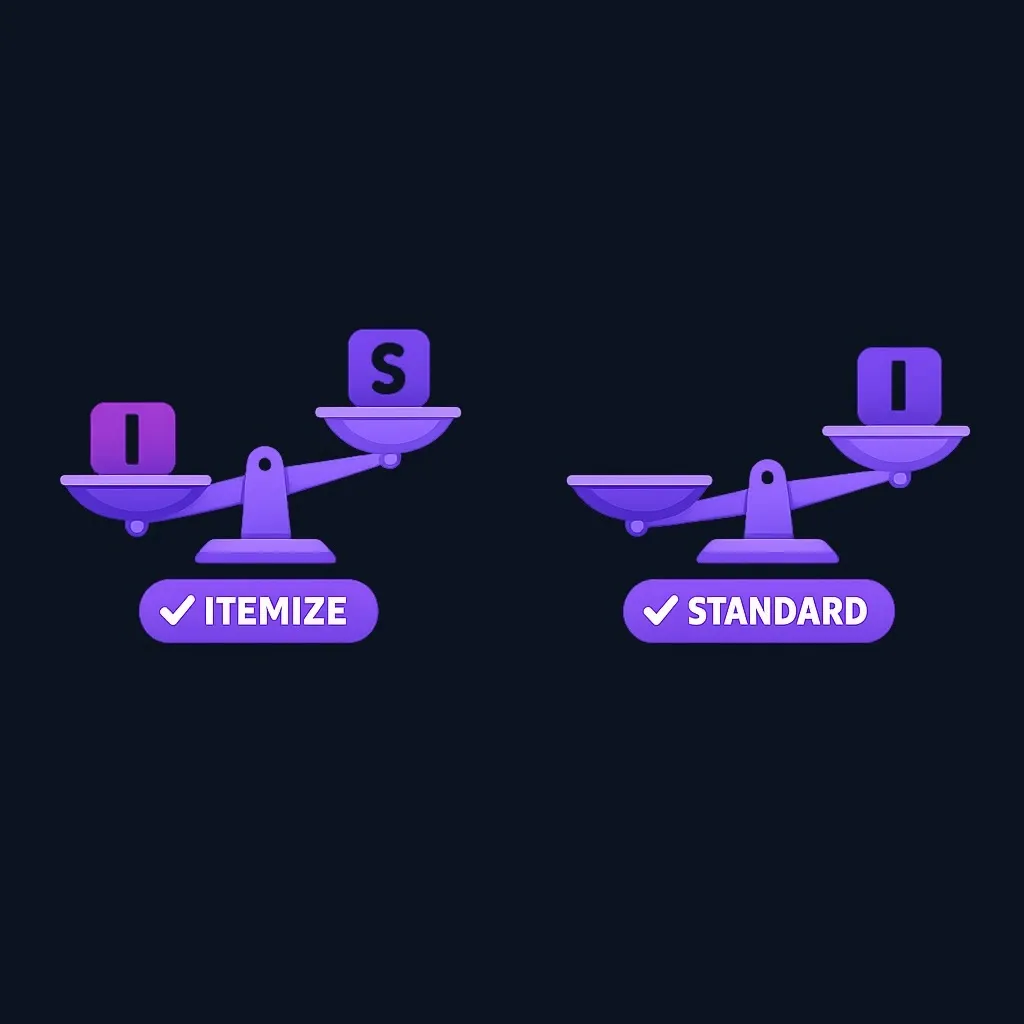
Worked practical illustration (no specific dollar amounts)
- You collect receipts for mortgage interest, qualifying medical costs, and charitable gifts. Apply each category’s limits to those expenses before computing I.
- If that I exceeds the S value from the IRS table you would generally itemize; if not, you take S and skip Schedule A.
When to choose each option
When the standard deduction is likely better
- You have relatively few deductible expenses or your eligible expenses are small or hard to substantiate. The standard deduction reduces the records needed for Schedule A. It does not remove the need to substantiate other items on the return.
When itemizing is likely better
- You have multiple significant, documentable deductible expenses (for example, mortgage interest, large qualifying medical expenses, or substantial charitable contributions). If their sum (I) is larger than the standard deduction (S), itemizing usually reduces taxable income more.
Situations that commonly push taxpayers toward itemizing
- Recent home purchase with sizable mortgage interest.
- Large out-of-pocket medical or dental expenses for the year (that qualify under IRS rules).
- Unusually large charitable donations in one year. For each situation, total the eligible amounts and compare to the standard deduction before filing.
Tradeoffs and caveats
- Simplicity vs. potential savings: the standard deduction is simple and requires no receipts; itemizing can give a bigger deduction but takes time and documentation.
- Year-to-year variability: itemizing can make sense some years but not others — re-evaluate annually as circumstances change (new home, major medical event, or large gifts).
- Documentation risk: itemized deductions require proof. If you choose to itemize, retain records in case of IRS questions.
- The IRS notes that most taxpayers take the standard deduction, reflecting that for many filers it provides sufficient tax benefit with less complexity.
Practical tip: if you’re close to the standard deduction threshold in a given year, consider accelerating or deferring deductible actions (for example, Charitable giving) into the year where itemizing would be more beneficial — only after confirming eligibility and timing with tax guidance or a professional.
Common Mistakes to Avoid
- Not actually adding itemized totals before assuming standard deduction is larger: compute I (itemized total) and compare to S (standard) each year.
- Failing to keep records: without receipts or bills you may not be able to substantiate itemized claims.
- Double-counting expenses or claiming non-eligible amounts: only include expenses that the IRS permits and that you can document.
- Treating one year’s choice as permanent: life changes can shift which option is better; revisit annually.
- Overlooking state-federal differences: some states handle deductions differently; check state tax rules separately before relying on a federal filing strategy.
What is the difference between standard and itemized deductions?
The standard deduction is a fixed dollar amount based on filing status that reduces taxable income; itemized deductions are the sum of allowable, documented expenses you report on Schedule A. Consider the option that gives the larger deduction for your tax year.
Who qualifies for the standard deduction?
Most individual taxpayers qualify for the standard deduction; the IRS describes the standard deduction as the common choice for many filers. Check current IRS guidance for any specific limitations that might affect particular situations.
What types of expenses can be itemized?
Common itemizable categories include mortgage interest, qualified medical and dental expenses, charitable contributions, and other deductible payments allowed by the IRS. See IRS guidance for a full list and qualification rules before claiming these expenses.
How do I decide which deduction to take?
Add up all substantiated itemizable expenses for the year (I), then compare that total to the standard deduction amount (S) for your filing status. When both are available, the larger deduction is generally preferable for federal tax, but verify the complete return and any state interaction. Use the year’s rules and allowable amounts after category limits.
Education credits work differently from deductions; compare American Opportunity Tax Credit vs. Lifetime Learning Credit.
This guide covers U.S. rules. Finelo provides financial education, not personalized financial, investment, tax, or legal advice.
Financial LiteracyU.S. GuideFinancial Education
Practice trading with Finelo
Practice in a simulator, learn with bite-sized lessons, and build confidence before risking real money.
About the author
Finelo Team
The Finelo Team creates practical investing and trading education designed to help beginners learn faster with structured challenges, simulator practice, and bite-sized lessons.
Keep reading — Related articles

Financial Literacy
USDA vs. FHA loan
Compare location and income eligibility, down payments, credit conditions, and upfront and annual program charges for a home purchase.
Finelo Team

Financial Literacy
Term life vs. accidental death insurance
Compare broad term-life protection with accident-only coverage, including exclusions, underwriting, and the family income gap.
Finelo Team

Financial Literacy
Term life insurance laddering vs. one policy
Compare several term policies ending at different times with one policy, using coverage needs, costs, and future insurability.
Finelo Team