Last editorial review: September 8, 2026
Transfer-on-Death Deed vs. Living Trust: Probate, Costs, and Control
A transfer-on-death deed and a living trust use different formalities and provide different control. Availability, probate effects, creditor issues, and tax treatment depend on state law.
10 min read
Practice investing with Finelo
Build practical investing skills with guided lessons, simulator practice, and structured challenges.
Want to learn more?
Build practical investing skills with guided lessons, simulator practice, and structured challenges.
Explore FineloExplore Finelo's 28-day challenges
Turn learning into a daily habit with guided challenge paths.
U.S. scope: This article discusses U.S. institutions, financial products, tax rules, and dollar examples unless stated otherwise. Rules and product terms may change; verify current official guidance for your situation.
Quick comparison answer
Where state law authorizes it, a properly executed and timely recorded Transfer-on-Death (TOD) deed may transfer the described real property outside probate at death. It is narrower than a revocable living trust and does not eliminate mortgages, liens, creditor issues, beneficiary disputes, or state-specific formalities. A properly created and funded living trust can coordinate multiple assets and incapacity planning, but it is usually more involved to establish and maintain. Neither tool is universally “better”; the governing state law and exact document control.
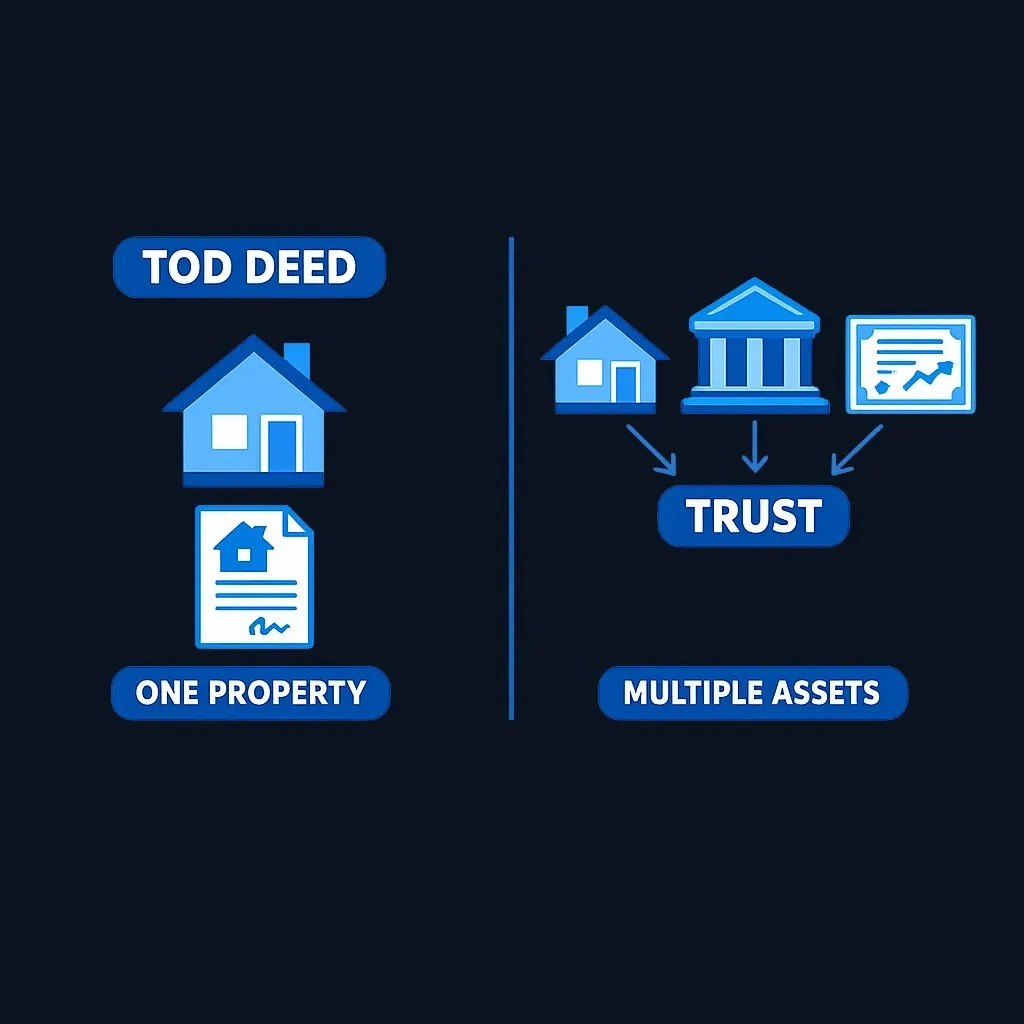
What is a Transfer on Death Deed?
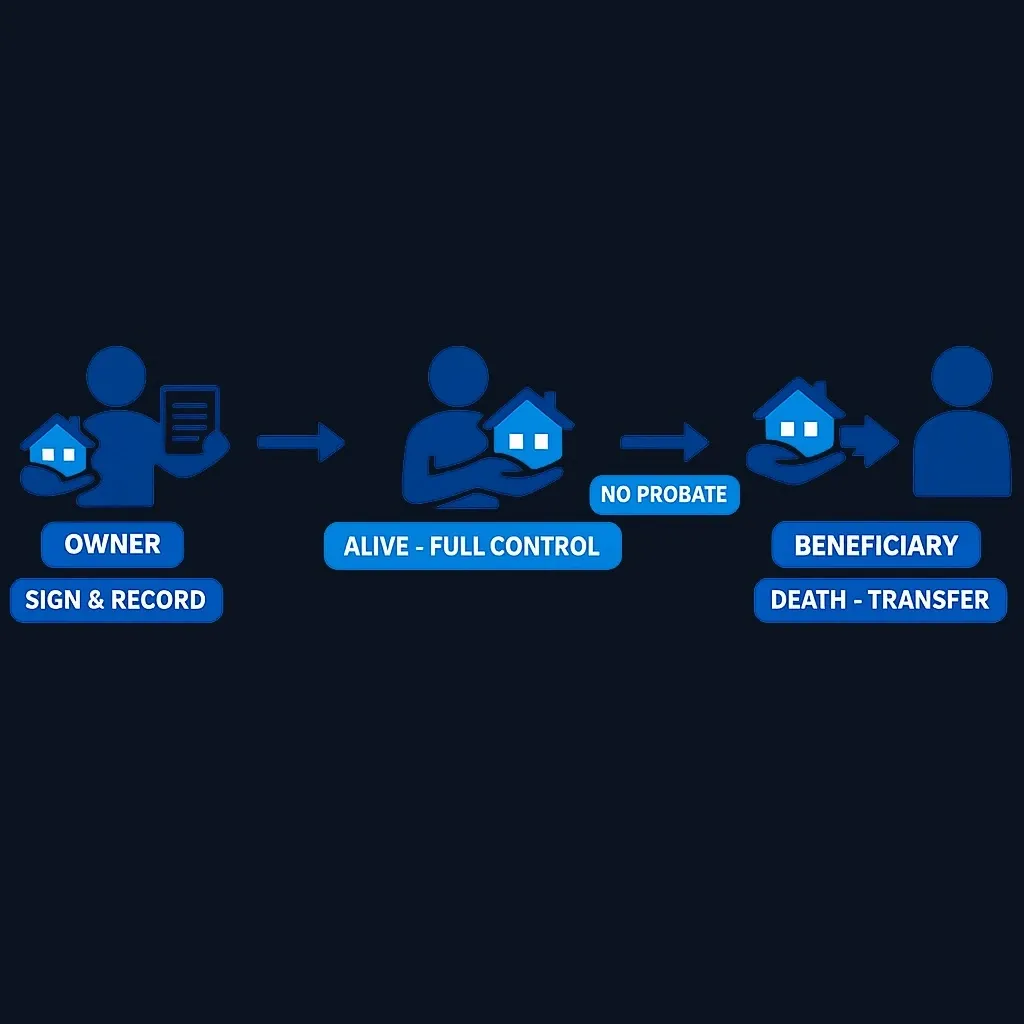
A Transfer-on-Death deed—called a beneficiary deed in some states—is a revocable deed authorized by the law of some jurisdictions. Formalities differ. Washington, for example, requires the deed to meet ordinary deed formalities and be recorded before the transferor's death; it also states that the transfer remains subject to applicable encumbrances and other interests (Washington Legislature, RCW 64.80). California provides a statutory revocable TOD deed but warns that it may not be appropriate for every estate and publishes detailed execution guidance (California Courts).
How it works in practice
- Preparation and recording: State-required language, witnesses or notarization, recording location, and timing all matter. A deed signed but not recorded before death may fail in a state such as Washington (Washington Legislature).
- State limits: TOD deeds are not available everywhere; they are authorized in many states and the District of Columbia—check your state’s law before relying on one Charles Schwab.
- Scope: A TOD deed applies only to the specific real property described in the deed; it does not cover bank accounts, personal property, or most other assets.
- Revocation or change: The owner can generally revoke or replace an authorized TOD deed only by following the state's procedure; a later will may not be sufficient.
Practical implication: TOD deeds are narrowly focused and low-friction tools for passing real estate outside probate in states that permit them.
What is a Living Trust?
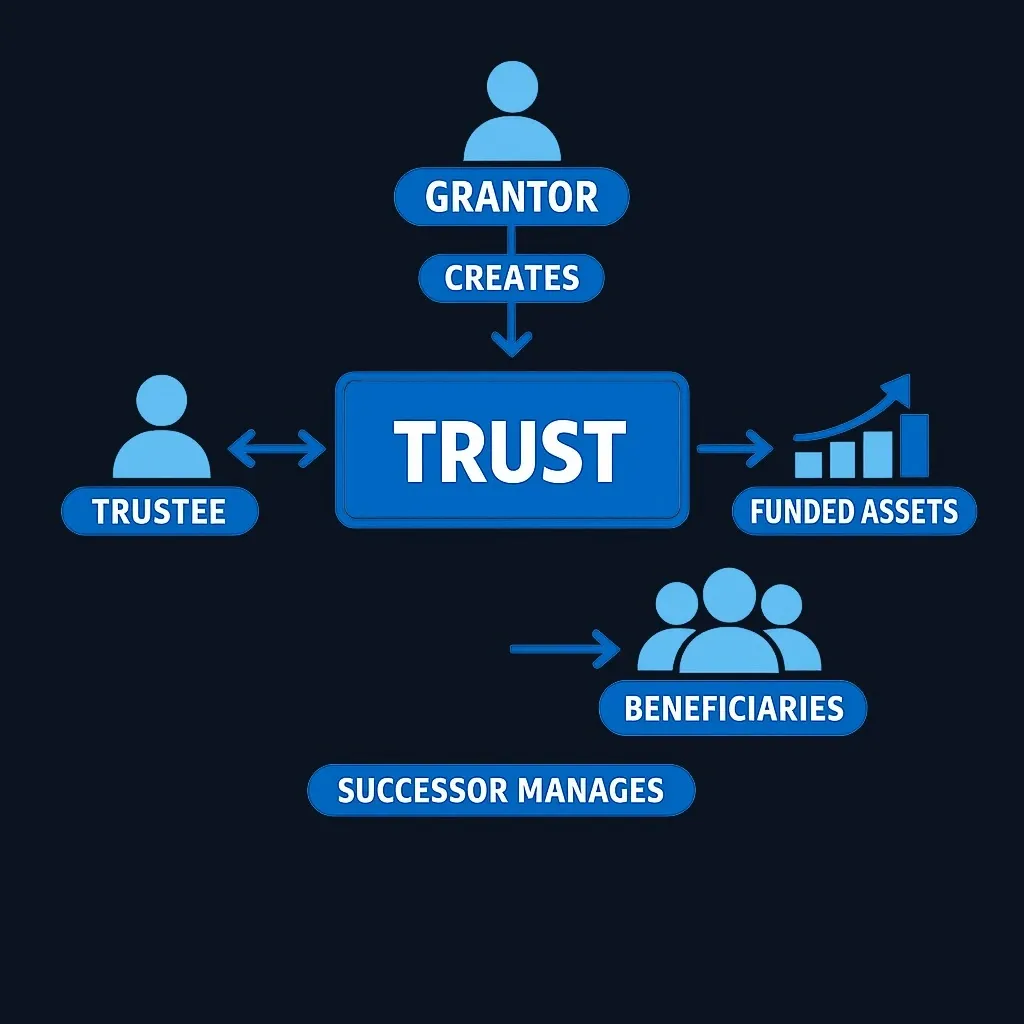
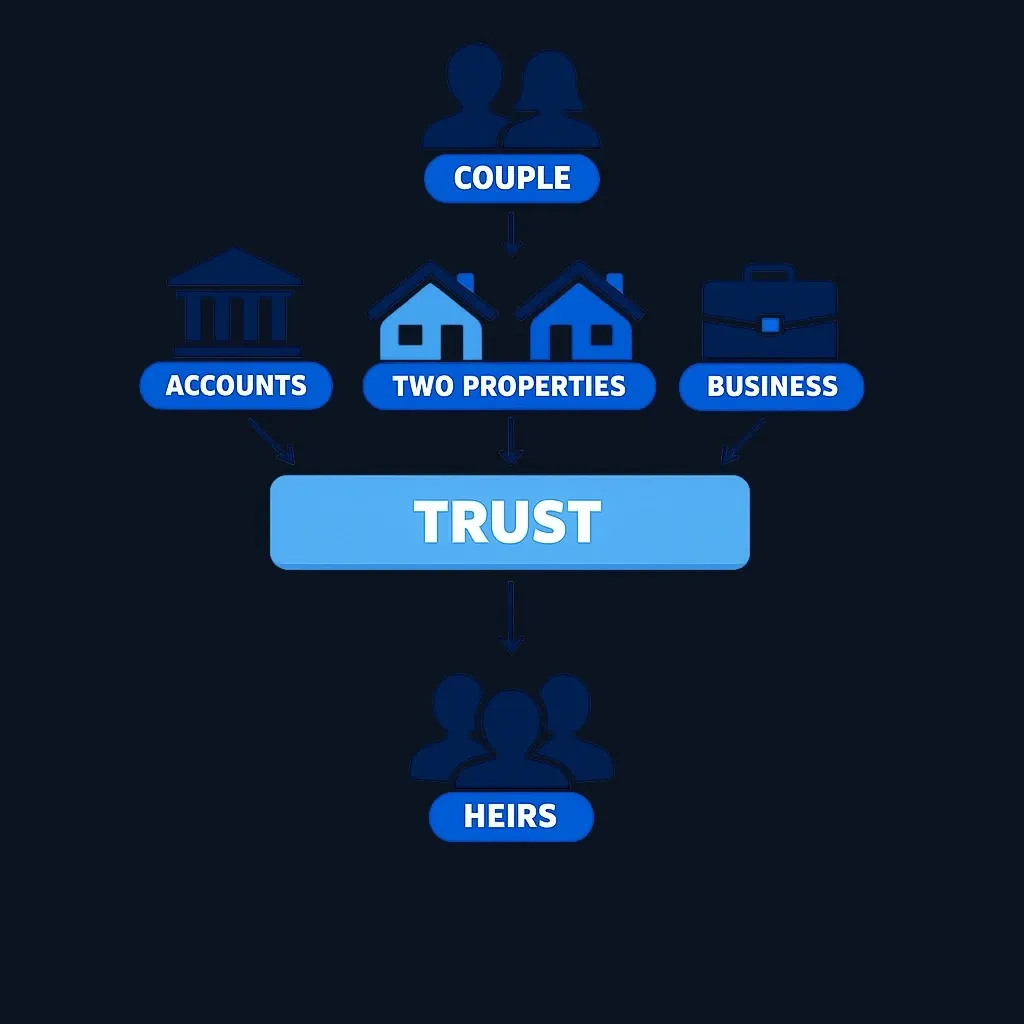
A revocable living trust is a legal arrangement in which you (the grantor) transfer assets into a trust you control during life. You name a trustee (often yourself initially) and successor trustees to manage and distribute assets according to the trust’s terms when you die or become incapacitated. A properly funded living trust can avoid probate for the assets it holds, and the grantor generally retains the right to change or terminate the trust while alive Fidelity.
Key functions and benefits
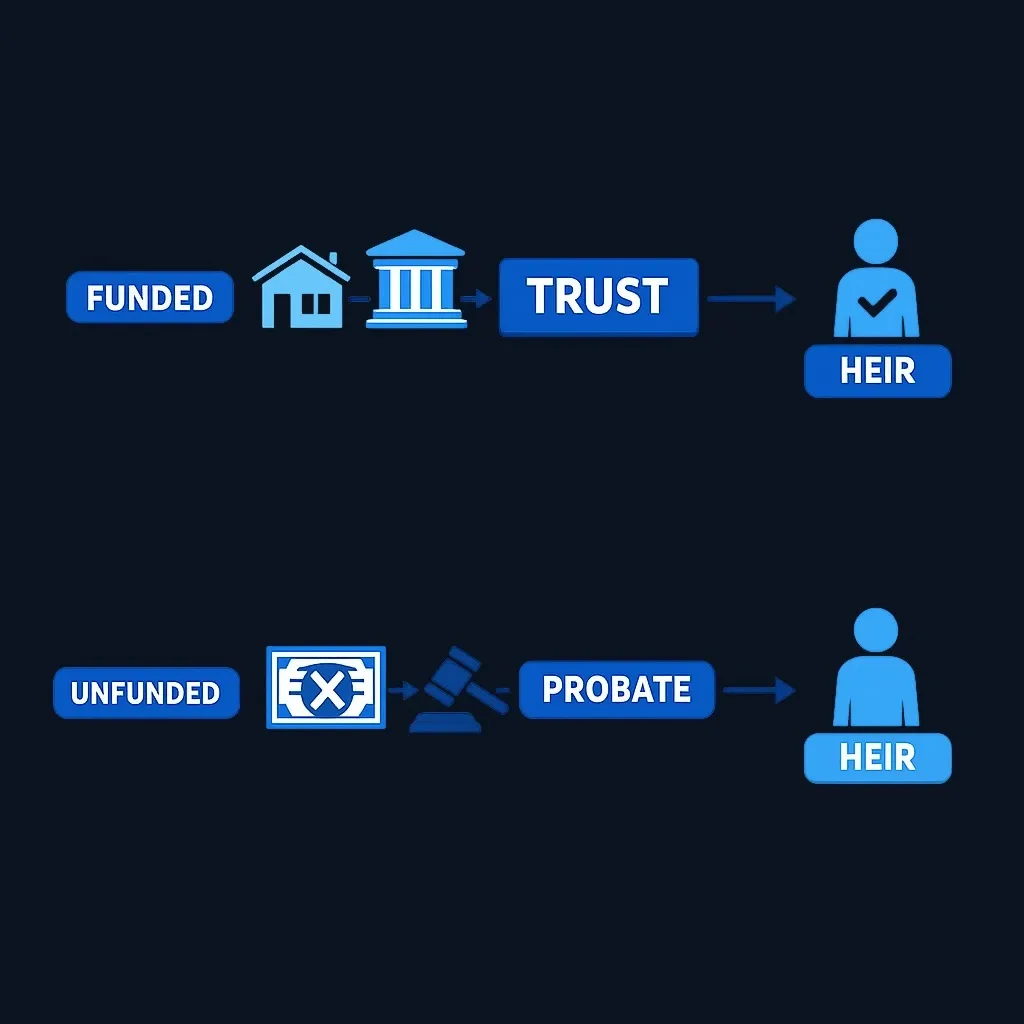
- Probate avoidance for funded assets: Assets that are retitled into the trust at the time of funding pass outside probate, which can simplify and speed transfer to beneficiaries Fidelity.
- Incapacity planning: A living trust can name a successor trustee to manage trust assets if the grantor becomes incapacitated, subject to the trust terms and applicable state law.
- Broader scope and control: Trusts can hold many asset types and allow conditional distributions, management instructions, and privacy (trust administration does not usually become public record the way probate can).
- Flexibility: A revocable trust can usually be amended or revoked by the grantor while alive Fidelity.
Practical implication: Living trusts are the more comprehensive tool when you need incapacity coverage, multi-asset coordination, or customized post‑death control.
Side-by-side comparison table
| Attribute | Transfer‑on‑Death (TOD) Deed | Revocable (Living) Trust |
|---|---|---|
| Primary purpose | Passes a specific piece of real estate to a beneficiary at death, where state law permits. | Hold and manage multiple assets during life and pass them under the trust terms at death; can address incapacity Fidelity. |
| Avoids probate? | May avoid probate for the described property when the deed is valid, recorded on time, and effective under state law. | May avoid probate for assets validly transferred to the trust; unfunded assets can remain subject to probate Fidelity. |
| Covers incapacity? | No — the beneficiary transfer operates at death. | A properly drafted and funded trust can authorize a successor trustee to manage trust assets during incapacity. |
| Scope of assets | Only the specific real property described in the deed. | Assets properly transferred into the trust, potentially including accounts, real estate, investments, and business interests Fidelity. |
| State availability | Available in many states; not universal (check local law) — TOD deeds are authorized in many states and DC Charles Schwab. | Living trusts are a standard estate planning tool used across the U.S.; consult an attorney for state‑specific rules Fidelity. |
| Typical setup cost (one-time) | Usually narrower in scope; filing, drafting, and legal-review costs vary by state and provider. | Usually broader in scope and more involved to establish; legal and administration costs vary by complexity, assets, state, and provider. |
| Maintenance needed | Review after title, ownership, beneficiary, marital-status, or state-law changes; any revocation must follow local formalities. | Requires actively retitling and funding assets into the trust and periodic updates for life events Fidelity. |
Decision criteria
Concise educational note: This content is educational, not legal or financial advice. Estate planning laws and costs vary by state and personal circumstances; consult a qualified attorney before acting.
Use the following checklist to decide which tool fits your objectives:
- Estate complexity: If your plan involves multiple asset types (accounts, investments, business interests), a living trust better centralizes control Fidelity.
- Incapacity planning: If you want a successor to manage trust assets during incapacity, review whether the trust document grants the necessary authority and whether all relevant assets are properly titled.
- Single-property transfer: In a state that authorizes TOD deeds, a valid deed may provide a narrower transfer mechanism than a living trust. Filing fees, drafting needs, title effects, creditor issues, tax treatment, and later revocation or correction costs are state- and fact-specific.
- Privacy and conditions: Trusts keep administration private and allow conditional distributions; TOD deeds transfer title outright at death with no conditions. See which control level matters to you Fidelity.
- State law and mobility: TOD deed availability and formalities vary by state. Confirm the law where the property is located before relying on the deed.
Quick decision framework
- Is your only goal to pass a single, clearly described property, and does current law where the property is located authorize a TOD deed? If yes, compare that state-specific deed with other estate-plan tools.
- Do you need incapacity coverage, multi-asset coordination, privacy, or conditional distributions? If yes, ask an estate-planning attorney whether a funded living trust or another arrangement better fits the plan.
When to choose each option
When TOD deed may be best
- You own a specific property, your transfer plan is straightforward, and your state recognizes TOD deeds. Confirm deed language and recording requirements locally.
- Example: A single homeowner wants title to transfer to an adult child on death and retains full control while alive; a TOD deed recorded locally often accomplishes that with limited expense.
When a living trust may be best
- You own multiple asset types, expect possible incapacity, want to impose timing or conditions on distributions, prefer privacy, or have a blended family where customized instructions matter Fidelity.
- Example: Married couple with investment accounts, real estate in two counties, and a family business may prefer a living trust to coordinate all assets and name successor trustees.
Cost illustration
- Compare written quotes on the same scope. A TOD deed quote may cover drafting and recording one property transfer, while a trust quote may include the trust document, related documents, and help retitling multiple assets. The lower quote is not necessarily equivalent in scope.
Practice investing with Finelo
Build practical investing skills with guided lessons, simulator practice, and structured challenges.
Tradeoffs and caveats
- Funding a trust matters: A living trust only avoids probate for assets actually transferred into it. Failure to retitle major assets into the trust can leave them subject to probate despite having a trust document Fidelity.
- Narrow scope of TOD deeds: A TOD deed applies only to the described real property. Other assets require their own ownership, beneficiary, or estate-planning arrangements.
- State formalities and availability: TOD deed recognition and required language or recording steps vary by state; a deed valid in one state may not be recognized in another—confirm local law before relying on a TOD deed Charles Schwab.
- Costs and upkeep: Compare current written quotes and ongoing tasks. A trust may require asset retitling and later updates, while a TOD deed is limited to the recorded property and may need revision after life or ownership changes.
- Beneficiary changes and contingencies: Ask how the document handles a beneficiary who dies first, a later sale, a name change, or a new co-owner. The result depends on the document and state law.
- Medicaid and estate recovery: How transfers affect Medicaid eligibility or estate recovery depends on state rules and timing; these consequences are complex—consult an elder‑law attorney or Medicaid specialist for state‑specific guidance.
Frequently Asked Questions
What are the legal requirements for a transfer on death deed?
Typical requirements may include naming a beneficiary, using state-compliant deed language, signing with the required formalities, and recording the deed in the county where the property is located. Exact requirements differ, so use the instructions from the relevant state or county authority and consider local legal review.
How does a living trust manage assets during incapacity?
A revocable living trust can authorize a successor trustee to manage trust assets if the grantor becomes incapacitated. The result depends on the document, proper funding, and state law; assets outside the trust may require a different arrangement.
What happens if a beneficiary predeceases me?
If a beneficiary dies first, the result depends on the document and state law. Ask a local attorney how the deed or trust handles that event and whether contingent language is permitted and appropriate.
Can I change my mind after setting up a transfer on death deed?
Often, yes, but the owner must follow the applicable state procedure. Revocation may require a new recorded instrument, and a will alone may not override the deed. Confirm the current rule with the recorder or a lawyer in the property’s state.
Conclusion
A Transfer-on-Death deed is a narrowly focused tool that may transfer specific real property outside probate when state law authorizes it and every formality is satisfied. A revocable living trust is broader but works only for assets properly transferred to it. Before choosing, verify the current law where the property is located, title and lien consequences, beneficiary contingencies, Medicaid or creditor issues, and how the document fits the rest of the estate plan with a qualified local attorney.
Sources and Further Verification
- Charles Schwab
- Fidelity
- California Courts: wills, estates, probate, and transfer-on-death deeds
- Washington Legislature: Uniform Real Property Transfer on Death Act
More from Finelo
- Naming a Trust as an IRA Beneficiary: Rules, Taxes, and Trade-Offs
- 1031 Exchange vs. Opportunity Zone: Key Differences
- 83(b) Election: Deadlines, Tax Risks, and When Early Filing May Fit
Disclaimer
This article is provided by Finelo for educational and informational purposes only. Finelo does not provide financial, investment, tax, legal, or insurance advice. Consider your circumstances and consult an appropriately qualified professional before making financial decisions.
InvestingBeginner GuideFinancial Education
Practice investing with Finelo
Build practical investing skills with guided lessons, simulator practice, and structured challenges.
About the author
Finelo Team
The Finelo Team creates practical investing and trading education designed to help beginners learn faster with structured challenges, simulator practice, and bite-sized lessons.
Keep reading — Related articles

Investing
Yield to Call vs Yield to Maturity: Assumptions and Bond Risks
Yield to call (YTC) estimates a bond's yield if the issuer redeems it on an eligible call date; yield to maturity (YTM) estimates yield if it remains outstanding to final maturity.
Finelo Team

Investing
Will My Employer Know If I Take a 401(k) Loan?
Who this page is for: readers new to 401(k) loans who want a practical, privacy‑focused explanation — what your employer can see, how to limit visibility, and the financial tradeoffs to weigh.
Finelo Team
Investing
What Medical Expenses Qualify for a 401(k) Hardship Withdrawal?
Before you decide, confirm three things with your plan administrator:
Finelo Team