Last editorial review: September 8, 2026
Naming a Trust as an IRA Beneficiary: Rules, Taxes, and Trade-Offs

A trust can be named as an IRA beneficiary, but current RMD treatment depends on see-through requirements, trust terms, beneficiaries, documentation, and the owner's date of death.
11 min read
Practice investing with Finelo
Build practical investing skills with guided lessons, simulator practice, and structured challenges.
Want to learn more?
Build practical investing skills with guided lessons, simulator practice, and structured challenges.
Explore FineloExplore Finelo's 28-day challenges
Turn learning into a daily habit with guided challenge paths.
U.S. scope: This article discusses U.S. institutions, financial products, tax rules, and dollar examples unless stated otherwise. Rules and product terms may change; verify current official guidance for your situation.
Quick answer
Yes—you can name a trust as the beneficiary of an IRA, but the trust itself is not an individual designated beneficiary. If the current see-through requirements are met, qualifying trust beneficiaries may be treated as designated beneficiaries for required-minimum-distribution (RMD) purposes (IRS Publication 590-B). The applicable schedule still depends on the trust terms, the beneficiaries taken into account, the owner's date of death, and each beneficiary's status under current law. This page is educational, not financial or legal advice; consult an estate-planning attorney and tax professional before changing a designation or trust.
What to know before deciding
Naming a trust may address control, beneficiary-management, or special-needs objectives, but it creates legal and tax complexity. For many nonspouse beneficiaries, current law applies a 10-year outer distribution period; life-expectancy treatment is generally reserved for eligible designated beneficiaries and other specific cases. A qualifying trust does not automatically preserve a lifetime “stretch” (IRS Publication 590-B).
Educational note: this is general information, not personalized legal or tax advice. IRA distribution timing and taxes depend on specific trust language and the identities of the trust beneficiaries; discuss your situation with qualified counsel.
What is a Trust?
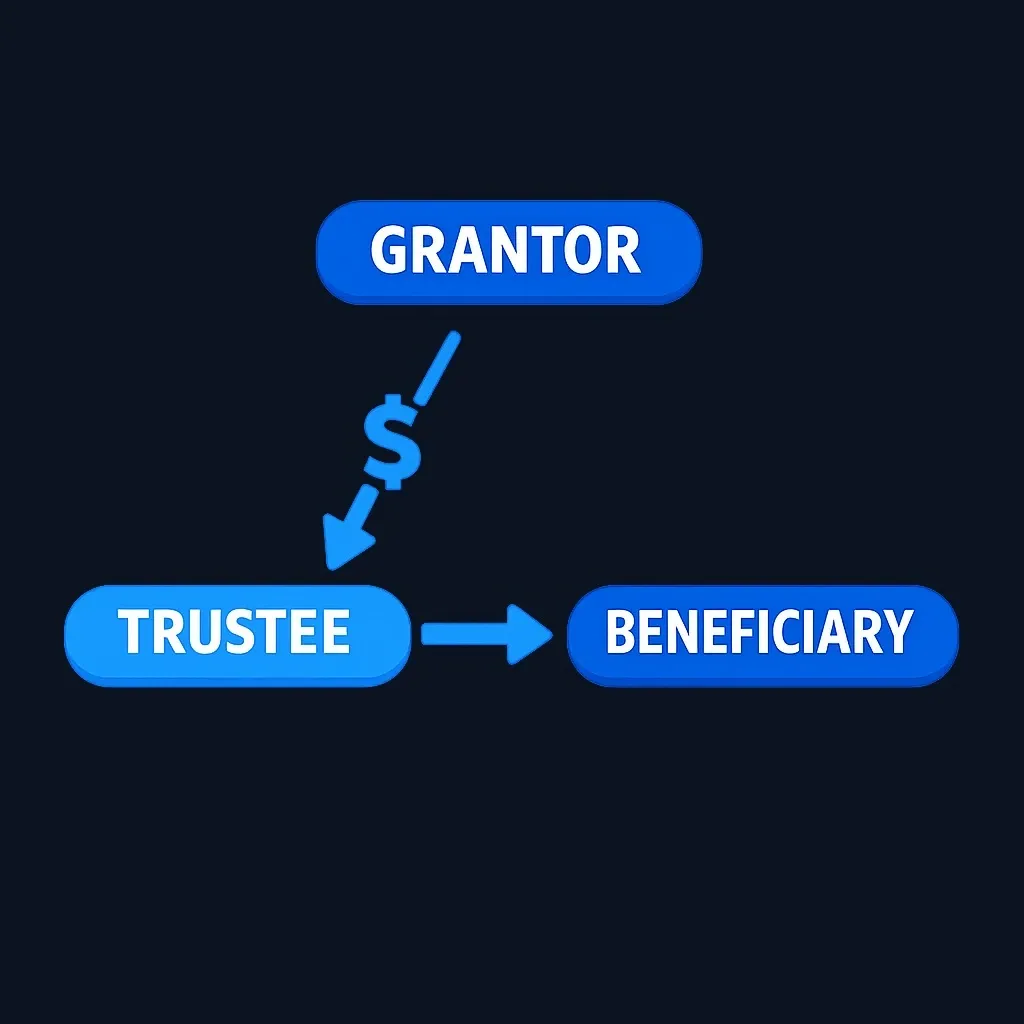
A trust is a legal arrangement in which a grantor (also called the settlor or trustor) transfers legal title to assets to a trustee to hold and manage for one or more beneficiaries. Trusts let the grantor specify how and when assets are distributed, name a professional or individual trustee to administer the plan, and include protective provisions for minor or vulnerable beneficiaries. In estate planning, trusts are used to:
- Control timing and conditions of distributions (for example, age-based payouts).
- Provide creditor, divorce, or spendthrift protection, depending on state law and trust terms.
- Preserve eligibility for public benefits when carefully drafted.
These purposes explain why some IRA owners choose to leave retirement assets to a trust instead of naming beneficiaries outright Fidelity.
Understanding IRA beneficiary designations
An IRA beneficiary designation directs the custodian whom to pay when the IRA owner dies. A common choice is to name individuals, but a trust can be named instead. How the custodian and the IRS treat the trust depends on the trust’s language, whether its beneficiaries are identifiable, whether it becomes irrevocable, and whether documentation requirements are met. The IRS discusses these requirements in its final RMD regulations.
Quick practical point: a see-through trust may allow its qualifying beneficiaries to be considered for RMD purposes, but it does not determine the payout schedule by itself. The trust terms and beneficiary classes must be analyzed under the post-SECURE Act rules and the final RMD regulations that apply beginning in 2025 (IRS final RMD regulations).
Types of Trusts: Conduit vs. Accumulation
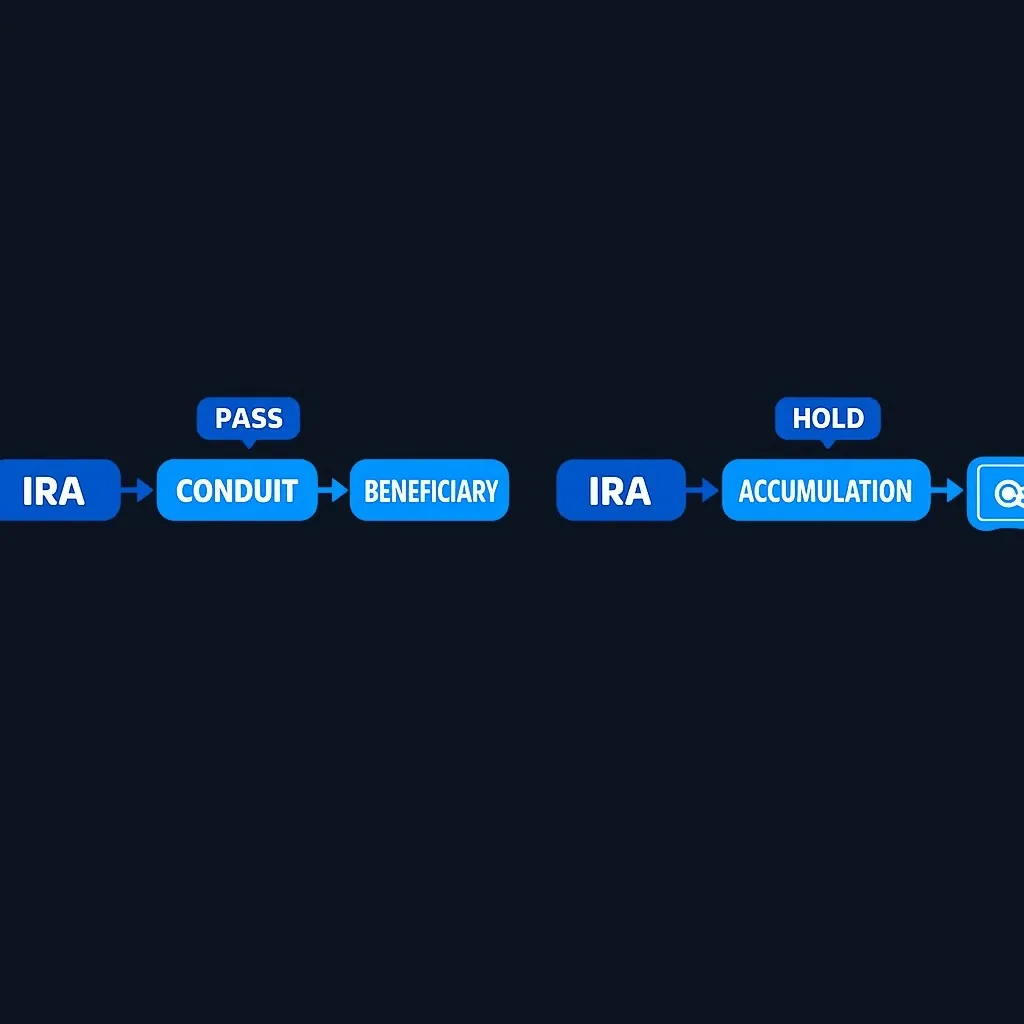
Two common trust structures for IRAs are conduit trusts and accumulation (or discretionary) trusts. The choice affects tax timing and control.
-
Conduit trust (pass-through): The trust requires the trustee to pass IRA distributions to the trust’s beneficiaries under its terms. The tax and distribution result depends on the beneficiaries’ status and current rules.
-
Accumulation trust: The trust allows the trustee to retain IRA distributions rather than distribute them immediately. This can provide flexibility but may create different tax and distribution consequences, so the document requires careful legal and tax review.
Comparative takeaway: conduit and accumulation terms can produce different control, creditor, income-tax, and beneficiary-identification results. Neither label alone establishes a lifetime distribution schedule or a lower tax result.
Requirements for a Trust to be a Valid IRA Beneficiary
Not every trust permits its beneficiaries to be treated as designated beneficiaries for RMD purposes. IRS Publication 590-B lists four current see-through requirements:
- The trust is valid under state law, or would be but for having no corpus.
- The trust is irrevocable or becomes irrevocable by its terms when the IRA owner dies.
- The beneficiaries who have an interest in the IRA benefit are identifiable from the trust instrument.
- The trustee provides the documentation required by the IRA custodian or trustee.
If these requirements are met, the relevant trust beneficiaries—not the trust itself—may be treated as designated beneficiaries for RMD purposes. Which beneficiaries are taken into account and which schedule applies can require additional analysis under the final regulations (IRS Publication 590-B).

Checklist: Does your trust meet common “see-through” expectations?
| Trust element | Why it matters |
|---|---|
| Irrevocable at the owner’s death | One of the requirements identified in the IRS see-through-trust rules. |
| Identifiable beneficiaries | Relevant to determining which beneficiaries are taken into account under the RMD rules. |
| Clear distribution terms | Determines whether retirement-account distributions pass through to beneficiaries or may remain in the trust. |
| Custodian documentation supplied | Publication 590-B requires the trustee to provide the documentation requested by the IRA custodian or trustee. |
Note: state-law validity and custodian-specific paperwork matter in practice. Custodians sometimes require a copy of the relevant trust provisions to accept the trust as beneficiary.
Tax implications of naming a trust as an IRA beneficiary
How distributions are taxed depends on whether the trust is treated as a designated beneficiary and whether distributions are made to individuals or retained in the trust.
- If the trust qualifies as a see-through trust and an eligible designated beneficiary is treated as the retirement-account beneficiary, life-expectancy treatment may be available under the applicable rules. Eligible-designated-beneficiary categories include a surviving spouse, the owner's minor child, a disabled or chronically ill individual, and an individual not more than 10 years younger than the owner (IRS Publication 590-B).
- A designated beneficiary who is not an eligible designated beneficiary is generally subject to the 10-year rule. Whether annual distributions are also required during that period depends in part on whether the owner died before or on/after the required beginning date and on the applicable beneficiary rules.
- If no designated-beneficiary treatment applies, a five-year rule or the deceased owner's remaining life expectancy may apply depending on whether death occurred before or on/after the required beginning date. Do not assume that a failed see-through trust always has the same deadline.
- Accumulation trusts can create higher-tax environments because retained IRA-distribution income may be taxed at trust rates, which reach high marginal rates at lower levels of income than individual rates.
These outcomes depend on trust drafting, beneficiary identities, and current law. For an overview of why owners may consider trusts for IRAs, see Fidelity’s discussion, then verify the legal and tax treatment with qualified professionals.
Practical tax note: the SECURE Act changed post-death distribution windows for many beneficiaries; whether a trust preserves an individual beneficiary’s ability to stretch depends on both the trust language and the beneficiary’s status under current law. Confirm timing and tax effects with counsel.
Practice investing with Finelo
Build practical investing skills with guided lessons, simulator practice, and structured challenges.
Real-life scenarios: When to use a trust as an IRA beneficiary
Below are common situations where a trust is often considered and the typical rationale.
-
Protecting minors or young adults: A trust may allow a trustee to manage distributions under its terms. The special eligible-designated-beneficiary category is limited to the IRA owner's minor child and changes when that child reaches majority; it is not a general exception for every minor beneficiary (IRS Publication 590-B).
-
Second marriages and blended families: A trust can balance interests between a surviving spouse and children from a prior marriage by controlling ultimate distribution timing and remainder interests.
-
Special-needs or disabled beneficiaries: Trusts can preserve eligibility for government benefits while receiving IRA distributions if the trust is drafted for that purpose; proper drafting is critical.
-
Creditor or spendthrift concerns: Trust terms and state law may provide some protection in certain circumstances, but retirement-account, bankruptcy, divorce, tax, support, and public-benefit rules can change the result. Do not describe the assets as protected without jurisdiction-specific legal review.
Worked example — drafting a basic see-through trust clause (conceptual)
- Identify the estate-planning objective and every person or entity that could receive the IRA interest under the trust.
- Ask counsel to test the document against the current see-through and beneficiary-identification rules.
- Confirm how conduit or accumulation provisions affect distributions, retained income, successor interests, and special-needs objectives.
- Confirm the exact documentation and post-death administration process with the IRA custodian.
This example illustrates drafting goals only. Exact language and tax consequences should be reviewed with qualified estate-planning and tax professionals; Fidelity’s overview provides additional context.
Common mistakes to avoid
-
Assuming any trust will qualify: A trust that does not meet current requirements may receive different beneficiary treatment and a faster distribution schedule.
-
Using accumulation language without tax planning: Retaining IRA distributions can change trust-level income taxation and administration. Any asset-protection effect depends on the document, beneficiary rights, creditor type, and governing law.
-
Not coordinating beneficiary designations and trust provisions: If the IRA beneficiary form names the trust but the trust’s terms contradict the owner’s intent, the results can be unintended. Always confirm custodian acceptance and align the beneficiary form with trust language Fidelity.
-
Ignoring the SECURE Act and other law changes: Post-death distribution rules changed for many beneficiaries; relying on old “stretch IRA” assumptions without checking current law and trust language is risky.
-
Overlooking custodian requirements: Some custodians require particular trust wording or additional paperwork to treat a trust as beneficiary; check the custodian’s acceptance process before finalizing documents.
How to fix common mistakes
- Review trust timing (ensure irrevocability at death where needed) and beneficiary ID language with an attorney.
- Decide early whether you need pass-through (conduit) treatment or trustee discretion (accumulation) and draft clauses accordingly.
- Provide your custodian with the specific trust provisions they require to accept the trust as beneficiary.
Decision framework
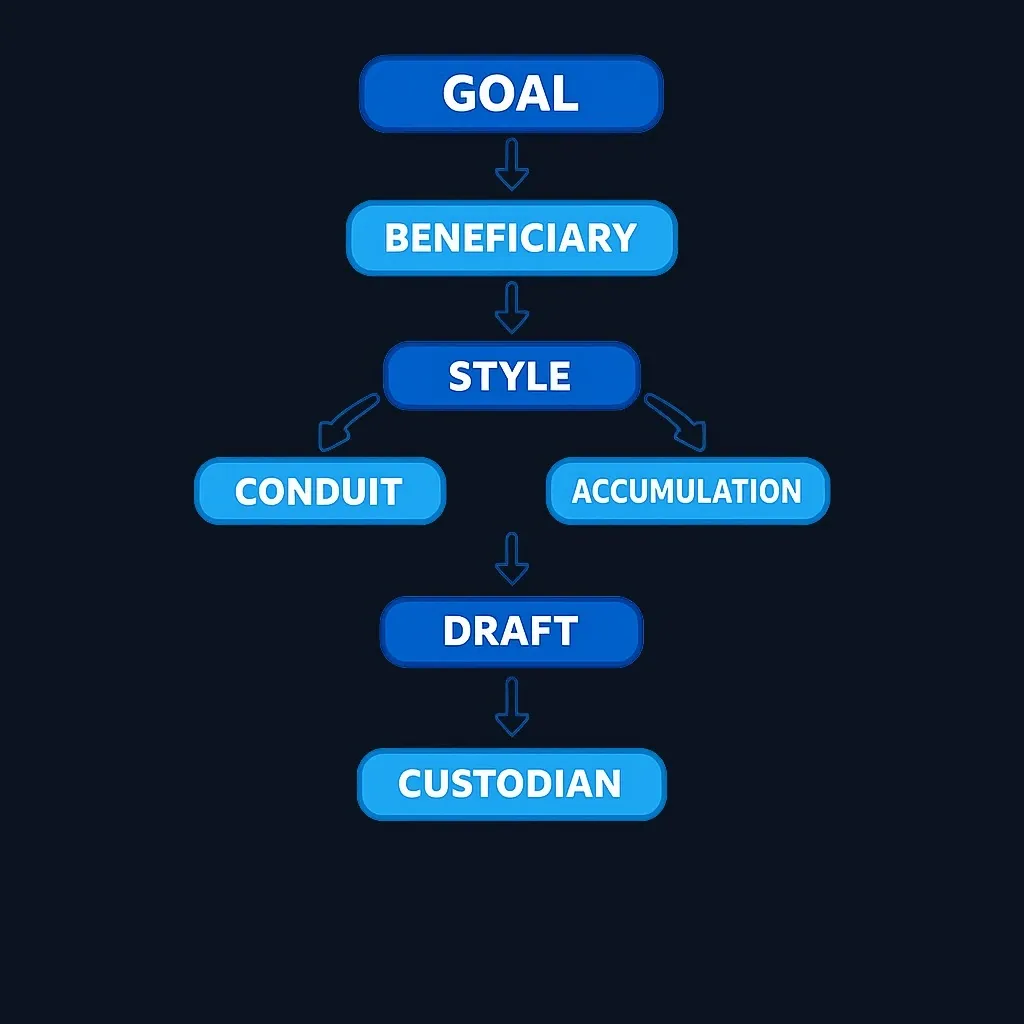
Use this short checklist to decide whether naming a trust is the right move for your IRA.
- Define the goal (control, protection, minor care, special needs).
- Identify beneficiaries and their tax/age status.
- Decide distribution style:
- If beneficiary-based distribution treatment is a priority, ask counsel whether a see-through trust and pass-through terms are appropriate under current rules.
- If protection/management is primary, consider accumulation powers but weigh trust-level taxation.
- Draft trust language to:
- Fix beneficiary identities (often by making the trust irrevocable at death).
- Specify conduit vs. accumulation behavior.
- Grant trustee the powers needed to administer RMDs and tax reporting.
- Check custodian rules and update the IRA beneficiary form to match the trust’s exact name and tax ID language.
- Revisit the plan after major life events and law changes.
This framework helps balance competing goals—control versus tax efficiency—so you and your advisor can select the approach consistent with your objectives and constraints Fidelity.
FAQ
What is a see-through trust?
A see-through trust is one that satisfies specific IRS requirements so certain trust beneficiaries can be treated as beneficiaries of the retirement account for RMD purposes. The requirements include validity under state law, irrevocability at death, identifiable beneficiaries, and required documentation; verify the full current rule in the IRS guidance.
How does the SECURE Act affect IRA beneficiaries named in a trust?
The SECURE Act changed payout periods for many non-spouse beneficiaries, including a 10-year rule in many cases. The result for a trust depends on its structure, the beneficiaries’ status, and whether annual distributions are required under current law.
What are the differences between conduit and accumulation trusts?
A conduit trust passes retirement-account distributions to beneficiaries under the trust terms, while an accumulation trust may retain them. These structures can produce different control, creditor, distribution, and tax outcomes.
Can I name a trust as the beneficiary of my IRA?
It can, but the trust must be carefully drafted and coordinated with the IRA beneficiary designation. Verify the current beneficiary-distribution rules and potential tax consequences with qualified estate-planning and tax professionals; Fidelity’s overview explains common planning considerations.
Next steps
- If you are actively planning, gather your current trust document and IRA beneficiary form and schedule a meeting with an estate-planning attorney and tax professional to review drafting and custodian requirements.
- For a concise primer on related terms, see Finelo’s learning hub for educational resources.
(One clear action: review your trust’s beneficiary-identification language with counsel and confirm your IRA custodian’s documentation requirements before changing beneficiary designations.)
Sources and Further Verification
- Fidelity
- IRS Publication 590-B: Distributions from Individual Retirement Arrangements
- IRS final required minimum distribution regulations
More from Finelo
- Transfer-on-Death Deed vs. Living Trust: Probate, Costs, and Control
- Inherited IRA Rules: Withdrawal Timelines, Taxes, and Beneficiary Options
- SIMPLE IRA vs. 401(k): Limits, Costs, and Which Plan Fits a Small Business
Disclaimer
This article is provided by Finelo for educational and informational purposes only. Finelo does not provide financial, investment, tax, legal, or insurance advice. Consider your circumstances and consult an appropriately qualified professional before making financial decisions.
InvestingBeginner GuideFinancial Education
Practice investing with Finelo
Build practical investing skills with guided lessons, simulator practice, and structured challenges.
About the author
Finelo Team
The Finelo Team creates practical investing and trading education designed to help beginners learn faster with structured challenges, simulator practice, and bite-sized lessons.
Keep reading — Related articles

Investing
Yield to Call vs Yield to Maturity: Assumptions and Bond Risks
Yield to call (YTC) estimates a bond's yield if the issuer redeems it on an eligible call date; yield to maturity (YTM) estimates yield if it remains outstanding to final maturity.
Finelo Team

Investing
Will My Employer Know If I Take a 401(k) Loan?
Who this page is for: readers new to 401(k) loans who want a practical, privacy‑focused explanation — what your employer can see, how to limit visibility, and the financial tradeoffs to weigh.
Finelo Team

Investing
What Medical Expenses Qualify for a 401(k) Hardship Withdrawal?
Before you decide, confirm three things with your plan administrator:
Finelo Team