Last editorial review: September 8, 2026
Tax Lien Investing for Beginners: Auctions, Returns, Costs, and Risks
Tax-lien certificates are rule-dependent claims tied to delinquent property taxes, not automatic ownership. Learn auction, redemption, priority, title, federal-lien, and loss risks.
10 min read
Practice investing with Finelo
Build practical investing skills with guided lessons, simulator practice, and structured challenges.
Want to learn more?
Build practical investing skills with guided lessons, simulator practice, and structured challenges.
Explore FineloExplore Finelo's 28-day challenges
Turn learning into a daily habit with guided challenge paths.
U.S. scope: This article discusses U.S. institutions, financial products, tax rules, and dollar examples unless stated otherwise. Rules and product terms may change; verify current official guidance for your situation.
Quick answer
Tax lien investing means purchasing a certificate or other interest tied to delinquent property taxes in a jurisdiction that sells those interests. It is not the same as buying the property at a tax-deed sale. If the owner redeems, a certificate holder may receive the statutory redemption amount; if the owner does not redeem, any route toward foreclosure or a tax deed depends on local law and strict notice, timing, and payment rules. Returns and title are not guaranteed.
Introduction to Tax Lien Investing
Property-tax enforcement differs by state and locality. Some governments sell tax-lien certificates, some sell property through tax-deed proceedings, and others use different collection processes. A certificate generally represents rights defined by the governing statute and sale terms; it does not automatically transfer ownership or every right held by the government. Florida, for example, separately regulates tax-certificate sales and later tax-deed applications under Chapter 197 (Florida Department of Revenue).
Who this is for
- Curious individual investors exploring alternative income strategies.
- Real-estate investors evaluating a speculative, illiquid claim governed by local law.
- People willing to spend time learning state and local rules and doing property-level due diligence.
What you’ll understand after reading
- How tax liens are bought and monetized.
- The main benefits and the real risks to anticipate.
- Practical steps to find auctions, evaluate opportunities, and decide if tax‑lien investing fits your objectives.
How Tax Lien Investing Works
This section explains the mechanics you’ll encounter from pre-auction research through post-purchase outcomes.
How liens originate
- A property owner fails to pay local property taxes. The taxing authority records a lien against the property to secure the unpaid amount.
- The taxing authority may sell that tax lien at auction to recover the unpaid tax revenue.
Common auction formats
- Competitive bidding: bidders compete on interest rate or premium paid.
- Certificate sales: successful bidders receive a tax lien certificate with rights defined by the statute and auction terms.
- Tax-deed sales: the government sells an interest in the property under a separate process; buying a lien certificate does not itself mean buying the deed.
- Online and in-person auctions are both common; counties and municipalities set their procedures.
What you receive when you win
- What the auction documents authorize—often a tax-lien certificate or, in a separate tax-deed sale, a deed or certificate of sale. Do not use these terms interchangeably. Read the statute, bidder rules, and property record before bidding.
Post‑purchase paths
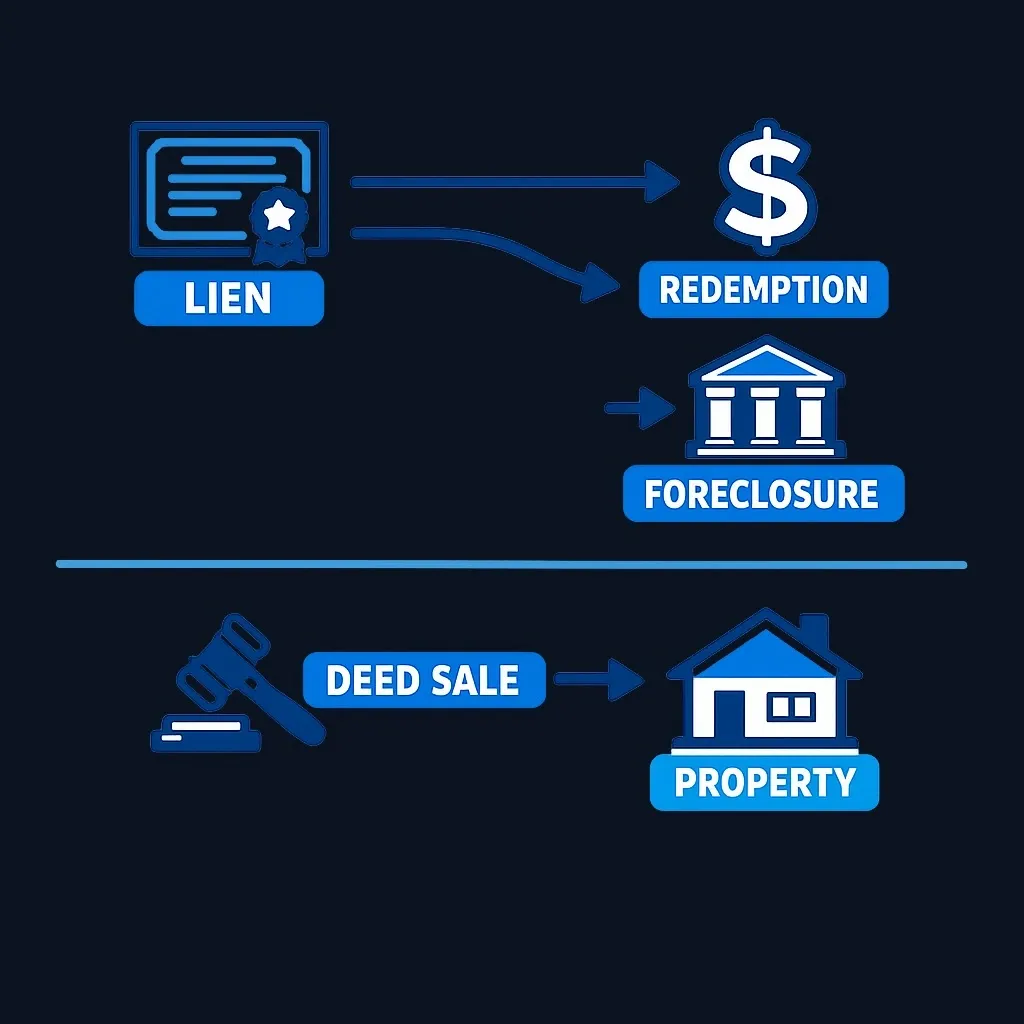
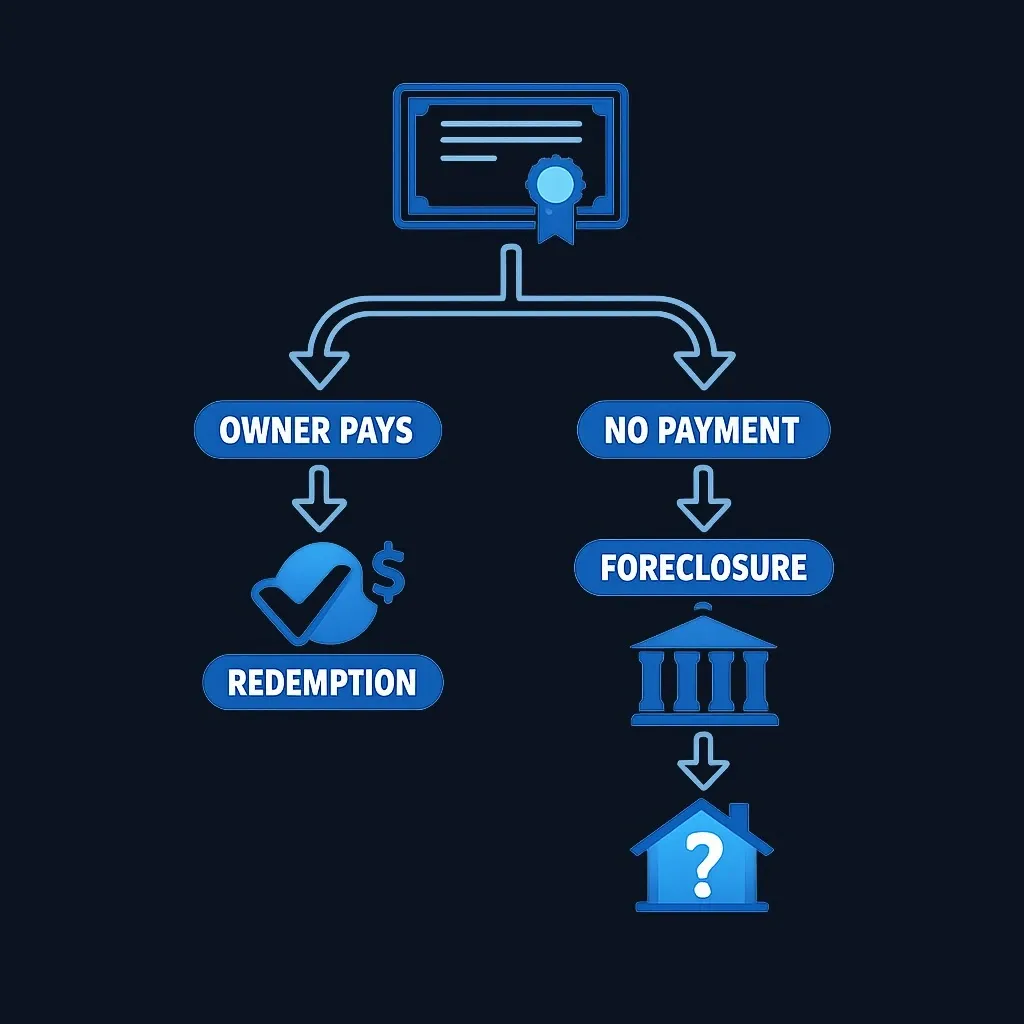
- Redemption: The owner or another authorized party pays the statutory amount; the certificate holder receives the amount allowed by local rules. The auction bid can reduce the effective interest rate. Florida records, for example, include the interest rate bid at the certificate sale (Florida Department of Revenue).
- Further enforcement: If redemption does not occur, local law may allow a certificate holder to apply for a tax-deed process or pursue foreclosure after specified periods. That is not automatic ownership and can require additional payments, notices, court or administrative proceedings, and title work.
- Resale/assignment: In some places you can sell the certificate to another investor; in others you must hold until redemption.
Recordkeeping and enforcement
- You must monitor redemption deadlines, pay attention to notices and bidder obligations, and follow statutory steps to preserve your rights. Procedures and timelines vary by jurisdiction.
Practical note
- Rules, redemption periods, allowed interest, and enforcement processes are set by state and local law. Other liens can complicate the outcome. In some foreclosure settings, the IRS can retain a federal right to redeem property for 120 days after the sale or for a longer state-law period, depending on the process and notice (IRS Internal Revenue Manual).
Benefits of Tax Lien Investing
Tax lien investing can be appealing for several reasons; consider these potential advantages alongside the tradeoffs in later sections.
Statutory claim structure
- Property-tax claims may receive priority under local law, but priority is not universal and does not eliminate senior interests, federal rights, notice defects, bankruptcy issues, or title problems. Confirm the exact priority with a local title professional or attorney.
Income potential
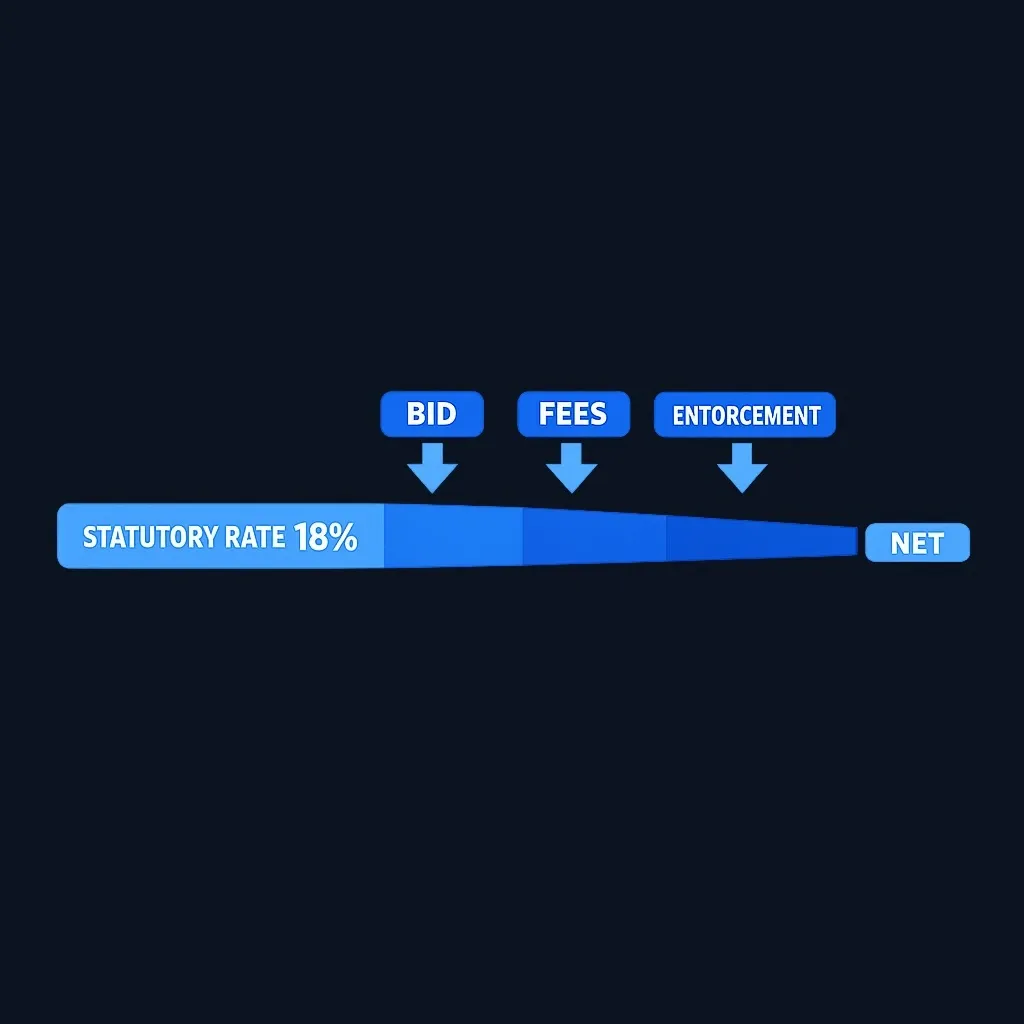
- A redeemed certificate may generate statutory interest or another amount allowed by local law. Competitive bidding, premiums, fees, delayed redemption, or cancellation can reduce the realized return.
Diversification and alternative exposure
- Tax liens provide a non‑equity exposure to real‑estate credit risk, which may behave differently than stocks or bonds.
A defined but uncertain process
- The statute defines the process, but the investor generally does not control when an owner redeems. Enforcement may become available only after a waiting period and may require additional action and expense.
Why these benefits aren’t guarantees
- Quoted statutory rates are not promised returns. Auction method, bid rate, redemption timing, fees, voided certificates, bankruptcy, and enforcement costs can materially change or eliminate profit.
Practical takeaway
- Treat tax‑lien investing as an income/credit exposure that demands legal and property research; it is not purely passive arbitrage.
Risks and Considerations
Investing in tax liens involves distinct legal, operational, and market risks. Read this section before making decisions.
Educational disclaimer
- This content is educational and not financial advice. Investing can result in loss; evaluate risks, check local law, and consult licensed professionals where necessary.
Key legal and title risks
- Mortgages, governmental claims, association liens, bankruptcy, and federal tax liens can affect ultimate recovery. Whether an interest survives a sale depends on priority, procedure, and notice. The IRS describes separate discharge and redemption rules for property subject to federal tax liens (IRS).
- Title defects, undisclosed environmental issues, or prior encumbrances can reduce or eliminate value even if you acquire title via foreclosure.
Liquidity and timing risk
- Tax-lien certificates are generally illiquid. Redemption timing is controlled by the owner and governing law, assignment may be restricted, and enforcement can take longer than expected.
Property quality and occupancy risk
- The underlying property may be vacant, damaged, or in a poor location. If you get title, you may inherit repair costs, code violations, or other liabilities.
Auction and bidding risks
- Auction rules vary and sometimes require immediate payment, deposits, or strict procedural compliance. Errors can invalidate claims.
Foreclosure and enforcement costs
- Pursuing title can be time-consuming and expensive (legal fees, publication costs, court processes). These costs reduce net returns.
Common beginner mistakes and how to avoid them
- Mistake: Skipping title and physical due diligence. Fix: Always review recorded encumbrances and, where possible, inspect the property or review recent photos and records.
- Mistake: Treating all counties as identical. Fix: Learn the specific auction format, payment deadlines, and redemption rules for each taxing authority you target.
- Mistake: Underestimating enforcement costs. Fix: Budget for legal and administrative expenses if pursuing foreclosure.
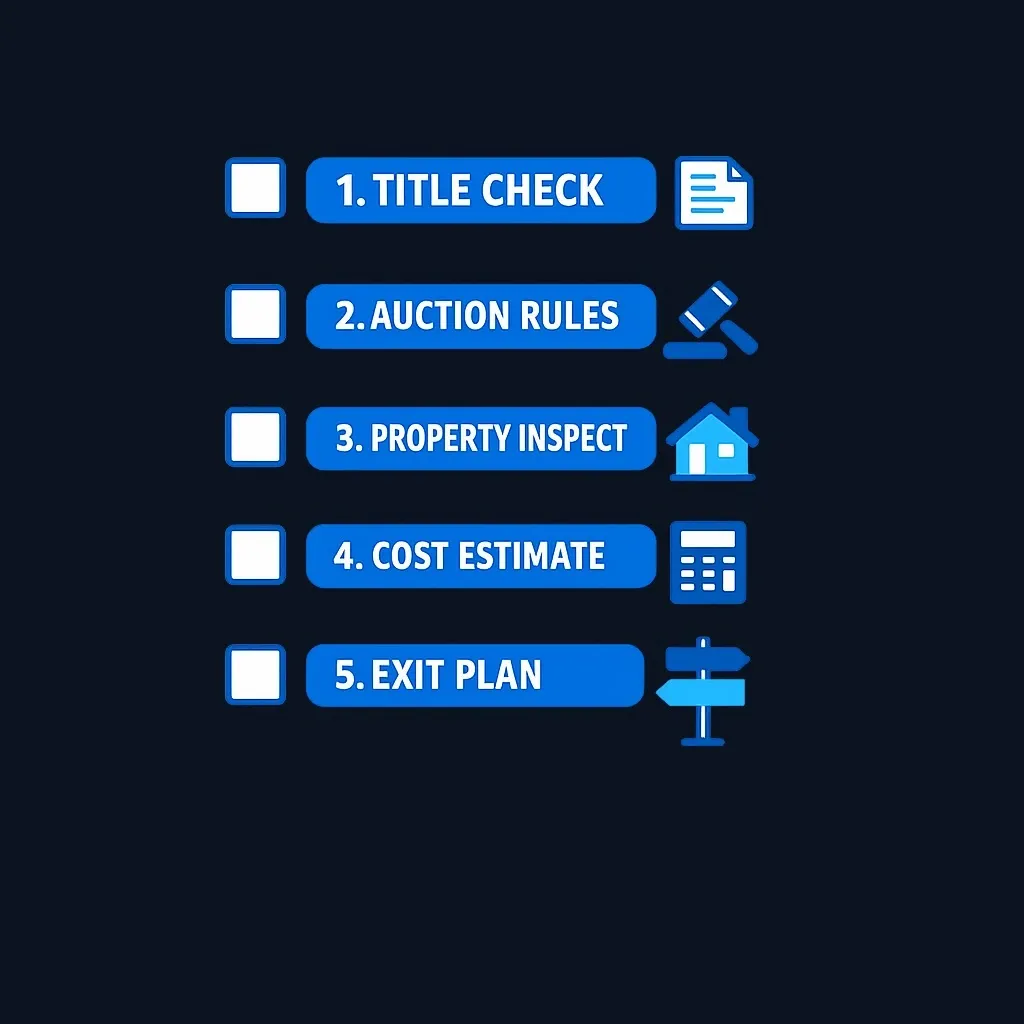
Practical safeguard checklist
- Obtain local legal or title confirmation of priority and recorded encumbrances.
- Verify auction payment and certificate issuance rules.
- Inspect or research property condition and neighborhood comparables.
- Estimate enforcement costs and likely redemption behavior.
- Create an exit plan: resale, hold for interest, or foreclosure.
Step-by-Step Guide to Getting Started
A practical path beginners can follow. Each step should be adjusted to your local rules and resources.
- Choose your scope and capital
- Decide whether you’ll focus on one county, several nearby counties, or remote opportunities. Start with an amount you can afford to tie up and potentially spend on enforcement.
- Learn local rules
- Visit county tax collector, treasurer, or auditor websites and read auction notices and redemption statutes. Learn auction calendar timing, bidding format, payment deadlines, and certificate issuance procedures.
- Build a short due‑diligence workflow
- Items to check before bidding (use as a checklist or table):
| Due‑diligence item | Why it matters | Quick action |
|---|---|---|
| Recorded encumbrances | Other liens can reduce recovery | Pull deed and lien records at county recorder |
| Property condition | Repairs or hazards affect value | View photos, drive by, or review municipal records |
| Market comps | Estimate resale or rehab value | Look at recent sales in the neighborhood |
| Redemption rules | Determine likely holding period | Confirm statutory redemption period on county site |
| Auction payment terms | Missing payment can void purchase | Note acceptable payment methods and deadlines |
| Enforcement costs | Legal fees reduce return | Get ballpark quotes from local counsel |
- Attend a single auction as an observer
- Watch bidding dynamics, timing, and announcements. Many counties allow online viewing; others are in-person.
- Start small with conservative bids
- Bid cautiously on properties you understand. Track outcomes, redemptions, and administrative steps until you’re comfortable.
- Manage post‑purchase tasks
- Monitor redemption notices, maintain records, and prepare for redemption payments or initiation of foreclosure steps if allowed and warranted.
- Iterate and scale
- Refine your research checklist and bidding strategy from real outcomes. Consider partnerships with local attorneys or title companies for enforcement and title clearing.
Simple decision-support formula
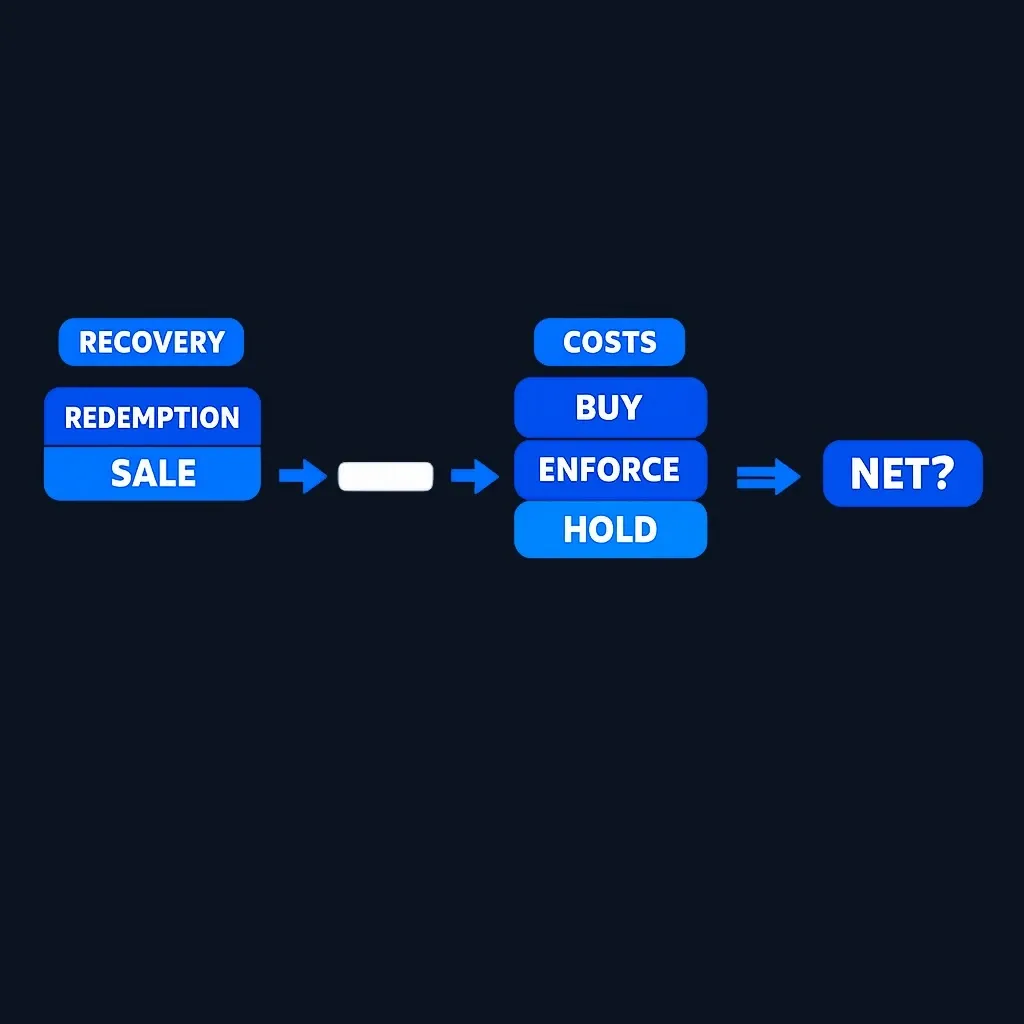
- Use a break‑even mindset: estimate total acquisition cost (purchase + fees + expected enforcement costs) and compare to expected recovery (tax paid back + interest/penalties or eventual sale value). Represent this as:
- Net recovery = (Redemption amount or sale proceeds) − (Acquisition + enforcement + holding costs)
- A positive expected net recovery that compensates for time and risk is the basic threshold to consider.
Practice investing with Finelo
Build practical investing skills with guided lessons, simulator practice, and structured challenges.
Decision framework
Use this short framework to decide whether tax‑lien investing suits you and which auction opportunities to pursue.
Step A — Clarify objectives
- Redemption return vs. possible enforcement: Are you prepared for either outcome without assuming you will acquire the property?
Step B — Assess constraints
- Capital available, legal tolerance, ability to manage property work, and time horizon.
Step C — Map local law fit
- If local law makes foreclosure cumbersome or liens junior to many claims, priorities change. Research one county thoroughly before expanding.
Step D — Score opportunities
- Create a simple scoring rubric (0–5) for each potential purchase across criteria: legal priority, property condition, enforcement cost estimate, market value gap, and liquidity. Prioritize higher‑scoring assets.
Step E — Exit planning
- Always define exit scenarios: owner redemption, resale of certificate (if allowed), or foreclosure and sale. Know the steps and expected timelines for each.
When to pause
- If you cannot verify title status, cannot estimate enforcement costs, or the property condition is ambiguous, step back until you gather facts or consult local counsel.
Frequently Asked Questions
What is tax lien investing?
Tax lien investing is purchasing a certificate or claim defined by a local delinquent-property-tax process. A certificate holder may receive a statutory redemption payment; any later foreclosure or tax-deed rights depend on the jurisdiction and procedural compliance.
How do I start investing in tax liens?
Begin by researching your county tax collector or treasurer’s auction rules, assemble a due‑diligence checklist, observe a live auction, and start with small, well‑researched bids.
Can I lose money with tax liens?
Yes. Losses can come from defective title, high enforcement costs, low or no redemption, or problems with the underlying property. Always budget for legal and other costs and do property-level due diligence.
What happens if the property owner never pays the taxes?
Outcomes vary by jurisdiction. The certificate may be redeemed, may expire, may be canceled or refunded under local rules, or may permit a later tax-deed application or foreclosure process. None of those outcomes guarantees title or profit. Check other liens and federal redemption rights before bidding (IRS).
Conclusion and Next Steps
Tax lien investing offers speculative, rule-dependent exposure to delinquent property-tax claims and is operationally intensive. Before considering a bid:
- Pick one county and download its auction rules and sample notices.
- Build the due‑diligence checklist above into a template you can reuse.
- Attend one auction as an observer and track a few certificates’ outcomes over time.
If you want structured learning on real‑estate and tax‑lien mechanics, Finelo offers educational resources and templates to help beginners organize research and checklists. Keep learning, verify local statutes, and treat each purchase as a legal and property‑level decision rather than a passive yield play.
Sources and Further Verification
- IRS
- IRS Internal Revenue Manual: federal tax liens and redemption
- Florida Department of Revenue: Chapter 197 property-tax statutes
- Florida Department of Revenue: county tax-certificate sale information
- Maricopa County Treasurer: tax-certificate assignment instructions
More from Finelo
- Best Investing Podcasts for Beginners in 2026
- Art Investing for Beginners: Costs, Liquidity, Valuation, and Risks
- Best Investing Newsletters for Beginners in 2026
Disclaimer
This article is provided by Finelo for educational and informational purposes only. Finelo does not provide financial, investment, tax, legal, or insurance advice. Consider your circumstances and consult an appropriately qualified professional before making financial decisions.
InvestingBeginner GuideFinancial Education
Practice investing with Finelo
Build practical investing skills with guided lessons, simulator practice, and structured challenges.
About the author
Finelo Team
The Finelo Team creates practical investing and trading education designed to help beginners learn faster with structured challenges, simulator practice, and bite-sized lessons.
Keep reading — Related articles

Investing
Yield to Call vs Yield to Maturity: Assumptions and Bond Risks
Yield to call (YTC) estimates a bond's yield if the issuer redeems it on an eligible call date; yield to maturity (YTM) estimates yield if it remains outstanding to final maturity.
Finelo Team

Investing
Will My Employer Know If I Take a 401(k) Loan?
Who this page is for: readers new to 401(k) loans who want a practical, privacy‑focused explanation — what your employer can see, how to limit visibility, and the financial tradeoffs to weigh.
Finelo Team

Investing
What Medical Expenses Qualify for a 401(k) Hardship Withdrawal?
Before you decide, confirm three things with your plan administrator:
Finelo Team


