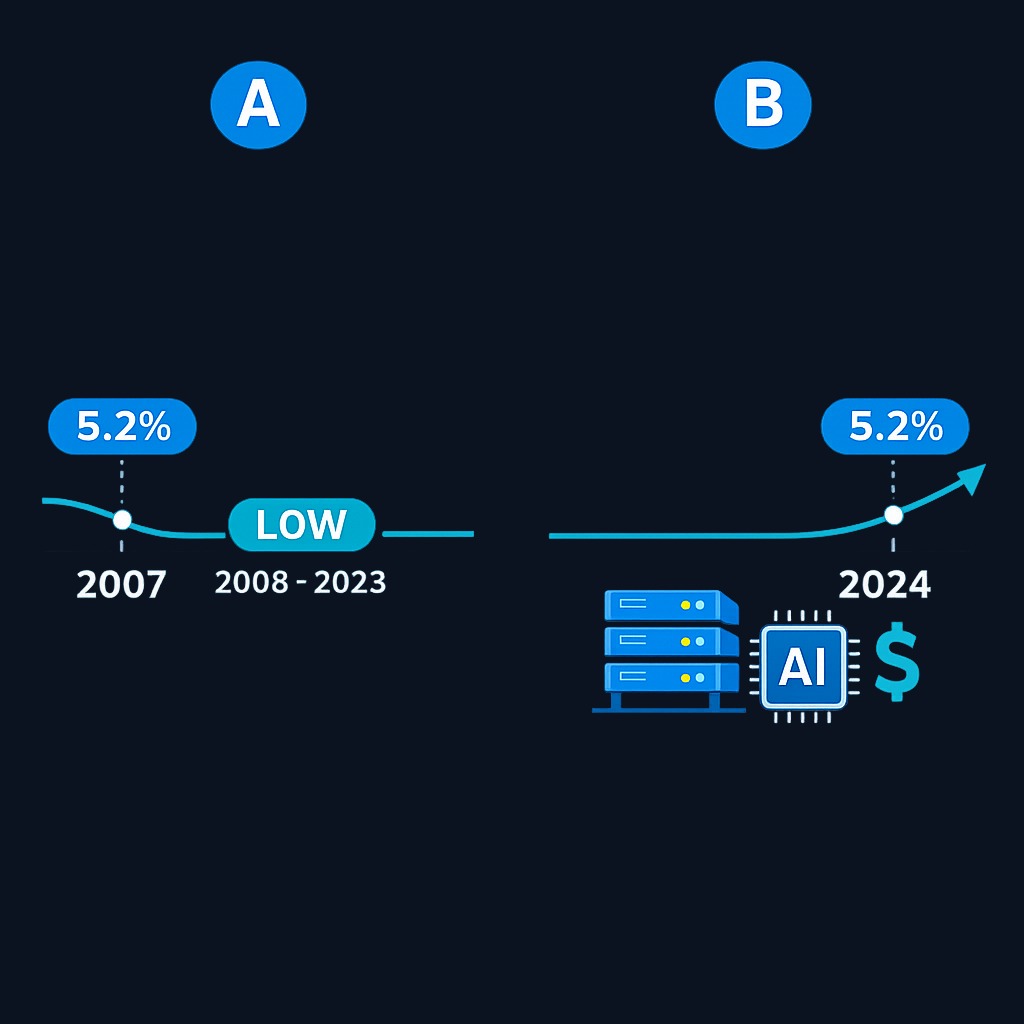
Two days ago we wrote that the bond market's old ceiling was becoming its new floor. On Thursday, the ceiling gave way in the other direction: the 30-year US Treasury yield touched 5.239%, its highest level in 19 years — since 2007, per Reuters.
30-Year Treasury Yield Hits Highest Since 2007: What It Means for Mortgages, Stocks, and the AI Boom
The 30-year Treasury yield reached 5.239%, its highest since 2007. Here's why long rates rose after a Fed hold and what it means for mortgages, stocks, and AI.
4 min read
Practice trading with Finelo
Practice in a simulator, learn with bite-sized lessons, and build confidence before risking real money.
Want to learn more?
Practice in a simulator, learn with bite-sized lessons, and build confidence before risking real money.
Explore FineloExplore Finelo's 28-day challenges
Turn learning into a daily habit with guided challenge paths.
The timing tells the story. This peak arrived the morning after the Federal Reserve held interest rates steady. The central bank pressed pause; the bond market pressed ahead. Understanding why they're moving in different directions is this week's most important lesson about how borrowing costs actually get set.
The Fed proposes, the bond market disposes
Wednesday's Fed decision was a hold — but a strange one: three dissenting votes in favor of a hike, the most internal disagreement in decades, and a chair who deliberately declined to signal what comes next. Some analysts read the press conference as dovish; UBS noted the chair described a "period of watchful thinking."
The bond market read it differently. If the Fed isn't sure it will fight inflation aggressively, then investors lending money for 30 years want more compensation for the risk that inflation eats their returns — especially with oil above $90 as the Middle East conflict escalates, and with September hike odds now near 65%, up from 57% a week ago. So long-term yields rose on a "dovish" hold. The Fed sets the overnight rate; the market sets the long rate — and right now the market is tightening on its own.
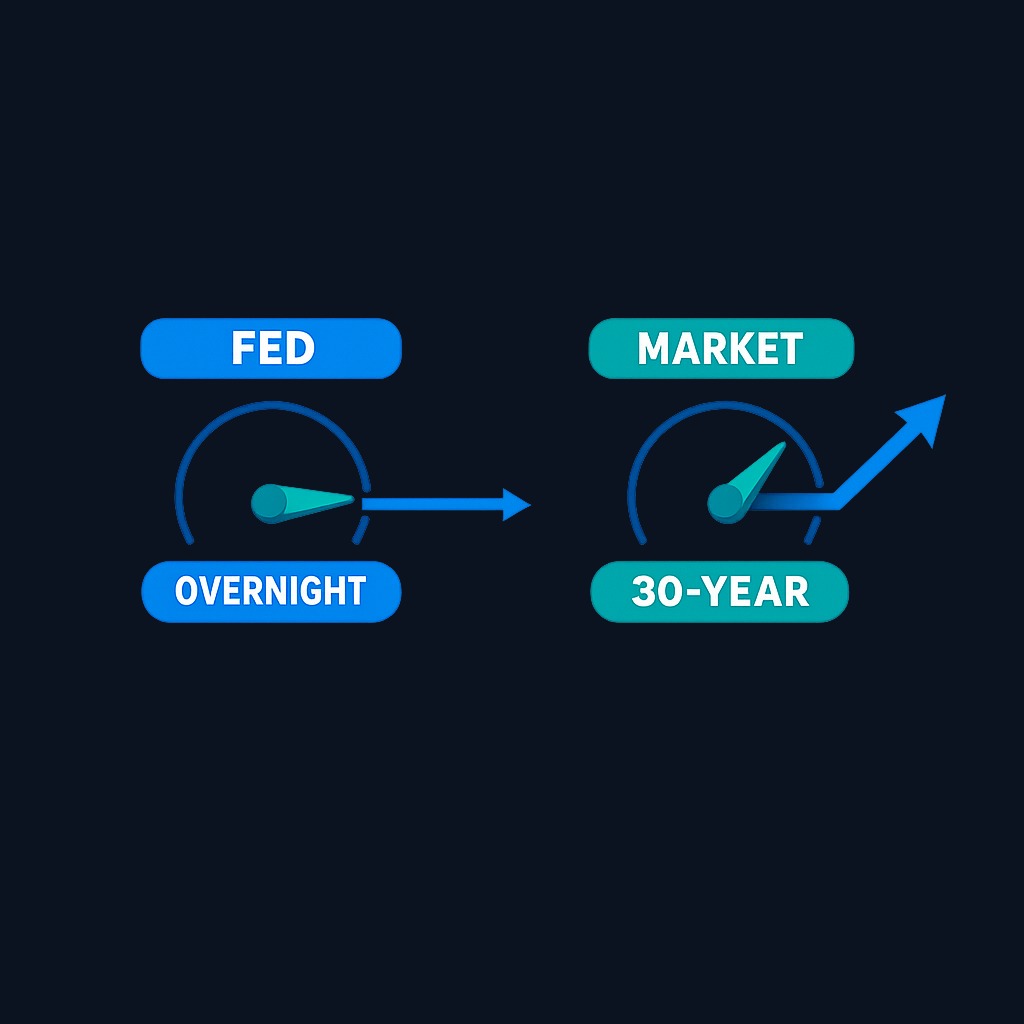
There's a deeper driver we flagged in our original coverage, and it still holds: this isn't primarily an inflation-expectations story. The "real yield" — the return investors demand above inflation — has been doing most of the climbing. Governments worldwide are borrowing heavily, and money simply costs more. That's why the same pattern showed up in the UK on Thursday, where the Bank of England held rates 6–3 with three members backing a hike.
Practice trading with Finelo
Practice in a simulator, learn with bite-sized lessons, and build confidence before risking real money.
Why 5.24% reaches into your life
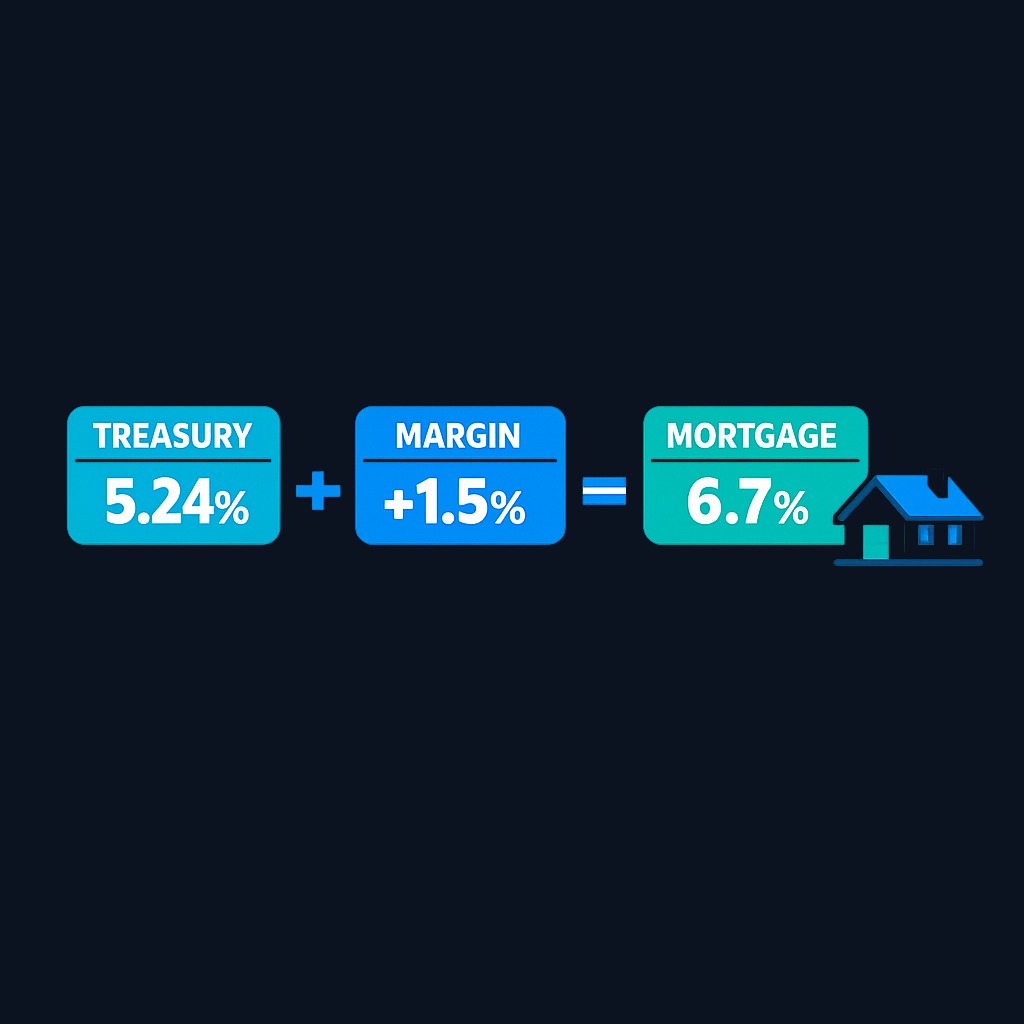
Mortgages key off long yields, not the Fed. This is the practical answer to "the Fed held — why did my mortgage quote go up?" Long-term loans price off long-term Treasuries, which just hit a two-decade high. Rates near 6.5% aren't going anywhere while the 30-year sits here.
Stocks compete with a risk-free 5.2%. Every stock's valuation is an argument that it beats what a government bond pays. The higher that hurdle, the harder the argument — especially for companies whose profits sit far in the future. That's rate-sensitive tech, which is exactly what's been selling off.
The AI boom borrows at these rates. Meta's $130–145 billion buildout, the reported $250 billion OpenAI backstop, the data-center joint ventures — all of it is financed in a world where long-term money now costs more than at any point since before the iPhone existed. Rising yields are the quiet pressure under every AI-financing story we've covered this week.
What to watch next
Whether the 30-year holds above 5.2% or retreats (the longer it holds, the more "new normal" wins the argument), today's PCE inflation report, and the September Fed meeting — where the bond market has effectively already voted.
Our original breakdown of the real-yield mechanics: Fed Rate Decision and Meta Earnings. The AI-financing thread this connects to: Finelo's AI spending boom explainer.
Finelo does not provide investment advice. This article is for informational and educational purposes only.
Sources: Reuters — 30-year yield hits 2007 high, Reuters — dollar and rate expectations, Reuters — Bank of England decision
Frequently asked questions
Why did the 30-year Treasury yield rise after the Fed held rates?
The Fed controls the overnight policy rate, while investors set long-term yields. Inflation risk, heavy government borrowing, oil prices, and uncertainty about future Fed moves pushed long-term lenders to demand more.
How does a higher 30-year Treasury yield affect mortgages?
Mortgage rates track longer-term bond yields more closely than the Fed's overnight rate, so home-loan quotes can rise even when the Fed leaves its own rate unchanged.
Why do high Treasury yields pressure technology stocks?
A higher risk-free return raises the hurdle for stocks and reduces the present value of profits expected far in the future, which can weigh especially heavily on growth and AI-related companies.
Treasury yieldsFederal ReservemortgagesstocksAIinterest rates
Practice trading with Finelo
Practice in a simulator, learn with bite-sized lessons, and build confidence before risking real money.
About the author
Finelo Team
The Finelo Team creates practical investing and trading education designed to help beginners learn faster with structured challenges, simulator practice, and bite-sized lessons.
Keep reading — Related articles
News
U.S. Gas Prices Reach $4.46: What the Increase Means for Inflation and Household Costs
The EIA's U.S. all-grades gasoline average reached $4.455 per gallon. See what changed, why regions differ and how fuel prices affect inflation.
Finelo Team
News
China Sets a Stronger Yuan Fix at 6.7521: What It Means for USD/CNY
China set its September 18 yuan reference rate at 6.7521 per dollar. Learn how the official fixing differs from market rates and why the move matters.
Finelo Team
News
BOJ Raises Its Policy Rate to 1.25%: What the Decision Means for the Yen
The BOJ raised its overnight policy-rate target to around 1.25%. Learn why the yen can still weaken after a rate increase and what the decision says.
Finelo Team