Last editorial review: September 8, 2026
Callable vs. Non-Callable Bonds: Key Differences
Callable vs noncallable bonds comes down to who controls timing. A callable bond lets the issuer redeem or pay off the bond before maturity; a non-callable bond lacks that issuer call…
6 min read
Practice investing with Finelo
Build practical investing skills with guided lessons, simulator practice, and structured challenges.
Want to learn more?
Build practical investing skills with guided lessons, simulator practice, and structured challenges.
Explore FineloExplore Finelo's 28-day challenges
Turn learning into a daily habit with guided challenge paths.
U.S. scope: This article discusses U.S. institutions, financial products, tax rules, and dollar examples unless stated otherwise. Rules and product terms may change; verify current official guidance for your situation.
Quick comparison answer
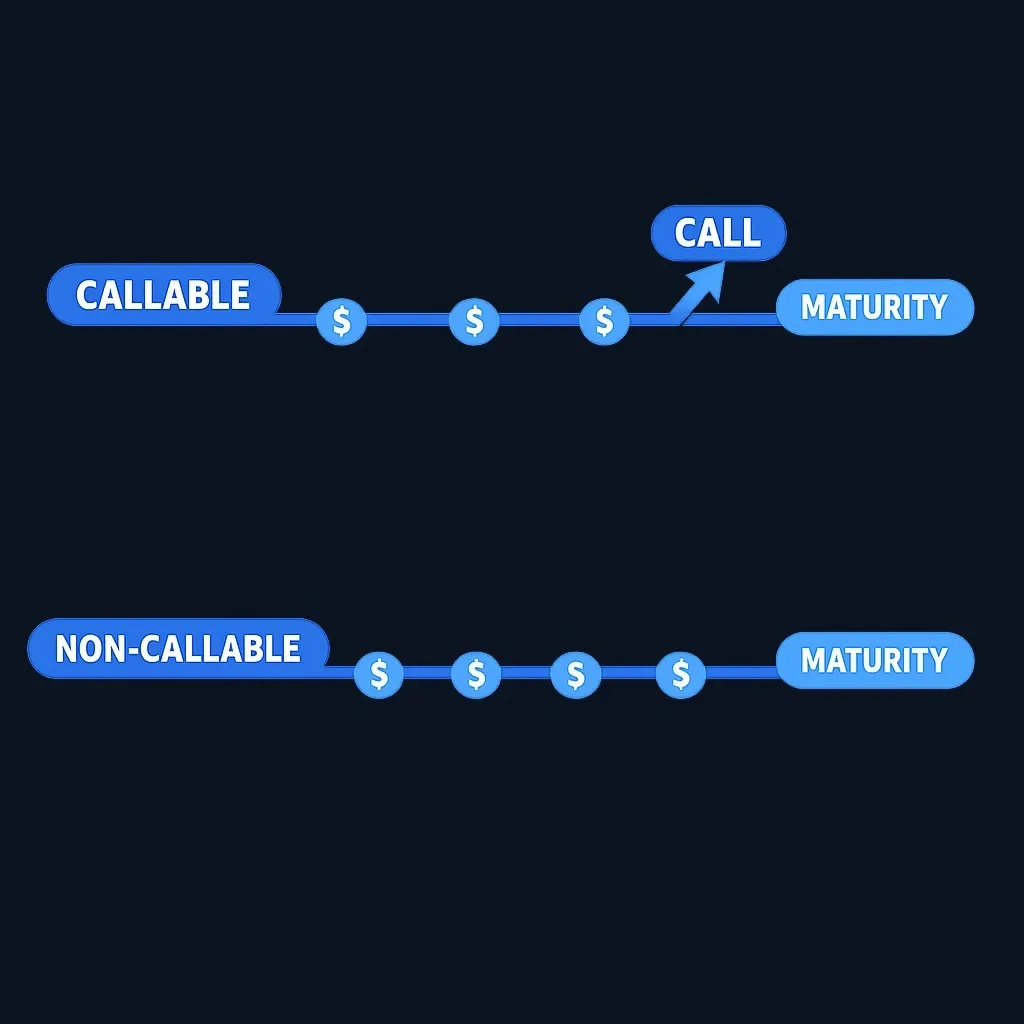
Callable vs noncallable bonds comes down to who controls timing. A callable bond lets the issuer redeem or pay off the bond before maturity; a non-callable bond lacks that issuer call feature (Investor.gov). Callable bonds may pay a higher interest rate than similar noncallable bonds to compensate for call risk and reinvestment risk (FINRA). Non-callable bonds are easier to plan around when timing matters.
Side-by-side comparison table
| Decision point | Callable bonds | Non-callable bonds |
|---|---|---|
| Early redemption | Issuer can redeem or pay off the bond before maturity (Investor.gov) | No issuer call feature in this comparison framework |
| Main timing issue | The bond may end before its stated maturity | The maturity date is easier to use for planning |
| Main investor risk | Call risk and reinvestment risk (FINRA) | Less issuer-driven timing risk |
| Possible compensation | May pay a higher interest rate than a similar noncallable bond (FINRA) | Usually evaluated for predictability rather than call-risk compensation |
| Call price | Some callable bonds set the call price above face value, such as $1,002 versus $1,000 (FINRA) | No call price if there is no call provision |
| Stronger fit when | You can handle early redemption and have a reinvestment plan | You value clearer timing and income planning |
The key is not just coupon versus coupon. Compare the coupon, maturity date, first call date, call price, credit risk, price paid, and your backup plan if cash returns earlier than expected.
Decision criteria
Start with the issuer’s incentive
A callable bond gives the issuer flexibility. If calling the bond helps the issuer, the investor may lose future interest payments from that bond sooner than expected. That is why the call feature is valuable to the issuer and risky for the investor.
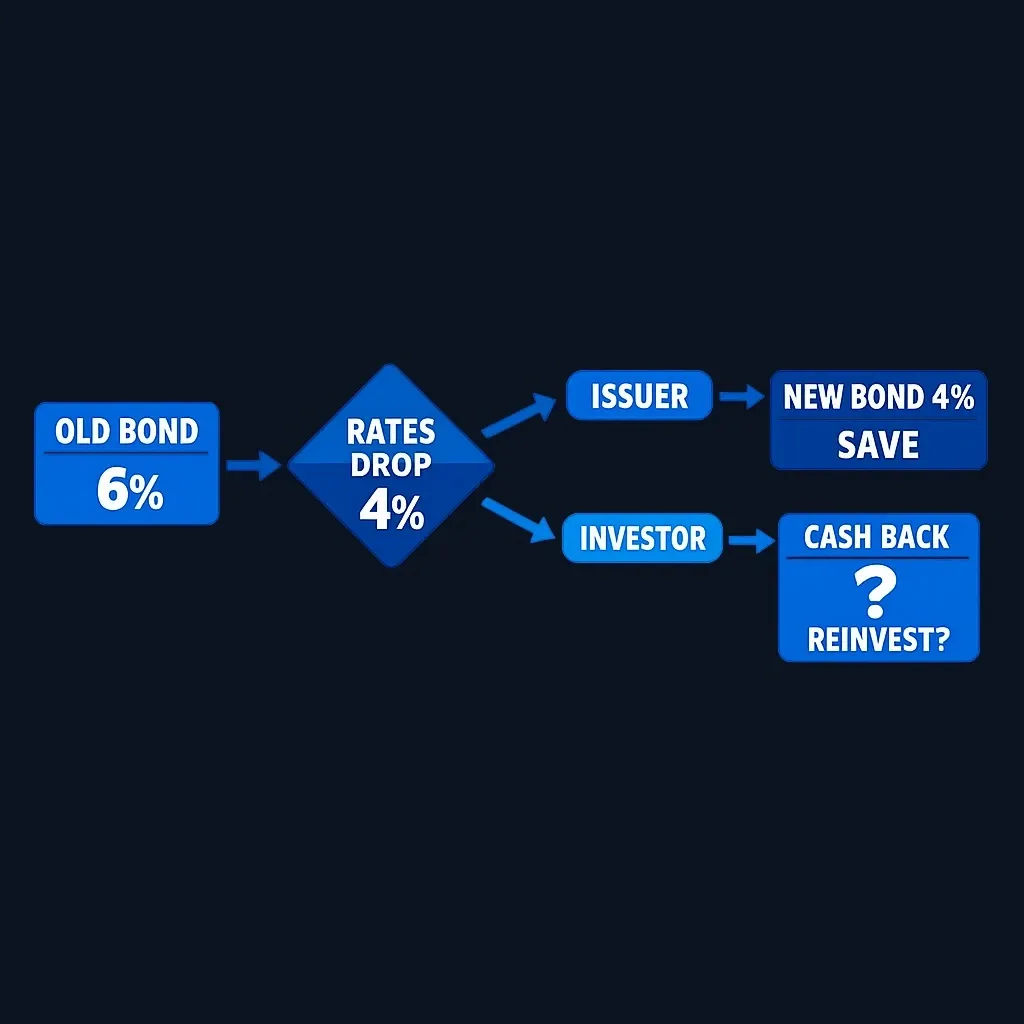
A common issuer-friendly scenario is refinancing. If an issuer can replace older debt with cheaper new debt, redeeming callable debt may be attractive. The investor’s issue is timing: the call may happen when comparable new bonds offer less attractive income.
Run the “what if called?” test
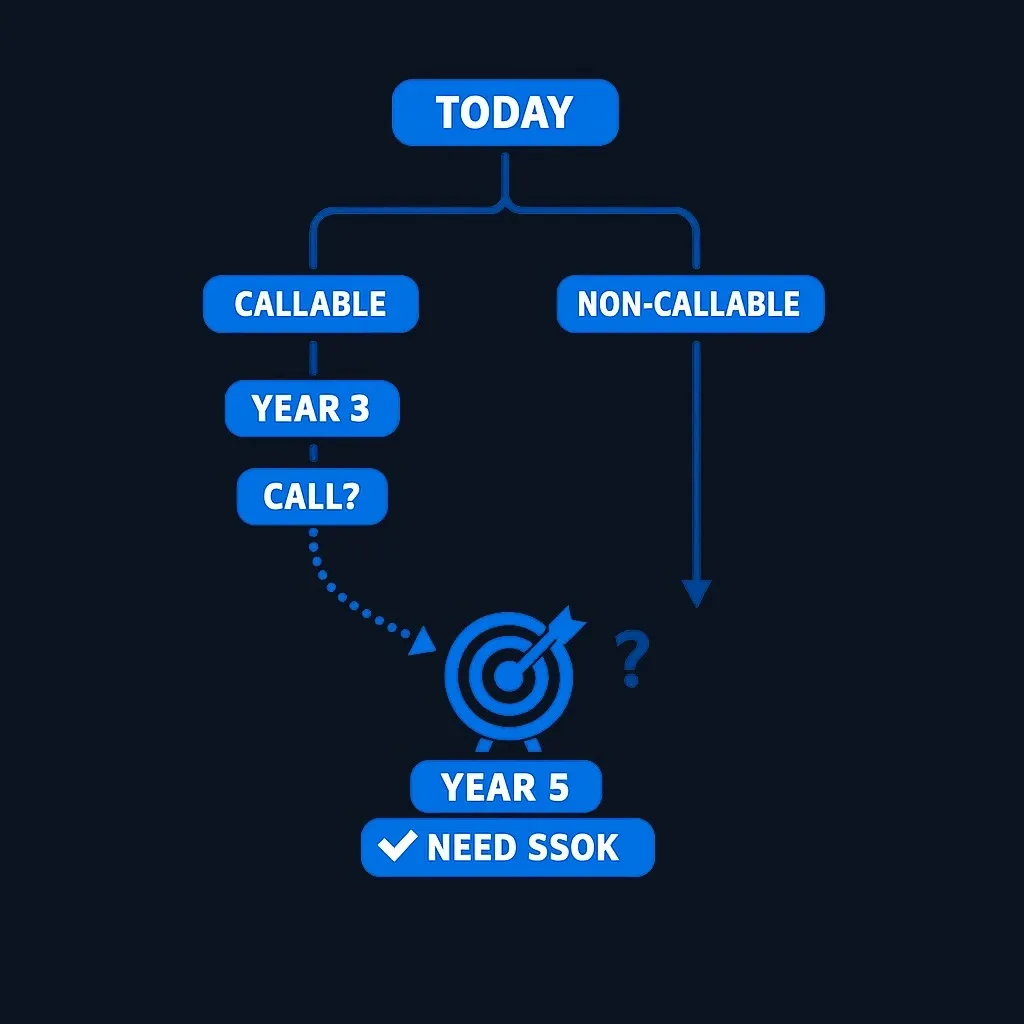
Before buying a callable bond, test two outcomes.
- If the bond is never called, would you still want to hold it to maturity?
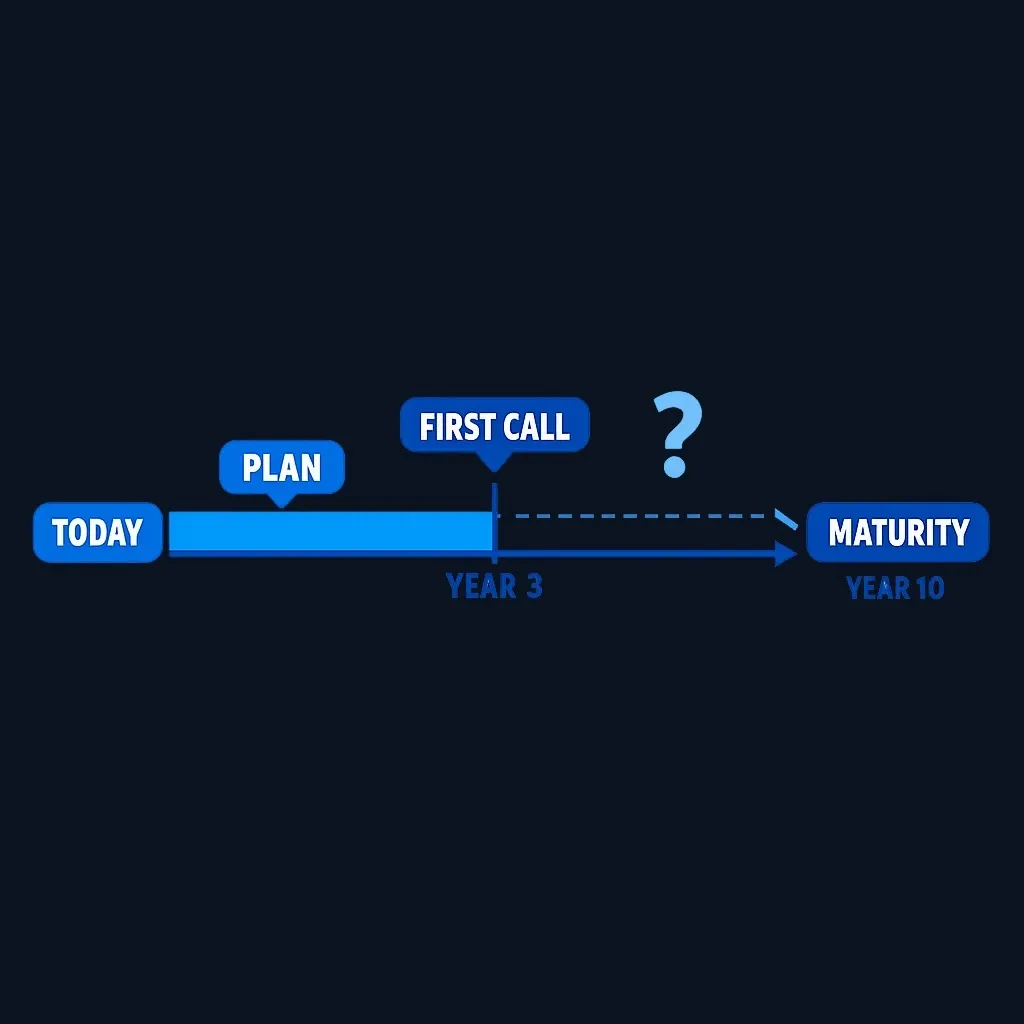
- If it is called at the first possible date, would the result still fit your plan?
- If rates are less attractive then, where might you reinvest the returned principal?
- If you need predictable income, would early redemption create a problem?
This avoids a common mistake: treating the final maturity date as the only important date. For a callable bond, the first call date can be the more practical planning date.
Look beyond the headline yield
A higher stated interest rate can look appealing, but it is not automatically better. FINRA explains that callable bonds may offer a better interest rate than similar noncallable bonds to compensate for call and reinvestment risk (FINRA).
The decision question is whether that extra income is enough for the uncertainty. If you would be unhappy with early redemption, the higher rate may not solve the real issue.
When to choose each option
When callable bonds may make sense
Callable bonds may fit investors who can accept timing uncertainty for possible income compensation. They can be easier to consider when you are not depending on one exact maturity date. They also require a clear plan for reinvesting returned principal.
For example, imagine you want fixed-income exposure but do not need one specific bond to remain outstanding. A callable bond could play that flexible role if the call terms are clear. It becomes less suitable if early redemption would disrupt a planned cash need.
Callable bonds can also make sense to analyze when comparing bonds with similar credit quality and maturity ranges. The investor still needs to remember that the issuer controls the call decision.
When non-callable bonds may make sense
Non-callable bonds may fit investors who place more value on timing clarity. They can be simpler for planning because issuer-driven early redemption is removed from the structure. That can matter when you are matching bond maturities to expected expenses.
For example, a bond ladder depends on timing. If you expect a bond to mature near a future spending need, a non-callable structure is easier to model. You still need to review price, credit risk, liquidity, and tax treatment.
They can also help investors avoid a common fixed-income issue: buying a bond for yield without understanding the redemption terms. Simpler structure does not remove all risk, but it can reduce one source of confusion.
Practice investing with Finelo
Build practical investing skills with guided lessons, simulator practice, and structured challenges.
Tradeoffs and caveats
The main callable-bond caveat is reinvestment risk. If the issuer redeems the bond early, future interest from that bond stops. You then need to decide how to use the returned cash in the market available at that time.
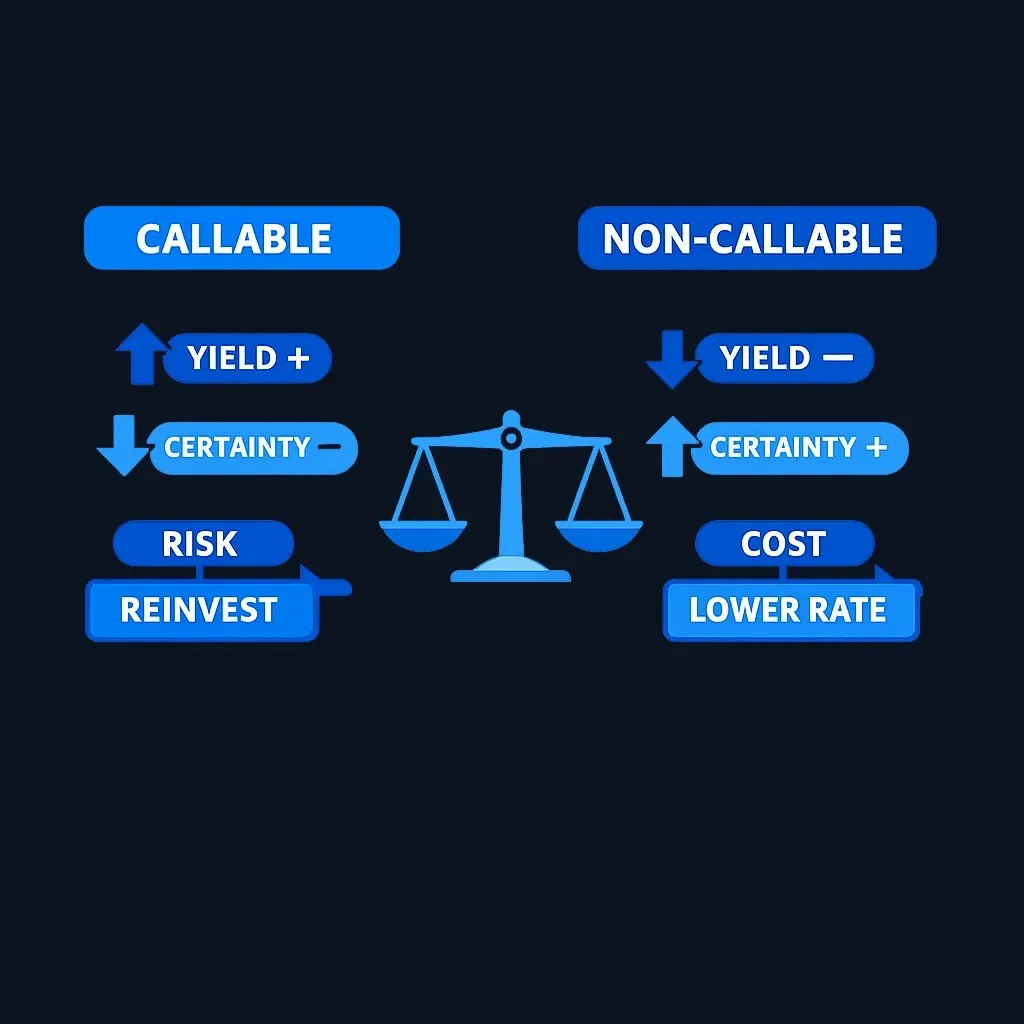
The main non-callable caveat is opportunity cost. You may gain clearer timing, but you may give up the extra interest rate callable bonds sometimes provide for call-related risk (FINRA). Predictability has value, but it can come with a lower stated rate.
Also, “callable” is not one standard feature. Call dates, call prices, and redemption conditions can differ. FINRA gives an example where a callable bond’s call price is above face value, such as $1,002 versus $1,000 (FINRA).
A practical fix is to read the bond’s offering documents before comparing yield. If you do not know when the issuer can call the bond, at what price, and under what conditions, the comparison is incomplete.
FAQ
What happens if my callable bond is called early?
The issuer redeems or pays off the bond before its maturity date, which is the defining feature of a callable bond (Investor.gov). After that, future interest from that bond stops, and you need to decide how to use the returned cash.
Are callable bonds always worse than non-callable bonds?
No. They add call risk and reinvestment risk, but they may also offer a higher interest rate than similar noncallable bonds (FINRA). The better fit depends on whether the compensation is worth the timing uncertainty.
Why would an issuer create a callable bond?
The call feature gives the issuer the right to redeem the bond before maturity (Investor.gov). From the investor’s side, that issuer flexibility is exactly why the bond’s interest rate and call terms need close review.
What should I compare before deciding?
Compare the coupon, maturity date, first call date, call price, credit risk, purchase price, and reinvestment plan. For a callable bond, model both outcomes: holding to maturity and being called at the earliest allowed date.
Sources and Further Verification
More from Finelo
- Green Bonds for Beginners: Types, Risks, Costs, and How to Evaluate Them
- 1031 Exchange vs. Opportunity Zone: Key Differences
- 83(b) Election: Deadlines, Tax Risks, and When Early Filing May Fit
Disclaimer
This article is provided by Finelo for educational and informational purposes only. Finelo does not provide financial, investment, tax, legal, or insurance advice. Consider your circumstances and consult an appropriately qualified professional before making financial decisions.
InvestingBeginner GuideFinancial Education
Practice investing with Finelo
Build practical investing skills with guided lessons, simulator practice, and structured challenges.
About the author
Finelo Team
The Finelo Team creates practical investing and trading education designed to help beginners learn faster with structured challenges, simulator practice, and bite-sized lessons.
Keep reading — Related articles
Investing
Yield to Call vs Yield to Maturity: Assumptions and Bond Risks
Yield to call (YTC) estimates a bond's yield if the issuer redeems it on an eligible call date; yield to maturity (YTM) estimates yield if it remains outstanding to final maturity.
Finelo Team
Investing
Will My Employer Know If I Take a 401(k) Loan?
Who this page is for: readers new to 401(k) loans who want a practical, privacy‑focused explanation — what your employer can see, how to limit visibility, and the financial tradeoffs to weigh.
Finelo Team
Investing
What Medical Expenses Qualify for a 401(k) Hardship Withdrawal?
Before you decide, confirm three things with your plan administrator:
Finelo Team


