Last editorial review: September 8, 2026
Green Bonds for Beginners: Types, Risks, Costs, and How to Evaluate Them
Green bonds are debt investments labeled to finance environmentally focused projects. For beginners, the key point is simple: evaluate the bond like any other fixed-income investment, then…
13 min read
Practice investing with Finelo
Build practical investing skills with guided lessons, simulator practice, and structured challenges.
Want to learn more?
Build practical investing skills with guided lessons, simulator practice, and structured challenges.
Explore FineloExplore Finelo's 28-day challenges
Turn learning into a daily habit with guided challenge paths.
U.S. scope: This article discusses U.S. institutions, financial products, tax rules, and dollar examples unless stated otherwise. Rules and product terms may change; verify current official guidance for your situation.
Quick answer
Green bonds are debt investments labeled to finance environmentally focused projects. For beginners, the key point is simple: evaluate the bond like any other fixed-income investment, then add a second review of the green label, project use, reporting, and verification. The MSRB notes that green-bond features can create “additional considerations” for investors evaluating whether to buy them MSRB green municipal bonds guide.
This page is for readers who want a practical, beginner-friendly way to understand green bonds before comparing issuers, funds, or individual bond opportunities. It is educational, not financial or investment advice. Investing can involve loss, and suitability depends on your goals, time horizon, costs, liquidity needs, and risk tolerance.
What to know before deciding
A useful way to understand green bonds is to split the decision into two tracks. The first track is the normal bond question: can the issuer repay, and does the yield compensate for the risks? The second track is the green question: are the proceeds, project goals, and reporting clear enough to support the environmental label?
That second track matters because a green label adds analysis rather than replacing it. The MSRB specifically warns that green-bond features may give investors additional considerations when evaluating a purchase MSRB green municipal bonds guide. In plain English, the label is a starting point, not proof that the investment fits your portfolio or values.
How can I tell whether a bond qualifies as green?
For a beginner’s screen, a green bond should have a clear link between the money raised and environmental use. Look for the label in the offering document, then check whether the issuer explains how proceeds will be used. If the description is vague, treat the bond with more caution.
A practical test is the “three-document rule.” Try to find the offering document, any green bond framework, and any impact or allocation report. If you cannot locate them, the investment may still exist, but your ability to evaluate the green claim is weaker.
Green bonds versus traditional bonds
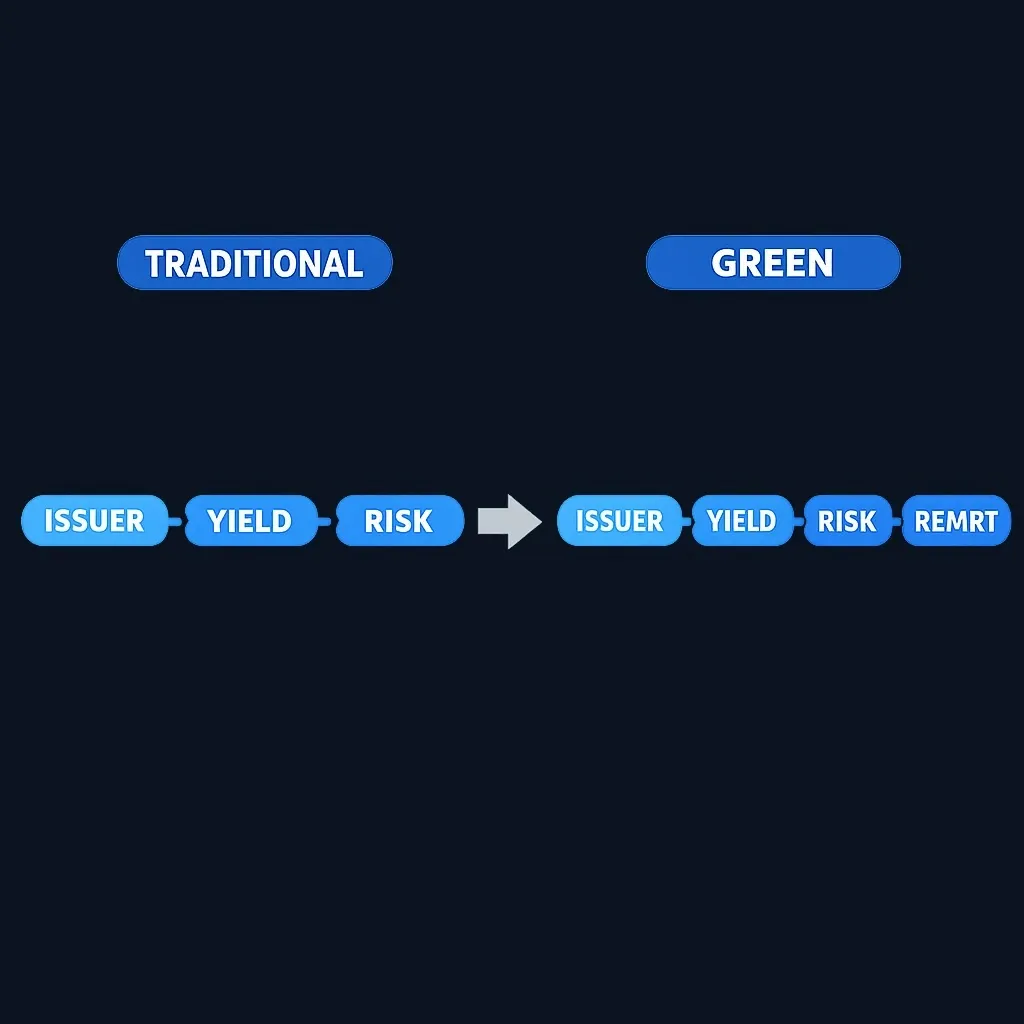
Green bonds and traditional bonds can look similar in basic structure. The difference is the added purpose and disclosure around environmental use. That extra layer can help values-driven investors, but it can also add complexity.
| Decision point | Green bond | Traditional bond |
|---|---|---|
| Core investment review | Still requires issuer, maturity, yield, liquidity, and repayment analysis | Requires issuer, maturity, yield, liquidity, and repayment analysis |
| Use of proceeds | Should be reviewed for environmental purpose and clarity | Usually reviewed for general issuer or project purpose |
| Extra diligence | Green label, reporting, and verification deserve scrutiny | No green-label review needed |
| Main mistake to avoid | Assuming “green” means lower risk or better returns | Ignoring sustainability preferences if they matter to you |
The comparison shows why green bonds are not a shortcut. They are a fixed-income decision with an added sustainability filter.
Types, benefits, and costs to compare
Green bonds can be issued by different types of borrowers. Beginners often see corporate, municipal, sovereign, agency, or development-linked examples in the market. The evaluation process is similar, but the issuer type affects what documents you read and which risks matter most.
Common types of green bonds
Corporate green bonds are issued by companies. Your review focuses on the company’s financial strength, the project description, and whether the green proceeds are easy to track.
Municipal green bonds are issued by local or regional public entities. For these, the MSRB guidance is especially relevant because it discusses green municipal bonds and the extra considerations investors may face MSRB green municipal bonds guide.
Sovereign green bonds are issued by national governments. Their appeal often depends on the country’s credit profile, policy framework, and transparency around eligible spending. If the documentation is broad, pay close attention to whether reporting is specific enough for your standards.
Potential benefits
Green bonds may appeal to investors who want fixed-income exposure while directing capital toward environmental projects. They can also make sustainability goals easier to discuss because the use of proceeds is part of the bond’s identity. For some investors, that transparency is valuable even when the financial analysis remains ordinary bond analysis.
The practical benefit is not that a green label guarantees a better investment. It is that the label gives you a defined set of questions to ask. What will the money fund? Who checks it? What gets reported later?
Costs and trade-offs
Green bonds can carry the same practical costs that investors consider with other bonds, including transaction costs, fund expenses, spreads, and opportunity cost. If you invest through a fund, review the fund’s own documents rather than assuming every holding meets your personal standard. If you buy an individual bond, liquidity and pricing deserve careful review.
The hidden cost is time. A green bond can require more document review than a conventional bond because you must assess both financial terms and environmental claims. That extra effort is exactly why a repeatable framework helps.
Decision framework
Use this five-part framework before deciding whether a green bond belongs on your research list. It does not tell you what to buy. It helps you compare opportunities consistently.
Step 1: Define the role in your portfolio
Start with the investment job. Are you looking for income, capital preservation, diversification, or sustainability alignment? If you cannot define the role, the green label may distract from the basic portfolio question.
Then write down your constraints. Include time horizon, liquidity needs, concentration limits, and comfort with interest-rate or credit risk. This keeps the decision anchored before you review the environmental claims.
Step 2: Review the issuer first
Before analyzing the green story, evaluate the issuer. Ask whether the borrower’s finances, repayment sources, and debt structure make sense for your risk level. A strong green story does not remove repayment risk.
For funds, replace issuer review with fund review. Look at the fund’s objective, holdings, concentration, expenses, and how often it reports sustainability information. A fund can reduce single-bond research work, but it adds manager-selection work.
Step 3: Test the green claim
Now review the label. Look for a clear use of proceeds, a defined project category, and a credible process for tracking funds. The MSRB’s point about additional investor considerations is useful here because the green feature creates extra questions beyond ordinary bond terms MSRB green municipal bonds guide.
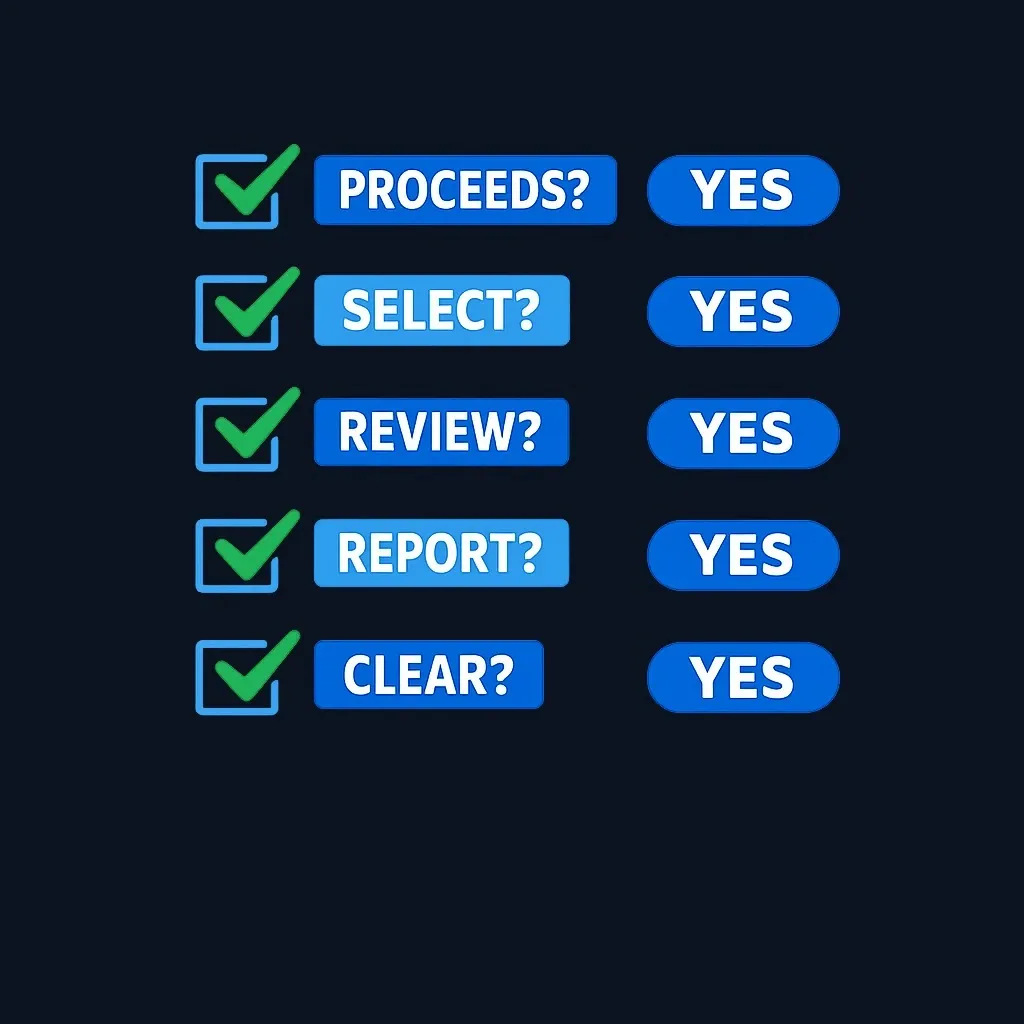
Use this checklist:
- Can you identify what the proceeds are meant to finance?
- Does the issuer explain how eligible projects are selected?
- Is there a framework, opinion, certification, or review?
- Will the issuer report allocation or impact after issuance?
- Are the reported measures understandable to a non-specialist?
Step 4: Compare pricing to alternatives
Compare the green bond with similar non-green bonds where possible. Focus on issuer quality, maturity, coupon structure, call features, and liquidity. If the green bond offers a lower yield than a close alternative, decide whether the sustainability alignment justifies that trade-off for you.
Avoid comparing unlike bonds. A corporate green bond and a municipal green bond may differ for reasons unrelated to the green label. Keep comparisons as close as possible before drawing conclusions.
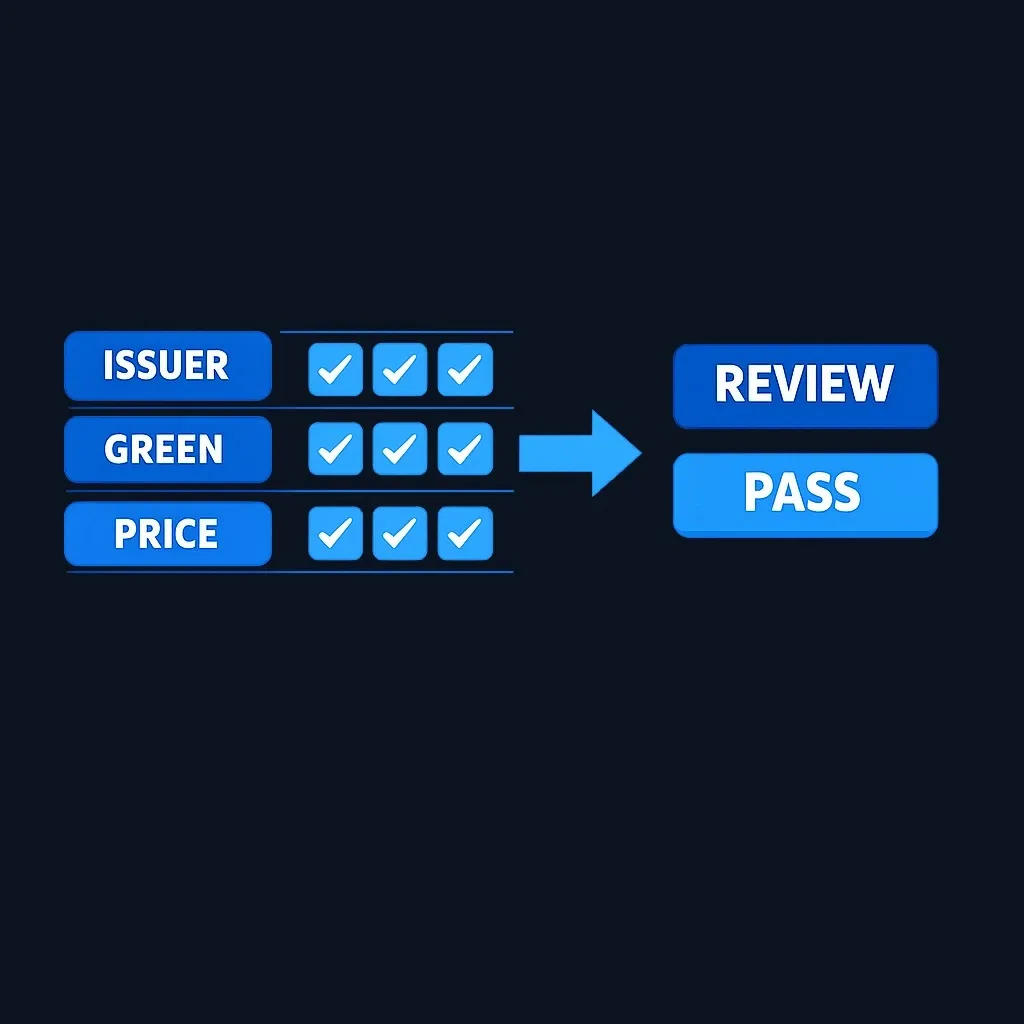
Step 5: Score the decision
A simple scorecard can prevent emotional decisions.
| Factor | Score 0 | Score 1 | Score 2 |
|---|---|---|---|
| Issuer review | Hard to assess | Some concerns | Clear enough for further research |
| Use of proceeds | Vague | Partly specific | Clear and project-linked |
| Reporting | No clear plan found | Limited plan | Clear reporting commitment |
| Verification | None found | Internal only | External review or stronger documentation |
| Pricing and liquidity | Weak fit | Acceptable | Competitive versus alternatives |
A high score is not a buy signal. It means the bond may deserve deeper review. A low score means you may need better documents, a different issue, or a pooled option.
Risks associated with green bonds
The main beginner mistake is treating “green” as a risk rating. It is not. Green bonds still require financial due diligence, and the green feature introduces its own risks.
Investment risks
A bond can lose value if market conditions change, if the issuer’s credit quality worsens, or if selling before maturity requires accepting a lower price. Those risks are not removed by the green label. For individual bonds, liquidity can also matter because a bond may be harder to sell at an attractive price when you need cash.
Funds introduce another layer. A green bond fund may hold many bonds, but its share price can still move. The fund’s strategy, expenses, and holdings should match the role you want it to play.
Green-specific risks
Greenwashing is the risk that the label sounds stronger than the underlying project or reporting supports. The fix is document-based review. Do not rely only on a platform tag, fund name, or marketing summary.
Reporting risk is also important. A bond may describe eligible projects at issuance, but the investor still needs later updates to judge whether proceeds were allocated as described. This is where the MSRB’s warning about additional considerations becomes practical MSRB green municipal bonds guide.
Regulatory and standards risk
Green bond standards and disclosure expectations can change. That can improve transparency over time, but it can also make older or weaker documentation look less useful. When reviewing an issue, ask whether its framework would still seem clear under today’s expectations.
A good habit is to separate “environmental intent” from “measurable evidence.” Intent explains what the issuer wants to finance. Evidence helps you evaluate what actually happened.
How to invest in green bonds
Individual investors usually find green bond exposure in two broad ways: individual bonds or pooled funds. The better route depends on your account access, research time, portfolio size, and need for diversification.
Buying individual green bonds
If you research an individual bond, start with your brokerage’s fixed-income tools and offering materials. When you see a green label, do not stop there. Download the documents and apply the same issuer, pricing, maturity, and liquidity review you would use for another bond.
Then apply the green checklist. If the documents do not explain the use of proceeds, reporting, or verification, you have less basis for evaluating the environmental claim. In that case, the bond may still be investable, but the green label should carry less weight in your decision.
Using funds or ETFs
A fund can make access easier because it pools many bonds. That can reduce single-issuer concentration, but it does not remove due diligence. Review the fund’s holdings, objective, expenses, and sustainability reporting.
Be careful with fund names. A green or sustainable label may cover a range of holdings, screening methods, and reporting styles. Read the documents, then decide whether the fund’s process matches your own definition of green exposure.
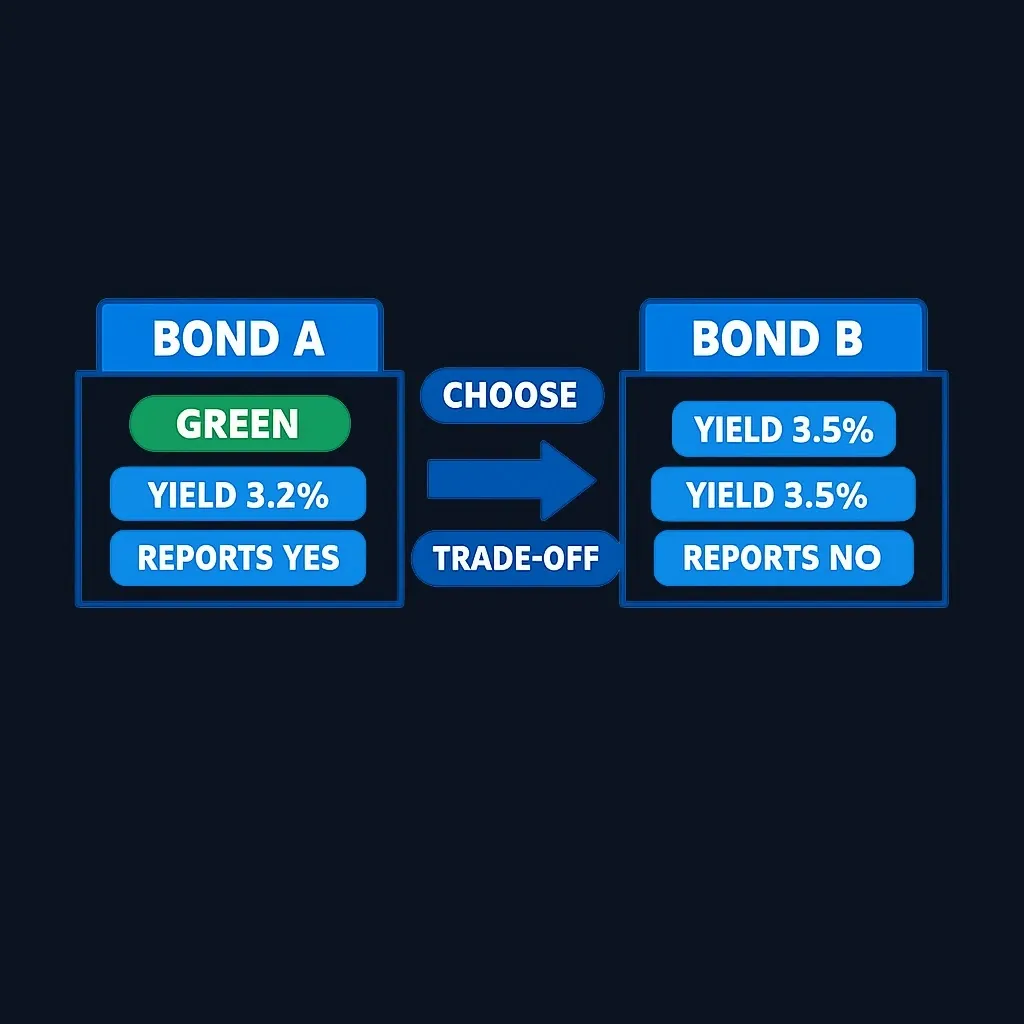
Worked example: two similar bonds
Imagine two bonds from similar issuers with similar maturities. Bond A has a green label, a clear project list, and annual allocation reporting. Bond B has no green label but offers slightly more yield.
A values-focused investor might keep Bond A on the shortlist if the lower yield is acceptable and the documents are strong. A yield-focused investor might prefer Bond B if sustainability alignment is not a priority. Neither answer is universal because the trade-off depends on goals, risk tolerance, and portfolio role.
Practice investing with Finelo
Build practical investing skills with guided lessons, simulator practice, and structured challenges.
Market growth, project examples, and future trends
Green bonds sit inside the broader sustainable finance market. The useful question for beginners is not whether the label is popular. It is whether market growth brings better documents, more comparable reporting, and easier access.
How green bonds contribute to sustainability
Green bonds contribute to sustainability by connecting borrowed capital with projects that have environmental goals. The quality of that contribution depends on project selection, tracking, and reporting. A bond with clear documents is easier to evaluate than one with broad language and limited follow-up.
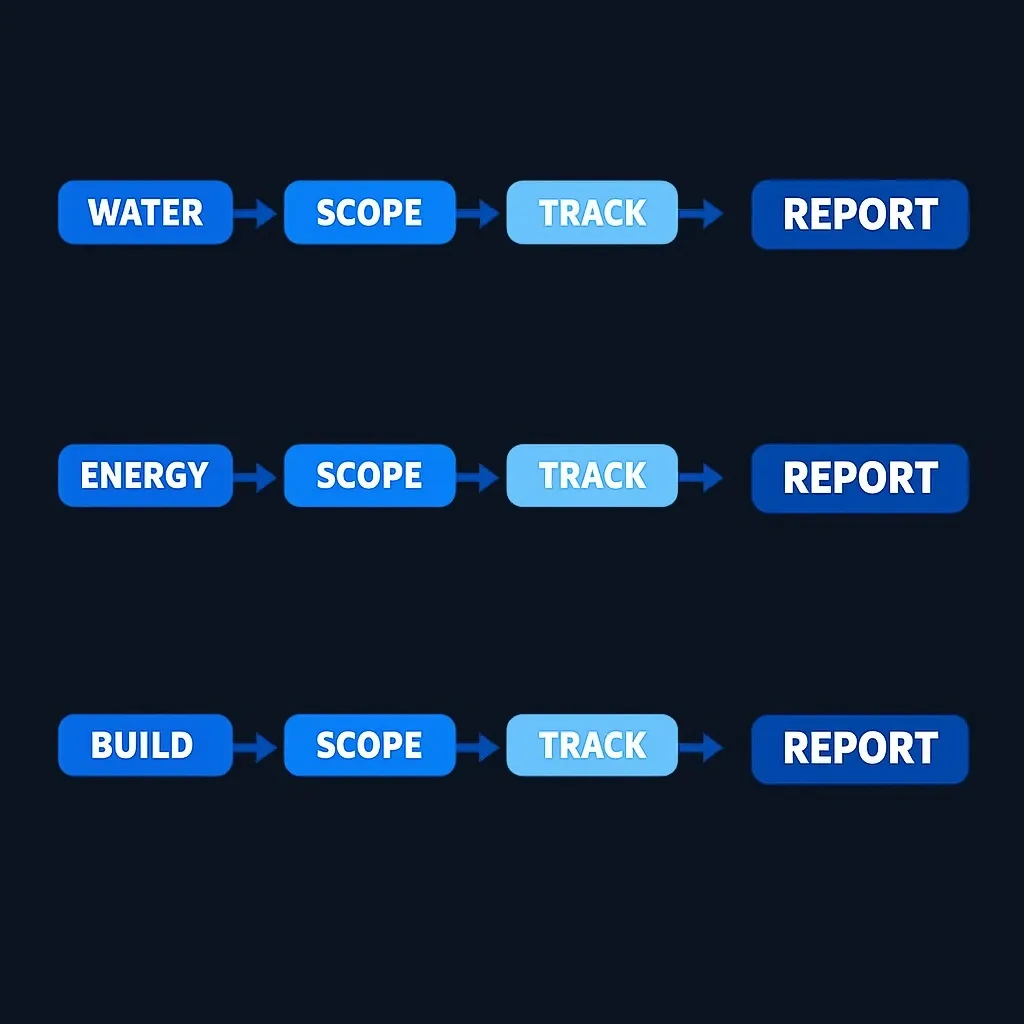
Think in a chain: money raised, eligible project, measurable output, published report. If one link is missing, your confidence in the green claim should fall. This approach works for energy, water, transport, resilience, and efficiency projects without relying on slogans.
Project-style examples
Here are realistic examples of what investors might review:
- A city financing water-system upgrades, where the investor checks project scope and reporting plans.
- A utility financing renewable-energy infrastructure, where the investor checks allocation and output metrics.
- A company financing building-efficiency improvements, where the investor checks whether proceeds are tied to defined assets.
These are evaluation examples, not performance claims. Their purpose is to show how the review moves from label to documents.
What to watch next
Expect investor attention to keep moving toward clearer reporting, better verification, and easier comparison across issuers. Technology may also improve data collection, but better tools do not replace judgment. Investors still need to ask whether the reported measures are relevant, understandable, and consistent.
For beginners, the best trend to follow is documentation quality. A crowded market can create more choice, but more choice also makes screening more important. Strong documents save time and reduce confusion.
Actionable next steps
Start with a narrow shortlist. Pick one green bond or green bond fund and gather its main documents. Then run the decision framework before comparing it with a traditional bond or fund serving the same portfolio role.
Use this quick process:
- Define why you want green bond exposure.
- Review issuer or fund fundamentals.
- Check use of proceeds, reporting, and verification.
- Compare price, yield, costs, and liquidity with close alternatives.
- Document the trade-offs before making any decision.
If you are still learning core investing terms, Finelo provides investment education resources for beginners through its learning hub. Use education first, then evaluate any product or security with current documents and your own risk constraints.
FAQ
What qualifies as a green bond?
A green bond should be labeled and documented as financing environmentally focused projects. For practical evaluation, look for clear use-of-proceeds language, reporting plans, and any verification or review.
How are green bonds regulated?
Rules and expectations can vary by market and issuer type. Instead of relying only on the label, review the official documents and remember that green-bond features can create additional investor considerations MSRB green municipal bonds guide.
What are the risks of investing in green bonds?
Green bonds carry normal bond risks, plus green-specific risks around labeling, reporting, and verification. The key mistake is assuming the environmental label reduces investment risk.
How can I find green bonds to invest in?
Start with your brokerage’s bond tools or research green bond funds. Then verify the underlying documents, holdings, use-of-proceeds language, and reporting before treating the green label as meaningful.
Sources and Further Verification
More from Finelo
- Callable vs. Non-Callable Bonds: Key Differences
- 1031 Exchange vs. Opportunity Zone: Key Differences
- 83(b) Election: Deadlines, Tax Risks, and When Early Filing May Fit
Disclaimer
This article is provided by Finelo for educational and informational purposes only. Finelo does not provide financial, investment, tax, legal, or insurance advice. Consider your circumstances and consult an appropriately qualified professional before making financial decisions.
InvestingBeginner GuideFinancial Education
Practice investing with Finelo
Build practical investing skills with guided lessons, simulator practice, and structured challenges.
About the author
Finelo Team
The Finelo Team creates practical investing and trading education designed to help beginners learn faster with structured challenges, simulator practice, and bite-sized lessons.
Keep reading — Related articles
Investing
Yield to Call vs Yield to Maturity: Assumptions and Bond Risks
Yield to call (YTC) estimates a bond's yield if the issuer redeems it on an eligible call date; yield to maturity (YTM) estimates yield if it remains outstanding to final maturity.
Finelo Team

Investing
Will My Employer Know If I Take a 401(k) Loan?
Who this page is for: readers new to 401(k) loans who want a practical, privacy‑focused explanation — what your employer can see, how to limit visibility, and the financial tradeoffs to weigh.
Finelo Team
Investing
What Medical Expenses Qualify for a 401(k) Hardship Withdrawal?
Before you decide, confirm three things with your plan administrator:
Finelo Team


