Last editorial review: September 8, 2026
Deferred Compensation Plans: Taxes, Payout Rules, and Employer Risk
Deferred compensation lets an employee elect to receive part of pay later (for example at retirement) instead of immediately, which postpones when that income is taxed. Governmental 457(b)…
7 min read
Practice investing with Finelo
Build practical investing skills with guided lessons, simulator practice, and structured challenges.
Want to learn more?
Build practical investing skills with guided lessons, simulator practice, and structured challenges.
Explore FineloExplore Finelo's 28-day challenges
Turn learning into a daily habit with guided challenge paths.
U.S. scope: This article discusses U.S. institutions, financial products, tax rules, and dollar examples unless stated otherwise. Rules and product terms may change; verify current official guidance for your situation.
Quick answer
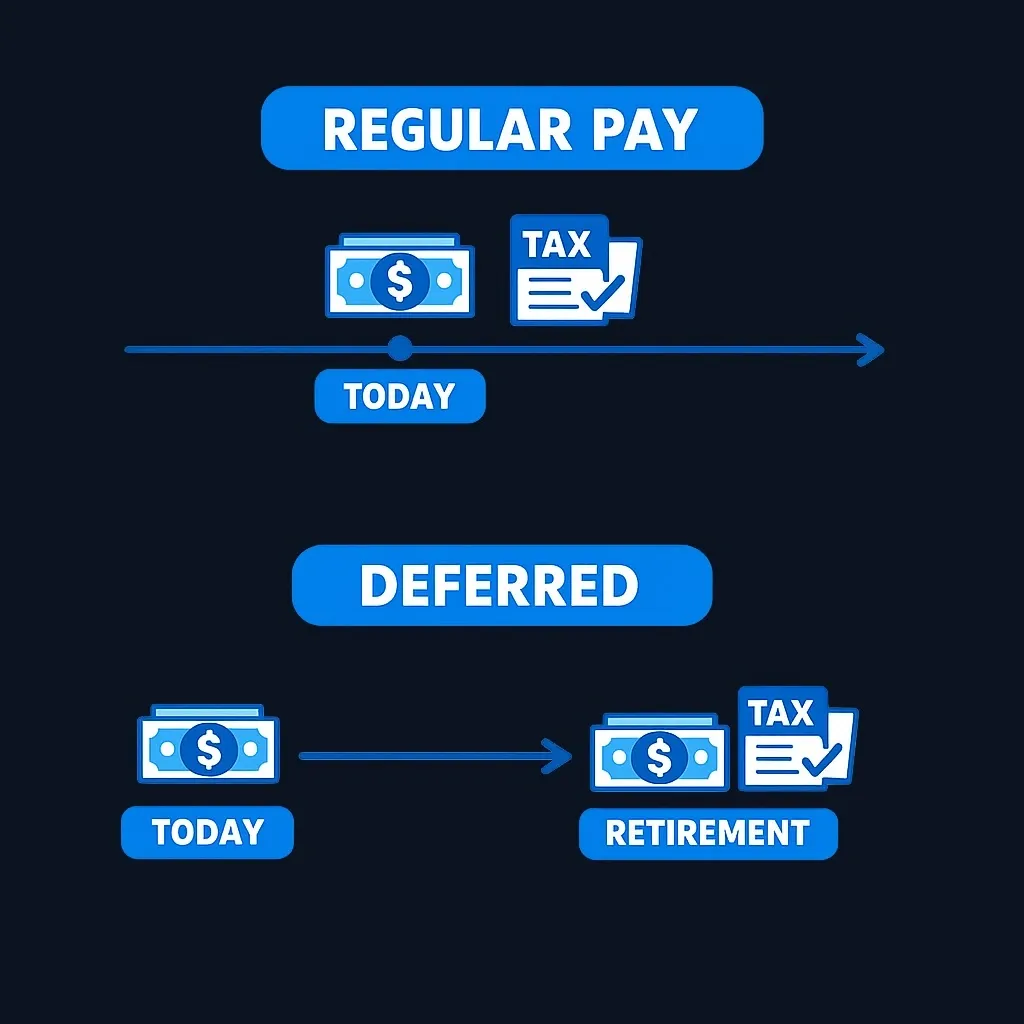
Deferred compensation lets an employee elect to receive part of pay later (for example at retirement) instead of immediately, which postpones when that income is taxed. Governmental 457(b) plans and some plans for qualifying tax‑exempt employers are described under Internal Revenue Code section 457 (IRS).
Educational scope and verification
Finelo provides educational content about retirement and compensation topics; this page is educational, not financial advice — verify your plan details with HR and consult a tax advisor before acting.
What to know before deciding
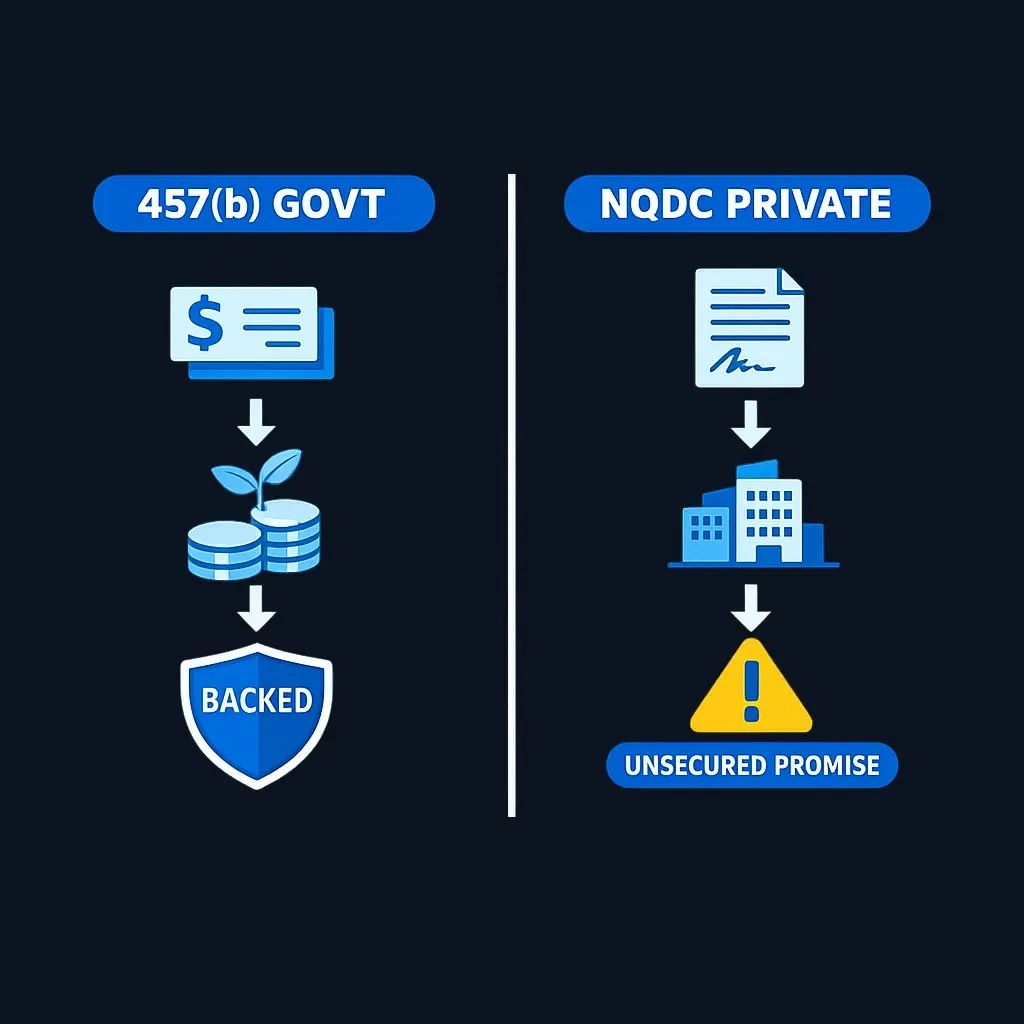
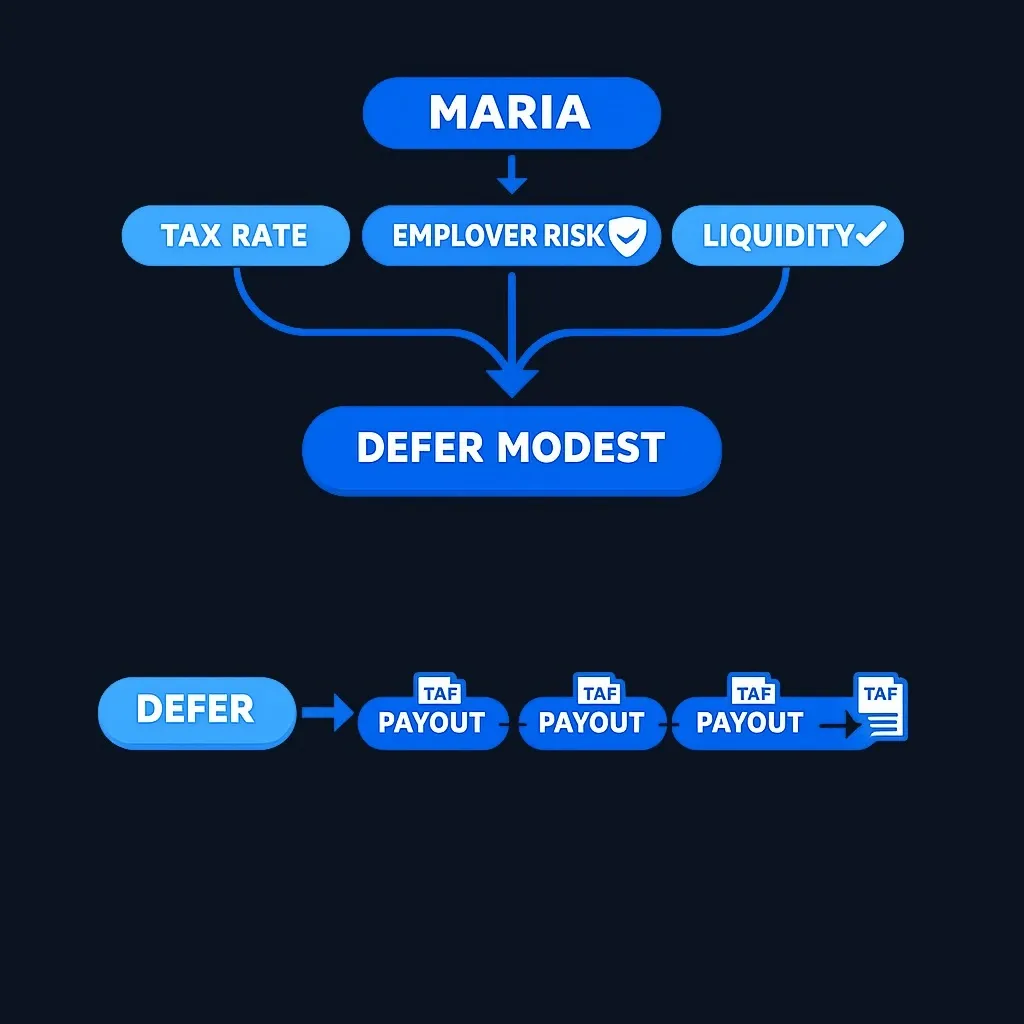
Deferred compensation shifts taxable income from today to a later date and can reduce current taxable income, but the outcome depends on three practical tradeoffs: (1) your expected tax rate in retirement, (2) how easily you can live without the deferred pay, and (3) your employer’s credit strength because deferred pay is often an unsecured promise. Consider liquidity (emergency savings), time horizon, and whether your plan permits Roth-style deferrals or only pre-tax deferrals — check your plan document for specifics.
Educational note: This content is educational, not tax or investment advice. Taxes, employer solvency, and plan terms can materially affect outcomes; consult a professional for decisions that affect your situation.
Types of Deferred Compensation Plans
Below is a concise comparison of common plan types and how they generally differ. Rely on your plan documents for exact rules.
| Plan type | Typical sponsor | Typical features and risks |
|---|---|---|
| Governmental 457(b) | State & local governments | Available to eligible public employees under IRC §457 (IRS). Usually tax-deferred until distribution; check plan for Roth options. |
| Non‑governmental 457(b) | Certain tax‑exempt employers | Sponsor-specific rules; employer may restrict distributions and the plan may impose different payout rules. |
| Nonqualified deferred compensation (NQDC) | Private employers | Highly contract-driven; payouts typically subject to employer creditor risk and specific vesting/trigger events. |
Example: A municipal employee offered a governmental 457(b) can typically defer salary through payroll elections; a private executive’s NQDC might instead be a contractual promise tied to company performance and solvency.
Eligibility and Enrollment Process
Eligibility is set by the plan sponsor. Government plans often cover employees in specified job classes; private plans apply only to employees the employer names. Enrollment commonly requires (1) requesting plan materials from HR or the plan administrator, (2) completing an election form that sets a deferral percentage or dollar amount, and (3) confirming payroll withholding. Always name or update beneficiaries according to the plan’s procedure.
Example: Common enrollment flow — obtain the plan summary, pick a deferral amount that preserves an emergency buffer, sign the election, and verify the first payroll deduction.
Contribution Limits and Options
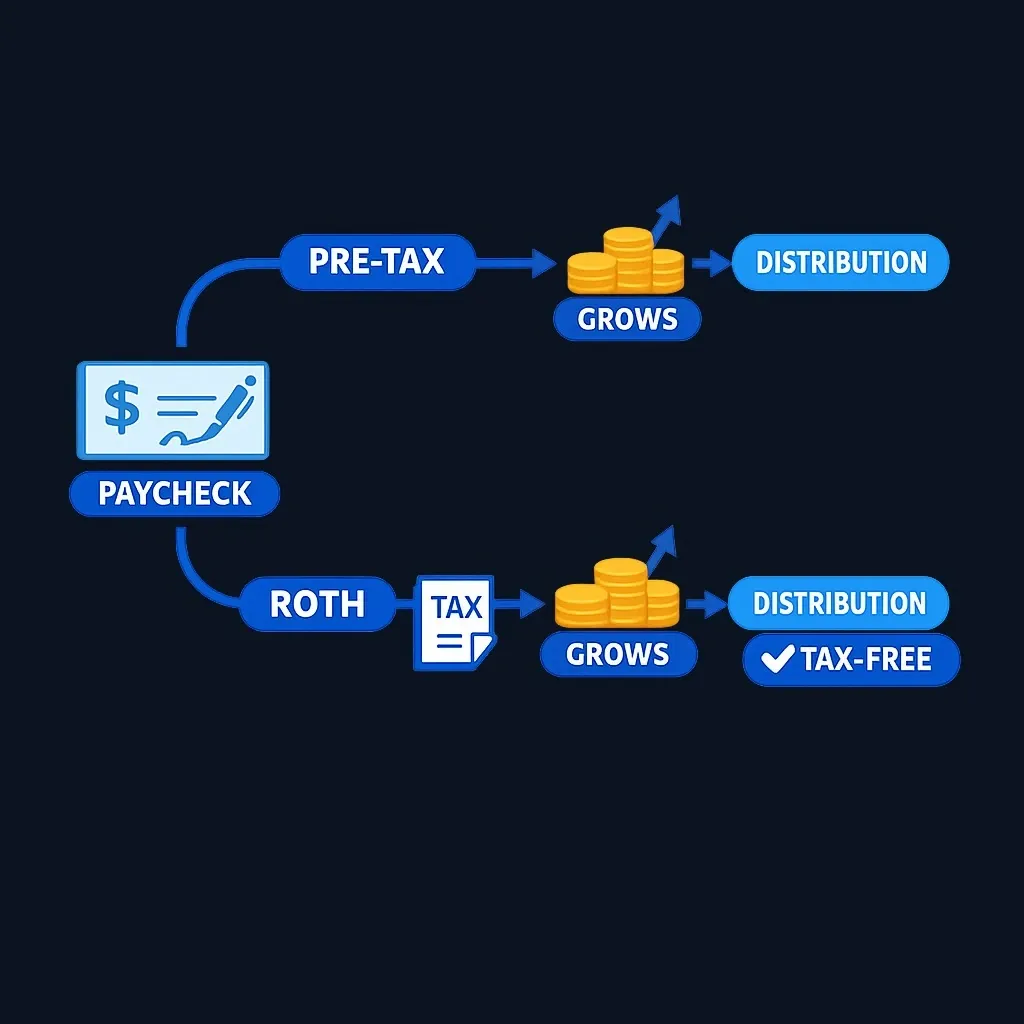
Contribution limits and whether Roth (after‑tax) deferrals are allowed vary by plan sponsor and by plan type. The IRS defines availability rules for 457 plans, but the specific maximums and any age‑based catch‑up provisions are set by tax law and plan implementation; confirm current numerical limits with plan documents or the IRS. Many participants must choose between pre‑tax deferral (defers tax to distribution) and Roth-style deferral (taxes paid now, tax-free treatment later if rules are met) where the plan permits.
Decision checkpoint: current and expected marginal tax rates can affect the comparison between pre-tax and permitted Roth deferrals, but future rates and personal income are uncertain. Also model near-term liquidity outside the plan, because distribution restrictions and employer-credit risk can limit access depending on the plan type.
Tax Implications of Deferred Compensation
Deferred compensation changes the timing of taxation: income you defer is typically taxed when distributed rather than when earned, but tax timing and rules differ by plan type and sponsor. For governmental 457(b) plans, IRC §457 describes plan availability and the general deferred-compensation framework (IRS). Confirm whether your plan permits Roth deferrals, whether state tax rules differ, and how distributions are reported for federal income tax.
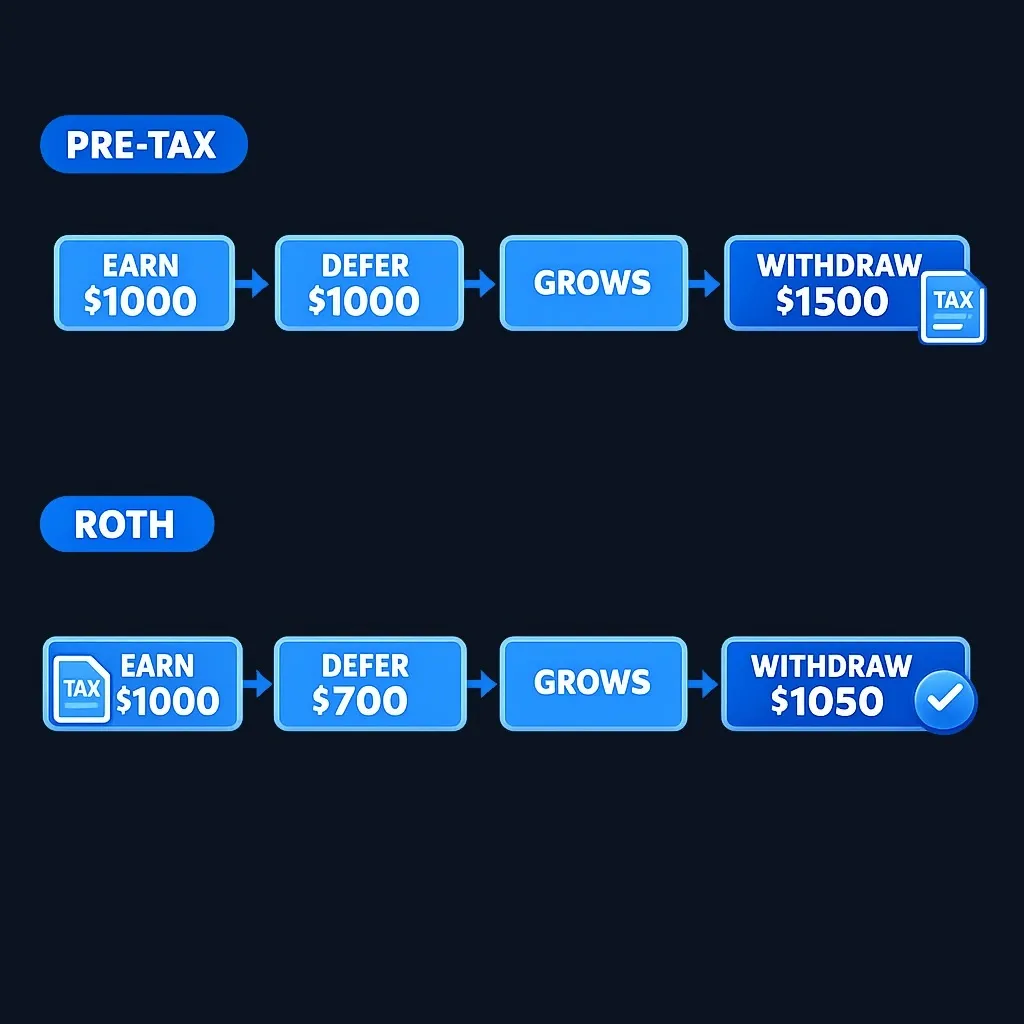
Example: If you defer pay pre-tax today and receive distributions in retirement, those distributions are usually included in taxable income at that time. If your plan offers a Roth option and you use it, taxes are paid up front and qualified distributions may be tax-free; verify qualification rules with your plan administrator.
Practice investing with Finelo
Build practical investing skills with guided lessons, simulator practice, and structured challenges.
Withdrawal Rules and Financial Planning
Plan documents define permissible distribution events (commonly separation from service, retirement, disability, death, or an unforeseeable emergency). Many plans limit in-service withdrawals, and nonqualified plans can impose additional contractual restrictions. Importantly, deferred compensation often ranks with other unsecured employer obligations; if the employer becomes insolvent, plan participants may have limited recovery rights.
Practical planning considerations
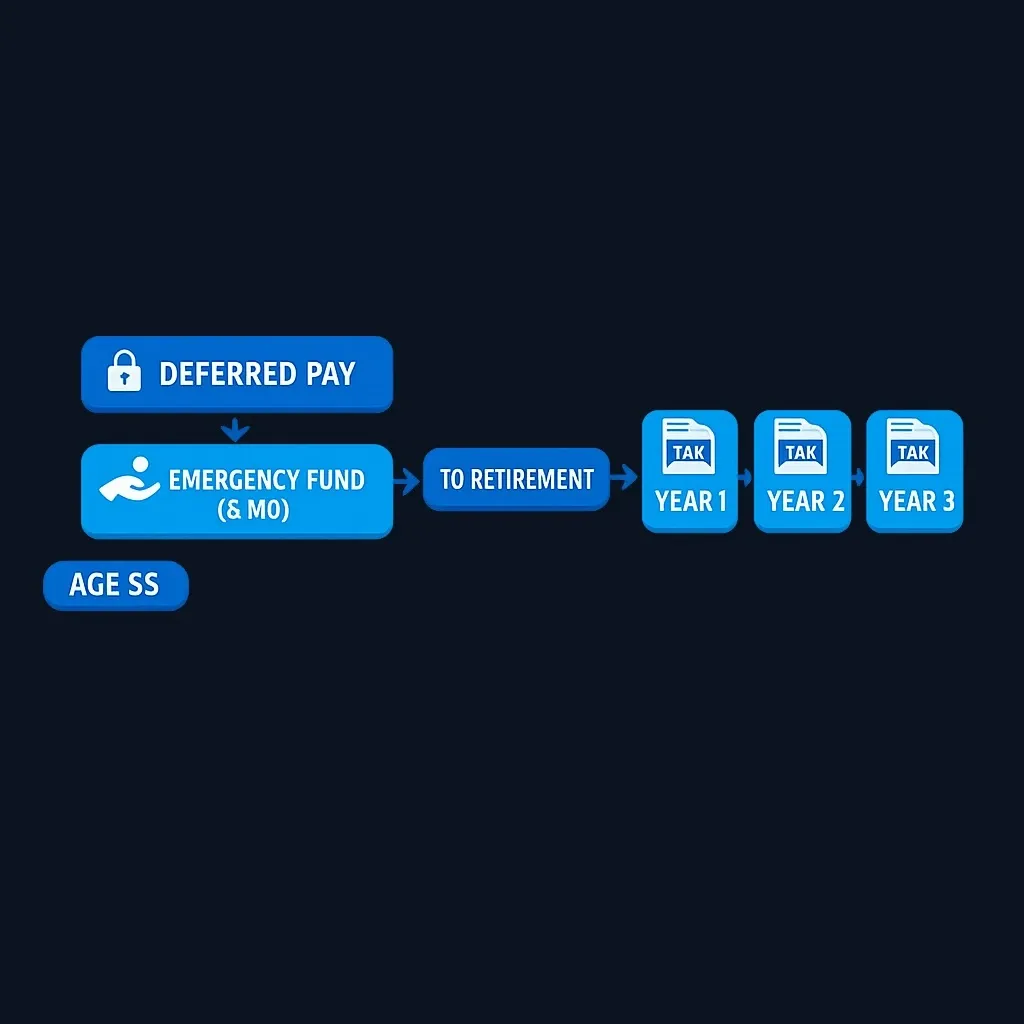
- Keep an emergency fund outside your deferred plan to avoid forced early distributions.
- Stagger distributions (if the plan permits) to manage taxable income across years.
- Maintain diversification outside employer-specific deferred pay to reduce concentration risk.
Worked example: Alex, age 55, defers a portion of salary but keeps six months of expenses in a liquid account. At retirement, Alex elects an annual payout schedule to avoid a single large taxable event.
Decision framework
Use this checklist to decide whether to participate and how much to defer:
- Time horizon — Can you wait years to access the money? If no, lower deferral.
- Expected tax rate — If you expect lower rates later, pre‑tax deferral may help; expect uncertainty.
- Employer risk — Is the sponsor financially stable? If not, limit exposure and hold savings elsewhere.
- Liquidity needs — Maintain emergency savings outside the plan.
- Plan rules — Confirm distribution triggers, Roth availability, portability if you leave, and beneficiary procedures.
Worked scenario: Maria expects lower income in retirement and her municipal employer is financially sound. She defers a modest share, keeps three months of expenses liquid, and elects a distribution schedule that avoids spiking taxable income in one year.
Case studies: worked examples (hypothetical)
Scenario 1 — Public-sector employee: Sam, age 48, uses a governmental 457(b) to defer part of salary, aiming to reduce current taxable income. Sam funds an outside emergency account to avoid early withdrawals and plans distributions staged across retirement years.
Scenario 2 — Executive with NQDC: Renee negotiates an NQDC tied to long-term service. Because those payments are subject to company solvency, Renee limits the deferred portion and increases personal retirement savings in diversified accounts.
Each scenario highlights tradeoffs among tax timing, liquidity, and employer credit risk.
FAQ
What is a deferred compensation plan?
A deferred compensation plan lets employees elect to receive some compensation at a later date, shifting when that income is taxed. Governmental 457(b) plans and certain plans for qualifying tax‑exempt employers are addressed under IRC §457 (IRS).
Who is eligible to participate in a deferred compensation plan?
Eligibility depends on the plan sponsor. Governmental 457(b) plans typically apply to eligible state and local government employees; other deferred arrangements apply only if your employer offers them. Check your plan summary or HR for specific eligibility rules.
How are withdrawals from a deferred compensation plan taxed?
Tax treatment depends on whether contributions were pre‑tax or Roth (after‑tax) and on plan type. Generally, pre‑tax deferrals and earnings are included in taxable income when distributed; Roth deferrals, if allowed and qualified, may be tax‑free. Confirm tax treatment with your plan administrator and a tax advisor.
Can I change my contribution amount after enrolling?
Plan documents govern contribution changes. Some plans allow frequent elections or changes; others restrict changes to certain windows or require advance notice. Review your plan’s election rules before planning changes.
Conclusion and next steps
Deferred compensation can help shift income timing and supplement retirement savings, but benefits depend on tax expectations, liquidity needs, and employer credit risk. Practical next steps: request your plan summary and fee schedule from HR, confirm distribution triggers and Roth availability, keep an emergency fund outside the plan, and consult a tax advisor for your situation.
Next step: Obtain your plan summary from HR and compare its distribution events, beneficiary rules, and employer protections before deciding.
Sources and Further Verification
More from Finelo
- Immediate vs. Deferred Annuities: Key Differences
- Art Investing for Beginners: Costs, Liquidity, Valuation, and Risks
- Business Development Companies: Yields, Fees, Risks, and How to Evaluate BDCs
Disclaimer
This article is provided by Finelo for educational and informational purposes only. Finelo does not provide financial, investment, tax, legal, or insurance advice. Consider your circumstances and consult an appropriately qualified professional before making financial decisions.
InvestingBeginner GuideFinancial Education
Practice investing with Finelo
Build practical investing skills with guided lessons, simulator practice, and structured challenges.
About the author
Finelo Team
The Finelo Team creates practical investing and trading education designed to help beginners learn faster with structured challenges, simulator practice, and bite-sized lessons.
Keep reading — Related articles

Investing
Yield to Call vs Yield to Maturity: Assumptions and Bond Risks
Yield to call (YTC) estimates a bond's yield if the issuer redeems it on an eligible call date; yield to maturity (YTM) estimates yield if it remains outstanding to final maturity.
Finelo Team

Investing
Will My Employer Know If I Take a 401(k) Loan?
Who this page is for: readers new to 401(k) loans who want a practical, privacy‑focused explanation — what your employer can see, how to limit visibility, and the financial tradeoffs to weigh.
Finelo Team

Investing
What Medical Expenses Qualify for a 401(k) Hardship Withdrawal?
Before you decide, confirm three things with your plan administrator:
Finelo Team


