Last editorial review: September 8, 2026
Early Exercise of Stock Options: Taxes, Costs, Risks, and When It May Fit
Early exercise is exercising (paying for) unvested options so you own shares before they fully vest. It can accelerate capital‑gains treatment and reduce later ordinary‑income on growth when…
8 min read
Practice investing with Finelo
Build practical investing skills with guided lessons, simulator practice, and structured challenges.
Want to learn more?
Build practical investing skills with guided lessons, simulator practice, and structured challenges.
Explore FineloExplore Finelo's 28-day challenges
Turn learning into a daily habit with guided challenge paths.
U.S. scope: This article discusses U.S. institutions, financial products, tax rules, and dollar examples unless stated otherwise. Rules and product terms may change; verify current official guidance for your situation.
Quick answer
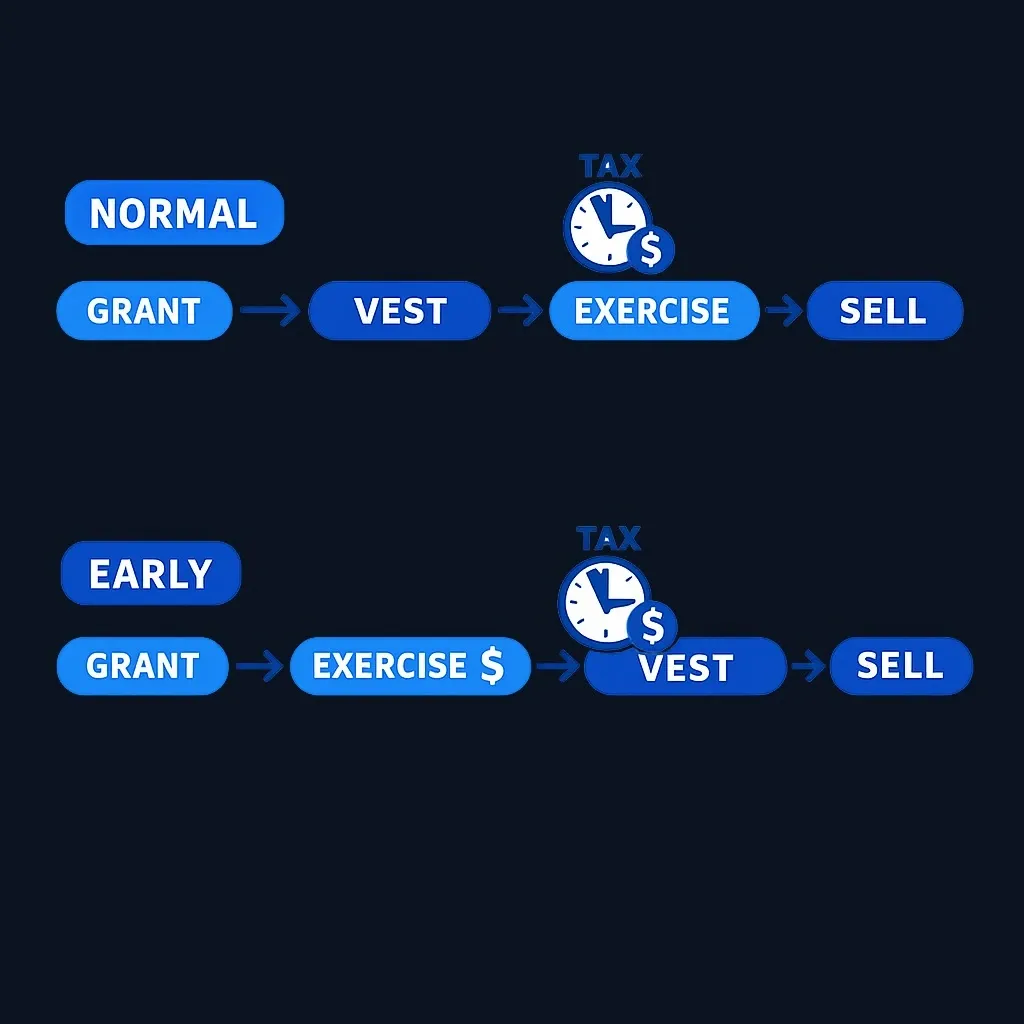
Early exercise is exercising (paying for) unvested options so you own shares before they fully vest. It can accelerate capital‑gains treatment and reduce later ordinary‑income on growth when paired with a timely Section 83(b) election; for statutory (qualified) options, the IRS says you generally don't include income when you receive or exercise the option IRS Topic No. 427.
What to know before deciding
What early exercise is and who this page is for
Early exercise means converting option rights into actual shares while some shares remain subject to vesting or repurchase. This strategy is most relevant to employees (especially at private or early‑stage companies) who expect meaningful equity upside and who can afford the exercise price and any tax consequences.
Educational note: this content is educational, not financial or tax advice. Exercising options involves cash outlay and loss risk; consider a tax professional before acting.
Core benefits in plain terms
- Starts your ownership clock: you become a shareholder earlier, which can start the capital‑gains holding period sooner and potentially reduce taxes on future appreciation.
- Locks in basis at a low valuation: if fair market value is low now, your taxable basis can be small, reducing future taxable spread.
- Simplifies future liquidity events: being a shareholder earlier can make you eligible for certain secondary sales or simplified paperwork when permitted.
Where relevant, the IRS notes that for statutory (qualified) options you generally don't include any amount in gross income when you receive or exercise the option IRS Topic No. 427.
Main risks and practical harms
- Cash needed today: you must pay the exercise price (and any fees). That cash is at risk if the company fails or you leave before vesting.
- Forfeiture or repurchase: unvested shares commonly can be repurchased by the company if you depart, which can make your exercise cost a total loss.
- Tax complexity and timing: to capture certain tax benefits you may need to make an election or meet holding‑period rules; missing procedural steps can change outcomes.
- Valuation uncertainty: private‑company share values depend on 409A/board valuations, not public markets, which complicates tax and exit planning.
How the Section 83(b) election fits (overview)
An 83(b) election — when available — lets you elect to be taxed on the value of shares at transfer (exercise) instead of at vesting. That can fix your tax basis at exercise and start the holding period immediately, which is why many employees pair early exercise with an 83(b). Because filing and timing rules matter for the election’s effectiveness, consult a tax advisor about whether it applies in your situation and how to file. See the IRS for background on stock option tax timing IRS Topic No. 427.
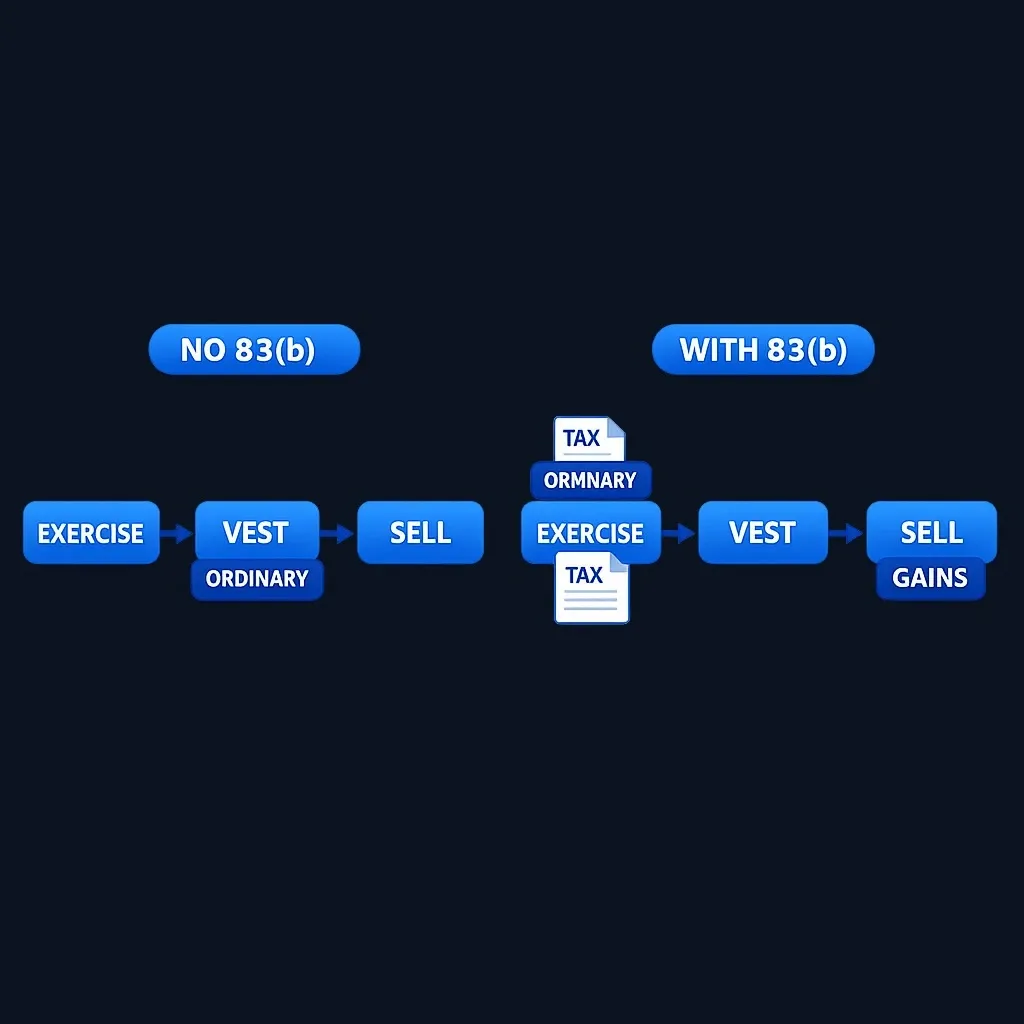
Practical takeaway: early exercise + a timely 83(b) can be powerful when the current value is low and you expect long‑term growth, but it increases short‑term cash and downside risk.
Decision framework
Use this short framework and checklist to evaluate whether early exercise may fit your objectives.
Step‑by‑step checklist
- Confirm plan/grant allows early exercise. If the paperwork does not permit it, you cannot early exercise.
- Assess liquidity: can you pay the exercise price and tolerate losing that money?
- Confirm 83(b) availability and procedure with a tax advisor and your employer.
- Estimate employment horizon: plan to stay long enough to avoid repurchase losses.
- Model after‑tax outcomes under realistic scenarios (no upside, moderate upside, high upside).
Compact decision table
| Question | If yes — what to consider | If no — next move |
|---|---|---|
| Grant allows early exercise | Proceed to cash and tax checks | You cannot early exercise |
| You can afford the exercise cost now | Consider filing 83(b) and modeling taxes | Likely delay or skip |
| 83(b) is available and practical for you | Potential long‑term tax benefits | Tax benefits likely limited |
| You expect to remain employed | Lower chance of repurchase loss | Higher risk — be cautious |
How to weigh tradeoffs (short framework)
- If you can absorb the cash loss and expect long holding plus significant upside, early exercise plus 83(b) often improves after‑tax returns.
- If employment is unstable or cash is tight, delaying exercise reduces immediate risk even if it raises future taxes.
- When unsure, quantify best/worst cases (net after‑tax proceeds) and pick the choice that fits your risk tolerance and liquidity.
Comparing ISOs and NSOs
Key differences to keep in mind
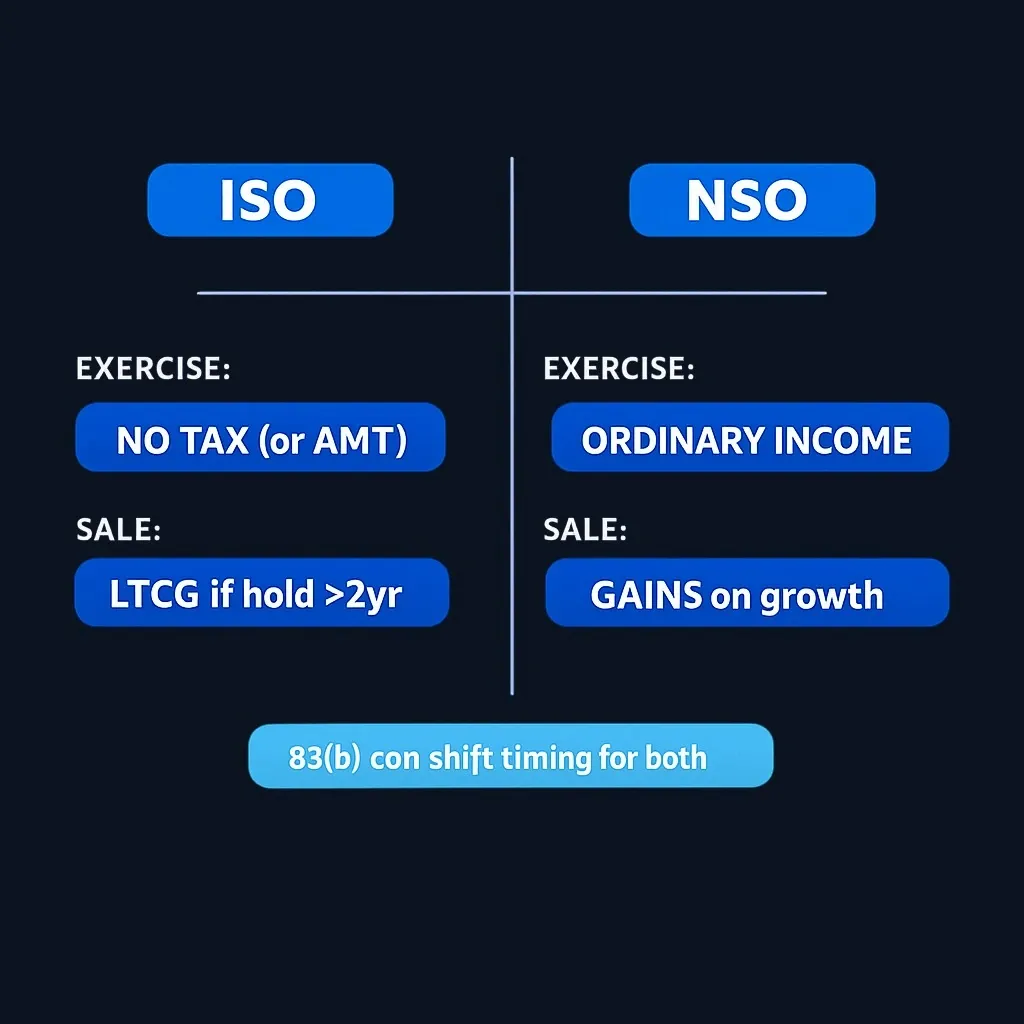
- ISOs (Incentive Stock Options) and NSOs (Non‑Qualified Stock Options) follow different tax rules. The IRS provides general guidance on the tax timing for statutory (qualified) options; treatment varies by option type IRS Topic No. 427.
- ISOs can introduce Alternative Minimum Tax considerations in some situations; NSOs typically generate ordinary income equal to the spread at exercise unless an election changes timing.
- The availability and benefits of an 83(b) election can interact differently with ISOs and NSOs, so confirm the interaction with a tax advisor and your plan documents.
Practical point: because ISO vs NSO consequences can materially change taxes at exercise and sale, review the option type on your grant and get targeted tax guidance before exercising.
Real‑world case studies (illustrative)
These three short, realistic scenarios show how outcomes differ. They are illustrative frameworks, not predictions.
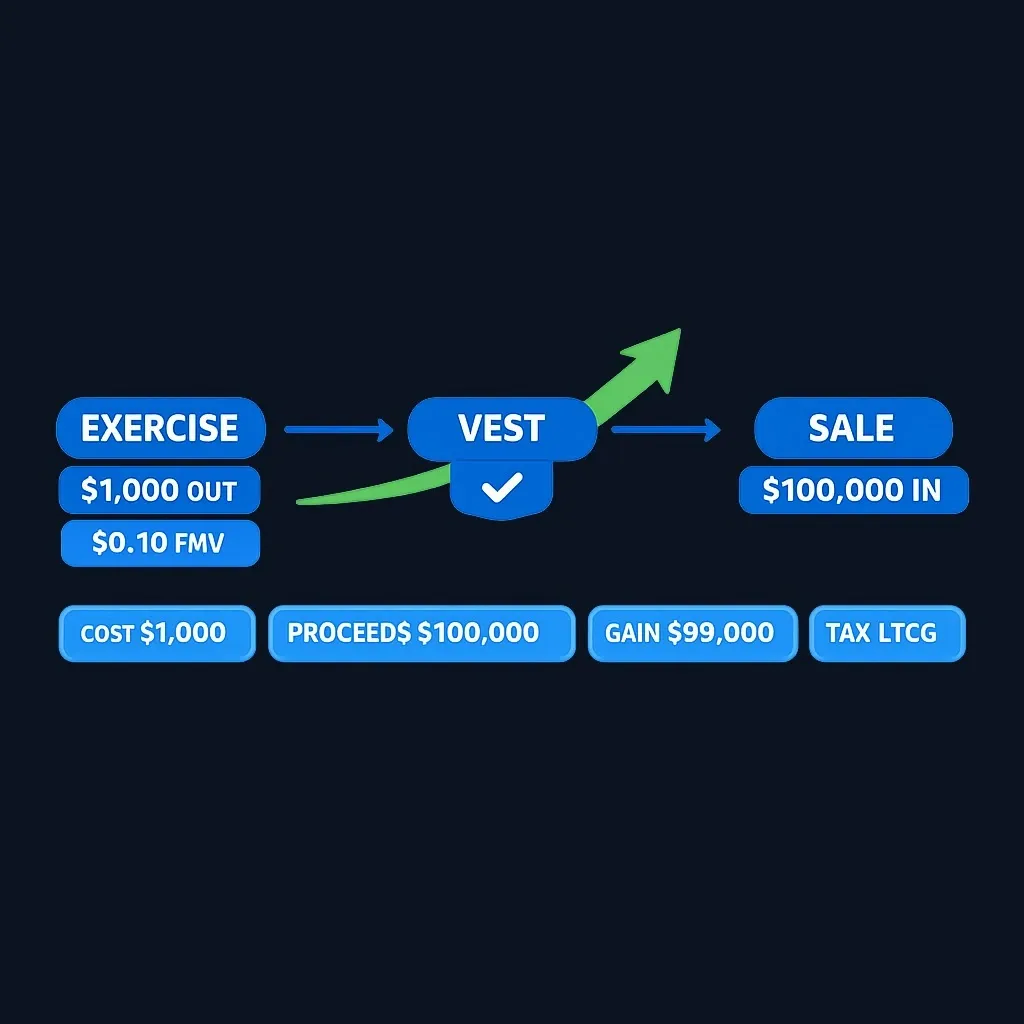
Case 1 — Early‑stage hire, low valuation, staying long term
An early hire exercises immediately at a low valuation and files an election where appropriate. Years later, the company grows and the sale proceeds are largely capital gains because the holding period began at exercise. The upfront cost was modest relative to the eventual value. Key dependencies: staying through vesting and an effective election.
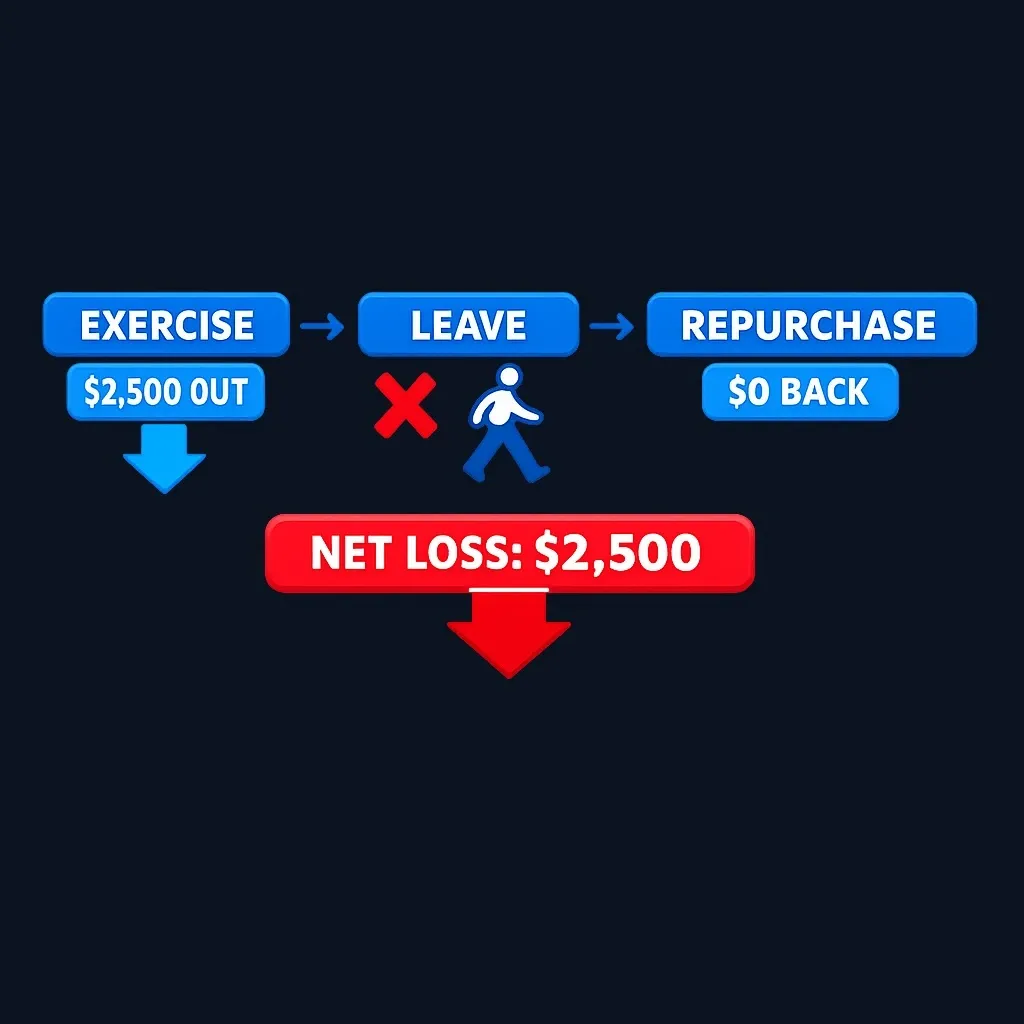
Case 2 — Early exercise, then early departure
An employee exercises unvested options but leaves before vesting. The company repurchases the unvested shares. The employee loses the exercise cost and any taxes paid — demonstrating the forfeiture risk of early exercise.
Case 3 — Early exercise without an election or missed filing
An employee exercises but cannot or does not file the necessary election in time. Taxes are calculated at vesting or according to plan rules, producing a higher ordinary‑income tax bill at vesting and reducing the prospective advantage of early exercise.
Takeaway: successful outcomes require alignment of paperwork (plan allowance and timely elections), cash capacity, and employment stability.
Practice investing with Finelo
Build practical investing skills with guided lessons, simulator practice, and structured challenges.
Common misconceptions about early exercise
Myth: early exercise eliminates taxes
Reality: early exercise changes the timing and character of taxable events but does not eliminate taxes. An election can shift tax to the exercise date, which may reduce future tax on appreciation — but it can also create immediate tax exposure.
Myth: early exercise removes downside risk
Reality: you still bear the economic risk of share value and repurchase rules. If the company fails or you forfeit unvested shares, the exercise cost can be lost.
Myth: everyone should early exercise at grant
Reality: the right choice depends on cash, employment stability, company prospects, and tax details. There is no universal answer.
Fixes for common mistakes: confirm plan language, model tax outcomes, secure written evidence of any 83(b) filing, and keep records of valuation/409A documents.
Practical next steps for employees
Immediate checklist
- Read your option grant and plan documents to confirm early exercise is permitted and to understand repurchase terms.
- Ask your HR or equity administrator for the company’s current valuation or 409A guidance to estimate tax exposure.
- Speak with a tax advisor about 83(b) elections and how ISOs/NSOs affect your taxes.
- Reserve cash for the exercise price and potential near‑term tax liabilities if you file an election.
- Keep copies of your exercise paperwork, proof of any 83(b) filing, and valuation documents.
Ongoing tracking
- Track holding periods and basis for each exercised lot.
- Revisit your plan if your employment situation changes or before any planned sale.
- Retain evidence of repurchase/vest schedules and any secondary sale approvals.
FAQ
What is early exercise?
Early exercise is exercising stock options before they fully vest, so you own shares that remain subject to vesting or repurchase terms until vested.
What is a Section 83(b) election?
A Section 83(b) election is a tax election to treat property received at transfer (for example, shares acquired on early exercise) as taxable at that transfer date rather than at vesting. Consult a tax advisor and refer to IRS guidance for background IRS Topic No. 427.
What happens if I leave before my shares vest?
If you leave before vesting, your employer commonly has rights to repurchase or forfeit unvested shares, which can mean losing your exercise cost. Check your option agreement for the specific repurchase terms.
Can I early exercise both ISOs and NSOs?
Plan rules determine availability. Tax consequences differ between ISOs and NSOs, so confirm option type on your grant and consult a tax advisor before exercising.
If you want a one‑page checklist you can send to your HR or advisor, prepare the items above and keep your grant, valuation, and filing records handy.
Sources and Further Verification
More from Finelo
- Cashless Exercise of Stock Options: Costs, Taxes, Risks, and Alternatives
- Stock Options vs. RSUs: Key Differences
- Best Stock Market Movies for Beginners in 2026
Disclaimer
This article is provided by Finelo for educational and informational purposes only. Finelo does not provide financial, investment, tax, legal, or insurance advice. Consider your circumstances and consult an appropriately qualified professional before making financial decisions.
InvestingBeginner GuideFinancial Education
Practice investing with Finelo
Build practical investing skills with guided lessons, simulator practice, and structured challenges.
About the author
Finelo Team
The Finelo Team creates practical investing and trading education designed to help beginners learn faster with structured challenges, simulator practice, and bite-sized lessons.
Keep reading — Related articles

Investing
Yield to Call vs Yield to Maturity: Assumptions and Bond Risks
Yield to call (YTC) estimates a bond's yield if the issuer redeems it on an eligible call date; yield to maturity (YTM) estimates yield if it remains outstanding to final maturity.
Finelo Team

Investing
Will My Employer Know If I Take a 401(k) Loan?
Who this page is for: readers new to 401(k) loans who want a practical, privacy‑focused explanation — what your employer can see, how to limit visibility, and the financial tradeoffs to weigh.
Finelo Team

Investing
What Medical Expenses Qualify for a 401(k) Hardship Withdrawal?
Before you decide, confirm three things with your plan administrator:
Finelo Team


