Last editorial review: September 8, 2026
Immediate vs. Deferred Annuities: Key Differences

An immediate annuity is generally used when retirement income needs to start soon. A deferred annuity is generally used when income can wait and the contract has time before payouts begin.…
7 min read
Practice investing with Finelo
Build practical investing skills with guided lessons, simulator practice, and structured challenges.
Want to learn more?
Build practical investing skills with guided lessons, simulator practice, and structured challenges.
Explore FineloExplore Finelo's 28-day challenges
Turn learning into a daily habit with guided challenge paths.
U.S. scope: This article discusses U.S. institutions, financial products, tax rules, and dollar examples unless stated otherwise. Rules and product terms may change; verify current official guidance for your situation.
Quick comparison answer
An immediate annuity is generally used when retirement income needs to start soon. A deferred annuity is generally used when income can wait and the contract has time before payouts begin. Both are insurance contracts used in retirement planning, and annuities can provide tax-deferred growth until income payments begin, a stream of income payments, and contract-specific benefits that vary by annuity (Investor.gov).
Annuities are not designed for short-term money needs. Investor.gov says annuities are appropriate only for investors with a long-term investment time horizon (Investor.gov).
Side-by-side comparison table
| Decision point | Immediate annuity | Deferred annuity |
|---|---|---|
| Primary job | Convert money into income soon | Delay income until a future date |
| Common planning use | Filling a near-term retirement income gap | Building toward future retirement income |
| Growth emphasis | Lower, because the focus is income | Higher, because income is postponed |
| Tax treatment | Annuities can provide tax-deferred growth until income payments begin (Investor.gov) | Annuities can provide tax-deferred growth until income payments begin (Investor.gov) |
| Liquidity mindset | Evaluate carefully before committing money to income | Evaluate surrender terms and access rules before income starts |
| Main risk to review | Locking into an income structure that may not match future needs | Deferring income while fees, contract limits, or market exposure affect outcomes |
| Complexity | Often simpler to understand conceptually | Often more complex because of accumulation, payout choices, and optional features |
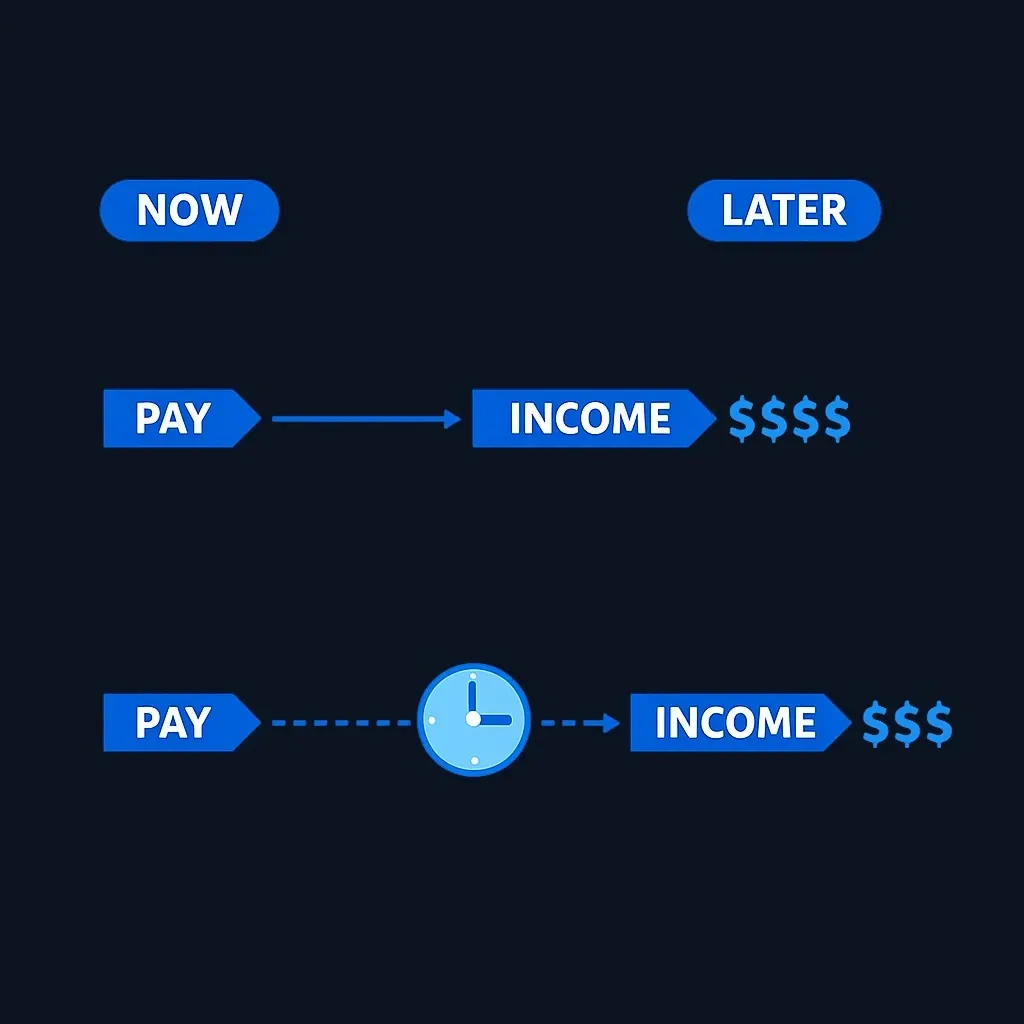
The strongest comparison point is timing. If you need income now, the immediate structure is easier to evaluate against your budget. If you need income later, the deferred structure gives more planning room, but it usually requires closer review.
Decision criteria
Start with the income gap
Begin with a budget question, not a product question: when does the income need to appear? If you are already retired and predictable income falls short of essential expenses, an immediate annuity may be easier to compare against that shortfall.
If retirement is still years away, a deferred annuity may match the planning problem better. It separates today’s funding decision from a later income decision, but the contract still needs detailed review.
Separate income certainty from flexibility
Many buyers look at annuities because they want predictable income. That predictability can come with tradeoffs. A contract designed around long-term income may not feel flexible if your cash needs change.
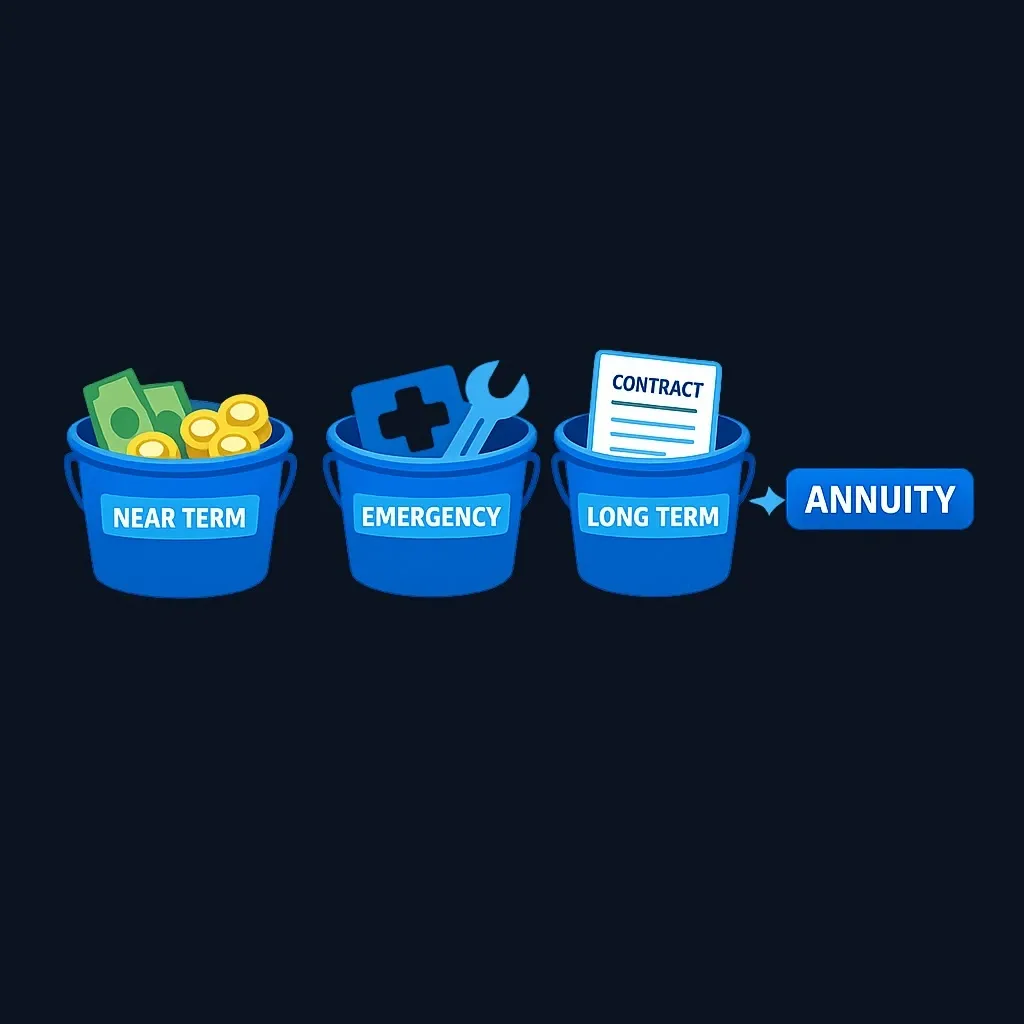
A practical framework is to divide money into three buckets: near-term spending, emergency reserves, and long-term income. An annuity usually belongs in the long-term income bucket. It should not replace cash needed for repairs, medical costs, relocation, or family support.
Compare the full contract, not only the payout
Two annuities can look similar at first and still work very differently. Payout options, death benefits, inflation features, surrender terms, investment exposure, and optional riders can all change the outcome. Investor.gov notes that annuities may include additional benefits that vary by contract (Investor.gov).
A better comparison asks: What happens if inflation rises, you need cash, you die earlier than expected, or you live much longer than expected? Those stress tests reveal more than the first quoted payment.
When to choose each option
When an immediate annuity may fit
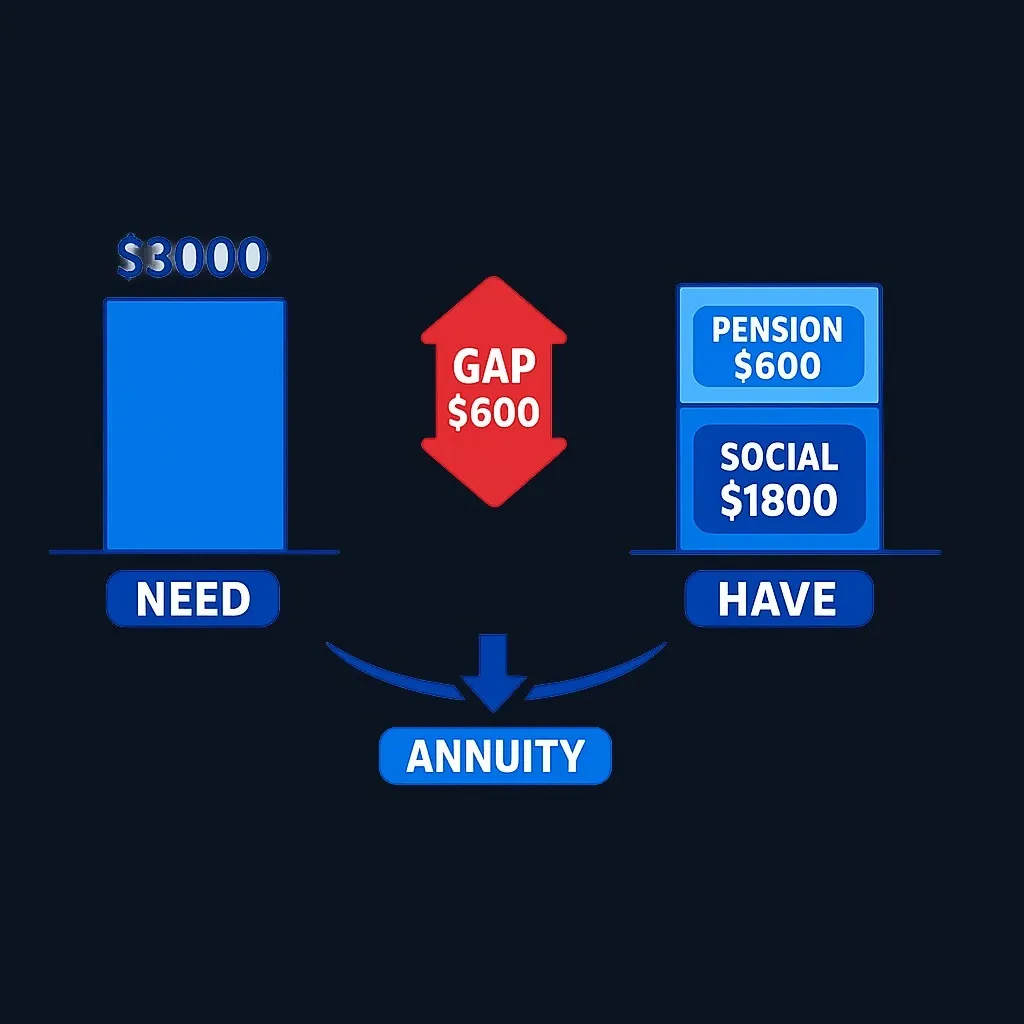
An immediate annuity may fit someone who wants to turn part of retirement savings into a predictable income stream. For example, a new retiree might have Social Security and a pension but still face a monthly shortfall. In that case, the annuity’s role is income matching, not aggressive growth.
It may also fit someone who does not want to manage withdrawals from that portion of savings. The tradeoff is that the decision may be difficult to reverse. Before committing money, test the amount against emergency reserves, future healthcare costs, and inflation.
When a deferred annuity may fit
A deferred annuity may fit someone who is still planning for retirement income later. For example, a late-career worker without a pension may want to evaluate a contract as one possible future income source.
It may also appeal to someone focused on tax-deferred accumulation before taking income, since annuities can provide tax-deferred growth until income payments begin (Investor.gov). The buyer still needs to review fees, surrender rules, payout options, insurer terms, and how the annuity fits with other retirement assets.
Tradeoffs and caveats
Inflation can reduce real income
A fixed income amount can feel adequate at the start but buy less over time if living costs rise. That risk matters more when retirement may last many years. If a contract includes an inflation-related feature, review how it works and what it costs, because annuity benefits vary by contract (Investor.gov).
Use a simple stress test. Build one budget using today’s expenses, then build another with higher future costs. If the annuity only solves the first budget, it may leave a later gap.

Fees and riders deserve a separate review
Deferred annuities often require more fee review because they may include accumulation features, investment choices, or optional riders. Immediate annuities can also involve important tradeoffs, even when the structure looks simpler.
Do not treat riders as automatic upgrades. A rider may solve a real planning need, such as income protection or death-benefit planning, but it can also change costs and contract behavior. Compare the base contract first, then add optional benefits only if they address a specific risk.
Liquidity is a core decision, not a side issue
The question “Can I access my funds if needed?” belongs at the start of the decision. An annuity built for income may not behave like a bank account or brokerage account.
Keep emergency money outside the annuity. If you may need flexible cash access for home repairs, medical bills, family support, or relocation, plan that reserve separately before committing money to a long-term income contract.
Tax treatment affects the real result
Annuities can provide tax-deferred growth until income payments begin (Investor.gov). That does not mean taxes disappear. Timing, account type, cost basis, and distribution details can affect the after-tax result.
Before comparing quotes, compare after-tax income assumptions. A larger gross payment may not be better if the after-tax cash flow, flexibility, or contract fit is worse.
State insurance regulators also publish consumer materials on deferred annuities; for example, the NAIC identifies its buyer’s guide as prepared by the National Association of Insurance Commissioners, an association of state insurance regulatory officials (NAIC).
Practice investing with Finelo
Build practical investing skills with guided lessons, simulator practice, and structured challenges.
FAQ
What is the main difference between an immediate and deferred annuity?
The main difference is timing. An immediate annuity is generally considered when income is needed soon, while a deferred annuity is generally considered when income is postponed until a future date.
How do I choose the right type of annuity?
Start with when you need income, how much flexibility you need, and what portion of savings can be committed to long-term retirement income. Then compare contract terms, fees, payout choices, inflation features, tax treatment, and liquidity limits.
What are the tax implications?
Annuities can provide tax-deferred growth until income payments begin (Investor.gov). The after-tax outcome depends on the contract, account type, and distribution details.
What happens if I die after buying an annuity?
The answer depends on the contract and any death-benefit or beneficiary provisions. Investor.gov notes that additional annuity benefits vary by contract, so this should be reviewed before purchase (Investor.gov).
Conclusion: Making the Right Choice for Your Retirement
The best answer to immediate vs deferred annuity is timing-based: consider an immediate structure when the income need is near-term, and consider a deferred structure when the goal is future retirement income. The decision should also account for taxes, inflation, liquidity, fees, riders, and how much control you want to keep.
A simple decision path helps: identify the income gap, decide when it starts, protect emergency cash, compare after-tax outcomes, and read the contract terms carefully. An annuity can support retirement planning, but it should fit your broader plan rather than drive it.
For broader investing education before comparing products, you can continue with Finelo’s financial learning resources.
Sources and Further Verification
More from Finelo
- Deferred Compensation Plans: Taxes, Payout Rules, and Employer Risk
- Fixed Annuity vs. CD: Key Differences
- Pension Lump Sum vs. Annuity: Key Differences
Disclaimer
This article is provided by Finelo for educational and informational purposes only. Finelo does not provide financial, investment, tax, legal, or insurance advice. Consider your circumstances and consult an appropriately qualified professional before making financial decisions.
InvestingBeginner GuideFinancial Education
Practice investing with Finelo
Build practical investing skills with guided lessons, simulator practice, and structured challenges.
About the author
Finelo Team
The Finelo Team creates practical investing and trading education designed to help beginners learn faster with structured challenges, simulator practice, and bite-sized lessons.
Keep reading — Related articles

Investing
Yield to Call vs Yield to Maturity: Assumptions and Bond Risks
Yield to call (YTC) estimates a bond's yield if the issuer redeems it on an eligible call date; yield to maturity (YTM) estimates yield if it remains outstanding to final maturity.
Finelo Team

Investing
Will My Employer Know If I Take a 401(k) Loan?
Who this page is for: readers new to 401(k) loans who want a practical, privacy‑focused explanation — what your employer can see, how to limit visibility, and the financial tradeoffs to weigh.
Finelo Team

Investing
What Medical Expenses Qualify for a 401(k) Hardship Withdrawal?
Before you decide, confirm three things with your plan administrator:
Finelo Team